

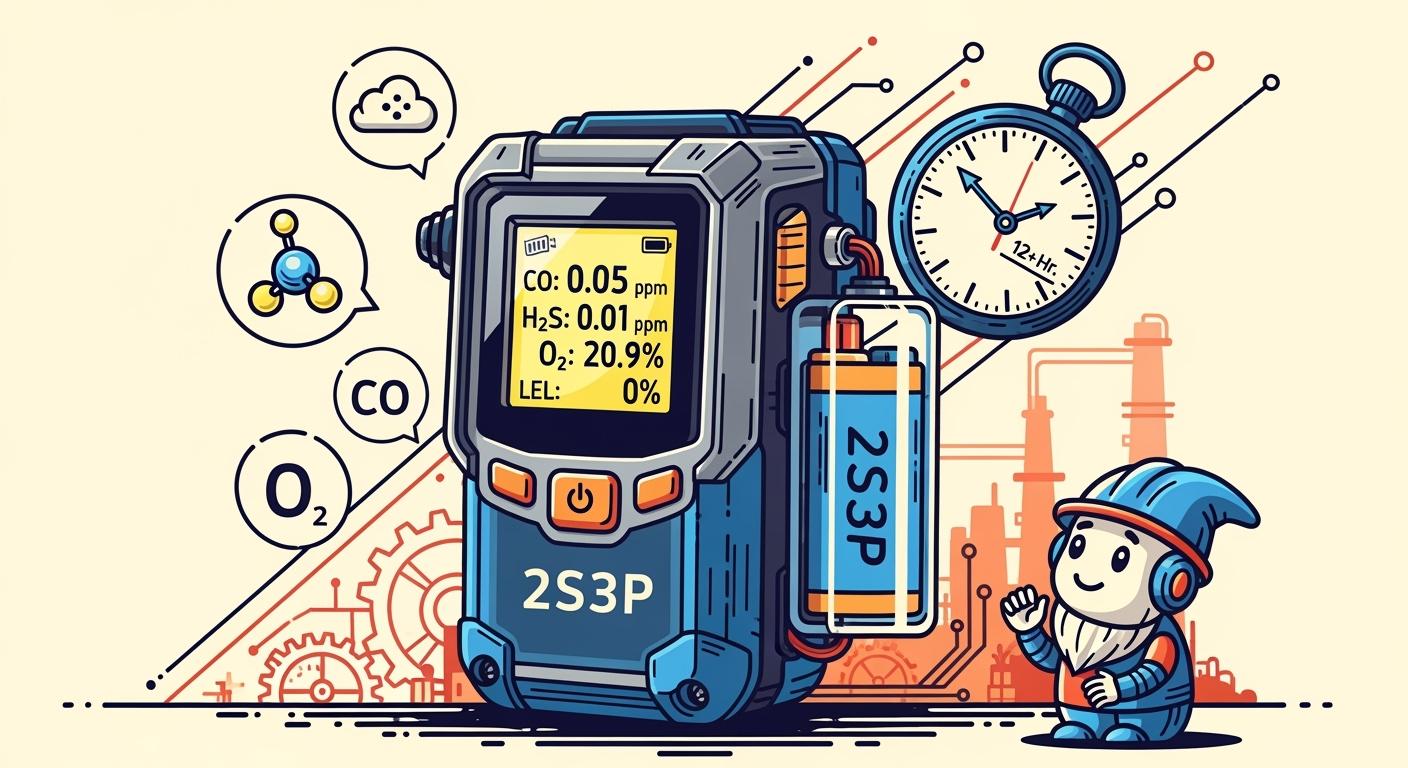
You need reliable power for your multi-gas detectors, especially in high-risk workplaces like Li-ion battery manufacturing. Li-ion Packs support sub-ppm sensitivity and long shifts, but battery failures can threaten safety. You might face issues such as thermal runaway, battery fire, or early cell venting. Your choice of battery impacts not only device runtime but also compliance and operational integrity.
Key Takeaways
Choose 2S3P Li-ion packs for reliable power in multi-gas detectors. They support long shifts and maintain sub-ppm sensitivity, crucial for safety in hazardous environments.
Select the right battery chemistry, like NMC or LiFePO4, for your application. These options provide high energy density and long cycle life, ensuring dependable performance.
Implement strict maintenance protocols for Li-ion packs. Regular inspections and capacity tests help prevent failures and ensure safety during critical operations.
Utilize built-in safety features in Li-ion packs. Overcharge and thermal protections reduce risks of overheating and fire, safeguarding your workforce.
Plan for future needs by choosing modular battery designs. This approach allows for upgrades as technology evolves, ensuring your gas detection systems remain effective.
Part 1: 2S3P Li-ion Packs: Suitability
1.1 Enterprise Needs
You need reliable power for your gas detection systems. In enterprise environments, you face strict requirements for safety, compliance, and operational uptime. Multi-gas detectors must run for long periods and deliver accurate readings, even in harsh or hazardous locations. The choice of li-ion packs directly affects your ability to meet these demands.
Here is a summary of the primary operational requirements for battery packs in enterprise multi-gas detectors:
Specification | Details |
|---|---|
Batteries Required | Yes |
Batteries Included | Yes |
Battery Run Time | 14 Hours with PID or IR Sensor |
14-18 hours | |
18 hours | |
Power Source | Battery |
You must ensure that your gas detection devices operate continuously during long shifts. Many industrial sites, such as battery manufacturing, medical facilities, and infrastructure projects, require detectors to function for at least 12 hours, often longer. If your li-ion packs fail, you risk downtime, missed alarms, or even safety incidents.
You also need to consider the reliability of li-ion packs in different environments. These packs must withstand temperature changes, vibration, and exposure to dust or chemicals. In sectors like robotics, security systems, and industrial automation, you cannot afford unexpected power loss. The right li-ion packs help you maintain compliance and protect your workforce.
Tip: Always verify that your li-ion packs meet the runtime and durability standards for your specific application. This step reduces the risk of device failure during critical operations.
1.2 Sub-ppm Sensitivity & Long Shifts
Gas detection in enterprise settings requires high sensitivity and fast response. Your detectors must identify trace amounts of toxic or flammable gases, often at sub-ppm (parts per million) levels. This capability is essential in environments like Li-ion battery manufacturing, where even a small leak can lead to major safety risks.
The following table outlines the minimum runtime and sensitivity specifications for multi-gas detectors in industrial applications:
Specification Type | Details |
|---|---|
Minimum Runtime | 16–24 hours of continuous operation |
Sensitivity Requirement | High sensitivity to detect trace amounts of gas |
T90 Response Time | Under 30 seconds for quicker response |
You need li-ion packs that support these demanding requirements. The 2S3P configuration provides both the voltage and capacity needed for extended operation. This setup allows your gas detection tools to run for 12 hours or more, even when using advanced sensors like PID (photoionization detectors) or IR (infrared sensors). You can trust these li-ion packs to deliver stable power, which is critical for maintaining sub-ppm sensitivity throughout a long shift.
In addition, li-ion packs offer high energy density and long cycle life. Chemistries such as NMC (Nickel Manganese Cobalt Oxide) and LiFePO4 (Lithium Iron Phosphate) are common in industrial detectors. These chemistries provide the balance of safety, performance, and longevity that enterprise users demand.
You should also consider the application scenarios. In medical, robotics, and security system sectors, gas detection devices often need to operate in remote or mobile settings. The compact size and lightweight nature of li-ion packs make them ideal for portable detectors. You can deploy these packs in a wide range of environments without sacrificing performance.
Note: Selecting the right li-ion packs ensures your gas detection systems remain accurate and reliable, even during extended use in challenging conditions.
Part 2: Li-ion Battery Tech in Gas Detection
2.1 Li-ion Chemistry Basics
You rely on Li-ion batteries because they deliver high energy density and long cycle life. In gas detection, you often see chemistries like LiFePO4 (Lithium Iron Phosphate), NMC (Nickel Manganese Cobalt Oxide), LCO (Lithium Cobalt Oxide), and LMO (Lithium Manganese Oxide). Each chemistry offers unique benefits:
LiFePO4: Stable, safe, and long-lasting. Cycle life often exceeds 1000 cycles.
NMC: Balanced performance, high energy density (150–220 Wh/kg), and good longevity.
LCO: High energy density but shorter cycle life. Used in consumer electronics.
LMO: Fast charge and discharge, moderate energy density.
You need to understand common failure modes in Li-ion batteries. These include:
Failure Mode | Description |
|---|---|
Electrolysis | Water between poles causes unwanted reactions. |
Electrolyte Evaporation | Damaged cells lose electrolyte, reducing performance. |
Early Venting | Cells release gases when failing, which can trigger alarms. |
Thermal Runaway | Overheating leads to uncontrolled reactions and possible fire. |
Battery Fire | Severe outcome of thermal runaway, posing safety risks. |
Mechanical damage can cause internal shorts. This may lead to thermal runaway and battery fires. You must monitor battery health to prevent these risks.
2.2 Why Li-ion Packs for Detectors
You choose Li-ion packs for portable gas detectors because they outperform other battery types. Li-ion batteries offer:
High energy density, allowing compact designs.
Long cycle life, supporting frequent use.
Shape flexibility, fitting various device forms.
Built-in protections: overcharge, over-discharge, short-circuit, and thermal safeguards.
Compare Li-ion packs to other chemistries:
Battery Type | Energy Density (Wh/kg) | Typical Cycle Life | Shape Flexibility |
|---|---|---|---|
Alkaline | ~100 | Single-use | Fixed shapes |
NiMH | ~60-120 | 300-500 cycles | Cylindrical only |
Li-ion 18650 | ~150-260 | 500-1000 cycles | Cylindrical only |
Li-Polymer | ~200-300 | 500-1200 cycles | Customizable shapes |
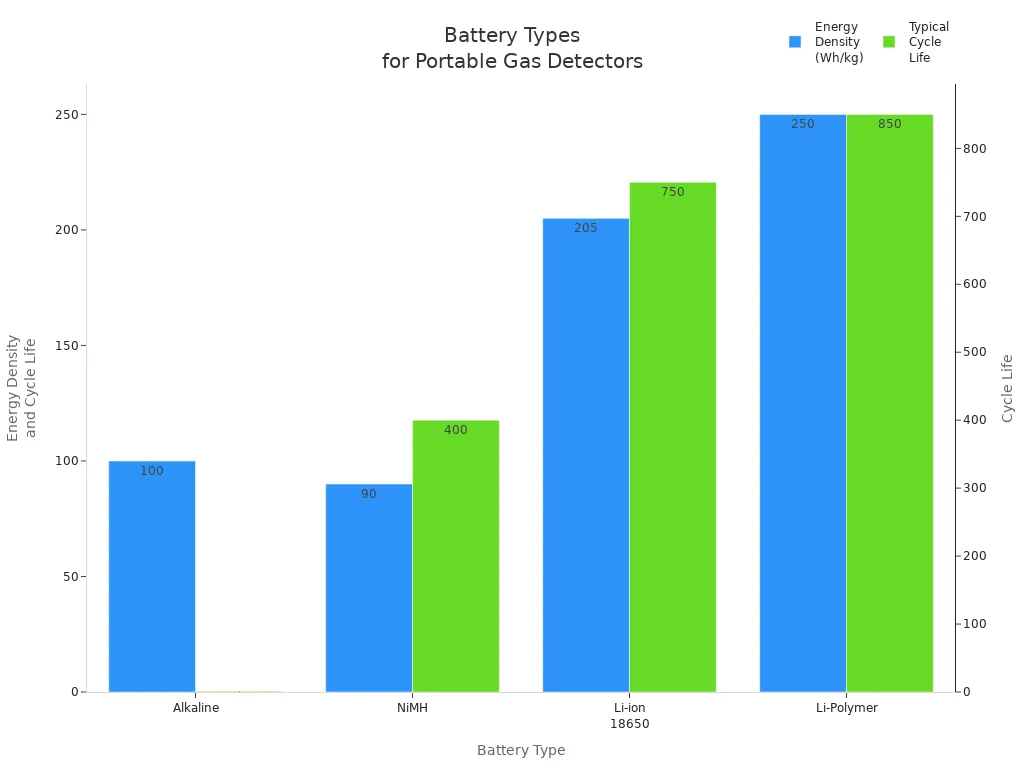
You see Li-ion packs used in medical devices, robotics, security systems, infrastructure monitoring, and industrial gas detection. Their high energy density (70–100 kWh/m³) and robust safety features make them ideal for enterprise applications. You gain reliable performance and extended runtime, which supports sub-ppm sensitivity and long shifts.
Tip: Always select Li-ion packs with the right chemistry and protection features for your application. This ensures safety and compliance in demanding environments.
Part 3: 2S3P Configuration Explained
3.1 2S3P Structure
You often see the term “2S3P” when you look at Li-ion battery packs for portable gas detectors. This code tells you how the cells connect inside the pack. “2S” means two cells connect in series. “3P” means three sets of these series pairs connect in parallel. You get a total of six cells in each pack.
Series connection increases the voltage.
Parallel connection increases the capacity.
You can picture the structure like this:
[Cell 1]---[Cell 2]    [Cell 3]---[Cell 4]    [Cell 5]---[Cell 6]
     |                     |                      |
     +---------------------+----------------------+
This design gives you both higher voltage and longer runtime. You find this setup in multi-gas detectors used in medical, robotics, and industrial sectors.
3.2 Voltage & Capacity
You need to know the voltage and capacity of your battery pack. Each Li-ion cell has a nominal voltage of about 3.6–3.7V. In a 2S3P pack, two cells in series give you 7.2–7.4V. The three parallel groups triple the capacity.
For example, if each cell has 2,500 mAh:
2S3P pack voltage: 7.2V
2S3P pack capacity: 7,500 mAh (2,500 mAh × 3)
This voltage matches the needs of advanced sensors like PID and IR. You get enough energy for 12+ hour shifts in harsh environments.
3.3 Comparison to Other Packs
You may wonder how 2S3P compares to other configurations. The table below shows the differences:
Pack Type | Voltage (V) | Capacity (mAh) | Typical Use Case |
|---|---|---|---|
1S3P | 3.6 | 7,500 | Small sensors, consumer devices |
2S2P | 7.2 | 5,000 | Compact detectors, robotics |
2S3P | 7.2 | 7,500 | Multi-gas, industrial, medical |
You see that 2S3P packs offer the best balance for enterprise tools. They deliver the voltage and capacity you need for long shifts and high-sensitivity detection.
Tip: Choose 2S3P packs for applications that demand both high energy and reliable performance in critical environments.
Chemistry | Nominal Voltage (V) | Energy Density (Wh/kg) | Cycle Life (cycles) | Application Scenario |
|---|---|---|---|---|
NMC | 3.6–3.7 | 150–220 | 1,000–2,000 | Industrial, robotics, medical |
LiFePO4 | 3.2–3.3 | 90–120 | 2,000+ | Security, infrastructure |
LCO | 3.6–3.7 | 150–200 | 500–1,000 | Consumer electronics |
LMO | 3.7 | 100–150 | 500–1,000 | Power tools, sensors |
You should match the chemistry to your application. For example, NMC and LiFePO4 work well in enterprise gas detectors because they offer safety, long life, and stable voltage.
Part 4: Advantages for Multi-Gas Tools
4.1 Extended Runtime
You need your gas detectors to operate through long shifts in hazardous environments. The 2S3P Li-ion pack delivers extended runtime by combining high voltage and increased capacity. You get up to 9000mAh at 7.4V, which supports continuous monitoring for 12 hours or more. This performance is essential in lithium-ion battery manufacturing, where you must detect toxic gases and prevent explosion risks. You can rely on these packs to power advanced sensors like PID and IR, maintaining sub-ppm sensitivity throughout the shift. Longer runtime means fewer battery swaps, reducing downtime and improving safety in industrial, medical, and robotics applications.
Tip: Extended runtime helps you maintain compliance and avoid hazardous exposure during shift changes.
4.2 Compact & Low-Power Design
You benefit from the compact design of 2S3P Li-ion packs. These packs fit easily into portable multi-gas detectors used in security systems, infrastructure monitoring, and medical devices. The low-power design features enhance device efficiency by doubling nominal voltage and tripling capacity. Efficient energy storage reduces stress on individual cells, which leads to less heat generation and longer lifespan. You minimize the risk of hazardous incidents caused by overheating. Compact packs allow you to deploy detectors in tight spaces, supporting lithium-ion battery manufacturing and other hazardous settings.
Efficient energy delivery supports long-term device operation.
Reduced heat generation improves safety and reliability.
Compact size enables flexible deployment in hazardous areas.
4.3 Reliability in Harsh Environments
You face extreme conditions in lithium-ion battery manufacturing and other hazardous industries. 2S3P Li-ion packs maintain performance under temperature swings, humidity, and mechanical stress. You can use thermal pads or aluminum heat sinks to dissipate heat in high-drain applications. Durable protective enclosures shield cells from moisture, dust, and impact. Optimal performance occurs between 15 and 35 °C, but you must monitor for degradation outside this range. Reliable power supply reduces explosion risks and ensures safety in hazardous locations.
Thermal management features protect against overheating.
Impact-resistant enclosures prevent mechanical damage.
Consistent performance supports safety and compliance in hazardous environments.
Note: Reliable battery packs help you avoid explosion incidents and maintain safety standards in lithium-ion battery manufacturing.
Part 5: Safety & Risk Management
5.1 Overheating & Fire Risks
You face real risks when using Li-ion battery packs in gas detection devices. Overheating and fire can occur if you do not follow proper safety protocols. The most common causes include:
Overcharging or over-discharging increases the chance of overheating and fire because of the high energy density in Li-ion cells.
Mechanical damage can cause a short circuit, letting the anode and cathode touch and raising the temperature quickly.
The electrolyte inside each cell contains flammable solvents. If the battery overheats, these solvents can ignite, especially after an internal short.
Thermal runaway is a critical concern. If heat builds up and cannot escape, a self-sustaining reaction may start, leading to fire or explosion. You must always use chargers designed for 2S Li-ion chemistry and avoid deep discharges below 3.0V per cell. Store packs at 40–60% charge in a cool, dry place.
Tip: Operate your battery packs within 0°C to 45°C and avoid dropping or bending them. Wear safety glasses and gloves during handling.
5.2 Gas Detection in Li-ion Manufacturing
You need advanced gas detection in Li-ion battery manufacturing. This environment produces several hazardous gases:
Hydrogen leaks can cause explosions if mixed with oxygen.
Volatile organic compounds (VOCs) like NMP are flammable and can vaporize, creating explosion risks.
High nitrogen levels can reduce oxygen, putting workers at risk.
Carbon monoxide is highly toxic, even in small amounts.
You must monitor these gases closely. Gas detection requirements in battery manufacturing are stricter than in many other industries. Early detection of hydrogen, VOCs, nitrogen, and carbon monoxide helps you prevent fires, explosions, and poisoning. Advanced multi-gas detectors with sub-ppm sensitivity are essential for safety and compliance.
5.3 Safety Features in Li-ion Packs
You rely on built-in safety features to protect your workforce and assets. Standard 2S3P Li-ion packs for gas detectors include:
Overcharge protection to stop cells from exceeding 4.25V.
Over-discharge protection that disconnects the load below 3.0V per cell.
Overcurrent protection to limit discharge current and prevent overheating.
Temperature monitoring systems that trigger shutdown if thresholds are exceeded.
Durable enclosures to prevent mechanical damage and short-circuiting.
You should never disassemble, modify, or use damaged battery packs. Avoid incinerating, heating, or striking the pack. Do not expose the battery to ultrasonic waves or soldering near safety components.
Safety Standard | Description |
|---|---|
CE Marking | Compliance with European health, safety, and environmental standards |
RoHS Compliance | Free from hazardous substances like lead, mercury, and cadmium |
UN 38.3 Certification | Tests for vibration, shock, altitude, and thermal stress for air transport |
ISO 9001 | Quality management in manufacturing processes |
UL or IEC Standards | UL 2054 or IEC 62133 for battery safety in commercial and household devices |
Note: Advanced battery management systems (BMS) and gas detection integration further reduce risks in medical, robotics, and industrial settings. You gain peace of mind knowing your power source meets strict safety and compliance standards.
Part 6: Maintenance & Best Practices
6.1 Maintenance Protocols
You must follow strict maintenance protocols to keep your Li-ion packs safe and reliable. Start by inspecting each pack for physical damage, swelling, or leaks before every use. Clean the battery contacts with a dry cloth to prevent poor connections. Use only chargers designed for your specific chemistry, such as LiFePO4 or NMC. Monitor charge and discharge cycles with a battery management system (BMS) to track performance and spot early signs of failure.
Tip: Schedule monthly capacity tests. Replace any pack that drops below 80% of its rated capacity.
6.2 Deployment Strategies
You should plan your deployment based on the environment and application. In medical and robotics sectors, store packs in temperature-controlled rooms. For industrial and security systems, use protective enclosures to shield batteries from dust, moisture, and vibration. Rotate packs in high-use areas to balance wear and extend service life.
Best Practices Checklist:
Store at 40–60% charge for long-term storage.
Avoid full discharges below 3.0V per cell.
Label packs by installation date for easy tracking.
6.3 Replacement & Lifecycle
You need to understand the lifecycle of your Li-ion packs. Most NMC and LiFePO4 packs last 1,000–2,000 cycles. LCO and LMO packs offer 500–1,000 cycles. Track cycle count and calendar age to plan replacements before failures occur.
Chemistry | Typical Cycle Life | Application Scenario |
|---|---|---|
NMC | 1,000–2,000 | Industrial, robotics, medical |
LiFePO4 | 2,000+ | Security, infrastructure |
LCO | 500–1,000 | Consumer electronics |
LMO | 500–1,000 | Power tools, sensors |
Note: Replace packs proactively to avoid downtime and maintain compliance in critical environments.
Part 7: Selecting Li-ion Packs for Enterprise
7.1 Key Criteria
You need to choose Li-ion packs that match your enterprise requirements. Start by checking the voltage and capacity. For multi-gas detectors, a 2S3P pack with 7.2V and 7,500–9,000mAh supports long shifts and advanced sensors. Select the right chemistry for your application. NMC and LiFePO4 offer high energy density and long cycle life, which are ideal for industrial, medical, and robotics sectors. LCO and LMO work well in consumer electronics and power tools.
Consider these factors when selecting a pack:
Cycle life: Choose packs with 1,000–2,000 cycles for lower replacement costs.
Operating temperature: Make sure the pack works between 0°C and 45°C.
Physical size: Pick a compact pack for portable detectors in security or infrastructure monitoring.
Safety features: Look for overcharge, over-discharge, and thermal protection.
Tip: Always match the battery pack to your device’s power needs and environment.
7.2 Vendor & Certification
You must select vendors who meet strict safety and compliance standards. Certification ensures that your Li-ion packs perform safely in hazardous environments, such as battery manufacturing or chemical plants. The certification process checks battery safety, including how the pack handles short circuits. Vendors must provide compliant and reliable solutions.
Safety Standard | Importance in Vendor Selection |
|---|---|
ATEX | Ensures compliance for devices in explosive atmospheres |
IECEx | Validates equipment for use in hazardous locations |
UL | Confirms safety and performance of battery packs in gas detectors |
Certification guarantees that your packs meet legal and safety requirements.
Compliance is critical for devices used in medical, industrial, and security applications.
Certified vendors help you avoid costly recalls and downtime.
Note: Always request certification documents from your vendor before purchase.
7.3 Future-Proofing
You should plan for future needs when selecting Li-ion packs. Choose packs with modular designs so you can upgrade as technology advances. Look for chemistries like NMC and LiFePO4, which support new sensor types and longer runtimes. Packs with smart battery management systems (BMS) allow remote monitoring and predictive maintenance.
Think about sustainability and supply chain transparency. Packs that use responsibly sourced materials help you meet environmental goals. For more on sustainable sourcing, see our internal guide on responsible battery materials.
Modular packs adapt to new device requirements.
Smart BMS features support predictive maintenance.
Sustainable sourcing aligns with enterprise ESG targets.
Tip: Future-proofing your battery selection reduces long-term costs and supports compliance as standards evolve.
You gain clear advantages when you choose 2S3P Li-ion packs for your enterprise detectors. These packs support long shifts and sub-ppm detection, which is critical for detectors in medical, robotics, security system, and industrial sectors. You must align battery selection with your detectors’ operational, safety, and compliance needs. Review your detectors’ runtime and detection requirements often. Work with your technical and procurement teams to evaluate new battery chemistries and detection technologies. Ongoing review ensures your detectors stay reliable and meet evolving detection standards.
FAQ
What makes 2S3P Li-ion battery packs ideal for enterprise gas monitoring solutions?
You gain extended runtime and stable voltage with 2S3P Li-ion battery packs. These batteries support continuous monitoring in medical, robotics, and industrial sectors. You can rely on them for accurate gas detection systems, even during long shifts with toxic and combustible gas emissions.
How do lithium batteries help reduce explosion risk in gas detection systems?
Lithium batteries feature built-in safety protocols and advanced battery management systems. You benefit from overcharge, over-discharge, and temperature monitoring. These safety measures lower explosion risk and protect worker safety in hazardous environments with gas-related hazards.
What are the best practices for charging and discharging lithium batteries in gas monitoring equipment?
You should use chargers designed for your battery chemistry. Avoid deep discharging below 3.0V per cell. Schedule regular capacity tests and monitor battery health. Proper charging and discharging extend battery life and support continuous monitoring in security system and infrastructure applications.
How does monitoring help prevent health risks from toxic and combustible gas emissions?
Which lithium battery chemistries offer the best performance for gas detection systems?
You should choose NMC or LiFePO4 batteries for gas monitoring solutions. These chemistries provide high energy density, long cycle life, and stable voltage. You get reliable performance for continuous monitoring in robotics, medical, and industrial applications.
Tip: Always match battery chemistry to your gas monitoring needs for optimal safety and performance.


