

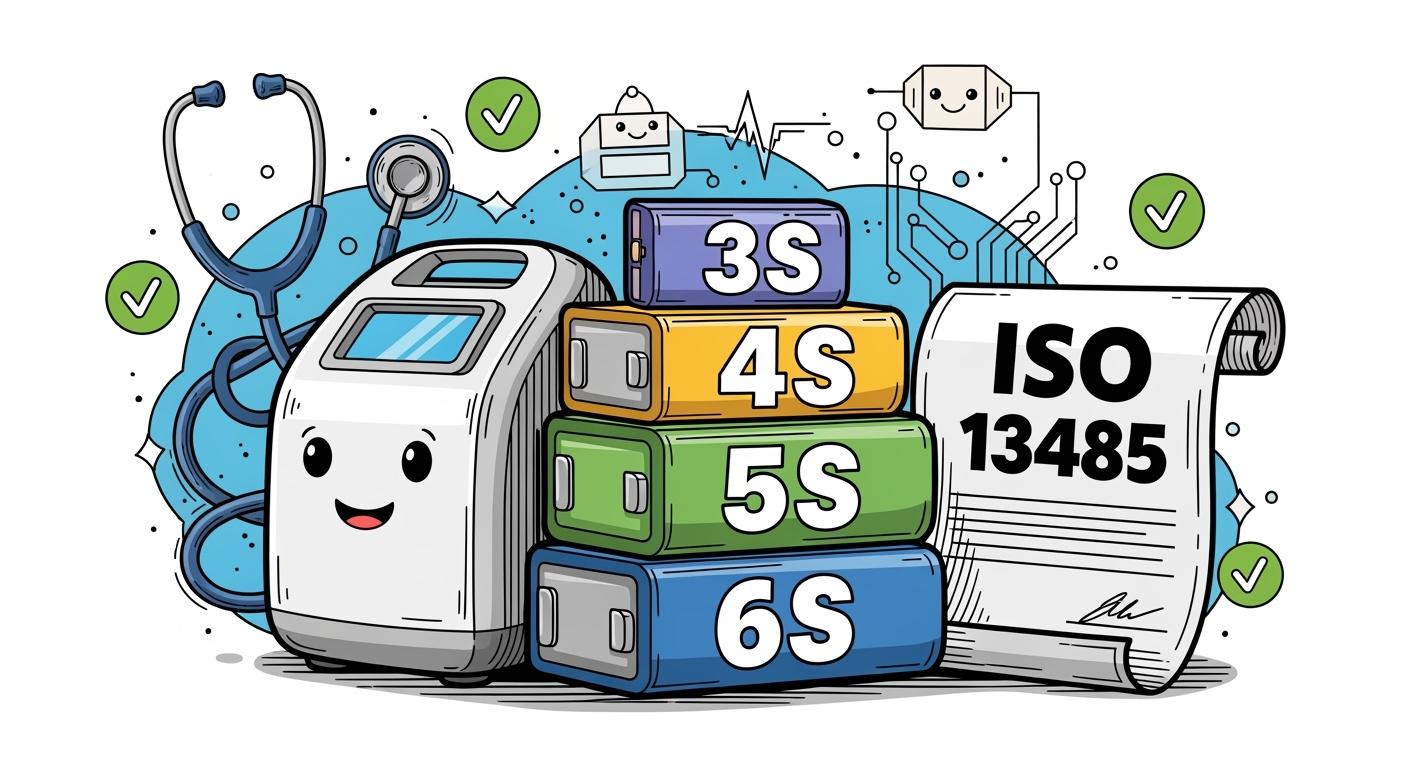
You can ensure 3S–6S lithium battery packs meet ISO 13485 and other regulations for portable oxygen concentrators when you follow strict Battery Standards. These standards play a critical role in safety and reliability for every medical device. FAA watt-hour limits and international rules shape your compliance requirements.
Key Takeaways
ISO 13485 is crucial for ensuring quality management in medical devices. It emphasizes safety, risk management, and the need for thorough documentation.
3S–6S lithium battery packs must comply with FAA watt-hour limits for air travel. Always verify the watt-hour rating to ensure safe transport.
Integrate safety features like thermal protection and mechanical reliability in battery design. This approach helps prevent hazards and ensures compliance with regulations.
Part1: Battery Standards and ISO 13485 Compliance

1.1 Overview of ISO 13485
You need to understand that ISO 13485 sets the foundation for quality management in the medical device industry. This standard focuses on regulatory requirements and documentation specific to medical devices, including lithium-ion battery packs. Unlike ISO 9001, which applies to all manufacturing sectors, ISO 13485 emphasizes risk management, corrective actions, and the retention of regulatory documents for the lifetime of the device. You must prioritize human health and safety in every aspect of battery design. This approach ensures your products meet the expectations of regulatory agencies and supports continual improvement.
ISO 13485 emphasizes regulatory requirements and documentation for medical devices.
ISO 9001 focuses on customer satisfaction across all industries.
ISO 13485 requires you to retain regulatory documents for the device’s lifetime.
Risk management and corrective actions are more prominent in ISO 13485.
1.2 Key Battery Standards for POCs
You must comply with several Battery Standards to ensure your portable oxygen concentrators meet global regulations. The FAA restricts lithium-ion batteries to under 160 watt-hours for air travel. Many international airlines follow similar rules. In addition, you should reference these essential standards:
Standard | Description | Effective Date | Category | Reference Number |
|---|---|---|---|---|
UL 1642 | Lithium Batteries | 12/23/2024 | General II (ES/EMC) | 19-53 |
UL 2054 | Household and Commercial Batteries | Current | General II (ES/EMC) | 19-54 |
IEC 62133 | Safety for Portable Sealed Cells | Current | General II (ES/EMC) | 19-55 |
ANSI/AAMI ES 60601-1 | Medical Electrical Equipment | Current | General II (ES/EMC) | 19-56 |
1.3 Quality Management and Documentation
You must establish a robust quality management system to comply with ISO 13485. This system should prioritize safety, reliability, and traceability. Every component in your lithium battery packs needs to be traceable, which supports quality control and enables efficient recalls if necessary. You should document all corrective actions for non-conformities and maintain records for audits. Third-party audits help you identify areas for improvement and validate your compliance with Battery Standards.
Tip: Use digital IDs for each cell to track capacity, voltage, and safety parameters, ensuring full traceability and regulatory alignment.
Explore more about lithium-ion battery packs in medical applications.
Part2: 3S–6S Lithium Packs: Configuration and Safety
2.1 3S–6S Lithium Pack Configuration
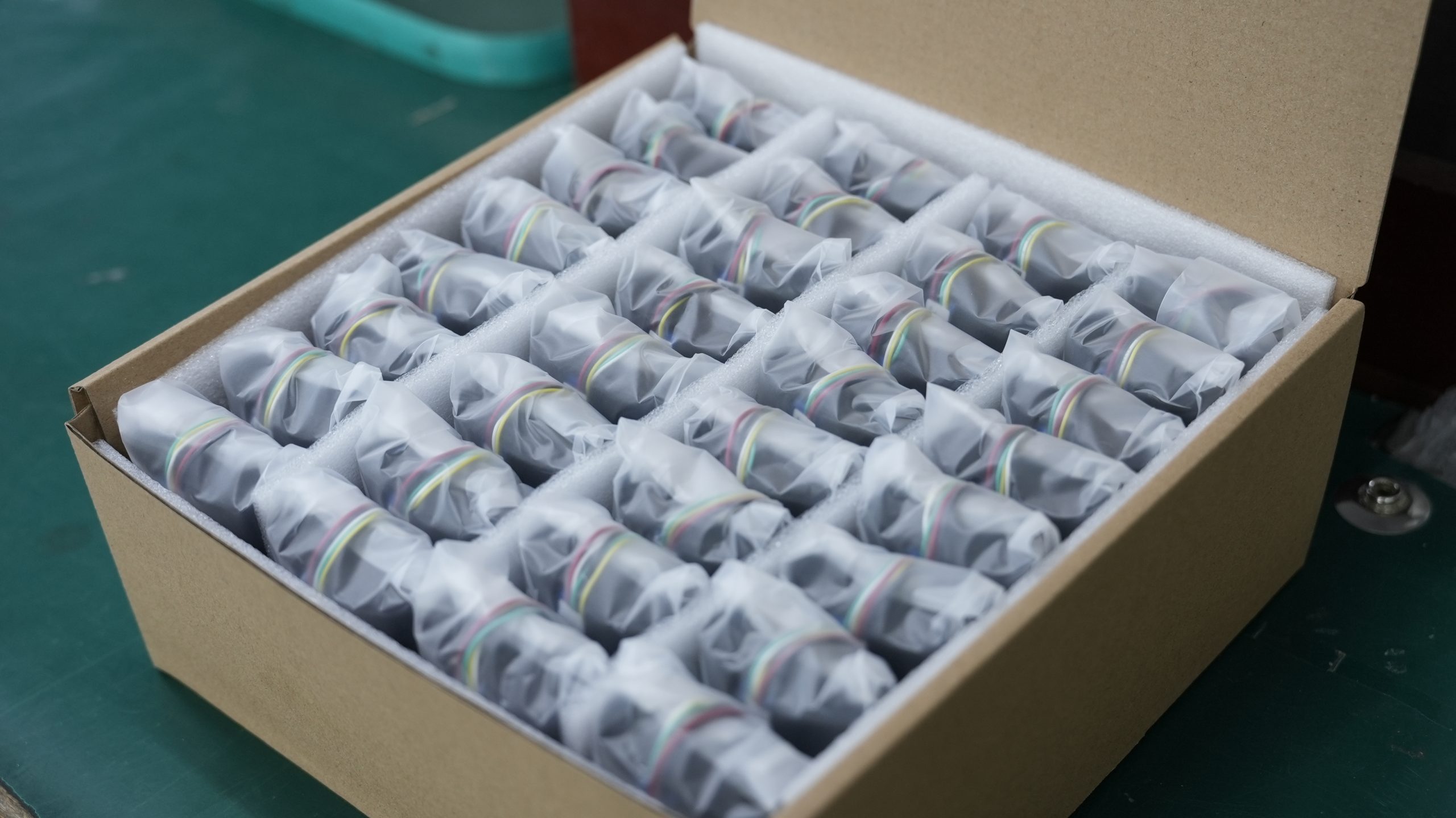
You need to understand how 3S–6S lithium battery packs are configured for portable oxygen concentrators. A 3S pack contains three cells in series, while a 6S pack contains six. These configurations typically deliver voltages between 11.1V and 25.2V, which match the requirements of most medical devices. The capacity of these packs usually ranges from 40 to 160 watt-hours. This range allows you to meet the FAA’s 160 Wh limit for air travel, which is essential for patients who need to carry their devices on flights.
When you select a pack, always verify the watt-hour rating. Packs above 160 Wh cannot be carried on passenger aircraft, which limits their use in portable medical devices. Most manufacturers design 3S–6S packs to stay below this threshold, ensuring compliance with both FAA and international airline regulations. You should also consider the chemistry of the cells, such as lithium-ion or lithium iron phosphate, as each offers different energy densities and safety profiles for medical applications.
2.2 Safety Features and Risk Management
You must prioritize safety features in every lithium battery pack for medical devices. These features protect both the user and the device from hazards such as overheating, short circuits, and mechanical damage. The following table outlines the most common safety features integrated into 3S–6S lithium packs:
Safety Feature | Description |
|---|---|
Environmental Adaptability Testing | Ensures batteries perform under extreme conditions, including thermal cycling and humidity endurance. |
Mechanical Reliability Assessment | Tests impact resistance, compression, and vibration endurance to ensure structural integrity. |
Electrochemical Performance Standards | Sets requirements for cycle life, self-discharge rates, and high-rate capability for various devices. |
Application-Specific Requirements | Includes biocompatibility, hermetic sealing, and rapid charging capabilities tailored to device types. |
User Safety Features | Incorporates reverse-polarity protection and ingress protection ratings for user safety. |
You should integrate risk management early in the design process. This approach aligns with ISO 14971 and ISO 13485. Start with a Preliminary Hazard Analysis (PHA) to identify risks before you finalize the design. Use the outputs from risk management to define your design inputs. This method ensures that you address safety concerns from the beginning and meet regulatory expectations.
A robust battery management system (BMS) also supports safety and compliance. The BMS monitors cell voltage, temperature, and current. It prevents overcharging, deep discharge, and thermal runaway. You should use process failure modes, effects, and criticality analysis (P-FMECA) to identify risks at both the cell and system levels. This holistic approach helps you maintain safety throughout the battery’s lifecycle.
Tip: Document every safety feature and risk mitigation step. This documentation will support your ISO 13485 audits and help you respond quickly to any safety concerns.
2.3 Aligning with Battery Standards
You must ensure that your 3S–6S lithium packs meet all relevant Battery Standards. Testing protocols for UL 2054 and IEC 62133 are essential. These protocols include:
IEC 62133-2 testing: Perform safety tests such as external short circuit, incorrect installation, overcharging, and thermal abuse. Conduct performance tests like mechanical shock and cycling to verify capacity retention.
UL 2054 testing: Complete electrical tests for simulated fault conditions, mechanical stress tests, and fire exposure tests to confirm the safety of the entire battery pack system.
You should also consider regional compliance requirements. The following table compares key compliance requirements for major markets:
Region | Compliance Requirements |
|---|---|
US | Compliance with UN 38.3 for transport of lithium batteries, with specific safety protocols for shipping. |
EU | Requires UN 38.3 compliance as per ADR for dangerous goods, ensuring safety in transport across Member States. |
China | Mandates 38 specific tests under GB standards, with CCC mark requiring annual inspections and sample testing. |
Japan | Emphasizes battery cell construction and electrolyte safety, requiring third-party testing for batteries above certain capacities. |
South Korea | KC mark requires extensive abuse testing and focuses on battery management systems for safety. |
Southeast Asia | ASEAN Battery Standards initiative is in progress, with localized requirements being developed in countries like Thailand and Indonesia. |
You need to stay updated on evolving standards. Begin by understanding which test standards apply to your product. Standards change frequently and vary by country. Evaluate each component test by relative risk and investigate your product’s behavior under expected test conditions. Develop mitigation strategies and consider independent pre-testing early in the design process. Engage with your regulatory test provider for insights on testing and regulations.
2.4 Compliance Checklist for Manufacturers and Buyers
You can use the following checklist to verify compliance with Battery Standards and regulatory requirements:
Certification | Description |
|---|---|
IEC 62133 | Global standard for safety of secondary lithium-ion cells and batteries. |
UL 2054 or UL 62133 | U.S. safety standards for household and commercial battery packs. |
UN 38.3 | Mandatory for air transport, certifying battery stability under stress. |
ISO 13485 | Quality management system standard for medical device manufacturing. |
FDA Registration | Indicates compliance with U.S. medical device regulations. |
Request up-to-date certification documents from your supplier.
Confirm that the battery pack meets the watt-hour limits for your application.
Review the quality management system documentation for traceability and corrective actions.
Verify that the battery pack has passed all required safety and performance tests.
Ensure ongoing compliance by monitoring updates to Battery Standards and regional regulations.
Note: Early communication with your regulatory test provider can help you avoid costly delays and ensure your product meets all necessary requirements.
By following these steps, you can ensure that your 3S–6S lithium battery packs meet the highest standards for safety, reliability, and regulatory compliance in medical devices.
You can achieve ISO 13485 and battery standard compliance with 3S–6S lithium packs through proper design and documentation. Always verify certifications for regulatory approval and device safety.
Next Steps:
Partner with certified suppliers
Review all compliance documents
Monitor updates to battery standards
FAQ
What makes 3S–6S lithium battery packs suitable for medical devices?
You get stable voltage, high energy density, and compliance with ISO 13485. Large Power offers custom battery solutions for medical, robotics, and industrial applications.
How do you ensure lithium battery packs meet global safety standards?
You must verify certifications like IEC 62133, UL 2054, and UN 38.3. Request documentation from suppliers such as Large Power to confirm compliance.
What is the difference between lithium-ion and lithium iron phosphate packs?
Chemistry | Energy Density | Cycle Life | Safety Level |
|---|---|---|---|
Lithium-ion | High | Moderate | Standard |
Lithium iron phosphate | Moderate | High | Enhanced |
You select based on your device’s needs. Large Power offers custom battery solutions.


