

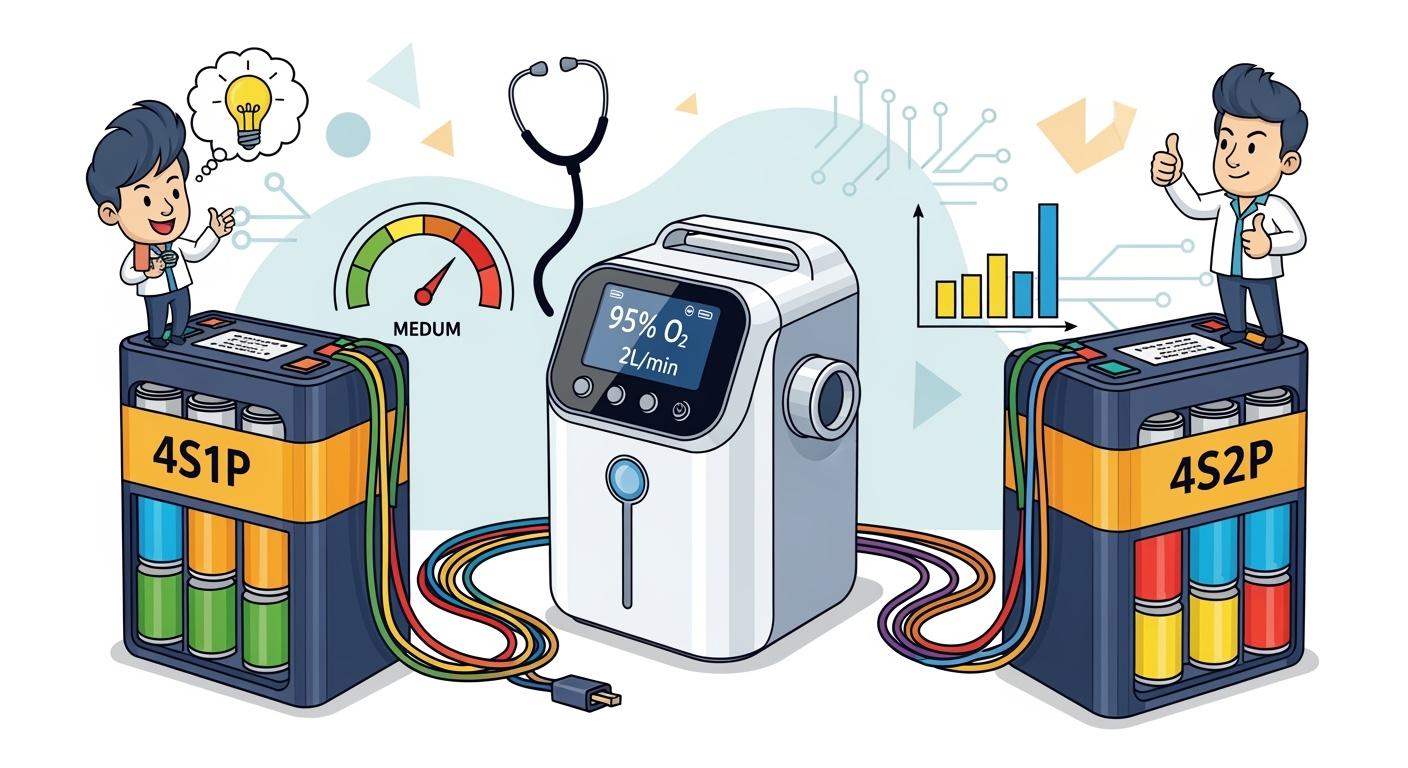
You need to understand how battery configuration impacts your oxygen concentrator’s performance. The 4s1p battery connects four lithium-ion cells in series, reaching about 14.4V. The 4s1p battery determines capacity by one cell’s rating. The 4s1p battery ensures reliable voltage for medical devices. The 4s1p battery offers stable operation. The 4s1p battery suits portable medical applications. The 4s1p battery supports patient mobility and safety. The 4s1p battery helps maintain uninterrupted therapy. The 4s1p battery meets growing demand for extended runtime. The 4s1p battery remains essential when selecting lithium battery packs for critical medical needs.
Key Takeaways
The 4S1P battery is ideal for portable medical devices, offering a compact design and moderate runtime of 2 to 4 hours, making it suitable for short-term use.
The 4S2P battery provides double the capacity and extended runtime, ensuring reliable operation for critical care devices during emergencies or continuous therapy.
When selecting lithium batteries, prioritize certified options to ensure safety and reliability, especially for medical applications.
Part1: Comparing Lithium Battery Packs
1.1 4S1P Battery Features
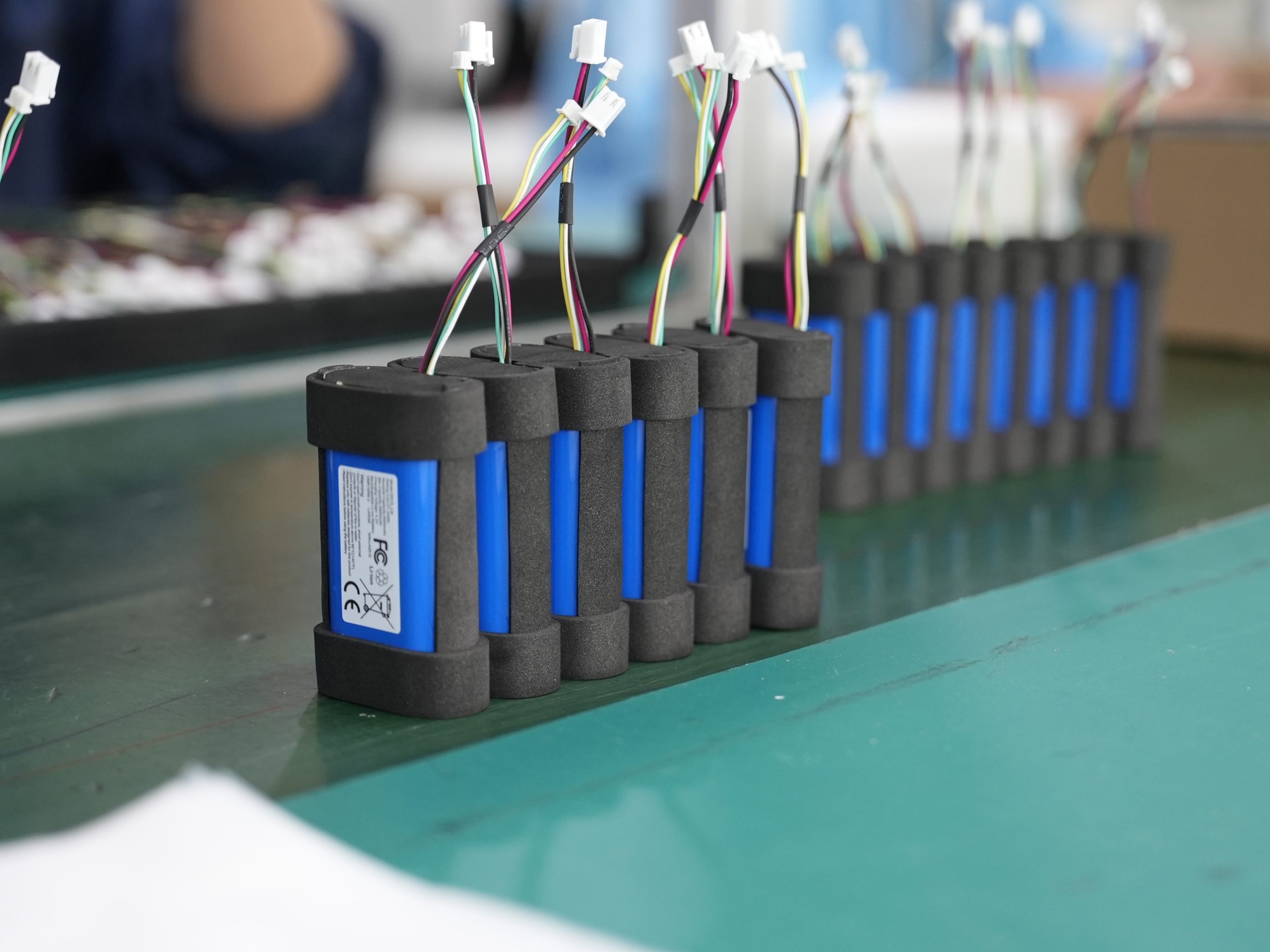
You rely on the 4s1p battery when you need a compact and lightweight power source for your medical equipment. This configuration connects four lithium-ion cells in series, delivering a nominal voltage of 14.4V. The capacity depends on a single cell, typically ranging from 3,000mAh to 3,500mAh. You benefit from a moderate runtime, which suits portable devices and short-term applications. The 4s1p battery offers stable voltage output, making it ideal for medical infusion pumps and oxygen concentrators that require consistent performance. You can trust the 4s1p battery for reliable operation in environments where mobility and quick deployment matter.
Tip: Choose the 4s1p battery for lightweight, portable medical devices that need moderate power and runtime.
Configuration | Rated Capacity | Nominal Voltage | Watt-Hour Rating |
|---|---|---|---|
4S1P | 2600 mAh | 14.6V | 37.96WH |
1.2 4S2P Battery Features
You select the 4s2p lithium battery when you require extended runtime and higher capacity for critical care devices. This configuration uses eight lithium-ion cells, arranged as two parallel strings of four cells each. The voltage remains at 14.4V, but the capacity doubles, reaching up to 7,000mAh. You gain superior reliability and redundancy because parallel cells provide backup in case one cell fails. The 4s2p lithium battery supports long-term operation, making it essential for medical infusion pumps and oxygen concentrators used in emergency transport or continuous therapy. You also benefit from enhanced cycle life, which reduces maintenance and replacement costs.
Note: The 4s2p lithium battery delivers sustained power, ensuring uninterrupted therapy for patients during extended use.
Aspect | Effect in 4S2P Configuration |
|---|---|
Voltage | Remains the same |
Capacity | Increases in Ah and runtime |
1.3 Capacity and Runtime Differences
You need to understand how capacity and runtime impact your device’s performance. The 4s1p battery provides standard capacity and moderate runtime, while the 4s2p lithium battery doubles the capacity and extends the runtime significantly. This difference is crucial for oxygen concentrators that must operate continuously without interruption. The 4s2p battery ensures that life-supporting functions remain active during transport or emergencies. You also benefit from higher cycle life and superior reliability, which are vital for medical applications.
Feature | 4S1P (14.8v, 4×18650) | 4S2P (14.8v, 8×18650) |
|---|---|---|
Voltage | 14.4v | 14.4v |
Capacity | Standard (1x cell) | Double (2x cell) |
Runtime | Moderate | Extended |
Size/Weight | Compact, lighter | Larger, heavier |
Redundancy | None | High (parallel cells) |
Long Cycle Life | Good | Excellent |
Reliability | Standard | Superior |
Application | Short-term, portable | Long-term, critical care |
18650 Li-ion Cells Used | 4 | 8 |
Smart Protection Systems | Yes | Yes |
Certification | Required | Required |
You see that the 4s2p lithium battery offers extended runtime and higher capacity, which are essential for medical infusion pumps and oxygen concentrators in critical care scenarios. The parallel arrangement in the 4s2p battery increases reliability and provides backup, making it a trusted choice for sustained power delivery. You also benefit from smart protection systems and certification requirements that ensure safety and compliance.
Callout: For oxygen concentrators needing sustained power, the 4s2p lithium battery is the preferred option. You achieve longer operation times and greater reliability, which are vital for patient safety.
You must consider the battery management system when selecting lithium battery packs. The battery management system protects against overcharge, over-discharge, and short circuits, ensuring safe operation and maximizing battery life. Learn more about battery management systems.
You also need to choose the right lithium battery chemistry for your application. Lithium-ion batteries offer high energy density and stable voltage. Explore lithium-ion battery chemistries for more information.
You can apply these configurations in medical, robotics, security, infrastructure, consumer electronics, and industrial sectors. Discover medical applications for lithium battery packs.
Part2: Reliability and Suitability
2.1 Runtime Analysis
You depend on consistent runtime when using oxygen concentrators and medical infusion pumps. The 4s1p battery provides moderate runtime, which fits short-term therapy or portable use. The 4s2p battery offers extended runtime, supporting continuous operation during patient transport or emergencies. You achieve higher reliability with the 4s2p battery, as its parallel cell arrangement reduces the risk of sudden power loss. The table below highlights how battery configuration influences reliability during extended use:
Factor | Description |
|---|---|
Battery Type | Most portable oxygen concentrators use lithium-ion batteries for high energy density and longevity. |
Energy Density | Higher energy density allows for longer usage times, crucial for extended therapy. |
Compatibility | Correct battery matching is vital for performance and safety, especially at higher flow settings. |
Maintenance | Proper care extends battery life and performance, ensuring reliability during prolonged use. |
2.2 Suitability for Medical Devices
You must select lithium battery packs that meet strict standards for medical equipment. Both the 4s1p battery and 4s2p battery use 18650 3.7V 2600mAh lithium-ion cells, which are widely accepted in the industry. These batteries hold certifications such as UL, CE, CB, KC, and CCC, confirming their safety and compatibility for medical devices. You ensure higher reliability by choosing certified batteries for critical applications.
Specification | Detail |
|---|---|
Battery Type | 18650 3.7V 2600mAh Lithium Ion |
Application | Medical Devices |
Certification | UL, CE, CB, KC, CCC Certified |
2.3 Cell Quality Considerations
You must prioritize cell quality when selecting a 4s1p battery or 4s2p battery. Low-quality cells can lead to serious issues:
Heating of the battery, posing risks to patient safety.
Leakage of dangerous materials from cells.
Reduced capacity leading to insufficient power supply.
Early degradation and short-circuits due to improper assembly or impurities.
Custom batteries can lead to unbalanced cells, increasing the risk of short circuits.
Mismatched battery capabilities can result in decreased runtime, affecting patient trust in medical devices.
⚠️ Always use a battery management system to monitor cell health and prevent overcharge, over-discharge, or short circuits. This step ensures higher reliability and safety for all lithium battery packs in medical applications.
Part3: Recommendations by Scenario
3.1 Portable Device Needs
You require a battery solution that supports mobility and reliability for portable oxygen concentrators. The 4s1p battery offers a lightweight design and moderate capacity, making it ideal for short-term use and frequent movement. You can expect 2 to 4 hours of operation per charge, depending on device settings. For air travel or hiking, you should select a configuration that provides 4–8 hours of runtime, plus spare batteries. You benefit from accessories like carry-on cases and FAA-approved chargers. Higher capacity batteries, such as those above 4000 mAh, deliver extended runtime for outdoor activities. Pulse-dose models maximize battery life, supporting your needs in medical equipment and medical infusion pumps.
Scenario | Recommended Battery Runtime | Suggested Accessories | Key Considerations |
|---|---|---|---|
Air Travel | 4–8 hours (plus spare) | Carry-on case, FAA charger | Check airline policies; physician’s note |
Hiking/Camping | 6+ hours (dual batteries) | Solar charger, cover | Monitor altitude impact |
Power Outage Preparedness | Minimum 4-hour reserve | Power bank, cables | Test monthly; store properly |
Home Mobility | 4–6 hours per battery | Extra battery, belt clip | Use smart charging stations |
Tip: You can explore custom lithium battery packs for portable medical applications.
3.2 Stationary Device Needs
You need a battery configuration that delivers sustained power for stationary oxygen concentrators and medical infusion pumps. The 4s2p battery provides extended runtime and higher capacity, supporting continuous therapy in clinical settings. You achieve superior reliability with parallel cell arrangements, reducing the risk of power loss. Stationary devices benefit from larger battery packs, which ensure uninterrupted operation during emergencies or power outages. You must select certified lithium battery packs for medical equipment to meet regulatory standards. These packs also support infrastructure and industrial applications.
3.3 Balancing Cost and Performance
You must evaluate cost and performance when selecting lithium battery packs for oxygen concentrators. The 4s1p battery offers affordability and ease of replacement, lasting 2–3 years with replacement costs ranging from $200 to $500. The 4s2p battery delivers extended runtime and higher reliability, but increases initial investment. You should analyze total cost of ownership, including warranty length and service support. Insurance may cover part or all costs with proper documentation. Rental or lease options suit temporary needs. You must consult healthcare providers for tailored advice and check warranty options for long-term value.
Evaluate oxygen output and portability.
Assess battery performance and ease of use.
Analyze total cost of ownership and warranty support.
Consult with experts for custom lithium battery solutions.
Note: You can apply lithium battery packs in medical, robotics, security, infrastructure, consumer electronics, and industrial sectors.
You see that 4S1P packs offer compact size and moderate runtime, while 4S2P packs double capacity for extended use. Select your configuration based on runtime needs, device type, and maintenance practices. For optimal results, consult battery experts for tailored solutions and ensure compliance with industry standards.
Resource | Description |
|---|---|
Battery Expert Consulting | Guidance from concept to certified battery solutions |
FAQ
What advantages do 4S2P lithium battery packs offer for oxygen concentrators in medical and industrial settings?
You gain double the capacity and extended runtime with 4S2P packs. This configuration supports continuous operation in hospitals, clinics, and industrial automation systems.
How does Large Power support custom lithium battery solutions for B2B clients?
You receive tailored battery pack designs, technical support, and compliance guidance from Large Power. Request a custom battery consultation for your specific application needs.
Which lithium battery chemistry best suits high-reliability medical and robotics applications?
You should consider lithium nickel manganese cobalt oxide (NMC) for high energy density and long cycle life. NMC batteries deliver stable platform voltage and reliable performance in critical environments.


