

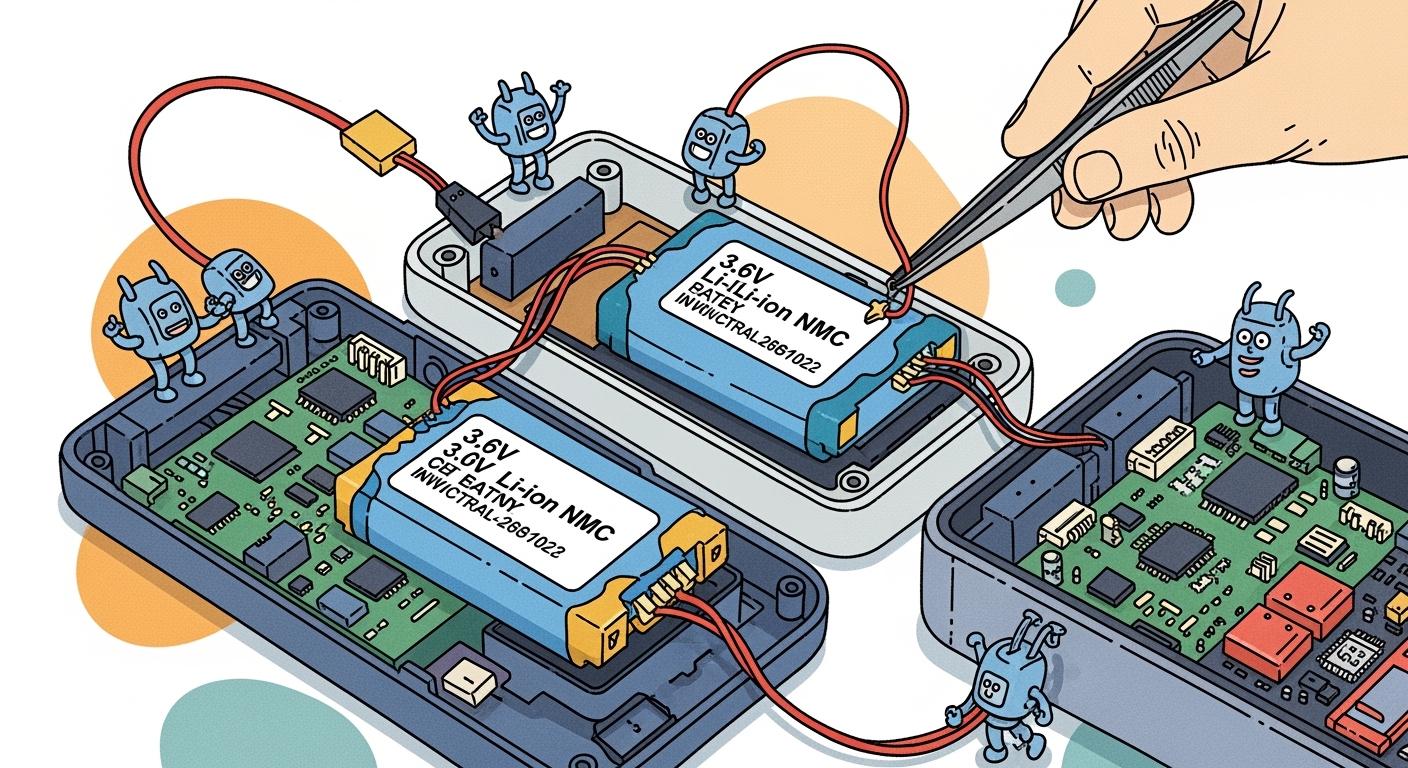
You face a real challenge when you try to fit 3.6V Li-ion NMC battery packs into compact IPCs or video doorbells. Space-Constrained Design demands that you use every millimeter efficiently. You must choose the right PCB type and cable assembly to ensure safety without sacrificing performance. Your decisions affect energy density, platform voltage, and long-term reliability in industrial and security system applications.
Key Takeaways
Choose prismatic or pouch cells for compact devices. These formats maximize energy density and fit into tight spaces.
Integrate a robust Battery Management System (BMS) to monitor voltage and temperature. This enhances safety and extends battery life.
Select the right PCB and cable assembly. Short, flexible cables with proper shielding maintain signal integrity and fit in limited spaces.
Implement effective thermal management strategies. Use passive and active cooling methods to prevent overheating and ensure reliable operation.
Balance size, capacity, and performance in your design. Prioritize the right battery chemistry to meet operational needs without sacrificing reliability.
Part 1: Space-Constrained Design Challenges
1.1 Device Size Limitations
You often face strict size limits when designing compact devices like IPCs and video doorbells. Space-Constrained Design means you must use every available millimeter inside the enclosure. You cannot choose just any battery pack. Instead, you need to focus on formats that fit tight spaces and still deliver the required performance.
Prismatic and pouch cells work well in these situations. They have shapes that fit into slim or irregular spaces.
These battery formats give you good energy density, which means you get more power in a smaller package.
You must consider safety and performance at the same time. A battery pack that fits but overheats or fails will not work for industrial or security system applications.
Careful design helps you avoid wasted space and ensures the battery supports all device functions.
Note: When you design for small devices, you must balance size, safety, and performance. The right battery format makes a big difference in reliability.
1.2 Impact on Battery Pack Selection
Space-Constrained Design forces you to look at several factors before you select a battery pack. Each factor affects how well your device will perform in the field.
Factor | Description |
|---|---|
Energy Density | How much energy you can store in a given size or weight. |
Power Density | How quickly the battery can deliver energy. |
Cycle Life | The number of charge-discharge cycles before the battery loses capacity. |
Self-Discharge Rate | How well the battery holds its charge over time. |
Form Factor | The shape and size of the battery, which affects design flexibility and heat management. |
Safety | Proper design prevents overheating and other safety issues. |
Cost | You must balance upfront cost with long-term reliability. |
Environmental Considerations | Using recyclable materials and meeting regulations reduces environmental impact. |
You need to match the battery chemistry and configuration to your device’s needs. For example, lithium nickel manganese cobalt oxide (NMC) packs offer a good balance of energy density and cycle life for security and industrial devices. You must also consider how the battery will integrate with the rest of your electronics, including the PCB and cable assembly.
Part 2: Custom Pack Requirements
2.1 Voltage, Capacity, and Safety Needs
You must define the voltage and capacity requirements for your compact device before you start the design. For most IPCs and video doorbells, a 3.6V Li-ion NMC battery pack offers the right platform voltage and high energy density. This chemistry supports long cycle life, which is essential for industrial and security system applications.
Safety remains a top priority in Space-Constrained Design. You need to include advanced safety features to protect both the device and the end user. The table below outlines the most important safety features for custom battery packs:
Safety Feature | Description |
|---|---|
Monitors voltage, current, and temperature, preventing overcharging and deep discharging, enhancing safety and extending battery lifespan. | |
Thermal Runaway Prevention | Incorporates safeguards to mitigate risks of thermal runaway, including thermal shutdown separators that block ion flow at high temperatures, crucial for high-drain applications. |
Proper Vent Design and Pressure Relief | Features safety vents that release gases in a controlled manner during internal gas buildup, preventing catastrophic explosions, and includes mechanisms to disconnect the cell under critical pressure conditions. |
2.2 Form Factor and Integration
You must select a battery form factor that fits your device’s enclosure. Prismatic and pouch cells work well for Space-Constrained Design because they maximize energy density in slim or irregular spaces. Custom packs allow you to match the battery’s shape and size to your device, which improves integration and reliability.
The table below shows how custom battery pack integration affects device performance and reliability:
Aspect | Impact on Performance and Reliability |
|---|---|
Compromised Performance | Generic battery packs may not meet specific power demands, leading to reduced device operation. |
Integration Headaches | Standard packs can complicate design and increase costs due to ill-fitting dimensions and connectors. |
Safety and Reliability Risks | Lack of tailored protection circuitry can compromise safety in unique operating environments. |
Inefficiencies | Sub-optimal power delivery can lead to energy waste and shorter product lifespan. |
Precise Power Delivery | Custom packs ensure exact voltage and capacity, maximizing efficiency and performance. |
Seamless Integration | Custom designs fit perfectly, optimizing space and simplifying assembly. |
Enhanced Reliability | Incorporation of specialized safety features ensures robust performance in demanding environments. |
Long-Term Cost Efficiency | Custom solutions reduce warranty claims and operational downtime, leading to significant savings. |
2.3 PCB and Cable Assembly Considerations
You must pay close attention to PCB type and cable assembly when designing battery packs for compact devices. The right choices help you achieve safe, reliable, and efficient integration.
Cable length: Short cables reduce signal loss and maintain accuracy.
Temperature range: Use cables rated for the device’s operating temperature.
Moisture resistance: Waterproof cables prevent corrosion in wet environments.
Flexibility: Flexible cables fit into tight spaces, which is important for Space-Constrained Design.
Shielding: Shielded cables maintain signal integrity in noisy environments.
Twisted pair vs. single conductor: Twisted pairs improve noise rejection.
Number of conductors: Match the configuration to your device’s requirements.
You also need to select the right connectors, wire gauge, and PCB layout. These choices affect assembly time, safety, and long-term reliability. For advanced protection and monitoring, always integrate a battery management system.
Tip: Customizing your PCB and cable assembly ensures your battery pack meets the unique demands of medical, robotics, security, and industrial applications.
Part 3: Customization Strategies
3.1 Cell Format Selection
You must choose the right cell format to optimize battery performance and space utilization in compact devices. Each cell format offers unique advantages and disadvantages for lithium-ion NMC battery packs. The table below compares the most common options:
Cell Format | Advantages | Disadvantages |
|---|---|---|
Cylindrical | – Robustness and easier heat dissipation | – Less space-efficient compared to prismatic and pouch cells |
– Suitable for high-drain tools and EVs | ||
Prismatic | – Better space utilization and custom pack configurations | – More expensive to manufacture than cylindrical cells |
– High energy density in limited space | – Potential swelling over time due to gas buildup | |
– Commonly used in consumer electronics | – Less robust under extreme physical stress | |
Pouch | – Extremely lightweight and thin profile | – Vulnerable to punctures and physical damage |
– High design flexibility (custom shapes and sizes) | – Requires additional protective circuitry | |
– Up to 20% higher energy density than cylindrical | – Shorter lifespan compared to rigid cells |
You should select prismatic or pouch cells for most Space-Constrained Design projects. These formats allow you to maximize energy density and fit battery packs into slim or irregular enclosures. For applications in medical, robotics, and security systems, pouch cells offer flexibility, while prismatic cells provide a balance between space efficiency and durability.
Tip: Always match the cell format to your device’s mechanical and electrical requirements. This approach ensures reliable operation and long-term performance.
3.2 Pack Configuration Options
You need to configure your battery pack to meet the specific needs of your compact device. The table below outlines common configuration options for 3.6V Li-ion NMC packs:
Cell Type | Description | Applications |
|---|---|---|
Cylindrical Cells | Durable and widely available, excellent for high-power applications. | Flashlights, e-bikes, electric vehicles |
Prismatic (Rectangular) | Thin, flat, and space-efficient, offers better packaging density. | Tablets, power banks, medical devices |
Pouch (Polymer) Cells | Lightweight and flexible, but sensitive to punctures and swelling. | Smartphones, wearables, slim gadgets |
When you design for compact enclosures, consider these best practices:
Use parallel and series configurations to achieve the required voltage and capacity.
Ensure cell balancing to maintain uniform charge and discharge rates.
Reinforce the pack structure to withstand vibration and impact, especially in industrial and infrastructure applications.
Minimize unused space to improve energy density and thermal management.
You must also address safety concerns. Overcharging and overheating can occur when multiple cells are stacked together. Battery swelling is a risk in confined spaces, especially with pouch cells. You should design the pack to allow for slight expansion and include venting features if necessary.
3.3 Protection Circuit and BMS Integration
You must integrate a robust protection circuit and battery management system (BMS) to ensure safety and reliability in limited space. A well-designed BMS monitors voltage, current, temperature, and state of charge. This system prevents overcharging, over-discharging, and overheating, which are critical for lithium-ion NMC packs.
Key strategies for BMS integration in compact designs include:
Select a modular architecture to minimize the distance between cells and control boards. This reduces the risk of short circuits.
Use low- or medium-voltage fuses to protect against component failure and contamination.
Choose between off-the-shelf BMS units for cost efficiency or custom BMS solutions for advanced monitoring and control.
Incorporate sensors and protection circuitry to safeguard against vibrations, shocks, and power fluctuations.
Implement both active and passive cell balancing to maintain consistent charge across all cells.
Note: The BMS must regulate internal temperatures and prevent thermal runaway, especially in high-drain or high-temperature environments. This is essential for medical, robotics, and security system applications.
3.4 Thermal Management in Small Spaces
You must manage heat effectively to protect battery packs and extend device lifespan. Batteries generate heat during charging and discharging, which can impact performance and safety in compact enclosures.
Effective thermal management techniques include:
Passive methods: Use heat pipes and phase change materials (PCMs) for energy-free heat transfer. These methods are simple but may have limitations in response time and conductivity.
Active methods: Apply air, liquid, or thermoelectric cooling for efficient heat removal. These systems increase complexity and energy use but provide precise temperature control.
Hybrid approaches: Combine passive and active methods to achieve better temperature uniformity and safety.
Recent studies show that hybrid cooling systems, such as combining indirect evaporative cooling with modified heat pipes, can reduce battery temperatures by up to 5.4 °C. Integrating air cooling, micro-tree-like heat pipe networks, and PCMs can lower temperature deviation by 7.5%. These innovations help maintain optimal operating temperatures between 25 °C and 40 °C, which is vital for battery longevity.
You should also design cooling components within the device and apply stack pressure to prevent delamination. This approach improves performance and extends battery life. The BMS must monitor and manage temperature to prevent overheating, especially in space-constrained designs.
Tip: Proper thermal control prevents thermal runaway and ensures safe, reliable operation in industrial, medical, and security applications.
Part 4: Trade-Offs & Real-World Insights
4.1 Balancing Size, Capacity, and Performance
You must weigh several factors when you design lithium battery packs for compact devices. The right balance ensures your product meets operational needs without sacrificing reliability. The table below shows how you can prioritize key specifications:
Specification | Description |
|---|---|
Form Factor | The battery’s shape and size must fit the device’s internal space and ergonomic requirements. |
Energy Capacity | Measured in mAh or Wh, this determines how long your device operates between charges. |
Battery Chemistry | Chemistry affects performance, safety, cost, and resilience. |
Energy Density | This measures how much energy the battery stores for its weight or volume. |
You should select a form factor that matches your enclosure. Choose a chemistry like lithium nickel manganese cobalt oxide (NMC) for high energy density and long cycle life. Always consider the trade-offs between size, runtime, and safety.
4.2 Best Practices Overview
You can follow several best practices to optimize battery performance in space-constrained environments:
Install battery packs in stable, moderate temperatures. Avoid direct sunlight and ensure proper ventilation.
Use chargers configured for your battery type. This prevents overcharging and imbalances.
Conduct regular maintenance and monitoring. Early checks help you catch issues before they affect device reliability.
Tip: Effective thermal management and proper charging extend battery life and reduce downtime in industrial, medical, and security system applications.
4.3 Case Examples for IPCs & Doorbells
You can learn valuable lessons from real-world projects in different sectors. The table below highlights key considerations:
Sector | Key Considerations |
|---|---|
Consumer Electronics | Longer battery life without increasing size or reducing performance. |
Industrial and IoT | Power-efficient systems that run for long periods without frequent recharging. |
Healthcare | Ultra-low power use and reliable battery management for patient safety. |
You will find that integrating a battery management system is crucial for energy efficiency. Market needs drive research and development in battery technology. Compact, cost-effective solutions are essential for Space-Constrained Design in all sectors.
Note: Custom battery packs support advanced features in robotics, infrastructure, and security systems, where reliability and safety are critical.
You can achieve safe, high-performance battery integration in compact devices by following a clear process. Start with custom pack design and select the right lithium chemistry for your application. Use protection circuits and a robust battery management system to maintain safety. Choose PCB and cable materials that match your environment, as shown below:
Material | Properties | Applications |
|---|---|---|
PVC | Flexible, flame retardant | Indoor electronics |
PE | Superior electrical properties | Outdoor, high-frequency |
Keep your design simple and standardized.
Optimize workflows and minimize unnecessary features.
Customizing your battery pack ensures reliability in medical, robotics, security, and industrial sectors. Apply these strategies to boost productivity and competitiveness in your projects.
FAQ
What is the main advantage of using 3.6V Li-ion NMC packs in compact industrial devices?
You gain high energy density and long cycle life. These packs deliver stable platform voltage, which supports reliable operation in security systems, medical devices, and industrial applications.
How does a Battery Management System (BMS) improve safety in space-constrained battery packs?
You use a BMS to monitor voltage, current, and temperature. This system prevents overcharging and overheating.
Which cable assembly features should you prioritize for compact lithium battery packs?
You should select short, flexible cables with proper shielding. These features help maintain signal integrity and fit tight spaces in robotics, infrastructure, and security devices.
How can you ensure sustainability when sourcing lithium battery packs?
You choose suppliers who comply with conflict mineral regulations and use recyclable materials.
What are the best practices for thermal management in small battery enclosures?
You apply passive cooling methods like heat pipes or phase change materials. Active cooling works for high-drain applications. Proper thermal management protects battery packs in medical, industrial, and security systems.


