

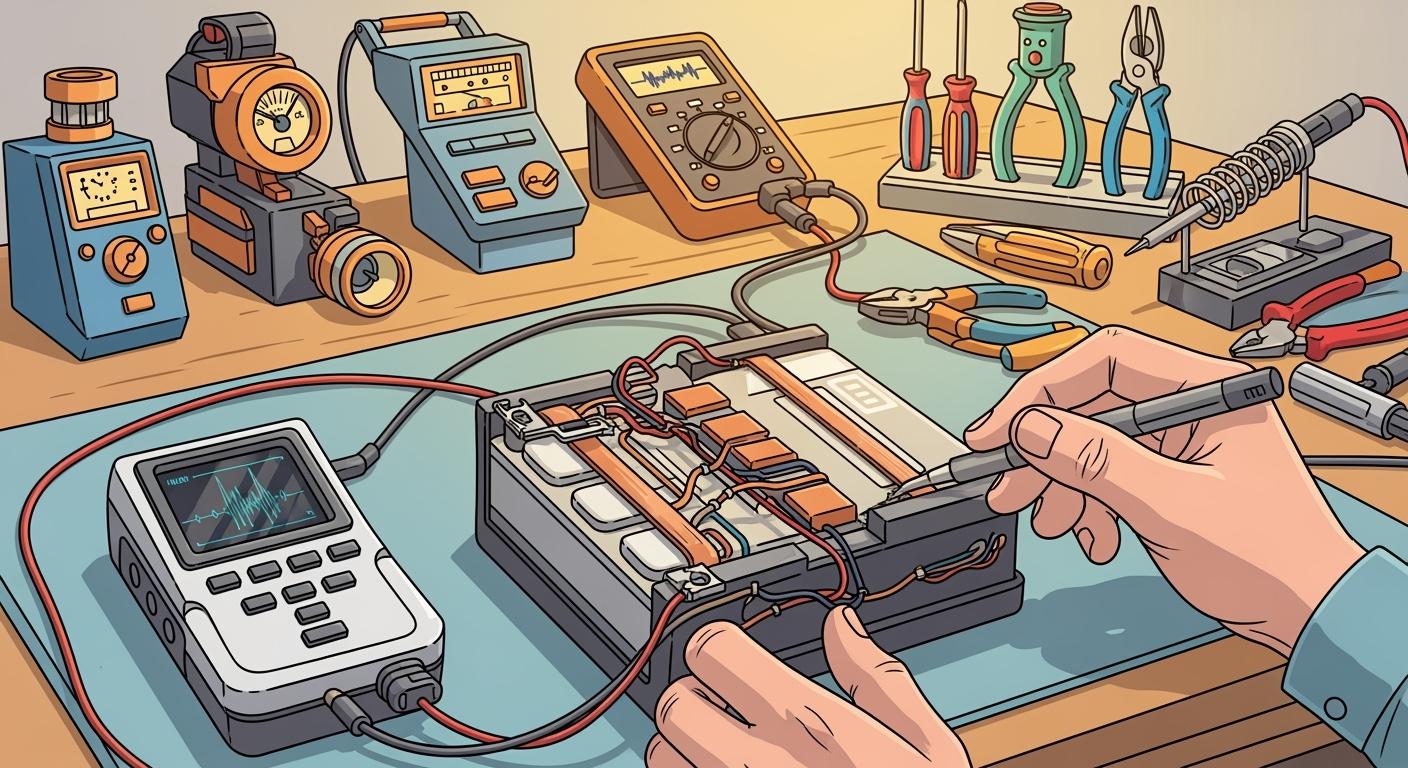
You demand precision and reliability in portable detection equipment. Custom Lithium Battery Packs deliver consistent power, extended runtime, and robust safety features. Industry leaders use tailored engineering to optimize device performance and reduce failure rates. You gain a competitive edge by integrating solutions built for your unique requirements. This approach ensures your equipment operates efficiently in challenging environments.
Key Takeaways
Custom Lithium Battery Packs enhance device performance by optimizing energy density and operational efficiency, leading to longer runtimes and reduced downtime.
Reliability in harsh environments is ensured through rigorous testing and compliance with safety standards, allowing your equipment to function effectively under extreme conditions.
Integrating tailored battery solutions gives OEMs a competitive edge, enabling faster time to market and stronger differentiation in the marketplace.
Choosing the right battery partner is crucial; evaluate their quality management practices and ensure they meet industry standards for safety and compliance.
Lifecycle support from battery suppliers maximizes reliability and performance, helping you maintain high standards in your portable detection equipment.
Part1: Custom Lithium Battery Packs Benefits

1.1 Enhanced Device Performance
You need portable detection equipment that delivers consistent results. Custom Lithium Battery Packs optimize energy density and operational efficiency, which directly improves device performance. You benefit from tailored form factors and weight distribution, making your equipment easier to handle and transport. Integrated battery management systems monitor critical parameters, protecting your devices from failures and maximizing uptime.
Advantage | Description |
|---|---|
Tailored Form-Factor & Weight | Custom designs optimize size, shape, and weight for better portability and user experience. |
Optimized Energy & Power Profile | Packs match energy capacity and power delivery to your application needs. |
Integrated Battery Management (BMS) | Enhanced safety and reliability through real-time monitoring and protection. |
Thermal Management & Robustness | Improved heat dissipation and durability for reliable performance in harsh conditions. |
Reduced Time to Market | Customization accelerates design cycles and integration with your device architecture. |
Lifecycle Optimization | Longer cycle life and lower total cost of ownership for demanding applications. |
You gain extended runtimes compared to standard battery solutions. Custom Lithium Battery Packs support long-lasting power, which is essential for accurate data capture in test and measurement equipment. You avoid frequent battery changes, allowing your team to focus on critical tasks.
Tip: Custom solutions outperform off-the-shelf batteries by providing a superior fit for your devices and supporting rugged performance in the field.
1.2 Reliability in Demanding Environments
You operate in environments where reliability is non-negotiable. Custom Lithium Battery Packs undergo rigorous environmental testing for temperature, humidity, shock, and vibration. You can trust these packs to withstand corrosive materials and extreme temperatures. Compliance with ATEX and IECEx standards ensures safety in explosive environments, while proper gas venting mechanisms prevent dangerous reactions.
Custom packs meet ISO 13485 standards for medical device manufacturing, emphasizing consistent design controls and risk management. UN 38.3 testing simulates severe transport conditions, ensuring your batteries survive environmental, mechanical, and electrical stresses.
Custom battery packs are designed to prevent damage from corrosive materials and extreme temperatures.
Compliance with ATEX and IECEx standards ensures safe operation in hazardous areas.
Gas venting mechanisms protect against dangerous reactions.
Environmental testing validates performance under temperature and humidity extremes.
Mechanical testing confirms durability against shock and vibration.
You maintain stable operation even in harsh conditions. Heat sinks, cooling systems, and thermal sensors manage temperature, preventing overheating and ensuring reliable performance. You avoid power disruptions caused by cold, overheating from high temperatures, and electrical shorts from humidity.
1.3 Competitive Edge for OEMs
You gain a distinct advantage by integrating Custom Lithium Battery Packs into your portable detection equipment. You avoid the “one size fits all” compromise, achieving a better fit with your device architecture. Tailored solutions enable stronger differentiation in the marketplace.
Higher energy density enables more efficient designs.
Faster charging reduces downtime for your users.
Longer battery life enhances product reliability.
Consistent performance meets rising demands for efficiency.
Custom design matches capacity and power to your application needs.
Improved safety and longer cycle life result from tailored engineering.
Fewer design iterations lead to faster time to market.
You position your products as industry leaders by delivering reliable, high-performance solutions. Customization allows you to respond quickly to market demands and regulatory requirements, giving you a sustainable competitive advantage.
Part2: Key Customization Options
2.1 Capacity and Size Choices
You select the capacity and physical dimensions that match your device requirements. Custom Lithium Battery Packs offer flexibility in energy storage, allowing you to optimize runtime and minimize weight. You choose from chemistries like LiFePO4, NMC, LCO, and LMO, each with distinct platform voltages, energy densities, and cycle lives. This tailored approach ensures your detection equipment operates efficiently, whether you need compact packs for handheld devices or larger modules for extended field use.
Note: Proper sizing and chemistry selection help you meet regulatory standards and maximize operational uptime.
2.2 Advanced Safety Features
You prioritize safety in every application. Custom Lithium Battery Packs integrate advanced protection systems to prevent failures and ensure compliance. Review the table below for common safety features:
Feature | Description |
|---|---|
Battery Management System | Monitors voltage, current, temperature, and state of charge. Prevents overcharging, over-discharging, and short circuits. |
Thermal Management Systems | Integrates heat sinks, cooling systems, and thermal sensors to prevent overheating. |
Protection Circuits | Includes overcurrent protection, short-circuit protection, and cell balancing mechanisms. |
Rigorous Testing & Compliance | Undergoes environmental, mechanical, and electrical safety validation to meet UL, IEC, and UN certifications. |
You benefit from IP54 to IP68 enclosure designs, low-temperature operation down to -40°C, and robust environmental testing for shock, vibration, humidity, and EMI.
2.3 Communication and Integration
You require seamless integration with your hardware and software systems. Custom Lithium Battery Packs support multiple communication protocols, ensuring compatibility and real-time monitoring. The table below highlights common options:
Protocol Type | Description |
|---|---|
SMBus 2.0 | Standard for communication with smart batteries. |
Smart Battery Protocol | Enables advanced battery management features. |
CANBus 2.0 | Robust communication for industrial applications. |
Bluetooth | Wireless monitoring and control. |
GPRS | Cellular communication for remote monitoring. |
USB | Wired connection for data transfer and management. |
Cloud-based dashboards | Remote battery status monitoring via the cloud. |
You tailor battery modules and management systems to fit your exact technical and environmental needs, ensuring optimized performance.
2.4 Environmental Adaptability
You operate in diverse and demanding environments. Custom Lithium Battery Packs feature ruggedized enclosures, heaters, cooling functions, and temperature sensors. These enhancements maintain stable operation in extreme cold, heat, humidity, and mechanical stress. You select battery systems with appropriate thermal characteristics and robust construction, ensuring reliable performance and extended cycle life.
Tip: Custom designs balance protection and airflow, delivering consistent results across climates and challenging conditions.
Part3: Choosing a Battery Partner
3.1 Evaluation Criteria
You need a battery partner who understands the demands of your industry. Start by defining your target market and use case. Select a supplier with proven process capability and long-term reliability testing. Review their quality management practices, including incoming, in-process, and outgoing quality control. Stable supply chain management is essential. Look for dual-sourcing strategies and inventory planning to avoid disruptions. Align transport and safety requirements before the pilot build. Verify supplier documents before signing volume orders.
Criteria | Description |
|---|---|
Process Capability Validation | Validate process capability through Cp/Cpk analysis and reliability testing. |
Quality Management | Ensure robust quality control procedures at every stage. |
Supply Chain Management | Confirm stable supply with dual-sourcing and inventory planning. |
Compliance Testing | Align transport and safety requirements early and verify documentation. |
Tip: Early definition of your application and clear communication with your supplier help streamline development and reduce risks.
3.2 Collaboration Process
You benefit from a structured collaboration process. Begin with an inquiry to review project requirements. Evaluate your needs and develop a tailored battery solution. Verify specifications and approve the proposed design. Receive a formal quotation and sample batteries for evaluation. After sample approval, confirm final pricing and production schedule. Your partner ships finished batteries securely.
Inquiry: Review project requirements.
Evaluation: Develop a tailored solution.
Specification Verification: Approve the design.
Quotation: Receive cost estimate.
Sample Production: Evaluate samples.
Price Verification: Confirm pricing.
Production Schedule: Plan production.
Shipment: Receive finished batteries.
Work closely with engineering teams. Clear specifications reduce costs and timelines. Quick feedback on tooling and pricing ensures efficient development. Manage changes carefully to avoid delays. Specialized design addresses environmental challenges and maximizes performance.
3.3 Quality and Compliance
You require strict quality assurance and compliance. Select suppliers who prioritize quality control throughout design and manufacturing. They must adhere to industry standards like ISO 9001, ISO 13485, TS 16949, and ISO 14001. Reliable partners invest in advanced technologies and maintain supplier qualifications aligned with your development process.
Standard | Description |
|---|---|
UN38.3 | Transport safety for lithium batteries |
IEC | International safety and performance standards |
UL | Underwriters Laboratories safety standards |
RoHS | Restriction of Hazardous Substances compliance |
Your supplier should offer comprehensive design support and after-sales service. This ensures your Custom Lithium Battery Packs meet regulatory requirements and deliver consistent performance. Overcurrent protection, overcharge protection, and thermal management systems are essential features for safety and reliability.
Note: Choosing a partner with strong compliance and quality management reduces risks and supports long-term success.
Part4: Integration Steps for OEMs
4.1 Prototyping and Testing
You start integration by developing prototypes. You use advanced modeling and simulation tools to accelerate design validation. You test mechanical form and fit with 3D printed enclosures. You confirm electrical performance to ensure the battery meets your requirements. You validate thermal management by monitoring cell temperatures. You refine battery management system (BMS) sensor placements for optimal function. You qualify vibration resistance through shaker table testing. You verify design safety using failure mode and effect analysis. You improve manufacturability by evaluating assembly processes.
Evaluation Step | Description |
|---|---|
Testing mechanical form and fit | Use 3D printed enclosures to ensure proper fit. |
Confirming electrical performance | Ensure battery meets electrical requirements. |
Validating thermal management | Check cell temperatures are maintained effectively. |
Refining BMS sensor placements | Adjust sensor placements for optimal function. |
Qualifying vibration resistance | Test durability through shaker table testing. |
Verifying design safety | Conduct failure mode and effect analysis. |
Improving manufacturability | Evaluate assembly processes for manufacturability. |
You conduct exhaustive testing, including capacity verification, DC internal resistance, pulse power characterization, efficiency mapping, thermal cycling, mechanical vibration, and abuse testing. You refine your design based on test data, often requiring two or three prototype iterations to meet performance and safety targets.
Tip: Collaborative partnerships and streamlined processes minimize delays and reduce time from design to production.
4.2 Certification and Standards
You ensure your battery packs meet mandatory certifications for market access and safety. You pursue certifications such as UN 38.3 for lithium battery shipments, UL 2054 for household and commercial batteries, UL 1973 for stationary storage, IEC 62133 for portable devices, and IEC 62619 for industrial applications.
Certification | Description |
|---|---|
UN 38.3 | Mandatory for lithium battery shipments |
UL 2054 | Household & commercial batteries |
UL 1973 | Stationary storage |
IEC 62133 | Portable devices |
IEC 62619 | Industrial applications |
You comply with global standards like IEC 62133 and FDA’s 21 CFR Part 820 for medical devices. You follow ISO 13485 for quality management and risk control. You use agency testing to ensure product safety and reliability. You achieve UL certification to enhance consumer confidence and legal compliance. Meeting these standards facilitates entry into global markets and ensures your products perform reliably.
Note: Safety certifications mitigate risks and promote recognition in regulated industries.
4.3 Lifecycle Support
You benefit from lifecycle support services offered by battery suppliers. You receive assistance with cell chemistry specification, pack design, performance feature matching, and compliance checks. You participate in design reviews and system-level validation. You access services such as cable and harness assembly, box builds, battery pack assembly, and electro-mechanical assembly.
Benefit | Description |
|---|---|
Safety | Protection circuitry and temperature monitoring enhance battery safety. |
Longevity | Durable design and thermal tolerance extend service life. |
Compliance | Integrated battery management systems help meet regulatory standards. |
Performance Optimization | Collaboration with design teams ensures performance benchmarks and reduces risk. |
You gain mass production support and technical partnership in energy innovation. You receive ongoing technical support and maintenance, including strong warranties. You ensure your custom lithium battery packs perform optimally throughout their lifecycle.
Tip: Lifecycle support maximizes reliability and reduces risk, helping you maintain high standards in your portable detection equipment.
Part5: Case Studies & Applications
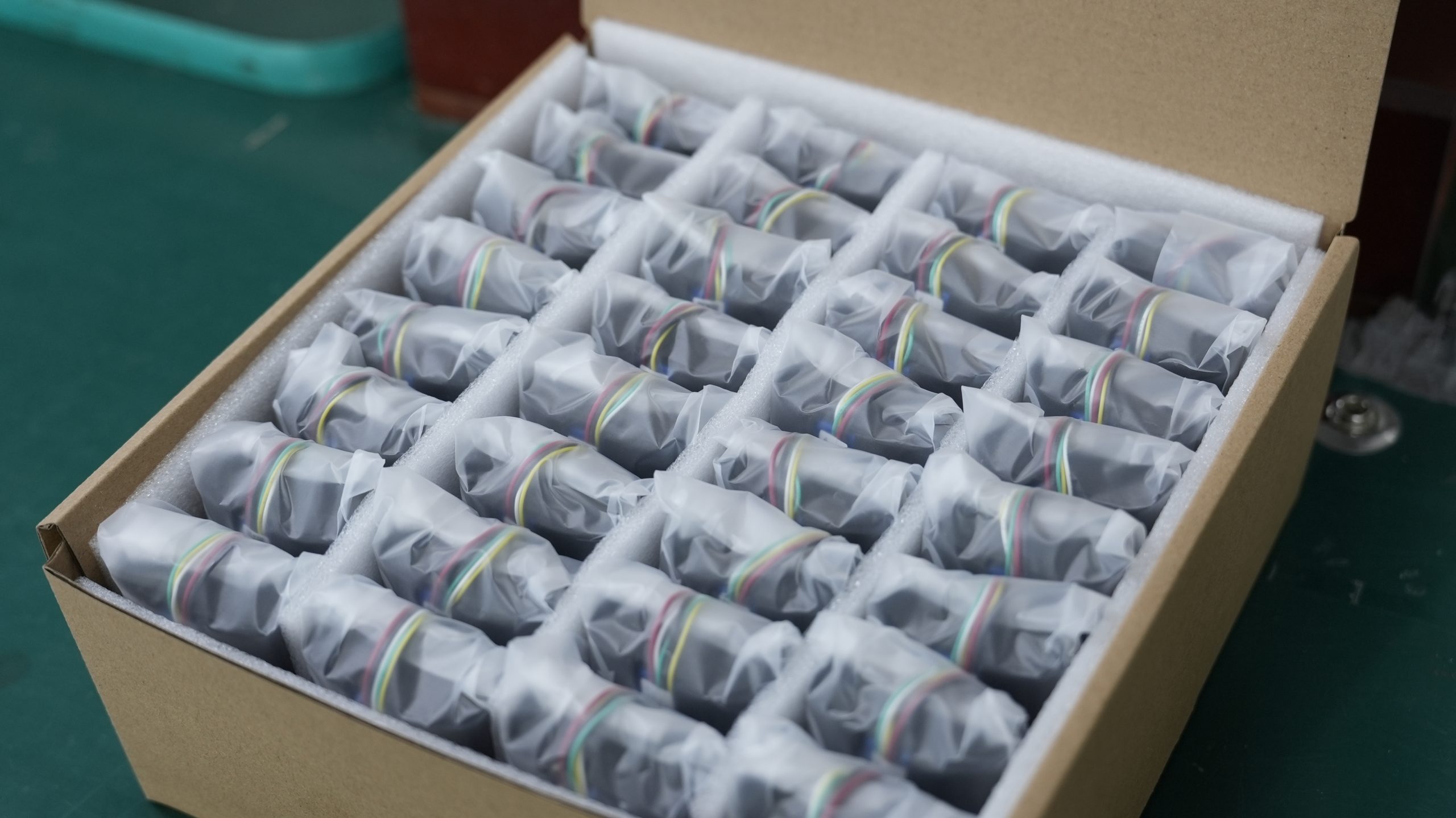
5.1 OEM Success Stories
You see real-world results when you invest in custom lithium battery packs for portable detection equipment. OEMs have transformed their products by leveraging tailored solutions. For example:
A leading OEM replaced a plug-in AC version of a portable x-ray machine with a mobile DC battery model. You gain mobility and flexibility by integrating custom lithium battery packs.
The engineering team delivered samples within six weeks to meet a critical trade show deadline. You benefit from rapid prototyping and agile development.
Collaboration between the OEM and battery supplier ensured compatibility and compliance with safety testing. You achieve seamless integration and regulatory approval.
You can showcase your devices at industry events and respond quickly to market demands. Custom lithium battery packs enable you to meet tight timelines and deliver innovative products.
Tip: Early collaboration with your battery partner accelerates development and ensures your device meets safety standards.
5.2 Lessons and Best Practices
You learn valuable lessons from OEMs who have successfully integrated custom lithium battery packs. The following best practices help you maximize performance and reliability:
Best Practice | Description |
|---|---|
Technical fit | Ensure your supplier meets voltage and energy density requirements for your application. |
Safety and validation | Choose partners with a strong track record in safety and compliance with industry standards. |
Cost and long-term roadmap | Evaluate pricing and plan for future performance improvements. |
Manufacturing footprint | Assess your supplier’s ability to deliver at scale and provide ongoing support. |
Collaboration | Engage in co-design and integration efforts for custom solutions. |
You maintain design authority throughout development. This approach guides decision-making and fosters effective collaboration. A partner with design authority offers insights and solutions beyond basic order fulfillment.
You prioritize technical fit and safety validation.
You evaluate cost and plan for future upgrades.
You assess manufacturing capabilities and support.
You engage in collaborative design for optimal results.
Note: Design authority and close collaboration with your battery supplier drive innovation and ensure your portable detection equipment stands out in the market.
You gain longer runtimes, improved reliability, and a stronger market position with custom lithium battery packs. You secure better device performance by selecting the right battery partner and following proven best practices. You address demanding environments and meet industry standards with tailored solutions. Consider consulting experts to explore custom battery options for your portable detection equipment.
Take the next step—enhance your product’s performance and reliability with a custom lithium battery pack.
FAQ
What are the main advantages of custom lithium battery packs for OEMs?
You gain longer runtimes, precise fit, and enhanced safety. Custom packs match your device’s requirements, improve reliability, and help you meet industry standards. You also reduce downtime and maintenance costs.
How do you choose the right lithium battery chemistry for your application?
You select chemistry based on platform voltage, energy density, and cycle life. The table below compares common options:
Chemistry | Platform Voltage | Energy Density (Wh/kg) | Cycle Life (cycles) |
|---|---|---|---|
LiFePO4 | 3.2V | 90–120 | 2000+ |
NMC | 3.7V | 150–220 | 1000–2000 |
LCO | 3.7V | 150–200 | 500–1000 |
LMO | 3.7V | 100–150 | 700–1500 |
What safety features should you expect in a custom lithium battery pack?
You should expect a battery management system, thermal sensors, and protection circuits. These features prevent overcharging, overheating, and short circuits. You also benefit from rigorous testing and compliance with UL, IEC, and UN standards.
How do custom battery packs support integration with your detection equipment?
You receive packs with tailored communication protocols like SMBus, CANBus, or Bluetooth. This ensures seamless data exchange and real-time monitoring. You also get custom connectors and enclosures for easy installation.
What lifecycle support can you expect from a battery partner?
You receive design reviews, compliance checks, and technical support throughout the product’s life. Your partner helps with upgrades, maintenance, and troubleshooting. This support ensures your equipment stays reliable and up to date.


