

You need to prioritize battery safety when you design or select handheld test instruments powered by lithium battery packs. Robust protection circuits, strict certification processes, and proven reliability features work together to prevent thermal runaway, overcharging, or device failure. Compliance with standards such as UL, IEC, UN38.3, and ISO 13485 ensures that your devices meet the highest expectations for safety and performance.
Key Takeaways
Prioritize battery safety by using certified lithium battery packs with robust protection circuits to prevent hazards.
Understand key certifications like UL 2054 and IEC 62133 to ensure compliance and safety in handheld devices.
Regularly inspect and maintain batteries to extend their lifespan and reduce the risk of failure.
Recognize warning signs of unsafe batteries, such as swelling or excessive heat, to prevent accidents.
Implement best practices in battery handling and storage to support reliability and operational safety.
Part1: Battery Safety Risks and Importance
1.1 Risks of Lithium Battery Packs
You face several risks when you use lithium battery packs in handheld test instruments. These risks can threaten both the device and the user. The most common risks include:
Thermal runaway: The battery can overheat and cause fires or explosions.
Overcharging: Charging the battery too much can create lithium plating, which may lead to internal short circuits.
Over-discharging: Draining the battery too much can damage it and cause short circuits when you recharge.
Mechanical damage: Dropping or hitting the battery can break its structure and trigger thermal runaway.
Release of flammable gases: High temperatures can make the battery release gases that can catch fire or explode.
You should also consider the differences between lithium battery chemistries. The table below compares the main types used in handheld test instruments:
Chemistry | Platform Voltage (V) | Energy Density (Wh/kg) | Cycle Life (cycles) | Application Scenario |
|---|---|---|---|---|
LiFePO4 | 3.2 | 90–120 | 2000–4000 | Medical analyzers, rugged tools |
NMC | 3.7 | 150–220 | 1000–2000 | Portable meters, industrial testers |
LCO | 3.7 | 150–200 | 500–1000 | Compact diagnostic devices |
LMO | 3.7 | 100–150 | 300–700 | Entry-level handheld devices |
1.2 Impact on Users and Devices
Thermal runaway can have a severe impact on handheld test instruments. When a single cell overheats due to mechanical impact or overcharging, heat can spread to nearby cells. This chain reaction can damage the device and put users at risk of burns or toxic gas exposure. Testing methods, such as heating or nail penetration, help you understand how thermal runaway affects battery systems. You can reduce these risks by integrating safety features that cut off excessive current during short circuits. For example, a safety reinforced layer interrupts current flow during overheating, which improves battery safety without lowering performance. Impact testing shows that these features can lower battery explosion rates from 63% to 10%.
You must prioritize battery safety in handheld and medical devices. Unsafe batteries can cause device failure, data loss, or even injury. Reliable battery systems protect your investment, ensure compliance with industry standards, and keep users safe in demanding environments.
Part2: Protection Circuits for Lithium Batteries
2.1 Overview of Protection Circuits
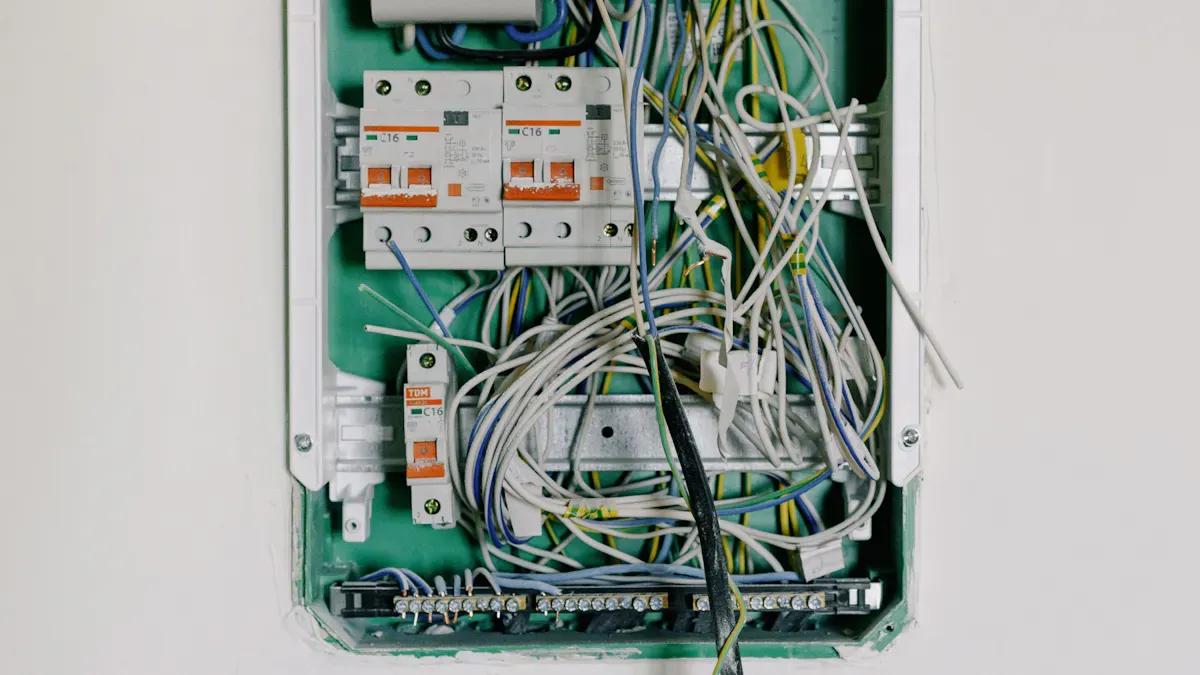
You rely on protection circuits to maintain Battery Safety in handheld test instruments. These circuits act as the first line of defense against hazards like overcharging, over-discharging, short-circuiting, and overheating. Protection circuits monitor battery conditions and respond instantly to abnormal events. You can find these circuits integrated into Battery Management Systems (BMS) and Protection Circuit Modules (PCM).
The table below summarizes the main purposes and descriptions of protection circuits:
Purpose | Description |
|---|---|
Overcharge protection | Prevents the battery from charging beyond its maximum voltage. |
Overdischarge protection | Stops the battery from discharging below its minimum voltage. |
Overcurrent and short-circuiting | Protects against excessive current flow and short circuits. |
High-temperature protection | Shuts down operations if the battery temperature exceeds safe limits. |
You see protection circuits used in medical analyzers, robotics, security systems, infrastructure monitoring, consumer electronics, and industrial testers. These circuits help you avoid costly downtime and protect users from dangerous battery failures.
2.2 Types: Overcharge, Over-Discharge, Short-Circuit, Thermal
You encounter several types of protection circuits in lithium battery packs. Each type targets a specific risk and ensures Battery Safety in demanding environments.
Protection Type | Description |
|---|---|
Overcharge Protection | Prevents the battery from exceeding its maximum charge voltage, avoiding thermal instability. |
Overdischarge Protection | Protects against discharging the battery below its safe voltage level. |
Overcurrent Protection | Limits the current flowing through the battery to prevent damage. |
Load Short-Circuit Protection | Disconnects the battery in case of a short circuit to prevent hazards. |
High-Temperature Protection | Shuts down the battery operation if temperatures exceed safe limits. |
Protection Circuit Module (PCM) | Limits maximum charge/discharge voltages and currents, ensuring safety during operation. |
You also find additional features such as:
Short circuit protection
Temperature protection
Electrostatic discharge protection
Power management
These features work together to keep lithium battery packs stable and reliable. You see their importance in medical devices, industrial testers, and security systems, where uninterrupted operation is critical.
2.3 Practical Operation in Devices
You benefit from protection circuits that operate with precision and speed. Overcharge protection uses integrated circuits to monitor cell voltage. When a cell reaches 4.25V, the system triggers a MOSFET switch to stop charging. Overdischarge protection detects low voltage, halting discharge at 2.4V to prevent battery damage. PTC thermistors monitor temperature and reduce current flow if overheating occurs.
Short-circuit and thermal protection circuits keep voltage and current within safe limits. If a short circuit happens, the circuit disconnects the battery, minimizing fire hazards and extending battery life. The following steps show how these circuits function:
Voltage monitoring: Integrated circuits track each cell’s voltage.
Threshold detection: The system signals a cutoff when a cell hits 4.25V.
Delay check: Blind-time delay prevents false alarms.
Cut off charge: MOSFETs open to stop current flow.
Fuse protection: If MOSFETs fail, the fuse blows to protect the battery.
Adaptive balancing: The system balances cells, preventing overcharge in any single cell.
You must integrate protection circuits carefully in handheld test instruments. Keep integrated circuits in their original protective packaging. Discharge electrostatic sources before handling sensitive electronics. Use a static-dissipative workbench and a conductive wrist strap for ESD-safe handling. Test instruments must be rated for the circuits and environments where you use them. Conduct visual inspections for defects before each use.
You see these practices applied in medical analyzers, robotics, and industrial testers. Reliable protection circuits ensure Battery Safety, reduce risk, and support compliance with industry standards.
Part3: Battery Safety Certifications and Standards
3.1 Key Certifications: UL 2054, IEC 62133, UN38.3, ISO 13485
You must understand the main certifications that govern lithium battery packs in handheld test instruments. These certifications set strict requirements for safety, performance, and reliability. Each standard addresses different aspects of Battery Safety and market access.
Certification | Scope | Main Focus | Application Scenario |
|---|---|---|---|
UL 2054 | United States | Safety of household and commercial battery packs | Industrial testers, medical analyzers |
IEC 62133 | International | Safety requirements for portable sealed secondary cells and batteries | Portable meters, security systems |
UN38.3 | Global (Transport) | Safe transport of lithium batteries by air, sea, and land | All lithium battery shipments |
ISO 13485 | International | Quality management for medical devices | Medical analyzers, diagnostic devices |
UL 2054 covers electrical, mechanical, and environmental safety. IEC 62133 focuses on rechargeable lithium cells, including LiFePO4, NMC, LCO, and LMO chemistries. UN38.3 ensures batteries can withstand vibration, shock, and extreme temperatures during transport. ISO 13485 requires manufacturers to maintain quality systems for medical device batteries.
You see these certifications as essential for entering regulated markets and protecting users. For example, medical analyzers with ISO 13485-certified battery packs meet hospital procurement standards. Industrial testers with UL 2054 and IEC 62133 certification can be sold in North America and Europe.
3.2 Certification Process and Compliance
You must follow a structured process to certify lithium battery packs. The process includes product testing, documentation, and audits. Certification bodies test batteries for electrical safety, mechanical integrity, and environmental resistance. You must submit technical files, test reports, and quality management documents.
Manufacturers often face compliance challenges during certification. The table below summarizes the most common issues:
Compliance Challenge | Description |
|---|---|
Understanding Regulations | Manufacturers struggle to determine whether a Powerbank is classified as a battery or a battery-powered device, which affects compliance with different regulations. |
Transportation Regulations | Lithium-ion batteries are regulated as dangerous goods, requiring adherence to specific UN codes, which complicates shipping and compliance. |
Testing and Packaging | Compliance with testing standards and packaging requirements varies based on the type of battery and its configuration, leading to potential confusion. |
Safety Standards | Electrical safety standards may not adequately cover all aspects of battery safety, particularly for devices that charge other devices, creating compliance gaps. |
You must address these challenges early in the design phase. You should consult with certification experts and testing labs to clarify requirements. You also need to consider ethical sourcing and supply chain transparency. For more information on responsible sourcing, review the conflict minerals statement.
Certification provides more than market access. It reduces liability and supports risk management. Certified battery packs help you avoid recalls, fines, and reputational damage. You also gain trust from customers who demand safe and reliable products.
3.3 Verifying Certification for Handheld Devices
You must verify the authenticity of battery safety certifications before purchasing or integrating lithium battery packs. Use the following steps to confirm compliance:
Conduct document verification before placing a purchase order.
Match the product model to the certification report.
Confirm that the testing lab’s accreditation is current and relevant to the standard.
Ask for the certificate number and verify it with the issuing body.
Look for certification marks on the battery or packaging (such as ‘UL Listed 1642’).
Ensure the seller provides documentation or specifies the applicable standard.
Always request complete documentation, including certificates and test data.
If a product claims ‘UL-certified’, confirm the specific UL standard it meets.
Avoid suppliers who are reluctant to share certification details.
You should follow these steps for every batch of handheld test instruments. This process protects your business from counterfeit or non-compliant products. It also ensures that your devices meet the highest standards for Battery Safety and reliability.
Part4: Reliability and Maintenance
4.1 Factors Affecting Battery Reliability
You depend on reliable lithium battery packs to keep handheld test instruments running in demanding environments. Devices such as acoustic monitors, thermal imagers, and alignment systems require stable power output for accurate readings. The reliability of these batteries depends on several factors, including design, quality, and maintenance. The table below highlights the most significant factors:
Factor | Description |
|---|---|
Stable power output | Supports repeatable and accurate hardness readings |
Compact form factor | Slim and lightweight for truly portable operation |
Extended runtime | Often 6–8 hours for a full shift of testing |
Safety & durability | Protection against over-charge, over-discharge, short-circuit, and thermal events |
Wide-temperature reliability | Performance stability for outdoor or harsh industrial sites |
Batteries, especially lithium-ion types like LiFePO4, NMC, LCO, and LMO, store energy efficiently in compact spaces. This efficiency increases risks if you do not test and maintain them properly.
4.2 Manufacturer Best Practices
You improve battery reliability by following best practices during manufacturing. Quality control measures, such as overcharge, thermal abuse, short circuit, and cell imbalance tests, help prevent failures. The table below compares key safety tests and their impact:
Safety Test Type | Impact on Battery Safety Outcomes |
|---|---|
Overcharge | Prevents thermal runaway and potential fires |
Thermal Abuse | Ensures stability under extreme temperatures |
Short Circuit | Identifies design weaknesses that could lead to internal failures |
Cell Imbalance | Highlights the need for quality control to prevent degradation |
4.3 User Maintenance Tips
You maximize battery lifespan and safety by following practical maintenance tips:
Charge lithium batteries to about 80% instead of 100% to prolong life.
Take devices off power immediately after reaching full charge.
Store batteries in a temperature range of 50° to 95° Fahrenheit.
Replace batteries when runtime drops below 80% of the original.
Handle batteries with care to prevent punctures or damage.
Avoid deep cycling; partial charges are safer and extend battery life.
Alert employees when batteries run low to prevent damage.
Track temperatures on cells to ensure safe operation.
Regular maintenance reduces the risk of battery failure and operational disruptions. In mission-critical applications, proactive care ensures reliable performance and protects your investment.
You support Battery Safety and device reliability by combining robust design, quality manufacturing, and consistent maintenance.
Part5: Common Battery Safety Issues
5.1 Warning Signs of Unsafe Batteries
You need to recognize the early warning signs of unsafe lithium batteries in handheld test instruments. Quick identification helps you prevent accidents and maintain operational safety. Watch for these common indicators:
Visible smoke or a burning odor signals immediate danger of fire.
A swollen battery pack often means internal pressure has increased.
Excessive heat from the device can point to a failing cell.
Cracked or deformed battery cases show physical damage.
Unusual hissing or popping sounds may indicate gas release or internal short circuits.
If you notice any of these signs, stop using the device right away. Move it to a safe, well-ventilated area and alert your safety team.
5.2 Steps for Issue Resolution
You can address battery safety problems by following a clear process. Start with a visual inspection. Check for swelling, cracks, or leaks. Use insulated gloves and tools to handle suspect batteries. Do not attempt to recharge or use damaged lithium battery packs.
Take these steps to resolve issues:
Isolate the device from other equipment.
Remove the battery if it is safe to do so.
Store the battery in a fireproof container.
Contact your battery supplier or manufacturer for guidance.
Arrange for certified disposal or recycling.
Tip: Always document battery incidents and share findings with your quality and safety teams. This practice helps you improve future Battery Safety protocols.
You support a safe work environment by acting quickly and following best practices. Regular training and clear procedures reduce risks and protect both users and equipment.
You ensure Battery Safety in handheld test instruments by following key steps.
Use certified lithium battery packs with robust protection circuits.
Verify compliance with UL 2054, IEC 62133, UN38.3, and ISO 13485.
Maintain batteries with regular inspections and proper handling.
Prioritize certified, safe battery solutions to protect your business and users. Reliable batteries support long-term performance in demanding environments.
FAQ
What certifications should you require for lithium battery packs in handheld test instruments?
You should require UL 2054, IEC 62133, UN38.3, and ISO 13485 certifications. These standards ensure electrical, mechanical, and transport safety. They also support compliance for medical and industrial applications.
How do protection circuits improve battery safety?
Protection circuits monitor voltage, current, and temperature. They prevent overcharge, over-discharge, short-circuit, and overheating. You reduce risks of fire, explosion, and device failure by using these circuits.
Which lithium battery chemistry is best for rugged handheld devices?
LiFePO4 offers platform voltage of 3.2V, energy density of 90–120 Wh/kg, and cycle life of 2000–4000 cycles. You benefit from high durability and safety in medical analyzers and industrial testers.
What maintenance steps help you extend battery life?
You should charge batteries to 80%, avoid deep cycling, and store them between 50°–95°F. Regular inspections and prompt replacement of degraded packs maximize reliability and safety.
How can you verify battery certification before purchase?
Check certification documents, match product models, and confirm lab accreditation. Request certificate numbers and verify with issuing bodies. Always ask for complete documentation and avoid suppliers who refuse to share details.


