


You can boost the efficiency of your industrial inspection tools with affordable Battery Upgrades. Evaluating lithium-ion chemistries like LiFePO4, NMC, LCO, and LMO helps you find the best fit for your equipment. Upgrading batteries extends tool lifespan, improves reliability, and lowers operational costs. Consider battery diagnosis and automation to maximize performance and reduce downtime.
Key Takeaways
Evaluate battery types like lithium-ion and lead-acid to find the best fit for your inspection tools. Lithium batteries often provide better performance and longer life.
Consider custom battery solutions if off-the-shelf options do not meet your tool’s specifications. Custom packs can enhance reliability and efficiency.
Check compatibility before upgrading batteries. Ensure the new battery matches your tool’s voltage, size, and management system requirements.
Invest in lithium battery upgrades for long-term savings. Although initial costs are higher, they lead to fewer replacements and lower maintenance expenses.
Utilize automation for battery inspection to improve quality control. Automated systems can detect defects early, reducing waste and enhancing reliability.
Part1: Affordable Battery Upgrades
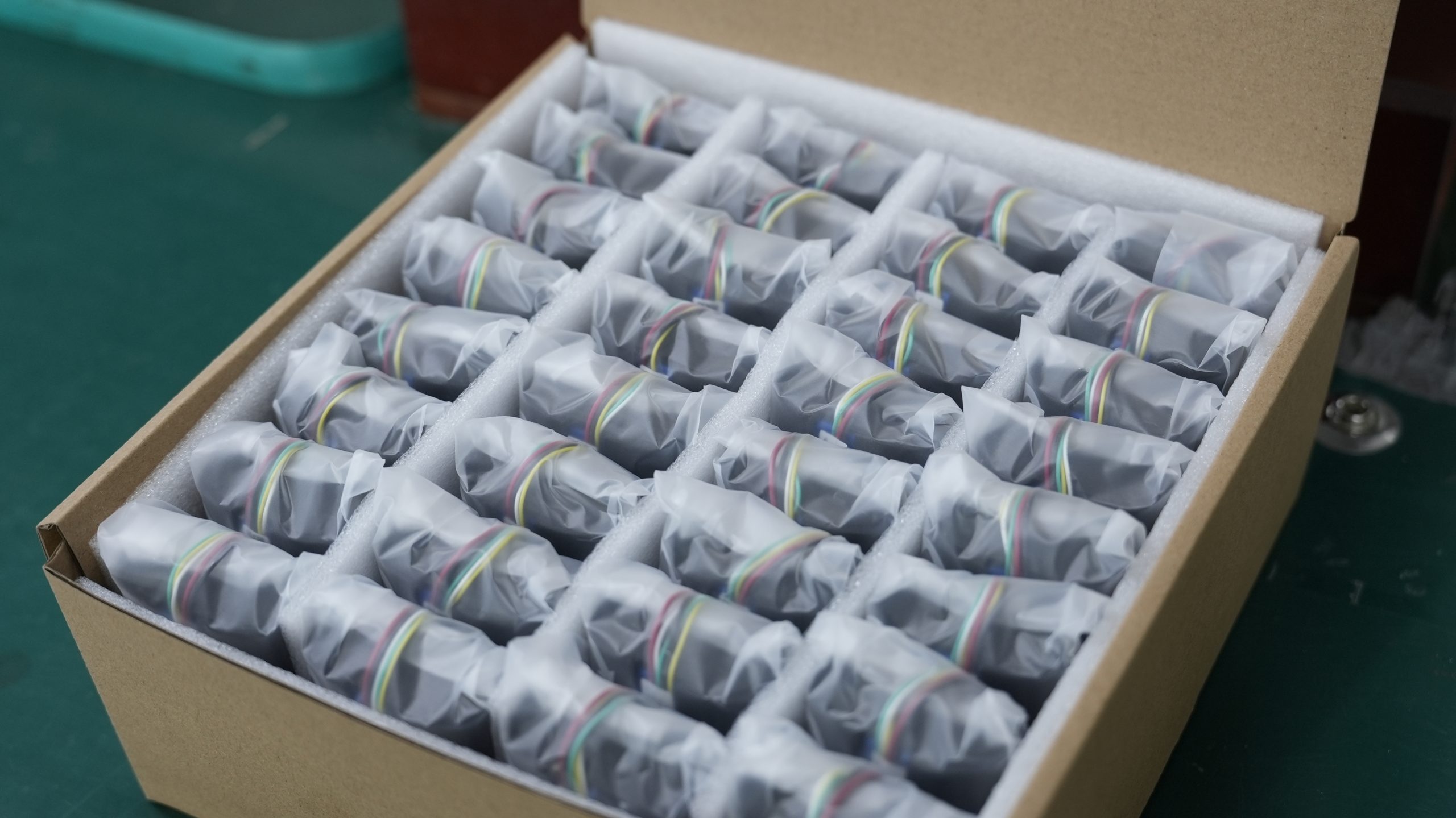
1.1 Battery Types for Inspection Tools
You have several battery options for industrial inspection tools. The most common types include:
Lithium-ion batteries (LiFePO4, NMC, LCO, LMO): These batteries power many tools in medical, robotics, security, infrastructure, consumer electronics, and industrial sectors. They offer high energy density and long cycle life.
Lead-acid batteries: Many SMEs use these batteries because they are reliable and cost-effective. They remain popular for quality control equipment and backup power.
Solid-state batteries: These are newer and provide higher energy density and safety. Their use is growing, but they are not yet widespread in SME applications.
Other types: Nickel-metal hydride, sodium-ion, and flow batteries serve niche or specialized needs.
Tip: You should choose a battery type based on your tool’s energy needs, size, and operating environment.
1.2 Lithium-Ion vs. Lead-Acid
You need to compare lithium-ion and lead-acid batteries to make the best choice for your inspection tools. The table below highlights key differences:
Feature | Lithium-Ion (LiFePO4, NMC, LCO, LMO) | Lead-Acid |
|---|---|---|
Energy Density | 120–260 Wh/kg | 30–50 Wh/kg |
Cycle Life | 1,000–3,000+ cycles | 300–500 cycles |
Maintenance | Low (BMS manages health) | High (check electrolyte, clean terminals) |
Weight | Light | Heavy |
Safety | Varies by chemistry; LiFePO4 is safest | Mature, stable, but risk of acid leaks |
Environmental Impact | Cobalt mining, recycling challenges | Highly recyclable, but contains toxic lead |
Cost | Higher upfront, lower lifetime cost | Lower upfront, higher replacement cost |
Lithium-ion batteries, especially LiFePO4, provide higher energy density and longer runtimes. You get lighter tools, which helps in robotics, medical, and security applications. Lead-acid batteries cost less at first, but you will replace them more often. They also need regular maintenance, such as checking electrolyte levels and cleaning connections.
You must consider safety. Some lithium chemistries, like LCO, can overheat if damaged. LiFePO4 offers better thermal stability, which reduces fire risk. Lead-acid batteries are stable but can leak acid if mishandled.
Note: Lithium-ion batteries require less maintenance because of built-in battery management systems. Lead-acid batteries need frequent checks to prevent failure.
1.3 Custom Replacement Solutions
You may find that off-the-shelf batteries do not fit your unique inspection tools. Custom replacement solutions can solve this problem. You can work with battery suppliers to design packs that match your voltage, size, and runtime needs. Custom lithium battery packs are common in advanced industrial, medical, and infrastructure tools. These packs can use chemistries like NMC for high energy or LiFePO4 for safety.
Custom solutions often cost more upfront, but they deliver better performance and reliability. You can extend tool life and reduce downtime with the right custom pack. You should also consider the environmental impact. Custom lithium packs may use less cobalt or recycled materials, which helps meet sustainability goals.
Battery Upgrades tailored to your equipment can give you a competitive edge in quality control and automation.
Part2: Compatibility and Selection
2.1 Assessing Tool Compatibility
You must check if your inspection tools support lithium battery packs before you upgrade. Start by reviewing the tool’s voltage and current requirements. Most tools in medical, robotics, security, infrastructure, and industrial sectors use voltages between 3.2V and 48V. LiFePO4, NMC, LCO, and LMO chemistries offer different voltage profiles. You should match the battery voltage to your tool’s input range. Look at the physical space inside the tool. Measure the compartment and compare it to the battery dimensions. If your tool uses a battery management system (BMS), confirm that it supports the new chemistry.
Tip: Contact your tool manufacturer or supplier for compatibility charts. This helps you avoid costly mistakes.
2.2 Key Specs to Consider
You need to focus on several technical specifications when selecting a battery. Energy density determines how long your tool runs between charges. LiFePO4 batteries provide 120–160 Wh/kg, NMC offers up to 260 Wh/kg, and LCO delivers around 150 Wh/kg. Cycle life affects how often you replace batteries. LiFePO4 can reach 3,000 cycles, NMC and LMO range from 1,000 to 2,000 cycles. Capacity (Ah), discharge rate (C-rate), and operating temperature are also important. Use the table below to compare specs:
Chemistry | Voltage (V) | Energy Density (Wh/kg) | Cycle Life |
|---|---|---|---|
LiFePO4 | 3.2 | 120–160 | 3,000 |
NMC | 3.7 | 180–260 | 1,000–2,000 |
LCO | 3.7 | 150 | 1,000 |
LMO | 4.0 | 100–150 | 1,000–2,000 |
Note: Higher energy density means longer runtime. More cycles mean fewer replacements.
2.3 Avoiding Common Pitfalls
You can avoid common mistakes by following a checklist. Do not mismatch voltage or chemistry. Always verify the battery’s physical size and connector type. Check if your tool’s BMS supports the new battery. Avoid using batteries with lower cycle life in high-use environments. Do not ignore safety certifications. Look for UL, CE, or IEC marks. Test the battery in a controlled setting before full deployment.
Review technical specs and compatibility.
Confirm certifications and safety standards.
Test before scaling up.
Battery Upgrades improve tool performance and reliability when you select the right pack. You reduce downtime and extend the life of your inspection equipment.
Part3: Benefits of Battery Upgrades
3.1 Lifecycle Extension
You can extend the lifecycle of your inspection tools by upgrading to lithium battery packs. LiFePO4, NMC, LCO, and LMO chemistries deliver cycle lives from 1,000 to 3,000 cycles. Medical devices and robotics systems benefit from fewer replacements and longer service intervals. Security and infrastructure tools operate more reliably when you use batteries with higher energy density and stable voltage profiles. You reduce the frequency of battery changes, which lowers maintenance costs and minimizes downtime.
Note: Longer battery life means your equipment stays in service for more years. You avoid disruptions in industrial and consumer electronics applications.
3.2 Reliability and Performance
You improve reliability and performance when you choose lithium battery packs. LiFePO4 batteries offer stable voltage and thermal safety, which is critical for medical and security tools. NMC and LCO chemistries provide high energy density, supporting robotics and industrial applications that require extended runtimes. You experience fewer failures and consistent power delivery. Battery Upgrades help you maintain quality control in infrastructure and consumer electronics sectors.
Stable voltage output supports sensitive equipment.
High energy density enables longer operation between charges.
Thermal safety reduces risk in demanding environments.
3.3 Cost Savings for SMEs
You achieve cost savings by investing in lithium battery upgrades. Although the upfront cost is higher, you spend less over time due to fewer replacements and reduced maintenance. Industrial and infrastructure companies save money by avoiding frequent battery purchases. Medical and robotics firms benefit from lower operational costs and improved tool reliability. You can allocate resources to other business needs instead of ongoing battery expenses.
Benefit | Impact on SMEs |
|---|---|
Fewer replacements | Lower long-term costs |
Reduced maintenance | Less labor and downtime |
Improved reliability | Higher productivity |
Tip: Battery Upgrades offer measurable savings and performance improvements across medical, robotics, security, infrastructure, consumer electronics, and industrial sectors.
Part4: Technical Considerations
4.1 Choosing the Right Battery
You need to select a battery that matches your inspection tool’s voltage, energy density, and cycle life requirements. For most industrial, medical, robotics, and infrastructure tools, lithium battery packs—such as LiFePO4, NMC, LCO, and LMO—offer the best balance of performance and reliability. LiFePO4 provides stable voltage (3.2V), high safety, and up to 3,000 cycles. NMC delivers higher energy density (up to 260 Wh/kg) for longer runtimes. Always check your tool’s specifications and confirm the battery fits both physically and electrically. Custom packs can address unique needs, but you should verify compatibility with your tool’s battery management system (BMS).
Tip: Consult your equipment manual or supplier for recommended chemistries and pack sizes.
4.2 Safety and Installation
You must follow strict safety protocols when installing lithium battery packs in industrial inspection tools. Use this checklist to reduce risks:
Install batteries in well-ventilated areas to prevent gas buildup.
Keep batteries away from heat sources and direct sunlight.
Allow space for air circulation around the battery.
Inspect terminals and connectors for corrosion before installation.
Use chargers compatible with your battery type to avoid overcharging.
Follow IEC 62133 and UL 1973 standards for safety compliance.
Monitor temperature with thermal sensors and act quickly if overheating occurs.
Note: Proper installation and adherence to safety standards protect your staff and equipment from hazards.
4.3 Maintenance and Diagnosis
Regular maintenance and diagnosis keep your lithium battery packs reliable and extend their service life. You should:
Inspect batteries for swelling, leaks, or damage.
Monitor voltage and temperature during operation.
Replace batteries that show reduced performance.
Use a BMS for real-time monitoring and early fault detection.
Routine checks help you spot minor issues before they cause downtime or safety incidents. This approach improves operational uptime and reduces unnecessary replacements. You save money and maintain productivity across medical, robotics, security, infrastructure, and industrial applications.
Routine battery testing and diagnosis support long-term reliability and cost savings for your business.
Part5: Automation and Quality Control
5.1 Automated Battery Inspection
You can improve quality control for lithium battery packs by using automated inspection systems. Modern ultrasonic NDT (Non-Destructive Testing) technologies use high-frequency sound waves to detect internal defects in battery cells. These systems now include AI-enhanced imaging and portable handheld devices, which allow you to perform real-time inspections on the production floor. The market for these solutions is growing, especially in regions like Asia-Pacific, where battery manufacturing is concentrated. The table below summarizes the latest advancements:
Aspect | Details |
|---|---|
Technology | Ultrasonic NDT with high-frequency sound waves |
Market Size | USD 582 million (2024), projected USD 880 million (2031) |
Growth Rate | 6.2% CAGR |
Key Innovations | AI imaging, portable real-time inspection devices |
Demand Drivers | Quality assurance in battery production, especially for EVs |
Key Players | Olympus Corporation, Baker Hughes |
Regional Insights | Asia-Pacific leads adoption, driven by China’s battery production |
You can use these tools to inspect LiFePO4, NMC, LCO, and LMO battery packs in medical, robotics, security, infrastructure, and industrial applications.
5.2 Reducing Quality Issues
Automation helps you reduce quality issues during battery pack assembly. Real-time assessment allows you to detect defects immediately, which minimizes material waste and prevents costly rework. Automated systems can halt production as soon as they find a problem, so your team can focus on value-added tasks. The shift from traditional end-of-line checks to step-by-step evaluation improves reliability for lithium battery packs. The table below shows how automation impacts quality:
Description | Impact on Quality Issues |
|---|---|
Real-time assembly assessment | Immediate defect detection, less rework, reduced waste |
Production halt on defect | Prevents costly rework, focuses labor on value-added tasks |
Step-by-step evaluation during assembly | Improves reliability, finds defects early |
You can achieve higher product reliability in all sectors, including medical, robotics, and industrial.
5.3 Cost Impact of Automation
You may face high initial costs when you implement automation for battery inspection and quality control. This can be a challenge for smaller manufacturers. However, cloud-based AI inspection platforms now offer scalable and cost-effective solutions. These platforms help you manage costs while improving quality. The growing demand for electric vehicles also drives adoption, making automation more accessible for SMEs. Over time, you can expect reduced labor costs, fewer defects, and better resource allocation in your battery production process.
Tip: Investing in automation can help you stay competitive and meet the rising quality standards in lithium battery pack manufacturing.
Part6: Sourcing and Integration
6.1 Finding Quality Suppliers
You need to select reliable suppliers when sourcing lithium battery packs for your inspection tools. Look for companies with proven experience in LiFePO4, NMC, LCO, and LMO chemistries. Check supplier certifications, such as ISO 9001 and IEC 62133. Review their track record in industries like medical, robotics, security, infrastructure, consumer electronics, and industrial. Ask for technical data sheets that show voltage, energy density, and cycle life. Compare these specs to your tool requirements.
Tip: Request sample packs and test them in your equipment before making bulk purchases.
Supplier Criteria | Why It Matters |
|---|---|
Certifications | Ensures safety and quality |
Technical Support | Helps with integration |
Industry Experience | Reduces risk of incompatibility |
6.2 Integrating New Batteries
You must follow a clear process when integrating new lithium battery packs. Start by reviewing your tool’s voltage and current requirements. Match the battery chemistry—LiFePO4 (3.2V), NMC (3.6-3.7V), LCO (3.7V), or LMO (4.0V)—to your equipment. Check the physical fit and connector type. Install the battery according to manufacturer guidelines. Use a battery management system (BMS) for real-time monitoring. Test the tool after installation to confirm stable operation.
Review voltage and energy density specs.
Confirm physical compatibility.
Use BMS for monitoring.
Note: Proper integration prevents downtime and extends tool life.
6.3 Working with Service Providers
You can partner with service providers to streamline battery upgrades. Choose firms that specialize in lithium battery pack integration for medical, robotics, security, infrastructure, consumer electronics, and industrial tools. Service providers offer installation, maintenance, and diagnostic support. They help you comply with safety standards and optimize battery performance. Ask for references and case studies to verify their expertise.
Installation and maintenance support
Diagnostic services for early fault detection
Compliance with industry standards
🚀 Partnering with experts ensures reliable upgrades and maximizes your investment in lithium battery technology.
Part7: Case Studies

7.1 SME Success Stories
You can learn from other SMEs that have upgraded to lithium battery packs. Many companies in the robotics and industrial sectors switched from lead-acid to LiFePO4 batteries. They saw longer tool runtimes and fewer battery replacements. One robotics firm replaced all lead-acid packs with NMC batteries in their inspection robots. The result was a 40% increase in daily operational hours.
A medical device manufacturer chose custom LCO battery packs for portable diagnostic tools. This upgrade improved reliability and reduced emergency maintenance calls. In the security industry, a company integrated LMO batteries into their surveillance equipment. They reported stable performance during long shifts and fewer power failures.
Tip: You can ask suppliers for references or case studies before making your decision.
7.2 Measurable Results
You should look for measurable results when you invest in battery upgrades. The table below shows typical improvements after switching to lithium battery packs:
Metric | Before Upgrade (Lead-Acid) | After Upgrade (LiFePO4/NMC/LCO/LMO) |
|---|---|---|
Cycle Life | 300–500 cycles | 1,000–3,000 cycles |
Tool Runtime | 4–6 hours | 8–12 hours |
Maintenance Intervals | Monthly | Quarterly or less |
Failure Rate | 5% per year | 1% per year |
You can see that lithium battery packs deliver longer runtimes and reduce maintenance needs. You also lower your failure rates. These results apply to medical, robotics, security, infrastructure, and industrial tools.
Note: Tracking these metrics helps you measure the return on your battery investment.
You gain improved energy density, longer cycle life, and faster charging when you choose cost-effective Battery Upgrades for your inspection tools. Lithium battery packs like LiFePO4, NMC, LCO, and LMO deliver reliable performance in medical, robotics, security, infrastructure, consumer electronics, and industrial sectors. Lead-acid batteries remain a practical option for budget-focused SMEs. You achieve greater reliability and safety by selecting compatible batteries from quality suppliers. Automation and predictive maintenance can reduce maintenance costs by up to 50% and improve equipment reliability. Explore sustainability and conflict minerals practices to support responsible sourcing. Evaluate your battery needs and upgrade your inspection tools for long-term savings.
FAQ
What lithium battery chemistry suits industrial inspection tools best?
You should choose LiFePO4 for safety and long cycle life. NMC offers higher energy density for longer runtimes. Both chemistries work well in medical, robotics, security, infrastructure, and industrial applications.
How do I verify battery compatibility with my inspection tool?
Check your tool’s voltage and current requirements. Match the battery chemistry (LiFePO4, NMC, LCO, LMO) and physical size. Review your tool’s battery management system for support. Contact your supplier for compatibility charts.
What maintenance steps extend lithium battery pack lifespan?
Inspect batteries regularly for swelling or leaks. Monitor voltage and temperature during operation. Replace batteries showing reduced performance. Use a battery management system for real-time monitoring and early fault detection.
Can automation improve battery quality control for SMEs?
Automation enables real-time defect detection during battery assembly. You reduce material waste and minimize rework. Automated inspection systems help you maintain high reliability in medical, robotics, and industrial sectors.
What are the cost benefits of upgrading to lithium battery packs?
You spend less on replacements and maintenance. Lithium battery packs deliver longer runtimes and higher reliability. You allocate resources to other business needs instead of frequent battery purchases.


