

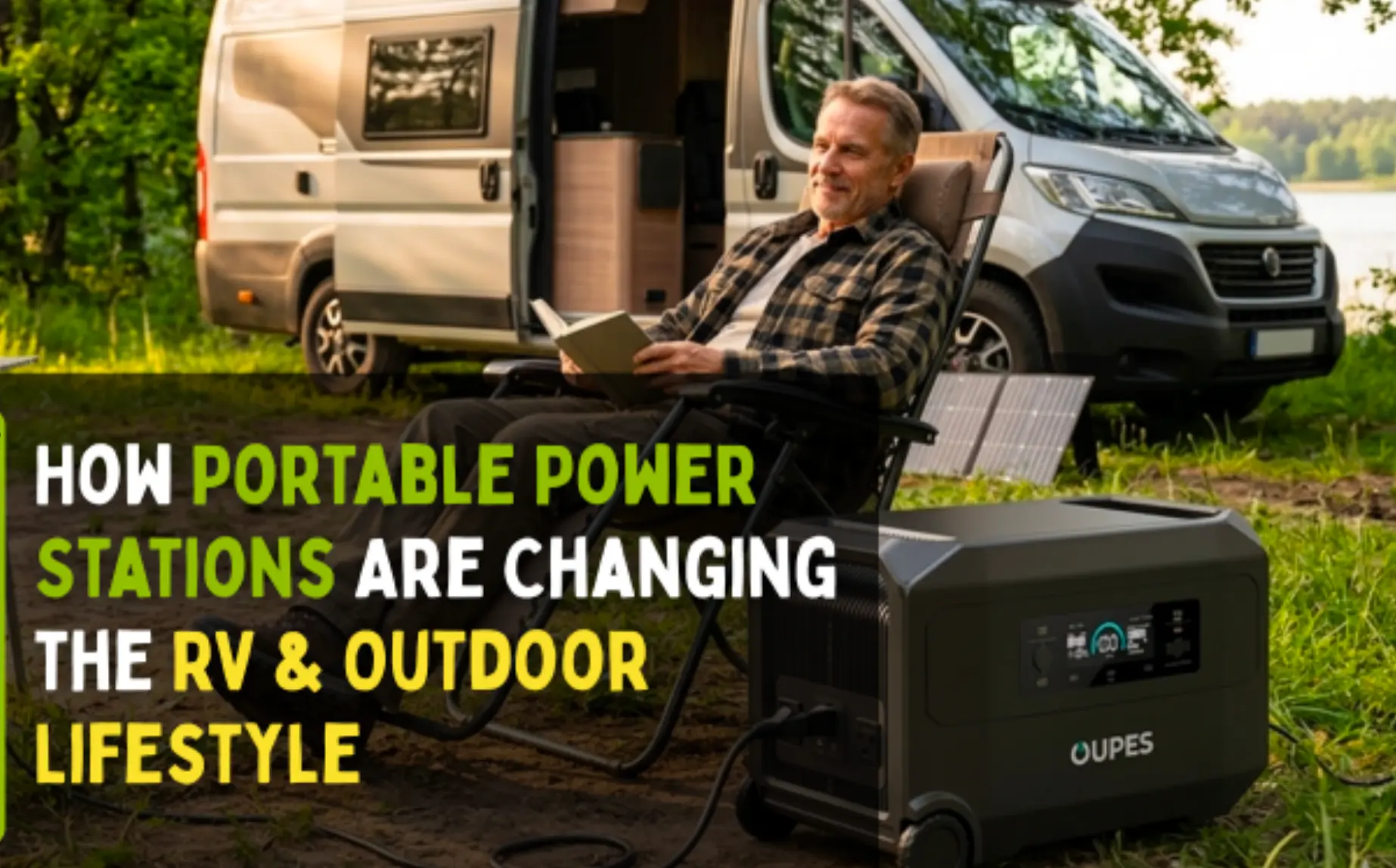
Something shifted in the way people travel, and it didn’t happen quietly. Full time RVers, weekend overlanders, and serious campers have traded noisy, unreliable gas generators for something far more capable: a portable power station that runs the fridge, charges the laptops, powers the lights, and never once interrupts the silence of a desert sunrise. No fumes. No pull starts. No apologies to your campground neighbors.
Brands like Oupes are making that shift easier than ever by delivering LiFePO4 battery technology, high wattage solar input, and the dependable output that turns a parked RV into a fully functional off-grid home. Whether you’re boondocking across Utah, running a work-from-the-road setup in your conversion van, or chasing real energy independence on your next outdoor adventure, the right portable power station doesn’t just support that lifestyle. It unlocks it entirely. This is what modern outdoor freedom actually looks like.
Part1: Gas Generators Had a Good Run. That Run Is Over.
For decades, the gas generator was the go to solution for RV power. Pull the cord, fire it up, and deal with the consequences. And there were always consequences.
The noise was the first problem. Most campgrounds enforce quiet hours for a reason, and a 70 decibel generator at 9 PM earns you the kind of looks you don’t want from your neighbors. Then there’s the carbon monoxide risk. Running a gas generator too close to an open window, or inside a partially enclosed space, has sent people to the hospital. It still does.
And the maintenance. Oil changes, spark plugs, stale fuel sitting in the carburetor through a six month winter. Gas generators aren’t just loud, they’re needy. They demand attention before every trip and punish you when they don’t get it.
Here’s the thing. That whole setup made sense when battery technology wasn’t good enough to replace it. That’s not the case anymore. The shift to clean, silent, rechargeable power isn’t coming. It’s already here.
Part2: What a Portable Power Station Actually Does for RV Life
The best way to understand what a portable power station changes is to look at a real day in an RV without shore power.
You wake up. The 12V residential fridge has been running overnight. Your CPAP machine completed a full eight hours. The phones are charged, the LED lights run on a timer, and your laptop has enough battery to get through a full morning of work. You haven’t touched a generator. You haven’t burned a drop of fuel. And nobody at the campsite heard a sound all night.
That’s boondocking in 2026, and it’s genuinely different from what it used to be.
A quality portable power station with 1,000 to 2,000 watt hours of LiFePO4 capacity handles all of that without breaking a sweat. Pair it with a 200 to 400 watt solar panel setup, and you’re recharging through the day while you’re out on the trail. By evening, you’re back to full capacity.
The math is straightforward. A 12V fridge draws roughly 40 to 60 watts on average. A CPAP runs 30 to 60 watts, depending on the pressure settings. LED lighting across an RV pulls another 30 to 50 watts. A 1,000Wh station handles all those loads through the night with room to spare. A 2,000Wh unit paired with solar input gives most RVers full energy independence for days at a time without ever thinking about refueling.
No fuel runs. No noise complaints. No maintenance window before a long trip.
Part3: The Battery Technology That Made This Possible
Not all portable power stations are equal, and the difference almost always comes down to battery chemistry.
LiFePO4, which stands for lithium iron phosphate, is the reason today’s portable power stations are worth taking seriously. Older lithium-ion cells have a lifespan of around 500 to 800 charge cycles before they start degrading. A quality LiFePO4 unit delivers 4,000 charge cycles or more to 80% capacity. At one charge per day, that’s over ten years of real daily use.
There’s a safety difference, too. LiFePO4 chemistry doesn’t produce thermal runaway, which is the dangerous chain reaction that causes lithium batteries to overheat or catch fire under stress. That matters when your power station is sitting inside a van baking in 95-degree Arizona heat or charging in a closed compartment during a summer drive.
The output quality is different, too. Pure sine wave inverters, which are standard in quality units, deliver power that’s safe for sensitive electronics. Laptops, medical devices, camera equipment, and even CPAP machines. The kind of clean power you’d pull from a wall outlet at home, not the rough current a cheap generator throws at your gear.
The outdoor and RV market caught on fast. Right now, every serious portable power station on the market runs LiFePO4 chemistry. It’s not a premium feature anymore. It’s the baseline expectation, and anything less isn’t worth your money.
Part4: Who’s Actually Making the Switch
The appeal of portable power stations cuts across a wide range of outdoor lifestyles, and it’s worth knowing exactly who’s driving this shift, because the use cases are different and the right setup depends on which one you are.
Weekend warriors make up the biggest group. People who load up a travel trailer every Friday and want to camp away from hookups without giving up comfort. A mid range 1,000Wh station covers their needs completely and fits in an overhead compartment without fighting for space.
Full-time RVers are the most demanding users. They need expandable systems, serious solar input, and appliances that run around the clock through every season. For them, a 2,000 to 4,000Wh setup paired with a roof or ground solar array isn’t gear, it’s infrastructure.
Van lifers and overlanders sit in between. They want something compact enough to fit a build-out but powerful enough to run a full workstation, a 12V fridge, and a fan through the night. Portability matters. Output matters more.
And then there’s the group that doesn’t get talked about enough: people who just want to camp better. No full-time lifestyle, no van conversion. They just want cold drinks, charged cameras, and three nights of silence without a generator rattling the whole campsite. A 500 to 1,000Wh station is genuinely life changing for that group, and most of them haven’t figured it out yet.
Part5: Energy Independence Has a New Meaning
There’s a phrase that gets used a lot in this space. Energy independence. It used to sound like something only serious off grid homesteaders talked about.
It doesn’t anymore.
For the RV and outdoor community, energy independence means you’re not planning your whole trip around campground availability. It means you’re not hunting for shore power hookups in national parks that ran out of reservations six months ago. It means you pull up wherever you want, stay as long as you want, and leave because you’re ready to, not because your power gave out.
That’s a real shift in how people experience outdoor travel. Not a subtle one.
The technology is proven. Prices have dropped sharply over the last two years. And the off grid lifestyle that once required real sacrifice, both in comfort and convenience, has opened up to anyone willing to make the switch.
The only thing left is picking the right setup for how you actually travel.
Conclusion
Portable power stations didn’t just replace a piece of gear. They changed what’s possible on the road.
Quieter campsites. Cleaner air. Longer stays in better locations. The freedom to park somewhere genuinely remote without rationing power or cutting the trip short.
That’s not a passing trend. That’s the direction the whole outdoor lifestyle is heading, and the people already out there living it aren’t looking back.


