

Battery requirements shape the reliability and performance of every service robot in commercial and industrial environments. You need high energy density to reduce power consumption costs and extend the lifespan of robotic components. Lithium battery packs deliver strong runtime and safety, supporting medical, security, and infrastructure robots. When you select a battery, you must balance power, lithium chemistry, and operational efficiency. The right battery ensures reliability and protects your investment.
Benefit Type | Description |
|---|---|
Economic Benefits | Efficient lithium battery use lowers operating and maintenance expenses. |
Operational Gains | Robots access extra power during peak demands, boosting reliability. |
Environmental Advantages | Enhanced energy efficiency reduces carbon emissions and supports regulatory compliance. |
Key Takeaways
Choose lithium batteries for service robots to ensure high energy density and long runtime.
Follow the 40-80 rule for charging to extend battery life and improve safety.
Select batteries with strong safety features to prevent overheating and ensure compliance with safety standards.
Match battery chemistry to your robot’s needs for optimal performance and reliability.
Use smart battery management systems to monitor battery health and prevent faults.
Part1: Key Battery Requirements for Service Robots
1.1 Power Density and Runtime for Robot Applications
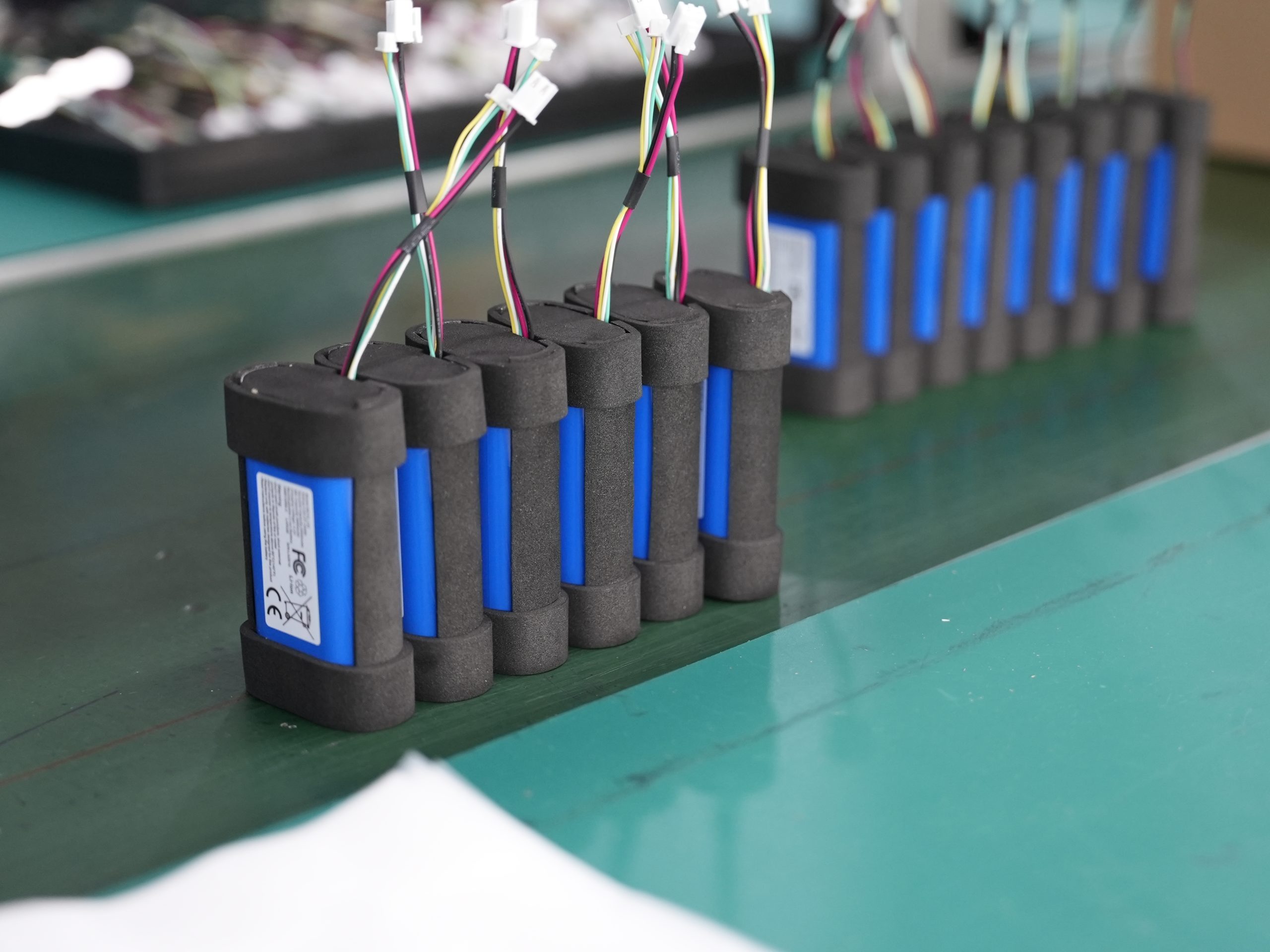
You must consider power density and runtime for robot applications when selecting a battery. Robots in medical, logistics, and security systems require high energy density to support longer operational time and reduce downtime. Lithium batteries, especially lithium iron phosphate (LiFePO4) and nickel manganese cobalt (NMC), deliver strong energy density and runtime. These batteries help robots operate efficiently in hospitals, hotels, and industrial facilities.
Tip: High energy density means your robot can perform demanding tasks without frequent charging. This boosts productivity and reliability.
The runtime for robot applications depends on battery capacity and the robot’s power draw. Delivery robots often carry payloads from 20 kg to 40 kg, while logistics robots handle capacities from 36 kg up to 1,000 kg. You must match battery capacity to the robot’s workload and operational schedule. Many service robots face operational challenges due to limited runtime, often restricted to 2-4 hours with conventional lithium-ion batteries. Frequent recharging or hot-swapping becomes necessary to maintain productivity.
Battery Type | Energy Density | Maintenance Frequency | Service Life | Safety Features |
|---|---|---|---|---|
Sealed Lead Acid (SLA) | Low | Every 2 years | Short (2 years) | Bulky, requires frequent servicing |
Lithium Iron Phosphate (LiFePO4) | High | Minimal | 5-7 years | Safer chemistry, internal battery management system (BMS) |
You must review core battery specifications, including energy density, battery capacity, and runtime, to ensure the robot meets operational demands. Lithium battery packs offer advantages in performance, density, and safety features, making them ideal for autonomous mobile robot battery applications.
1.2 Safety and Cycle Life Considerations
Safety is a top priority for service robots in medical, infrastructure, and industrial sectors. You must select batteries with robust safety features and compliance with international standards. Lithium batteries, especially LiFePO4, include internal battery management systems that monitor temperature, voltage, and current. These systems prevent thermal runaway and protect the robot from hazards.
Note: Safety standards such as IEC 62368-1, UL 1642, UL 2054, NFPA 855, EN 62133, EN IEC 63056, ISO 10218-1, ISO 10218-2, ISO/TS 15066, and ATEX Directive 2014/34/EU set requirements for battery safety in service robots.
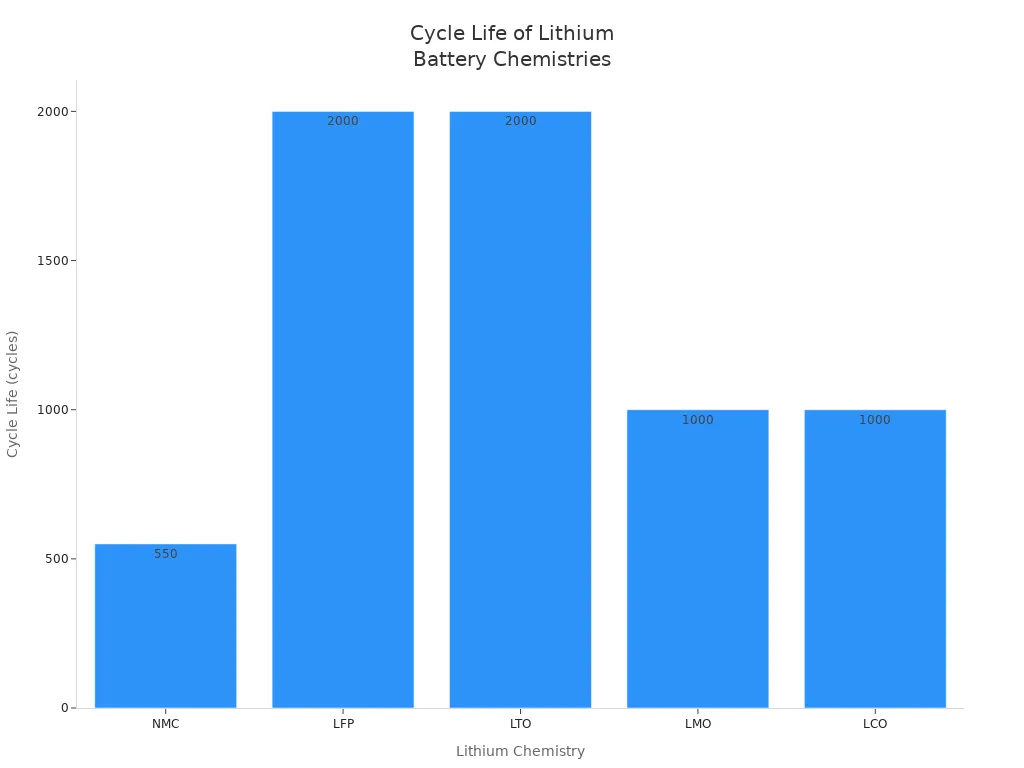
Battery cycle life affects the total cost of ownership. Longer cycle life means fewer replacements and lower maintenance costs. LiFePO4 batteries can last 8-12 years, while NMC batteries typically last 3-6 years. This difference can result in only one battery replacement instead of two or three, reducing expenses and downtime. You must evaluate battery specifications and cycle life to maximize robot reliability and minimize operational costs.
1.3 Shock, Vibration, and Sizing Factors
Robots in automotive, marine, and industrial environments face constant shock and vibration. These conditions can damage batteries, reduce capacity, and cause failures. AGM batteries often struggle with vibration, which can lead to mechanical damage, short circuits, and uneven electrolyte distribution. Lithium battery packs, especially robot lithium battery designs, withstand shock and vibration better due to advanced internal structures and battery management systems.
You must size the battery correctly to match the robot’s power requirements and operational duration. Battery sizing influences operational duration, charging time, and efficiency. In healthcare and hospitality, battery performance is crucial for reliability and safety. Innovations like wireless charging and modular battery systems improve robot availability and productivity.
Battery sizing affects operational duration, charging time, and efficiency.
In sectors like healthcare and hospitality, battery performance is crucial for reliability and safety.
Modular systems and wireless charging enhance robot productivity.
You must review battery specifications, capacity, and core battery specifications to ensure the robot lithium battery meets the demands of your application. Autonomous mobile robot battery packs require high capacity, robust safety features, and resistance to shock and vibration for optimal performance.
Performance Needs: AMRs require batteries that deliver high bursts of power for lifting and moving. Cycle life and safety features are essential for reliability in field deployments.
By understanding battery capacity, energy density, runtime, and safety features, you can select the best lithium battery pack for your service robot. This ensures strong performance, longer operational time, and reduced maintenance costs across medical, robotics, security systems, infrastructure, consumer electronics, and industrial sectors.
Part2: Battery Chemistries and Runtime Trade-offs
2.1 Lithium-Ion, NMC, and LiFePO4 Overview
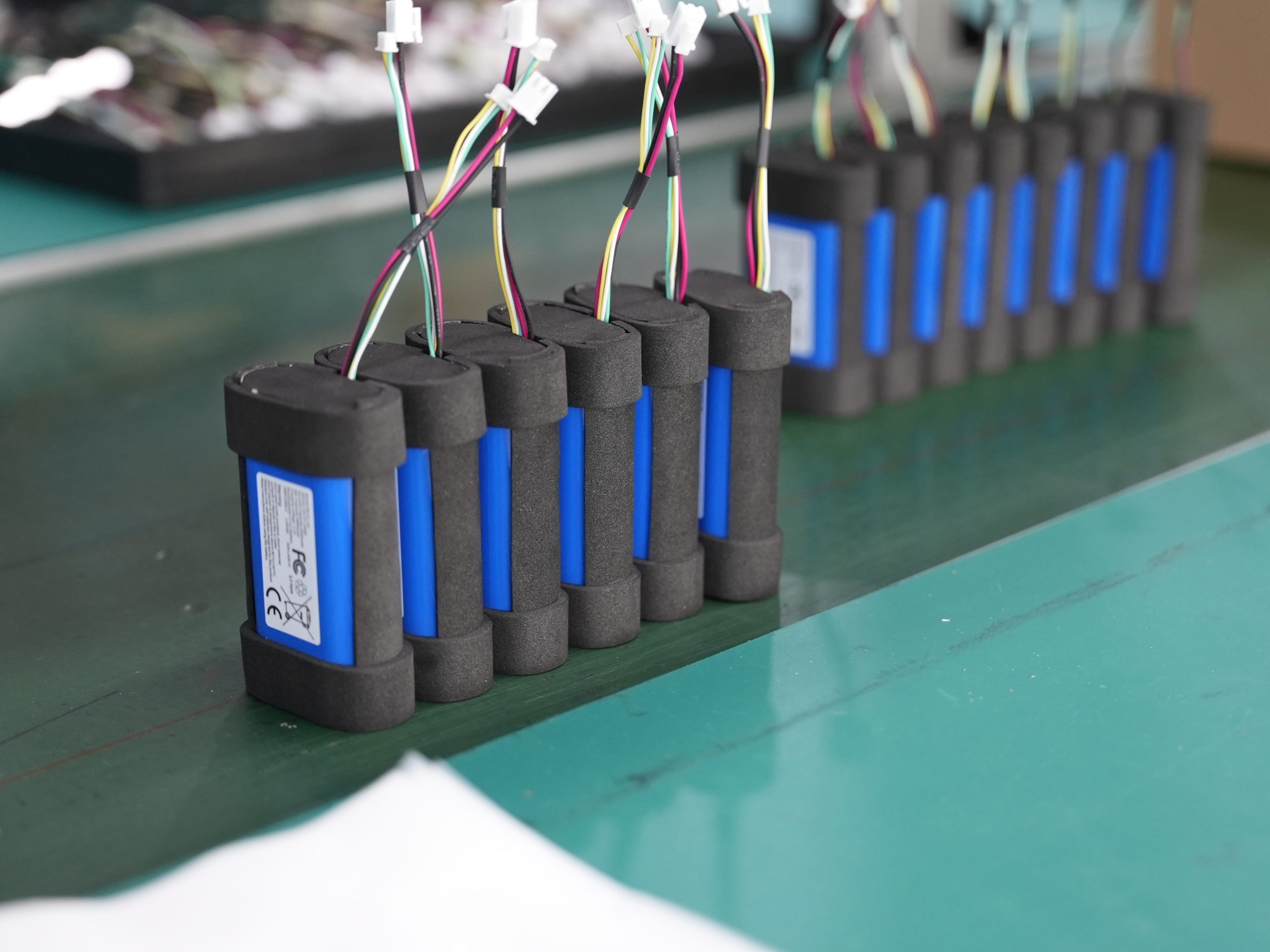
You must understand the differences between lithium battery chemistries to select the right battery for your robot. Lithium-ion batteries include several types, such as nickel manganese cobalt (NMC) and lithium iron phosphate (LiFePO4). Each chemistry offers unique benefits for service robots in medical, security, and industrial sectors.
Battery Chemistry | Platform Voltage (V) | Cycle Life (cycles) | |
|---|---|---|---|
NMC | 3.7 | 200-280 | 1,000-2,000 |
LiFePO4 | 3.2 | 140-180 | 3,000-5,000 |
NMC batteries deliver high energy density, supporting robots that require peak power and longer runtime. LiFePO4 batteries provide lower energy density but excel in cycle life and safety. You must match battery chemistry to your robot’s operational needs.
2.2 Comparing Runtime and Safety Features
You must compare runtime and safety features before choosing a battery for your robot. NMC batteries offer longer runtime due to higher energy density. However, LiFePO4 batteries provide superior safety and stability.
LiFePO4 batteries exhibit a thermal runaway threshold of approximately 270°C, significantly higher than NMC’s threshold of around 200°C. This indicates that LiFePO4 batteries have a much lower risk of fire or thermal runaway, making them safer for deployment in service robots.
LiFePO4 batteries enter thermal runaway at 270°C.
NMC batteries enter thermal runaway at 210°C.
LiFePO4’s structure provides better thermal and chemical stability.
You must consider safety features for robots in medical and infrastructure environments. LiFePO4 batteries are preferred where safety is critical. NMC batteries require additional protective measures to mitigate fire risks.
2.3 Cycle Life and Application Suitability
You must evaluate cycle life and application suitability for each battery chemistry. LiFePO4 batteries can provide over 3,000 to 5,000 cycles, supporting robots in full-shift operations and reducing downtime. Lithium batteries last 5 to 10 years, compared to 2 years for lead-acid batteries.
Robot Type | Recommended Battery Chemistry | Key Features |
|---|---|---|
Humanoid / AI | Li-ion modular packs | High peak power, swappable for continuous operation |
Service Robots | LiFePO4 or Li-ion packs | Suitable for full-shift operations, modularity reduces downtime |
Manufacturers adopt low-cost battery chemistries such as LiFePO4 and process innovations like dry electrode manufacturing to manage costs and enhance performance. Advanced safety measures, including AI diagnostics, ensure compliance in industrial and medical robots. You must also consider sustainability and ethical sourcing. For more information, review the conflict minerals statement.
By understanding battery chemistry, runtime, safety, and cycle life, you can select the best lithium battery pack for your robot. This ensures reliability and efficiency in medical, robotics, security systems, infrastructure, consumer electronics, and industrial sectors.
Part3: Balancing Runtime, Safety, and Battery Management
3.1 Smart Battery Management Systems
You need a smart battery management system to ensure your service robot operates safely and efficiently. These systems monitor battery voltage, temperature, and current in real time. They use communication protocols like CAN and RS485 for seamless integration with the robot’s main controller. This integration allows you to track battery status and performance during every operation. Smart battery management also includes thermal management, which prevents overheating and extends battery life. You can customize these systems for your specific application, and many battery manufacturers offer support to optimize performance.
Feature | Description |
|---|---|
Real-time Monitoring | Continuously tracks cell voltages, temperatures, and currents to ensure safe operating conditions. |
Communication Protocols | Supports CAN and RS485 for data exchange with the robot’s main controller, enabling real-time tracking. |
Thermal Management | Includes both passive and active cooling options to prevent overheating under various load conditions. |
A battery management system helps you prevent overcharging, overheating, and other faults. It provides real-time diagnostics and predictive maintenance alerts, which are essential for uninterrupted workflow in medical, security, and industrial robots.
3.2 Optimal Charging Practices and the 40-80 Rule
You can extend battery life and improve safety by following optimal charging practices. The 40-80 rule is a proven method for lithium battery packs. You should keep the battery charge between 40% and 80%. This practice reduces stress on the battery and prevents capacity loss over time. High discharge rates and deep discharges can damage the battery and shorten its operational time.
The 40-80 rule minimizes battery stress.
Avoiding full charges and deep discharges preserves battery health.
Scheduled charging prevents unexpected downtime.
You should use suitable chargers that match your battery type. Scheduled charging routines and charge controllers help prevent overcharging and overheating. Routine inspections for wear and corrosion, along with predictive maintenance, further enhance safety and reliability.
3.3 Regulatory Compliance and Safety Protocols
You must comply with international safety standards when integrating lithium battery packs into service robots. Standards like IEC 62368-1, UL 1642, and EN 62133 set requirements for battery safety in medical, infrastructure, and industrial applications. Adhering to these protocols protects your investment and ensures safe operation in demanding environments.
Follow all relevant safety standards for your sector.
Implement robust battery management and charging protocols.
Use real-time monitoring and diagnostics to maintain compliance.
By focusing on battery management, charging strategies, and regulatory compliance, you can maximize runtime, safety, and operational efficiency for your service robots. Smart integration of these practices ensures your robots deliver reliable power and performance in every application.
You face important trade-offs when choosing a battery for your robot. Power density, cycle life, and safety all impact performance and reliability. The table below shows how lithium chemistries compare:
Battery Type | Power Density (Wh/kg) | Cycle Life (Cycles) | Safety Characteristics | Runtime Characteristics |
|---|---|---|---|---|
LFP | 140–180 | 3000–6000 | Very stable | Safer for continuous operation |
NMC | 200–280 | 1500–2000 | Higher risk | Longer runtime |
For battery selection, match chemistry to your robot’s operational needs. Use smart battery management to extend asset life and reduce downtime. Evaluate new technologies and monitor performance as battery advancements continue.
FAQ
What is the best lithium battery chemistry for service robots?
You should choose lithium iron phosphate (LiFePO4) for safety and long cycle life. Nickel manganese cobalt (NMC) works well for robots needing high energy density and longer runtime. Match chemistry to your robot’s operational needs.
How do battery management systems improve robot safety?
Battery management systems monitor voltage, temperature, and current. You get real-time alerts for faults. These systems prevent overheating and overcharging. They help you maintain safe operation in medical, industrial, and security robots.
Why does battery sizing matter for service robots?
Proper battery sizing ensures your robot meets its power demands. You avoid downtime and maximize productivity. Sizing affects runtime, charging time, and efficiency. Always match battery capacity to your robot’s workload and schedule.
What charging practices extend lithium battery pack life?
You should follow the 40-80 rule. Keep battery charge between 40% and 80%. Avoid deep discharges and full charges. Scheduled charging routines and suitable chargers help you prevent overheating and extend battery life.
Which safety standards apply to lithium battery packs in robots?
You must follow standards like IEC 62368-1, UL 1642, and EN 62133. These standards set requirements for battery safety in medical, robotics, infrastructure, and industrial sectors. Compliance protects your investment and ensures reliable operation.


