

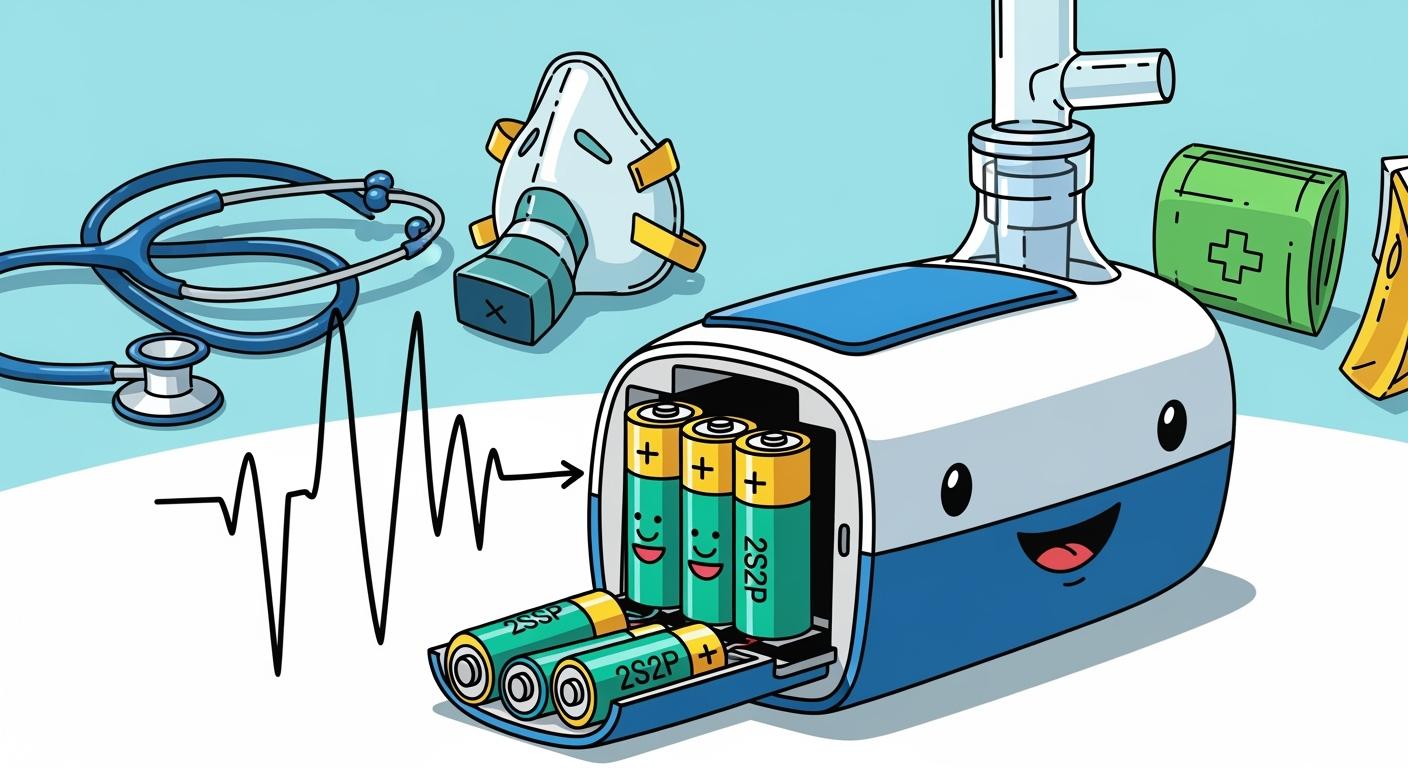
You need to ensure the battery pack you choose delivers consistent output for your portable nebulizer, especially during pulsed loads. Focus on Lithium Battery Selection by checking energy capacity, voltage compatibility, and integrated safety features. Prioritize reliability, as uninterrupted power supply is essential for medical applications.
Key Takeaways
Choose a 2S2P lithium battery for portable nebulizers to ensure stable voltage and high capacity. This configuration supports the power needs of medical devices during operation.
Always verify the battery’s voltage and capacity against your nebulizer’s requirements. A minimum of 900mAh is recommended for reliable performance between charges.
Prioritize safety by selecting batteries that comply with international standards. This ensures reliability and reduces risks associated with battery failure in medical applications.
Part1: 2S2P Battery Basics for Nebulizers
1.1 2S2P Configuration Explained
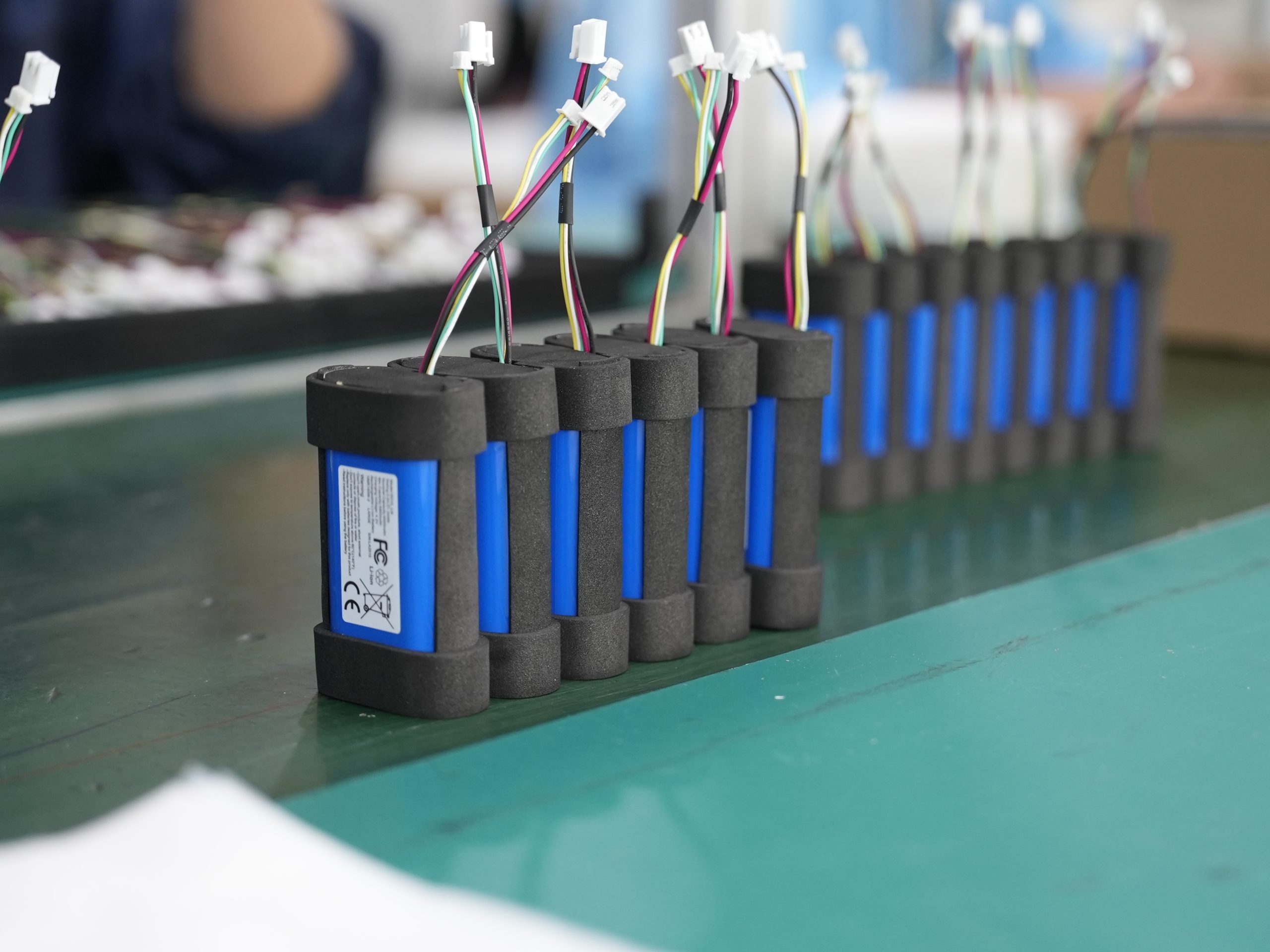
You need to understand the 2S2P configuration before you start the Lithium Battery Selection process. In this setup, you connect two cells in series and two sets of these series in parallel. This design increases both voltage and capacity, which is critical for medical devices like portable nebulizers.
Series Connection (2S): You connect two cells end-to-end. This doubles the voltage. For example, two 3.7V cells give you 7.4V.
Parallel Connection (2P): You connect two sets of series cells side by side. This doubles the capacity. If each cell has 3500mAh, the total becomes 7000mAh.
Tip: Always check the manufacturer’s datasheet for exact voltage and capacity ratings.
Here is a quick comparison table:
Configuration | Voltage (V) | Capacity (mAh) |
|---|---|---|
1S2P | 3.7 | 7000 |
2S1P | 7.4 | 3500 |
2S2P | 7.4 | 7000 |
1.2 Suitability for Portable Nebulizers
You want a battery pack that delivers stable power under pulsed loads. The 2S2P configuration meets this need by providing higher voltage and extended runtime. This setup supports the high current bursts required by nebulizer motors without voltage drops.
When you focus on Lithium Battery Selection for medical devices, you must consider the following:
Consistent voltage output for reliable operation
Sufficient capacity for long usage between charges
Compact size for portability
You will find that 2S2P lithium battery packs offer a balanced solution for portable nebulizers. They combine safety, efficiency, and performance, which are essential for healthcare applications.
Part2: Lithium Battery Selection Criteria

2.1 Voltage and Capacity
You must match the battery’s voltage and capacity to your portable nebulizer’s requirements. Most 2S2P lithium battery packs for medical devices deliver a nominal voltage of 7.4V, which supports stable operation for motors and control circuits. Capacity determines how long your device runs between charges. For uninterrupted use, select a pack with at least 900mAh, though higher capacities offer longer runtime and better support for pulsed loads.
Tip: Always verify the manufacturer’s specifications for voltage and capacity before finalizing your Lithium Battery Selection.
Here is a comparison of typical 2S2P lithium battery configurations used in medical devices:
Nominal Voltage | Capacity |
|---|---|
7.4V | 7000mAh |
7.4V | 5200mAh |
7.4V | 6700mAh |
2.2 Discharge Rate and Pulsed Load
Portable nebulizers often draw power in bursts, especially during startup or medication delivery. You need a lithium battery pack that can handle high discharge rates without voltage sag. Look for packs rated for continuous and peak discharge currents that exceed your device’s maximum draw. This ensures stable power under pulsed loads and prevents interruptions during critical medical treatments.
High discharge rate supports motor surges.
Stable voltage output prevents device resets.
Extended capacity maintains performance during repeated pulsed loads.
Note: Lithium Battery Selection for medical devices should prioritize packs with proven performance under pulsed load conditions.
2.3 Safety and Durability
Safety is non-negotiable in medical applications. You must choose lithium battery packs that comply with international safety standards and certifications. These standards ensure the battery’s reliability, biocompatibility, and protection against common failure modes such as swelling, capacity drop, and thermal imbalance.
Certification/Standard | Description |
|---|---|
FDA General Safety and Performance Requirements (US) | Requires compliance with IEC 62133, UL 2054, ISO 13485, and IEC 60601-1, along with biocompatibility and safety features for patient use. |
European Medical Device Regulation (EU) | Mandates compliance with essential safety and performance requirements, biocompatibility, and adherence to ISO 13485. |
IEC 62133 | International standard for safety of secondary cells, includes biocompatibility and safety features for medical devices. |
UL 2054 | Safety standard for batteries covering electrical, mechanical, environmental, and thermal safety. |
IEC 60601-1 | General requirements for safety and performance of medical electrical equipment, including batteries. |
ISO 10993-1 | Guidelines for evaluating biological safety of medical devices, ensuring batteries do not cause adverse reactions. |
ISO 13485 | Ensures manufacturers have a quality management system for producing safe and reliable batteries. |
Common failure modes in lithium battery packs include:
Common Failure Modes |
|---|
Swelling due to overcharge |
Capacity drop due to aging |
Connector corrosion |
Thermal imbalance |
You should select packs with robust protection circuits and quality assurance from certified manufacturers. This reduces risk and extends the battery’s service life.
2.4 Size and Portability
You need a compact and lightweight battery pack for portable medical devices. Portability improves user comfort and device usability. Lithium-ion batteries come in cylindrical, prismatic, and pouch polymer formats, each designed to meet specific size and weight constraints while providing adequate power.
Compact design reduces device bulk.
Lightweight packs enhance mobility.
High energy density supports longer operation in smaller form factors.
Tip: When making your Lithium Battery Selection, prioritize packs that balance energy density with minimal size and weight.
2.5 Evaluating Performance
You must evaluate the battery’s real-world performance before deployment. Testing methods include voltage measurement, internal resistance testing, full cycle testing, and rapid-test protocols. Compliance with standards such as UL 2054, UL 1642, and SAE J 2929 ensures safety and reliability.
Voltage measurement confirms output stability.
Internal resistance testing detects aging or damage.
Full cycle testing validates long-term durability.
Rapid-test methods provide quick assessment for batch quality.
Cycle life is a key metric for Lithium Battery Selection. Most 2S2P lithium battery packs for medical devices offer over 500 cycles at standard conditions, supporting long-term use and reducing maintenance costs.
Battery Type | Cycle Life (at 25°C, 1C) |
|---|---|
2S2P 7000mAh INR18650 Battery Pack | 500+ |
Long life cycle
Large capacity
Good shock resistance
Note: Always request performance data and safety certifications from your supplier. For custom consultation on battery packs, contact our technical team.
By following these criteria, you ensure your Lithium Battery Selection delivers stable power under pulsed loads, meets safety standards, and supports the demanding requirements of portable medical devices.
You should select a 2S2P lithium battery pack by matching voltage, capacity, and discharge rate to your nebulizer’s needs. Always verify pulsed load stability and demand certified safety features.
Key Requirements | Details |
|---|---|
ISO 13485 Compliance | Medical Devices Quality Management |
ISO 10993 Compliance | Biocompatibility |
Sterilization Tolerance | Autoclaving, EtO, Hydrogen peroxide |
Leak-proof Design | Prevents electrolyte exposure |
Dr. Emily Carter (FDA Medical Device Reviewer) states:
“Solid-state electrolytes like LiPON are pivotal for implantables, eliminating leakage risks and ensuring long-term stability under sterilization.”
FAQ
What makes a 2S2P lithium battery pack ideal for portable medical devices?
You get stable voltage, high capacity, and reliable pulsed load performance. 2S2P lithium battery packs, such as those from Large Power, meet strict medical safety standards.
How do you ensure lithium battery packs handle pulsed loads in industrial applications?
You select packs with high continuous and peak discharge ratings. Always verify performance data and request custom battery consultation from Large Power’s technical team.
Which lithium battery chemistries suit security and robotics sectors best?
Application Sector | Recommended Chemistry | Key Benefit |
|---|---|---|
Security | LiFePO₄ | Long cycle life |
Robotics | NMC | High energy density |
You choose based on your device’s power and safety needs.


