

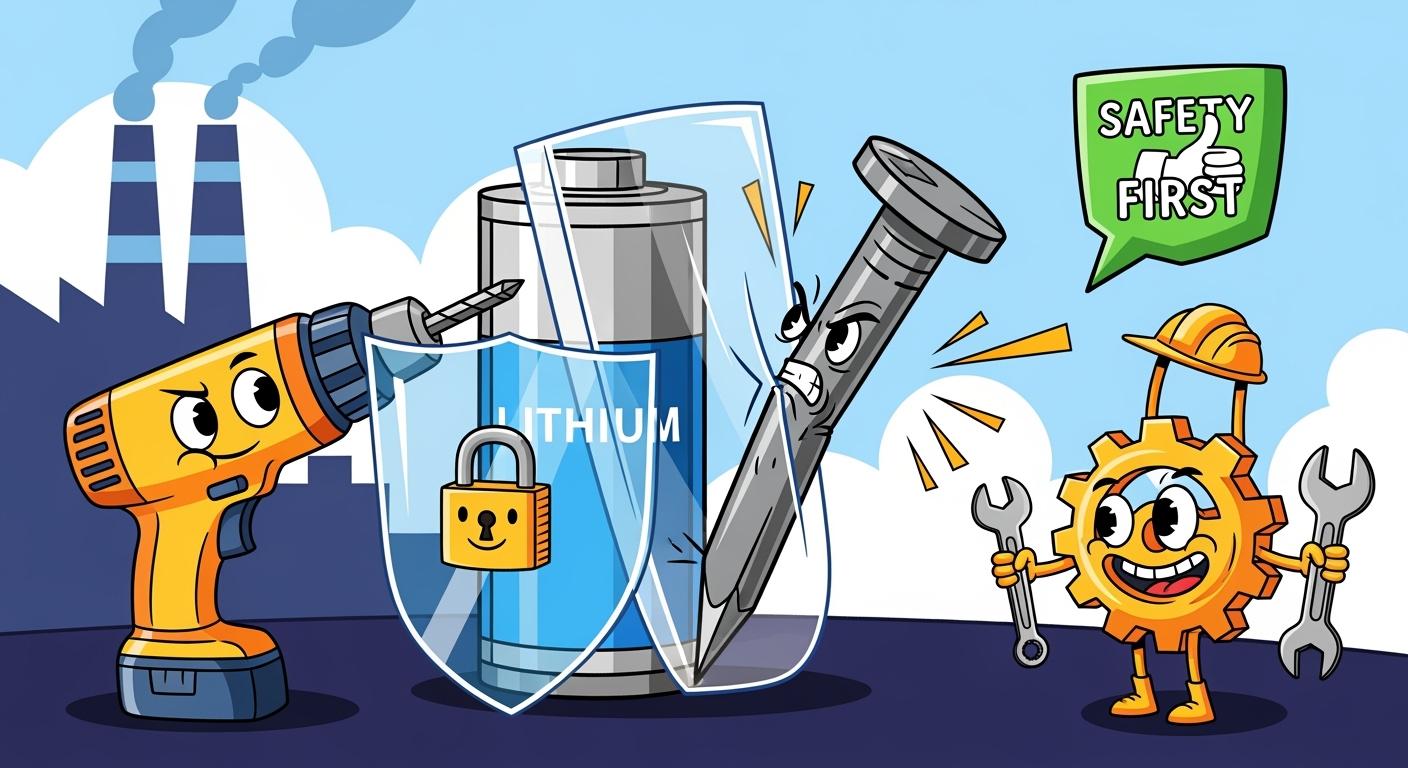
You face fire and explosion risks in industrial environments when batteries suffer physical damage. Nail penetration resistant lithium-ion batteries protect your equipment by preventing dangerous reactions during a nail penetration test. Safety testing and strict safety standards help you meet operational safety goals. Advanced battery management systems monitor your battery and support safety evaluation. Nail penetration resistance stops thermal runaway, making your batteries safer and more reliable for industrial use.
Key Takeaways
Nail penetration resistant batteries prevent dangerous reactions during physical damage, enhancing safety in industrial environments.
These batteries use advanced designs to stop thermal runaway, reducing fire and explosion risks in harsh conditions.
Battery Management Systems (BMS) monitor battery conditions, improving safety and performance by predicting potential failures.
Choosing batteries that meet safety standards ensures reliable operation and minimizes maintenance needs in industrial applications.
Nail penetration resistant batteries extend battery life and reduce downtime, leading to more efficient industrial operations.
Part1: Nail Penetration Resistance in Industrial Batteries
1.1 What Is Nail Penetration Resistance
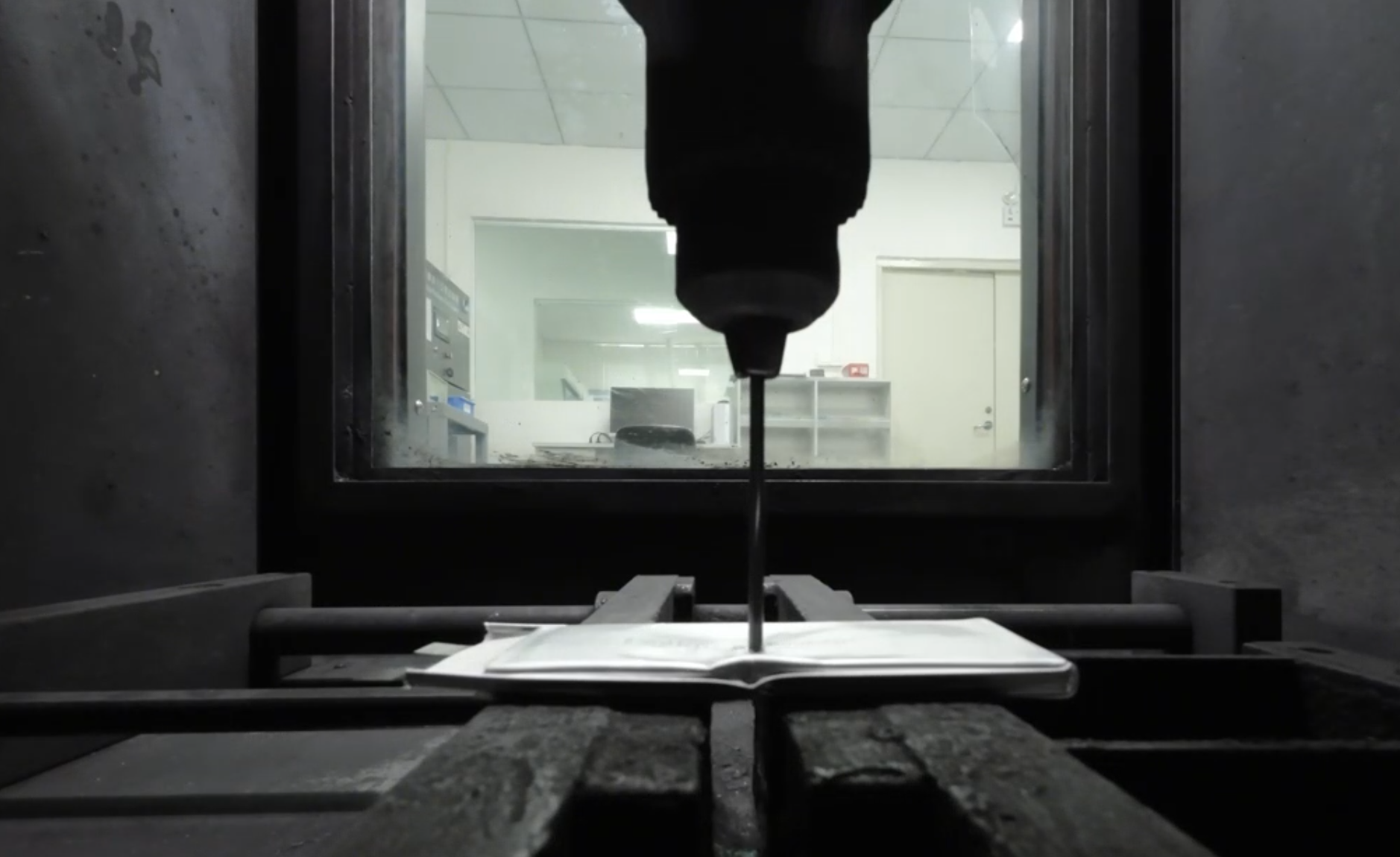
You need nail penetration resistance to protect lithium-ion batteries in industrial equipment from dangerous failures. This feature helps your battery withstand a nail penetration test, which simulates a sharp object piercing the cell. When a nail penetrates a battery, it can create a direct connection between the anode and cathode, causing a rapid increase in temperature and pressure. Nail penetration resistant batteries use advanced designs to prevent thermal runaway and maintain safety.
Mechanism | Description |
|---|---|
Internal Short Circuit | The nail creates a direct connection between the anode and cathode, simulating a short circuit. |
Rapid Heat Generation | The short circuit leads to a significant increase in temperature, potentially exceeding 300°C. |
Gas Release | Decomposition of the electrolyte generates flammable gases, raising internal pressure. |
Thermal Runaway | A chain reaction occurs, accelerating chemical breakdown and increasing the risk of fire or explosion. |
Separator Melting | The polymer separator fails at high temperatures, allowing direct contact between electrodes. |
Oxygen Release | Decomposition of cathode materials releases oxygen, which can fuel combustion. |
Nail penetration resistant lithium-ion batteries use features like reinforced separators and metallized polymer current collectors to isolate shorts and prevent these dangerous reactions.
1.2 Importance for Industrial Applications
You rely on industrial lithium-ion batteries for high energy density and consistent performance. Nail penetration resistance is critical because your equipment often faces harsh environments, mechanical impacts, and accidental damage. Industrial battery packs must pass strict safety testing, including the nail penetration test, to meet international standards.
Standard | Description |
|---|---|
UL 2580 | Safety standard for electric vehicle batteries |
IEC 62133 | International standard for portable batteries |
UN 38.3 | Transport safety testing for lithium batteries |
SAE J2464 | Electric vehicle battery abuse testing |
GB/T 31485 | Chinese national standard for EV battery safety |
Nail penetration tests use a nail diameter of 3-5 mm and a speed of 7-10 mm/s.
The test monitors voltage, temperature, and gas release.
The purpose is to simulate real-world risks, such as equipment accidents or manufacturing defects.
You need nail penetration resistant batteries to prevent thermal runaway and fires, especially in high energy density applications like manufacturing automation and material handling.
1.3 Common Risks: Short Circuits and Thermal Runaway
Industrial lithium-ion batteries face risks from mechanical impacts, internal defects, and high temperatures. These risks can cause internal short circuits and trigger thermal runaway, leading to equipment failure or fire.
Cause of Failure | Description |
|---|---|
Mechanical Impacts | High velocity impacts can deform the separator, leading to short circuits. |
Internal Defects | Flaws within the battery can initiate short circuits and contribute to thermal runaway. |
Thermal Runaway | Rapid heating due to exothermic reactions can lead to temperature spikes and potential explosions. |
Nail penetration resistant batteries help you avoid these risks by stopping the chain reaction before it starts. You get better performance, longer battery life, and safer operation for your industrial equipment.
Tip: Always choose lithium-ion batteries that meet recognized safety standards and have passed the nail penetration test for your industrial applications.
Part2: Safety Features of Nail Penetration Resistant Lithium-Ion Batteries
2.1 Prevention of Internal Short Circuits
You depend on lithium-ion batteries to power your industrial equipment safely. Nail penetration resistant batteries use advanced safety mechanisms to prevent internal short circuits, which can cause dangerous failures. When a nail penetrates a battery, the risk of short circuit increases. You need features that confine heat and limit current flow to protect your equipment.
Safety Mechanism | Description |
|---|---|
Localized Heat Confinement | Heat generation stays near the nail entry point, reducing risk to the rest of the battery. |
Non-Flammable Solid Electrolyte | The solid electrolyte resists ignition, even at high temperature, lowering fire risk. |
Controlled Short Circuit | High impedance in the solid electrolyte keeps current at safe levels during a short circuit. |
Thermal Barrier | Insulation prevents heat from spreading throughout the battery. |
No Oxygen Release | The design stops decomposition reactions that could trigger short circuits. |
You also benefit from reinforced casings, internal separators with thermal shutdown properties, and pressure relief mechanisms. These features help your batteries withstand physical damage and abnormal conditions. You get improved safety and reliable performance in harsh industrial environments.
2.2 Thermal Runaway Mitigation
Thermal runaway poses a serious threat to lithium-ion batteries in industrial applications. You need materials and technologies that stop runaway reactions before they start. Nail penetration resistant batteries use specialized separators, adhesives, and electrolytes to keep temperature and energy under control.
Material/Technology | Description |
|---|---|
NPORE® nanoporous ceramic separators | Less than 1% heat shrinkage prevents short circuits and maintains battery integrity. |
NCORE™ polymer composite current collectors | Plastic inner layer melts to act as a fuse during excess current situations. |
Mechanically graded separators | SiO₂/polymer composites increase puncture resistance by 180%. |
Shear-thickening adhesives | Impact forces drop by 35%–60%, reducing risk of battery failure. |
Halogen-free electrolytes | Self-extinguishing time of 2 seconds limits fire risk. |
Solid-state architectures | Zero thermal runaway incidence in nail penetration tests. |
Thermo-responsive polymers | Electrolytes or separators suppress ionic conduction when heated. |
Positive thermal coefficient (PTC) materials | Electronic conduction stops when heated, preventing runaway. |
You see these technologies working together to protect your batteries from thermal runaway. Industrial lithium-ion batteries with these features deliver consistent performance and reduce downtime. You get safer operation and longer battery life for your equipment.
Note: Choosing batteries with advanced thermal runaway mitigation helps you meet safety standard requirements and maintain high energy density in your industrial applications.
2.3 Role of Battery Management Systems (BMS)
You rely on Battery Management Systems (BMS) to monitor and protect your lithium-ion batteries. BMS uses advanced algorithms to predict potential failures and balance cells within the battery pack. This predictive capability is vital for preventing hazardous situations, especially during nail penetration events.
The BMS continuously checks battery conditions, such as voltage, temperature, and energy flow. When the system detects abnormal behavior, it activates safety measures to protect your industrial equipment. You benefit from improved operational safety and reduced risk of thermal runaway.
You get uniform performance across all cells, which is crucial for maintaining reliability in industrial lithium-ion batteries. The BMS ensures your batteries operate safely, even in demanding environments.
Part3: Reliability Benefits for Industrial Operations
3.1 Consistent Performance in Harsh Conditions
You need batteries that deliver reliable performance in demanding industrial environments. Nail penetration resistant lithium-ion batteries help you achieve this goal. These batteries maintain stability even when exposed to high temperature, vibration, or physical impact. You can trust them to power your industrial equipment in sectors like robotics, medical devices, security systems, and infrastructure.
The following table shows how these batteries perform under extreme conditions:
Feature | Description |
|---|---|
Operational Temperature Range | -40°C to 60°C |
Flight Duration | 90+ minutes continuous flight |
Recharge Cycle Speed | 30% faster recharge cycles |
Cooling Technology | Dual-path cooling with phase-change material |
Vibration Resistance | Vibration-resistant electrode design |
Fire Suppression | UL 9540A certified fire suppression layers |
You benefit from a wide operational temperature range and advanced cooling technology. These features ensure your lithium-ion batteries keep working, even when your equipment faces harsh industrial conditions. Vibration-resistant designs protect against mechanical failure, which is critical for robotics and automated manufacturing. Fire suppression layers add another level of safety, reducing the risk of thermal runaway.
Tip: Choose batteries with certified fire suppression and vibration resistance for applications in medical, security, and industrial automation.
3.2 Extended Battery Life and Reduced Downtime
You want your industrial equipment to run longer with fewer interruptions. Nail penetration resistant lithium-ion batteries extend battery life and reduce downtime. These batteries use advanced materials and designs to prevent thermal runaway and internal failure. You get more charge cycles and less risk of sudden shutdowns.
Test results from leading laboratories show the reliability of these batteries:
Laboratory/Company | Battery Type | Test Standard | Result |
|---|---|---|---|
Argonne National Laboratory | Sulfide-based | N/A | Zero fire incidents, max temperature rise 65°C |
Oak Ridge National Laboratory | N/A | N/A | No thermal propagation between cells after nail penetration |
MIT Battery Lab | N/A | N/A | 0% failure for SSBs vs. 87% for liquid Li-ion cells |
Samsung SDI | Sulfide-based | UL 2580 | Pass – No fire, max 80°C |
QuantumScape | Oxide-based | SAE J2464 | Pass – Voltage retained 15% |
Solid Power | Sulfide-based | IEC 62133 | Pass – No thermal runaway |
Toyota | Sulfide-based | GB/T 31485 | Pass – Zero gas generation |
Lipower | Polymer-hybrid | UL 2580 + IEC 62133 | Pass – Multi-cell fault isolation |
You see that these batteries pass strict test standards, including UL 2580 and IEC 62133. They show no thermal runaway or fire, even after severe nail penetration. This reliability means your equipment in sectors like infrastructure, robotics, and medical technology can operate longer without unexpected failure. You save time and resources by reducing the need for emergency repairs or replacements.
Note: Reliable lithium-ion batteries help you maintain high energy density and consistent energy output, which is essential for industrial operations.
3.3 Lower Maintenance Needs
You want to minimize maintenance for your industrial equipment. Nail penetration resistant lithium-ion batteries help you achieve this by preventing combustion or explosion after penetration. For example, batteries from Amprius Technologies remain operational even after a penetration event. This feature reduces the need for immediate maintenance or replacement.
You benefit from:
Fewer emergency shutdowns due to battery failure
Less frequent battery replacement cycles
Reduced risk of equipment damage from thermal runaway
These advantages lower your total cost of ownership and keep your industrial operations running smoothly. You can focus on productivity instead of constant battery checks or repairs. This is especially valuable in sectors like security, infrastructure, and consumer electronics, where equipment uptime is critical.
Callout: Nail penetration resistant lithium-ion batteries give you peace of mind by reducing maintenance needs and supporting continuous industrial operations.
By choosing advanced lithium-ion batteries with nail penetration resistance, you improve reliability, reduce operational disruptions, and support safer, more efficient industrial environments.
Part4: Real-World Impact and Industrial Case Studies

4.1 Sectors Benefiting from Enhanced Safety
You see the impact of nail penetration resistant lithium-ion batteries across many industrial sectors. Manufacturing, logistics, medical devices, and infrastructure rely on these batteries for safe and reliable operation. You reduce risks in environments where equipment faces physical stress and accidental damage. The batteries protect your assets and workforce by preventing fire, explosion, and toxic gas release.
Safety Aspect | Impact |
|---|---|
Fire Risk | 99%+ reduction vs. liquid Li-ion |
Thermal Runaway | Physically impossible with stable solid electrolytes |
Explosion Risk | Zero incidents in thousands of abuse tests |
Eliminated (no combustion byproducts) | |
Thermal Propagation | Isolated to damaged cell only |
You gain confidence knowing that lithium-ion batteries with nail penetration resistance deliver proven safety in real-world conditions.
4.2 Manufacturing Automation Example
You operate automated production lines that depend on lithium-ion batteries for continuous power. Nail penetration resistant batteries prevent thermal runaway during mechanical accidents or equipment malfunctions. For example, a robotic arm may drop a tool onto a battery pack. The battery resists penetration and avoids internal short circuits. You maintain uptime and protect sensitive machinery.
You see fewer emergency shutdowns and lower maintenance costs. Your production stays on schedule, and you avoid costly downtime caused by battery failure.
4.3 Logistics and Material Handling Example
You manage fleets of forklifts, automated guided vehicles (AGVs), and warehouse robots. These devices use lithium-ion batteries to move goods efficiently. Nail penetration resistant batteries prevent thermal runaway and fire when equipment suffers impacts or collisions. You protect your inventory and staff from hazardous incidents.
You experience zero explosion risk during abuse tests.
You isolate thermal events to a single cell, preventing damage to the entire battery pack.
You achieve reliable operation and longer battery life in logistics and material handling. Your equipment runs smoothly, and you minimize disruptions from battery-related incidents.
You improve safety and reliability in your operations when you choose nail penetration resistant lithium-ion batteries. These batteries stop thermal runaway and lower fire risk. You see fewer shutdowns and less maintenance because the battery resists thermal runaway after impact. Industry guidelines help you evaluate batteries for your needs:
Standard | Description |
|---|---|
IEC 62619 | Safety requirements for batteries, including thermal runaway prevention. |
UL 9540A | Fire and explosion hazard testing for battery energy storage systems. |
You can review these standards to select the right battery for your industrial devices.
FAQ
What makes nail penetration resistant batteries different from standard lithium battery packs?
You get extra safety with nail penetration resistant batteries. These batteries use advanced separators and solid-state designs. They prevent internal short circuits and thermal runaway. Standard lithium battery packs may not stop fires after physical damage.
Which lithium battery chemistries offer the best nail penetration resistance?
You find strong resistance in LiFePO4 and solid-state battery chemistries. These batteries show low risk of fire during penetration tests. NMC and LCO batteries have higher energy density but may not match LiFePO4 for safety. Review test data for your application.
Chemistry | Platform Voltage | Energy Density | Cycle Life | Nail Penetration Safety |
|---|---|---|---|---|
LiFePO4 | 3.2V | 90-140 Wh/kg | 2000+ | Excellent |
NMC | 3.7V | 150-220 Wh/kg | 1000-2000 | Good |
LCO | 3.7V | 150-200 Wh/kg | 500-1000 | Moderate |
LMO | 3.7V | 100-150 Wh/kg | 500-1000 | Moderate |
How do you test battery packs for nail penetration resistance?
You use a controlled test. A steel nail penetrates the battery at a set speed. You monitor temperature, voltage, and gas release. Passing batteries show no fire, explosion, or toxic gas. Review standards like UL 2580 and IEC 62133 for details.
Why should you choose nail penetration resistant batteries for industrial devices?
You reduce fire and explosion risks in harsh environments. These batteries protect your equipment and staff. You also lower downtime and maintenance costs. Nail penetration resistant battery packs help you meet strict safety standards in industrial settings.
Where can you find more information on lithium battery safety?
You can read research from Nature or Science. These sources provide data on battery chemistries, safety features, and industrial applications.


