

Part 1: Introduction
Backup power design is evolving rapidly as homes and businesses become more dependent on electricity. Modern properties now rely on HVAC systems, networking equipment, refrigeration, automation systems, and electric vehicle charging infrastructure. Because of this, traditional small backup systems are often no longer capable of supporting real-world energy demands during outages.
This shift is increasing interest in larger-capacity battery storage systems, especially 50 kWh platforms. Positioned between standard residential batteries and industrial-scale energy storage, these systems provide longer runtime, higher load support, and better scalability. Installers and EPC contractors are increasingly using them for homes, farms, workshops, offices, and light commercial facilities where reliable backup power and future energy expansion are becoming essential parts of system design.
Part 2: Why Backup Power Requirements Are Increasing
Electrical demand is growing across both residential and commercial environments. Homes now contain more always-on devices than ever before, including smart appliances, security systems, internet infrastructure, and EV chargers. During outages, homeowners increasingly expect uninterrupted power for refrigeration, lighting, pumps, and communication systems.
Small businesses face even greater challenges. Restaurants, clinics, workshops, and retail stores often depend on continuous electricity for payment systems, refrigeration, cloud-based operations, and networking equipment. Even short outages can interrupt operations and create financial losses.
Another important trend is electrification. Many contractors are seeing customers replace gas-powered systems with electric heat pumps, induction cooking, and EV charging. This significantly increases backup load requirements and is pushing installers toward larger battery platforms designed for higher continuous energy demand.
Part 3: What Makes a 50 kWh Battery System Different?
A 50 kWh battery system fills the gap between compact residential batteries and large industrial energy storage systems. It offers sufficient capacity to support high-consumption properties while remaining practical for residential and light-commercial installations.
These systems commonly support:
- Multi-zone HVAC systems
- EV charging infrastructure
- Refrigeration systems
- Agricultural equipment
- Office backup loads
- Telecom hardware
- Hybrid solar applications
One major advantage is operational flexibility. Smaller battery systems often require aggressive load management during outages. A larger-capacity platform allows contractors to support more circuits with longer runtime.
| Application Type | Estimated Continuous Load | Approximate Runtime |
| Large Residential Home | 4–5 kW | 8–12 Hours |
| Small Office | 5–6 kW | 8–10 Hours |
| Retail Refrigeration Setup | 3–4 kW | 10–14 Hours |
| Farm Irrigation + Controls | 4–6 kW | 7–10 Hours |
Actual runtime depends on inverter efficiency, battery reserve settings, surge demand, ambient temperature, and real operational behavior.
Part 4: How Installers Size Backup Systems Around Real Load Profiles
Professional battery sizing involves much more than reviewing monthly utility bills. Installers must evaluate how energy is actually consumed throughout the day, especially during peak operational periods.
Key sizing considerations include:
- Surge demand
- Continuous loads
- Runtime expectations
- Seasonal usage changes
- Future electrical expansion
A properly designed 50 kWh battery bank helps contractors support larger real-world load profiles without resorting to excessive load-shedding strategies.
For example, a residential property with central air conditioning, pumps, refrigeration, and internet infrastructure may show moderate daily consumption while still experiencing very high startup surges. If surge demand is ignored during system design, backup performance may become unstable during outages.
Example of a Real Backup Load Scenario
A small office operating during outages may require support for:
- Networking equipment
- LED lighting
- Refrigeration
- Desktop computers
- Security systems
- HVAC operation
A realistic continuous load profile could range between 4 and 6 kW during normal business activity. In this type of environment, a properly configured 50 kWh battery system may provide approximately 8–12 hours of operational backup depending on inverter efficiency, battery reserve settings, and HVAC cycling behavior.
Many installers now design around real operational patterns instead of theoretical calculations alone. This helps improve runtime accuracy while reducing the risk of undersized systems during peak demand periods.
Part 5: The Role of 50 kWh Systems in Modern Backup Architecture
Modern backup systems are becoming integrated energy ecosystems rather than simple emergency power solutions. Today’s installations often combine battery storage, solar generation, hybrid inverters, smart load management, and remote monitoring systems into a unified platform.
A modern 50kWh battery backup design can support both residential and light commercial operations during extended outages while also improving daily energy optimization.
Many systems now perform multiple functions, including:
- Peak shaving
- Solar self-consumption
- Generator reduction
- Time-of-use energy management
- Grid support strategies
In regions with unstable utility infrastructure, larger battery systems are increasingly replacing traditional generator-only backup setups. Contractors are also seeing more customers request hybrid systems that combine solar production with battery storage to reduce long-term operating costs and improve energy independence.
This shift is transforming how modern backup architecture is designed across residential and commercial sectors.
Part 6: Inverter Compatibility and Communication Protocols
As energy storage systems become more advanced, inverter compatibility is becoming one of the most important technical considerations in system design.
Battery performance now depends heavily on communication between the battery management system (BMS) and the inverter platform. Modern installations often rely on:
- CAN bus communication
- RS485 protocols
- Closed-loop inverter integration
- Real-time monitoring
- Dynamic charging management
Compatibility problems can create charging instability, inaccurate state-of-charge reporting, or reduced operational efficiency.
Many installers now prioritize battery systems that support broad inverter compatibility because future expansion flexibility has become increasingly important. Some contractors also oversize inverter infrastructure during initial installation to prepare for future EV charging demand or solar array expansion.
Reliable communication architecture improves both long-term system stability and serviceability, especially in larger residential and light commercial applications.
Part 7: Installation Space, Thermal Design, and Service Access
Physical installation planning has become increasingly important as battery capacity grows. Contractors must consider ventilation, thermal management, cable routing, maintenance access, and structural support before installation begins.
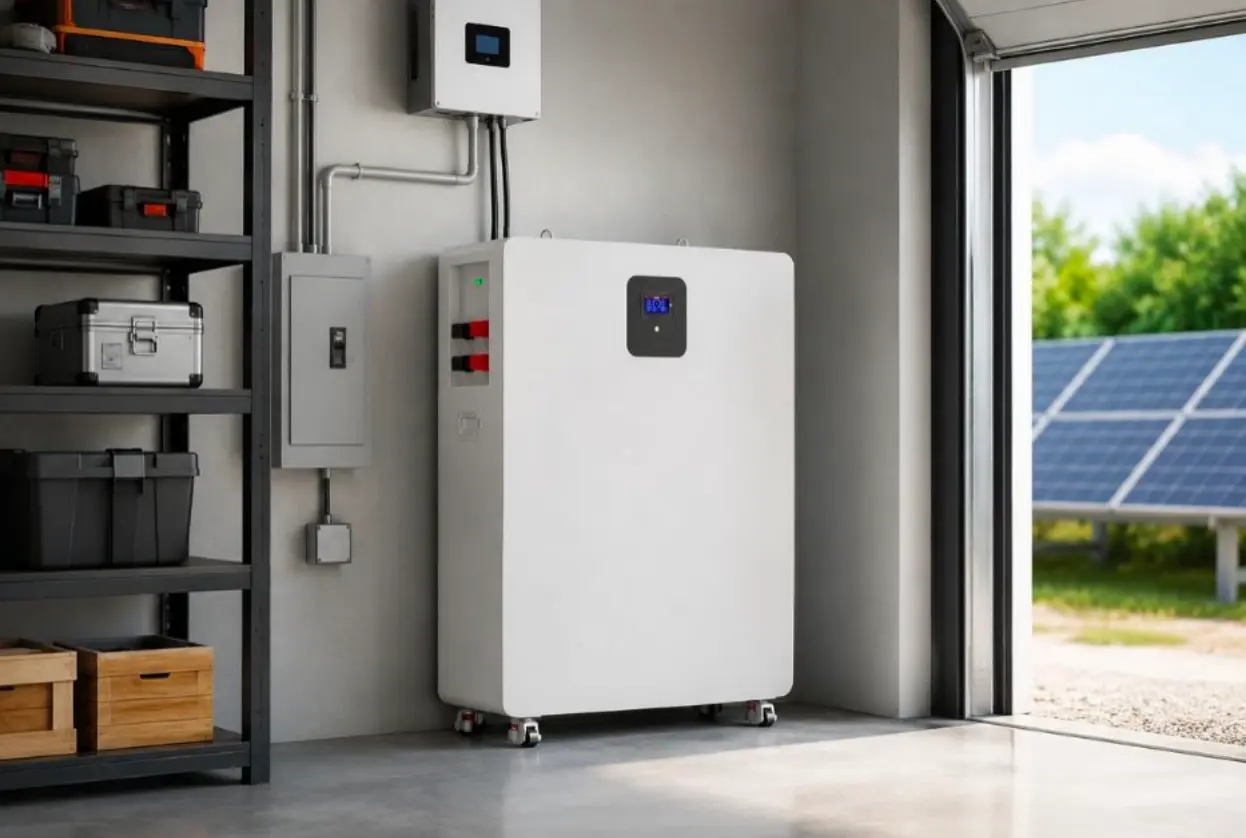
Many installers now prefer a vertical battery configuration because it reduces floor space requirements while improving maintenance accessibility and cable organization. This approach is especially valuable in garages, utility rooms, and commercial electrical spaces where the installation area may be limited.
Thermal stability is another major factor. Excessive heat can reduce battery lifespan and negatively affect long-term efficiency. Proper airflow and spacing help maintain safe operating temperatures.
Service access is equally important. Systems should always allow technicians to inspect, troubleshoot, and replace components without dismantling major sections of the installation. Good physical layout planning improves reliability, safety, and long-term maintenance efficiency.
Part 8: How 50 kWh Systems Support Light Commercial Applications
One of the biggest trends in the energy storage industry is the growing overlap between residential and light commercial backup design. Many small businesses now require more backup capacity than traditional residential systems can provide.
This creates strong demand for scalable 50 kWh battery platforms in applications such as:
- Farms and agricultural operations
- Restaurants and cafes
- Retail stores
- Office buildings
- Workshops
- Medical clinics
- Telecom facilities
For example, a restaurant may prioritize refrigeration, payment systems, and ventilation during outages, while a workshop may focus on maintaining lighting, networking equipment, and essential machinery.
Battery Design for Agricultural and Remote Applications
Agricultural facilities are becoming one of the fastest-growing markets for larger battery systems. Farms often depend on irrigation pumps, refrigeration units, automated feeding systems, and communications equipment that cannot remain offline during outages.
For example, a small agricultural site using refrigeration and water pumping infrastructure may prioritize battery runtime over full-property backup coverage. In these situations, contractors frequently design segmented backup circuits to maximize operational continuity while reducing unnecessary battery drain.
This type of application highlights why scalable battery architecture is becoming increasingly important for rural and semi-commercial installations.
Part 9: Scalability and Future Expansion Planning
Energy consumption rarely stays the same over time. Homeowners may later install EV chargers, additional HVAC equipment, or workshop tools. Businesses may expand operations, increase working hours, or add new electrical infrastructure.
Because of this, scalability has become one of the most important factors in modern backup system planning.
Modular 50 kWh systems allow contractors to expand battery capacity incrementally without redesigning the entire installation. Future-ready projects often include:
- Parallel battery expansion
- Additional inverter capacity
- Solar array growth
- Generator integration
- Smart energy management systems
Many installers are now intentionally oversizing battery infrastructure during initial deployment because future EV charging demand and electrification upgrades are expected to increase significantly over the next decade.
This long-term approach helps protect infrastructure investments while improving flexibility for future operational changes.
Part 10: Common Design Mistakes Installers Should Avoid
As larger battery systems become more common, several design mistakes continue appearing across residential and commercial installations.
One of the biggest issues is poor load analysis. Systems may appear correctly sized on paper while still struggling under real startup surge conditions. Another common mistake is undersized inverter selection, which can limit total system performance even when battery capacity is sufficient.
Ventilation problems are also common. Poor airflow can increase operating temperatures and shorten battery lifespan over time.
Communication compatibility issues between batteries and inverters may create unstable charging behavior or inaccurate monitoring data. Some installers also fail to leave enough service clearance around equipment, making maintenance and future upgrades more difficult.
Careful planning, realistic load evaluation, and proper equipment matching are essential for reliable long-term performance.
Part 11: The Future of Residential and Light Commercial Energy Storage
Battery storage is rapidly becoming a central part of modern energy infrastructure. Future systems are expected to include smarter energy management software, AI-assisted load balancing, predictive maintenance monitoring, and deeper integration with solar and smart grid technologies.
Many industry professionals also expect virtual power plant participation to expand in the coming years, allowing distributed battery systems to support grid stability while creating additional value for property owners.
As electrification continues accelerating, larger-capacity battery systems will likely become more common across homes and commercial facilities. Contractors are already seeing increased interest in systems designed for future EV charging, higher solar self-consumption, and long-duration backup capability.
This shift is creating new opportunities for installers, EPC firms, and system integrators with expertise in advanced backup architecture and scalable energy storage design.
Part 12: Conclusion
Residential and light commercial backup expectations are changing rapidly as energy consumption, electrification, and grid instability continue increasing. Modern properties now require backup systems capable of supporting longer runtime, higher electrical loads, and future scalability.
This is why 50 kWh battery systems are becoming an increasingly important part of modern energy infrastructure. They provide a practical balance between capacity, flexibility, installation efficiency, and long-term expansion potential for both residential and semi-commercial applications.
For installers, EPC contractors, and system integrators, the focus is no longer simply on emergency backup. Modern battery design now involves load profiling, inverter communication, hybrid solar integration, thermal planning, and future energy management strategies.
As energy storage adoption continues growing, companies like Avepower are helping support scalable backup solutions designed for evolving residential and light commercial energy demands.
FAQ
Is a 50 kWh battery enough for a small business?
Yes, a 50 kWh battery system can support many small businesses, depending on load requirements. Restaurants, offices, workshops, and retail stores often use systems in this range for refrigeration, lighting, networking, and operational continuity during outages.
How long can a 50 kWh battery power a home?
Runtime depends on the total electrical load. A home consuming 5 kW continuously could theoretically operate for around 8–10 hours, depending on inverter efficiency, battery reserve settings, and energy usage behavior.
Can a 50 kWh battery system work with solar panels?
Yes. Many modern systems are designed for hybrid solar integration, allowing stored solar energy to be used during outages or peak utility pricing periods.
Why is inverter compatibility important in battery systems?
Proper communication between the battery and inverter improves charging efficiency, monitoring accuracy, and overall system stability. Compatibility problems may reduce performance or create operational issues.
Why are vertical battery systems becoming more popular?
Vertical battery installations help reduce floor space usage while improving cable management and maintenance accessibility. This is especially useful in garages, utility rooms, and commercial electrical spaces.


