

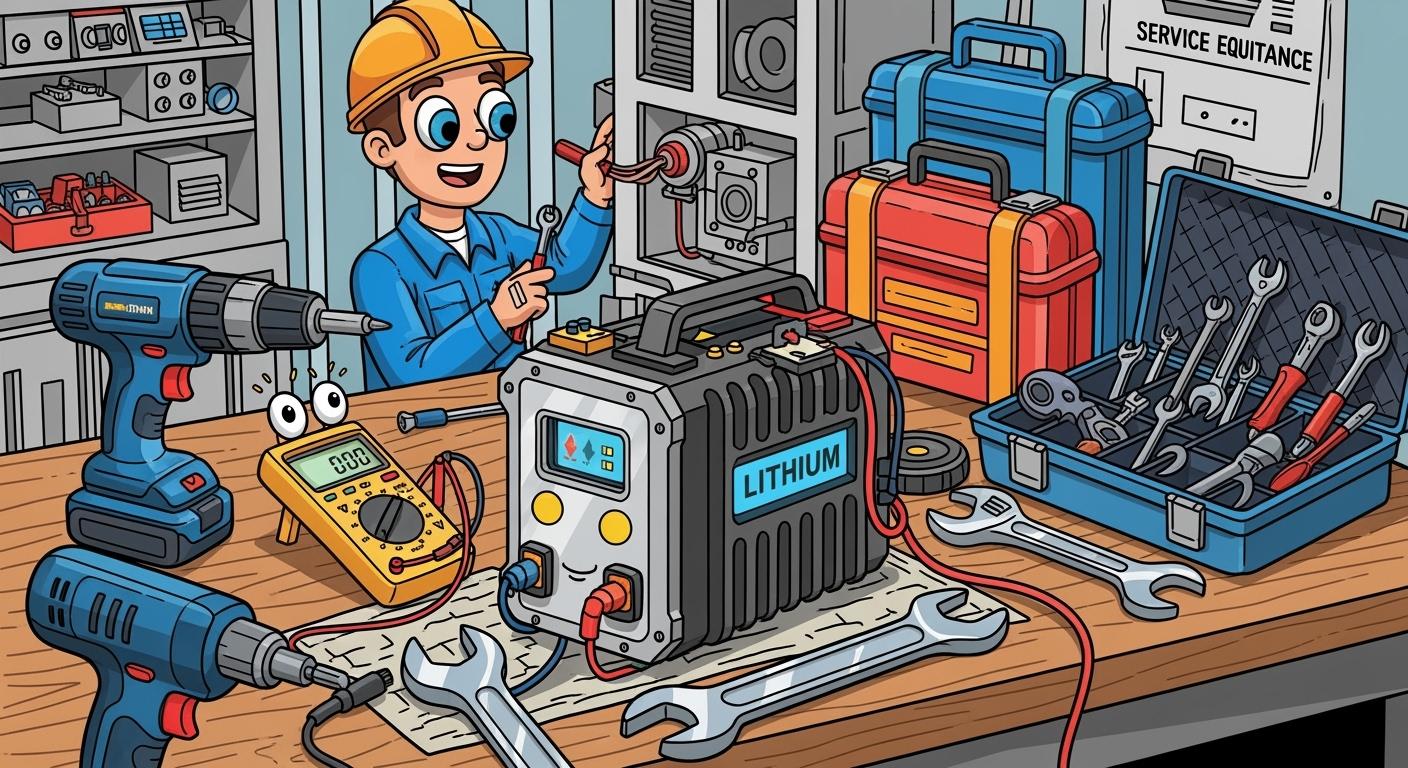
When you select Lithium Battery Packs for industrial tools and service equipment, you must prioritize safety, reliability, and operational efficiency. Meeting industry standards ensures your equipment performs safely in demanding environments. For example, you will encounter these common safety standards:
Standard | Focus |
|---|---|
IEC 62619 | Manages risks like internal short-circuiting and thermal events to prevent fires. |
UL 2054 | Requires rigorous testing for fire, mechanical, electrical, and enclosure safety. |
Custom solutions for industrial tools help you address unique power and runtime demands.
Key Takeaways
Prioritize safety by ensuring lithium battery packs meet standards like UL 2054 and IEC 62619. This protects equipment and personnel in demanding environments.
Choose the right battery chemistry for your needs. LFP offers safety and long life, while NMC and NCA provide higher energy density for specific applications.
Implement effective thermal management to prevent overheating. Use Battery Management Systems and cooling techniques to enhance safety and performance.
Select battery packs with appropriate IP ratings for dust and water resistance. Higher ratings reduce maintenance and extend battery life in harsh conditions.
Utilize modular and swappable battery designs to improve productivity. Quick swaps minimize downtime and support continuous operation in industrial settings.
Part1: Safety & Reliability in Lithium Battery Packs
1.1 Chemistry & Protection
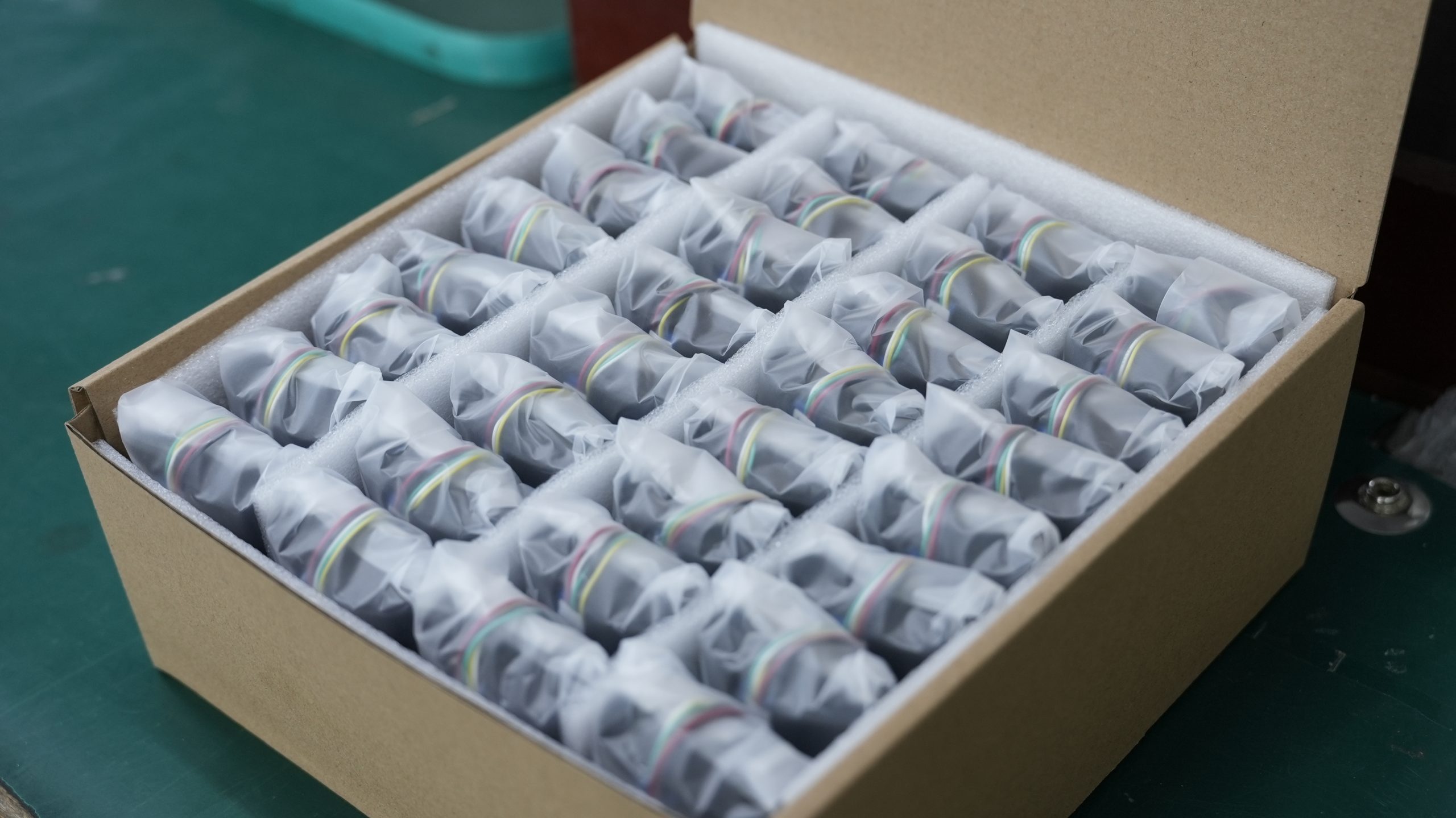
When you select lithium battery packs for industrial tools, you must consider the chemistry and protection systems. The chemistry determines the safety profile, cycle life, and suitability for different applications such as robotics, medical devices, security systems, and infrastructure equipment. The most widely used chemistries include LFP (Lithium Iron Phosphate), NMC (Lithium Nickel Manganese Cobalt Oxide), and NCA (Lithium Cobalt Aluminum Oxide). Each chemistry offers unique advantages and safety characteristics.
Chemistry | Platform Voltage (V) | Energy Density (Wh/kg) | Cycle Life (cycles) | Safety Profile | Key Characteristics |
|---|---|---|---|---|---|
LFP (Lithium Iron Phosphate) | 3.2 | 90-160 | 3,000-5,000 | Safest, minimal thermal runaway risk | High power, long lifespan, nontoxic, easily recycled |
NMC (Lithium Nickel Manganese Cobalt Oxide) | 3.6-3.7 | 150-220 | 1,000-2,000 | Balanced, moderate thermal risk | Good power density, used in EVs, higher cost |
NCA (Lithium Cobalt Aluminum Oxide) | 3.6 | 200-260 | ~500 | Lower thermal threshold, higher risk | Highest energy density, used where weight matters |
Note: If your application requires conflict-free sourcing, review the conflict minerals statement to ensure compliance.
Protection systems play a critical role in industrial safety. You must use a robust Battery Management System (BMS) and protection circuits to prevent failures. These systems monitor and control the battery’s operation, reducing risks in demanding environments like manufacturing, field service, and automated robotics.
Function | Description |
|---|---|
Overcharge protection | Prevents cells from exceeding safe voltage limits, reducing the risk of thermal runaway. |
Overdischarge protection | Cuts off current when voltage drops too low, extending battery life and preventing damage. |
Overcurrent protection | Stops dangerous current surges that could cause fires or explosions. |
High-temperature protection | Disconnects the battery if temperatures approach unsafe levels. |
Internal temperature sensors | Provide real-time monitoring of cell temperatures, detecting abnormal heat buildup quickly. |
Fuses and thermal cutoffs | Disconnect the battery if temperatures exceed safe thresholds, preventing further escalation. |
Safety vents | Release gases if internal pressure rises, maintaining battery stability. |
You benefit from embedding RTD sensors inside the battery, which improves temperature measurement accuracy. Internal sensors can detect dangerous temperature spikes up to 20 seconds before external sensors during short-circuit events. Early detection allows you to intervene before thermal runaway occurs, reducing the risk of fire or explosion.
1.2 Safety Certifications & Standards
You must ensure your lithium battery packs comply with international safety standards. These standards protect your equipment and personnel in sectors such as medical, security, and industrial automation. The most recognized certifications include UL 2054 and IEC 62619.
UL 2054: Requires rigorous testing for fire, mechanical, electrical, and enclosure safety. You must verify that your battery packs pass these tests to operate safely in industrial and service environments.
IEC 62619: Focuses on managing risks like internal short-circuiting and thermal events. This standard helps you prevent fires and ensures safe operation in automated guided vehicles (AGVs), autonomous mobile robots (AMRs), and other critical applications.
You should also consider additional certifications based on your region or industry, especially for medical and infrastructure projects. Compliance with these standards reduces liability and demonstrates your commitment to safety.
1.3 Thermal Management
Thermal management is essential for the safe operation of lithium battery packs. Overheating can lead to thermal runaway, which may cause fires or explosions. In the United States, about 2,000 lithium-ion battery fires are reported each year, affecting everything from consumer electronics to large industrial vehicles. Although the failure rate is low—about 1 in 1 million for consumer electronics—the consequences can be severe, especially in high-value or mission-critical equipment.
You can use several effective thermal management techniques to prevent overheating:
A well-designed Battery Management System (BMS) monitors cell conditions and implements safety measures.
Active cooling methods, such as air cooling, liquid cooling, or refrigerant-based cooling, help maintain temperature uniformity and efficiency.
Hybrid cooling solutions combine passive and active techniques to optimize performance and minimize energy consumption.
Immersion cooling submerges battery cells in a dielectric fluid, ensuring uniform temperature distribution and minimizing fire risks.
Improved battery pack design includes thermal barriers, proper spacing, and passive cooling features to prevent overheating.
The BMS monitors voltage, current, and temperature, taking action to prevent conditions that could lead to thermal runaway.
Tip: Regular maintenance and real-time monitoring help you detect voltage or temperature anomalies early. This practice optimizes battery lifespan and enhances safety for your industrial tools and service equipment.
By focusing on chemistry, protection, certification, and thermal management, you ensure your lithium battery packs deliver safe, reliable power for demanding industrial, medical, and infrastructure applications.
Part2: Performance Requirements
2.1 Capacity & Power Output
You need to match the capacity and power output of your lithium battery packs to the demands of your industrial equipment. Automated guided vehicles (AGVs), autonomous mobile robots (AMRs), and forklifts require high energy density and reliable power delivery. Lithium battery packs offer a clear advantage over traditional lead-acid batteries in these environments.
Battery Type | Energy Density (Wh/kg) | Maintenance Requirements |
|---|---|---|
Lithium-ion | 90-120 | Low |
Lead Acid | 30-50 | High |
Lithium battery packs provide higher energy density, which means more power in a smaller, lighter package.
Fast charging times help you keep your operations running smoothly.
Longer lifespan reduces your operating costs and downtime.
2.2 Charge/Discharge Rates
You must consider the charge and discharge rates when specifying battery packs for high-demand applications. These rates, often called C-rates, determine how quickly you can charge or discharge the battery without damaging it.
Parameter | Recommended Rate |
|---|---|
Maximum Charge Rate | Up to 1.0C |
Recommended Charge Rate | 0.2C to 0.5C |
Steady-State Discharge Rate | Up to 1.0C |
High charge currents can cause internal heating, which may shorten battery life. You should use proper charging practices and effective thermal management to maintain battery health. Keeping the state of charge within optimal levels helps prevent issues like lithium plating, which can reduce capacity.
2.3 Runtime & Efficiency
You want your equipment to run longer between charges and operate efficiently. Lithium battery packs deliver over 96% energy efficiency, so almost all the stored energy powers your operations. This efficiency supports opportunity charging, which lets you recharge during short breaks and reduces energy loss.
High energy efficiency means less wasted energy and lower electricity bills.
Fewer maintenance needs allow your team to focus on core tasks.
Reliable runtime supports multi-shift operations in logistics, robotics, and field service.
Tip: Choosing the right battery pack improves your equipment’s uptime and reduces total cost of ownership.
Custom lithium battery packs help you meet the unique power, runtime, and efficiency needs of your industrial tools and service equipment.
Part3: Durability & Environmental Resistance

3.1 Shock & Vibration Resistance
You need lithium battery packs that withstand constant movement and harsh handling in industrial environments. Mobile equipment like AGVs, AMRs, and forklifts face frequent shocks and vibrations during daily operations and transport. If you ignore these forces, you risk battery damage, reduced capacity, and higher maintenance costs. Vibration can cause plate cracking, active material shedding, and loose connections, which increase internal resistance and shorten battery life.
To ensure reliability, manufacturers design lithium battery packs to meet strict standards:
UL, IEC, and UN regulations require mechanical testing for shock and vibration.
T3 Vibration Test: Simulates transport vibration with a sine sweep from 7Hz to 200Hz over 15 minutes, across three axes.
T4 Shock Test: Applies a half-sine pulse of 150G for small cells and 50G for large cells, in six directions.
You benefit from features like thicker plates, reinforced cases, and absorbent glass mat separators. These design choices help your battery packs resist vibration and thermal damage, supporting multi-shift operations and mobile equipment needs.
3.2 Water & Dust Resistance
Industrial settings often expose your battery packs to dust, moisture, and even direct water contact. You must select lithium battery packs with the right IP (Ingress Protection) rating to prevent short circuits and performance loss. Higher IP ratings protect against dust and water, reducing maintenance and extending lifespan.
IP Rating | Dust Protection | Water Protection | Suitable Applications |
|---|---|---|---|
IP65 | Complete dust-tight | Resists low-pressure water jets | Outdoor lighting, streetlights |
IP67 | Total dust-tight | Temporary submersion in water up to 1 meter | Wet environments, docks |
IP68 | Total dust-tight | Continuous immersion under severe conditions | Extreme wet environments |
IP69K | Total dust-tight | High-pressure and high-temperature water jets | Food processing, hygiene-sensitive |
Selecting the right IP rating reduces dust and water ingress, which lowers maintenance costs and increases reliability. For example, IP67-rated packs work well in humid or wet environments, while IP69K suits areas with high-pressure cleaning.
Tip: Dust and water protection not only extends battery life but also ensures safe operation in demanding industrial and infrastructure applications.
3.3 Temperature Range
You must consider the temperature range for your lithium battery packs, especially if your equipment operates outdoors or in unheated warehouses. Most industrial lithium battery packs function reliably from -40℃ to +85℃. Extreme cold can cause capacity loss and lithium plating, leading to power disruptions. High temperatures accelerate chemical reactions, increasing the risk of thermal runaway, swelling, and faster degradation.
In cold conditions, the electrolyte becomes less mobile, which hinders lithium ion movement.
In hot conditions, chemical reactions speed up, raising safety risks.
By choosing battery packs designed for wide temperature ranges, you ensure consistent performance and safety for your tools and service equipment, even in harsh environments.
Part4: Compatibility & Integration
4.1 Tool & Equipment Interface
You need seamless integration between your battery packs and the equipment you use. Industrial tools, medical devices, robotics, and security systems all require reliable connections for safe and efficient operation. Manufacturers design interfaces to match voltage, current, and communication needs. Universal inverter compatibility ensures you can use the same battery system across different platforms, from automated guided vehicles in warehouses to portable medical carts in hospitals. This flexibility supports rapid deployment and reduces the need for custom wiring or adapters.
4.2 Modular & Swappable Packs
You gain many advantages by choosing modular and swappable battery packs for your operations. These designs allow you to scale energy storage as your needs grow. You can swap batteries quickly, which keeps your equipment running without long charging breaks. This approach works well in logistics, field service, and infrastructure maintenance.
Key benefits include:
Enhanced productivity through quick battery swaps.
Reduced downtime, enabling 24/7 operation.
Improved safety with lightweight packs that any employee can handle.
Cost efficiency due to long service life and fewer replacements.
Modular architecture for rapid customization in different environments.
Hot-swappable design that prevents operational interruptions.
Feature | Benefit |
|---|---|
Scalable Amp-Hour Capacity | Increase energy storage as demand grows, enhancing uptime. |
Space-Optimized Form Factors | Save space and allow flexible installation in various industrial settings. |
Universal Inverter Compatibility | Integrate with existing systems for operational flexibility. |
4.3 Smart Features & Communication
Smart features in battery packs help you monitor and manage your power systems more effectively. You can access real-time data on state of charge, temperature, and voltage. Communication protocols like CAN Bus and RS485 support reliable data transfer in industrial, medical, and security applications. Remote monitoring lets you receive alerts and track performance from a central location.
Communication Protocol | Description |
|---|---|
CAN Bus | Real-time data transfer for monitoring SOC, temperature, and voltage. |
RS485 | Long-distance data transfer with strong interference resistance. |
Daisy Chain | Sequentially links modules for simple system design. |
Remote Monitoring | Access real-time battery information and receive alerts on abnormalities. |
Data Monitoring | Log key data to track and optimize battery performance over time. |
Smart features enable predictive maintenance. You can identify issues before they cause failures, reducing downtime and maintenance costs. The Battery Management System stores historical data, which helps you plan maintenance and extend the life of your lithium battery packs.
Part5: Maintenance & Lifecycle Management
5.1 Charging Infrastructure
You need a robust charging infrastructure to keep your operations running smoothly. Industrial environments, such as warehouses, hospitals, and manufacturing plants, often require multiple charging stations to support continuous use of equipment like AGVs, AMRs, and portable medical devices. Place chargers in temperature-controlled, well-ventilated areas to prevent overheating and reduce fire risks. Avoid direct sunlight and moisture. Use chargers that match the voltage and current requirements of your lithium battery packs to ensure safe and efficient charging. Fast-charging options can minimize downtime, but always monitor battery temperature during rapid charging cycles.
Tip: Schedule regular inspections of charging stations to catch wear or damage early. This practice helps prevent unexpected failures and supports safe operation.
5.2 Monitoring & Diagnostics
Effective monitoring and diagnostics extend the lifespan of your battery packs and improve safety. An intelligent Battery Management System (BMS) checks the temperature and voltage of each cell. This system can act immediately if it detects a problem. Gas sensors add another layer of safety by detecting volatile substances before they become hazardous.
You can choose between basic and advanced monitoring approaches:
Monitoring Approach | Key Tools | Estimated Lifespan Impact | Efficiency Insight |
|---|---|---|---|
Basic Monitoring | BMS Only | Standard | Basic (Voltage-based SoC) |
Accurate Monitoring | BMS, External Shunt, Hybrid Inverter | Potentially 20-30% Longer | High (Coulomb counting, RTE) |
Depth of Discharge (DoD) affects battery life. Limiting DoD can increase the number of cycles.
Round-trip efficiency (RTE) shows how much energy you lose during charging and discharging. A drop in RTE can signal a problem.
Cell-level diagnostics help you spot imbalances early.
You should use these tools to monitor batteries in robotics, security, and infrastructure applications. Early detection of issues reduces downtime and supports safe, long-term use.
5.3 Replacement & Recycling
Plan for battery replacement and recycling to meet environmental standards and reduce costs. Always follow local and international guidelines for disposal. Partner with certified recycling facilities that use advanced methods, such as hydrometallurgical and pyrometallurgical processes. These methods recover valuable metals and lower emissions.
Store used batteries in cool, dry, and well-ventilated spaces until you can recycle them. This practice prevents degradation and reduces fire risks. By following these steps, you help protect the environment and comply with regulations.
For more on sustainable practices, see Our Approach to Sustainability.
You must consider safety, performance, durability, and integration when choosing lithium battery packs for industrial tools and service equipment. Always verify compliance with standards like UL 2054 and IEC 62619. Custom solutions help you meet unique operational needs in sectors such as robotics, medical, and infrastructure. For best results:
Review maintenance schedules regularly.
Monitor battery health with smart diagnostics.
Stay updated on new technologies and standards.
Careful planning ensures reliable power and long-term value.
FAQ
What battery chemistry should you choose for industrial tools?
You should select LFP (Lithium Iron Phosphate) for safety and long cycle life. NMC (Lithium Nickel Manganese Cobalt Oxide) suits high energy needs. NCA (Lithium Cobalt Aluminum Oxide) works best where weight matters.
Chemistry | Platform Voltage (V) | Energy Density (Wh/kg) | Cycle Life (cycles) |
|---|---|---|---|
LFP | 3.2 | 90-160 | 3,000-5,000 |
NMC | 3.7 | 150-220 | 1,000-2,000 |
NCA | 3.6 | 200-260 | ~500 |
How do you ensure lithium battery pack safety?
You must verify UL 2054 and IEC 62619 certifications. Use a robust Battery Management System (BMS) with overcharge, overdischarge, and temperature protection.
Regular inspections and real-time monitoring help you prevent failures in medical, robotics, and infrastructure applications.
What IP rating do you need for harsh environments?
You should choose IP67 or higher for wet or dusty conditions.
IP Rating | Dust Protection | Water Protection | Typical Use |
|---|---|---|---|
IP65 | Dust-tight | Water jets | Outdoor lighting |
IP67 | Total dust-tight | Temporary immersion | Docks, field service |
IP69K | Total dust-tight | High-pressure jets | Food processing |
Can you use modular battery packs for multi-shift operations?
You can use modular and swappable packs to reduce downtime. Quick swaps keep AGVs, AMRs, and medical carts running. Modular designs allow you to scale capacity and improve productivity.
How do you recycle lithium battery packs responsibly?
You must partner with certified recycling facilities. Store used packs in cool, dry spaces. Hydrometallurgical and pyrometallurgical methods recover metals and reduce emissions.
Responsible recycling supports sustainability in industrial, medical, and security sectors.


