

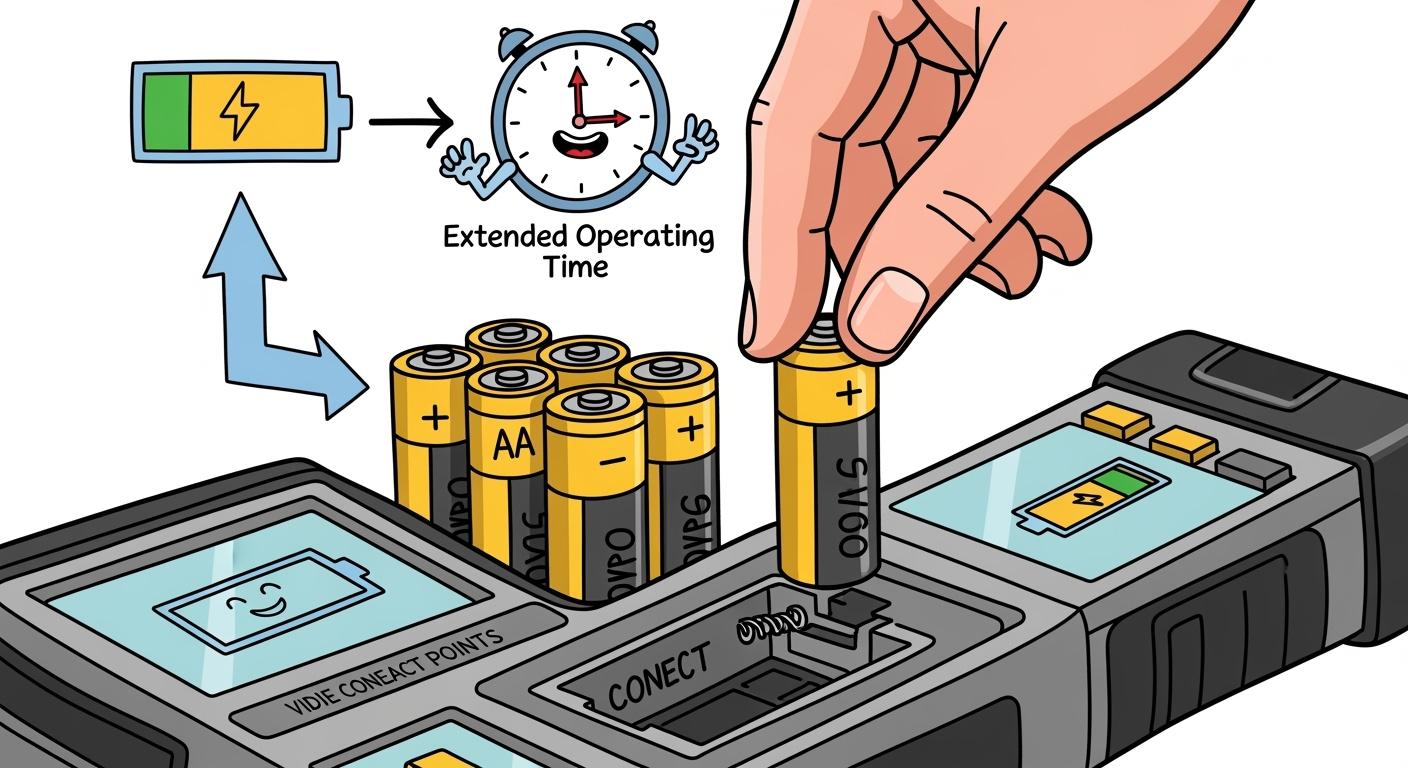
You face increasing demands to extend operating time for inspection devices in complex industrial environments. Lithium battery packs have become essential for reliable, long-duration performance. As digitalization and automation expand, you must prioritize advanced power management and battery monitoring systems. These solutions reduce unexpected failures and improve asset utilization. Innovative technologies in battery optimization help you achieve consistent performance and support your business goals.
Key Takeaways
Identify battery drain factors to optimize your inspection devices. High current draw and frequent data transmission can quickly deplete battery life.
Control environmental conditions to enhance battery performance. Proper temperature and humidity management can significantly extend battery life.
Upgrade to lithium battery packs for improved reliability. They offer higher energy density, longer cycle life, and lower maintenance needs compared to traditional batteries.
Implement advanced battery monitoring systems. These systems provide real-time data, helping you predict failures and schedule maintenance effectively.
Adopt energy harvesting methods to supplement battery power. This approach reduces maintenance needs and ensures consistent device operation.
Part 1: Challenges to Extend Operating Time
1.1 Battery Drain Factors
You face several factors that drain batteries in inspection devices. High current draw from advanced sensors, wireless communication modules, and onboard processing units can quickly reduce available energy. Frequent data transmission and continuous operation increase the load on lithium battery packs. Inconsistent power management or lack of sleep modes can further accelerate battery depletion. You must identify these drain sources to optimize your system and extend operating time.
1.2 Environmental Impacts
Environmental conditions play a critical role in battery performance. You need to control the environment where your devices operate to maintain battery efficiency. Key factors include:
Proper ventilation, humidity levels, and consistent temperature in battery rooms.
Temperature swings and high humidity can accelerate battery aging.
Regular checks are necessary, especially under heavy usage.
Temperature variation has a direct impact on lithium battery packs:
As temperatures decrease, battery capacity drops, reducing energy delivery efficiency.
Uneven temperatures in battery packs can cause reduced capacity and faster degradation.
At subzero temperatures, capacity can fall by 50% or more due to slowed chemical reactions and increased resistance.
Colder temperatures slow chemical reactions, reducing efficiency and potentially shortening device lifespan.
Higher temperatures may enhance short-term performance but accelerate aging and reduce longevity.
You must monitor and manage these environmental factors to ensure reliable operation and maximize battery life.
1.3 Traditional Battery Limitations
Traditional batteries, such as lead-acid and AGM, present significant limitations compared to modern lithium battery packs. The table below highlights key differences:
Feature | Traditional (Lead-Acid/AGM) | Lithium (LiFePO4/NMC/LCO/LMO) |
|---|---|---|
Energy Density | Low | High |
Cycle Life | Short | Long |
Self-Discharge Rate | Up to 15% monthly | <3% monthly |
Charging Speed | Slow | Fast |
Maintenance Needs | High | Low |
These limitations can cause power interruptions, missed data, and higher maintenance costs. You should consider upgrading to lithium battery packs to improve reliability and extend operating time for your inspection devices.
Part 2: Battery Fundamentals and Power Management

2.1 Lithium Battery Pack Basics
You need to understand the structural and chemical features that make lithium battery packs ideal for inspection devices. These packs use advanced materials and designs to deliver high performance and safety. The table below highlights key characteristics:
Characteristic | Description |
|---|---|
Carbon Fibers | Structural anodes with excellent conductivity and mechanical strength. |
Solid-State Electrolytes | Enhance safety, though they may slow ion diffusion and face chemical instability challenges. |
Temperature Performance | Operate reliably from −20 °C to 180 °C, suitable for harsh environments. |
Eco-Friendliness | Use safe, inexpensive, and environmentally friendly materials. |
Lithium battery packs also offer superior energy density compared to other chemistries, as shown here:
Battery Chemistry | Specific Energy Density (Wh/kg) |
|---|---|
Chemistry A | 30-50 |
Chemistry B | 45-80 |
Chemistry C | 60-120 |
LiFePO4/NMC/LCO/LMO Lithium battery | 150-190 |
Chemistry D | 100-135 |
Chemistry E | 90-120 |
This high energy density allows you to extend operating time and reduce device weight.
2.2 Battery Monitoring Techniques
Effective battery monitoring is essential for maximizing uptime and safety. You can use several techniques to track battery health and performance:
Battery Monitoring Technique | Description |
|---|---|
Simple Voltage and Temperature Monitor | Tracks total voltage and temperature; limited for detailed assessment. |
Split Battery Monitor | Compares sections for voltage and temperature differences. |
Cell Level Monitoring System | Monitors each cell for early fault detection. |
Comprehensive Cell Level System | Uses algorithms to assess health and predict failures. |
State of Health (SoH) | Provides daily health status and life predictions. |
Cell Temperature Monitoring | Detects thermal runaway by tracking individual cell temperatures. |
Advanced monitoring systems, such as those found in BMS and PCM solutions, provide real-time data and predictive analytics. These systems help you extend operating time by supporting proactive maintenance and reducing downtime.
2.3 Integrated Circuits for Reliability
Integrated circuits (ICs) play a critical role in battery management. You rely on ICs to balance cells, protect against overcharge, and ensure safe operation. Modern BMS and PCM modules use ICs to monitor voltage, current, and temperature, providing predictive alarms and trend analysis. This technology enables you to extend operating time and improve reliability in demanding inspection environments.
Tip: Companies like Tesla and GE use AI-powered monitoring to predict battery failures and schedule maintenance before issues arise.
2.4 Battery Emulators and Testing
Battery emulators allow you to test and optimize battery systems before deployment. These devices mimic real battery behavior, letting you evaluate performance under different scenarios without risk. Emulators help you identify issues early, improve reliability, and shorten development cycles.
Benefit | Description |
|---|---|
Improved Testing Coverage | Simulate various conditions for comprehensive testing. |
Enhanced Reliability | Detect scheduling and communication issues early. |
Reduced Development Cycle Times | Accelerate feedback and free resources for critical tests. |
By using emulators, you ensure your inspection devices deliver consistent performance and extended operating time in the field.
Part 3: Battery Optimization Strategies
3.1 Selecting Lithium Battery Packs
You must select lithium battery packs that match your inspection device requirements and industrial environment. The right choice improves safety, performance, and sustainability. Consider the following criteria:
Criteria | Description |
|---|---|
Safety | Battery safety is critical. Dendrites can cause short-circuits, and lithium-ion batteries may catch fire if damaged. Semi-aqueous or solid-state electrolytes can enhance safety. |
Environmental Impact | Materials like cobalt and nickel can harm the environment if not disposed of properly. Lithium mining may cause habitat destruction and pollution. Responsible sourcing and disposal are essential. |
Chemistry Selection | The right lithium chemistry ensures safety and performance. LiFePO4 Lithium battery offers stability and long life cycles, making it a preferred choice for industrial applications. |
You should also keep these best practices in mind:
Select the right lithium chemistry for your application.
Use fewer cells in the battery assembly to increase safety.
Integrate an intelligent Battery Management System (BMS) for enhanced safety and performance.
If your sourcing involves cobalt or nickel, review your supplier’s conflict minerals statement to ensure ethical practices.
3.2 Efficient Power Conversion
Efficient power conversion directly impacts how long your inspection devices can operate. Wide bandgap semiconductors, such as GaN and SiC, increase power density and minimize energy losses. These materials reduce wasted energy as heat, which allows your devices to run longer between charges. Improved efficiency translates to higher reliability and better performance in critical industrial applications.
Tip: Upgrade your power conversion modules to GaN or SiC-based designs to maximize battery utilization and extend operating time.
3.3 Minimizing Current Draw
Reducing current draw is one of the most effective ways to extend battery life. You can achieve this by:
Selecting low-power components for sensors and processors.
Implementing sleep or standby modes during idle periods.
Optimizing firmware to reduce unnecessary data transmission.
Using efficient communication protocols, such as LoRa or Zigbee, for wireless modules.
Scheduling intensive tasks during periods of peak battery performance.
Note: Regularly audit your device’s power profile to identify and eliminate sources of excessive current draw.
3.4 Energy Harvesting Methods
Energy harvesting can supplement your lithium battery packs, especially in remote or hard-to-access locations. This approach reduces maintenance and increases device reliability. Common energy harvesting methods include:
Photovoltaic (PV) sources: Deliver the highest average and peak power output, especially in well-lit environments.
RF energy scavenging: Offers high availability (up to 90%) due to the presence of RF signals, though with lower power output.
Thermoelectric generators (TEGs): Provide stable energy in cold environments with consistent temperature gradients.
Piezoelectric harvesters: Generate energy bursts during high-mobility activities, though availability is limited (about 40%).
Energy harvesting sensors eliminate the need for frequent battery replacements. This reduces labor costs and prevents unexpected failures in critical monitoring systems. Devices powered by energy harvesting maintain a consistent power supply, which improves data reliability and extends maintenance intervals.
3.5 Smart Charging Protocols
Smart charging protocols help you maximize battery lifespan and reduce downtime. These protocols:
Prevent overcharging and deep discharging by keeping batteries within safe limits.
Support optimal thermal management by monitoring temperature and minimizing thermal stress.
Improve cell balancing, ensuring equal aging across the battery pack.
Facilitate predictive maintenance through real-time monitoring and early issue detection.
Minimize idle deterioration by managing battery charge during periods of inactivity.
Pro Tip: Implement a smart charging system with real-time analytics to ensure your lithium battery packs remain healthy and ready for deployment.
Ten Proven Power Optimization Techniques
You can apply these ten strategies to optimize your battery systems and extend operating time:
Choose the safest and most stable lithium chemistry, such as LiFePO4 Lithium battery.
Use an intelligent BMS for real-time monitoring and protection.
Select high-efficiency power conversion components (GaN/SiC).
Minimize current draw with low-power hardware and optimized firmware.
Enable sleep and standby modes during inactivity.
Schedule high-load tasks during optimal battery conditions.
Integrate energy harvesting solutions where feasible.
Use smart charging protocols to prevent battery stress.
Regularly audit and update device power profiles.
Source batteries and materials responsibly to support sustainability and compliance.
By following these strategies, you can extend operating time, reduce maintenance, and improve the reliability of your inspection devices.
Part 4: Real-World Applications

4.1 Industrial Inspection Robots
You see industrial inspection robots transforming sectors such as manufacturing, infrastructure, and security. These robots rely on advanced lithium battery packs like LiFePO4 Lithium battery and NMC Lithium battery for reliable, long-duration operation. You can deploy robots to inspect pipelines, monitor assembly lines, or patrol facilities. Optimized battery systems allow these robots to work longer shifts, reduce downtime, and minimize manual intervention. For example, in automotive plants, robots equipped with high-density lithium battery packs complete more inspection cycles per charge. You benefit from fewer interruptions and improved asset utilization.
Tip: Regular battery monitoring and smart charging protocols help you schedule maintenance efficiently and avoid unexpected failures in mission-critical environments.
4.2 Remote Monitoring Devices
You depend on remote monitoring devices in sectors such as healthcare, data centers, renewable energy, and security systems. These devices must operate reliably in the field, often in harsh or inaccessible locations. Battery system optimization plays a key role in extending device uptime and reducing maintenance costs. The following table highlights real-world improvements:
Case Study | Description | Impact |
|---|---|---|
Data Center Reliability Boost | A Texas data center used the Battery Status Monitor to prevent outages. | Reduced downtime by 40%, cut maintenance costs by 25%. |
Renewable Energy Storage Optimization | A solar company in California improved battery performance with monitoring solutions. | Enhanced energy storage efficiency by 30%, extended battery life cycles. |
Healthcare Backup Power Assurance | A hospital in Ontario ensured backup power systems for patient care. | Achieved 99.9% system reliability during grid failures. |
You can apply these strategies to remote monitoring in smart cities, environmental sensors, and critical infrastructure. Optimized lithium battery packs ensure continuous data collection and system reliability.
4.3 Measurable Outcomes
You achieve measurable outcomes when you optimize battery systems in inspection devices. You extend operating time, increase reliability, and lower total cost of ownership. In robotics, you see robots completing more inspection rounds per charge. In healthcare, you maintain backup power for life-saving equipment. In security and infrastructure, you reduce the risk of system downtime. You also support sustainability goals by selecting lithium battery chemistries with long cycle life and high energy density. These improvements help you deliver better service to your clients and maintain a competitive edge.
You can extend operating time for inspection devices by applying proven battery optimization strategies. Focus on these best practices:
Establish regular maintenance and inspection routines.
Control temperature with thermal management systems.
Use smart charging to optimize battery life.
Regular monitoring, advanced power management, and innovative technologies help you achieve reliable performance. Consult industry experts to tailor solutions for your unique operational needs.
FAQ
5.1 What lithium battery chemistry should you choose for inspection devices?
You should consider LiFePO4 Lithium battery for safety and long cycle life. NMC Lithium battery offers higher energy density. The table below compares key features:
Chemistry | Energy Density (Wh/kg) | Cycle Life (cycles) |
|---|---|---|
LiFePO4 Lithium battery | 120–160 | 2000–4000 |
NMC Lithium battery | 150–220 | 1000–2000 |
5.2 How does temperature affect lithium battery packs?
Temperature changes impact battery performance. High heat accelerates aging. Cold reduces capacity. You should use thermal management systems to keep batteries within optimal ranges for maximum operating time.
Tip: Keep batteries between 15°C and 35°C for best results.
5.3 What is the role of a Battery Management System (BMS)?
A BMS monitors voltage, current, and temperature. You use it to balance cells, prevent overcharge, and extend battery life. Advanced BMS solutions provide real-time analytics for predictive maintenance.
5.4 How can you minimize current draw in inspection devices?
You can select low-power components, enable sleep modes, and optimize firmware. These steps reduce energy use and extend battery runtime. Regular audits of your device’s power profile help identify further savings.
5.5 Why should you use smart charging protocols?
Smart charging protocols protect lithium battery packs from overcharging and deep discharge. You benefit from longer battery life, improved safety, and reduced downtime. Smart systems also support predictive maintenance.


