

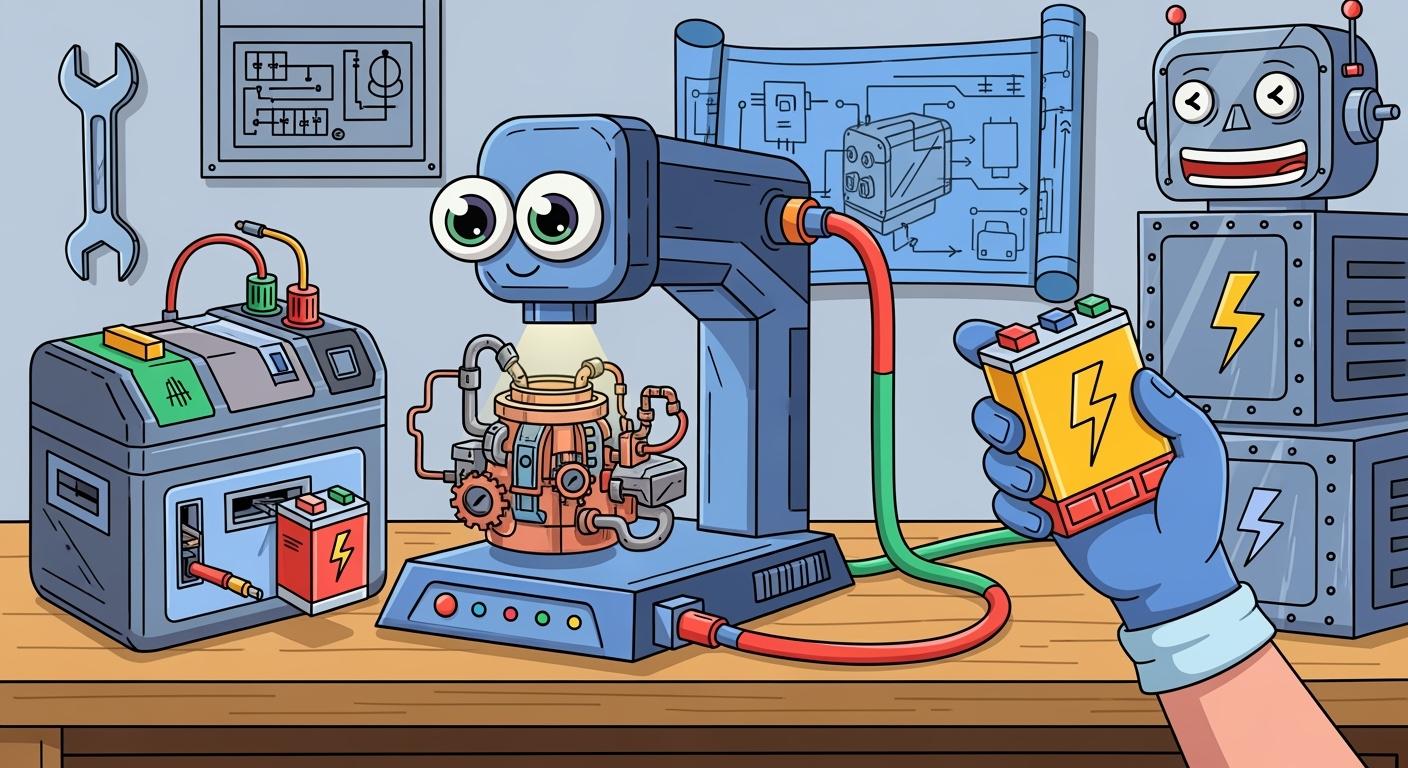
You depend on stable battery power to keep your 3d scanning operations precise and efficient. High-precision 3d imaging devices require battery solutions that deliver consistent voltage and current. Lithium battery packs support longer 3d scanning sessions and enable you to work in challenging environments. Battery performance affects the accuracy of your 3d data, the mobility of your team, and the uptime of your equipment. Battery Solutions tailored for industrial 3d applications help you maintain productivity and reduce downtime.
Key Takeaways
Choose the right battery based on your 3D scanner’s voltage and current needs to ensure stable power.
Opt for lithium-ion or semi-solid-state batteries for long runtime and reliability in challenging environments.
Regularly maintain batteries by inspecting terminals and using approved chargers to extend their lifespan.
Utilize hot-swappable battery packs to minimize downtime during 3D scanning operations.
Consider environmental factors when selecting batteries to ensure optimal performance in various conditions.
Part1: Power Requirements
1.1 Voltage and Current Needs
You must select a battery that matches the voltage and current needs of your 3d scanner. Industrial 3d scanners often require stable power to operate sensitive imaging components. Most 3d scanning devices use internal circuits to convert input voltage to a safe range for their electronics.
Typical input voltage for industrial 3d equipment ranges from 100V to 240V.
Internal systems usually step this down to 5V–24V for low-voltage components.
A lithium battery pack designed for 3d scanning should deliver consistent voltage and current. This consistency helps prevent power fluctuations that could disrupt scanning accuracy. When you choose a battery, always check the manufacturer’s recommended voltage and current ratings for your specific 3d scanner model.
1.2 Runtime and Uptime
You rely on long runtime and high uptime to complete 3d scanning tasks efficiently. A battery with extended capacity allows you to scan larger areas or more objects without frequent recharging. In field applications, such as infrastructure inspection or robotics, you need a battery that supports continuous operation.
Select a battery with enough capacity to match your typical scanning session length.
Consider backup batteries or hot-swappable options to maximize uptime.
A reliable battery solution reduces downtime and increases productivity for your 3d scanning projects.
1.3 Impact on Precision
Battery stability directly affects the precision of your 3d scans. Fluctuations in battery output can introduce errors in high-resolution imaging.
High-resolution scans can detect defects in battery cells that impact stability.
Automated measurements from 3d scanners provide critical metrics for battery safety and performance.
Advanced 3d scanning technologies, such as industrial X-ray CT, improve the quality of battery assessments.
You achieve the best results when your 3d scanner receives stable power throughout the scanning process. Consistent battery performance ensures accurate data capture and reliable imaging for industrial applications.
Part2: Battery Technologies

2.1 Lithium-Ion Packs
You rely on lithium-ion battery packs for your industrial 3d scanners. These packs deliver high energy density and stable platform voltage. You can use lithium-ion batteries in medical imaging, robotics, security, and infrastructure inspection. Lithium-ion packs support long scanning sessions and quick recharge cycles. You benefit from their lightweight design and consistent performance. Many 3d scanners use lithium-ion packs because they provide reliable power for high-precision imaging.
Tip: Always check the battery chemistry when selecting a pack for your 3d scanner. Different chemistries offer unique advantages for industrial applications.
2.2 Semi-Solid-State Battery Packs
Semi-solid-state battery packs represent a new direction in power technology. You gain improved safety and longer cycle life compared to traditional lithium-ion batteries. These packs use advanced materials to reduce overheating risks. You can deploy semi-solid-state batteries in robotics, medical devices, and security systems. The stable output supports 3d scanning in remote or harsh environments. You achieve greater uptime and reliability with these battery solutions.
2.3 Suitability for Industry
You must match the battery technology to your 3d scanner’s requirements. The table below compares common lithium battery chemistries used in industrial sectors:
Chemistry | Platform Voltage (V) | Energy Density (Wh/kg) | Cycle Life (cycles) |
|---|---|---|---|
LCO | 3.7 | 150 | 500 |
NMC | 3.7 | 200 | 1000 |
LiFePO4 | 3.2 | 120 | 2000 |
LMO | 3.7 | 100 | 700 |
Semi-Solid-State | 3.7 | 250 | 3000 |
Lithium Metal | 3.7 | 350 | 1000 |
You select the right battery for your 3d scanner by considering platform voltage, energy density, and cycle life. Industrial sectors such as infrastructure, medical, robotics, and security depend on these battery solutions for reliable 3d imaging.
Part3: Battery Solutions Selection
3.1 Matching Specs to Scanners
You need to match the right battery solutions to your 3d scanner’s technical requirements. Each industrial 3d scanner model, such as Artec, Faro, or LiDAR-based systems, has unique power demands. You should review the voltage, current, and capacity specifications before making a selection. For example, Artec handheld scanners often require lightweight lithium battery packs for mobility, while Faro tripod-mounted scanners may need higher-capacity packs for extended sessions.
Scanner Type | Typical Use Case | Power Demand | Recommended Battery Solution |
|---|---|---|---|
Artec Handheld | Field/mobile scanning | Low to Medium | Lightweight lithium-ion pack |
Faro Tripod-Mounted | Long-duration scanning | Medium to High | High-capacity lithium-ion pack |
LiDAR Industrial | Infrastructure mapping | High | Semi-solid-state or NMC pack |
You should always check the manufacturer’s documentation for your 3d scanner. This ensures the battery solution you choose meets both runtime and safety requirements. If you work in robotics or medical imaging, you may need battery solutions that support both high precision and long operational periods.
Tip: Choose rechargeable battery packs for most industrial 3d scanning tasks. Rechargeable solutions reduce operational costs and support sustainability goals.
3.2 Environmental Factors
You must consider environmental factors when selecting battery solutions for 3d applications. Temperature, humidity, and dust can affect battery performance and lifespan. For example, scanning in outdoor infrastructure projects exposes your battery to temperature extremes. In medical or security environments, you need battery solutions that maintain stable output in controlled conditions.
High temperatures can reduce battery cycle life.
Low temperatures may decrease available capacity.
Dust and moisture can damage battery terminals or connectors.
You should select battery solutions with protective casings or IP-rated enclosures for harsh environments. In robotics or field-based 3d scanning, ruggedized lithium battery packs help maintain uptime and safety.
Note: Always store and transport batteries in approved cases to prevent damage and ensure compliance with safety regulations.
3.3 Step-by-Step Process
You can follow a clear process to select the best battery solutions for your 3d scanning needs:
Identify Power Requirements
Review your 3d scanner’s voltage, current, and runtime needs. Check technical documentation for exact figures.Assess Application Scenario
Determine if you need mobility for field use, or extended runtime for stationary scanning. Consider if your application is in medical, robotics, security, or infrastructure sectors.Evaluate Environmental Conditions
Analyze the operating environment. Choose battery solutions with features like temperature tolerance or ruggedized design if needed.Compare Battery Chemistries
Use the table below to compare lithium battery chemistries for your application:Chemistry
Energy Density (Wh/kg)
Cycle Life (cycles)
Typical Use Case
LiFePO4
120
2000
Robotics, infrastructure
NMC
200
1000
Medical, security
LCO
150
500
Consumer electronics
LMO
100
700
Portable 3d devices
Semi-Solid
250
3000
Industrial, remote sites
Select Accessories
Choose power banks or hot-swappable packs for remote or on-the-go 3d scanning. These accessories help you extend runtime and reduce downtime.Test and Monitor
After installation, monitor battery performance during 3d scanning sessions. Adjust your choice if you notice issues with uptime or stability.
Tip: Always keep spare battery solutions and charging equipment on hand for uninterrupted 3d scanning in the field.
You can maximize productivity and reliability by following these steps. The right battery solutions keep your 3d scanning operations running smoothly, whether you work in industrial inspection, medical imaging, or robotics.
Part4: Battery Solutions Management
4.1 Maintenance and Safety
You must prioritize battery maintenance and safety to ensure reliable 3d scanning operations. Proper care extends the lifespan of lithium battery packs and reduces the risk of incidents. In industrial environments, safety incidents related to lithium-ion batteries remain a challenge. OSHA guidance highlights the importance of prevention and recordkeeping. Manufacturers have reported risks such as thermal runaway, hazardous materials exposure, and fire hazards. Improved training and proactive risk management help you prevent these issues.
To maximize battery lifespan and safety, follow these best practices:
Store batteries in cool, dry environments away from direct sunlight.
Inspect battery terminals and connectors for dust or corrosion before each use.
Use only manufacturer-approved chargers and accessories.
Avoid overcharging or deep discharging lithium battery packs.
Train your team on emergency procedures for battery fires or leaks.
Tip: Schedule regular battery health checks and keep detailed maintenance records. This practice supports compliance and helps you identify potential problems early.
4.2 Hot-Swappable and External Packs
Hot-swappable and external battery packs play a key role in uninterrupted 3d scanning. You can replace a depleted battery without shutting down your 3d scanner. For example, the FreeScan Omni uses a hot-swappable design that lets you swap batteries during long scanning sessions. Detachable battery packs enable seamless transitions and eliminate downtime.
You benefit from these features in field applications where continuous operation is critical. Many industrial 3d scanners support external power banks or modular battery packs. These accessories allow you to extend runtime and maintain productivity in remote or challenging environments.
Common Accessories for Uninterrupted Operation:
Accessory Type | Function | Typical Use Case |
|---|---|---|
Hot-swappable packs | Replace batteries without shutdown | Infrastructure, robotics |
External power banks | Provide backup power on the go | Field scanning, security |
Multi-bay chargers | Charge multiple batteries simultaneously | Medical, industrial inspection |
Ruggedized cases | Protect batteries in harsh conditions | Outdoor, infrastructure |
Note: Always carry extra batteries and charging solutions when you work in the field. This habit ensures you can continue 3d scanning without interruption.
4.3 Power Management Systems
Advanced power management systems help you monitor and control battery performance in real time. These systems protect your 3d scanner from voltage fluctuations and overheating. You can use battery management systems (BMS) to track charge cycles, temperature, and remaining capacity. A robust BMS improves safety and extends the life of your lithium battery packs. Learn more about battery management systems.
In modern industrial settings, 3d scanning has become essential for asset management and maintenance. Facilities that use advanced battery systems for 3d scanners achieve millimeter-level accuracy and rapid data collection. This technology reduces manual surveying time and minimizes costly rework. You also improve safety by enabling virtual walkthroughs of hazardous areas, which lowers exposure risks for your team.
Callout: Integrate power management systems with your 3d scanning workflow to maximize uptime and data reliability.
You can apply these management strategies across sectors such as medical imaging, robotics, security, and infrastructure. By investing in the right battery solutions and accessories, you ensure stable power for high-precision 3d scanning in any environment.
Part5: Applications and Case Studies
5.1 Industrial Use Cases
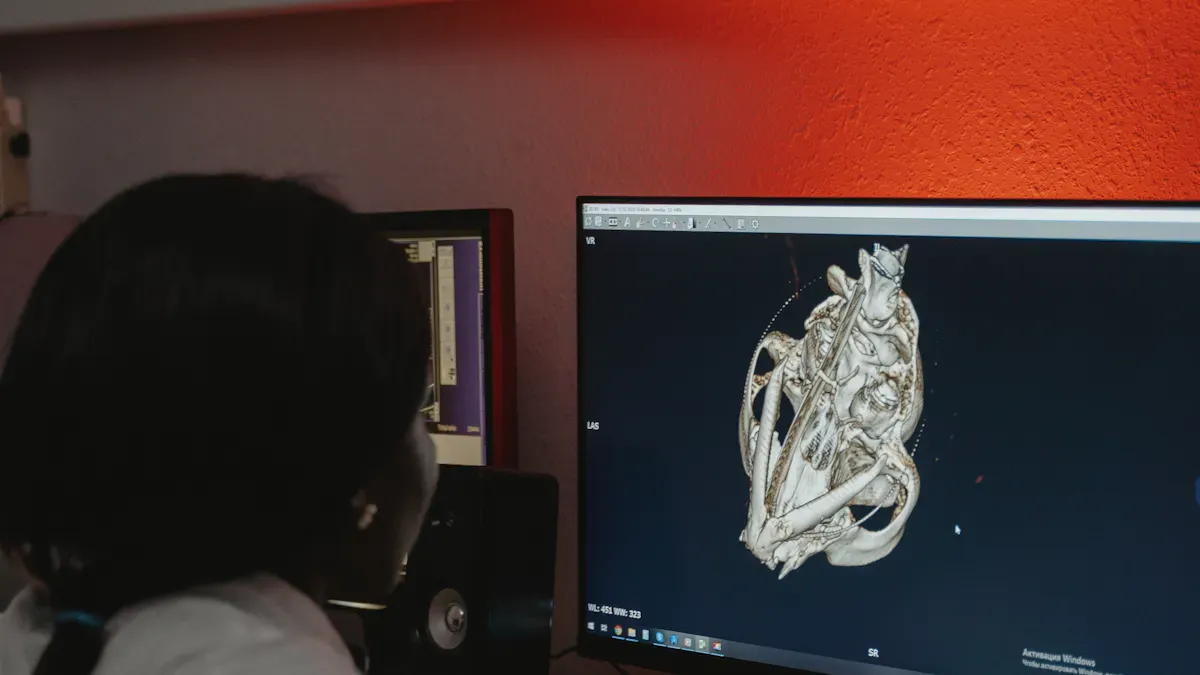
You see battery-powered 3D scanners transforming many industrial sectors. These devices support critical tasks such as battery tray inspection, quality control, and maintenance. You can use them in environments where stable power and mobility matter most. The following table highlights common use cases for battery-powered 3D scanners:
Use Case | Description |
|---|---|
Mold Inspection | Precision checks in manufacturing processes |
Aerospace Components | Ensuring accuracy in critical aerospace parts |
Automotive Parts | Quality control in automotive production |
Aircraft Engine Maintenance | Regular checks for performance and safety |
Assembly-Line Inspection | Streamlining production efficiency |
Robotics Alignment | Ensuring precision in robotic systems |
Automotive Surface Checks | Evaluating surface quality in vehicles |
Large Machine Tooling | Precision in large-scale manufacturing |
Aerospace Structure Inspection | Inspecting structural integrity in aerospace |
Composite Material Evaluation | Assessing quality of composite materials |
You often rely on lithium battery packs for these applications. They provide the stable power needed for accurate battery tray inspection and 3d inspection in challenging environments.
5.2 Battery Solutions in Practice
You benefit from advanced battery solutions when you perform battery tray inspection in the field. For example, wireless 3D scanners like the KSCAN-X and SIMSCAN-E use dual-battery or hot-swappable systems. These features allow you to complete battery tray inspection without interruption, even in remote or dusty locations. You can scan for up to 8 hours and charge while working, which increases your productivity.
You use battery tray inspection for electric vehicle batteries, ensuring safety and quality.
You deploy battery-powered scanners for battery tray inspection during aircraft engine maintenance.
You rely on robust battery systems with IP54 protection for battery tray inspection in heavy industry.
In the automotive sector, companies like Phiaro use portable 3D scanners for battery tray inspection when converting vehicles to electric power. These scanners help you capture precise measurements and improve the design of electric vehicle batteries. You also see battery tray inspection in robotics, where alignment and quality checks depend on uninterrupted scanning.
Tip: Choose lithium battery packs with hot-swappable features to maximize uptime during battery tray inspection in industrial settings.
You can trust battery-powered 3D scanners to deliver reliable results for battery tray inspection, whether you work in infrastructure, security, or manufacturing.
Choosing the right battery solution for your industrial 3D scanner ensures stable power and high-precision results. Lithium battery packs, advanced management systems, and rugged accessories support your work in medical, robotics, security, and infrastructure sectors.
Match battery specs to your scanner’s needs.
Maintain batteries with regular checks.
Use hot-swappable packs for uninterrupted uptime.
Evaluate your operational needs and consult with trusted solution providers to optimize your 3D scanning performance.
FAQ
What lithium battery chemistry works best for industrial 3D scanners?
You often choose between LiFePO4, NMC, LCO, and LMO chemistries. Each offers unique benefits. See the table below for a quick comparison:
Chemistry | Energy Density (Wh/kg) | Cycle Life (cycles) | Typical Use Case |
|---|---|---|---|
LiFePO4 | 120 | 2000 | Robotics, infrastructure |
NMC | 200 | 1000 | Medical, security |
LCO | 150 | 500 | Consumer electronics |
LMO | 100 | 700 | Portable 3D devices |
How do you maximize battery life for 3D scanning in the field?
You should store batteries in cool, dry places. Use only approved chargers. Avoid deep discharges. Regularly inspect terminals for dust or corrosion. Carry extra packs for long sessions.
Can you use hot-swappable batteries with all 3D scanners?
Not all 3D scanners support hot-swappable batteries. You need to check your scanner’s specifications. Many industrial and field models offer this feature for uninterrupted operation.
What safety steps should you follow when handling lithium battery packs?
You must avoid overcharging or puncturing packs. Always use manufacturer-approved accessories. Train your team on emergency procedures. Store batteries away from heat and direct sunlight.
Which sectors benefit most from advanced lithium battery solutions in 3D scanning?
You see the greatest impact in medical imaging, robotics, security, infrastructure, and industrial inspection. Reliable lithium battery packs support high-precision scanning and long operational periods in these fields.


