

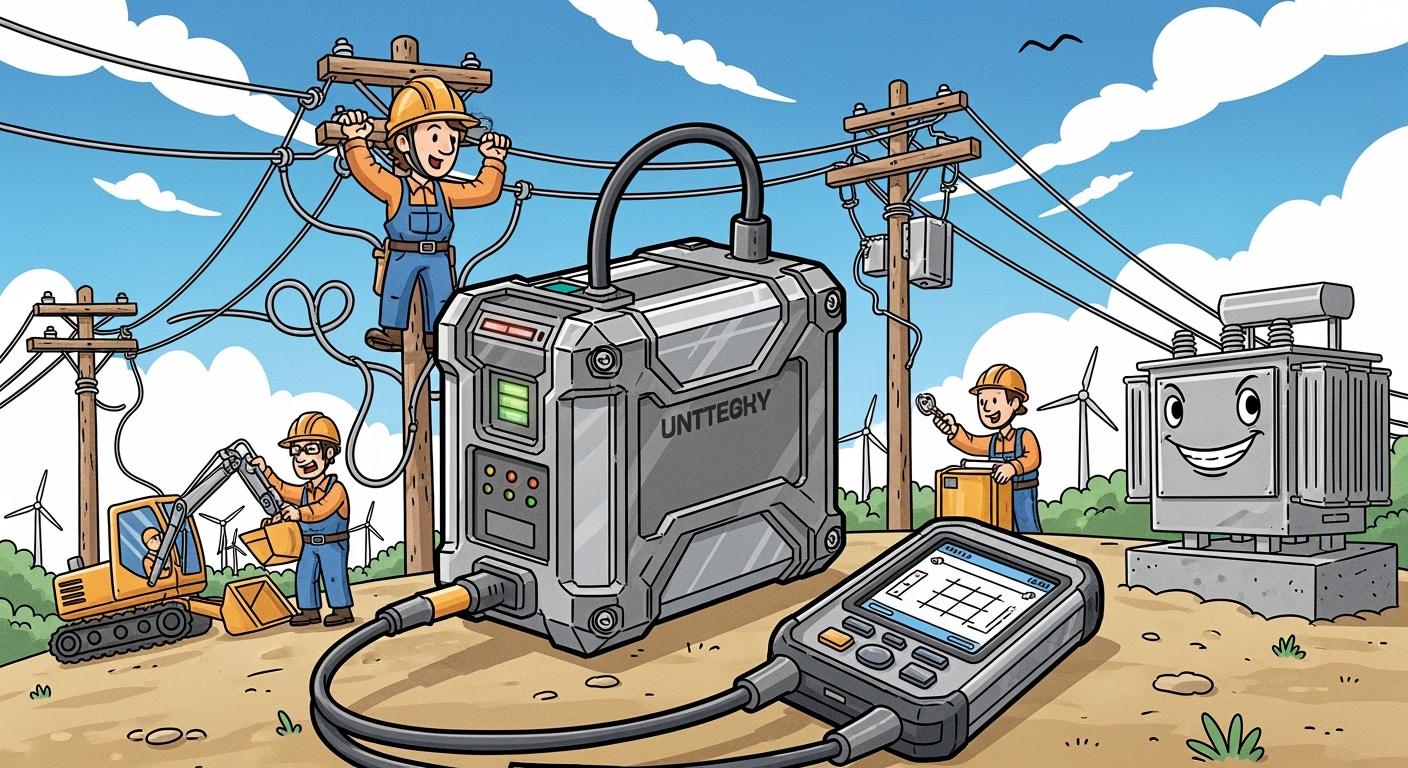
You rely on battery pack design to ensure that your power grid inspection devices perform reliably in tough utility environments. Battery reliability, safety, and consistent performance matter most when you face unpredictable weather, rough handling, and remote locations. Lithium battery packs stand out because they offer high voltage efficiency, store and retrieve energy more effectively, and maintain long-term reliability even in harsh conditions. Their higher specific energy gives your devices the power needed for demanding fieldwork. When you choose robust battery solutions, you protect your operations and deliver dependable results.
Key Takeaways
Focus on reliability in battery pack design to ensure uninterrupted operation during field tasks.
Select lithium battery chemistries like LiFePO4 or NMC for safety and long life in harsh environments.
Implement robust thermal management systems to prevent overheating and extend battery life.
Use real-time monitoring to track battery performance and detect issues early, enhancing safety.
Ensure compliance with safety certifications to reduce risks and improve reliability in utility operations.
Part1: Battery Pack Design Requirements

1.1 Reliability Factors
You need to focus on reliability when you design battery packs for power grid inspection devices. Reliability ensures your equipment operates without interruption during critical field tasks. You must address several factors that impact battery performance and longevity.
Here is a table that summarizes the most common reliability factors:
Reliability Factor | Description |
|---|---|
Thermal Management | Effective strategies are needed to ensure uniform temperature distribution within the battery pack. |
Structural Integrity | Design must include robust elements to withstand mechanical stresses and prevent thermal runaway. |
Quality Control | Rigorous testing and inspection processes are essential to maintain consistent quality across cells. |
You also need to manage risks such as short-circuiting, overheating, and thermal runaway. These issues can cause major failures, especially during short utility outages. Studies show that battery autonomy times longer than necessary do not improve reliability. In fact, systems with extended autonomy times often experience more failures. Legacy lead-acid batteries typically last for about 1200 cycles and require replacement every five years. Lithium battery packs offer improved cycle life and energy density, but reliability data remains limited due to rapid changes in technology.
Tip: Always use rigorous quality control and testing procedures to reduce the risk of undetectable failures in your battery pack design.
1.2 Environmental Durability
You must consider environmental durability when you select and design battery packs for field operations. Power grid inspection devices often face extreme temperatures, humidity, and mechanical stress. These conditions can degrade battery performance and shorten lifespan.
The following table highlights key environmental conditions and their impact:
Environmental Condition | Impact on Battery Performance |
|---|---|
Ambient Temperature | Affects chemical reactions and overall efficiency. |
Proper Ventilation | Prevents overheating and maintains optimal conditions. |
Mechanical Degradation | Can lead to reduced capacity and lifespan. |
Chemical Degradation | Impacts battery chemistry and performance. |
High temperatures accelerate battery degradation, reducing capacity and cycle life. Low temperatures impair power delivery and can cause damage during charging. You must maintain optimal temperature ranges to ensure reliable performance. Effective thermal management and regular maintenance help your battery packs withstand harsh environments. High-temperature lithium batteries, such as those used in mining and industrial applications, maintain stable output even in extreme conditions. You can use these chemistries for inspection devices that operate in challenging environments.
Note: Monitoring temperature and airflow is critical for safety and efficiency in battery pack design.
1.3 Safety Standards
Safety standards protect your devices and personnel during field operations. You must follow strict testing protocols to ensure your battery packs meet industry requirements. These standards cover electrical, mechanical, and environmental aspects.
Here is a table summarizing key safety tests:
Test Type | Description |
|---|---|
Electrical Tests | Includes short-circuit, overcharge, and abnormal charge tests to ensure safety under various conditions. |
Mechanical Tests | Involves impact, vibration, and mold stress tests to assess durability and fire hazards. |
Environmental Tests | Tests for temperature cycling, humidity, and altitude to evaluate performance in extreme conditions. |
Safety Circuit Evaluation | Reviews battery management systems and protective components for overcurrent and overtemperature protection. |
You must evaluate battery management systems and protective circuits to prevent overcurrent and overheating. These features are essential for lithium battery packs used in medical, robotics, security systems, infrastructure, and industrial applications. By following safety standards, you reduce risks and ensure compliance with regulatory requirements.
Alert: Always verify that your battery pack design passes all required safety tests before deployment in utility field operations.
Part2: Battery Chemistry & Capacity Selection
2.1 Lithium Battery Types
You must select the right lithium battery chemistry to match your inspection device’s needs. Each chemistry offers unique strengths for different field applications. The table below compares common lithium battery types using standardized names, showing their lifespan and performance characteristics:
Battery Type | Lifespan | Performance Characteristics | Application Scenarios |
|---|---|---|---|
LiFePO4 (LFP) | Long | High safety, stable output, durable | Industrial, infrastructure, robotics |
LCO | Short | High energy density, lower thermal stability | Consumer electronics, medical |
LMO | Moderate | Enhanced safety, good for varied applications | Security systems, medical |
NMC | Moderate | Balanced performance, widely used in electric vehicles | Industrial, infrastructure |
NCA | Moderate | High energy density, high-performance | Robotics, industrial |
LTO | Very Long | Rapid charging, excellent cycle life | Industrial, infrastructure |
You should match the battery chemistry to your device’s operational profile. For example, LiFePO4 works well in harsh environments due to its safety and long life. NMC batteries suit higher energy density requirement in industrial settings.
2.2 Capacity Planning
You need to plan capacity based on your device’s energy requirements and expected field conditions. Start by calculating the total energy your device consumes during a typical inspection cycle. Choose a battery with enough capacity to handle peak loads and provide a safety margin for unexpected events. Oversizing the battery increases weight and cost, while undersizing risks device shutdowns.
Tip: Use real-world duty cycles and temperature profiles when estimating capacity needs for your Battery Pack Design.
2.3 Performance Trade-Offs
You must balance energy density, power delivery, and lifespan when designing battery packs. The table below highlights the main trade-offs between power cells and energy cells:
Cell Type | Characteristics | Trade-offs |
|---|---|---|
Power Cells | Fast current delivery, thinner electrodes | Lower energy density |
Energy Cells | Higher energy storage, thicker electrodes | Slower charge/discharge, higher resistance |
You will also face challenges like capacity fade and resistance growth. These issues reduce energy storage and power output over time. Degradation mechanisms include SEI growth, lithium plating, particle cracking, and electrolyte decomposition. You should monitor these factors to extend battery life and maintain reliable performance in the field.
Part3: Field Reliability Design
3.1 Ruggedization
You need to make your battery packs tough enough for utility field operations. Ruggedization techniques help your devices survive harsh environments. You can use functional adhesives, coatings, and resins to boost mechanical performance and safety. Structural and thermal adhesives improve durability when your devices face extreme conditions. Thermal gap fillers and pastes manage heat dissipation. Conductive coatings suppress electromagnetic interference (EMI) and radio frequency interference (RFI). Protective coatings and resins increase resilience against dust, moisture, and chemicals.
Lithium battery packs are zero-maintenance and ruggedized for extreme conditions.
They tolerate deep discharges and recharge shocks without damage.
These packs endure heavy vibrations and wide temperature variations.
Military battery packs show how ruggedization works. They perform reliably in freezing or scorching temperatures. Tough outer casings made from hardened plastics or aluminum protect against impacts, water, and dust. You can use similar designs for industrial and infrastructure applications.
3.2 Thermal Management
You must control battery temperature to ensure safe and efficient operation. Battery thermal management systems (BTMS) are essential for maintaining optimal performance in lithium battery packs. Common solutions include air cooling, indirect liquid cooling, direct liquid cooling, and phase change cooling. Passive, active, and hybrid systems help regulate temperature.
Thermal management prevents overheating and improves energy transfer efficiency. Exposure to temperatures above 45°C can reduce battery capacity by up to 20%. Excessive heat speeds up aging and increases safety risks. Overheating can cause thermal runaway, leading to fires or explosions. A well-designed thermal management system can extend battery life by 30 to 50 percent and reduce the risk of thermal runaway by up to 50 percent.
Tip: Use modeling and simulation tools to optimize layout and structure for better heat dissipation in your Battery Pack Design.
3.3 Waterproofing & Shock Resistance
You must protect your battery packs from water and physical shocks. Utility field operations require battery packs to meet strict waterproofing standards. IP68 is a common rating, meaning the battery is dust-tight and can withstand continuous immersion in water under pressure. Laser-welded stainless steel cases and glass-to-metal hermetic seals enhance waterproof capabilities. Potting compounds provide mechanical stability and absorb shocks.
These features are vital for environments like wastewater management, industrial, and infrastructure applications. Battery packs with proper waterproofing and shock resistance last longer and perform reliably in demanding conditions.
Note: Wire harness design improves safety and serviceability. Secure connections and robust insulation prevent failures during field operations.
Part4: Battery Management & Monitoring
4.1 Battery Management Systems
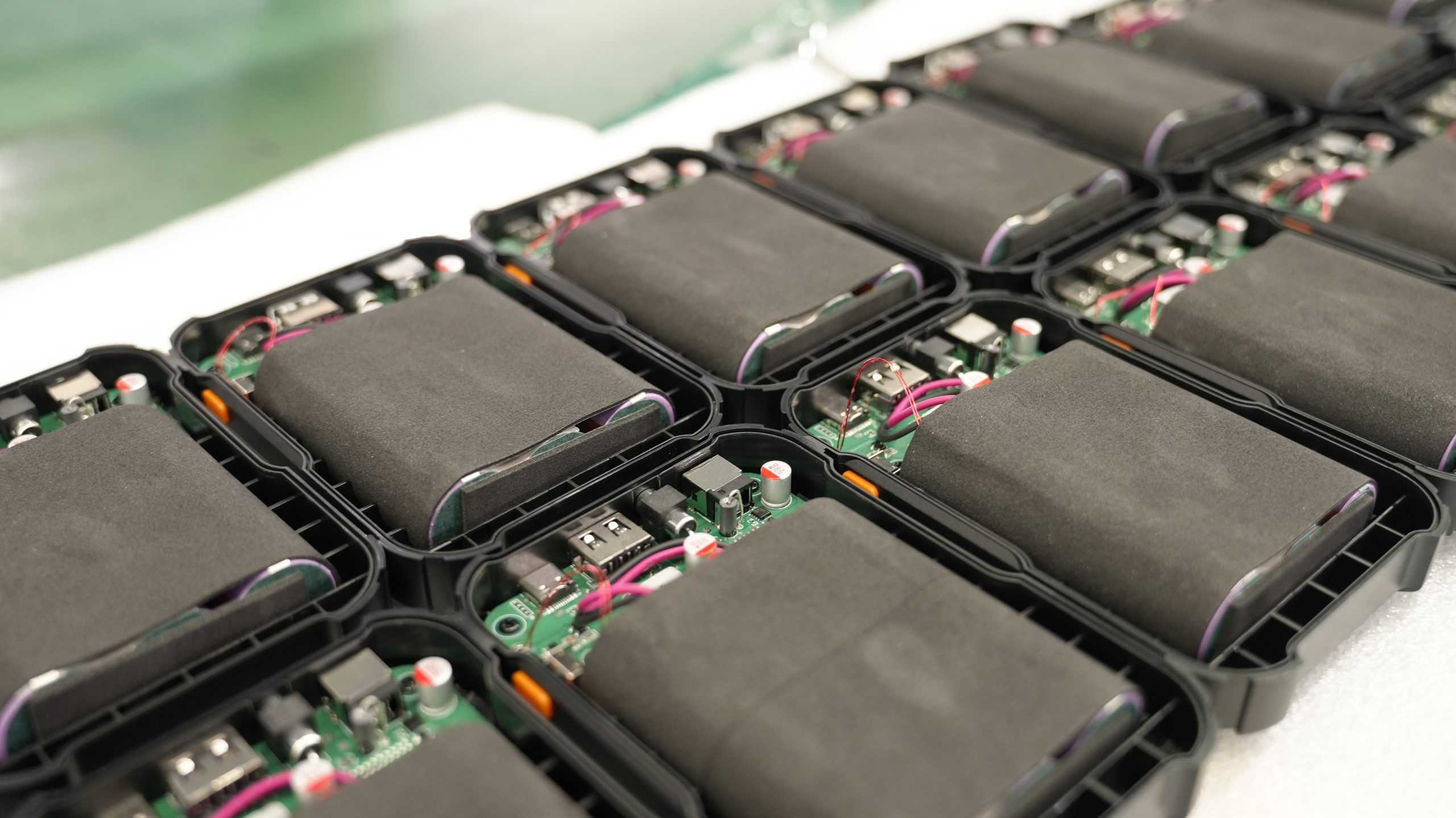
You need a robust battery management system (BMS) to ensure safe and reliable operation of lithium battery packs in power grid inspection devices. A BMS acts as the brain of your battery pack. It monitors, controls, and protects every cell, which is vital for field operations in industrial, infrastructure, and medical applications.
Here is a table that summarizes the main functions of a BMS:
Function | Description |
|---|---|
Monitoring | Tracks voltage, current, and temperature of each cell. |
State Estimation | Calculates the battery’s current state to optimize performance. |
Cell Balancing | Ensures all cells charge and discharge evenly. |
Power Management | Controls power flow for maximum efficiency. |
Thermal Management | Regulates temperature to prevent overheating and ensure safety. |
Protection | Guards against overcharging, deep discharging, and short circuits. |
Communications | Shares data with other system components for coordinated operation. |
A modern BMS constantly checks battery conditions to prevent overheating. It uses predictive tools to boost reliability and performance. You shift safety management from reactive to proactive by using a BMS. In utility field operations, you benefit from continuous cell balancing, which keeps uptime high and reduces downtime. Self-diagnostics help you spot issues with sense wires during startup, making installation more reliable. Dynamic current limits adjust thresholds to prevent over-temperature, over-charging, and over-discharging, which keeps your battery packs safe.
Tip: For a deeper dive into BMS technology and its role in advanced battery pack design, visit our Battery Management Systems resource page.
4.2 Real-Time Monitoring
You must use real-time monitoring to maintain battery safety and performance in the field. A BMS oversees each cell’s voltage, manages charging cycles, and controls temperature. This system estimates both the state of charge (SoC) and state of health (SoH), which are essential for reliable operation in power grid inspection devices.
Recent advances in battery inspection technology combine radiography, computed tomography, and ultrasound. These tools allow you to detect failure modes early, both during manufacturing and in the field. Real-time monitoring tracks critical parameters like voltage, current, and temperature. This helps you maintain safety and efficiency.
Real-time monitoring enables you to:
Estimate SoC and SoH for accurate performance assessment.
Detect faults and manage thermal risks before they cause failures.
Use advanced algorithms to analyze sensor data and spot problems earlier than traditional systems.
Support proactive maintenance, which extends battery life and improves reliability.
Note: Proactive maintenance based on real-time data can extend battery lifespan and reduce unexpected downtime in industrial and infrastructure applications.
4.3 Charging Solutions
You need effective charging solutions to keep your battery packs ready for demanding field operations. Start by assessing your current charging system. Engineer a solution that fits your industry’s needs. Implement preventative maintenance to keep your batteries in peak condition.
Here is a table that highlights key features of advanced charging solutions for lithium battery packs:
Feature | Description |
|---|---|
High Voltage Output | Supports large-scale energy and industrial applications. |
Modular Design | Allows easy maintenance and scalability. |
Thermal Management | Uses liquid cooling for precise temperature control. |
Smart BMS | Provides real-time protection and diagnostics. |
Lifecycle | Delivers over 8000 charge-discharge cycles. |
Charging methods affect both reliability and safety. High charging rates can create a non-uniform solid electrolyte interphase (SEI) layer, which lowers efficiency. Charging below 0°C can cause metallic lithium plating, leading to permanent damage and higher failure risk. High temperatures during charging can trigger thermal runaway, which is a dangerous feedback loop. Proper thermal management is crucial to prevent these issues.
Key Point | Explanation |
|---|---|
Charging Rates | Fast charging can reduce efficiency and increase risk of damage. |
Temperature Control | Charging below freezing or at high temperatures can cause permanent harm. |
Thermal Runaway | Uncontrolled heat can lead to hazardous chemical reactions. |
Aging Reduction | New coatings can reduce battery aging time and improve longevity. |
You can use these charging solutions in renewable energy power stations, grid peak shaving, commercial and industrial energy storage, microgrids, and backup power for critical infrastructure. These solutions support the high demands of utility field operations and help you maintain reliable performance.
Tip: Always monitor charging temperature and rates to maximize battery life and safety in your Battery Pack Design.
Part5: Safety, Compliance & Lifecycle
5.1 Certifications
You must ensure your lithium battery packs meet recognized certifications before deploying them in power grid inspection devices. Certifications confirm that your battery packs comply with safety, performance, and environmental standards. Common certifications include UL 2054, IEC 62133, and UN 38.3. These standards cover electrical safety, transportation, and environmental impact. You can use certified battery packs in industrial, medical, robotics, and infrastructure applications. Certification testing includes electrical, mechanical, and environmental evaluations. You reduce risk and improve reliability by selecting certified battery packs.
Certification | Scope | Application Scenarios |
|---|---|---|
UL 2054 | Electrical safety | Industrial, medical, robotics |
IEC 62133 | Performance, safety | |
UN 38.3 | Transport safety | Industrial, infrastructure |
Tip: Always verify certification labels and documentation before integrating battery packs into your devices.
5.2 Protection Circuits
You need robust protection circuits to safeguard lithium battery packs in demanding field environments. Protection circuits prevent overcharging, over-discharging, and short circuits. These circuits monitor voltage, current, and temperature. You improve safety and extend battery life by using advanced protection features. Battery management systems often include protection circuits for cell balancing and thermal management. You can find these systems in industrial, medical, and security applications. Protection circuits help you avoid costly downtime and equipment damage.
Note: Regularly test protection circuits to ensure reliable operation in harsh conditions.
5.3 Maintenance & Recycling
You must follow best practices for maintenance and recycling to maximize battery pack performance and minimize environmental impact. Regular maintenance keeps your battery packs safe and reliable. You should inspect and clean terminals and cables, monitor battery life, and control temperature during storage and use. Proper charging techniques and balanced battery packs help you avoid failures.
Maintenance Checklist:
Develop a safety plan for recycling facilities.
Train staff on battery handling.
Store batteries safely to prevent fires.
Alert: Proper maintenance and recycling protect your operations and the environment. You reduce risks and support compliance by following these practices.
You can achieve reliable performance in utility field operations by following best practices for Battery Pack Design. Integrate reliability, safety, and compliance at every stage. Evaluate technical and operational factors, such as ruggedization and thermal management. Use certified lithium battery packs for industrial and infrastructure applications. Encourage your team to review maintenance plans and recycling protocols. Stay proactive and seek new solutions to improve battery performance and safety.
FAQ
What lithium battery chemistry works best for industrial inspection devices?
You should choose LiFePO₄ (LFP) for high safety and long cycle life. NMC batteries offer higher energy density. Use the table below for a quick comparison:
Chemistry | Platform Voltage | Energy Density (Wh/kg) | Cycle Life |
|---|---|---|---|
LFP | 3.2 V | 90–160 | 2000+ |
NMC | 3.6 V | 160-270 | 500+ |
How do you ensure battery packs remain safe in harsh environments?
You need to use rugged casings, advanced protection circuits, and a robust battery management system. These features help prevent overheating, water damage, and electrical faults. Regular maintenance and real-time monitoring also improve safety.
Why is real-time monitoring important for lithium battery packs?
Real-time monitoring lets you track voltage, temperature, and state of charge. You can detect faults early and prevent failures. This approach increases uptime and extends battery life in industrial, medical, and infrastructure applications.
What certifications should you look for in lithium battery packs?
You should verify UL 2054, IEC 62133, and UN 38.3 certifications. These standards confirm electrical safety, performance, and transport compliance. Certified packs reduce risk and support reliable operation in robotics, security, and industrial systems.
How often should you perform maintenance on battery packs?
You should inspect terminals, check for damage, and monitor performance every three to six months. Follow manufacturer guidelines for your specific application. Regular maintenance helps you avoid unexpected failures and extends the service life of your battery packs.


