


Having a UL test report does not automatically clear an Amazon Direct Validation request. For a battery-powered product, the practical question is whether the required evidence covers the delivered design, satisfies the applicable store policy and can be accepted through Amazon’s authorized validation workflow.
This guide is for equipment brands, OEMs and purchasing teams sourcing custom lithium battery packs. It separates platform validation from battery testing, product certification and transport documentation.
Policy review date: October 26, 2026. Requirements differ by Amazon store, product policy and ASIN notification. Confirm the current instructions in Seller Central before arranging testing.
Quick Answer: TIC means testing, inspection and certification. Amazon’s relevant workflow is Direct Product Validation, often shortened to DV. A notified seller works through an Amazon-authorized provider; existing reports may be reviewed rather than automatically replaced. Battery suppliers can support the technical file, but cannot guarantee platform approval.
Part 1: What Amazon TIC Direct Validation Actually Means
1.1 Validation is not the same as a new safety standard
DV is a platform process for checking compliance evidence. It is not a UL standard or a replacement for the product’s underlying safety obligations. In this context, describing DV simply as Document Verification misses the official workflow and can confuse an ordinary document request with direct validation.
Amazon’s Direct Product Validation policy explains that authorized TIC providers submit validation results on the seller’s behalf. Reports from other accredited laboratories may be considered, but an authorized provider must validate them. Do not assume that any laboratory can directly close the Amazon task.
1.2 Existing reports are evidence, not automatic approval
A report might be technically valid yet outside the requested product scope. Conversely, a request for validation does not necessarily mean the entire product must be retested. Send the existing documents to the selected provider and obtain a written gap assessment before ordering additional work.
Part 2: Confirm the Product Scope, Store and Deadline
2.1 Do not apply one announcement to every lithium battery
Amazon’s US smart-home and consumer-electronics announcement identifies a rollout beginning September 30, 2026, with notifications scheduled through November 16, 2026. Examples include certain rechargeable-battery-powered cameras, doorbells, locks and electronic devices.
That announcement also identifies exclusions, including stand-alone lithium batteries, medical devices and devices using cylindrical, coin or button lithium cells. These are exclusions from that specific policy, not exemptions from all Amazon requirements or product-safety obligations. Check the product’s actual design and policy assignment rather than classifying it from a chemistry label alone.
2.2 Use the deadline attached to the ASIN
The sources reviewed for this article do not establish a universal March 1, 2027 deactivation date for every lithium-battery-powered product. Do not use an external article’s date as a substitute for the action date in the account notification.
Canada has a separate Amazon.ca announcement and store-specific document requirements. A US evidence package should not be assumed to satisfy Canada unchanged.
Part 3: Match UL and Other Reports to the Correct Product Level
3.1 Distinguish cells, battery packs and finished equipment
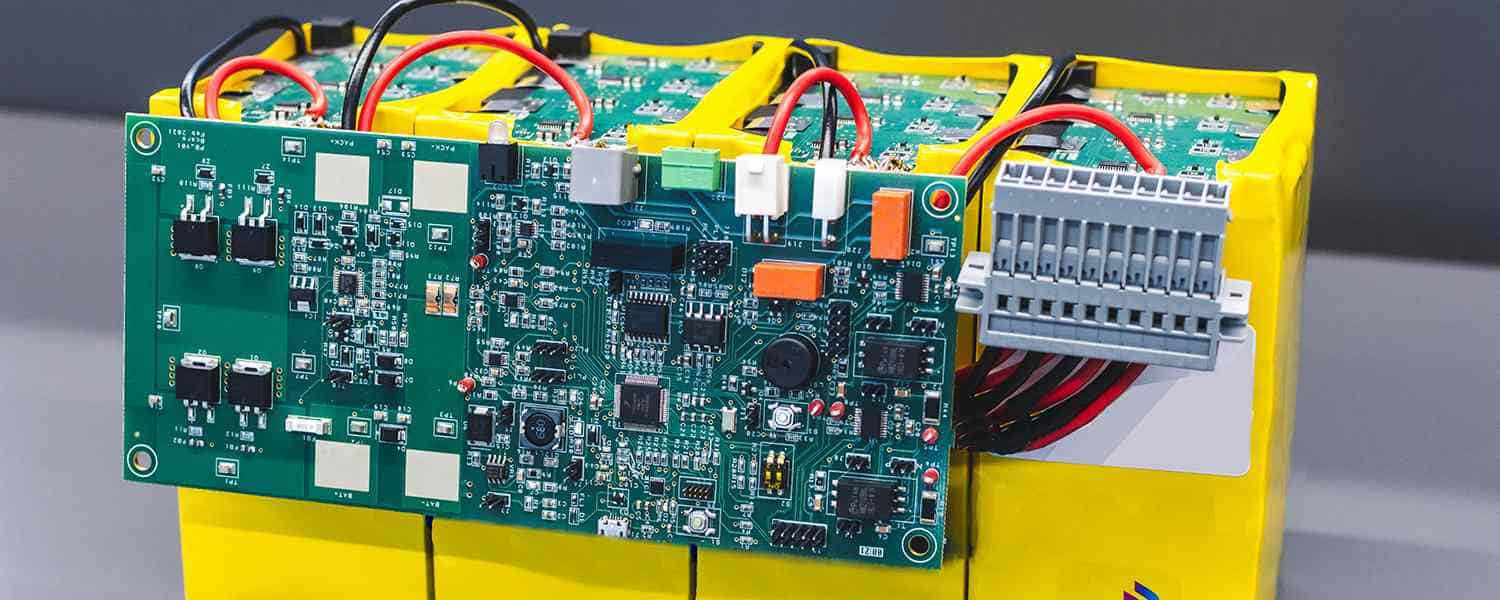
A certified or tested cell is one input to a battery design. The finished pack adds interconnects, insulation, protection electronics, wiring and mechanical construction. The host adds its own charger, operating loads and enclosure environment. These levels need to be identified separately in the compliance plan.
| Reference | Typical relevance | OEM review question |
|---|---|---|
| UL 1642 | Lithium battery safety, commonly encountered for cells | Which cell or component model is actually covered? |
| UL 2054 | Household and commercial batteries, commonly used for packs | Does the evidence cover the delivered pack construction? |
| UL 2056 | Power banks | Is the product a power bank within the relevant scope? |
| UL/CSA 62368-1 | Applicable audio/video and ICT equipment | Is finished-device evaluation required by the applicable policy? |
| UN 38.3 | Lithium cell and battery transport testing | Do the transport records cover the relevant design? |
These are scope distinctions, not a mandatory test list for every product. See UL Solutions’ battery testing resources and the applicable Amazon product policy. Do not describe UL 2054 as the generic cell standard, or treat UN 38.3 as finished-device safety approval.
3.2 Separate a test report from UL certification
A report showing testing to a UL standard is not automatically a UL Listing or authorization to apply a UL certification mark. Identify the issuing organization, tested model, standard edition, results and any certification file separately. UL describes its certification terminology in its certification-mark FAQ.
Similarly, ISO/IEC 17025 accreditation is not Amazon TIC authorization. Laboratory competence, accreditation scope, product-certification status and platform authorization are different checks. A laboratory’s CNAS accreditation should not be presented as proof of Amazon-authorized provider status.
Part 4: Prepare a Consistent OEM Evidence Package
4.1 Build one model and configuration map
Create a controlled cross-reference connecting the ASIN, brand, finished-device model, pack part number, cell model and applicable report identifiers. Where private-label names or model families differ, ask for documented coverage and provider acceptance. An unexplained suffix mismatch requires clarification; do not alter a report to make the strings match.
The internal technical file should identify the approved series/parallel arrangement, cell source, protection hardware and configuration, charger limits, connector pinout, label artwork and drawing revision. Not every item will be a required Amazon upload, but the map helps the reviewer understand what was tested and what is being supplied.
4.2 Check document age and authenticity against the specific policy
The smart-home and consumer-electronics policy includes conditions for existing test documents, including a previous-12-month requirement for specified reports. That is a platform acceptance condition in the relevant policy, not a universal statement that every UL report expires after twelve months.
Use original, unmodified reports and genuine product photographs. Never use AI to fabricate a laboratory report, certificate, signature or compliance photograph. Resolve factual errors through the issuing organization. Confirm the accepted laboratory, report edition, scope and result with the provider before submission.
4.3 Apply change control after approval
A new cell, modified PCM, different wire gauge or revised charger can change the relationship between the supplied product and existing evidence. Require notification, an impact assessment and the necessary revalidation before accepting a substitution. Not every minor change demands full retesting, but silent changes defeat traceability.
For custom packs, define the required BMS and PCM functions in the specification, not only in marketing language.
Part 5: Follow the Account-Specific Validation Workflow
5.1 Start with the notification, not an unsolicited test order
In Seller Central, open the notified product issue, confirm the relevant store and select the validation or testing route shown. Create the required test request form, choose a provider available for that policy and share the request identifiers with it.
Before the stated action date, provide the requested documents or samples and confirm receipt and status with the provider. Amazon’s general workflow distinguishes an in-progress request from failed validation; creating a form alone is not proof that review is underway. Follow the live dashboard and provider instructions.
5.2 Assign responsibilities before the deadline
| Party | Recommended responsibility |
|---|---|
| Brand or seller | ASIN notification, account workflow, provider selection and deadline tracking |
| Device OEM | Finished-device identity, integration design, charger and product-level evidence |
| Battery supplier | Pack specification, configuration traceability and available cell/pack records |
| Authorized TIC provider | Policy-specific validation or testing and result submission |
Keep a single issue log listing missing evidence, responsible person, due date and closure record. Avoid promising approval dates before the provider confirms the review scope.
Part 6: What to Ask Your Custom Battery Supplier
- Which exact pack model and revision are covered by each available report?
- Can the cell, pack and device identifiers be traced without modifying original documents?
- Which safety and transport evidence already exists, and what remains project-specific?
- Who controls changes to cells, protection settings, connectors and materials?
- Who will coordinate technical questions with the selected authorized provider?
Large Power’s testing and certification resources provide a starting point for discussing evidence needs. For a new design, submit the target device, market, pack requirements and requested documents through the custom battery solution inquiry. Technical support from a battery manufacturer is not a guarantee of Amazon acceptance.
FAQ
Does having a UL report guarantee DV approval?
No. The provider must assess the document against the applicable product, store and current policy requirements.
Can an existing report from another laboratory be used?
Potentially. Amazon’s general process permits review of existing evidence through an authorized provider; acceptance is not automatic.
Is a cell report enough for a custom battery-powered device?
Do not assume so. Identify which cell, pack and finished-product evidence the applicable policy requires.
Does the twelve-month rule mean all UL reports legally expire annually?
No. Distinguish a platform’s document-age condition from the underlying report or certification status.
Can the same documents be used for the US and Canada?
Only after confirming the applicable store policies, national standard designations and provider acceptance.
Can a CNAS-accredited laboratory submit Amazon DV results directly?
Accreditation alone does not establish that authority. Verify authorization for the relevant store and product policy through Amazon’s provider-selection workflow.


