

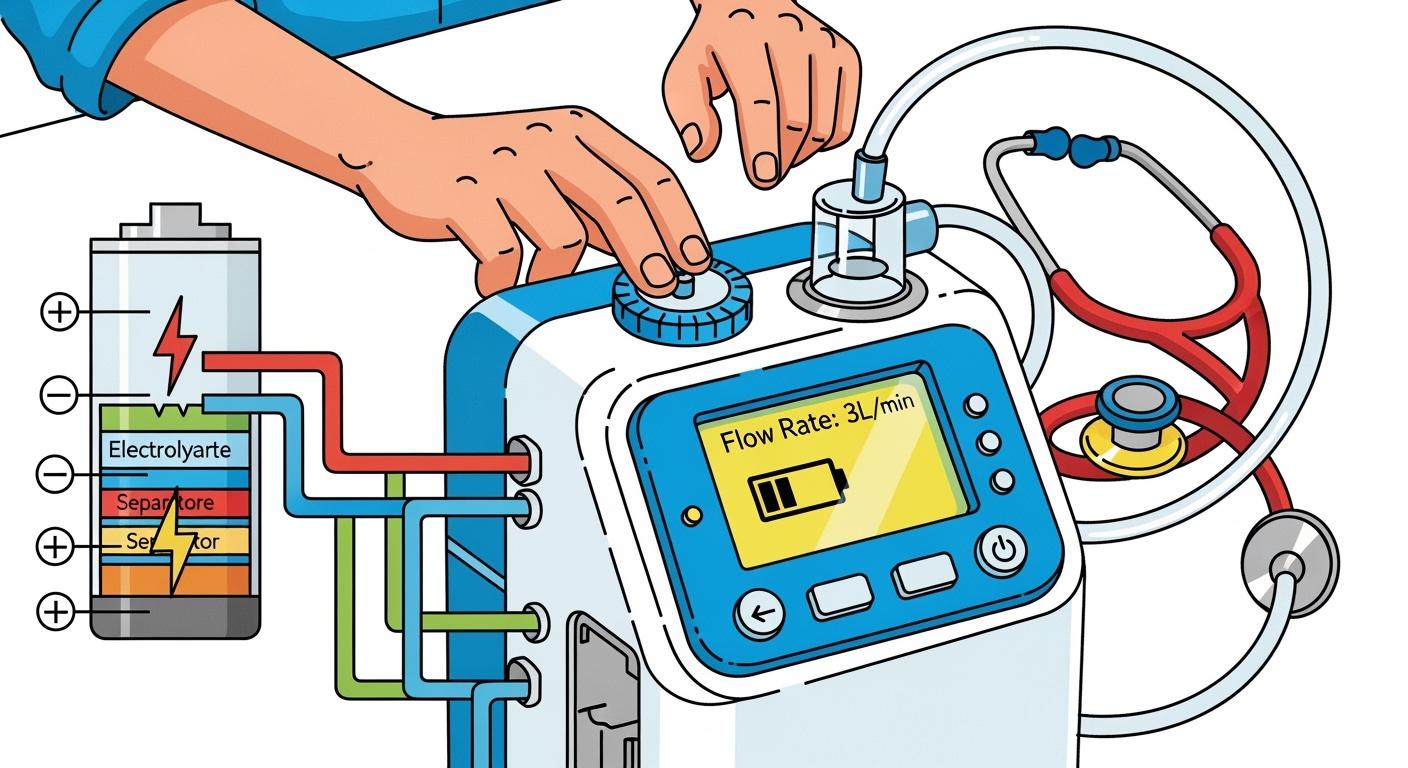
You rely on medical oxygen concentrators to deliver life-saving therapy in demanding environments. Battery design plays a vital role in ensuring these devices operate reliably and remain portable. Lithium-ion battery packs and custom solutions boost device runtime and allow easy transport. Smart battery management systems help maintain safety and performance. You benefit from diverse battery options that adapt to different needs and improve user experience.
Rugged battery packs withstand impact and wear, enhancing reliability.
Intelligent alert systems support timely maintenance and reduce disruptions.
Balanced size, weight, and energy capacity increase portability.
Key Takeaways
Choose lithium-ion battery packs for medical oxygen concentrators to ensure high energy density and long runtimes.
Implement smart battery management systems to enhance safety and prevent overheating or overcharging.
Select custom battery solutions tailored to your device’s specific energy needs for improved efficiency and reliability.
Prioritize regular maintenance routines, including monthly inspections and recalibrations, to extend battery life and ensure safe operation.
Consider portability and weight when designing devices, as lighter batteries improve transportability for patients and healthcare providers.
Part1: Battery Design Importance
1.1 Device Reliability
You depend on medical oxygen concentrators to deliver consistent therapy, even in unpredictable environments. Battery design directly impacts device reliability. When you choose lightweight and compact batteries, you make it easier for patients and healthcare staff to transport devices. This portability supports therapy during travel, emergencies, or daily routines.
Battery life is critical for portable oxygen concentrators, especially for extended outings or travel.
Some concentrators last as little as two hours, while others can run up to eight hours on a single charge.
Models that allow easy battery swapping ensure uninterrupted oxygen therapy.
Many users opt for additional batteries to extend runtime during travel or emergencies.
Fast-charging capabilities or dual battery configurations are valuable for users with demanding schedules.
Devices with car adapters or solar charging kits offer flexibility for those who travel frequently or spend time outdoors.
Longer-lasting devices reduce the need for frequent replacements. This leads to fewer surgeries, lower complication rates, and decreased healthcare costs. You also help more patients access care by extending device longevity.
Key Benefits of Improved Battery Reliability:
Longer-lasting devices reduce the need for additional surgeries.
Fewer surgeries lower the risk of surgical complications.
Enhanced device longevity decreases healthcare costs and increases access for new patients.
1.2 Safety & Patient Outcomes
Safety remains a top priority in battery design for medical oxygen concentrators. Battery failures can disrupt therapy and put patients at risk. You must consider real-world incidents to understand the importance of robust safety features.
Device Name | Issue Description | Recall Classification | Affected Units | Date of Recall |
|---|---|---|---|---|
Life2000 Ventilation System | Risk of battery charging issues | Class I | >2,500 | June 26, 2023 |
Damaged battery charger dongles can prevent charging |
This table shows how battery charging issues can lead to major recalls. You can prevent such incidents by selecting batteries with advanced safety features, such as overcharge protection and thermal management. Reliable battery design ensures stable power delivery, which is essential for patient safety and positive outcomes.
1.3 Lithium-Ion Battery Packs
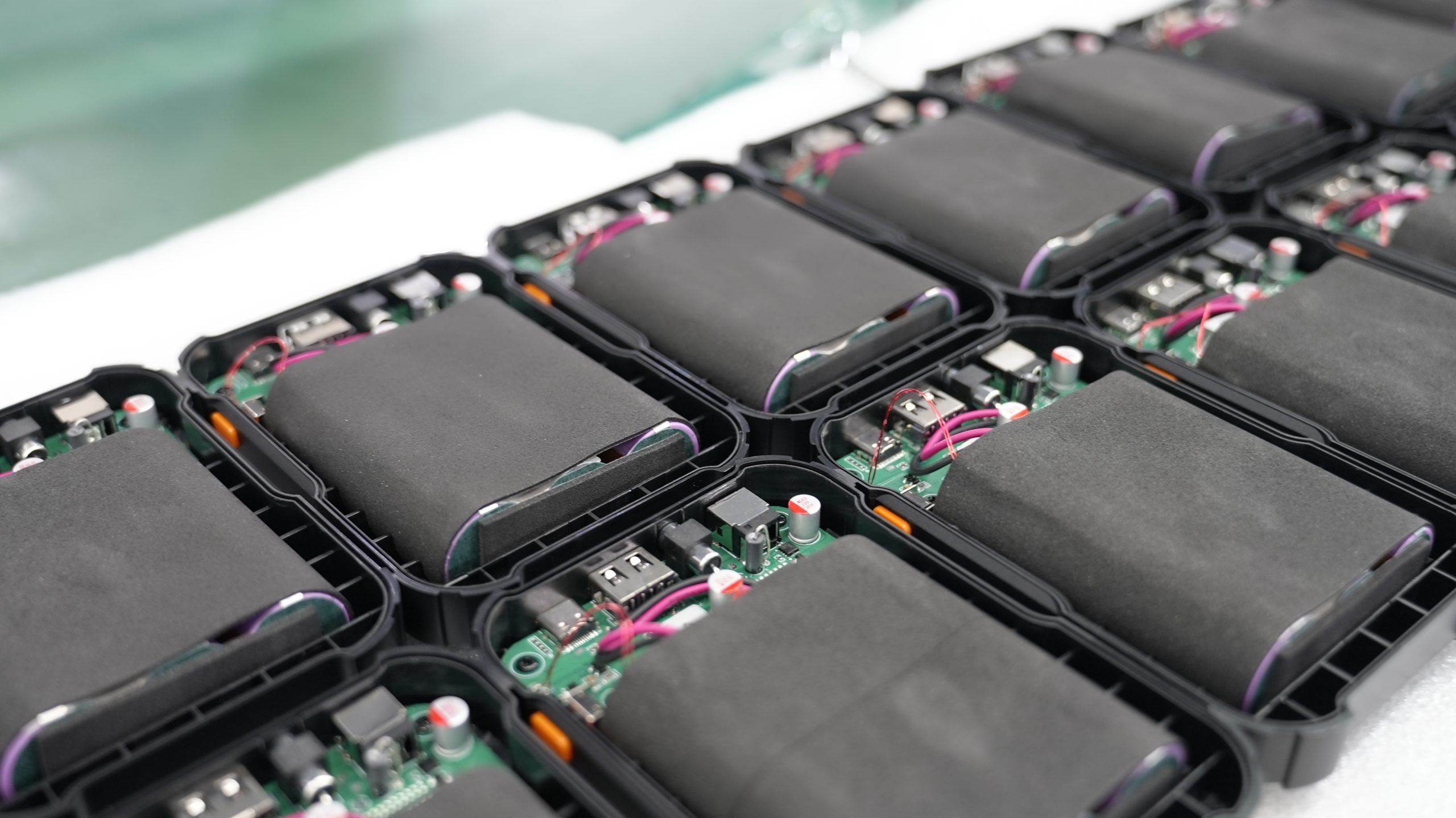
Lithium-ion battery packs have become the standard for medical oxygen concentrators. You benefit from their high energy density, which means longer runtimes and fewer interruptions. Advanced safety features, such as integrated Battery Management Systems (BMS), protect both users and equipment from overheating and overcharging.
Higher energy density leads to longer runtimes for oxygen concentrators, ensuring uninterrupted therapy.
Advanced safety features, such as BMS, protect users and equipment from overheating and overcharging.
Custom lithium-ion battery packs are designed to meet specific energy requirements, reducing energy waste and improving efficiency.
You need tailored battery solutions because every medical oxygen concentrator model has unique energy requirements. Custom lithium-ion battery packs help you achieve longer runtimes, stable operation, and enhanced safety. These packs use advanced chemistries like LiFePO4, NMC, LCO, and LMO, each offering different advantages in platform voltage, energy density, and cycle life.
Chemistry | Platform Voltage (V) | Energy Density (Wh/kg) | Cycle Life (cycles) |
|---|---|---|---|
LiFePO4 | 3.2 | 90-120 | 2000-4000 |
NMC | 3.6-3.7 | 150-220 | 1000-2000 |
LCO | 3.7 | 150-200 | 500-1000 |
LMO | 3.7-4.2 | 100-150 | 300-700 |
Custom battery packs ensure stable performance under varying environmental conditions and integrate advanced safety features. You can select the right chemistry and configuration to match your device’s needs, whether you work in medical, robotics, security systems, infrastructure, or industrial sectors.
Aspect | Evidence |
|---|---|
Energy Requirements | Custom lithium-ion battery packs are designed to meet specific energy requirements, reducing energy waste and improving efficiency. |
Longer Runtimes | Custom lithium battery packs help achieve longer runtimes by using advanced lithium-ion chemistries with high energy density. |
Stable Operation | Custom lithium battery packs ensure stable performance under varying environmental conditions. |
Safety Features | Custom lithium battery packs integrate advanced safety features to protect both users and equipment. |
Tip: When you select a battery design tailored to your device, you improve reliability, safety, and patient outcomes. You also gain flexibility to adapt to different application scenarios and user needs.
Part2: Key Battery Factors
2.1 Chemistry & Energy Density
You need to consider battery chemistry and energy density when selecting power solutions for medical oxygen concentrators. The chemistry determines how much energy the battery can store and how long it will last. High energy density allows you to design lighter and more compact devices, which is essential for portable medical equipment.
Metric | Description |
|---|---|
Gravimetric energy density | Measures energy stored per kilogram of battery (Wh/kg). |
Volumetric energy density | Measures energy stored per liter of battery (Wh/L). |
Impact on design | High energy density enables lighter and more compact devices. |
Standardized lithium chemistries such as LiFePO4, NMC, LCO, and LMO each offer unique benefits. For example, NMC batteries provide high energy density and long cycle life, making them suitable for devices that require frequent use. LiFePO4 batteries offer excellent safety and stability, which is critical in medical settings.
2.2 Smart Battery Management Systems
Smart battery management systems (BMS) play a vital role in ensuring reliability and safety. You rely on BMS to monitor voltage and temperature, control charge and discharge rates, and prevent overcharging or overheating. These systems protect both the device and the patient.
Smart BMS monitors critical parameters such as voltage and temperature.
It controls charge/discharge rates to prevent overcharging.
BMS protects against thermal issues, ensuring safe operation of medical oxygen concentrators.
2.3 Custom Battery Packs
Custom lithium battery packs give you a competitive edge in medical device design. Compared to standard solutions, custom packs offer higher capacity, longer charge cycles, and improved integration with your device.
Feature | Custom Lithium Battery Packs | Standard Battery Solutions |
|---|---|---|
Increased Capacity | 15-25% more | N/A |
Charge Cycles | 2,000-3,500 | 1,000-1,500 |
Higher capacity extends runtime, supporting uninterrupted therapy.
Energy density ranges from 180 to 300 Wh/kg, boosting efficiency.
Devices can operate for several hours on a single charge, even at higher oxygen flow rates.
You depend on oxygen concentrators to work flawlessly in critical situations. Custom lithium battery packs deliver reliability through high-quality materials, robust design, and rigorous testing.
Custom packs also ensure stable performance under varying environmental conditions, which is essential for medical, robotics, security systems, infrastructure, and industrial applications.
2.4 Portability & Weight
Portability remains a top concern for ambulatory patients and healthcare providers. The weight of the battery directly affects how easily you can transport the device. Devices weighing over 7.2 kg often require a cart, which can be burdensome. Most patients prefer a minimum operating time of 5-6 hours, but carrying extra batteries adds to the load.
The weight of portable oxygen concentrators significantly affects transportability, especially for high flow rates.
Average continuous operating time is up to 3.8 hours, which may limit mobility.
Lighter devices may compromise battery life or oxygen output.
For example, the Inogen One G3 offers a single-cell battery lasting 3.5 to 4 hours. A double-cell battery extends this to 7-8 hours but increases the device’s weight by about a pound. You must balance battery capacity and device weight to optimize both portability and runtime.
Part3: Performance & User Experience
3.1 Runtime & Backup
You need reliable runtime to ensure continuous oxygen therapy for patients. Standard lithium-ion battery packs in medical oxygen concentrators provide an average runtime between 3 to 7 hours. Extended battery options can last up to 13 hours, which supports longer shifts or travel.
Average runtime: 3–7 hours
Extended battery: up to 13 hours
Backup battery systems play a critical role in patient safety during power outages. You can see the benefits in the table below:
Benefit | Description |
|---|---|
Complete Backup Power | Provides power to entire facilities, ensuring all critical systems remain operational during outages. |
Protection from Blackouts | Safeguards against power interruptions, maintaining essential services. |
Integration with Hospital Power Grid | Enhances reliability and efficiency of power supply, reducing dependency on emergency generators. |
Prolonged Operation | Allows hospitals to function during extended blackouts with advanced energy storage systems. |
You should consider backup solutions as part of your battery design strategy, especially for hospital and clinical environments.
3.2 Stability & Power Delivery
Stable power delivery ensures your oxygen concentrators perform reliably. Several factors influence stability and power output:
Factor | Description |
|---|---|
Battery Type | Most portable oxygen concentrators utilize lithium-ion batteries, which are known to degrade over time. |
Battery Degradation | These batteries can typically be recharged around 300 times before experiencing significant degradation. |
Power Requirements | Portable concentrators consume between 20 and 100 watts, depending on settings, which helps extend battery life. |
Consistent power delivery depends on maintaining optimal operating conditions. You should keep devices within a temperature range of 41°F (5°C) to 104°F (40°C). Extreme temperatures can cause automatic shutoffs, which may disrupt therapy. When you connect stationary concentrators to a mains socket, they can operate for 16 to 24 hours, depending on the model and settings.
3.3 Maintenance & Usability
Proper maintenance extends the lifespan of your lithium battery packs and ensures safe operation. You can follow these recommended practices:
Maintenance Practice | Description |
|---|---|
Regular cleaning and filter changes | Essential for optimal performance and longevity of the device. |
Avoid fully depleting batteries | Prevents deep cycling, which can shorten battery lifespan. |
Monthly partial drain | Helps calibrate the battery fuel gauge for improved accuracy. |
Recharge after each use | Reduces strain on the battery by preventing complete discharge. |
Monthly inspection | |
Check battery charge efficiency | Recommended every 2 years or as needed. |
Tip: You can maximize usability by training staff on battery care and monitoring. This reduces downtime and improves patient outcomes.
You should always integrate maintenance routines into your workflow. This approach helps you get the most from your battery design and supports reliable performance in medical, industrial, and infrastructure applications.
Part4: Practical Battery Guidance
4.1 Selecting Lithium-Ion Packs
You need to choose lithium-ion battery packs that match your device’s technical and operational needs. The right selection improves reliability, safety, and user satisfaction. Review the following criteria before making a decision:
The specifications of lithium-ion battery packs, such as energy density and cycle life, directly affect device performance and safety. For example, NMC chemistry provides high energy density for devices that need significant power. LiFePO4 offers a longer cycle life, which enhances safety and longevity. Robust battery management systems and thermal controls help prevent overheating and ensure reliable operation.
4.2 Maintenance Best Practices
You can extend battery life and maintain safety by following proven maintenance routines:
Perform battery recalibration once a month by fully depleting and recharging the battery.
Store spare batteries at 50% charge every two to three months.
Check battery charge efficiency every two years or as needed.
Inspect packs monthly for swelling, leakage, or overheating.
Regular maintenance supports long-term reliability. The table below summarizes key aspects:
Aspect | Details |
|---|---|
Battery Lifespan | 350–500 charge cycles (about 2 years under normal use) |
Replacement Indicator | Faster drain from full to less than half charge |
Maintenance | Monthly recalibration by full discharge and recharge |
Storage Advice | Store spares at 50% charge if unused for 2–3 months |
Safety Checks | Inspect for swelling, leakage, or overheating; discontinue use if issues are found |
Tip: Consistent maintenance reduces downtime and helps you avoid unexpected device failures.
4.3 Evaluating Performance & Safety
You must evaluate battery performance and safety to meet regulatory and operational standards. Use the following schedule:
Maintenance Task | Recommended Interval |
|---|---|
Battery recalibration | Once a month |
Inspect for swelling, leakage, etc. | Monthly |
Check battery charge efficiency | Every 2 years or as needed |
Store spare batteries | Every 2-3 months at 50% charge |
Manufacturers follow strict standards to ensure safety and compliance. Key requirements include:
Compliance Requirement | Relevant Standard |
|---|---|
Safety requirements | IEC 62133, UL 2054, ISO 13485, IEC 60601-1 |
Biocompatibility | ISO 10993-1 |
Quality management system | ISO 13485 |
You benefit from these standards because they guarantee safe, reliable, and high-quality battery packs for medical oxygen concentrators and related applications.
You improve patient care when you focus on battery design for medical oxygen concentrators. Lithium-ion battery packs like LiFePO4, NMC, LCO, and LMO offer high energy density, long cycle life, and strong safety features. Custom solutions and smart BMS increase reliability and safety. For best results:
Choose batteries with extended runtime and quick charging.
Use models that support spare batteries for uninterrupted therapy.
Maintain regular inspection and calibration routines.
You help patients stay mobile and safe by prioritizing these factors in your device designs.
FAQ
What makes lithium-ion battery packs ideal for medical oxygen concentrators?
You benefit from lithium-ion battery packs because they offer high energy density, long cycle life, and lightweight design. Chemistries like NMC provide stable power and safety. These features support reliable operation in medical, robotics, and industrial devices.
How do smart battery management systems (BMS) improve safety?
Smart BMS monitors voltage, temperature, and charge cycles. You gain protection from overcharging, overheating, and short circuits. This technology helps prevent failures and ensures safe operation in medical and security systems.
Why should you consider custom battery packs for your devices?
Custom battery packs let you match voltage, capacity, and size to your device’s needs. You achieve longer runtimes and better integration. Contact Large Power for a custom battery solution for your next project.
How often should you inspect lithium battery packs?
You should inspect lithium battery packs monthly. Look for swelling, leakage, or overheating. Regular checks help you avoid unexpected failures and extend battery life in all sectors, including industrial and robotics.
Can you use the same battery chemistry for all applications?
No, you should select battery chemistry based on your device’s requirements. For example, LiFePO4 offers long cycle life for medical devices, while NMC provides higher energy density for portable electronics. Always match chemistry to your application scenario.


