

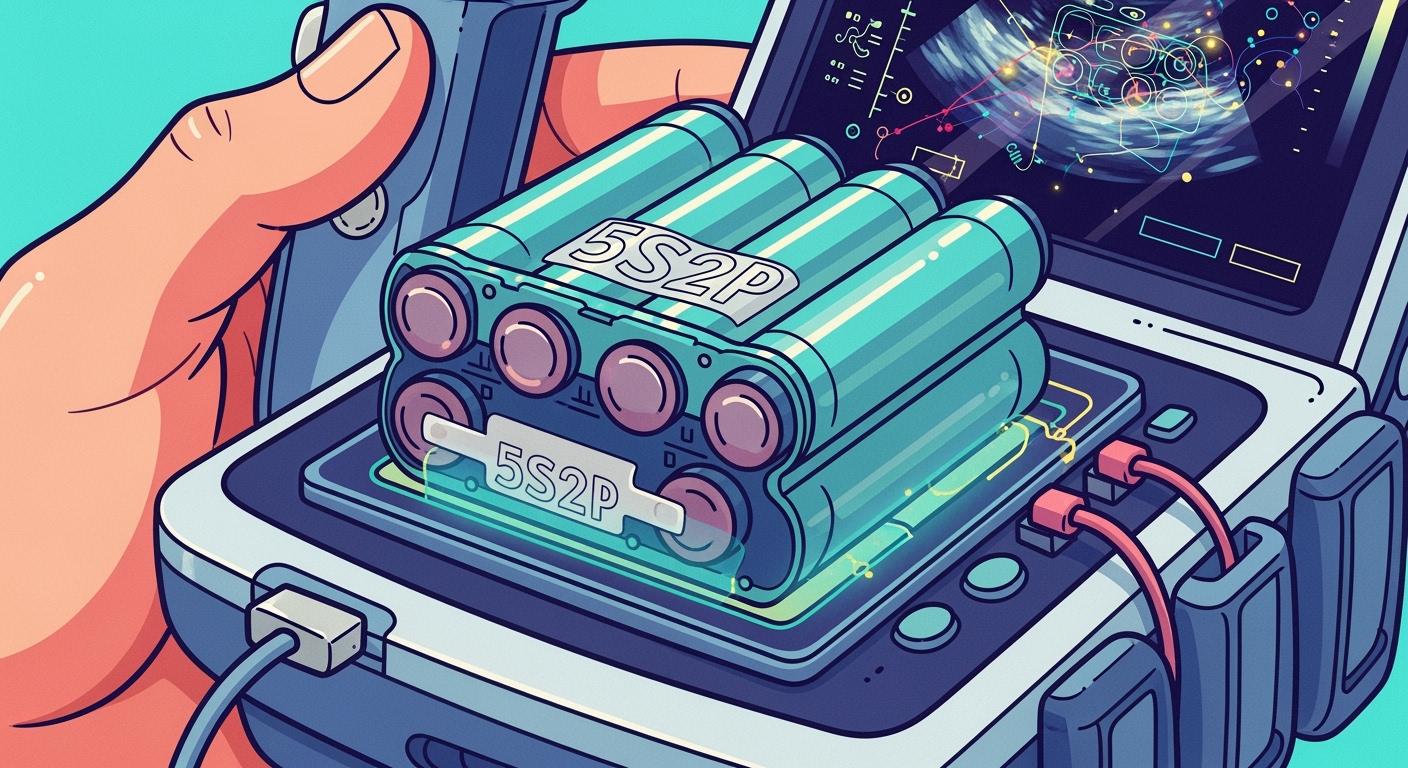
High-resolution handheld ultrasound systems require compact battery packs that can support extended scanning sessions without limiting device portability. A 5S2P lithium battery pack combines five cells in series with two parallel cell groups, providing a practical balance of operating voltage, capacity, size, and weight for portable imaging equipment.
Depending on the selected cell chemistry and pack design, lithium-ion batteries can deliver the energy density needed for longer runtime and efficient clinical workflows. A properly engineered Battery Management System (BMS) also helps monitor voltage, current, temperature, and cell balance, supporting safe and reliable operation in handheld ultrasound and other medical devices.
Key Takeaways
The 5S2P lithium battery pack configuration offers high energy density, supporting longer runtime for handheld ultrasound devices.
Choose a 5S2P pack with a proven battery management system (BMS) to enhance safety and performance in medical applications.
Follow proper maintenance routines, such as storing batteries at recommended temperatures, to extend battery life and ensure reliable performance.
Part 1: Runtime Optimization with 5S2P Packs
1.1 5S2P Configuration Overview
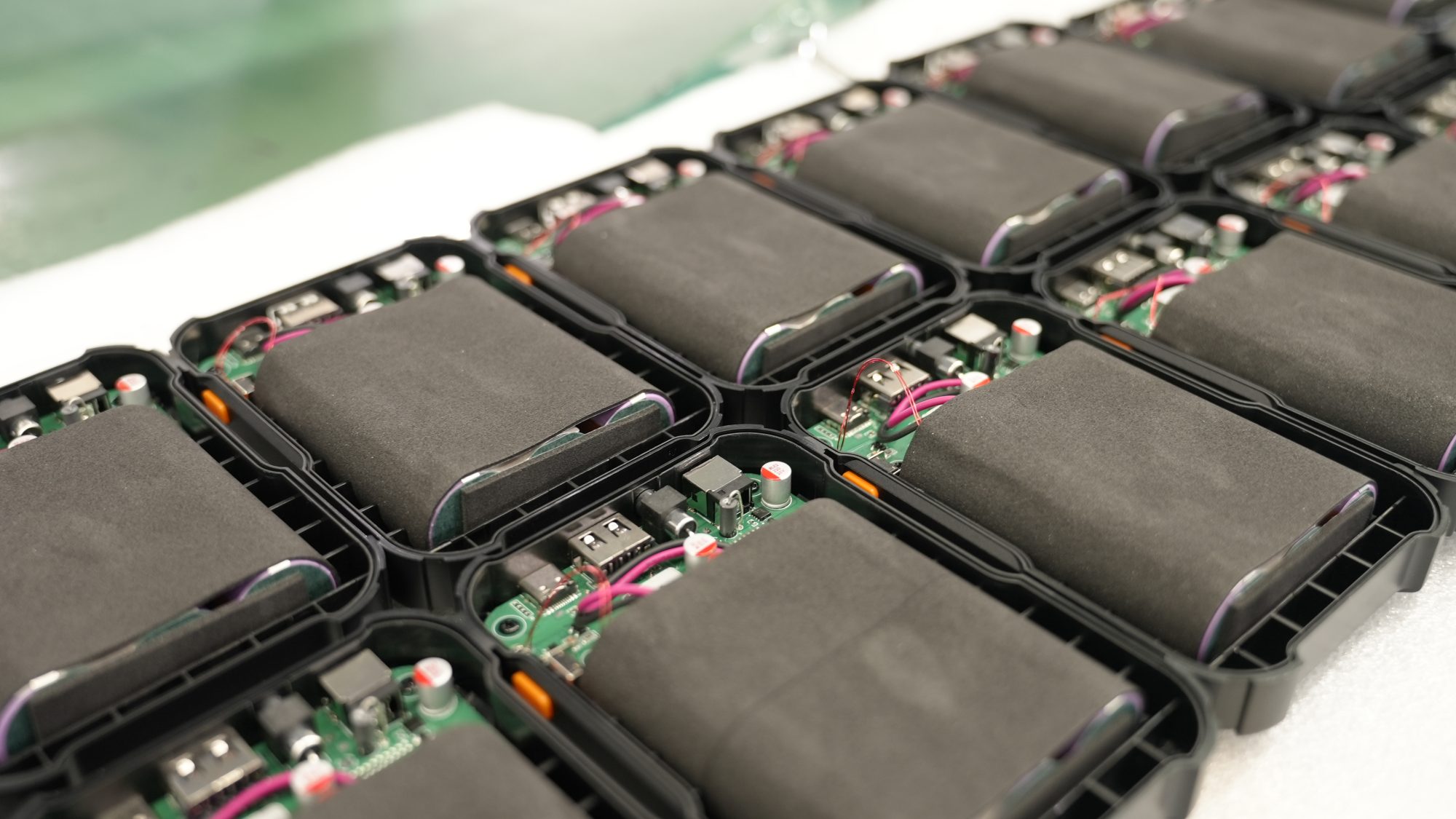
You need a battery pack that delivers consistent power and maximizes Runtime Optimization in high-resolution handheld ultrasound. The 5S2P configuration arranges five cells in series and two in parallel, combining voltage and capacity for demanding medical applications. This design supports devices in the medical industry, as well as robotics, security, infrastructure, consumer electronics, and industrial sectors. You benefit from a custom pack that balances energy density and size, making it ideal for portable equipment.
Specification | Li-ion 9000mAh 5S2P 18v Battery Pack | LiPo 6500mAh 5S2P 18.5v Battery Pack |
|---|---|---|
Capacity (mAh) | 9000 | 6500 |
Nominal Voltage | 18v | 18.5v |
Maximum Voltage | 21v | 21v |
Minimum Voltage | 12.5v | 15v |
Recommended Landing Voltage (air) | 15v | 17.5v |
Recommended Cut-off Voltage (ground) | 13.5v | 16v |
Chemistry | Lithium-ion (Li-ion) | Lithium-polymer/LiPo (LiPo) |
Max Continuous Discharge (amps) | 90 | 149.5 |
Max Charge Current (amps) | 9 | 32.5 |
Watt Hours | 162 Wh | 120.3 Wh |
Energy Density | 220 Wh/kg | 151 Wh/kg |
Dimensions (L x W x H) | 4.17″ x 1.69″ x 2.95″ | 5.55″ x 1.85″ x 2.36″ |
Weight | 25.96oz (736g) | 25.61oz (726g) |
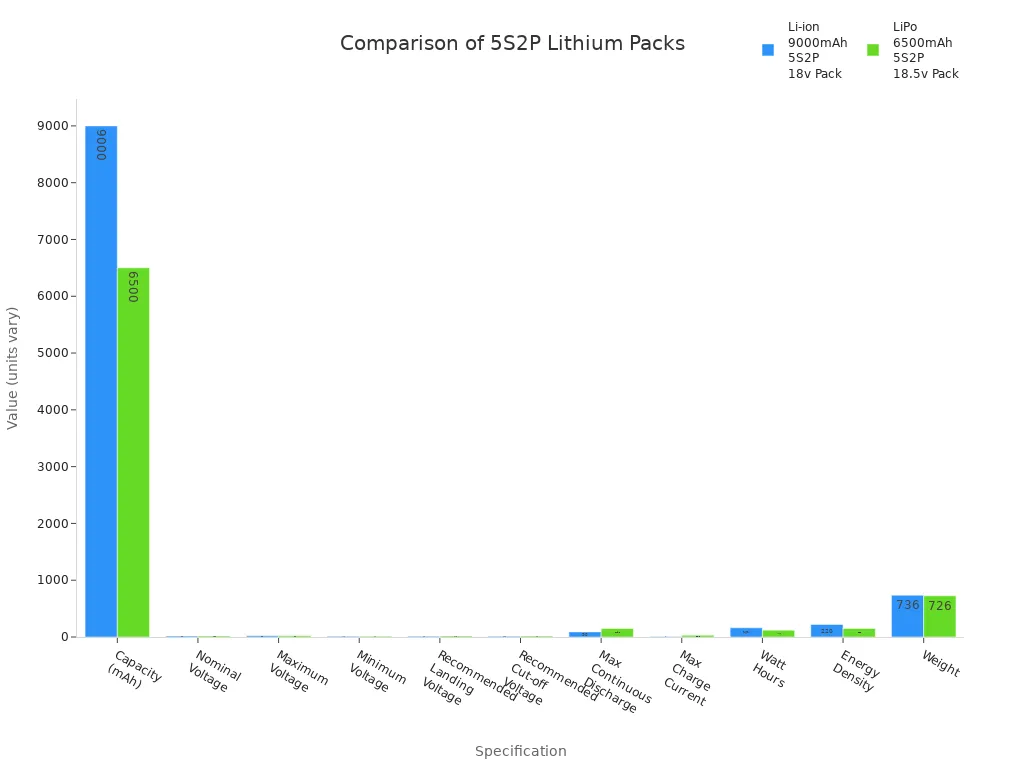
You see that the 5S2P pack offers high capacity and voltage, supporting Runtime Optimization for extended use. The energy density and compact size make it suitable for handheld devices that require reliability and portability.
1.2 Impact on Ultrasound Device Performance
You depend on Runtime Optimization to ensure uninterrupted imaging sessions. The 5S2P configuration delivers stable voltage and high capacity, which supports advanced imaging features in handheld ultrasound. You achieve longer runtime, reducing the need for frequent charging and minimizing workflow interruptions. The low self-discharge rate of lithium-ion and lithium-polymer chemistries preserves battery life during storage and transport.
You notice that the pack’s robust discharge capability enables consistent performance, even when you operate high-resolution probes or advanced signal processing. You gain confidence in device reliability, which is critical in clinical environments. The pack’s design also supports integration with battery management systems (BMS), enhancing safety and monitoring during use.
Tip: Choose a 5S2P pack with a proven BMS for optimal safety and performance in medical applications.
1.3 Capacity, Voltage, and Reliability
You require a battery pack that maintains Runtime Optimization across multiple shifts. The 5S2P configuration provides high capacity—up to 9000mAh for lithium-ion and 6500mAh for lithium-polymer—delivering extended runtime for handheld ultrasound. The nominal voltage range (18–18.5v) matches the requirements of most portable medical devices, ensuring compatibility and efficient power delivery.
You benefit from reliable voltage output, which protects sensitive electronics and maintains image quality. The pack’s energy density (up to 220 Wh/kg) allows you to design compact devices without sacrificing runtime. You also appreciate the low self-discharge rate, which keeps the pack ready for use after long periods of inactivity.
You see that the 5S2P pack’s reliability supports clinical workflows, minimizing downtime and maximizing patient care. You can also apply this configuration in robotics, security, infrastructure, consumer electronics, and industrial sectors, where long runtime and robust performance are essential.
Part 2: Comparison and Practical Considerations
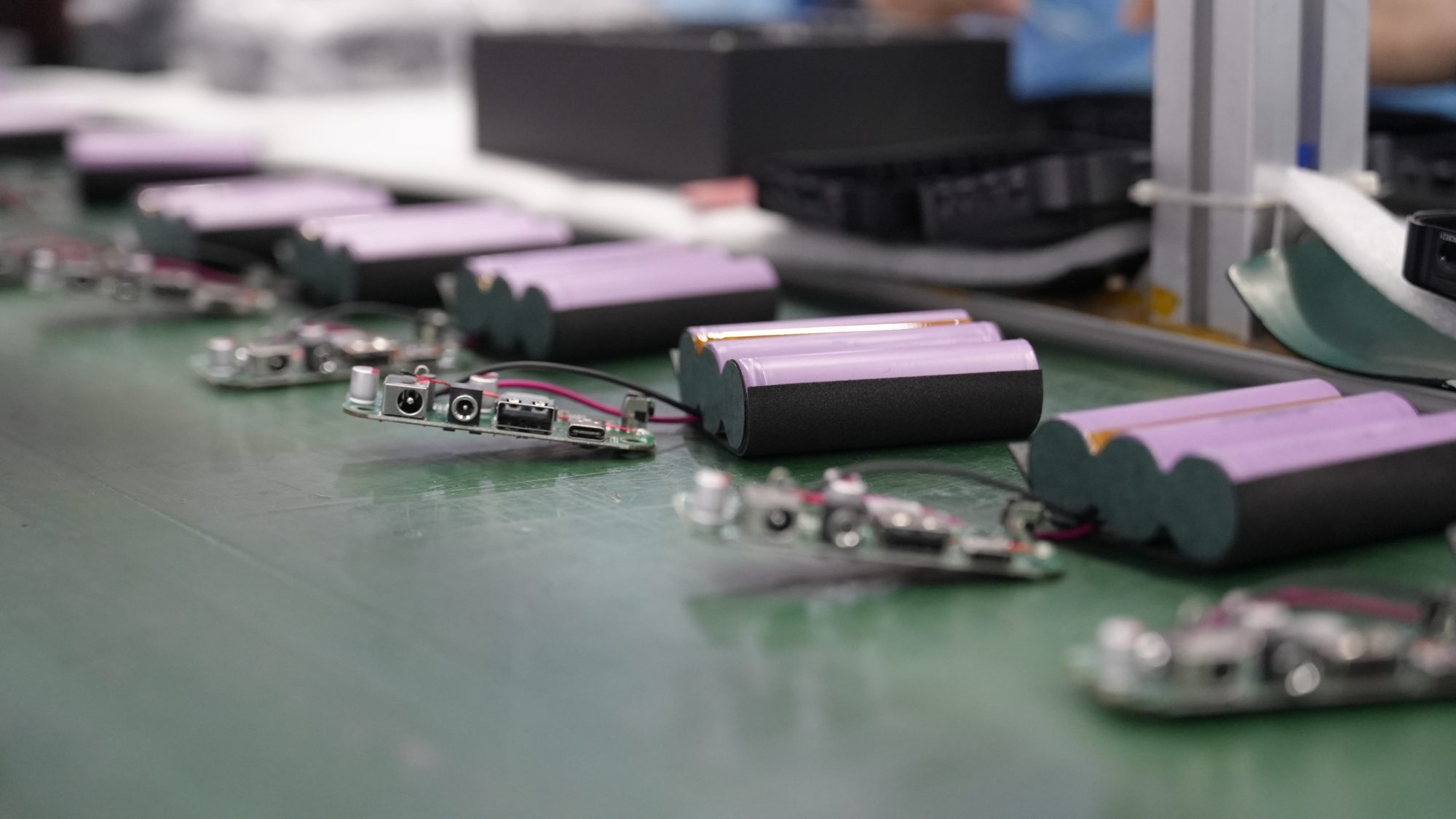
2.1 5S2P vs. Other Configurations
You need to select the right battery configuration for your handheld ultrasound device. The 5S2P pack delivers higher capacity and voltage than a 3S2P pack, supporting longer imaging sessions and fewer interruptions. You see the difference in performance and reliability in the table below:
Configuration | Voltage (V) | Capacity (mAh) | Energy Density (Wh/kg) | Typical Runtime (hrs) |
|---|---|---|---|---|
5S2P | 18–18.5 | 9000 / 6500 | 220 / 151 | 6–8 |
3S2P | 11.1–12.6 | 6000 / 4000 | 180 / 120 | 3–5 |
You achieve better Runtime Optimization with 5S2P, especially in clinical workflows that demand extended use.
2.2 Size, Weight, and Safety Factors
You must balance miniaturization and safety in device design. The 5S2P pack maintains compact dimensions and manageable weight, making it ideal for portable medical equipment. You ensure compliance with regulatory standards by following guidelines such as UL 2054, IEC 60601, and UN 38.3. Review the table below for key safety frameworks:
Regulatory Framework | Description |
|---|---|
FDA & U.S. Regulatory Framework | Medical device manufacturers must adhere to design controls, risk management, and quality system regulations. |
510(k) Premarket Notification / PMA | Battery subsystems must be documented and tested for Class II devices or higher. |
Consensus Standards Recognition | FDA recognizes UL 2054 and UL 1642 as consensus standards for battery safety. |
IEC 60601 series | General safety and performance standards for medical electrical equipment. |
IEC 62133 | Safety standards for rechargeable cells and battery packs, covering overcharge and short circuit. |
UN 38.3 | Transportation test suite for lithium-based batteries, required for legal shipping. |
2.3 Maintenance and Integration Tips
You extend battery life by following proper maintenance routines. Store packs at recommended temperatures and avoid deep discharges. Integrate a battery management system to monitor charge cycles and prevent overcharging. Advancements in lithium-ion and lithium-polymer chemistries improve cycle life and safety, supporting reliable performance in medical, robotics, and industrial applications.
Tip: Consult with a custom battery pack provider to optimize integration and ensure regulatory compliance.
You optimize runtime and reliability in handheld ultrasound by selecting 5S2P lithium packs. Follow these recommendations for energy density, safety, and maintenance:
Use only smart chargers designed for lithium packs.
Store batteries in protective cases.
Never charge unattended or near flammable surfaces.
Aspect | Impact on Workflow Efficiency |
|---|---|
Enhanced Battery Packs | Continuous operation improves clinical efficiency. |
FAQ
What advantages does the 5S2P lithium pack offer for medical devices?
A 5S2P lithium battery pack combines five series-connected cell groups with two cells in parallel in each group. This configuration can provide the operating voltage, capacity, and runtime required by handheld ultrasound systems and other portable medical devices. Its final voltage, energy density, and runtime depend on the selected cell chemistry, capacity, and device power consumption.
How can you ensure safe integration of lithium battery packs?
Start by matching the pack’s voltage, capacity, peak current, dimensions, connector, and charging profile to the medical device. A properly designed Battery Management System (BMS) should provide cell balancing and protection against overcharge, over-discharge, overcurrent, short circuits, and abnormal temperatures.
Applicable requirements may include IEC 62133-2 for rechargeable portable batteries, UN 38.3 for transportation, and UL 2054 where relevant. IEC 60601 requirements apply to the complete medical electrical equipment and should be considered during system-level integration and validation.
Can Large Power customize 5S2P battery packs for handheld ultrasound systems?
Yes. Large Power can develop custom lithium battery packs based on the ultrasound system’s voltage, runtime, size, weight, charging, thermal management, communication, and compliance requirements. Engineering support can cover cell selection, BMS/PCM design, enclosure integration, connector configuration, prototyping, and production.
Can custom lithium battery packs support applications beyond medical equipment?
Yes. Custom packs can be engineered for robotics, security systems, infrastructure equipment, consumer electronics, and industrial systems. The chemistry, protection system, enclosure, and certification plan should be matched to the operating conditions of each application.


