

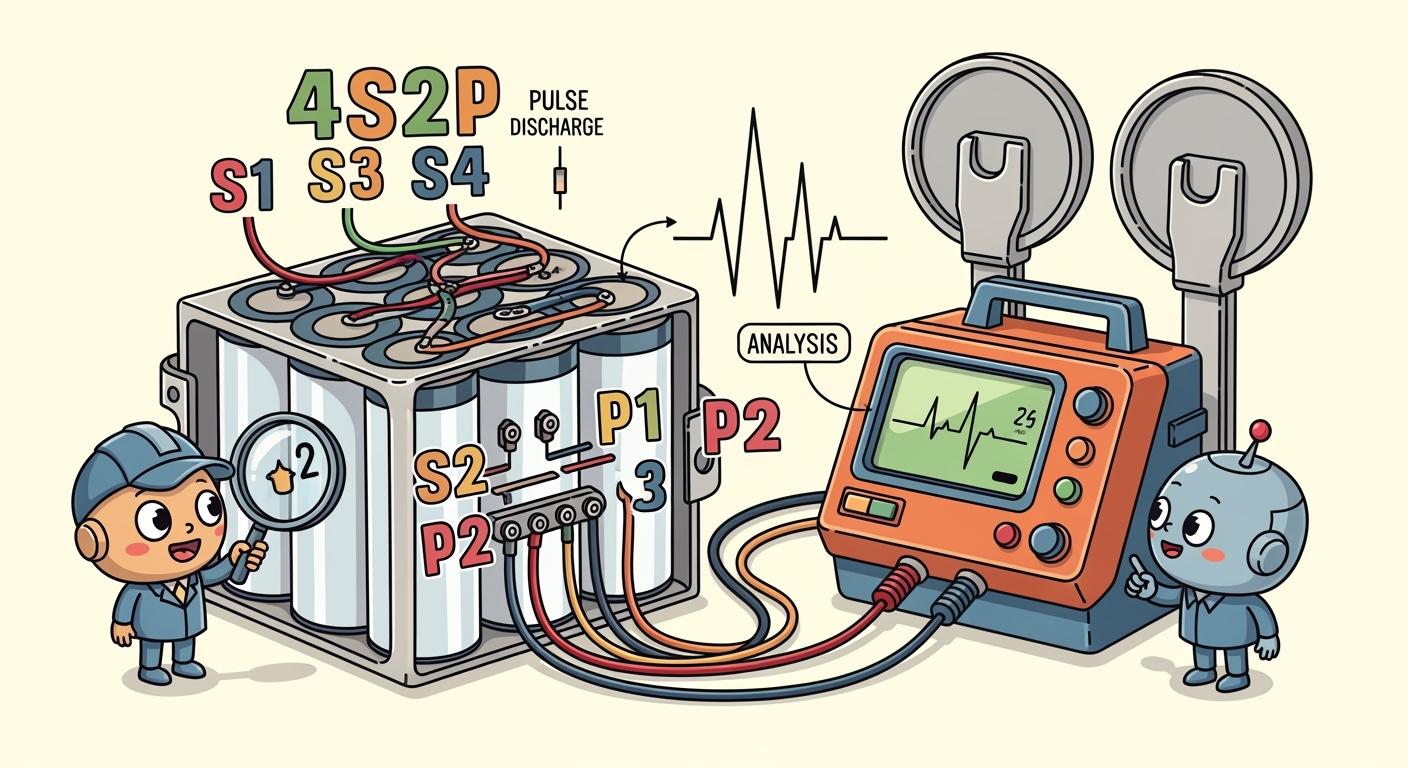
A defibrillator must be ready to deliver controlled, life-saving energy when every second matters. Its lithium battery pack powers the device electronics and charges the high-voltage capacitor that delivers the therapeutic shock. Stable voltage, sufficient pulse-power capability, and dependable remaining-capacity estimation are therefore critical to device readiness.
A properly engineered Battery Management System (BMS) monitors voltage, current, temperature, and battery status, while pulse-discharge testing helps engineers evaluate voltage sag, heat generation, recharge time, and performance under repeated high-power demands. Together, these measures support the safety, reliability, and predictable operation required in defibrillators and other critical medical devices.
Evidence Type | Description |
|---|---|
Performance Impact | Defibrillators are essential for resuscitation; failure can lead to patient death or further cardiac damage. |
Accuracy Issues | Devices with poor battery performance showed low precision in energy output, affecting treatment effectiveness. |
Regulatory Need | There is a call for stricter regulations and training for medical staff to ensure proper operation of high-risk devices. |
Key Takeaways
The 4S2P lithium battery pack configuration provides high voltage and extended capacity, essential for delivering reliable energy in defibrillators.
Redundancy in the 4S2P design allows continued operation even if one cell fails, ensuring patient safety during emergencies.
Integrating a robust battery management system enhances safety by monitoring temperature, balancing cells, and protecting against overcurrent.
Part1: 4S2P Lithium Battery Pack Benefits
1.1 Series-Parallel Cell Arrangement
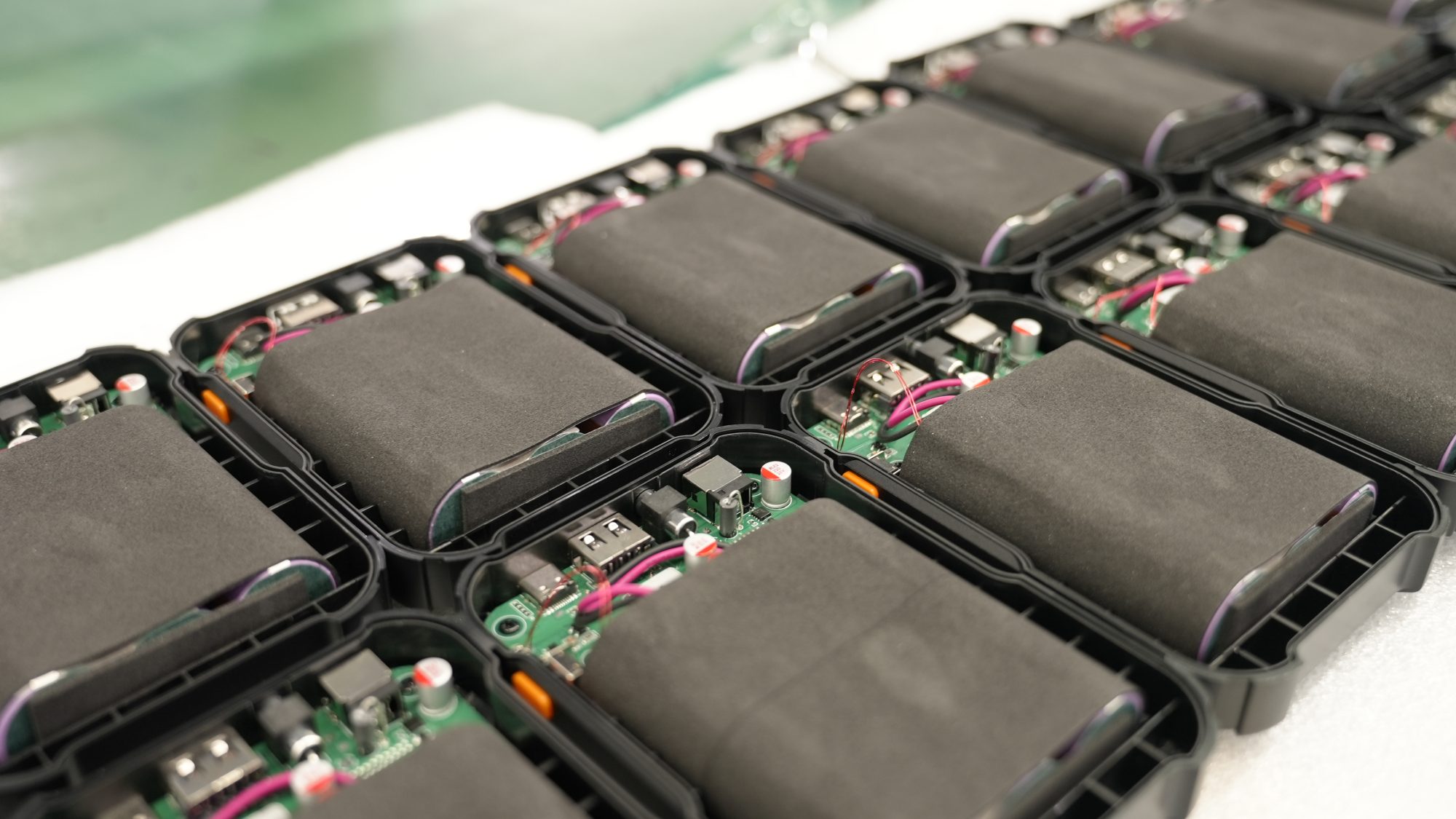
You need a lithium battery pack that delivers both high voltage and extended capacity for critical medical devices. The 4s2p lithium battery configuration achieves this by arranging four cells in series and two sets in parallel. When you connect four cells in series, you sum their voltages, reaching a nominal output of 14.8V. This voltage matches the requirements of most professional defibrillator designs, ensuring the device can deliver precise energy during operation.
By connecting two of these series strings in parallel, you double the ampere-hour capacity. This approach gives your lithium battery pack the ability to support multiple high-energy discharges without rapid depletion. The parallel arrangement also helps distribute the electrical load, reducing stress on individual cells and extending the overall lifespan of the 4s2p lithium battery.
In a 4s2p lithium battery, you benefit from a balance between voltage and capacity. This balance is essential for medical applications, where stable power delivery can mean the difference between life and death. The 4s2p lithium battery pack stands out in battery design because it meets the demanding needs of professional defibrillators, supporting both reliability and performance.
Note: In a 4s2p configuration, the arrangement of four cells in series increases the voltage by summing the voltage of each cell, while the parallel connection of two sets of these series cells enhances the overall capacity by combining their ampere-hour ratings.
1.2 Redundancy and Reliability
You cannot compromise on reliability when designing a lithium battery pack for a defibrillator. The 4s2p lithium battery configuration offers built-in redundancy, which is a critical advantage over single-series or single-parallel arrangements. If one cell fails, you can quickly identify the affected half by checking for lower voltage. The device can continue to operate at reduced capacity, allowing you to maintain essential functions until you replace the faulty cell.
“The 4S2P configuration provides easy redundancy. If one cell fails, you can identify the faulty half by checking for lower voltage and continue using the unaffected half, maintaining operation at reduced capacity.”
This redundancy ensures that your defibrillator remains operational during emergencies, reducing the risk of total power loss. The 4s2p lithium battery pack also supports higher reliability by maintaining a stable voltage output, which is vital for the precise operation of sensitive medical electronics.
You should always integrate a robust battery management system into your battery design. A proper battery management system balances the cells, monitors temperature, and protects against overcurrent. Certified smart BMS modules log battery events and help you meet regulatory compliance standards. These features are essential for any lithium battery pack used in medical environments, where safety and reliability are non-negotiable.
A proper battery management system is essential for balancing, temperature monitoring, and overcurrent protection.
Certified smart BMS modules are necessary for logging battery events and ensuring regulatory compliance.
The 4S2P configuration ensures stable voltage output, which is critical for the precise operation of sensitive medical electronics.
When you choose a 4s2p lithium battery pack for your defibrillator, you invest in a solution that prioritizes both redundancy and reliability. This approach minimizes downtime, supports patient safety, and aligns with the highest standards in medical device battery design.
Part2: Design Principles and BMS Integration
2.1 Voltage and Current Output
You need a battery pack that delivers precise voltage and current for every defibrillator application. The 4S2P configuration provides a stable 14.8V output, which matches the requirements for most professional defibrillators. This voltage ensures that each shock delivered remains consistent and effective. When you design for high current output, you enable the defibrillator to deliver rapid high-energy shocks during emergencies. The parallel arrangement in the 4S2P pack supports repeated shocks without significant voltage drop, which is essential for reliable device operation.
2.2 Battery Management System (BMS)
You must integrate a battery management system (BMS) and PCM to ensure robust protection features and optimal battery performance. The BMS acts as a vigilant overseer for your lithium battery pack. It protects the battery from overcharging and excessive discharging. It also monitors temperature to prevent damage from heat or cold. The BMS estimates the battery’s State of Health (SoH), so you can track lifespan and capacity. You benefit from enforced safety thresholds, such as overvoltage and undervoltage protections. The BMS also employs cell balancing, which maximizes efficiency and extends the life of your defibrillator’s battery pack.
Tip: A well-designed BMS improves safety and battery life tracking compared to conventional systems.
Contribution | Description |
|---|---|
Battery Model Design | Simulates battery parameters and state, considering temperature dynamics. |
Active Cell Balancing | Provides real-time energy indications, enhancing safety and performance. |
Safety Validation | Demonstrates improved safety and battery life tracking over passive systems. |
2.3 Cell Balancing and Protection
You rely on cell balancing to maintain the performance and safety of your defibrillator. The 4S2P lithium battery pack uses a self-balancing unit that balances individual cells externally, without adding weight or dimensions. This approach reduces stress on each cell, which extends the lifespan of your battery pack by 5–30%. You gain higher reliability and consistent shock delivery, even after multiple uses.
Key Function | Impact on Lifespan |
|---|---|
Extend Lifespan | Reduces stress on individual cells, boosting longevity by 5–30%. |
You should always prioritize cell balancing and robust protection features in your battery design to ensure safe, reliable operation for every defibrillator shock.
Part3: Pulse Discharge Performance

3.1 Rapid Discharge Characteristics
You need a battery pack that can handle rapid discharge without compromising performance. In professional defibrillator applications, the 4S2P lithium battery pack delivers high current pulses in a short time frame. This rapid discharge supports the delivery of precise energy for each shock. You see similar requirements in medical infusion pumps, where consistent and reliable power output is essential for patient safety.
During rapid discharge, the temperature of the 4S2P lithium battery pack varies based on both the discharge rate and the surrounding environment. At a moderate discharge rate of 0.5C, the battery maintains optimal temperature ranges, even when the ambient temperature changes from 25°C to 60°C. As you increase the discharge rate to 1C, 2C, or 3C, the temperature rises more quickly, especially at lower ambient temperatures like 25°C. This behavior shows that higher discharge rates create more heat and can lead to uneven temperature distribution among cells. You must monitor these changes to prevent performance issues and ensure the safety of both defibrillators and medical infusion pumps.
Tip: Always monitor cell temperatures during rapid discharge to avoid uneven heating and extend battery life.
3.2 Safety During High Current Loads
You must prioritize safety when your battery pack faces high current loads. The 4S2P configuration supports the delivery of high-energy shocks in defibrillators, but it also requires robust protection features to prevent overheating, overcurrent, or cell imbalance. You see the same need for safety in medical infusion pumps, which often operate continuously and require stable power for extended periods.
A well-designed battery management system detects abnormal temperature rises and triggers protective actions. You benefit from real-time monitoring, which helps you avoid dangerous conditions like thermal runaway or cell failure. The system also balances the cells, ensuring that each one shares the load evenly. This approach reduces the risk of localized overheating and extends the lifespan of your battery pack.
Real-time monitoring prevents overheating and cell failure.
Cell balancing ensures even load distribution and higher reliability.
You should always test your battery packs under simulated high current loads to validate their safety features. This practice is essential for both defibrillators and medical infusion pumps, where uninterrupted operation can save lives.
3.3 Thermal Management
You must implement effective thermal management to maintain battery performance during pulse discharge. The 4S2P lithium battery pack generates significant heat during rapid discharge, especially in demanding medical devices like defibrillators and medical infusion pumps. Advanced cooling methods help you control temperature rise and protect the battery from damage.
The following table compares different cooling methods for 4S2P lithium battery packs:
Cooling Method | Temperature Rise Reduction | Optimal Temperature | Flow Rate | Pressure Drop |
|---|---|---|---|---|
Synthetic Ester Oil (FFIC) | 51% compared to natural air convection | 31.3 °C | 5 L/min | 228.44 Pa |
Static Flow Immersion Cooling | 35% compared to SFIC | N/A | N/A | N/A |
Static Convection with Ester Oil | 8.3% compared to natural air convection | N/A | N/A | N/A |
Forced Convection with Ester Oil | < 5 °C | 0.077 m/s (20 LPM) | N/A | N/A |
You achieve the best results with synthetic ester-based immersion cooling. This method provides a uniform temperature distribution and keeps the battery at an optimal temperature during high-current discharge. Forced convection with ester oil also reduces temperature rise, especially when you use a middle inlet and outlet-center flow model. This approach allows you to maintain performance and extend the battery’s lifespan, even under heavy use.
The study shows that at higher discharge rates, temperature distribution among cells becomes less uniform. You must address this challenge with advanced cooling and real-time monitoring. By doing so, you ensure that both defibrillators and medical infusion pumps operate safely and reliably, even during demanding conditions.
Note: Effective thermal management not only improves battery performance but also supports extended runtime and higher reliability in critical medical devices.
Part4: Comparison with Other Battery Packs
4.1 4S2P vs. Alternative Configurations
You need to select a lithium battery power source that offers higher reliability and robust protection features. The 4S2P configuration stands out because it allows continued operation even if one cell fails. Parallel connections maintain current flow, so your device does not shut down completely. Other configurations, such as single-series or single-parallel packs, lack this redundancy. If a cell fails in those designs, the entire battery pack may stop working.
You benefit from advanced safety features in packs like the RRC2054-2. These include short circuit protection, over-temperature protection, and over-current protection. These features support battery performance and extend runtime, which is critical for medical devices that deliver high-energy shocks.
The 4S2P configuration provides redundancy through parallel connections.
Safety features like short circuit and thermal regulation improve reliability.
Note: You should always prioritize battery design that includes redundancy and robust protection features for medical devices.
4.2 Lithium Battery Pack in Medical Infusion Pumps
You see lithium battery packs used in medical infusion pumps, where extended runtime and reliability are essential. These pumps require continuous power and must meet strict compliance standards. The 4S2P configuration supports long operating life and stable energy delivery.
Performance Metric | Specification |
|---|---|
Energy Density | Up to 250 Wh/kg |
Cycle Life | Over 500 cycles at 80% capacity |
Compliance Standards | ANSI/AAMI ES 60601-1, UL2054, FDA |
Configuration | 4S2P for extended runtime and reliability |
Clinical Infusion Rates | Between 2.0 and 2.4 mL/hr |
You must ensure lithium battery packs meet standards like ISO 13485, CE, UL, and IEC. Overcharge protection, short-circuit protection, and thermal regulation are required for safe operation. Medical infusion pumps demand continuous high-rate power, while defibrillators need instantly available energy for shock delivery. Both applications rely on battery management system integration and rigorous safety validation.
Tip: Choose battery packs that meet international standards and deliver consistent performance for medical devices.
You gain higher reliability and safety with a 4S2P lithium battery power source in your battery design. The battery management system and robust protection features support extended runtime and precise shock delivery. Key performance includes:
Cycle life over 500 cycles at 80% DoD
Self-discharge below 3% monthly
Wide operating temperature range
Low internal resistance
FAQ
What makes the 4S2P lithium battery pack ideal for professional defibrillators?
A 4S2P lithium battery pack combines four series-connected cell groups with two cells in parallel in each group. This configuration can balance operating voltage, capacity, peak-power capability, and pack size for professional external defibrillators. The exact voltage and energy depend on the selected cell chemistry and capacity.
The battery powers the device electronics and charges the high-voltage capacitor that delivers the therapeutic shock. A suitable pack must support rapid capacitor charging, repeated shock sequences, dependable standby operation, and accurate remaining-capacity estimation.
How does the battery management system improve safety and performance?
A Battery Management System (BMS) monitors cell voltage, pack current, temperature, state of charge, and cell balance. It can protect the battery against overcharge, over-discharge, overcurrent, short circuits, and abnormal temperatures.
For defibrillator applications, the BMS must be designed so its protection settings and current-handling capability support capacitor-charging loads without causing unintended shutdowns. Battery diagnostics can also help medical staff identify declining capacity or abnormal conditions before an emergency.
What should engineers evaluate when designing a defibrillator battery pack?
Engineers should evaluate nominal voltage, peak current, capacitor-charging time, repeated-pulse performance, standby duration, operating temperature, cycle life, connector reliability, enclosure design, charging compatibility, and applicable safety requirements. Testing should include voltage sag, heat generation, recharge time, and performance at different states of charge and battery ages.
Where can you find custom lithium battery solutions for professional medical equipment?
Large Power develops custom battery solutions for external defibrillators and other professional medical devices. Engineering support can cover cell selection, BMS/PCM development, pack structure, connectors, charging compatibility, prototyping, and compliance planning.


