


Portable industrial testing equipment requires dependable power during inspections, measurements, and diagnostic work in demanding field environments. Custom lithium battery packs can be engineered around the equipment’s voltage, capacity, peak current, runtime, installation space, and environmental conditions. This application-specific design helps improve integration, durability, and operational reliability.
Requirement Type | Custom Lithium Battery Packs | Standard Battery Solutions |
|---|---|---|
Voltage | Tailored to specific needs | Fixed specifications |
Capacity | Optimized for application | General use |
Runtime | Extended based on design | Limited by standard specs |
Size | Custom dimensions | Standard sizes |
Shape | Designed for specific fit | Generic shapes |
Enclosure Design | Customized for protection | Standard enclosures |
Connectors | Specific to application | Common connectors |
Communication Features | Tailored for device needs | Basic communication |
Safety Protections | Enhanced for specific risks | Basic safety features |
Environmental Durability | Designed for harsh conditions | General durability |
Regulatory Testing | Meets specific standards | May not meet all standards |
A properly designed Battery Management System (BMS) can monitor voltage, current, temperature, cell balance, and battery status while providing protection against electrical and thermal faults. Rugged connectors, suitable communication protocols, reinforced enclosures, and compatible charging systems further support dependable operation in industrial systems.
The applicable safety requirements depend on the battery type, equipment category, transportation method, and target market. UL 2743 may be relevant to portable power packs, while standards such as UN 38.3, IEC 62133-2, IEC 62619, or other product-specific requirements may apply to different battery systems. Engineers should determine the correct compliance path through a product-level risk assessment rather than applying one standard to every industrial battery pack.
Key Takeaways
Custom lithium battery packs enhance performance by matching voltage and capacity to your equipment’s needs.
Advanced safety features in custom packs reduce risks of overheating and operational failures in the field.
Selecting the right battery chemistry, like LiFePO4 or NMC, ensures reliability in harsh environments.
Regular maintenance, such as cleaning terminals and monitoring charge levels, extends battery life and performance.
Always verify compatibility of battery packs with your devices to prevent integration issues and ensure reliable operation.
Part1: Battery Packs in Field Testing
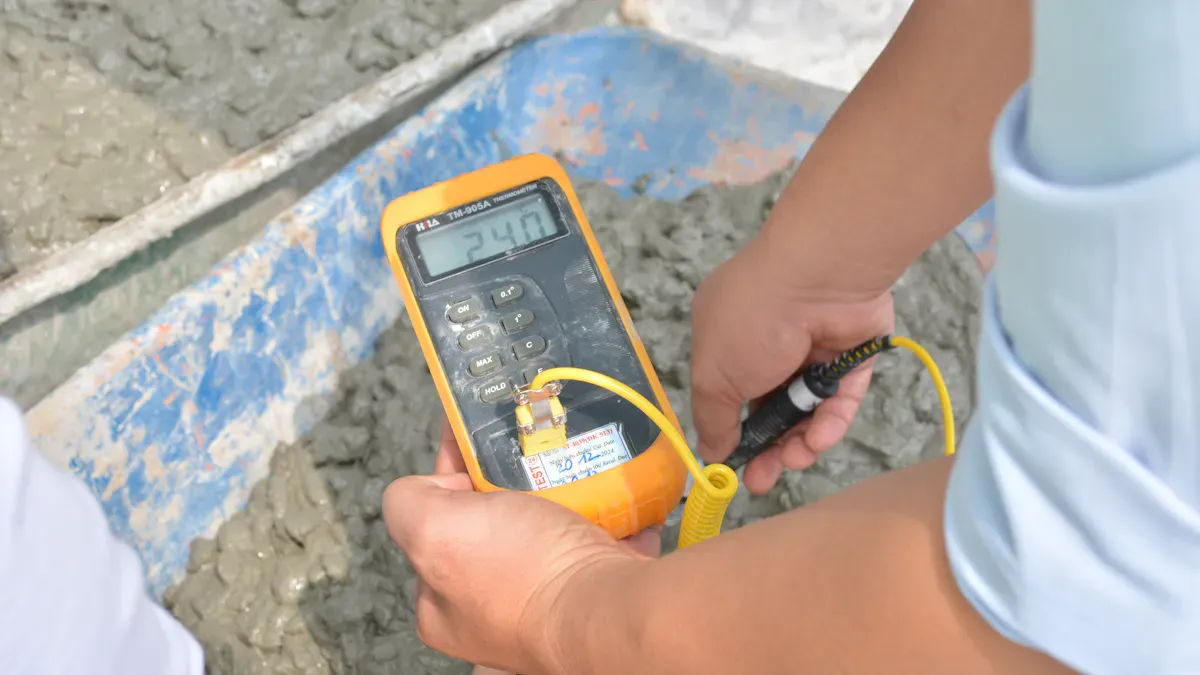
1.1 Role in Portable Measurement
You depend on portable measurement tools to deliver accurate results in remote or challenging environments. Battery packs serve as the backbone of these devices, providing consistent power when you cannot access fixed electrical sources. With advanced lithium chemistries such as LiFePO4, NMC, LCO, and LMO, you gain higher energy density and lighter weight, which makes your equipment easier to transport and operate. Custom battery packs allow you to match voltage and capacity to your instrument’s requirements, ensuring that your analyzers, meters, and diagnostic tools perform at their best.
Tip: Select battery packs with integrated communication features. These features help you monitor battery status and optimize usage in the field.
1.2 Impact on Reliability and Uptime
You need reliable power to avoid costly downtime during field operations. Modern battery packs for industrial testing equipment include advanced features that protect your investment and maintain uptime. Consider the following aspects that influence reliability:
Feature | Description |
|---|---|
Thermal Management Systems | Integrates heat sinks, cooling systems, and thermal sensors to prevent overheating. |
Protection Circuits | Includes overcurrent protection, short-circuit protection, and cell balancing mechanisms. |
Rigorous Testing & Compliance | Undergoes environmental, mechanical, and electrical safety testing to meet industry standards. |
Cycle Life | Offers 300–500 charge cycles, extendable through better materials and control systems. |
Environmental Resistance | Operates in extreme temperatures and harsh environments, ensuring reliability in the field. |
Robust Mechanical Design | Features strong enclosures and vibration-resistant construction for durability. |
You benefit from battery packs that withstand vibration, moisture, and temperature extremes. These features ensure your instruments remain operational, even in harsh conditions. By choosing battery packs with robust protection and compliance, you reduce the risk of unexpected failures and extend the service life of your equipment.
Part2: Types and Features of Battery Packs

2.1 Lithium-Ion and Other Chemistries
You face many choices when selecting battery chemistries for portable industrial testing equipment. Each chemistry offers unique advantages and limitations. The table below compares the most common options for industrial applications, including LiFePO4, NMC, LCO, LMO, solid-state, lithium metal, NiMH, and lead acid batteries.
Chemistry | Energy Density (Wh/kg) | Cycle Life (cycles) | Safety Profile | Typical Use Cases |
|---|---|---|---|---|
LiFePO4 | 90–140 | 2000+ | Excellent | Field analyzers, power tools |
NMC | 150–220 | 1000–2000 | Good | Diagnostic meters, sensors |
LCO | 150–200 | 500–1000 | Moderate | Portable monitors |
LMO | 100–150 | 300–700 | Good | Handheld testers |
Solid-State | 250–500 (theoretical) | 2000+ | Superior | Emerging tech, prototypes |
Lithium Metal | 300–500 (theoretical) | 500–1000 | Developing | Research, specialty |
NiMH | 55–110 | 500–800 | High | Legacy equipment |
Lead Acid | 30–50 | 200–500 | Moderate | Backup, stationary use |
You gain higher energy density and longer cycle life with lithium-ion chemistries such as NMC and LiFePO4. These batteries reduce weight and size, which makes your equipment easier to carry and operate. NiMH batteries offer strong safety and reliability, but they have lower energy density and shorter cycle life. Lead acid batteries remain cost-effective for stationary or backup applications, but they add significant weight and bulk.
Note: Lithium-ion batteries require advanced thermal management to prevent thermal runaway. NiMH batteries have a lower risk of overheating, but you must still follow proper charging protocols.
You should also consider the sustainability and ethical sourcing of battery materials.
2.2 Custom Engineering and Integration
You need battery packs that match your equipment’s exact requirements. Custom engineering allows you to optimize electrical, mechanical, and safety features for your application. You can select battery cells based on capacity, voltage, discharge rate, and thermal characteristics. Custom battery packs often include:
Battery Management Systems (BMS) for intelligent monitoring, control, and protection. Learn more about BMS and PCM solutions.
Custom-designed enclosures for physical protection, thermal management, and environmental sealing.
Specialized connectors, such as alligator clips or ruggedized terminals, for secure integration.
Multi-level, user-configurable voltage, temperature, and current protection.
Communication protocols like CANBus, SMBus, or Bluetooth for real-time data exchange.
Smart gas gauging and capacity learning algorithms.
Event logs and history data for maintenance tracking.
You benefit from battery packs that meet strict safety standards. Key certifications include UL 2743 for portable power packs, IEC 62133-2 and UL 2054 for cell and pack safety, and ingress ratings per IEC 60529 or NEMA 250 for dust and water resistance. You can also find packs tested for shock and vibration under IEC 60068 or MIL-STD-810.
Integration Feature | Details |
|---|---|
Dynamic Control via CAN | Enables charge/discharge control through BMS |
Read/Write Integration | Facilitates seamless data exchange with management systems |
Custom Reports | Allows creation of tailored CAN reports for BMS data comparison |
No Additional Equipment | Eliminates need for third-party tools or licenses |
Frame Type Options | Supports both extended and standard communication frame types |
Tip: Always verify that your battery packs include UL 2743 certification and robust BMS integration for maximum safety and compatibility.
2.3 Size, Weight, and Compatibility
You must balance power needs with portability. Battery packs for portable industrial testing equipment come in several form factors. The most common cell types include cylindrical, prismatic, and polymer (pouch) cells. Each type offers different advantages for size, weight, and integration.
Cell Type | Diameter (mm) | Length (mm) | Thickness (mm) | Common Applications |
|---|---|---|---|---|
Cylindrical | 18, 26, 21 | 65, 65, 70 | N/A | Medical instruments, handheld devices, power tools |
Prismatic | 34 | 50 | 10 | Laptops, tablets, phones, medical monitors |
Polymer (Pouch) | N/A | N/A | N/A | Wearable devices, medical equipment, drones, thin laptops |
You can select the cell type that best fits your device’s enclosure and power requirements. Custom battery packs allow you to optimize both size and weight, ensuring compatibility with your equipment’s design. You also gain the flexibility to replace or upgrade packs for trusted brands, which extends the service life of your instruments.
Callout: Always confirm that your battery pack’s connectors and communication protocols match your device’s specifications. This step prevents integration issues and ensures reliable operation in the field.
Part3: Selecting Battery Packs for Industrial Equipment
3.1 Performance and Safety Standards
You must evaluate several critical performance metrics and safety standards when selecting battery packs for industrial testing equipment. These standards ensure your devices operate reliably in demanding environments such as medical diagnostics, robotics, security systems, infrastructure monitoring, and industrial automation.
Key performance and safety criteria include:
Temperature cycling tests from -40°C to 75°C, with 30-minute transitions, to verify stability.
Monitoring of voltage, current, and electrical performance during operation.
Environmental testing for extreme temperatures, humidity, and altitude.
Abuse testing, including simulations of physical damage, overcharging, and short circuits.
Life-cycle testing to assess long-term durability and reliability.
Integration of safety components such as interlocks and shut-down signals.
Insulation resistance and dielectric strength tests.
Thermal profiling and state-of-charge (SOC) and state-of-health (SOH) estimation.
Cell balancing to prevent overcharging or overdischarging.
Overcharge and overdischarge protection mechanisms.
You should use specialized equipment for these tests, such as environmental test chambers, digital multimeters, battery analyzers, and power cycling equipment. Impact, nail, and crush testers, as well as X-ray machines, help you validate the mechanical and internal integrity of your battery packs.
Safety certifications play a vital role in the acceptance and reliability of battery packs. The UL 2743 standard, for example, addresses the unique needs of portable energy products used in active field applications. The table below summarizes how UL 2743 enhances trust and safety:
Aspect | Description |
|---|---|
Energy Products | Recognizes broader energy needs beyond emergency backup. |
Intentional Operation | Accounts for active battery use as a core feature. |
User-Controlled | Designed for active management, not just emergency response. |
Certification Alignment | Provides relevant safety testing for real-world conditions. |
You should also consider certifications such as UN38.3, IEC62133, UL2054, and CE/RoHS/MSDS for global compliance. These standards help you meet regulatory requirements and assure your customers of product safety.
3.2 Application-Based Selection Tips
You need to match battery pack specifications to your application, environment, and instrument requirements. The following table outlines the main selection criteria:
Criteria | Description |
|---|---|
Capacity | Estimate the required capacity and include a buffer for projected loss over time. |
Voltage | Ensure the design meets voltage requirements under load and accounts for voltage drops. |
Recharge Cycles | Consider cycle life and depth of discharge to estimate long-term performance and replacement. |
When choosing battery packs for different sectors, consider these actionable tips:
In medical devices, prioritize certifications, cell balancing, and robust BMS integration.
For robotics and industrial automation, select ruggedized designs that withstand vibration, dust, and moisture. Custom battery packs with data logging and accelerometers can enhance safety and traceability.
In security systems and infrastructure monitoring, choose packs with smart sensors for temperature and humidity control. These features prevent corrosion, static buildup, and microbial growth.
For consumer electronics, focus on lightweight, high-energy-density chemistries like NMC or LCO, and ensure compatibility with device connectors and communication protocols.
In all applications, request compatibility documentation, runtime test reports, and charger validation data from your supplier. This step ensures seamless integration and reliable operation.
Environmental factors also influence your selection. Temperature sensors and humidity control systems are essential for safe operation. Maintain humidity levels between 30-50% to prevent rust, static, and measurement errors. Smart monitoring systems can extend battery life and improve efficiency.
You must address common challenges such as safety and compliance, performance precision, scalability, data management, and cost-of-ownership. High maintenance and component replacement costs can impact your bottom line, so prioritize reliability and supplier transparency.
Tip: Never select battery packs based solely on amp-hour rating. Always validate platform compatibility, charger behavior, and certification records.
3.3 Maintenance and Storage Guidelines
Proper maintenance and storage practices maximize the lifespan and performance of your battery packs. Follow these guidelines:
Inspect and clean terminals and cables regularly to prevent corrosion and ensure optimal connections.
Use proper charging techniques. Set the correct voltage for your battery chemistry and avoid overcharging or undercharging.
Monitor battery life and maintain balanced packs to prevent uneven wear.
Control temperature during operation and storage. Avoid exposing batteries to high heat or freezing conditions.
Store batteries in a cool, dry, and well-ventilated area. Use non-conductive containers and protective covers to prevent physical damage and short circuits.
For long-term storage, keep batteries at around 50% charge to minimize degradation.
Follow equipment-specific maintenance schedules, especially for flooded batteries or specialized chemistries.
Common causes of battery failure include voltage fluctuations, excessive current draw, and thermal issues. You can mitigate these risks by implementing fail-safe mechanisms such as NTC thermistors, sense resistors, and FETs. Rigorous testing and adherence to safety certifications further reduce failure rates.
Note: Proper storage and charging extend battery life. Environmental conditions have a significant impact on performance and safety.
You rely on Battery Packs to power your portable industrial testing equipment in the field. Custom lithium solutions, such as LiFePO4 and NMC, deliver optimized performance, advanced safety, and precise fit for your applications.
Feature | Custom Lithium Batteries | Standard Lithium Batteries |
|---|---|---|
Performance Optimization | Tailored for specific applications, leading to better performance | Designed generically, may not meet all performance criteria |
Safety and Reliability | Includes advanced safety features, rigorously tested | May lack specific safety features, not tested for all use cases |
You should prioritize quality, compatibility, and proper maintenance. This approach ensures long-term reliability, reduces downtime, and supports safe, efficient field operations.
FAQ
What is the main advantage of custom lithium battery packs for industrial testing equipment?
Custom lithium battery packs allow engineers to match the battery’s voltage, capacity, peak current, dimensions, connectors, communication interface, and protection settings to the testing equipment. Chemistries such as NMC and LiFePO4 can be selected according to runtime, weight, cycle life, and environmental requirements. This application-specific approach can improve integration, reliability, and field operating time.
How does UL 2743 certification benefit your portable battery packs?
UL 2743 applies primarily to portable power packs, including certain rechargeable power sources used to supply or charge external devices. It is not automatically applicable to every battery installed inside industrial testing equipment.
When UL 2743 is relevant, evaluation against its requirements can help address electrical, mechanical, fire, and charging-related hazards. Other requirements, such as UN 38.3, IEC 62133-2, IEC 62619, or equipment-specific standards, may apply depending on the battery design, product category, transportation method, and target market.
Which battery chemistry should you choose for harsh field conditions?
LiFePO4 batteries provide strong thermal stability and long cycle life, making them suitable for equipment where durability and safety are priorities. NMC lithium-ion batteries offer higher energy density when lower weight and compact dimensions are more important.
Chemistry selection should also consider peak current, charging time, operating temperature, installation space, and required service life. For applications exposed to severe cold, a purpose-built low-temperature battery may be necessary.
How can you maximize the lifespan of your lithium battery packs?
Use a charger approved for the battery chemistry and pack configuration.
Avoid unnecessary deep discharges and prolonged storage at full charge.
Store the pack in a cool, dry environment at the manufacturer’s recommended state of charge, commonly around 30–50% for extended storage.
Inspect the enclosure, terminals, cables, and connectors for damage, corrosion, or abnormal heating.
Keep the battery within its specified charging, discharging, and storage temperature ranges.
Use a properly configured Battery Management System (BMS) to monitor operating conditions and protect the pack.
Can you replace standard battery packs with custom solutions in existing equipment?
Often, yes, but the replacement must be validated at the system level. Engineers should confirm nominal and maximum voltage, capacity, continuous and peak current, connector pinout, charging profile, communication protocol, physical dimensions, mounting method, thermal behavior, and protection settings.
The upgraded battery should also be tested with the complete device to verify startup behavior, measurement stability, charger compatibility, fault response, and compliance with applicable requirements. A battery with the correct voltage alone is not necessarily a safe drop-in replacement.


