

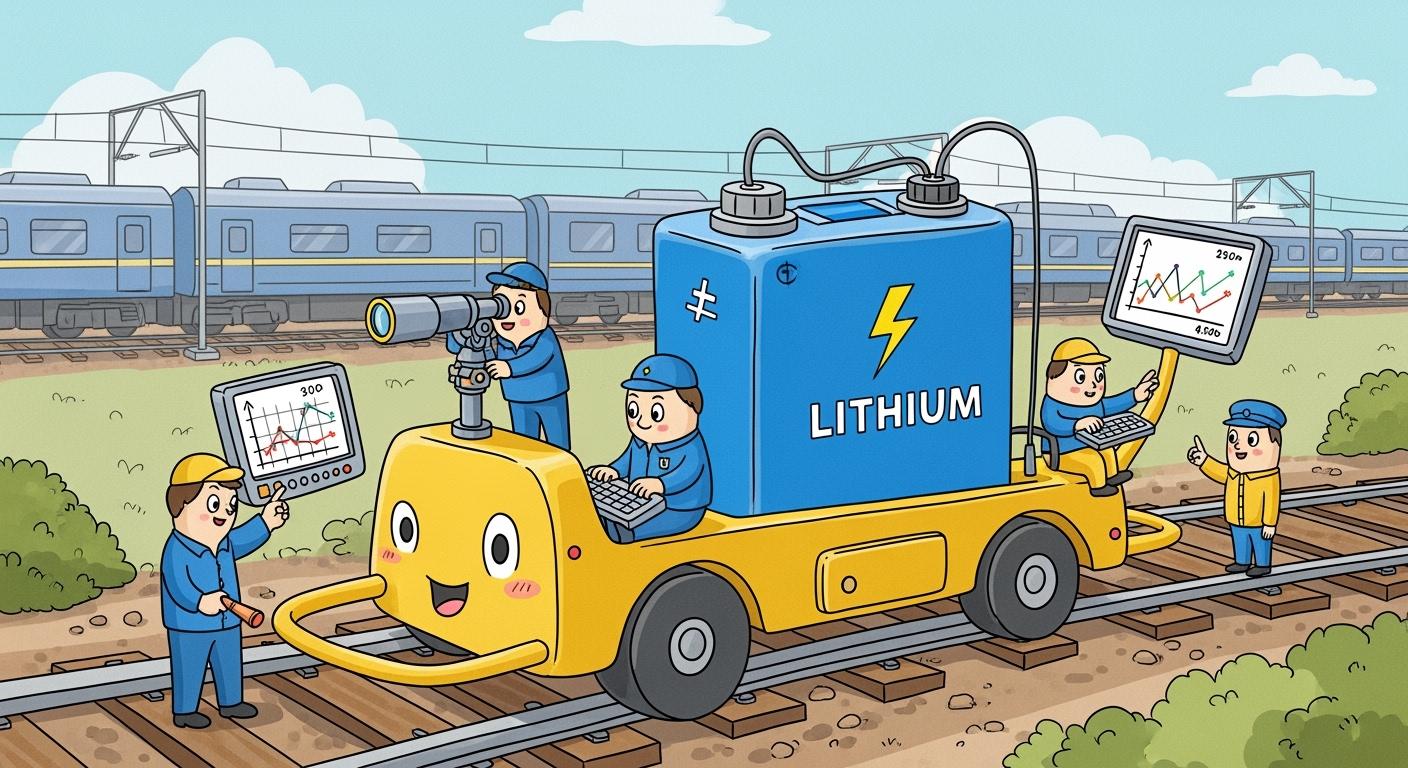
Railway inspection equipment requires stable, dependable power to support track monitoring, defect detection, positioning, data storage, and wireless communication. Custom lithium battery solutions can be designed for handheld instruments, inspection trolleys, autonomous robots, trackside monitoring nodes, and larger mobile maintenance platforms.
Compared with conventional battery technologies, lithium-ion batteries provide higher energy density, lower weight, reduced self-discharge, and more accurate battery monitoring. For self-propelled inspection platforms that might otherwise rely on an internal-combustion engine, an appropriately designed electric system can also reduce point-of-use emissions, noise, and routine engine maintenance.
Engineering Requirement | Lithium Battery Design Benefit |
|---|---|
Extended Inspection Runtime | Application-specific capacity reduces interruptions during track surveys |
Portable Equipment Weight | High energy density supports lighter handheld and mobile inspection devices |
Vibration and Shock Resistance | Rugged construction helps protect cells, wiring, and connectors during rail operation |
Temperature Adaptability | Cell chemistry and thermal design can be selected for seasonal outdoor conditions |
Battery Status Monitoring | A smart BMS can report state of charge, temperature, faults, and remaining operating time |
Reduced Local Noise and Emissions | Electrified mobile equipment operates without engine exhaust at the point of use |
Predictive Maintenance | Battery-health data helps teams plan charging and replacement before field deployment |
The actual cost and environmental benefits depend on equipment duty cycle, electricity source, battery service life, maintenance practices, and end-of-life treatment. Lithium batteries should therefore be evaluated as part of the complete railway inspection system rather than treated as a direct replacement for every diesel-powered machine.
For railway and other infrastructure monitoring applications, voltage, capacity, peak current, charging method, communication protocol, enclosure protection, and applicable railway requirements must all be defined during battery-system design.
Key Takeaways
Lithium battery solutions lower operating and maintenance costs compared to diesel systems, making them a cost-effective choice for railway operations.
These batteries offer high energy efficiency and long cycle life, with some lasting over 6,000 cycles, reducing the need for frequent replacements.
Advanced features like automatic remote monitoring and battery management systems enhance safety and reliability, ensuring optimal performance in harsh environments.
Switching to lithium batteries supports sustainability goals by reducing emissions and noise, contributing to cleaner air quality in sensitive areas.
Choosing the right lithium battery chemistry, such as LiFePO4 or NMC, ensures you meet the specific power needs of your railway inspection equipment.
Part1: Lithium Battery Solutions Overview
1.1 Key Features and Technology
You need advanced power solutions to keep railway inspection equipment reliable and efficient. Lithium Battery Solutions offer several technological advancements that set them apart in the industry. These batteries eliminate atmospheric and noise pollution, making them ideal for use in tunnels and enclosed spaces. You benefit from both active and passive balancing at high power, which ensures stable performance and proper heat management. This feature reduces maintenance needs and increases operational uptime.
A major innovation is the integration of automatic remote monitoring systems using artificial intelligence. These systems provide 24/7 health monitoring, self-diagnostics, and predictive maintenance. You can expect a long service life, with many lithium battery packs exceeding 4,000 full charge cycles—often outlasting the railway maintenance machines they power. The significant reduction in battery weight enhances the agility and performance of your inspection vehicles.
Advancement Description | Impact |
|---|---|
Elimination of atmospheric and noise pollution | Reduces emissions and noise to zero, enabling use in enclosed areas |
Combined active and passive balancing at high power | Ensures stability, heat management, and eliminates maintenance needs |
Automatic remote monitoring system using AI | Provides 24/7 health monitoring, self-diagnostics, predictive maintenance |
Long service life with over 4,000 full charge cycles | Often exceeds the lifespan of railway maintenance machines |
Significant weight reduction of vehicles | Enhances agility and performance during maintenance activities |
You can find similar advancements in other sectors, such as medical devices, robotics, and security systems, where reliability and safety are critical.
1.2 Lithium vs. Other Batteries
When you compare Lithium Battery Solutions to traditional battery technologies, you see clear advantages in energy output, lifespan, and safety. The two main chemistries used in railway applications are Lithium Iron Phosphate (LiFePO4, also called LFP) and Lithium Nickel Manganese Cobalt Oxide (NMC). LFP batteries offer superior safety, long cycle life, and cost-effectiveness, making them ideal for hybrid railways. NMC batteries provide higher energy density and longer lifespan, which suits autonomous systems and high-power applications.
Here is a comparison of common battery chemistries used in railway inspection equipment:
Chemistry | Platform Voltage (V) | Energy Density (Wh/kg) | Cycle Life (cycles) | Key Features |
|---|---|---|---|---|
LiFePO4 (LFP) | 3.2 | 90-140 | 3,000–6,000 | Superior safety, long life, cost-effective |
NMC | 3.6–3.7 | 150–220 | 2,000–4,000 | High energy density, long life, high power |
LCO | 3.6 | 150–200 | 500–1,000 | Used in consumer electronics, moderate safety |
LMO | 3.7 | 100–130 | 1,000–2,000 | Moderate energy, used in power tools |
You can see that LFP and NMC batteries dominate the railway market, with LFP holding about 45% and NMC about 55% market share. These chemistries outperform older technologies in both safety and performance.
Battery Type | Market Share | Key Features |
|---|---|---|
LFP (LiFePO4) | 45% | Superior safety, long cycle life, cost-effective |
NMC | 55% | Higher energy density, preferred for autonomous systems, longer lifespan, high power output |
Lithium Battery Solutions also deliver zero direct emissions and enhanced noise reduction compared to diesel-powered locomotives. This supports your sustainability goals and improves air quality in sensitive environments.
Benefit | Lithium Iron Phosphate Batteries | Diesel-Powered Locomotives |
|---|---|---|
Direct Emissions | Zero | High |
Air Quality Improvement | Significant | Poor |
Contribution to Climate Change | Reduced | High |
Integration with Smart Systems | Yes | No |
Noise Reduction | Enhanced | High |
1.3 Safety and Compliance
You must ensure that your railway inspection equipment meets strict safety and compliance standards. Lithium Battery Solutions for railway use comply with international standards such as IEC 62928, which covers safety requirements for secondary lithium-ion batteries in railway applications. They also meet UN38.3 standards for safe transport and CE certification for product safety. You can find more details about these standards at IEC and UN Transport.
Manufacturers design these batteries with multiple safety layers, including advanced battery management systems (BMS), thermal protection, and robust enclosures. These features prevent overheating, overcharging, and short circuits. You benefit from reliable operation in harsh environments, which is essential for uninterrupted railway inspection and maintenance.
Tip: Always verify that your battery supplier provides full documentation for IEC 62928, UN38.3, and CE compliance. This ensures the safety and reliability of your railway inspection operations.
By choosing certified Lithium Battery Solutions, you support modern, sustainable, and cost-effective railway operations.
Part2: Applications in Railway Inspection

2.1 Track Monitoring Devices
You rely on track monitoring devices to detect faults, measure rail geometry, and ensure safe train operations. Lithium Battery Solutions power these devices efficiently, enabling remote monitoring and mobile inspection units to operate for extended periods without interruption. You benefit from high energy density and rapid charging, which allow your equipment to stay active longer and recharge quickly when needed. These batteries perform reliably in harsh environments, including temperature extremes, vibration, and moisture. You see similar battery technology used in medical devices and robotics, where consistent performance and safety are critical.
Track monitoring devices face:
Temperature extremes
Vibration
Moisture
Lithium batteries, especially LiFePO4 and NMC chemistries, deliver superior energy density and fast recharge times. You minimize downtime and maximize operational uptime, which is essential for continuous track monitoring.
Note: Lithium batteries offer long cycle life and environmental resilience, making them ideal for railway infrastructure and other sectors like industrial automation and transportation.
2.2 Maintenance Platforms and Tools
You depend on maintenance platforms and tools to keep railway tracks and systems in top condition. Lithium Battery Solutions enhance reliability and operational uptime for these platforms. You experience longer operational periods without recharging, quick recharge times, and reduced maintenance needs. These features translate to fewer downtime incidents and higher productivity.
Feature | Benefit |
|---|---|
Energy Density | Provides superior energy storage, allowing for longer operational periods without recharging. |
Rapid Charging Capabilities | Reduces downtime by enabling quick recharges, ensuring tools are ready for use faster. |
Long Cycle Life | Minimizes maintenance needs and replacement frequency, enhancing overall reliability. |
Environmental Resilience | Designed to operate in extreme conditions, ensuring consistent performance in various climates. |
Modular Architecture | Allows for customization to fit specific machinery needs, improving integration and efficiency. |
IP65-Sealed Connectors | Protects against dust and water, ensuring durability in harsh environments. |
Built-in Heating System | Ensures functionality in cold conditions, maintaining operational uptime. |
Flash Balancing System | Optimizes battery life and protects during inactivity, enhancing reliability. |
You see a 30% reduction in downtime incidents after switching to lithium batteries for maintenance platforms.
Metric | Value |
|---|---|
Initial downtime incidents/month | 10 |
Downtime incidents after switch | 7 |
Reduction percentage | 30% |
You find similar benefits in sectors such as medical, robotics, and industrial automation, where reliability and uptime are essential.
2.3 Security and Surveillance Systems
You use security and surveillance systems to protect railway assets and monitor operations. Lithium Battery Solutions provide higher energy density, longer lifespan, and better environmental impact compared to lead-acid and nickel-cadmium batteries. You benefit from lighter weight and more efficient power storage, which allows for easier installation and maintenance.
Feature | Lithium Iron Phosphate (LiFePO4) | Lead-Acid Batteries | Nickel-Cadmium Batteries |
|---|---|---|---|
Energy Density | Higher | Lower | Lower |
Lifespan | Longer | Shorter | Shorter |
Environmental Impact | Better (non-toxic materials) | Poorer | Poorer |
Weight | Lighter | Heavier | Heavier |
Advantages of lithium batteries in security systems:
Higher energy density allows for more efficient power storage.
Longer lifespan reduces the frequency of battery replacements.
Better environmental impact due to non-toxic materials.
Lithium-ion batteries discharge slowly, maintaining charge for longer periods. You require less frequent recharging, which supports continuous surveillance operations. You see similar technology in consumer electronics and security systems, where uninterrupted performance is vital.
Tip: Choose lithium battery chemistries like LiFePO4 and NMC for your security and surveillance systems to achieve higher reliability and sustainability.
You ensure uninterrupted operations and reliable performance in harsh environments by using lithium battery packs. These batteries support modern railway inspection needs and align with practices in medical, robotics, infrastructure, and industrial sectors.
Part3: Performance and Key Metrics
3.1 Cycle Life and Fast Charging
You want your railway inspection equipment to last as long as possible with minimal downtime. Cycle life measures how many times you can charge and discharge a battery before its capacity drops below 80%. Most lithium-ion batteries offer 300 to 500 cycles. LiFePO4 batteries stand out by delivering over 3,000 cycles, and some, like BSLBATT’s, reach more than 6,000 cycles with a service life of 15 to 20 years. This means you replace batteries less often, which reduces costs and maintenance.
LiFePO4 batteries: 3,000–6,000+ cycles
Standard lithium-ion: 300–500 cycles
Service life: Up to 20 years for advanced LiFePO4 packs
Fast charging helps you get equipment back in service quickly. However, frequent fast charging can cause overheating and shorten battery life. You should balance the need for speed with long-term reliability.
Tip: Use fast charging only when necessary to extend the lifespan of your battery packs.
3.2 Energy Density and Weight
You need batteries that store more energy without adding extra weight. High energy density lets your inspection robots and devices cover larger areas and operate longer between charges. Lightweight battery packs improve mobility and efficiency, especially for mobile platforms and robotic systems.
High energy density supports efficient movement and extended range.
Lightweight design allows robots to carry heavier tools or sensors.
Custom battery packs fit a variety of rail inspection and maintenance applications.
Goldencell’s LiFePO4 batteries combine high energy density with a compact, lightweight design. This enables your equipment to perform demanding tasks in rail, medical, robotics, and industrial sectors.
3.3 Battery Management Systems
You rely on advanced battery management systems (BMS) to keep your lithium battery packs safe and efficient. A BMS monitors and controls each cell, protecting against unsafe conditions like overcharging, deep discharging, and overheating. It maintains voltage and current within safe limits and manages thermal conditions to prevent thermal runaway.
BMS tracks battery health, including State of Health (SOH) and Remaining Useful Life (RUL).
Integrated IoT features allow real-time monitoring of voltage, current, and temperature.
The system makes real-time decisions to optimize safety and extend battery life.
You can learn more about BMS technology and its role in railway applications at Battery Management Systems.
Note: A reliable BMS is essential for safety and longevity in railway, medical, security, and industrial battery solutions.
Part4: Implementation and Optimization
4.1 Selection Criteria
You need to choose lithium battery solutions that match your railway inspection equipment requirements. Start by reviewing key technical criteria. The table below summarizes the most important factors for B2B clients:
Criteria | Description |
|---|---|
Voltage Range | 24V–220V for compatibility |
Test Accuracy | ±0.5% voltage for reliable results |
Discharge Current | Up to 300A for high-power applications |
Data Logging | Essential for performance tracking |
Safety Features | Over-temperature protection included |
You should select batteries with advanced safety features and accurate data logging. These features help you monitor performance and prevent failures. Look for solutions with a wide voltage range and high discharge current to support different inspection tools. You can find similar selection processes in medical and industrial automation sectors, where reliability and safety are critical.
4.2 Maintenance and Lifecycle
You benefit from lithium battery packs because they require less maintenance than traditional lead-acid batteries. Here are the main differences:
Lithium-ion batteries do not need watering.
Battery management systems handle cell balancing automatically.
You only need to check system health and connections.
Lead-acid batteries require regular watering and health checks.
Lithium batteries offer higher energy density and longer lifespan. You recharge them less often, which reduces downtime. Many railway operators report lower maintenance costs and improved reliability after switching to lithium solutions. You see similar advantages in robotics and security systems, where minimal maintenance is important.
Tip: Schedule periodic inspections and use built-in diagnostics to maximize battery life.
4.3 Integration with Rail Systems
You must integrate lithium battery packs with existing rail systems for optimal performance. Modern battery-electric locomotives use integrated HVAC systems to control battery temperature. Energy management systems monitor battery health and support dynamic braking, which recharges batteries during operation. Wayside charging stations provide fast recharging and reduce emissions by up to 15%.
You may face challenges such as the need for high-voltage power lines and redundancy for continuous operation. Self-powered devices with IoT features improve monitoring and signal processing, but you must coordinate with embedded systems to manage costs and space. Best practices include following integration design guidelines and providing emergency response training, as recommended by industry experts like Judy Jeevarajan and Peter Jensen.
You can also look to energy recuperation systems, such as those used in ABB’s Enviline, which capture and reuse braking energy. These solutions support sustainability and reduce energy waste. You find similar integration strategies in industrial and infrastructure sectors.
Note: Always involve technical experts during integration to ensure safety and reliability.
You gain reliable, efficient, and safe power with lithium battery solutions for railway inspection equipment. These batteries help you modernize operations and reduce emissions. You see improved operational efficiency and lower costs.
Railway operators invest in energy-efficient propulsion to upgrade fleets.
Lithium-ion batteries deliver high energy density and support emission reduction.
Digital technologies and advanced battery systems drive sustainability goals.
You support sustainable, cost-effective railway operations. Consider lithium battery solutions for your next project.
FAQ
What makes LiFePO4 and NMC batteries ideal for railway inspection equipment?
You get high energy density, long cycle life, and strong safety features with LiFePO4 and NMC batteries. These chemistries support heavy-duty use in railway, medical, and industrial sectors. Their reliability reduces downtime and maintenance costs.
How do lithium battery packs handle extreme temperatures?
You benefit from built-in heating systems and advanced battery management. These features keep lithium battery packs stable in cold or hot environments. This technology also appears in robotics and security systems.
Can you integrate lithium battery packs with existing rail systems?
Yes. You can connect lithium battery packs to modern rail systems using modular designs and smart management. Integration supports energy recuperation and fast charging. You see similar integration in industrial automation and infrastructure.
How often do you need to replace lithium battery packs?
You replace LiFePO4 and NMC battery packs less often than lead-acid or nickel-cadmium types. Most packs last 3,000–6,000 cycles or up to 20 years. This long life lowers your total cost of ownership.
What safety standards do lithium battery packs meet?
You ensure safety with compliance to IEC 62928, UN38.3, and CE certification. These standards cover transport, operation, and product safety. Leading brands provide full documentation for your records.


