

Quick Answer
EU removable battery rules push device makers toward better serviceability, replaceability, and battery lifecycle management. Device designers should consider battery access, connector safety, enclosure structure, labeling, user safety, and compliance documentation early in product development. For OEM products, Large Power can help match battery chemistry, voltage, BMS/PCM protection, charger settings, and certification needs.
Removable Battery Design Considerations
Design Area | Why It Matters | OEM Note |
|---|---|---|
Service access | Battery may need replacement access. | Plan enclosure and connector layout. |
User safety | Removal should avoid short circuit or puncture. | Use insulated terminals and clear instructions. |
Compliance | Rules can vary by product category and date. | Confirm latest EU requirements. |
Battery pack | Must remain safe and reliable. | Use BMS, labeling, and traceability. |
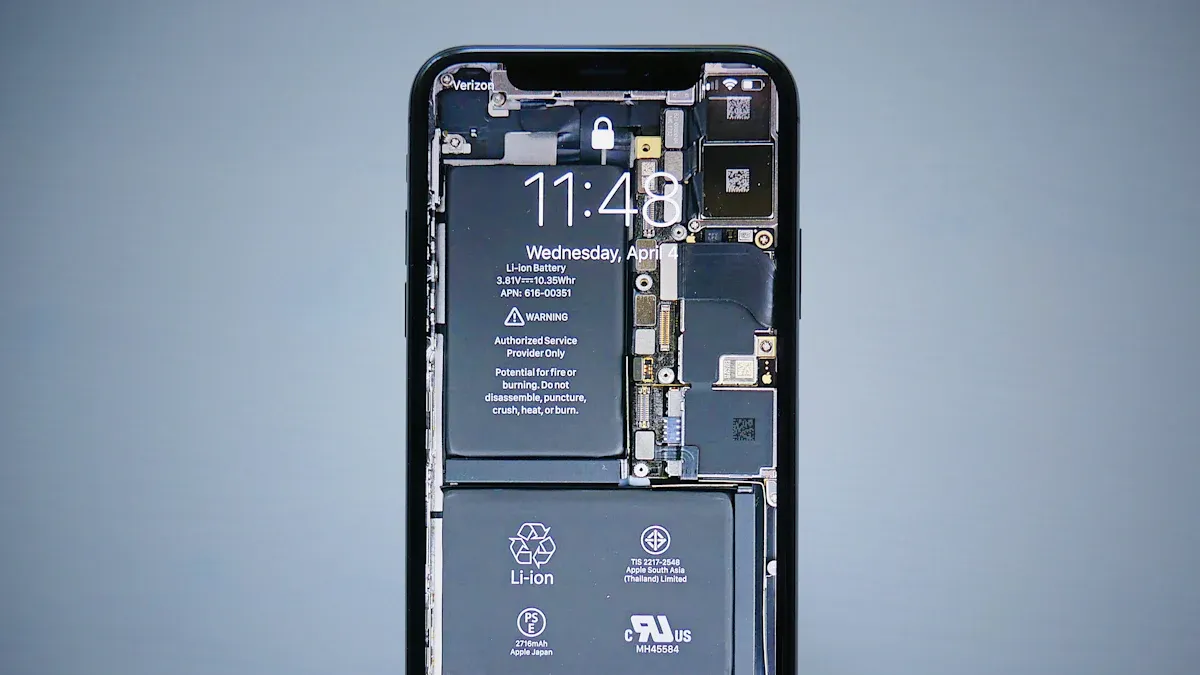 The EU removable battery mandate marks the most significant shift in smartphone design regulations in over a decade. Specifically, this groundbreaking legislation requires all new smartphones sold in the European Union to feature user-replaceable batteries starting in 2027.
Furthermore, the EU sustainable batteries regulation aims to address the growing electronic waste crisis, where millions of smartphones are discarded annually due to dead batteries. This decisive move by European lawmakers not only promises to extend device lifespans but also stands to save consumers hundreds of euros in battery replacement costs.
Consequently, major smartphone manufacturers must now fundamentally rethink their device designs, potentially influencing global production standards and setting a new precedent for sustainable electronics manufacturing worldwide.
The EU removable battery mandate marks the most significant shift in smartphone design regulations in over a decade. Specifically, this groundbreaking legislation requires all new smartphones sold in the European Union to feature user-replaceable batteries starting in 2027.
Furthermore, the EU sustainable batteries regulation aims to address the growing electronic waste crisis, where millions of smartphones are discarded annually due to dead batteries. This decisive move by European lawmakers not only promises to extend device lifespans but also stands to save consumers hundreds of euros in battery replacement costs.
Consequently, major smartphone manufacturers must now fundamentally rethink their device designs, potentially influencing global production standards and setting a new precedent for sustainable electronics manufacturing worldwide.
EU Unveils Groundbreaking Battery Regulation
On July 10, 2023, the European Council adopted a comprehensive battery regulation that extends beyond smartphones to encompass all portable devices [1]. This regulation establishes stringent requirements throughout the entire battery lifecycle – from production to recycling.How Will the New Law Transform Smartphone Design?
The regulation mandates that portable batteries in devices must be removable using basic commercially available tools [2]. Moreover, manufacturers cannot require specialized tools unless provided free of charge, nor can they demand proprietary tools, thermal energy, or solvents for battery removal [1]. In addition to design changes, the regulation introduces mandatory requirements for:- Battery labeling with internal components
- Information about recycled material content
- QR codes for easy access to battery information [1]
When Does Implementation Begin?
The regulation follows a structured timeline for implementation:- February 18, 2024: Initial enforcement of Battery Regulations [3]
- August 18, 2024: Mandatory safety requirements for energy storage systems and performance criteria for industrial batteries [3]
- February 18, 2025: Carbon footprint requirements for electric vehicle batteries [3]
- August 18, 2025: Enforcement of waste battery management protocols [3]
- February 18, 2027: Implementation of battery passports for industrial batteries [3]
Manufacturers Race to Meet 2027 Deadline
Smartphone manufacturers face significant design challenges as they prepare to comply with the EU’s battery regulation. The mandate requires extensive modifications to current smartphone architectures, prompting companies to explore innovative solutions.Apple Faces Biggest Design Challenge
Apple’s upcoming iPhone 16 series showcases the company’s adaptation strategy. Internal design changes include a metal battery casing that serves dual purposes – simplifying battery removal and improving cell density by 5-10% [6]. The company plans to implement an electrically induced adhesive debonding technology, allowing easier battery access [7].Samsung and Others Already Testing Solutions
Samsung Electronics, alongside other manufacturers, must redesign their flagship devices that have featured integrated batteries since 2015 [8]. The challenge extends beyond standard smartphones to foldable devices, where incorporating removable batteries presents unique engineering hurdles [8].Cost Implications for Production
The transition toward removable batteries brings substantial financial considerations. Manufacturers must:- Invest in new production lines
- Modify existing design processes
- Develop standardized fastening mechanisms
- Create clear instruction guides for battery replacement [9]
Large Power as Your Trusted Battery Manufacturer to Comply with EU Regulation
Battery manufacturers face stringent requirements under the new framework. They must:- Achieve recycling efficiency targets of 80% for nickel-cadmium batteries by 2025 [12]
- Meet minimum recycled content levels for critical materials
- Implement comprehensive labeling systems
- Establish battery tracking mechanisms through QR codes [13]
Consumers Win Big with Right to Repair
Right-to-repair legislation stands as a cornerstone of the EU’s sustainable batteries regulation, fundamentally changing how consumers maintain their devices. This comprehensive approach ensures manufacturers provide repair services at reasonable prices, alongside easy access to spare parts and essential tools.Battery Replacement Costs Drop Significantly
Battery failure emerges as a primary reason for device replacement, with studies showing that 42% of smartphone repairs and 27% of laptop repairs involve battery replacement [14]. Currently, close to 100% of tablet and smartphone batteries are glued in place [14], making replacements costly and complex. Under the new regulation, manufacturers must:- Provide spare parts at reasonable prices
- Supply repair documentation
- Remove software locks that impede repairs
- Extend warranty by 12 months after repairs [1]
Environmental Impact Reduces
The environmental benefits of this legislation prove substantial. According to European Commission data, premature disposal of consumer goods generates:- 261 million tons of CO2-equivalent emissions annually
- 30 million tons of resource consumption
- 35 million tons of waste [1]
- Repair vouchers
- Information campaigns
- Training programs
- Support for community repair spaces [1]
Global Markets Follow EU’s Lead
As the EU’s battery regulation sets new standards, major global markets initiate similar measures to address electronic waste and consumer rights. This ripple effect demonstrates the far-reaching impact of the EU’s sustainable batteries regulation across international borders.India Considers Similar Legislation
India’s policy landscape shifts toward enhanced battery accessibility. The government think tank, NITI Aayog, introduced draft legislation to standardize battery swapping station components [17]. Although initially focused on electric vehicles, the proposed law undergoes redrafting to address industry concerns before reintroduction later this year [17].US States Push for Repair Rights
The United States witnesses substantial progress in right-to-repair legislation. Five states – New York, Minnesota, Colorado, California, and Oregon – have enacted consumer device repair laws [5]. These regulations establish distinct implementation timelines:- New York’s law became effective December 28, 2023 [5]
- Minnesota and California laws activate July 1, 2024 [5]
- Colorado’s legislation implements January 1, 2026 [5]
- Oregon’s mandate begins July 1, 2027 [5]
China’s Manufacturing Sector Adapts
China, currently producing over 75% of the world’s lithium-ion batteries [20], faces pressure to align with global sustainability standards. Chinese manufacturers explore innovative solutions, primarily focusing on semi-solid/state-liquid hybrid batteries [20]. Although Chinese companies maintain production dominance, they lag behind international competitors in solid-state battery patent development [20]. The Chinese EV sector demonstrates adaptability through the introduction of sodium-ion batteries, estimated to cost 30% less than LFP batteries [2]. Multiple carmakers announce sodium-ion electric vehicles, exemplified by BYD’s plans to integrate these batteries into models below USD 29,000 [2]. This technological advancement achieves TRL 6 (full prototype at scale) in 2022, advancing rapidly from TRL 3-4 (small prototypes) in 2021 [2].Conclusion
The EU’s battery regulation stands as a landmark shift toward sustainable electronics manufacturing. Through mandatory removable batteries, strict recycling targets, and comprehensive right-to-repair provisions, this legislation reshapes the smartphone industry’s future. Major manufacturers now adapt their design approaches, while markets worldwide follow suit with similar regulations. These changes promise significant benefits for consumers and the environment alike. Battery replacement costs will drop substantially, device lifespans will extend, and electronic waste will decrease markedly. The regulation’s ripple effects already appear across global markets, with countries like India considering comparable legislation and U.S. states implementing their own right-to-repair laws. The 2027 deadline signals a crucial turning point for smartphone design and sustainability. Though manufacturers face considerable challenges, their ongoing adaptations demonstrate the industry’s capacity for innovation under regulatory pressure. This transformation ultimately serves a broader purpose – creating a more sustainable and consumer-friendly electronics ecosystem that benefits both users and the planet.References
[1] – https://www.europarl.europa.eu/news/en/press-room/20240419IPR20590/right-to-repair-making-repair-easier-and-more-appealing-to-consumers [2] – https://www.iea.org/reports/global-ev-outlook-2023/trends-in-batteries [3] – https://excellbattery.com/new-eu-rules-revamp-battery-safety-recycling-and-more-eu-regulation-2023-1542/ [4] – https://www.standard.net/lifestyle/home_and_family/2023/jul/19/tech-matters-all-about-the-eus-new-battery-law/ [5] – https://www.wiley.law/alert-State-Right-to-Repair-Patchwork-Grows-as-Electronic-Device-Manufacturers-Face-New-Compliance-Deadlines [6] – https://www.forbes.com/sites/davidphelan/2024/07/03/apple-to-upgrade-iphone-16-design-in-important-way-new-leak-claims/ [7] – https://www.israelhayom.com/2024/07/01/reports-removable-batteries-are-coming-to-the-iphone/ [8] – https://www.kedglobal.com/regulations/newsView/ked202306210021 [9] – https://www.usmobile.com/blog/smartphone-batteries-eu-regulation/?srsltid=AfmBOooGS_1ASgJVdRfW_qNwdAOecq-cvvhFg_eQcCKatWGfZ7rBJz5- [10] – https://www.gizchina.com/2023/07/06/are-removable-batteries-in-phones-a-good-idea-these-days/ [11] – https://www.macrumors.com/2024/09/11/apple-makes-iphone-16-batteries-easier-to-replace/ [12] – https://www.consilium.europa.eu/en/press/press-releases/2023/07/10/council-adopts-new-regulation-on-batteries-and-waste-batteries/ [13] – https://www.techtimes.com/articles/293823/20230714/new-eu-law-requires-smartphones-replaceable-batterieseffective-2027.htm [14] – https://eeb.org/non-replaceable-batteries-are-bad-news-for-the-environment-and-consumers-new-research-finds/ [15] – https://commission.europa.eu/law/law-topic/consumer-protection-law/directive-repair-goods_en [16] – https://www.digitaltrends.com/mobile/smartphones-removable-batteries-climate-impact-comeback-analysis/ [17] – https://www.exponent.com/article/eu-user-replaceable-battery-mandate-leads-global-effort [18] – https://www.goodnewsnetwork.org/all-50-states-have-now-introduced-right-to-repair-legislation/ [19] – https://pirg.org/media-center/release-all-50-states-now-have-filed-right-to-repair-legislation-over-last-8-years/ [20] – https://www.trendforce.com/news/2024/04/17/insights-chinas-position-in-ev-battery-market-to-be-shaken-as-the-mass-production-race-of-all-solid-state-battery-industry-speeds-up/Need Battery Packs for Serviceable Devices?
Large Power can customize lithium battery packs with the right cell chemistry, voltage, capacity, BMS protection, charger matching, connector design, and certification support. Request a custom battery solution for your application.
4. Do removable battery rules mean every product needs a loose battery?
No. Requirements depend on product category and regulation details, so designers should confirm the latest rules.
5. What should OEMs plan first?
Plan battery access, safe connectors, labeling, service instructions, and pack protection early in the design stage.
Related battery guides: For more context, see UN3480 vs UN3481: Lithium-Ion Battery Shipping Guide, UN38.3 Testing for Lithium Battery Safety, and lithium battery transportation regulations in 2026. For application-specific projects, review custom lithium battery compliance support.
FAQ
What do EU removable battery rules mean for device designers?
Device designers need to consider battery accessibility, replacement procedures, safety labeling, service life, and end-of-life handling early in the product design stage. The battery pack should support safe installation, removal, and maintenance without compromising performance.
Do custom lithium battery packs help with removable battery design?
Yes. A custom lithium battery pack can be designed with the right enclosure, connector, BMS, mounting structure, and service interface for removable or replaceable battery applications.
How can you review a project for battery compliance needs?
You can contact Large Power with your product type, target market, voltage, capacity, and mechanical requirements. The engineering team can help evaluate practical battery pack design options.


