

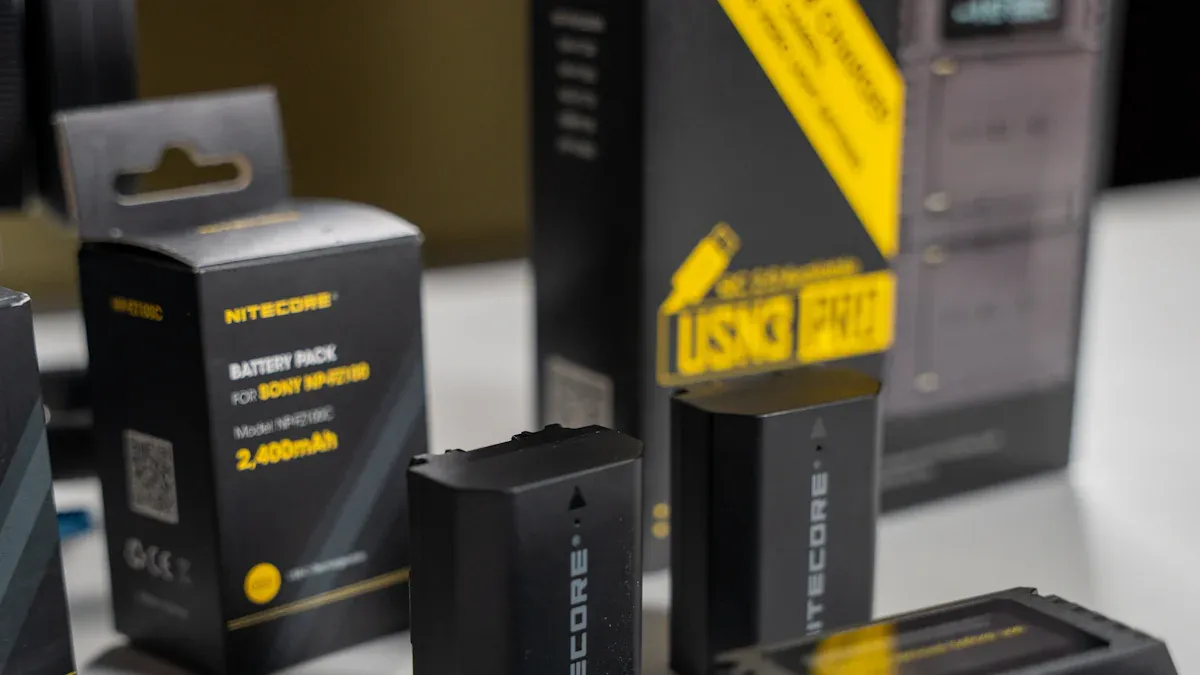
UN3480 and UN3481 identify how rechargeable lithium-ion cells and batteries are presented for transport. Selecting the correct classification is essential because it determines the applicable packing instruction, state-of-charge limit, package design, marks, labels, documentation, aircraft restrictions, and carrier acceptance process.
Quick Answer
UN3480 applies when lithium-ion cells or batteries are shipped by themselves. UN3481 applies when batteries are packed in the same package as equipment or installed inside equipment. For air transport, UN3480 uses Packing Instruction 965, UN3481 packed with equipment uses PI 966, and UN3481 contained in equipment uses PI 967. From 1 January 2026, important state-of-charge requirements also apply to many PI 966 shipments.
Key Takeaways
- Use UN3480 for standalone lithium-ion cells, replacement packs, and bulk battery shipments without equipment.
- Use UN3481 with PI 966 when the battery and the device are in the same outer package but the battery is not installed.
- Use UN3481 with PI 967 when the battery is installed in the equipment during transport.
- From 1 January 2026, PI 966 Section I batteries and PI 966 Section II cells or batteries above 2.7 Wh must generally be offered for air transport at no more than 30% state of charge.
- For PI 967 batteries contained in equipment, reduced state of charge is strongly recommended but is not a universal mandatory limit.
- Marks, labels, dangerous-goods declarations, quantity limits, and aircraft restrictions depend on the applicable packing instruction and section.
- Confirm the current IATA DGR, national rules, route, airline variations, and freight-forwarder requirements before each shipment.
Part1: UN3480 and UN3481 Classification
1.1 What Is UN3480?
UN3480 is the UN number for lithium-ion cells and batteries shipped without equipment. Typical examples include replacement battery packs, spare batteries shipped to service centers, and cells delivered to an equipment manufacturer.
For air transport, UN3480 is prepared under PI 965. Standalone lithium-ion batteries are forbidden as cargo on passenger aircraft and must be prepared for cargo-aircraft transport under the applicable requirements. They must generally be offered at no more than 30% of rated capacity unless an approved exception applies.
1.2 What Is UN3481 Packed with Equipment?
UN3481 “packed with equipment” applies when a lithium-ion battery and the equipment it is intended to power are placed in the same package, but the battery is not installed in the equipment. A medical device packed with a removable spare battery is a typical example.
Air shipments in this configuration use PI 966. The cells or batteries must be protected against short circuit, enclosed in suitable inner packaging, and secured so they cannot move or contact conductive materials. The number of batteries should be limited to those required to operate the equipment plus the permitted spare sets.
1.3 What Is UN3481 Contained in Equipment?
UN3481 “contained in equipment” applies when the lithium-ion battery is installed in the device. Examples include a monitor, industrial analyzer, security camera, or portable medical device shipped with its battery already connected or installed.
Air shipments use PI 967. The equipment must protect the battery from damage and prevent accidental activation. The package must also control movement and withstand normal transport conditions.
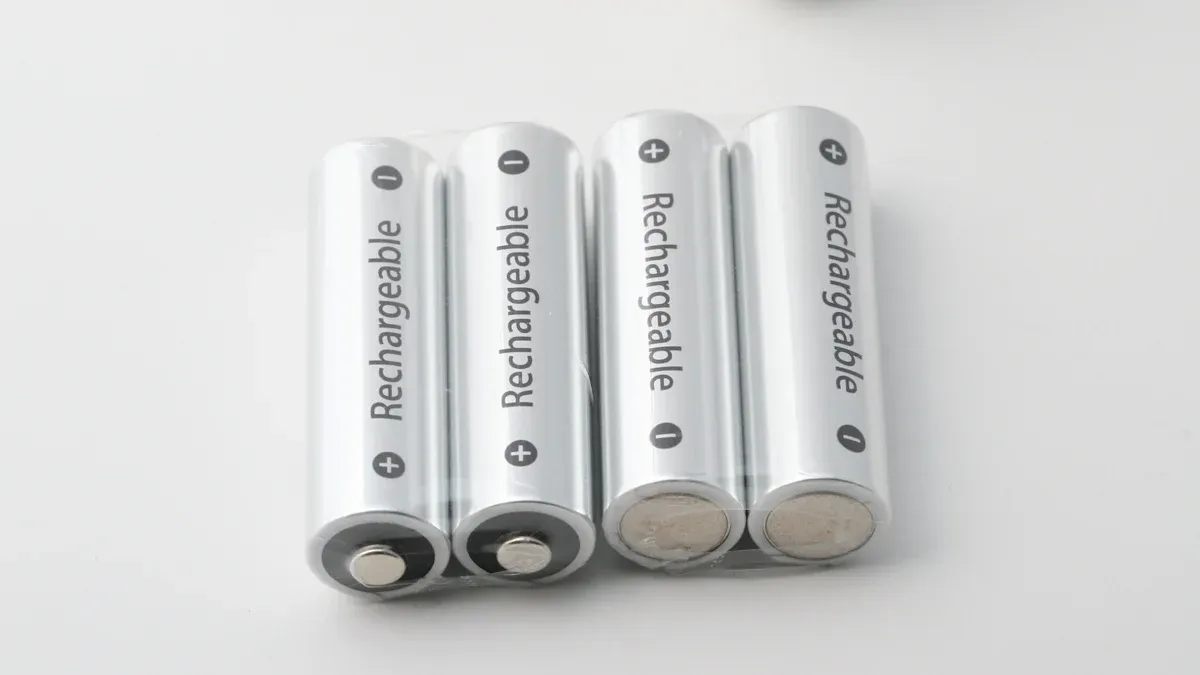
Part2: UN3480 vs UN3481 Quick Comparison
| Classification | Shipment Configuration | Air Packing Instruction | Typical Example |
|---|---|---|---|
| UN3480 | Lithium-ion cells or batteries shipped alone | PI 965 | Replacement packs or cells shipped to an OEM |
| UN3481 packed with equipment | Battery and equipment in the same package, but battery not installed | PI 966 | Device packed with a removable battery or permitted spare set |
| UN3481 contained in equipment | Battery installed inside the equipment | PI 967 | Medical or industrial device shipped with its battery installed |
UN3481 does not automatically mean that the battery is safer. It describes the shipment configuration, not the quality or safety performance of the battery. A defective battery, inadequate BMS, exposed terminal, damaged device, or poorly secured package can still create a transport risk.
Part3: 2026 State-of-Charge Requirements
3.1 UN3480 Under PI 965
Lithium-ion cells and batteries shipped alone by air under PI 965 must generally be offered at a state of charge not exceeding 30% of rated capacity. Transport above this level requires the applicable regulatory approvals. UN3480 shipments are restricted to cargo aircraft.
3.2 UN3481 Packed with Equipment Under PI 966
From 1 January 2026, the following requirements apply to lithium-ion batteries packed with equipment:
- PI 966 Section I cells and batteries must be offered at no more than 30% state of charge unless a higher level is approved by the State of Origin and the State of the Operator.
- Under PI 966 Section II, cells and batteries above 2.7 Wh must also be offered at no more than 30% state of charge.
- A PI 966 Section II battery above 2.7 Wh offered above 30% must move under the applicable Section I provisions and regulatory approvals.
This 2026 change is important for manufacturers shipping removable batteries together with medical, industrial, robotics, security, or testing equipment.
3.3 UN3481 Contained in Equipment Under PI 967
For batteries contained in equipment, IATA recommends offering the shipment at no more than 30% state of charge or with an indicated battery capacity not exceeding 25%. This reduced level is a transport-safety recommendation rather than a universal mandatory PI 967 limit.
Carriers may apply stricter policies. The shipper should therefore confirm airline and freight-forwarder requirements before dispatch.
| Configuration | 2026 Air-Transport SOC Position |
|---|---|
| UN3480, PI 965 | Maximum 30% SOC unless the required approval applies |
| UN3481 packed with equipment, PI 966 Section I | Maximum 30% SOC unless approved above that level |
| UN3481 packed with equipment, PI 966 Section II above 2.7 Wh | Maximum 30% SOC; higher SOC moves under the applicable Section I provisions and approvals |
| UN3481 contained in equipment, PI 967 | 30% SOC or 25% indicated capacity is recommended, not universally mandatory |
Part4: Watt-Hour Rating and Packing Sections
The watt-hour rating affects which section of the packing instruction may apply. For lithium-ion batteries, the commonly used thresholds are 20 Wh per cell and 100 Wh per battery. Larger cells or batteries are generally subject to fully regulated provisions.
Calculate watt-hours using:
Watt-hours = nominal voltage x rated capacity in amp-hours
For example, a 25.2 V, 4 Ah pack is rated at 100.8 Wh and exceeds the 100 Wh battery threshold. The calculation, battery marking, test summary, packaging, and documentation must all use consistent product data.
The applicable section cannot be determined from the UN number alone. It also depends on energy rating, number of batteries, net quantity, packaging configuration, transport mode, and regulatory variations.
Part5: Packaging, Marks, Labels, and Documents
5.1 Packaging Controls
Battery packaging should prevent short circuits, terminal contact, movement, crushing, and accidental activation. Appropriate controls may include terminal caps, non-conductive covers, individual inner packaging, cushioning, rigid outer packaging, and secure equipment restraints.
Damaged, defective, recalled, prototype, or low-production-run batteries may require different provisions or specific approvals. They should not be placed into a routine shipment without a separate regulatory assessment.
5.2 Marks and Labels
Do not assume that every UN3480 or UN3481 package uses exactly the same marks and labels. Depending on the packing instruction and section, requirements may include the battery mark, Class 9 lithium battery hazard label, Cargo Aircraft Only label, UN number, proper shipping name, and package-orientation information where applicable.
Carrier variations can add further requirements. The final package should be reviewed against the current modal regulations and the selected carrier’s acceptance rules.
5.3 Shipping Documentation
A Shipper’s Declaration for Dangerous Goods is not required for every lithium-battery shipment. Its use depends on whether the shipment is fully regulated and on the applicable packing-instruction section. Air waybill statements may still be required for certain excepted shipments.
OEMs and shippers should keep the following information available as applicable:
- UN38.3 test summary
- Battery specification and watt-hour rating
- SDS or safety information requested by the carrier
- Applicable packing instruction and section
- Package quantity and net battery weight
- Dangerous-goods declaration when required
- Air waybill statements and carrier forms when required
- Evidence of required approvals for exceptional shipments
Part6: UN38.3 and Battery Design Responsibilities
Cells and batteries offered for routine transport must generally be of a type that has passed UN Manual of Tests and Criteria, Part III, subsection 38.3. Manufacturers and subsequent distributors must make the UN38.3 test summary available. The test summary is not the same as a general marketing certificate.
Transport compliance begins during battery development. A Battery Management System can help control overcharge, over-discharge, overcurrent, temperature, and short-circuit risks, but the BMS does not replace compliant cells, mechanical protection, testing, packaging, or shipping procedures.
For a custom lithium battery pack, manufacturers should define:
- Cell model, chemistry, and traceability
- Pack voltage, capacity, watt-hour rating, and maximum current
- BMS and independent protection architecture
- Terminal and connector protection
- Enclosure strength and resistance to handling damage
- UN38.3 test-summary availability
- Intended shipping configuration: alone, packed with equipment, or contained in equipment
- Target markets, transport modes, and carrier restrictions
Part7: Classification Checklist for Device Manufacturers
- Confirm whether the battery is lithium-ion or lithium metal.
- Determine whether it is shipped alone, packed with equipment, or contained in equipment.
- Calculate and verify the watt-hour rating.
- Confirm that the battery type has passed UN38.3 and obtain the test summary.
- Select PI 965, PI 966, or PI 967 for air transport.
- Identify the applicable section and quantity limits.
- Apply the correct 2026 state-of-charge requirement or recommendation.
- Prepare packaging, marks, labels, and documents for the applicable section.
- Check national, modal, airline, and freight-forwarder variations.
- Retain shipment records and train personnel according to their responsibilities.
Transport rules change regularly. Always verify the current IATA DGR and carrier requirements before preparing a live shipment.
Need Battery Packs Prepared for Equipment Shipping?
Large Power supports custom battery development for medical, robotics, security, infrastructure, consumer-electronics, and industrial equipment. Engineering support can cover cell selection, BMS/PCM design, terminal protection, pack labeling information, UN38.3 documentation, and device integration.
Contact Large Power to review your battery configuration and intended shipping method before finalizing the pack design.
For a broader regulatory overview, read our Lithium Battery Air Transport Rules.
FAQ
What is the main difference between UN3480 and UN3481?
UN3480 applies to lithium-ion cells or batteries shipped alone. UN3481 applies when batteries are packed with equipment or installed in equipment.
Which packing instructions apply to UN3480 and UN3481?
For air transport, UN3480 uses PI 965. UN3481 packed with equipment uses PI 966, while UN3481 contained in equipment uses PI 967.
Does the 30% state-of-charge limit apply to UN3481 in 2026?
It is mandatory for PI 966 Section I and for PI 966 Section II cells or batteries above 2.7 Wh, unless the required approval applies. For PI 967 batteries contained in equipment, 30% SOC or 25% indicated capacity is strongly recommended rather than universally mandatory.
Does every lithium-battery shipment need a Class 9 label and Shipper’s Declaration?
No. Marks, labels, declarations, and air waybill statements depend on the packing instruction, section, energy rating, quantity, transport mode, and carrier requirements.
Is UN3481 automatically safer than UN3480?
No. UN3481 describes the relationship between the battery and equipment. Battery quality, BMS protection, terminals, device design, packaging, handling, and state of charge still affect transport risk.
What documents should an OEM prepare?
Common records include the UN38.3 test summary, battery specification, watt-hour rating, packing information, SDS or carrier-requested safety information, and any required dangerous-goods declaration or approvals.


