

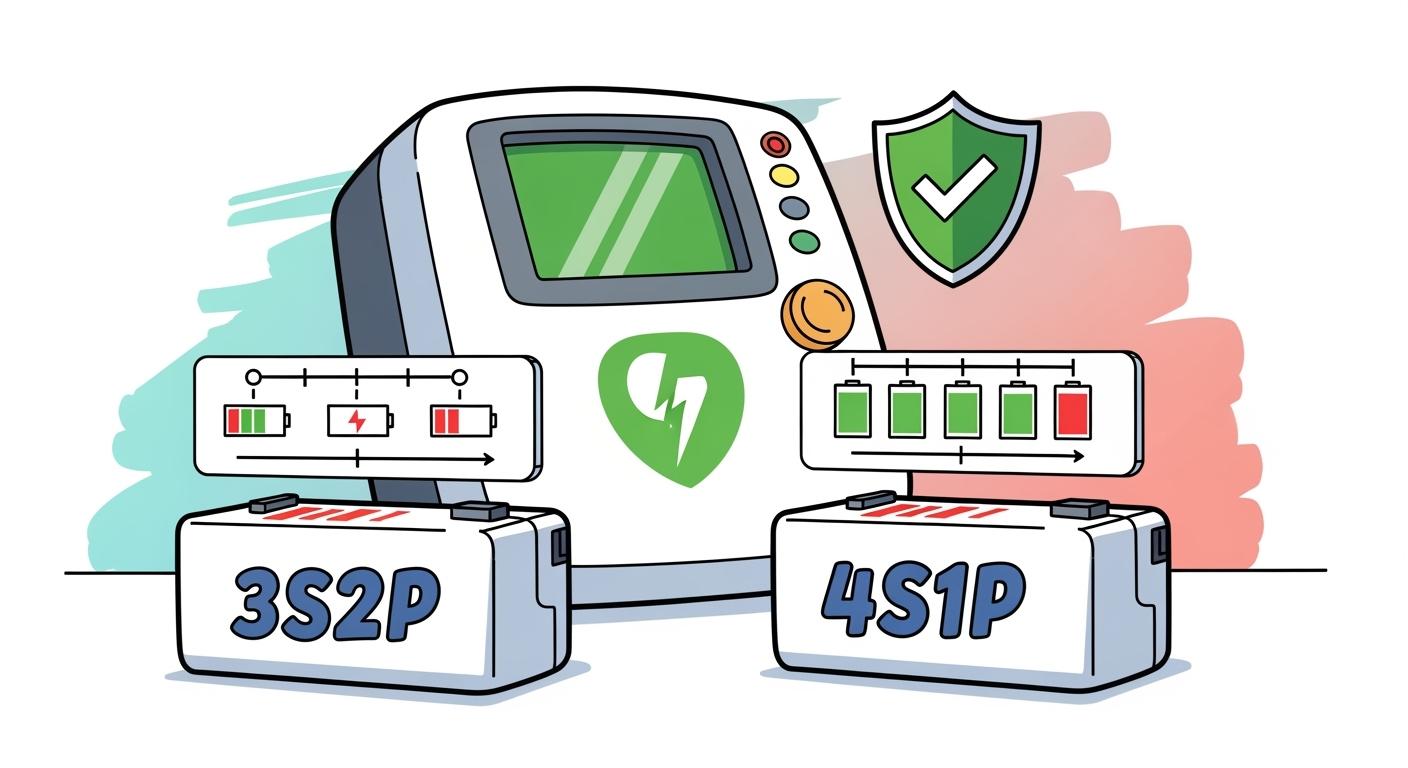
You need to prioritize Battery Reliability for public AEDs because even a short lapse can jeopardize readiness. Recent studies show:
15.4% of AEDs fail due to battery issues.
44% have less than 24-hour usability, often from poor battery status.
Regulatory standards like ISO 13485 require strict battery quality.
Key Takeaways
Choose the 3S2P battery configuration for public AEDs to enhance reliability. Its parallel structure allows continued operation even if one cell fails.
Always verify voltage compatibility with your AED model. Using the wrong voltage can lead to device malfunction and compromise safety.
Prioritize battery maintenance by scheduling replacements and monitoring battery status. This practice ensures AEDs remain ready for emergencies.
Part1: Understanding 3S2P and 4S1P

1.1 What Is 3S2P
You encounter the 3S2P configuration frequently in lithium battery packs for medical devices like public AEDs, robotics, and security cameras. The term “3S2P” describes three cells connected in series and two sets of these series connected in parallel. This arrangement delivers a typical voltage of 11.1V and a capacity of 5800mAh, as shown below:
Battery Pack Type | Voltage (V) | Capacity (mAh) |
|---|---|---|
3S2P | 11.1 | 5800 |
4S1P | 14.8 | 7500 |
You benefit from increased capacity and redundancy, which enhances Battery Reliability. If one cell fails, the parallel structure allows the pack to continue functioning, which is critical for AED readiness.
1.2 What Is 4S1P
The 4S1P configuration consists of four lithium cells connected in series. You see this setup in industrial and infrastructure applications. It provides a higher voltage of 14.8V and a capacity of 7500mAh. This higher voltage supports devices that require more power, but the single parallel path means less redundancy. If one cell fails, the pack may lose functionality, which can impact AED performance.
1.3 Series vs Parallel in Lithium Packs
You need to understand how series and parallel arrangements affect lithium battery packs. The table below summarizes the impact:
Configuration Type | Voltage Impact | Capacity Impact | Reliability Benefit |
|---|---|---|---|
Series Configuration | Increases total voltage | Maintains the same capacity | Beneficial for high-power applications, but lacks redundancy. |
Parallel Configuration | Maintains the same voltage | Increases overall capacity | Offers redundancy; if one cell fails, others can continue to supply power, enhancing reliability in critical applications like AEDs. |
Tip: For AEDs, you should prioritize parallel configurations when Battery Reliability is essential. Parallel packs offer greater assurance that the device will operate during emergencies.
You also need to consider the role of a Battery Management System (BMS), which monitors cell health and balances charging. This system further improves reliability and safety in both configurations.
Part2: Battery Reliability Factors Comparison
2.1 Voltage and AED Performance
You must consider voltage as a primary factor when selecting a battery pack for public AEDs. The 3S2P configuration delivers a nominal voltage of 11.1V, while the 4S1P configuration provides 14.8V. Most AEDs require a specific voltage range to operate reliably. If you use a battery with insufficient voltage, the AED may fail to deliver a therapeutic shock or may not power on at all. On the other hand, excessive voltage can damage sensitive internal circuits.
A higher voltage, like that from a 4S1P pack, can support faster capacitor charging and more efficient energy delivery. However, you must ensure that your AED model is compatible with this voltage. Using the wrong voltage can compromise Battery Reliability and device safety. Always check the manufacturer’s specifications before choosing a battery configuration.
Note: Voltage compatibility directly impacts AED readiness. You should never substitute a battery pack with a different voltage rating without technical validation.
2.2 Longevity and Standby Life
You need to maximize the standby life of AED batteries to reduce maintenance and replacement costs. The 3S2P configuration, with its parallel cell arrangement, offers increased capacity and redundancy. This design allows the battery to maintain power even if one cell fails, which extends the overall lifespan and improves Battery Reliability.
The 4S1P configuration provides a higher capacity (7500mAh), but it lacks redundancy. If a single cell fails, the entire pack may become unusable. This risk can shorten the effective standby life, especially in environments where regular maintenance is challenging.
You should also consider cycle life. Both configurations typically use lithium-ion chemistries with similar cycle ratings, but the parallel structure in 3S2P can distribute load and thermal stress more evenly. This feature can further enhance longevity in real-world AED deployments.
2.3 Safety and Redundancy
Safety remains a top priority for public AED battery packs. The 3S2P configuration offers inherent redundancy because of its parallel cell arrangement. If one cell in a parallel group fails, the remaining cells continue to supply power. This feature increases the likelihood that the AED will function during an emergency, directly supporting Battery Reliability.
The 4S1P configuration, with all cells in series, does not provide this redundancy. A single cell failure can interrupt the entire circuit, rendering the AED inoperable. You must weigh this risk against the higher voltage and capacity benefits.
A robust Battery Management System (BMS) can help monitor cell health and balance charging, but the underlying configuration still plays a critical role in overall safety and reliability.
Comparison Table: 3S2P vs 4S1P Battery Reliability Factors
Factor | 3S2P (11.1V, Parallel-Redundant) | 4S1P (14.8V, Series-High Voltage) |
|---|---|---|
Nominal Voltage | 11.1V | 14.8V |
Capacity (mAh) | 5800 | 7500 |
Redundancy | High (parallel cells) | Low (series only) |
Standby Life | Extended (redundancy) | High, but at risk if cell fails |
Safety | Enhanced by redundancy | Dependent on BMS, less redundant |
Compatibility | Widely compatible | Requires device validation |
Maintenance | Lower (less frequent replacement) | May require more monitoring |
Tip: For public AEDs, prioritize configurations that maximize Battery Reliability and minimize the risk of unexpected failure. Redundancy and compatibility should guide your selection process.
Part3: Physical and Practical Differences
3.1 Size and Weight
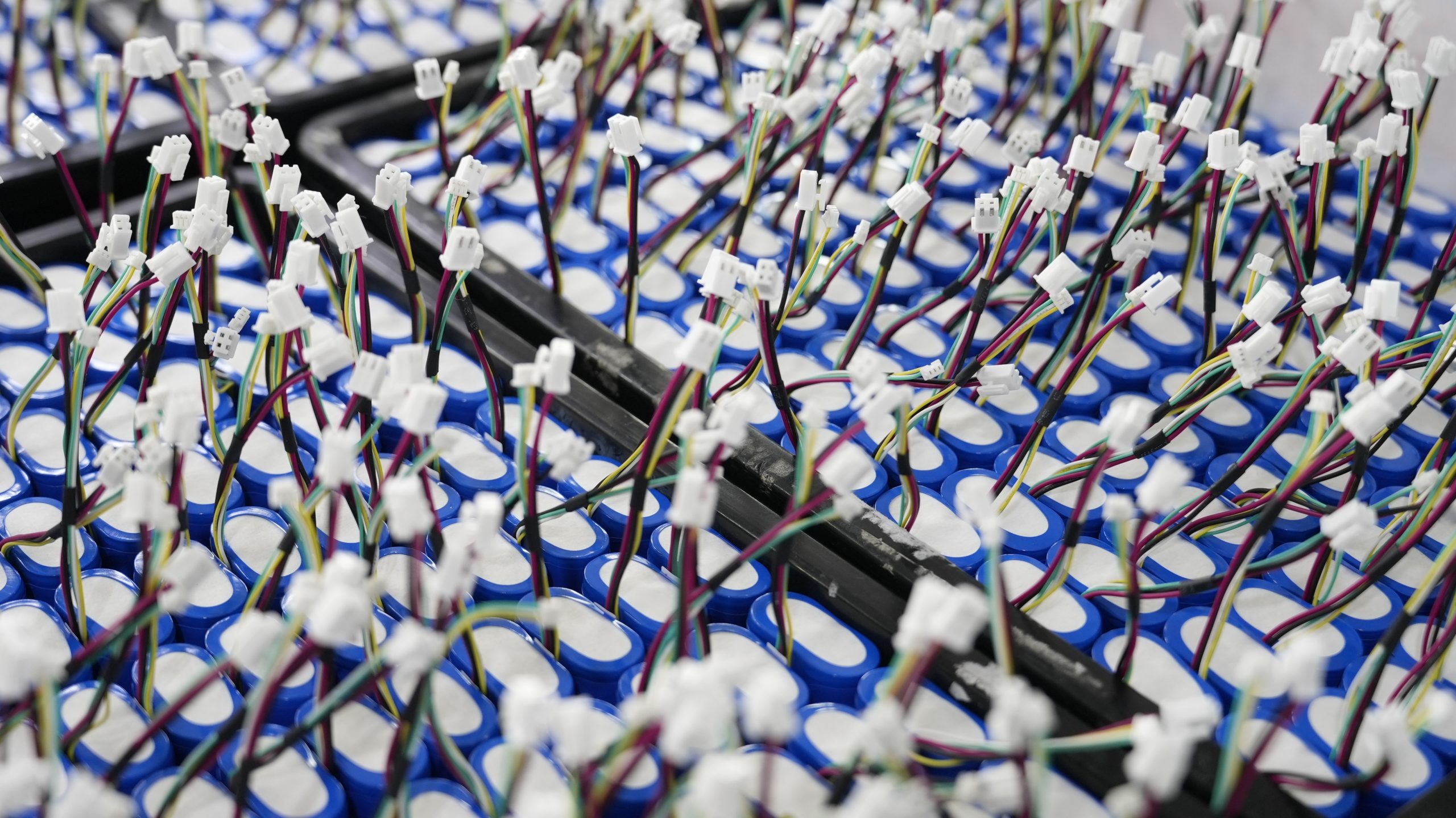
You must evaluate size and weight when selecting a lithium battery pack for public AEDs. The 3S2P configuration typically uses six cells arranged in a compact form. This design results in a moderate weight and a balanced footprint, which fits most AED housings. The 4S1P configuration uses four cells in series, often resulting in a slimmer but longer pack. You may find that 4S1P packs offer a higher energy density, but the increased voltage can require additional insulation or casing, which adds bulk.
Configuration | Number of Cells | Typical Weight (g) | Form Factor |
|---|---|---|---|
3S2P | 6 | 350–400 | Compact, rectangular |
4S1P | 4 | 300–350 | Slim, elongated |
Note: You should always verify the physical dimensions with your AED manufacturer to ensure proper fit and compliance with safety standards.
3.2 Environmental Durability
You need to consider how each configuration performs under harsh conditions. Public AEDs often face temperature extremes, humidity, and vibration. The 3S2P pack, with its parallel structure, can distribute thermal stress more evenly, which helps maintain performance during rapid temperature changes. The 4S1P pack, with fewer cells, may heat up faster under load, which can affect long-term stability.
Both configurations require robust sealing and a quality Battery Management System to prevent moisture ingress and cell imbalance. You should also assess the sustainability of your battery choice. Many suppliers now offer lithium battery packs designed for recyclability and reduced environmental impact. For more information, review our sustainability practices.
Tip: Prioritize packs with proven environmental durability to support Battery Reliability and reduce unexpected failures in the field.
You gain greater Battery Reliability and longer lifetime with the 3S2P configuration for public AEDs. Consider voltage, compatibility, and maintenance when selecting a battery pack. Review the table below for key factors:
Factor | Description |
|---|---|
Extended Battery Life | Enables standby operation for 4–5 years |
Built-in Self-check Features | Ensures readiness with automatic diagnostics |
Maintenance Alerts | Notifies users about maintenance needs |
Schedule battery replacements before expiration.
Monitor battery status and track expiration dates.
Store spare batteries correctly.
FAQ
What makes 3S2P lithium battery packs more reliable for public AEDs?
You gain higher reliability from 3S2P packs due to parallel redundancy. If one cell fails, the pack continues operating, ensuring AED readiness in critical environments.
How does voltage compatibility affect AED battery selection?
You must match the battery voltage to your AED’s requirements. Using 11.1V or 14.8V packs without validation can cause device malfunction or reduce operational safety.
Where can you find custom lithium battery solutions for AEDs?
You can explore Large Power’s custom battery solutions for tailored lithium battery packs that meet specific AED voltage, capacity, and reliability standards.


