

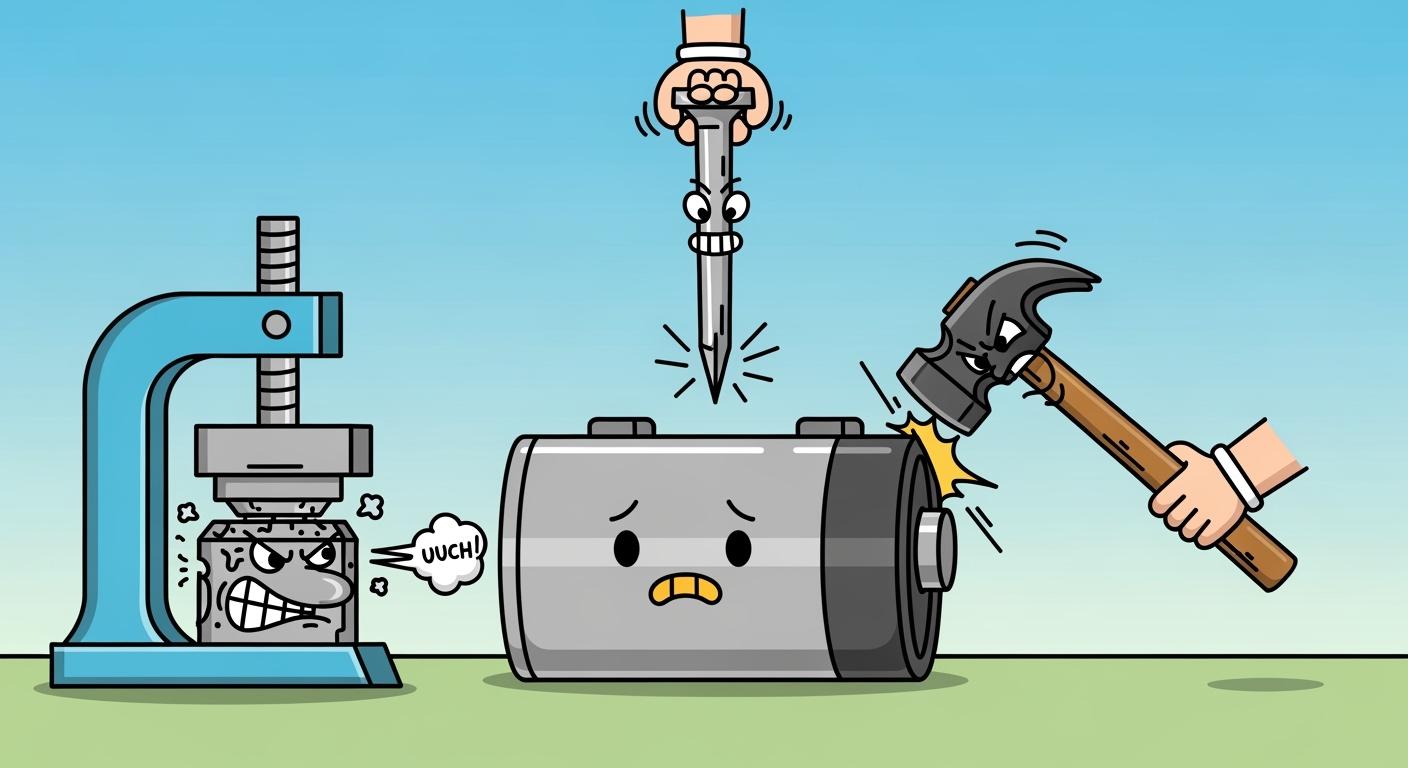
You work in an industry where reliability and safety cannot be compromised. Battery Safety Testing helps you ensure that lithium battery packs meet strict standards. Many battery manufacturers and integrators make safety testing a core part of their quality assurance process. These tests hold special value for high-risk industrial systems. Nail penetration, crush, and impact tests give you a practical way to evaluate battery safety and compliance.
Key Takeaways
Battery Safety Testing is essential for ensuring lithium battery packs meet safety standards and prevent hazards in high-risk applications.
Nail penetration tests simulate internal short circuits, helping to identify potential thermal runaway and other safety risks in battery cells.
Crush and impact tests assess how batteries respond to mechanical stress, revealing structural integrity and risks of fire or explosion.
Compliance with international standards like UL 1642 and IEC 62133 is crucial for battery safety, ensuring products are safe for use in various industries.
Staying updated on industry trends and advancements in battery safety testing can enhance product reliability and compliance.
Part1: Battery Safety Testing Basics
1.1 What Is Battery Safety Testing
You need to make sure lithium battery packs work safely in every application. Battery Safety Testing is a process that checks how batteries respond to stress, abuse, and real-world hazards. You use these tests to find out if a battery can handle short circuits, crushing, impacts, and other dangers. Technical standards guide you in this process.
IEC 62133 – Main international safety standard for rechargeable lithium and nickel batteries
UL 1642 & UL 2054 – Guidelines for lithium cell and battery pack safety
UN 38.3 – Safety testing requirements for batteries in transportation
SAE J2464 – Primary EV battery safety test standard
UL 2271 – Standard for light electric vehicle (LEV) battery packs
IEC 61960 – Performance standards for rechargeable lithium batteries
IEC 60086-4 – Safety requirements for non-rechargeable lithium batteries
UL 1989 – Safety standard for standby batteries
UL 4200A – Standard for products with button or coin cell batteries
IEC/UL 62133-1 & IEC/UL 62133-2 – Safety guidelines for nickel-based and lithium-based battery systems
You follow these standards to ensure batteries meet the requirements for medical, robotics, security systems, infrastructure, consumer electronics, and industrial sectors.
1.2 Importance for Lithium Battery Packs
You face many risks when working with lithium battery packs.
Thermal runaway can cause overheating and fires.
Manufacturing defects may lead to fires or chemical leaks.
Aging increases the chance of failure as internal parts wear out.
External heat can push batteries to unsafe levels.
Water damage may cause short circuits and overheating.
Recent incidents show why you cannot ignore safety. In 2023, 268 fires from lithium-ion batteries caused 150 injuries and 18 deaths. In February 2024, a battery fire from e-bikes led to 44 injuries and 15 deaths. The FAA reported over 500 incidents involving smoke or fire from lithium batteries on airplanes since 2006. Major recalls, such as the 142,000 Chevrolet Bolt EVs in 2022, happened because of battery fires linked to defects.
You protect your business, your clients, and end users by making Battery Safety Testing a core part of your process. This approach helps you avoid costly recalls and ensures compliance with international standards.
Part2: Nail Penetration Test

2.1 Purpose and Simulation of Short Circuit
You use the nail penetration test to simulate what happens when a lithium battery cell experiences an internal short circuit. This test helps you understand how a LiFePO4 Lithium battery, NMC Lithium battery, LCO Lithium battery, or LMO Lithium battery reacts to severe internal damage.
You drive a steel nail into the battery cell, which creates a direct connection between the positive and negative electrodes.
This action can trigger thermal runaway or venting, closely mimicking the effects of a real short circuit inside the cell.
You monitor temperature rise and gas emissions to see how the battery handles these dangerous conditions.
Note: The nail penetration test is highly destructive. You cannot reuse the cell after this test. You use it to reveal the worst-case safety risks in lithium battery packs for critical applications like medical devices, robotics, and industrial systems.
2.2 Test Procedure and Key Factors
You follow a strict procedure to ensure reliable results from the nail penetration test:
Select a high-temperature resistant steel needle, 5 to 8 mm in diameter, with a 60° tip angle. Make sure the needle is smooth and free from rust, oxide, or oil.
Insert the needle at a speed of 25 ± 5 mm/s, perpendicular to the battery’s electrode plate, aiming for the geometric center of the cell.
Leave the needle in place to trigger the artificial short circuit and observe the battery for a set period.
Decide the outcome: If the battery does not catch fire, smoke, or explode, it passes the test. If any of these occur, it fails.
You must pay close attention to several key factors that affect the test’s reproducibility and safety assessment:
Nail Geometry: The diameter and tip angle of the nail influence how the short circuit forms inside the cell.
Penetration Speed: Faster penetration increases the chance of thermal runaway, especially in soft pack batteries. Slower speeds can cause more local heating.
Cell Support: How you secure the battery during the test affects the results.
Penetration Depth: The depth of the nail impacts whether a true internal short circuit occurs.
Factor | Impact on Test Outcome |
|---|---|
Nail Geometry | Changes the likelihood and type of short circuit |
Penetration Speed | Alters risk of thermal runaway and heat generation |
Cell Support | Influences consistency and repeatability |
Penetration Depth | Affects whether a short circuit is actually induced |
You may see different results even with small changes in these factors. Multiple types of internal short circuits can occur, which makes repeatability a challenge. Variations in test standards also affect reproducibility.
2.3 Result Interpretation
You interpret the results of the nail penetration test by observing the battery’s reaction. The most important question is whether an internal short circuit actually occurs. You check for voltage drops, temperature spikes, smoke, fire, or explosion. The outcome depends on penetration speed, depth, and nail geometry. Sometimes, a short circuit does not happen, so you must confirm it by monitoring the voltage.
Here is a summary of typical outcomes you might observe:
Outcome Description | Result | Notes |
|---|---|---|
Internal Short-Circuit Induction | Yes | Successfully induced during the test |
Thermal Runaway | No | Modest temperature rise observed |
Hazard Level | 2 | Excellent result for safety testing |
You use these results to judge the safety of lithium battery packs in demanding sectors such as infrastructure, security systems, and consumer electronics. If the battery does not catch fire, smoke, or explode, you can consider it safe under these extreme abuse conditions. Battery Safety Testing with the nail penetration method gives you confidence in the reliability of your products and helps you meet international safety standards.
Part3: Crush and Impact Tests
3.1 Crush Test Overview
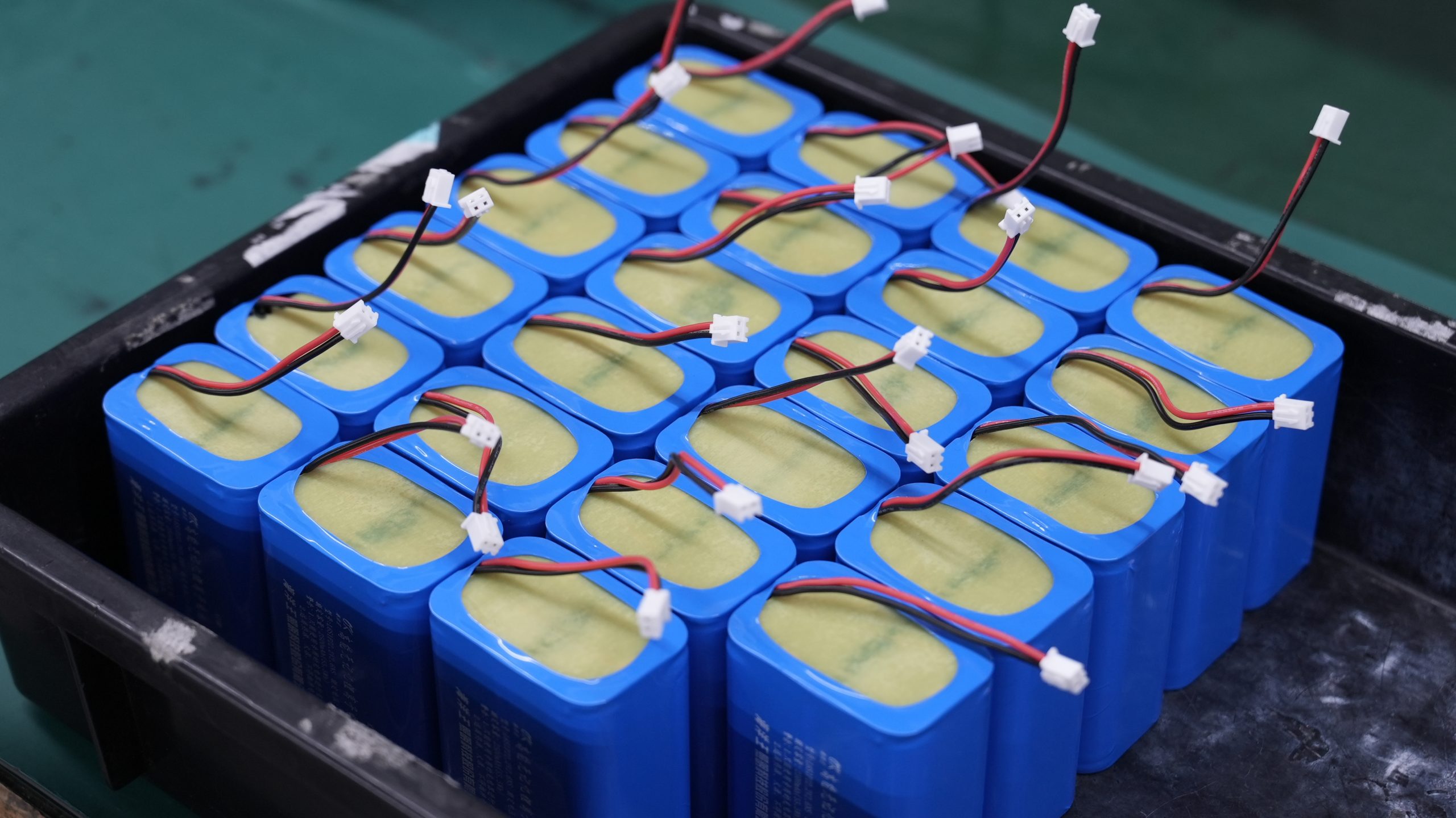
You need to know how lithium battery packs respond to heavy pressure. The crush test helps you evaluate the structural integrity of lithium battery cells. In this test, you apply a controlled force to the battery, simulating real-world scenarios such as a vehicle crash, accidental drop, or equipment malfunction. You monitor the battery for signs of deformation, voltage drop, temperature rise, smoke, fire, or explosion.
You follow procedures outlined in standards like UL 1642 and IEC 62133. These standards specify the amount of force, the speed of application, and the orientation of the battery during the test. For example, UL 1642 requires you to apply a force of up to 13 kN (about 3,000 pounds) until the battery’s voltage drops or the cell deforms by a set amount.
Tip: Always use proper safety equipment and remote monitoring during crush tests. The risk of thermal runaway or explosion increases under high pressure.
Crush testing helps you identify potential hazards. You can detect thermal runaway, short-circuiting, or venting, which may lead to fire or explosion. This test is essential for applications in electric vehicles, robotics, and industrial systems, where batteries may face mechanical abuse.
3.2 Impact Test Overview
You also need to assess how lithium battery packs handle sudden shocks. The impact test simulates events like dropping a battery, a tool falling onto a pack, or a collision in transit. You place a weight or bar on the battery and drop a heavy object from a specified height, as described in standards such as UL 1642 and UN 38.3.
During the test, you monitor the battery for voltage changes, temperature spikes, smoke, fire, or explosion. The impact test exposes weaknesses in the battery’s mechanical design. For example, it can reveal internal issues like dendritic lithium metal plating, which may cause internal short circuits. You use this test to ensure the battery can withstand accidental drops or impacts during shipping, installation, or use in medical devices, security systems, and consumer electronics.
Note: Impact tests are destructive. You cannot reuse the battery after testing. Always dispose of tested cells according to safety guidelines.
3.3 Safety and Functional Assessment
You use crush and impact tests to evaluate both safety and functionality. These tests help you identify hazards by monitoring temperature, voltage, and physical changes during and after the test. For instance, a sudden temperature rise or voltage drop may indicate an internal short circuit or thermal runaway. You record all observations and compare them to the acceptance criteria in standards like UL 1642 and IEC 62133.
Test Type | What You Monitor | What It Reveals |
|---|---|---|
Crush | Deformation, voltage, temperature | Structural integrity, risk of fire or explosion |
Impact | Voltage, temperature, physical damage | Mechanical robustness, internal shorting risks |
Battery Safety Testing with crush and impact methods gives you confidence in the reliability of your lithium battery packs. You can meet regulatory requirements and reduce the risk of costly recalls or safety incidents. These tests are especially important for B2B clients in sectors like infrastructure, robotics, and industrial automation, where battery failure can have serious consequences.
Part4: Regulatory Standards
4.1 Key Standards (UL 1642)
You must follow strict regulatory standards when you conduct Battery Safety Testing for lithium battery packs. These standards help you ensure safety and reliability in demanding sectors such as medical devices, robotics, security systems, infrastructure, consumer electronics, and industrial applications. The most recognized standards include UL 1642, IEC 62133-2, UN 38.3, UL 2054, UL 2271, and UL 2580. Each standard addresses specific aspects of battery safety, from cell-level abuse tests to pack-level mechanical and electrical evaluations.
Standard | Description |
|---|---|
UL 1642 | Focuses on the safety of individual lithium battery cells, including rigorous abuse tests. |
IEC 62133-2 | Ensures safe operation of rechargeable Li-ion cells in portable applications, covering various tests. |
UN 38.3 | Ensures lithium batteries meet safety requirements for transportation across different modes. |
UL 2054 | Addresses safety for entire battery packs, including electrical and mechanical stress tests. |
UL 2271 | Specific to batteries for light electric vehicles, ensuring safety and reliability in applications. |
UL 2580 | Comprehensive safety requirements for batteries used in electric vehicles. |
You should always verify which standards apply to your product and application scenario. For example, UL 1642 is essential for cell-level safety, while UL 2054 covers battery packs used in industrial systems.
4.2 Compliance for Lithium Battery Packs
You need to ensure your lithium battery packs comply with these standards before you ship, install, or integrate them. Compliance involves passing a series of tests that simulate real-world hazards, such as mechanical stress, electrical abuse, and environmental extremes. For instance, UN 38.3 requires batteries to withstand eight different tests, including vibration, shock, and thermal cycling. UL 2054 and UL 1642 demand rigorous electrical, mechanical, and environmental evaluations to reduce risks of fire and explosion.
Standard | Description |
|---|---|
UN 38.3 | Ensures batteries can withstand environmental and mechanical stresses during transport. Requires passing a series of eight tests. |
UL 2054 | Addresses safety of battery packs, including electrical, mechanical, and environmental tests. |
UL 1642 | Covers safety requirements for lithium battery cells, reducing risks of fire and explosion. |
You can use specialized equipment, such as a Battery Safety Test Chamber or a Servo Computer Battery Crush Tester, to simulate these scenarios and verify compliance. These tools help you meet standards like IEC 62133-2017 and UL 1642, ensuring your lithium battery packs are safe for use in critical applications.
4.3 Industry Trends
You see rapid changes in battery safety testing methods as technology advances. Manufacturers now combine model-based simulations with physical tests to predict battery behavior under extreme conditions. You use crush, nail penetration, drop, fire resistance, sled, mechanical shock, and vibration tests to improve battery design and safety. The industry adopts advanced cooling technologies and fire-resistant materials to manage overheating and fire risks. Modular battery designs make maintenance easier and enhance safety. Research into solid-state batteries aims to eliminate risks associated with liquid electrolytes. Stricter regulations, such as the EU Battery Regulation and UNECE Regulation No. 100, push you to meet higher safety and performance standards.
You must stay updated on these trends to ensure your lithium battery packs remain compliant and competitive. Battery Safety Testing continues to evolve, helping you deliver safer products for demanding B2B applications.
You play a vital role in ensuring lithium battery pack safety and compliance. Nail penetration, crush, and impact tests help you prevent battery-related accidents by simulating real-world hazards.
Test Type | Purpose |
|---|---|
Crush and Nail Penetration | Simulates mechanical damage to assess structural robustness. |
Impact Test | Determines resistance to sudden shocks and drops. |
Manufacturers now use advanced protocols and Battery Management Systems to improve safety. You see new materials and modular designs that make batteries safer and easier to maintain. International standards continue to evolve, promising even greater protection for your applications in medical, robotics, security, and industrial sectors.
FAQ
What is the main goal of battery safety testing for lithium battery packs?
You use battery safety testing to confirm that LiFePO4, NMC, LCO, and LMO lithium battery packs can withstand abuse and prevent hazards. This process helps you meet industry standards and protect your business in critical sectors.
How do nail penetration, crush, and impact tests differ?
You use the nail penetration test to simulate internal short circuits. The crush test checks structural strength under pressure. The impact test evaluates resistance to sudden shocks. Each test targets a different real-world risk for lithium battery packs.
Which standards should you follow for lithium battery safety testing?
You should follow UL 1642, IEC 62133, and UN 38.3. These standards guide you in testing lithium battery packs for safety in medical devices, security systems, infrastructure, and industrial applications.
Why do you need to test different lithium chemistries separately?
Each chemistry—LiFePO4, NMC, LCO, LMO—has unique platform voltage, energy density, and cycle life. You must test them separately to ensure safety and compliance for your specific application scenario.
What equipment do you need for battery safety testing?
You need a Battery Safety Test Chamber, a Servo Computer Battery Crush Tester, and monitoring tools for voltage and temperature. These help you simulate real-world hazards and record results for compliance.


