

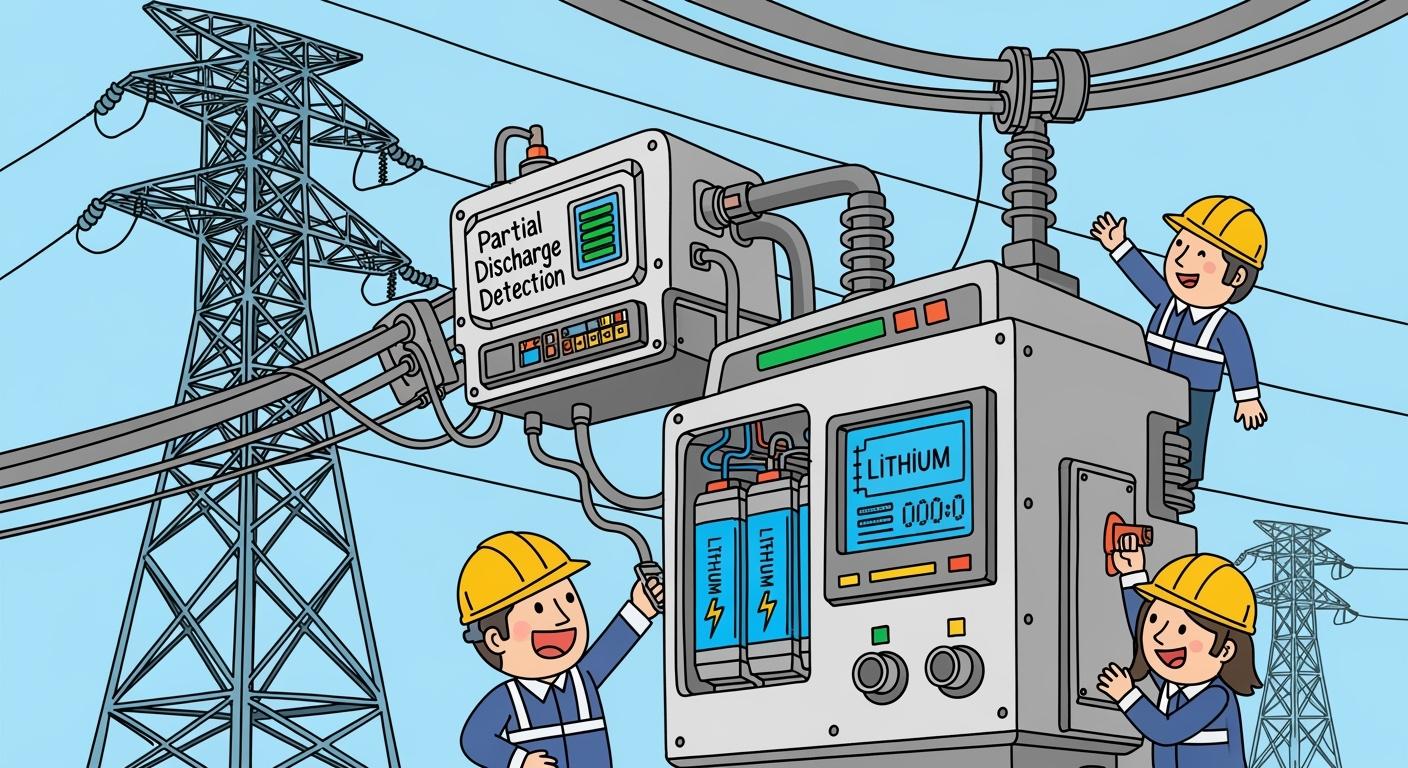
You need reliable power sources when you inspect power grids with partial discharge detection equipment. Lithium Battery Solutions give you steady energy, reduce maintenance, and keep your devices ready for action. You should pay attention to quality control and use condition monitoring to keep these batteries safe and efficient.
Key Takeaways
Lithium Battery Solutions provide reliable power for partial discharge detection equipment, ensuring your tools are always ready for action.
Regular quality control and condition monitoring of lithium batteries enhance safety and efficiency, preventing costly breakdowns in power grid inspections.
Follow best practices for inspection and maintenance to extend battery life and improve the reliability of your detection equipment.
Part1: Partial Discharge Detection in Grid Inspection

1.1 Importance for Asset Reliability
You rely on partial discharge detection to protect your power grid assets. This process helps you spot insulation failures before they cause major problems. Early detection keeps your equipment safe and extends its lifespan. You can prevent costly breakdowns and avoid safety hazards by monitoring for partial discharge. Routine checks ensure your transformers and cables stay reliable and meet safety standards. Here are some key reasons why partial discharge detection matters:
Identifies potential failures in electrical insulation systems.
Prevents costly breakdowns and safety hazards.
Early detection of weaknesses ensures integrity and reliability of electrical systems.
Asset life extension is achieved by predicting partial discharge sources early, which minimizes the need for premature replacements.
Quality assurance is provided through the identification of insulation defects, ensuring the reliability of transformer materials.
Compliance with safety standards is facilitated by routine partial discharge detection.
Operational safety and reliability are enhanced through proactive maintenance, which reduces downtime and protects both assets and personnel.
1.2 Field Challenges and Equipment Demands
You face several challenges when you perform partial discharge detection in the field. Signals can travel along the lowest resistance path, which sometimes leads to misinterpretation if other cables share the same earth. Online testing may not always find every joint with partial discharge severity because signals weaken over long cable distances. Testing from both ends does not always solve these issues, especially when cables have different earthing methods. Noise signals can mimic partial discharge, making detection harder.
The PD signal seeks the lowest resistance path, which can lead to misinterpretation if other cables are connected to the same earth.
Online PD testing may not accurately identify all joints with PD severity due to signal attenuation over long cable lengths.
Testing from both ends may not always resolve issues, especially with mixed cable types that have different earthing methods.
Noise signals can sometimes mimic PD characteristics, complicating detection.
Your detection equipment must meet strict demands to handle these challenges. You need sensors that tolerate noise and work with underground cables or switchgear. The table below shows common sensor types and their applications:
Sensor Type | Characteristics | Application |
|---|---|---|
HFCT | Inductive-type high-frequency current transformers; suitable for underground cable PD measurement; operational during cable use; cut-off frequencies between 50 kHz to 150 kHz for noise tolerance. | Detecting dispersed signals from long cables. |
TEV | Measures electromagnetic radiation due to internal partial discharge; non-intrusive installation on in-service equipment. | Condition monitoring of MV switchgear. |
Lithium Battery Solutions support these advanced tools by providing reliable power, reducing maintenance, and improving uptime. You can trust these batteries to keep your detection equipment running in demanding environments. When you choose Lithium Battery Solutions, you ensure your inspection tools stay ready for every challenge.
Part2: Lithium Battery Solutions for Detection Equipment
2.1 Quality Control and Inspection of Lithium Batteries
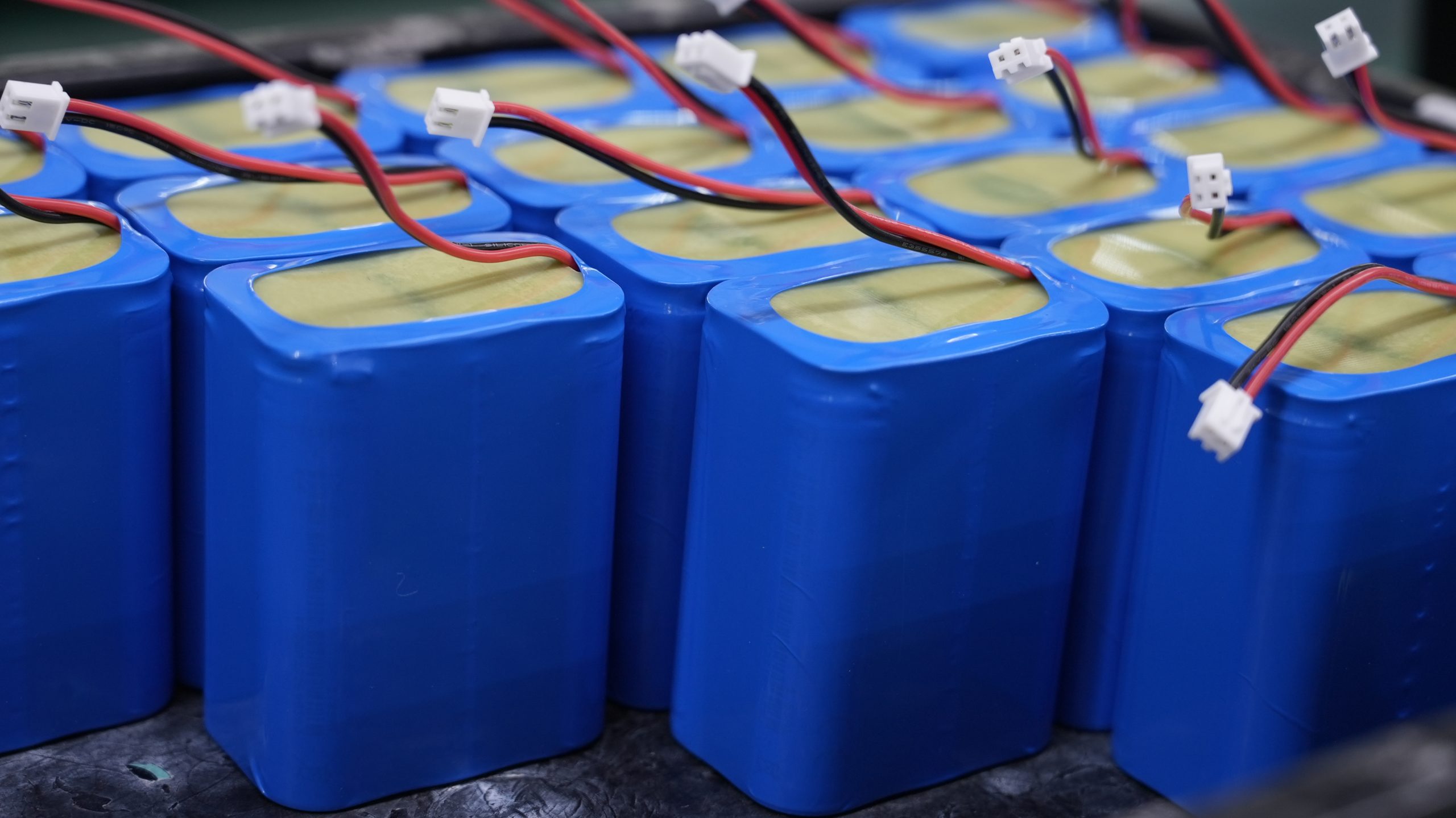
You need to ensure that every lithium battery pack meets strict quality standards before you deploy it in partial discharge detection equipment. Quality control starts with incoming inspections, where you check for manufacturing defects, verify cell matching, and confirm compliance with safety standards. You should use partial discharge spectroscopy to detect early insulation issues within battery cells, which helps prevent failures in the field.
You can choose from several lithium battery chemistries, each with unique properties:
Chemistry | Platform Voltage | Energy Density (Wh/kg) | Cycle Life (cycles) | Common Applications |
|---|---|---|---|---|
LiFePO4 | 3.2 V | 90–160 | 2000–4000 | Medical, industrial, grid storage |
NMC | 3.6–3.7 V | 150–220 | 1000–2000 | Robotics, EVs, infrastructure |
LCO | 3.7 V | 150–200 | 500–1000 | Consumer electronics |
LMO | 3.7 V | 100–150 | 300–700 | Security systems, power tools |
You find LiFePO4 batteries in medical and industrial sectors because of their long cycle life and stable chemistry. NMC batteries power robotics and infrastructure equipment due to their high energy density. LCO batteries are common in consumer electronics, while LMO batteries serve security systems and power tools.
You must also inspect battery management systems (BMS) for proper operation. A BMS protects against overcharge, over-discharge, and temperature extremes.
2.2 Maintenance Reduction and Operational Benefits
You gain several operational advantages when you use Lithium Battery Solutions in partial discharge detection equipment:
High energy density (up to 330 Wh/kg) allows for compact, lightweight designs compared to lead-acid batteries (75 Wh/kg).
Higher voltage output (up to 3.6 V) supports high-power applications in field environments.
Low maintenance requirements mean you do not need to schedule regular cycling or perform routine tasks like topping up water.
No memory effect ensures that partial charge and discharge cycles do not reduce battery capacity.
Low self-discharge rate (1.5–2% per month) keeps your equipment ready for use, even after long storage periods.
Lead-acid batteries require long recharging times, sometimes up to eight hours, which interrupts workflow. Lithium-ion batteries accept quick and partial charges, reaching 50% recharge in less than 30 minutes. This reduces downtime and supports multi-shift operations. You also avoid maintenance tasks like cleaning oxidation or maintaining specialized charging stations.
You can operate your detection equipment for extended periods. A typical cycle includes eight hours of use, one hour to charge, and another eight hours of use. You do not need a cool-down period, so you can run 24-hour shifts with only short breaks for charging. This maximizes uptime and keeps your inspection teams productive.
2.3 Enhancing Reliability with Condition Monitoring
You improve equipment reliability by using real-time condition monitoring with Lithium Battery Solutions. Online partial discharge monitoring measures PD activity without interrupting service. You receive immediate insights into insulation conditions under real operational stresses, which helps you plan maintenance based on actual equipment needs.
Online monitoring allows you to track insulation degradation trends and supports predictive maintenance.
Sensors like HFCT and TEV provide real-time feedback on partial discharge activity.
The technology captures PD signals across the power cycle, letting you observe phase-related patterns as they happen.
You can use the collected data for condition-based maintenance, which further enhances the reliability of your detection equipment. Integrated partial discharge testing identifies early signs of insulation deterioration, so you can act before failures occur. This proactive approach extends the life of both batteries and detection equipment, ensuring long-term reliability in power grid inspections.
Part3: Selection and Maintenance Best Practices
3.1 Choosing the Right Lithium Battery Solutions
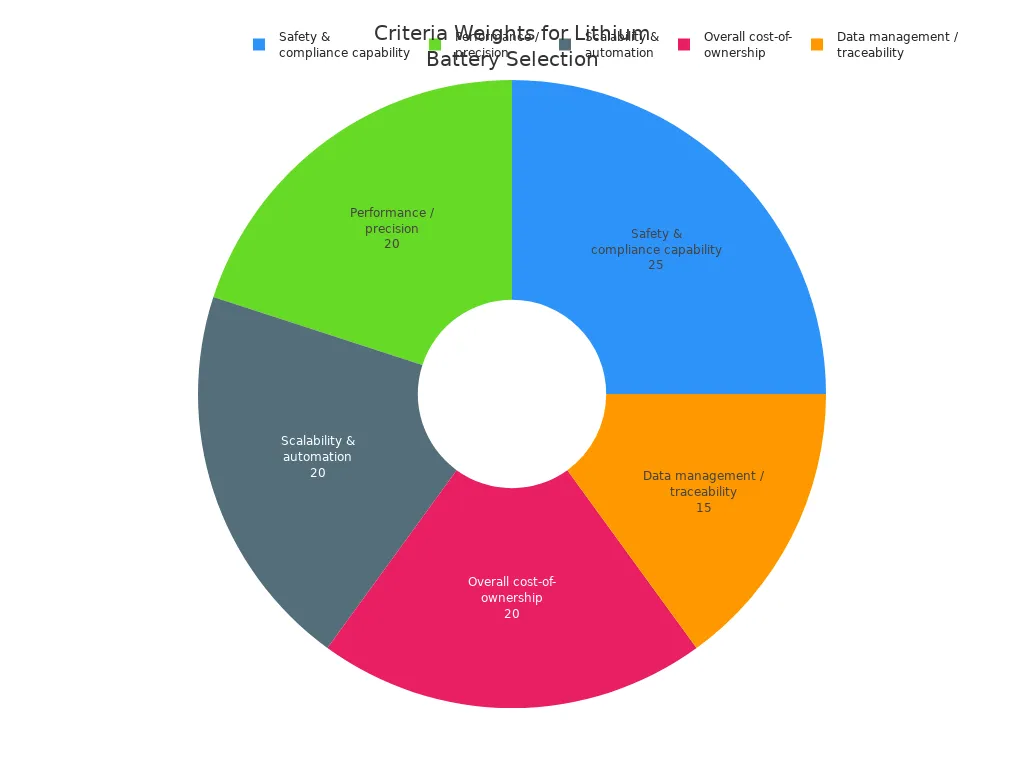
You need to select lithium battery packs that match the demands of partial discharge detection equipment. Safety and compliance matter most, followed by performance, scalability, data management, and cost flexibility. The table below shows the key criteria and their importance:
Criterion | Weight |
|---|---|
Safety & compliance capability | 25 % |
Performance / precision | 20 % |
Scalability & automation | 20 % |
Data management / traceability | 15 % |
Overall cost-of-ownership / flexibility | 20 % |
You should choose battery solutions with robust battery management systems (BMS) for enhanced protection and monitoring. In industrial and medical applications, you benefit from batteries with high cycle life and stable chemistry, such as LiFePO4.
3.2 Inspection and Maintenance Guidelines
You keep your lithium battery packs reliable by following regular inspection and maintenance routines. Cleanliness prevents dust from interfering with cooling. Secure connections ensure safe operation. Physical integrity checks help you spot swelling or leaks early. System alerts warn you about potential issues.
Clean the battery and surrounding area.
Check terminal connections for tightness and corrosion.
Inspect the casing for swelling, cracks, or leaks.
Monitor system alerts for error codes.
Maintenance Frequency | Tasks |
|---|---|
Monthly | Visual checks for cleanliness, secure connections, physical integrity, and system alerts |
Quarterly | Review performance data and investigate drops in energy storage or production |
Annual | Full service, including all checks and professional servicing if needed |
3.3 Safety and Longevity Tips
You protect your equipment and extend battery life by following safety precautions:
Flush eyes or skin with water if battery liquid contacts them and consult a doctor.
Use only lithium-ion battery packs with proper protection.
Avoid using loose lithium-ion batteries.
Prevent short circuits in battery packs.
Wipe contamination from terminals with a clean cloth.
Charge batteries correctly and monitor their status.
Replace all batteries at once to avoid fire hazards.
Do not disassemble or modify batteries.
Avoid mixing brands or types.
Stop using batteries with performance drops or damage.
Charge at room temperature and avoid extreme conditions.
Do not leave batteries plugged in for long periods.
Check battery status before use.
Use chargers designed for lithium-ion batteries.
Keep batteries away from heat and direct sunlight.
You improve safety and reliability by following these best practices. For technical standards, refer to UL Standards for Lithium Batteries.
You gain reliable performance and longer uptime when you use lithium battery packs for partial discharge detection equipment. Follow best practices for selection, inspection, and maintenance.
Prioritize quality control and real-time condition monitoring. This approach helps you maximize safety and efficiency in every power grid inspection.
FAQ
What makes lithium battery packs ideal for partial discharge detection equipment?
You get high energy density, long cycle life, and low maintenance. These features ensure your detection equipment stays reliable during power grid inspections.
How often should you inspect lithium battery packs in field equipment?
You should perform visual checks monthly. Review performance data quarterly. Schedule a full service annually for best reliability.
Can you use any charger with lithium battery packs?
You must use chargers designed for lithium battery packs. This prevents overcharging, overheating, and ensures safe operation.


