

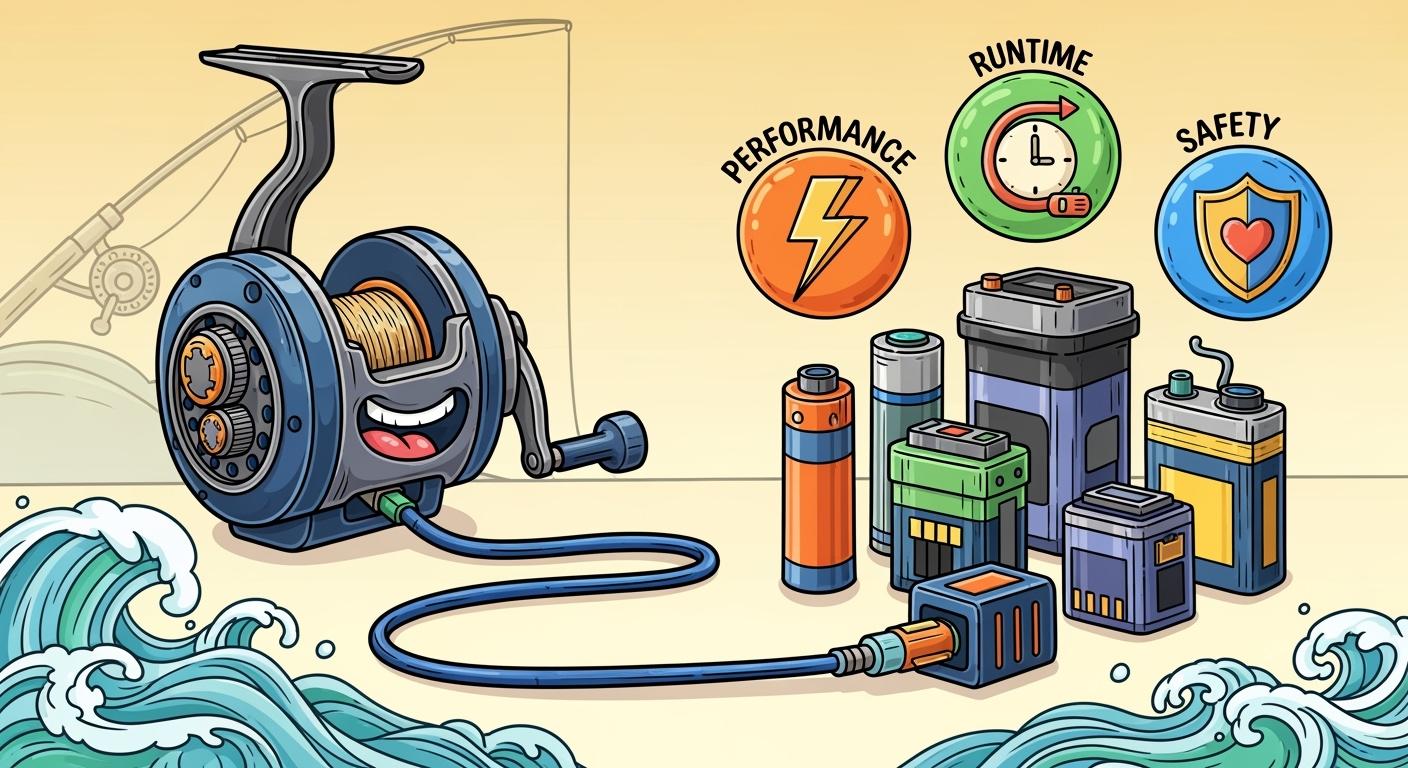
You want your electric fishing reel to run smoothly and safely, so you need to pay attention to battery specs like voltage, capacity, discharge current, portability, waterproofing, and safety features such as a battery management system (BMS). Matching the battery to your reel and fishing scenario keeps your gear performing at its best. Custom lithium battery packs stand out because they deliver high power, lightweight design, and reliable protection. Check out the typical requirements below:
Specification | Details |
|---|---|
Voltage | 12V (standard) |
Capacity | 20Ah (short trips), 30–50Ah (medium), 50Ah+ (full-day) |
Discharge Current | ≥ 30A continuous, strong peak capability |
If you want to choose the right battery, focus on these specs for top performance and safety.
Key Takeaways
Choose lithium batteries for electric fishing reels. They offer long runtime, lightweight design, and reliable performance.
Match battery voltage and capacity to your reel’s requirements. This prevents damage and ensures optimal operation.
Look for batteries with high discharge current capabilities. A minimum of 30A continuous discharge is essential for effective reel performance.
Select batteries with waterproof ratings like IP67. This protects your battery from water damage during fishing trips.
Regularly maintain and store your batteries properly. This extends their lifespan and ensures safe operation.
Part1: Electric Reel Battery Basics
1.1 What Is an Electric Reel Battery
When you use an electric fishing reel, you need a special kind of battery. An electric reel battery is a portable power source, usually 12V, made just for electric fishing reels. Unlike standard marine batteries, these batteries deliver a high burst of current and keep voltage steady, even when your reel works hard. You can carry them easily, and they are built to handle water and rough conditions. This design lets you fish longer without worrying about power.
Electric reel batteries deliver high burst current.
They keep voltage stable under heavy loads.
You can take them anywhere because they are lightweight and waterproof.
They support long fishing sessions, even in tough environments.
1.2 Why Battery Choice Matters
Choosing the right battery for your electric reel can make or break your fishing trip. If you pick a battery that cannot handle the demands of your reel, you might lose power when you need it most. Lithium battery packs, like Large Power’s models, stand out because they handle the pulling force of big fish such as tuna and marlin. They give you reliable power for deep-sea adventures and long days on the water.
Here’s why your battery choice matters:
Lithium batteries last longer, so you can fish all day without swapping batteries.
They recharge quickly, so you are ready for your next trip in no time.
High energy density means more power with less weight in your gear bag.
Greater efficiency lets you use your reel longer between charges.
Advanced protection keeps you safe, even in wet or rough marine conditions.
Tip: Always check if your battery has a sturdy shell and a stable internal design. This helps prevent short circuits and keeps you safe on the water.
When you choose the right battery, you get better performance, longer runtime, and peace of mind. That’s why so many anglers trust lithium battery packs for their electric reels.
Part2: Battery Types Compared
2.1 Lead-Acid, Lithium-Ion, LiFePO4 Overview
When you look at batteries for electric fishing reels, you see three main types: lead-acid, lithium-ion, and LiFePO4 (lithium iron phosphate). Each type has its own strengths and weaknesses. You often find lithium battery packs used in advanced B2B applications like medical devices, robotics, security systems, and industrial equipment because they offer high energy density and long cycle life.
Here’s a quick look at how these batteries stack up:
Battery Type | Average Cycle Life | Energy Density (Wh/kg) |
|---|---|---|
Lead-acid | 300–500 cycles | 30–50 |
Lithium-Ion | 3000–5000 cycles | 120–180 |
LiFePO4 | 3000–5000 cycles | 90–120 |
2.2 Pros and Cons
You want to choose the right battery for your reel, so it helps to know the advantages and disadvantages of each type. Check out this table for a clear comparison:
Battery Type | Advantages | Disadvantages |
|---|---|---|
Lead-Acid | Lower initial cost, widely available, reliable in cold conditions | Heavy, bulky, short lifespan, needs regular maintenance |
Lithium-Ion | Long lifespan, lightweight, compact, fast charging | Higher cost, needs BMS, performance drops in extreme cold |
LiFePO4 | Safe, stable, long cycle life, good thermal stability | Higher cost, limited availability, heavier than lithium-ion but lighter than lead-acid |
2.3 Why Lithium Packs Lead
Lithium battery packs stand out for electric fishing reels. You get a lightweight design, long runtime, and strong safety features. For example, a 10Ah lithium pack can power your reel for a full day, while lead-acid batteries run out faster and weigh you down. Most lithium packs include overcharge protection, short-circuit protection, and temperature regulation, so you stay safe on the water.
Tip: If you want to choose the right battery for performance and safety, lithium packs are the top choice for both recreational and professional use.
You see lithium battery packs used in everything from medical equipment to industrial robots because they deliver reliable power and last for thousands of cycles. When you choose the right battery, you get more time fishing and less time worrying about your gear.
Part3: Choose the Right Battery – Key Criteria
3.1 Voltage & Compatibility
You need to match the battery voltage to your electric fishing reel’s requirements. If you use the wrong voltage, you risk damaging the reel’s electronics or losing motor control. Sometimes, you might even see smoke or fire if the voltage goes above the safe limit. Most reels need a 12V battery, but always check your manufacturer’s specs.
Using a battery with incorrect voltage can damage the electronic circuits of the reel.
It may cause loss of motor control.
There is a risk of smoke and fire if the voltage exceeds the specified limits.
You want a battery that meets safety standards and delivers reliable performance. Lithium Iron Phosphate batteries, for example, meet ABYC standards and work well in demanding environments. Here’s a quick comparison:
Aspect | Details |
|---|---|
Battery Type | Lithium Iron Phosphate |
Safety Compliance | Meets and exceeds ABYC standards for lithium ion batteries |
Application | Designed for demanding environments, ensuring reliability and safety in electric fishing reels |
Tip: Always check voltage compatibility before you choose the right battery for your reel. This keeps your equipment safe and running smoothly.
3.2 Capacity (Ah) & Runtime
Battery capacity, measured in amp-hours (Ah), tells you how long your reel can operate. If you plan a short trip, you might get by with a 20Ah battery. For longer sessions or deep-sea fishing, you need more capacity. Higher capacity means longer runtime, especially if your reel draws more amps.
Battery capacity (Ah) determines how long an electric fishing reel can operate based on its amp draw.
Higher capacity batteries provide longer runtimes, especially with higher amp draws.
Typical amp draw for electric fishing reels ranges from 2-3 amps, but can vary based on factors like load and speed settings.
Understanding the amp draw helps in planning battery needs for efficient fishing trips.
Here’s a table to help you plan:
Capacity | Suitable Use |
|---|---|
20Ah | Short trips / light fishing |
30–50Ah | Medium sessions |
50Ah+ | Full-day deep-sea fishing |
You might find that a quality 7Ah battery runs for over 5 hours, which works for most day trips. Premium models with 10Ah capacity can provide up to 18 hours of continuous power. If you want to maximize your fishing time, choose the right battery with enough capacity for your needs.
3.3 Discharge Current Needs
Electric fishing reels need batteries that deliver strong, steady current. Most reels require at least 30A continuous discharge, with the ability to handle peak loads. If your battery can’t keep up, your reel might stall or lose power during heavy retrieval.
Requirement Type | Specification |
|---|---|
Continuous Discharge Current | ≥ 30A |
Peak Current Capability | Strong peak current capability |
You want a battery that can handle these demands, especially if you target big fish or use your reel at high speeds. Lithium battery packs excel here, supporting both steady and peak currents without overheating.
3.4 Portability & Waterproofing
You need a battery that’s easy to carry and can handle wet conditions. Lithium battery packs weigh much less than lead-acid batteries, making them ideal for portable use.
Battery Type | Average Weight (lbs) |
|---|---|
Lead-Acid (100 Ah) | 60 – 80 |
Lithium-Ion | ~30 – 40 |
If you fish in marine environments, waterproofing matters. Look for batteries with high IP ratings, like IP67. These batteries can survive being submerged in water up to one meter for 30 minutes. Ratings below IP65 aren’t considered waterproof and may not protect your battery in harsh conditions.
Batteries with a high IP rating, such as IP67, are recommended for marine environments as they can be submerged in water up to one meter for 30 minutes.
Ratings below IP65 are generally not considered waterproof and may not be suitable for marine environments.
Note: If you want to learn more about sustainability and environmental resistance, check out our sustainability page.
3.5 Durability & Environmental Resistance
Fishing exposes your battery to saltwater, heat, and rough handling. Lithium batteries can suffer from internal corrosion, electrolyte contamination, and structural damage if exposed to seawater. Chloride ions react with electrode materials, causing capacity decay. Seawater can dilute or contaminate the electrolyte, reducing efficiency. Corrosion may crack the battery shell, leading to leaks.
Impact of Seawater on Lithium Batteries | Description |
|---|---|
Accelerated internal corrosion | Chloride ions react with electrode materials, causing capacity decay. |
Electrolyte contamination | Seawater dilutes or contaminates the electrolyte, reducing efficiency. |
Structural damage | Corrosion can lead to battery shell cracking, exacerbating leakage. |
You want a battery with a tough shell and strong internal design. This helps prevent leaks and keeps your battery running longer. If you care about responsible material sourcing, visit our conflict minerals statement.
3.6 Safety Features (BMS, Certifications)
Safety features protect your reel, your battery, and your fishing trip. A Battery Management System (BMS) acts as a digital firewall. It balances cells, provides short-circuit mitigation, and manages thermal risks. You also want batteries with IP65 ingress protection and UN38.3 certification for safe transport.
Safety Feature | Description |
|---|---|
Battery Management System (BMS) | Acts as a digital firewall, balancing cells and providing short-circuit mitigation and thermal management. |
IP65 Ingress Protection | Protects against micro-capillary ingress, ensuring internal circuits remain safe from salt mist. |
UN38.3 Certification | Ensures compliance with stringent lithium transport protocols, reducing thermal risks in transport. |
Short-Circuit Mitigation: Triggers a microsecond shutdown to prevent cell damage from salt spray.
Thermal Management: Incorporates heat-dissipating busbars to maintain safe operational temperatures.
Safety Feature | Description |
|---|---|
Overcharging Protection | Prevents the battery from being charged beyond its capacity, reducing the risk of overheating. |
Overheating Protection | Monitors temperature and shuts down the battery if it gets too hot, preventing damage and hazards. |
Short Circuit Protection | Detects and interrupts the circuit in case of a short, preventing potential fires or battery failure. |
For more details on BMS and its role in battery safety, visit our BMS page.
When you choose the right battery, you get reliable performance, longer runtime, and peace of mind. You also protect your investment and keep your fishing gear safe in any environment.
Part4: Matching Battery to Fishing Scenarios

4.1 Short vs Long Trips
You need to match your battery choice to the length of your fishing trip. For short outings, lead-acid batteries work because they are affordable and durable, though they are heavy and need maintenance. If you plan longer expeditions, AGM batteries offer better durability and are spill-proof. Lithium-ion batteries, such as LiFePO4 or NMC, stand out for both short and long trips. They are lightweight, charge quickly, and deliver high energy density. You see these lithium packs used in medical devices, robotics, and security systems because they provide reliable power for extended periods.
Battery Type | Suitable For | Key Features |
|---|---|---|
Lead-Acid Batteries | Short fishing trips | Affordable, durable, moderate energy requirements, heavier, requires maintenance |
AGM Batteries | Longer fishing expeditions | Spill-proof, maintenance-free, better durability, higher energy efficiency |
Lithium-Ion Batteries | Both short and long trips | Lightweight, high energy density, longer run times, faster charging |
4.2 Deep-Sea vs Freshwater
Your fishing environment also affects your battery needs. In freshwater, you can use AGM, flooded lead-acid, or lithium batteries. These options last 5-7 years with standard care. Saltwater fishing demands sealed batteries like AGM or lithium (LiFePO4, NMC) to prevent acid spills and corrosion. These batteries use stainless steel terminals and sealed boxes, lasting 3-5 years. Lithium batteries are popular in industrial and infrastructure settings for their resistance to harsh environments.
Fishing Type | Battery Type Options | Maintenance Requirements | Expected Life |
|---|---|---|---|
Freshwater | AGM, flooded lead-acid, or lithium | Standard terminal posts, normal battery boxes | 5-7 years |
Saltwater | AGM or Lithium (sealed, no acid spillage) | Stainless steel terminal hardware, sealed boxes | 3-5 years |
4.3 Target Species & Retrieval Speed
When you target large species or need high retrieval speeds, you need a battery that delivers steady, long-lasting power. Electric reels let you retrieve line quickly and smoothly, which is key for big fish and deep-drop fishing. Lithium marine batteries support these demands with consistent output, just like those used in consumer electronics and industrial robots.
Electric reels make deep-drop fishing at 500 feet or more possible.
You get smooth, precise control and effortless retrieval.
Long-lasting lithium batteries keep your reel running strong all day.
4.4 Quick Selection Guide
To choose the right battery for your electric reel, follow these steps:
Check capacity (Ah) for the runtime you need.
Confirm voltage (V) matches your reel’s requirements.
Pick the battery type that fits your weight, lifespan, and safety needs.
Use a compatible charger for safe, convenient charging.
Choose a trusted brand with a solid warranty for peace of mind.
Tip: When you choose the right battery, you ensure your gear performs at its best, whether you fish for a few hours or all day.
Part5: Mistakes, Tips, and Best Practices
5.1 Common Mistakes
You want your electric fishing reel to perform at its best, but some mistakes can shorten battery life or even damage your equipment. Many anglers overlook key details when choosing and using batteries. Here’s a quick table to help you spot the most common pitfalls:
Mistake | Explanation |
|---|---|
Use of non-specialized charging hardware | Non-specialized chargers can confuse lithium battery management systems, leading to potential damage. |
Believing any voltage source is sufficient | This misconception can lead to improper charging and battery failure. |
Using standard automotive chargers | These chargers can cause over-voltage stress on lithium batteries, which require precise charging methods. |
Ignoring micro-corrosion sensitivity | Lithium batteries are more susceptible to micro-corrosion, necessitating specific maintenance protocols. |
⚠️ Always use the charger recommended by your battery manufacturer. This simple step protects your lithium pack and ensures safe operation.
5.2 Pro Tips for Performance
You can get more out of your lithium battery pack with a few expert habits. These tips help you maximize performance, whether you use your batteries in medical devices, robotics, or electric fishing reels.
Clean and maintain your battery regularly, especially after use in marine environments.
Store your battery in a cool, dry place, ideally between -4°F and 77°F (-20°C to 25°C).
Charge your battery fully every 3–6 months during long-term storage to prevent capacity loss.
Use only the manufacturer-recommended charger to extend battery lifespan.
Clean terminals after each use to prevent corrosion and maintain strong connections.
💡 Pro Tip: Consistent care keeps your lithium battery pack running longer and safer, even in tough industrial or marine settings.
5.3 Maintenance & Storage
Proper maintenance and storage keep your battery safe and reliable. Before storing, check the battery’s voltage and look for any physical damage. For lithium packs, charge to 60–80% before storage. Lead-acid batteries need a full charge. Pick a temperature-controlled spot, ideally between 40°F and 70°F, to avoid damage. Place batteries on non-conductive surfaces and make sure lead-acid types have good ventilation.
Assess battery condition before storage with voltage testing and inspection.
Charge lithium batteries to 60–80% and lead-acid to 100% before storing.
Store in a cool, dry, and temperature-controlled environment.
Use non-conductive platforms and ensure ventilation for lead-acid batteries.
You need to focus on voltage, capacity, discharge current, portability, waterproofing, and safety when you choose the right battery for electric fishing reels. Lithium battery packs stand out because they deliver up to 30 hours of power on a single charge and weigh less than two pounds. Matching battery specs to your fishing scenario improves safety and makes your equipment more reliable. If you use the selection guide and avoid common mistakes, you get the best performance for your gear.
Lithium batteries offer long runtime and easy transport.
Proper installation and marine-grade components reduce battery failure risks.
Remember, you can choose the right battery for every fishing trip and application.
FAQ
What makes lithium battery packs ideal for electric fishing reels?
You get high energy density, lightweight design, and long cycle life. Lithium packs, like LiFePO4 and NMC, deliver steady power and withstand tough environments.
How do I check if my battery is compatible with my reel?
Look at your reel’s voltage and current requirements. Most reels need 12V and at least 30A continuous discharge. Match these specs with your battery. If you use lithium packs, check for a built-in BMS. For custom battery solutions, please consult Large Power’s professional engineering team.
Can I use lithium batteries in saltwater environments?
Yes, you can. Choose lithium packs with IP67 waterproof ratings and sealed terminals. These batteries resist corrosion and protect internal circuits. You find similar designs in outdoor security cameras and infrastructure applications.
What is the typical runtime for a lithium battery pack?
Runtime depends on capacity and reel amp draw. A 10Ah lithium pack can last up to 18 hours. Higher capacity packs, like 30–50Ah, support full-day fishing.
How do I safely store lithium battery packs?
Charge your battery to 60–80% before storage. Keep it in a cool, dry place between 40°F and 70°F. Use non-conductive surfaces.


