


As an OEM, you need reliable and high-performance power solutions to keep your smart security cameras operating at their best. Custom battery packs offer a major advantage by matching voltage and current precisely to your camera models, which standard batteries often fail to do. You benefit from higher mAh ratings, longer maintenance intervals, and enhanced reliability. The wireless IP camera market in the United States alone is projected to reach $4.8 billion in 2024, with strong growth expected through 2033. As demand for wireless and outdoor cameras rises, choosing the right battery pack becomes more important than ever.
Feature | Custom Battery Packs | Standard Battery Options |
|---|---|---|
Voltage and Current Matching | Tailored to specific camera requirements | May not match specific needs |
mAh Ratings | Higher ratings for extended runtime | Generally lower ratings |
Reliability | Enhanced reliability, fewer performance issues | Potential for more issues |
Maintenance Intervals | Longer intervals due to extended runtime | Shorter intervals |
Key Takeaways
Custom battery packs provide tailored voltage and capacity, ensuring optimal performance for smart security cameras.
Choosing the right battery chemistry, like LiFePO4, enhances durability and reliability in harsh outdoor conditions.
Regular maintenance and monitoring with a battery management system (BMS) extend battery life and prevent unexpected failures.
Design for electrical and mechanical compatibility to avoid performance issues and ensure safe operation.
Incorporate advanced features like smart charging and environmental resistance to improve user experience and camera functionality.
Part1: Custom Battery Packs—OEM Design Factors
1.1 Key Metrics for Smart Security Cameras
You must consider several key metrics when designing battery solutions for smart security cameras. Each camera model has unique power needs. Custom battery packs allow you to match these requirements precisely.
Voltage: You can select the exact voltage your camera needs, which prevents system errors and ensures stable operation.
Capacity (mAh): High-capacity packs, such as 4000mAh, deliver up to 3-4 months of battery life. This reduces the frequency of maintenance and battery swaps.
Discharge Rate: Some cameras require quick bursts of power. Pulse discharge capability improves response times by up to 30%, which is critical for motion-triggered recording.
Self-Discharge: Low self-discharge technology keeps monthly loss below 2%. Your cameras stay ready for action, even after long standby periods.
Voltage Stabilization: Smart voltage regulation prevents crashes caused by voltage drops or spikes.
Tip: Always check the manufacturer’s datasheet for your camera’s voltage and current requirements before specifying a battery pack.
1.2 Why Customization Matters
You gain a competitive edge when you choose custom battery packs for your smart security cameras. Off-the-shelf batteries often fail to meet the unique demands of advanced camera systems. Customization lets you optimize both performance and reliability.
You can tailor the battery’s shape and size to fit the camera housing, which is essential for compact or weatherproof designs.
You can specify the chemistry, such as LiFePO4, NMC, LCO, or LMO, to balance energy density, cycle life, and safety.
You can add features like integrated protection circuits or smart charging ports.
Many industry leaders, including Large Power, offer custom lithium-ion battery packs for security applications. They design solutions that fit unique housings and meet strict power requirements.
Feature | Custom Battery Packs | Standard Packs |
|---|---|---|
Voltage Matching | Yes | No |
Custom Shape | Yes | No |
High Capacity (4000mAh+) | Yes | Sometimes |
Pulse Discharge | Yes | Rarely |
Low Self-Discharge | Yes | Sometimes |
Custom battery packs give you the flexibility to support new camera features, such as night vision, two-way audio, or wireless connectivity. You can ensure your products stand out in a competitive market.
Part2: Battery Chemistry Choices
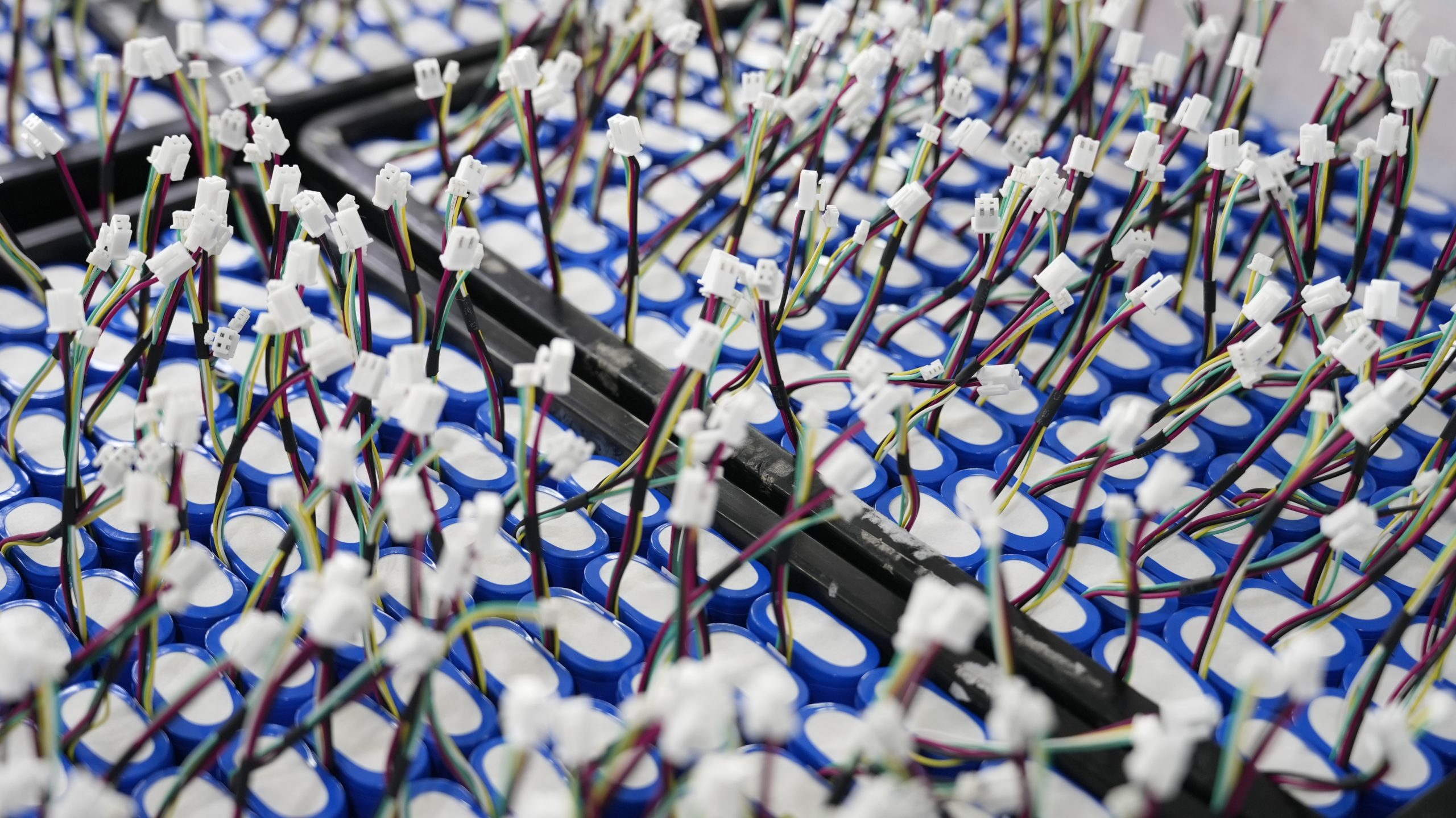
2.1 Lithium-Ion vs. Lithium-Polymer
When you design smart security cameras, you often choose between lithium-ion and lithium-polymer batteries. Each chemistry offers unique strengths for OEM applications. Lithium-ion batteries deliver steady power, making them ideal for devices that need constant operation. Lithium-polymer batteries provide quick bursts of energy, which can help with features like motion detection or rapid camera activation.
Here is a comparison to help you decide:
Feature | Lithium-Ion | Lithium-Polymer |
|---|---|---|
Discharge Rate | Best for devices needing constant power | Good for quick bursts of power |
Safety Concerns | Risk of thermal runaway | Less likely to explode, but still risks |
Safety Features | Basic safety features | Advanced safety features like overcharge protection |
Common Uses | Phones, laptops | Drones, fitness bands |
Note: Lithium-polymer batteries often include advanced safety features, which can reduce the risk of overcharging in your security camera designs.
2.2 Chemistry Selection for Camera Applications
You must select the right battery chemistry to balance performance, safety, and cost. The 18650 lithium battery stands out in smart security camera applications. It offers high energy density and stable discharge, which ensures your cameras receive consistent power. Its robust construction and environmental sealing protect against harsh outdoor conditions. This battery also provides a long cycle life, so you can reduce maintenance and replacement costs.
Here is a table comparing common lithium chemistries used in Custom Battery Packs for security, medical, robotics, and industrial systems:
Chemistry | Platform Voltage (V) | Energy Density (Wh/kg) | Cycle Life (cycles) |
|---|---|---|---|
LiFePO4 | 3.2 | 90–120 | 2000–4000 |
NMC | 3.7 | 150–220 | 1000–2000 |
LCO | 3.7 | 150–200 | 500–1000 |
LMO | 3.7 | 100–150 | 300–700 |
Battery chemistry, such as lithium-ion, significantly influences the performance of smart security cameras by affecting battery life and functionality.
Environmental conditions, including temperature extremes, can reduce battery capacity and performance, impacting the overall effectiveness of the camera.
Different battery types have unique characteristics that affect their energy density, cycle life, and suitability for specific applications.
You should always match the chemistry to your camera’s power profile and deployment environment. For example, LiFePO4 works well in infrastructure and industrial settings due to its long cycle life. NMC and LCO chemistries suit consumer electronics and security systems that need high energy density. LMO can serve in robotics or backup applications where moderate energy and cycle life are acceptable.
Part3: Capacity and Runtime
3.1 Calculating Power Needs
You need to understand your camera’s power requirements before you select a battery pack. This step ensures your device operates reliably and meets customer expectations. You can calculate the power needs of a smart security camera using a simple formula:
Battery capacity is measured in milliampere hours (mAh) for small batteries.
To estimate how long a battery will last, divide the battery’s capacity by the camera’s average current draw.
For example, if your camera uses 100mA and you choose a 500mAh battery, the camera will run for 5 hours (500mAh ÷ 100mA = 5 hours).
You should always check the camera’s datasheet for its typical and peak current consumption. This information helps you size the battery correctly and avoid unexpected shutdowns.
Tip: Consider adding a safety margin of 10–20% to your calculations to account for temperature changes and battery aging.
3.2 Balancing Size and Longevity
You face a trade-off between battery size and runtime. Larger batteries provide longer operation but may not fit in compact camera housings. You must balance these factors based on your application and customer needs.
The table below shows typical battery life for smart security cameras in different recording modes:
Recording Mode | Approximate Battery Life |
|---|---|
Motion Detection Only | Up to 540 days |
Scheduled Recording | 100–180 days |
Continuous Recording | Up to 60 days |
If you design for motion detection only, you can achieve runtimes of up to 540 days on a single charge. Scheduled recording usually delivers 100 to 180 days. Continuous recording reduces battery life to about 60 days. These figures depend on battery chemistry, camera features, and environmental conditions.
Custom Battery Packs let you optimize both size and runtime. You can select LiFePO4 for long cycle life in infrastructure projects or NMC for high energy density in compact security systems. Always match the battery to your camera’s deployment scenario for the best results.
Part4: Integration and Compatibility

4.1 Electrical and Mechanical Fit
You must ensure that your custom battery pack fits both electrically and mechanically with your smart security camera. Electrical fit means the battery matches the camera’s voltage, current, and connector type. Mechanical fit means the battery’s shape, size, and mounting points align with the camera’s housing. If you overlook these factors, you risk poor connections, reduced performance, or even device failure.
Many OEMs face challenges during integration. For example, lithium-ion batteries cannot charge safely below freezing temperatures. You can solve this by adding a 12W polyimide heater inside the pack. This heater uses stored energy to warm the cells above 5°C before charging begins. You may also need to speed up development. Using proven, off-the-shelf components can help you deliver prototypes in as little as eight weeks instead of six months.
Challenge | Core Problem | Solution |
|---|---|---|
Cold Weather Charging Capability | Li-Ion batteries cannot charge below freezing | Integrated 12W polyimide heater to warm cells above 5°C |
Accelerated Development Timeline | Shorter prototype delivery needed | Use proven, off-the-shelf components to reduce risk and time |
Global Manufacturing Requirements | Multiple international production sites | Use international manufacturing networks for localized production |
Tip: Always verify the battery’s fit with your camera’s enclosure and electrical system during the design phase.
4.2 Charging Features and USB Ports
You can enhance your smart security camera’s reliability by selecting the right charging features. Many custom battery packs now include smart chargers that automatically stop charging when the battery is full. This prevents overcharging and extends battery life. For outdoor cameras, solar panels provide continuous charging, which is ideal when you have limited access to power. External battery packs can serve as backups during outages, keeping your cameras running in high-demand scenarios.
Charging Feature | Description |
|---|---|
Smart Chargers | Stop charging automatically when full to prevent overcharging |
Solar Panels | Provide continuous charging using solar energy, ideal for outdoor cameras |
External Battery Packs | Serve as backup during outages, ensuring uninterrupted functionality |
You may also want to add USB ports for flexible charging options. USB-C ports support fast charging and universal compatibility. When you integrate these features, you improve user experience and reduce maintenance needs. For advanced safety and monitoring, consider adding a battery management system (BMS) to your design. A BMS protects against overcharge, over-discharge, and short circuits, which is essential for lithium chemistries like LiFePO4, NMC, LCO, and LMO.
You can future-proof your camera systems by choosing battery packs with modular charging features and robust integration.
Part5: Safety and Compliance
5.1 Protection Circuits and BMS
You must prioritize safety when designing custom lithium battery packs for smart security cameras. Protection circuits and a robust battery management system (BMS) help prevent failures and extend battery life. These systems monitor key parameters and respond to unsafe conditions quickly.
Sensor Type | Function | Description |
|---|---|---|
Temperature Sensors | Monitor temperature | Detect internal and surface heat to prevent overheating. |
Current Sensors | Monitor current flow | Ensure safe charging/discharging and stop overcurrent events. |
Voltage Sensors | Monitor voltage levels | Prevent overcharging and deep discharging of lithium cells. |
Smart Sensors | Advanced monitoring | Track pressure and mechanical stress for extra safety. |
You can find these features in advanced BMS designs. Modern systems also support AI detection for real-time object recognition, flexible power options like solar recharging, and real-time alerts for remote monitoring. These advancements help you deliver reliable, always-on security solutions.
Tip: Always select a BMS that matches your lithium chemistry—LiFePO4, NMC, LCO, or LMO—to ensure optimal protection and performance.
5.2 Meeting Safety Standards
You must meet strict safety standards when supplying lithium battery packs for smart security cameras. These standards verify that your products operate safely in all environments and reduce liability risks.
Standard Code | Description |
|---|---|
UL 1642 | Standard for Lithium Batteries |
UL 2054 | Household and Commercial Batteries |
UL 1989 | Valve Regulated or Vented Batteries |
UL 4200A | Products with Button or Coin Cell Batteries |
UL 2271 | Batteries for Light Electric Vehicle (LEV) Applications |
UL 2056 | Power Banks |
UL/CSA/IEC 60950 | Information Technology Equipment |
UL/CSA/IEC 60065 | Audio, Video, and Similar Electronic Apparatus |
IEC/UL 62133-1 | Safety for Nickel-Based Portable Sealed Secondary Cells |
IEC/UL 62133-2 | Safety for Lithium-Based Portable Sealed Secondary Cells |
You should verify compliance through third-party testing and certification. Meeting these standards ensures your battery packs perform safely in demanding applications, such as outdoor surveillance, industrial monitoring, and critical infrastructure protection.
Meeting recognized safety standards not only protects your brand but also builds trust with your clients and end-users.
Part6: Durability and Reliability
6.1 Environmental Resistance
You must design custom lithium battery packs for smart security cameras to withstand harsh outdoor conditions. Temperature and moisture present the biggest challenges. Low temperatures slow down chemical reactions inside the battery, which reduces power output. High temperatures can cause overheating and even thermal runaway, which increases the risk of fire or explosion. Humidity and salt spray also threaten battery performance, especially in coastal or industrial environments. You need to consider these factors when you select battery chemistries like LiFePO4, NMC, LCO, or LMO for your application.
For industrial and infrastructure deployments, you should always specify battery packs that can operate across a wide temperature range and resist moisture intrusion.
You can improve environmental resistance by using specialized components. The table below shows how each part helps protect your battery pack:
Component | Function |
|---|---|
Electrical Insulators | Block spark voltage, create flame barriers, and prevent overheating. |
Compression Pads | Absorb impacts and protect against thermal runaway, reducing friction and mechanical movement. |
Seals and Gaskets | Block liquid, gas, and dust, ensuring optimal operating conditions. |
These features help your battery packs survive in demanding security, industrial, and infrastructure settings.
6.2 Vibration and Long-Term Use
You must ensure your battery packs can handle vibration and long-term use. Smart security cameras often operate in locations with constant movement, such as near heavy machinery or on outdoor poles. Vibration testing during charge and discharge cycles helps you find design flaws before deployment. This testing simulates real-world conditions and ensures your battery packs will last for years.
You should choose battery chemistries with proven cycle life, such as LiFePO4 or NMC, for applications that demand reliability. Regular vibration testing and robust mechanical design help you deliver battery packs that maintain performance over time.
Reliable battery packs reduce maintenance costs and downtime, which is critical for large-scale security and infrastructure projects.
By focusing on durability and reliability, you can provide power solutions that meet the high standards of industrial and security systems.
Part7: Maintenance and Lifecycle
7.1 Charging and Maintenance Best Practices
You can maximize the performance and lifespan of your custom lithium battery packs by following a few essential maintenance strategies. Managing charge cycles is key. Avoid letting batteries discharge completely. Charge them more frequently to maintain a low depth of discharge (DoD). This practice extends the life of LiFePO4, NMC, LCO, and LMO chemistries.
A battery management system (BMS) helps you control temperature and manage capacity. BMS features, such as pack protection and temperature regulation, support safety and warranty requirements for OEM applications. You should always use a BMS to monitor battery health and prevent unsafe conditions.
Seasonal maintenance also plays a role in battery reliability. The table below outlines best practices for each season:
Season | Maintenance Tips |
|---|---|
Spring | Clean camera and battery contacts. Replace worn or degraded batteries. |
Summer | Check for overheating signs. Move cameras if excessive sun exposure is observed. |
Autumn | Test battery capacity before cold weather hits. Charge batteries fully before temperature drops. |
Winter | Use battery warmers or insulating materials. Reduce camera settings (e.g., motion detection) to save power. |
Regular maintenance reduces downtime and ensures your security cameras stay operational year-round.
7.2 Replacement and End-of-Life
You should plan for battery replacement and end-of-life management from the start. Monitor battery performance with your BMS. Replace packs that show reduced capacity or fail to hold charge. This approach prevents unexpected outages in critical security applications.
When batteries reach end-of-life, follow proper recycling and disposal procedures. Many regions require safe handling of lithium chemistries. You can support sustainability by choosing recycling partners and designing packs for easy disassembly. For more information on sustainable battery practices, see our Sustainability Guide.
Proactive replacement and responsible end-of-life management protect your investment and support environmental goals.
You can optimize your smart security camera designs by following these steps:
Define your camera’s voltage, capacity, and runtime needs.
Select the right lithium chemistry, such as LiFePO4 or NMC, for your application.
Ensure electrical and mechanical compatibility.
Prioritize safety and compliance.
Partnering with experienced battery solution providers gives you access to:
Tailored power output and longer run times.
Advanced features like Bluetooth connectivity.
Enhanced thermal protection for harsh environments.
FAQ
What lithium battery chemistry works best for outdoor smart security cameras?
You should consider LiFePO4 for outdoor cameras. It offers high cycle life (2000–4000 cycles), stable platform voltage (3.2V), and strong environmental resistance. This chemistry handles temperature swings and moisture better than NMC, LCO, or LMO.
How do you calculate the required battery capacity for a camera?
You divide the camera’s average current draw (in mA) into the battery’s capacity (in mAh). For example, a 100mA camera with a 2000mAh battery runs for 20 hours. Always add a safety margin for temperature and aging.
What safety features should you include in custom lithium battery packs?
You should include a battery management system (BMS), temperature sensors, and overcurrent protection. These features prevent overheating, overcharging, and deep discharge. They help you meet UL and IEC safety standards for OEM applications.
Can you use solar panels with lithium battery packs?
Yes, you can pair solar panels with lithium battery packs. Solar charging works well with LiFePO4 and NMC chemistries. You must use a charge controller to prevent overcharging and ensure safe operation in outdoor environments.
How do you ensure battery pack reliability in harsh environments?
You select chemistries like LiFePO4 for durability. Use seals, gaskets, and electrical insulators to block moisture and dust. Test for vibration and temperature extremes. These steps help you deliver reliable power for security cameras in challenging locations.


