

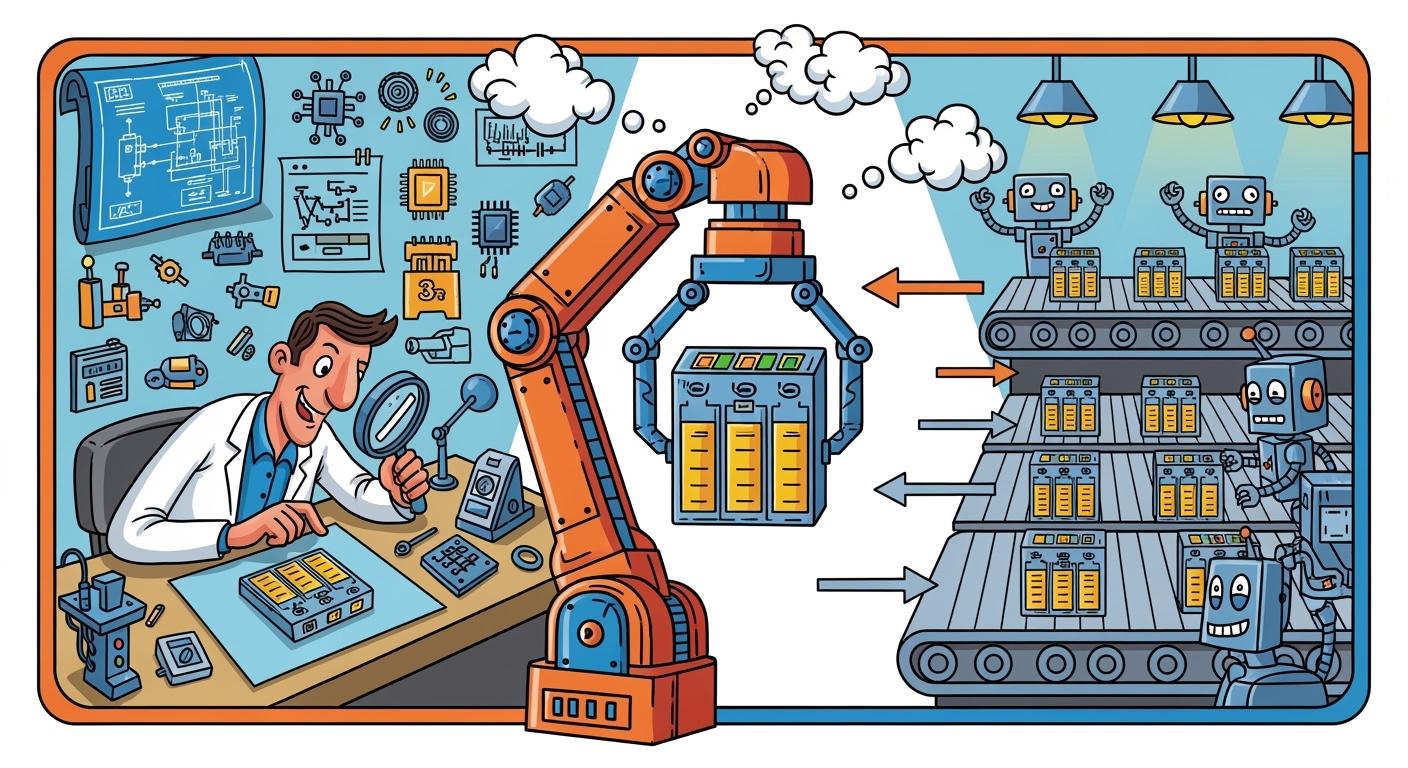
You face a critical challenge when building advanced robotics: selecting Custom Battery Solutions that meet strict power, safety, and reliability demands. Robotic systems require precise energy delivery, stable voltage platforms, and robust chemistries like LiFePO4 or NMC. Your decisions must support seamless integration, regulatory compliance, and efficient scaling from prototype to production. A step-by-step process helps you avoid costly errors and ensures long-term performance.
Key Takeaways
Define the power and energy needs of your robotic platform early to ensure optimal battery performance.
Select the right lithium battery chemistry, like LiFePO4 or NMC, based on your specific application requirements.
Implement rapid prototyping to test and refine battery designs before mass production, saving time and costs.
Ensure compliance with safety and regulatory standards to facilitate market access and protect consumer safety.
Adopt automated assembly and quality control systems to enhance production efficiency and maintain high standards.
Part 1: Battery Requirements
1.1 Power & Energy Needs
You must start by defining the power and energy profile for your robotic platform. Industrial and service robots often require high energy density and reliable current output to support continuous operation. The table below summarizes typical requirements for indoor and outdoor robots:
Parameter | Indoor Robots (e.g., medical, security) | Outdoor Robots (e.g., infrastructure, industrial) |
|---|---|---|
System-level mass energy density | ≥180Wh/kg | ≥200Wh/kg |
Volumetric energy density | ≥350Wh/L | N/A |
Instantaneous current output | 5C–15C (peak 20C) | N/A |
Operating temperature range | -20°C to 60°C | Below -30°C for some robots |
Cycle life | >600 cycles | N/A |
You should select lithium battery chemistries such as LiFePO4 or NMC to meet these requirements. These chemistries provide stable voltage platforms and long cycle life, which are essential for robotics in medical, security, and industrial sectors.
1.2 Application Constraints
Every robotic application presents unique constraints. You need to consider the following factors when designing Custom Battery Solutions:
Energy density and capacity determine battery life.
Lightweight design maintains motion performance.
High energy density must not exceed weight limits.
Custom battery packs can fit specific internal geometries, such as cylindrical housings or thin baseplates. This flexibility allows you to optimize integration without sacrificing functionality.
1.3 Safety & Compliance
Safety and regulatory compliance are critical for lithium battery packs. You must ensure your batteries meet international standards before mass production. The table below lists key certifications:
Certification | Purpose |
|---|---|
UN38.3 | Mandatory for air and sea transport |
CE | Required for access to EU markets |
UL 2054 | Essential for U.S. consumer safety compliance |
IEC 62133 | Widely accepted in Asia and global electronics |
RoHS | Focuses on environmental and hazardous material restrictions |
You should also address conflict minerals and environmental regulations. For more information, review the conflict minerals statement.
Tip: Early alignment with compliance standards reduces risk and speeds up your product launch.
Part 2: Prototyping Custom Battery Solutions
2.1 Rapid Prototyping Methods
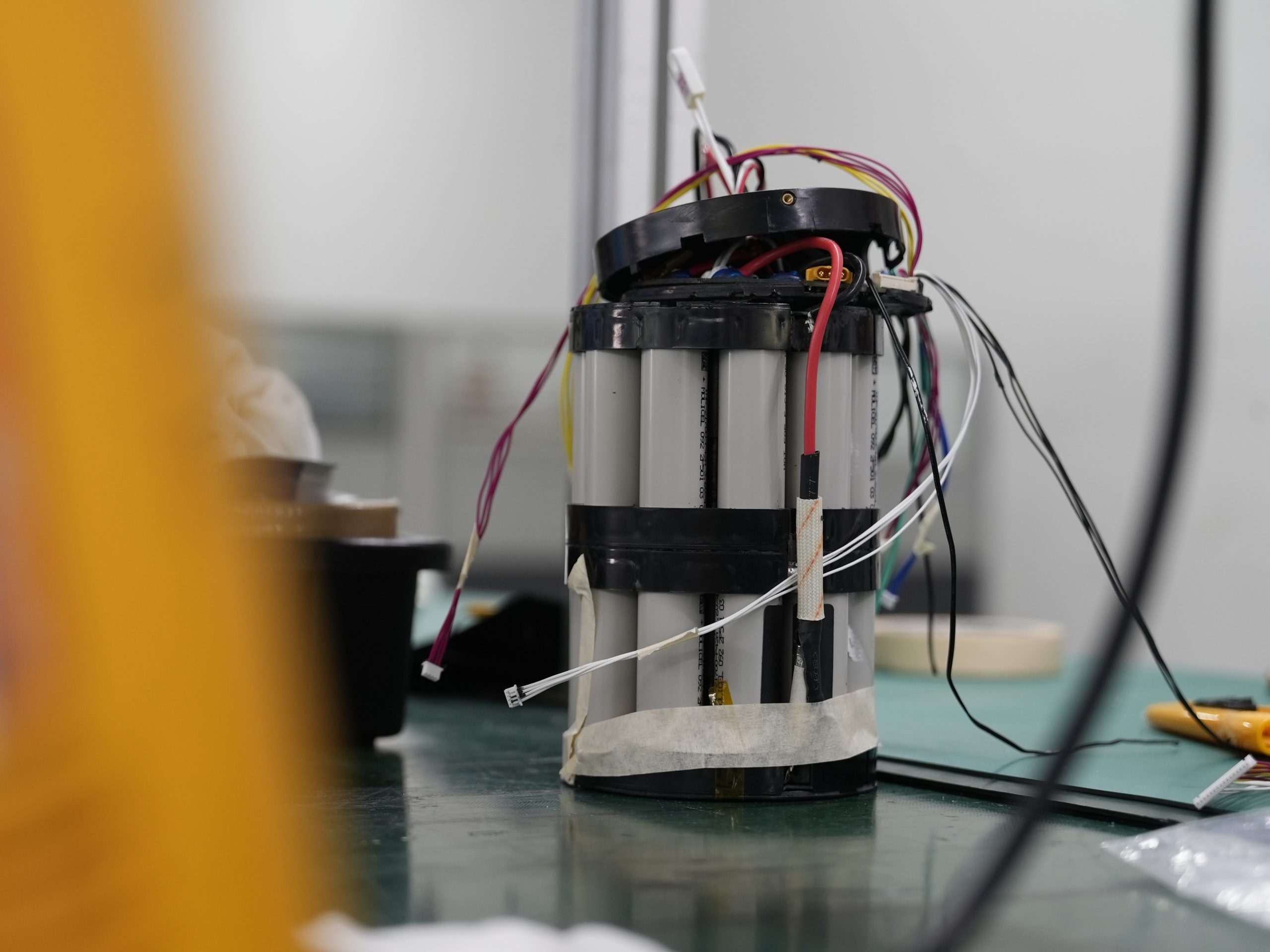
You need to move quickly from concept to prototype when developing Custom Battery Solutions for robotics. Rapid prototyping helps you test ideas and refine designs before committing to mass production. The process starts with cell design, then moves to pack integration, and finally optimizes performance at the robot level. The following table outlines the typical steps:
Step | Description |
|---|---|
1 | Initial lithium-silicon cell design |
2 | Prototype pack integration |
3 | Robot-level performance optimization |
You also need to create a technical folder, configure the battery mechanically, and select electrical components. These steps ensure your battery fits the robot’s geometry and meets application requirements. See the table below for a summary:
Step | Description |
|---|---|
1 | Drafting the project technical folder |
2 | Mechanical configuration of the battery |
3 | Choosing electrical components |
Custom battery manufacturers support you by optimizing design and selecting materials. They run pilot batches to validate performance and use 3D printing for quick prototyping. You can gather feedback and collaborate with engineering teams to improve the design.
Tip: Rapid prototyping reduces development time and lets you identify integration challenges early.
2.2 Integration with Robotics
You must ensure seamless integration between the battery pack and the robotic platform. Custom Battery Solutions allow you to match the battery’s shape, voltage, and energy density to the robot’s needs. For medical robots, you require lightweight packs with high cycle life. Security systems need stable voltage and reliable chemistries like LiFePO4 or NMC. Industrial robots demand robust packs that withstand harsh environments.
Custom battery manufacturers provide tailored solutions for each application. They use advanced features such as thermal management and telematics to monitor battery health. You benefit from batteries that fit unique geometries, such as cylindrical housings or thin baseplates. This flexibility improves performance and reliability.
Note: Integration challenges often arise from mismatched voltage platforms or incompatible connectors. Early collaboration with battery engineers helps you avoid these issues.
2.3 Early Testing & BMS
You need to validate battery performance and safety during the prototyping phase. Early testing and Battery Management System (BMS) implementation play a critical role. BMS monitors cell voltage, temperature, and current, protecting the battery from overcharge and deep discharge.
Early testing offers several advantages:
Reduced Time to Market: Early validation of designs minimizes the time spent on physical testing, accelerating development.
Lower Costs: Fewer prototypes and tests lead to significant cost savings in BMS development.
Improved Safety: Virtual testing of fault scenarios ensures safety is integrated from the start, lowering the risk of failures.
Increased Confidence: Real-time validation enhances engineers’ confidence in the reliability and performance of their designs.
“HIL testing is a crucial step,” said Chu. “For example, if charging a battery from 60% to 80% takes 20 minutes in real life, the simulation will replicate this in real-time. This level of precision gives engineers confidence that their algorithms will perform as expected in production.”
Simulation and iterative testing let you refine algorithms and battery designs. If an algorithm does not perform as intended, you can update and re-validate it in the simulation environment. This process reduces the risk of hardware damage and improves reliability.
Custom battery manufacturers help you by ensuring quality and compliance with regulatory standards. They facilitate rapid prototyping and testing, using advanced features like thermal management. You receive support from pilot batches, quick feedback, and collaboration with engineering and manufacturing teams.
Tip: Early BMS integration and testing help you meet safety standards and regulatory requirements for lithium battery packs.
Part 3: Validation & Testing
3.1 Functional Validation
You need to validate every custom battery pack before moving to mass production. Functional validation checks if the battery meets your robot’s requirements for voltage, capacity, and safety. You should use several testing methods to ensure reliability. The table below shows standard procedures for functional validation:
Testing Method | Purpose |
|---|---|
Electrical Testing | Validate voltage, capacity, and internal resistance |
Lifecycle Testing | Predict lifespan through accelerated cycles |
Thermal Testing | Identify hotspots under load |
Mechanical Testing | Ensure structural integrity through shock and vibration tests |
Safety Testing | Conduct overcharge, overdischarge, and short-circuit tests (UL/IEC standards) |
You must test lithium battery packs for electrical performance, temperature distribution, and mechanical durability. These tests help you confirm that your battery will perform well in medical robots, security systems, and industrial platforms.
3.2 Industry Standards
You must follow industry standards when validating custom battery packs. Standards like UL 2054, IEC 62133, and UN38.3 set requirements for safety and performance. You need to check for short circuit protection, overcharge protection, and thermal runaway containment. Environmental testing ensures your battery operates under extreme temperatures, humidity, and dust. Mechanical validation includes vibration and shock testing. System integration testing checks communication with robotic systems and verifies charge/discharge profiles.
Tip: Meeting industry standards protects your business and ensures your product is ready for global markets.
3.3 Iterative Improvements
You should use iterative improvements during validation and testing. Early defect detection helps you save raw materials and reduce rework. Integrating testing throughout production lets you find defects closer to their source. Digital engineering and virtual validation allow you to test prototypes rigorously. You can refine designs and improve performance before mass production. This process increases reliability and reduces costly errors.
Early defect detection improves battery reliability.
Testing during production prevents errors later.
Digital engineering enables rigorous prototype testing.
Custom Battery Solutions benefit from this approach. You gain confidence in your battery’s performance and safety, ready for scaling in robotics applications.
Part 4: Mass Customization & Production

4.1 Design for Manufacturability
You must adopt a design for manufacturability (DFM) mindset when scaling battery solutions for robotics. DFM helps you avoid delays and manage change requests efficiently. You need to optimize materials handling and equipment integration. Re:Build Battery Solutions recommends balancing strength and weight in your design. This approach ensures your battery packs fit the robot’s geometry and meet performance targets.
You should select lithium chemistries like LiFePO4, NMC, LCO, or LMO based on your application. For medical robots, you require lightweight packs with high cycle life. Security systems need stable voltage platforms. Industrial robots demand robust packs that withstand harsh environments. Employing the right DFM methods helps you avoid costly fixes later and prepares your robots for industrial-scale production.
Chemistry | Energy Density (Wh/kg) | Cycle Life | Typical Application |
|---|---|---|---|
LiFePO4 | 120–160 | >2000 | Medical, Security, Robotics |
NMC | 150–220 | >1000 | Industrial, Infrastructure |
LCO | 150–200 | >500 | Consumer Electronics |
LMO | 100–150 | >1000 | Power Tools, Robotics |
Tip: Early DFM integration reduces production risks and ensures your battery solution meets regulatory requirements.
4.2 Automated Assembly
Automated assembly transforms battery production for robotics OEMs. You gain higher output and lower costs with simpler designs. The new systems require only 60% of the floor space compared to older equipment. You benefit from fewer complex components, which improves reliability over time.
Robotic automation increases efficiency in battery production.
Labor costs drop significantly.
Advanced technologies enhance product quality.
Consistency and quality improve with inline monitoring.
Labor reduction and increased throughput lead to a payback period under nine months.
You can scale operations without costly downtime. Automation systems provide agility to shift between products. You minimize human error and material waste, leading to fewer rejected parts and tighter process control.
Benefit | Impact |
|---|---|
Output | Increased by about 10% |
Floor Space | Reduced by 40% |
Reliability | Improved with fewer complex components |
Payback Period | Under nine months |
Quality | Enhanced through advanced technologies |
Note: Automated assembly ensures steady returns as your operations grow. You can integrate new products easily and maintain consistent quality.
4.3 Scaling Custom Battery Solutions
You face several challenges when scaling custom battery solutions from prototype to mass production. You must ensure power consistency in demanding environments. Real-time monitoring and automated systems help you reduce errors. Regulatory approval requires up-to-date knowledge of evolving standards. You need robust quality control systems to maintain high standards throughout production.
Mass customization delivers tailored solutions at scale. You collaborate with expert teams to create lithium battery packs that match your requirements for capacity, voltage, and dimensions. Each solution is optimized for its intended application, whether in medical diagnosis, robotics, security systems, or industrial platforms.
Product Type | Customization Features |
|---|---|
E-bikes | Tailored battery packs for optimized performance |
Electric Vehicles | Custom designs to meet exact specifications |
Robotics | Solutions designed for maximum durability and reliability |
Process optimization strategies help you maintain quality during mass production. You optimize raw materials to ensure battery consistency. You adopt advanced technologies for sorting and grouping. You strengthen control of the production environment with regular maintenance and inspection. Continuous mixing processes handle large volumes efficiently. Inline monitoring of parameters like temperature and pressure ensures real-time quality control. Thorough testing before ordering guarantees batteries meet specifications. Failure analysis identifies and corrects potential issues. You limit variability among batches by controlling raw material consistency.
Strategy | Description |
|---|---|
Optimize raw materials | Ensures high-quality inputs for consistency |
Adopt advanced technologies | Improves efficiency with modern sorting and grouping |
Strengthen control of environment | Maintains optimal production conditions |
Continuous mixing processes | Handles large volumes for batch stability |
Quality control measures | Monitors parameters in real-time |
Thorough testing before ordering | Verifies performance and reliability |
Failure analysis | Corrects potential issues leading to battery failure |
Limit variability among batches | Maintains quality across production |
You achieve measurable benefits with mass customization. Automation scales with your operations, ensuring steady returns without costly rebuilds. Long-term savings from automation help reduce costs and eliminate inefficiencies. Easy integration and long service life contribute to consistent returns.
Tip: Mass customization enables you to deliver tailored battery solutions at scale, meeting the demands of robotics, medical, and security applications.
If you want to learn more about sustainability in battery production, visit Our Approach to Sustainability.
Part 5: Quality Assurance
5.1 Quality Systems
You need robust quality systems to guarantee consistent performance in lithium battery packs for robotics. Inline quality control addresses every stage of manufacturing, from electrode production to cell assembly and pack integration. Advanced sensor technologies and AI-assisted software evaluate quality-relevant data during production. Continuous monitoring of quality parameters maintains efficiency and reduces reject rates. You benefit from fewer defects and improved reliability in medical robots, security systems, and industrial platforms.
Inline quality control covers electrodes, cells, modules, and packs.
Sensor technologies and AI software analyze production data in real time.
Continuous monitoring reduces waste and ensures high efficiency.
Tip: Investing in advanced quality systems helps you deliver reliable battery packs for demanding robotics applications.
5.2 Consistency & Traceability
You must track every battery component to ensure consistency and traceability. Traceability systems let you analyze electrode-level data, which is crucial for assessing performance and reliability. Early identification of defects in the production process optimizes operations and reduces waste. Electrode traceability links manufacturing parameters to final battery performance, preventing costly recalls and protecting consumer safety.
Traceability systems track electrode-level data for performance analysis.
Early defect detection improves operational efficiency.
Electrode traceability prevents recalls and supports safety compliance.
Note: Consistent traceability builds trust with your clients and supports regulatory audits.
5.3 Regulatory Certification
You must achieve regulatory certification before deploying custom lithium battery packs in robotics. Certification ensures safety, reliability, and market access. The table below summarizes key certifications and sample requirements for robotics OEMs:
Certification | Description | Sample Requirement |
|---|---|---|
UN38.3 | Transport safety requirements | 16 samples |
IEC62133-2 | Battery safety standard | 30 samples |
Additional | Compliance with FCC, NDAA, RoHS, TAA | N/A |
You must test lithium battery packs for transport safety, electrical performance, and hazardous material compliance. Meeting these standards allows you to access global markets and assures your clients of product safety.
Regulatory certification is essential for scaling your robotics solutions and maintaining industry credibility.
Part 6: Case Studies & Best Practices
6.1 OEM Success Stories
You can learn from real-world examples of robotics OEMs that have scaled custom lithium battery packs successfully. Medical robotics companies often select LiFePO4 chemistries for high cycle life and stable voltage. Security cameras OEMs choose NMC packs for robust energy density and reliable performance. Industrial robot manufacturers use LMO batteries to withstand harsh environments and frequent charge cycles.
Here is a comparison of outcomes from three OEMs:
Sector | Chemistry | Key Requirement | Outcome |
|---|---|---|---|
Medical Robotics | LiFePO4 | Long cycle life | 30% reduction in maintenance |
Security Systems | NMC | Stable voltage platform | 20% increase in uptime |
Industrial Robots | LMO | High durability | 15% improvement in reliability |
Note: Custom battery solutions help you achieve measurable gains in operational efficiency and product reliability.
6.2 Lessons Learned
You should apply best practices from these OEMs to your own projects. Early alignment with application requirements ensures you select the right chemistry and pack design. Rapid prototyping and iterative testing help you identify integration challenges before mass production. Automated assembly and inline quality control maintain consistency and traceability.
Define energy and power needs at the start.
Choose lithium chemistries based on sector demands.
Integrate BMS early for safety and compliance.
Use automated assembly to scale production efficiently.
Monitor quality with real-time data systems.
Tip: Collaboration with expert battery manufacturers accelerates development and reduces risk.
You can improve reliability and customer satisfaction by following these lessons. Custom battery solutions give you flexibility and performance tailored to robotics, medical, and industrial applications.
Part 7: Lifecycle Support
7.1 Technical Support
You need reliable technical support to maximize the performance and longevity of custom lithium battery packs in robotics. OEMs value support that addresses continuous operating cycles and ensures long-lasting battery technologies. You benefit from technical teams that align solutions with lithium-ion strengths, such as stable voltage platforms and high energy density. Support services often include:
Custom engineering for unique robotics requirements
Collaboration on safety and reliability improvements
Integration of advanced battery management systems (BMS)
Solutions for challenging power scenarios
You also gain advantages from rapid wireless charging and long run times, which suit 24/7 operational environments. Technical support helps you maintain high uptime and extend battery life expectancy across medical, security, and industrial robots.
7.2 Upgrades & Retrofits
You extend the lifecycle of your battery systems through upgrades and retrofits. Regular updates to controllers and electronics keep your robotics platforms compatible with new technologies. For example, the RDS system received multiple controller upgrades during its service life. Timely retrofitting prevents obsolescence and enhances operational longevity. You maintain safety and functionality by adapting to advancements in lithium chemistries like LiFePO4 and NMC. Upgrades ensure your robots continue to meet demanding requirements for voltage, energy density, and cycle life.
Upgrade Type | Benefit | Application Sector |
|---|---|---|
Controller Upgrade | Prevents obsolescence | Medical, Security, Robotics |
BMS Retrofit | Enhances reliability | Industrial, Infrastructure |
Wireless Charging | Supports 24/7 operation | Security, Robotics |
Tip: Schedule regular reviews of your battery systems to identify opportunities for upgrades and retrofits.
7.3 Recycling & End-of-Life
You must manage end-of-life batteries responsibly to support sustainability and regulatory compliance. Effective recycling starts with proper disassembly and sorting of lithium battery packs. You follow strict safety protocols during battery discharging and handling. Automation improves efficiency in recycling processes. You adhere to regulations, such as the new EU Battery Regulation, to ensure compliance and promote sustainable practices. These steps enhance the quality of recycled materials and reduce environmental impact.
Learn more about sustainable battery management at Our Approach to Sustainability.
Best Practice | Description |
|---|---|
Disassembly & Sorting | Improves recycling quality |
Safety Protocols | Reduces risks during handling |
Automation | Increases process efficiency |
Regulatory Compliance | Ensures adherence to EU Battery Regulation |
You protect your business and the environment by following these best practices for recycling and end-of-life management.
You ensure successful custom battery development by following these steps:
Understand your technical needs.
Collaborate with engineering teams for custom design.
Test for seamless integration and reliability.
Scale manufacturing while maintaining quality.
Support your products throughout their lifecycle.
Partnering with battery experts gives you access to advanced technologies, strategic planning, and comprehensive testing.
A lifecycle-focused approach improves reliability and customer satisfaction. Battery management systems provide safety features:
Safety Feature | Description |
|---|---|
Overcharge Protection | Stops charging when full to prevent overheating. |
Thermal Cutoffs | Disconnects power if temperatures exceed safe limits. |
Short Circuit Protection | Breaks the circuit during a short circuit to prevent fire. |
FAQ
What lithium battery chemistry should you choose for robotics applications?
Chemistry | Energy Density (Wh/kg) | Cycle Life | Best Use Case |
|---|---|---|---|
LiFePO4 | 120–160 | >2000 | |
NMC | 150–220 | >1000 | Industrial, Infrastructure |
LCO | 150–200 | >500 | Consumer Electronics |
LMO | 100–150 | >1000 | Robotics, Power Tools |
Select chemistry based on your platform’s energy, voltage, and cycle life needs.
How does a Battery Management System (BMS) improve safety?
A BMS monitors voltage, temperature, and current. It prevents overcharge, deep discharge, and overheating. You reduce fire risk and extend battery life. BMS integration is essential for robotics, medical, and security systems.
What certifications do you need for lithium battery packs in robotics?
You need UN38.3 for transport, IEC 62133 for safety, and CE for EU market access. UL 2054 is required for U.S. consumer safety. These certifications ensure compliance and global market entry.
How do you ensure quality and traceability in mass production?
You use inline quality control and traceability systems. These track every cell and electrode. Early defect detection reduces waste. Consistent quality supports reliability in medical, industrial, and security robots.
Can you upgrade or retrofit battery packs in deployed robots?
Yes. You can upgrade controllers, BMS, or switch to advanced chemistries like NMC or LiFePO4. Upgrades extend service life and improve performance. Regular reviews help you identify retrofit opportunities.


