

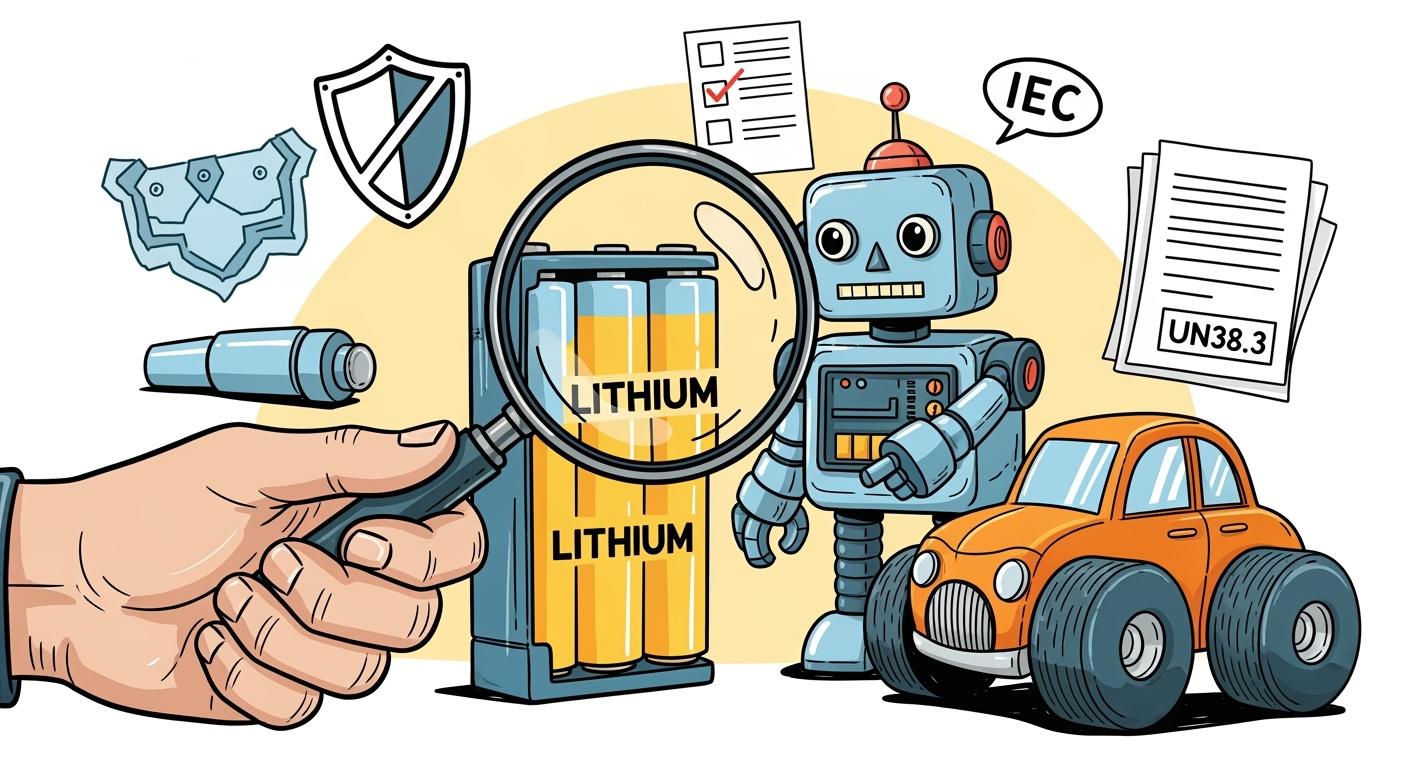
You must follow strict Toy Battery Regulations when manufacturing lithium battery packs for toys in the EU and US. In the EU, you need to comply with IEC 62133 and UN38.3, which set safety and transport standards. In the US, Reese’s Law and CPSC rules require secure compartments and clear labeling for button and coin cell batteries. The table below highlights key US regulations you should know:
Regulation/Standard | Description |
|---|---|
16 CFR Part 1263 | Safety standard for button cell or coin batteries, requiring secure battery compartments and labeling. |
Consumer Product Safety Improvement Act (CPSIA) | Enforces substance restrictions and testing for children’s products powered by lithium batteries. |
ASTM F963 | Standard for toy safety, including requirements for battery compartments and warning labels for toys using lithium batteries. |
Compliance protects children from battery hazards and reduces legal risks for your business. You must stay updated with testing, certification, and labeling requirements to ensure your products meet all current safety standards.
Key Takeaways
Understand and comply with EU and US toy battery regulations to protect children from hazards and avoid legal issues.
Ensure battery compartments are secure and labeled clearly to meet safety standards like IEC 62133 and CPSIA.
Regularly test lithium battery packs in accredited labs to confirm they meet safety and performance requirements.
Stay updated on regulatory changes to maintain compliance and ensure your products are safe for the market.
Document all testing, certifications, and labeling to support compliance and facilitate audits.
Part1: Toy Battery Regulations Overview
1.1 Why Toy Battery Regulations Matter
You face strict Toy Battery Regulations when you design or import lithium battery packs for toys in the EU and US. These rules protect children from hazards like overheating, leakage, or accidental swallowing of batteries. Regulatory bodies want to reduce the risk of injury or death, especially with small batteries such as button or coin cells. If you ignore these regulations, you risk product recalls, legal penalties, and damage to your business reputation.
Toy Battery Regulations also help you maintain a level playing field in the market. When everyone follows the same safety standards, you can compete fairly. You also gain trust from retailers and distributors who demand proof of compliance before they stock your products.
1.2 Key Standards and Authorities
You must understand which organizations set and enforce Toy Battery Regulations. In the EU, the European Commission oversees toy safety. The main standard for lithium battery packs is IEC 62133, which covers safety requirements for rechargeable batteries. The new Regulation (EU) 2025/2509 introduces stricter rules for battery safety, chemical restrictions, and labeling. Here is a summary of the latest EU update:
Regulation | Description |
|---|---|
Regulation (EU) 2025/2509 | New rules on toy safety, including battery safety provisions. |
Effective Date | Enters into force on Jan. 1, 2026; applicable from Aug. 1, 2030. |
Key Provisions | Ban on bisphenols, PFAS, CMR, and endocrine disruptors; requirements for visibility of warnings; Digital Product Passport for toys; restrictions on battery access. |
In the US, the Consumer Product Safety Commission (CPSC) enforces standards such as ASTM F963 and the Consumer Product Safety Improvement Act (CPSIA). Reese’s Law adds new requirements for button and coin cell batteries, focusing on secure compartments and clear warnings.
Tip: Stay updated with changes in both regions. Regulatory updates can affect your product design, testing, and documentation.
Part2: EU Lithium Battery Pack Rules
2.1 EU Toy Safety Directive
You must follow the EU Toy Safety Directive when designing lithium battery packs for toys. This regulation sets strict requirements to protect children from battery hazards. The directive mandates that toys with lithium batteries must prevent children from accessing the batteries without tools. You need to ensure that battery compartments remain secure and cannot be opened by hand. This rule applies to all lithium chemistries, including LiFePO4, NMC, LCO, and LMO.
Toys with lithium batteries must be designed so children cannot access the batteries without tools.
Battery compartments must stay secure during normal use.
The directive enhances child safety by making batteries unreachable for children under 14 years.
Note: You must review your toy designs regularly to ensure compliance with the latest Toy Battery Regulations in the EU.
2.2 IEC 62133 and Related Standards
IEC 62133 sets the safety requirements for rechargeable lithium battery packs used in toys. You must test your batteries according to this standard before placing them on the EU market. IEC 62133 covers mechanical, electrical, thermal, and environmental testing.
Here is a summary of the testing procedures you need to follow:
Testing Type | Description |
|---|---|
Mechanical Abuse Testing | Tests include crushing, puncturing, and impact to assess physical damage resistance. |
Electrical Abuse Testing | Evaluates battery terminals and connections under abnormal electrical conditions to prevent hazards. |
Thermal Testing | Exposes batteries to extreme temperatures to assess performance and safety. |
Environmental Testing | Simulates real-world conditions like humidity and vibration to test durability. |
Safety Performance Testing | Assesses safety features like protection circuits to ensure safe usage. |
Capacity and Performance Testing | Measures energy storage capacity and performance over time to verify specifications. |
You must also understand how IEC 62133 compares to other international standards. The table below shows key differences:
Aspect | IEC 62133-2 1st Edition | UN 38.3 | ANSI/CAN/UL 2271 |
|---|---|---|---|
Battery Chemistry | Lithium, NiMH, Lead-Acid | Lithium only | Lithium and others |
Testing Conditions | Includes thermal abuse | Focus on transport safety | General safety requirements |
Fault Conditions | Single fault conditions | Not specified | Not specified |
Vibration Testing | Included | Not included | Included |
Adoption Timeline | EU adopted in March 2021 | Varies by region | Varies by region |
Tip: You should select the correct standard based on your application. IEC 62133 is essential for toys, but you may need UN 38.3 for transport or UL 2271 for industrial and robotics applications.
2.3 REACH and Chemical Safety
You must comply with REACH regulations when manufacturing lithium battery packs for toys in the EU. REACH restricts hazardous chemicals and requires you to assess the environmental impact of your products. You need to avoid substances like bisphenols, PFAS, CMR, and endocrine disruptors.
You must document all chemicals used in your battery packs.
You must ensure your products do not contain restricted substances.
You must provide safety data sheets and risk assessments for all materials.
You must monitor updates to REACH and adapt your sourcing and manufacturing processes.
For more information on environmental compliance and sustainability, visit Our Approach to Sustainability.
If you use minerals such as cobalt or tantalum, you must also consider conflict minerals regulations. You can find more details in the Conflict Minerals Statement.
2.4 CE Marking and Documentation
You must obtain CE marking for lithium battery packs in toys sold in the EU. CE marking shows that your product meets all applicable EU directives and safety standards.
Here are the main requirements for CE marking:
Requirement | Description |
|---|---|
Identify applicable EU directives | Determine which directives apply to the product, such as the Low Voltage Directive and Toy Safety Directive. |
Meet essential safety requirements | Ensure the product complies with safety standards outlined in the directives. |
Create a technical file | Maintain documentation including design details, risk assessments, and test reports. |
Issue a Declaration of Conformity | Provide a formal document confirming compliance with EU regulations. |
You must also follow EN 62115 for electrical safety. This standard covers protection of cords, components, and connections in toys.
The Toy Safety Directive ensures toys are safe for children under 14 years.
EN 62115 covers electrical safety for toys, including lithium battery packs.
You must keep all documentation up to date and ready for inspection by EU authorities. This includes test reports, risk assessments, and declarations.
Part3: US Toy Battery Regulations
3.1 CPSC and CPSIA Overview
You must understand the role of the Consumer Product Safety Commission (CPSC) and the Consumer Product Safety Improvement Act (CPSIA) when you design or import lithium battery packs for toys in the US. The CPSC enforces safety standards that protect children from battery hazards. These rules focus on battery compartments, labeling, and testing.
The table below shows the main CPSC regulations for toy lithium battery packs:
Regulation | Description |
|---|---|
16 CFR Part 1263 | Sets safety standards for battery compartments, labeling, and child-resistant packaging for button cell or coin batteries. |
ASTM F963 | Covers safety specifications for toys, including lithium battery requirements, small parts testing, and warning labels. |
CPSIA adds more requirements for lithium battery safety in toys. You must test your products in CPSC-accredited laboratories. The law cites ASTM F963 as the mandatory safety rule for toys. The standard includes new revisions for lithium battery safety.
The table below highlights key CPSIA requirements for lithium battery packs:
Requirement | Description |
|---|---|
Battery Safety | You must certify the shell for lithium batteries to prevent damage after abuse. |
Temperature Limits | The non-touch surface of the lithium battery must stay below 71℃. |
Testing Protocols | You must test rechargeable cells for overcharging and short circuit protection. |
You must use CPSC-accepted labs for testing.
You must follow ASTM F963 for lithium battery safety in toys.
Note: You should review CPSC and CPSIA rules before you design or import any toy with a lithium battery pack.
3.2 UL Standards for Lithium Batteries
You must follow Underwriters Laboratories (UL) standards when you manufacture or import lithium battery packs for toys in the US. These standards help you prevent fire, explosion, and other hazards. UL standards cover both rechargeable and primary lithium batteries, including LiFePO4, NMC, LCO, and LMO chemistries.
The table below lists the main UL standards for lithium batteries in toys:
UL Standard | Description |
|---|---|
UL 1642 | Focuses on preventing fire or explosion risks when lithium batteries are used in products or discarded. |
UL 60086-4 | Ensures safe operation of primary lithium batteries under intended and foreseeable use. |
UL 4200A | Covers safety for products with button or coin cell batteries, requiring secure battery compartments and labeling. |
You must select the right UL standard based on your battery type and application. For example, UL 1642 applies to rechargeable lithium batteries, while UL 60086-4 covers primary (non-rechargeable) lithium batteries. UL 4200A is important for toys with button or coin cell batteries.
The table below compares UL and IEC standards for lithium batteries:
Standard | Focus Area | Key Testing Requirements |
|---|---|---|
ANSI/CAN/UL 2271 | Light electric vehicles (LEVs) | Performance under normal and abnormal conditions, mechanical integrity, environmental resistance, electrical safety |
IEC 62133 | Electronics (smartphones, laptops) | Charging/discharging cycles, physical stress tests, extreme temperature and pressure testing |
Tip: You should document which UL and IEC standards you use for each battery pack. This helps you show compliance during audits or inspections.
3.3 State-Specific Rules
You must check for state-specific rules when you sell toys with lithium battery packs in the US. Some states have extra requirements for battery safety, labeling, or recycling. For example, California enforces strict chemical restrictions and labeling rules. New York and Illinois may require special warnings for button cell batteries.
You should review state laws before you ship products to different regions.
You must update your compliance documents if state rules change.
You should work with legal experts to track new state regulations.
If your lithium battery packs use minerals such as cobalt or tantalum, you must also consider conflict minerals regulations. For more information, see the Conflict Minerals Statement.
Note: State rules can change quickly. You should monitor updates to avoid penalties or recalls.
3.4 Certification and Tracking Labels
You must provide proper certification and tracking labels for all toy lithium battery packs sold in the US. These requirements help you prove compliance with Toy Battery Regulations and make it easier to trace products in case of safety issues.
The table below summarizes the main certification and labeling requirements:
Requirement | Description |
|---|---|
16 CFR Part 1263 | Sets safety standards for battery compartments and labeling for products with button cell or coin batteries, including lithium batteries. |
General Certificate of Conformity | Mandatory document detailing compliance with CPSC regulations, including product information and testing details. |
Children’s Product Certificate (CPC) | Required for children’s products, based on test reports from CPSC-accepted labs, containing product and compliance information. |
Tracking label | Must include manufacturer name, production date, and details about the manufacturing process to identify the product source. |
UL 4200A | Standard for safety of products with button or coin cell batteries, ensuring secure battery compartments and proper labeling. |
You must keep all certificates and test reports on file. You must also make tracking labels visible on the product or packaging. This helps you and your customers trace the source of each battery pack.
Tip: You should review your certification and labeling process every year to stay compliant with new rules.
Part4: Reese’s Law and Button Cell Safety
4.1 Reese’s Law Requirements
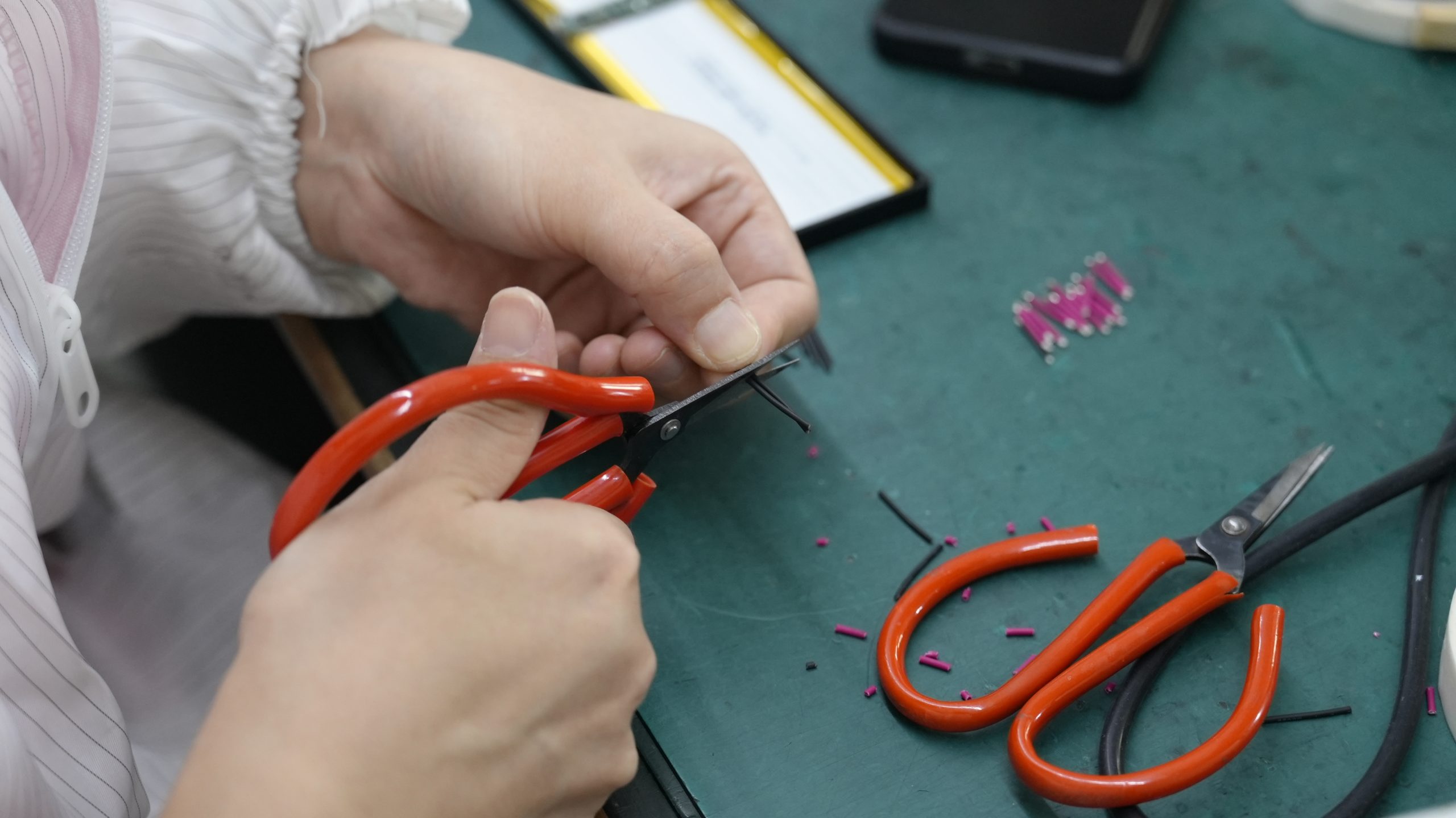
Reese’s Law sets new federal safety standards for button cell and coin batteries in the United States. You must follow these rules if you design or import lithium battery packs for toys. The law aims to prevent children under six from swallowing batteries. It became law on August 16, 2022. You must now use child-resistant battery compartments and special packaging for these batteries. The law also requires warnings on both the product and packaging.
Here is a summary of the main requirements:
Requirement | Description |
|---|---|
Battery Compartment Security | Must require a tool or two independent hand movements to open. |
Access Prevention | Must not allow batteries to be accessed through use and abuse testing. |
Packaging Warning | Must include a warning on the product packaging. |
Product Warning | Must bear a warning on the product itself, if practicable. |
Instructions | Must include all applicable warnings in manuals. |
Special Packaging | Requires child-resistant and senior-friendly packaging for batteries sold separately or with products. |
You must also follow ANSI/UL 4200A-2023, which is now a mandatory safety rule for products with button cell or coin batteries.
4.2 CPSC Button Cell Safety Rules
The Consumer Product Safety Commission (CPSC) enforces strict rules for button and coin cell batteries in toys. You must design battery compartments that children cannot open during normal use or after abuse testing. The CPSC requires that you use at least two full rotations of a screw or two independent movements to open the compartment. You must also follow ASTM F963, which covers additional safety and labeling requirements for lithium battery packs in toys.
These rules help prevent injuries or deaths from battery ingestion. You must test your products in CPSC-accepted labs to show compliance.
4.3 Labeling and Compartment Standards
You must provide clear labeling and follow strict compartment standards for button cell batteries in toys. The table below summarizes the main requirements:
Requirement | Description |
|---|---|
Battery labeling | Must specify type, size, and number of batteries used. |
Marking requirements | Must include battery polarity, size, and voltage. |
Safety warnings | Must state ‘Do not mix old and new batteries’ and ‘Battery is not replaceable’ if applicable. |
Ingestion hazard | Warning label required for button cell batteries. |
Non-replaceable batteries | Must indicate that batteries are not replaceable. |
Additional safety info | Must address battery replacement, disposal, and hazards. |
If the toy is too small for all labels, you must include the information in the instructions. You must make sure all warnings are visible and easy to understand.
Part5: UN38.3 and Transport Safety
5.1 UN38.3 Testing for Lithium Batteries
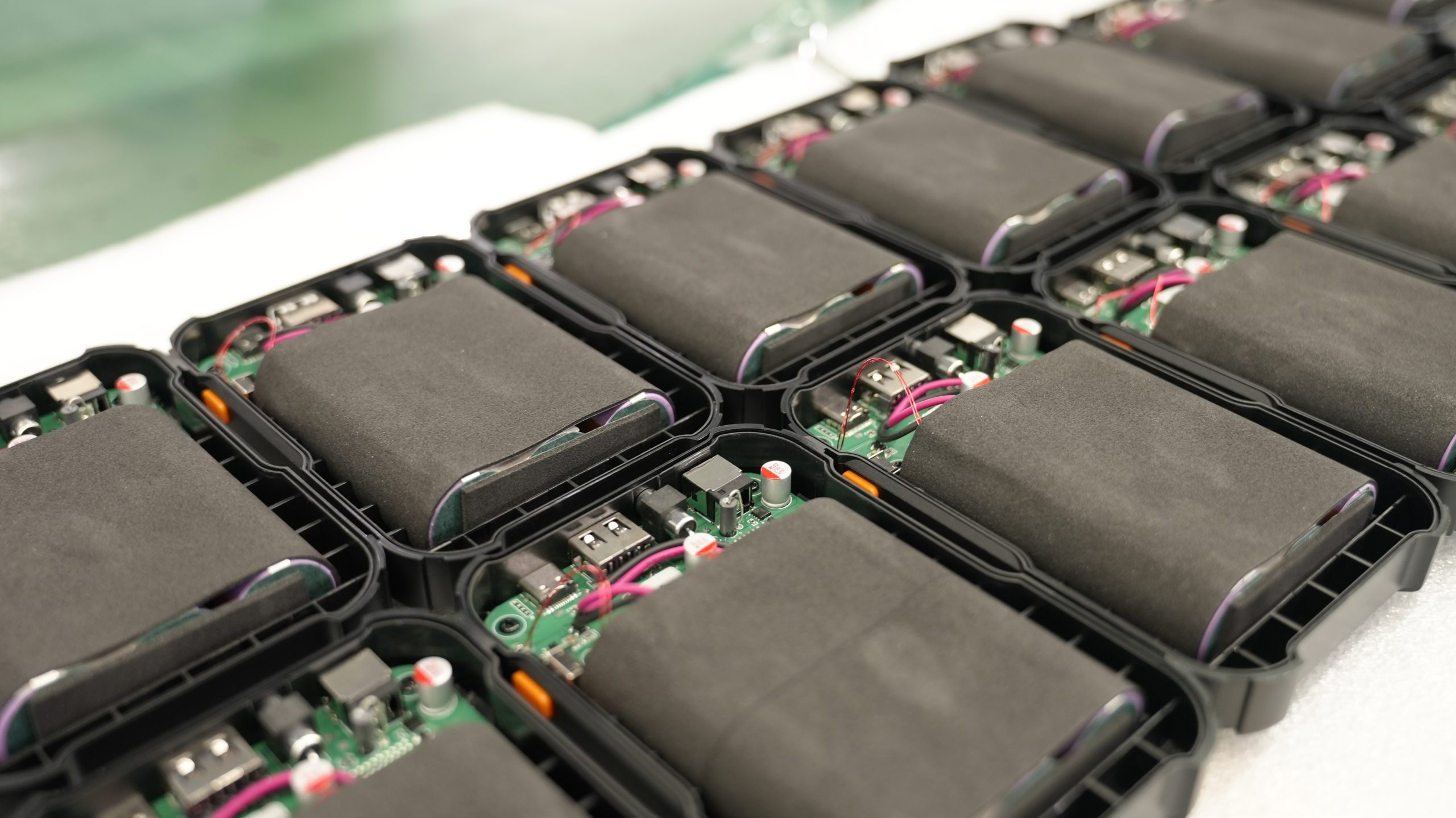
You must follow UN38.3 testing if you ship lithium battery packs for toys or other applications such as medical devices, robotics, or security systems. This standard ensures batteries can handle the stresses of air, sea, or ground transport. UN38.3 applies to all lithium chemistries, including LiFePO4, NMC, LCO, and LMO. You need to complete a series of tests before you can legally transport your battery packs.
The table below summarizes the main UN38.3 test codes and their purpose:
Test Code | Description | Battery Type |
|---|---|---|
T1 | Altitude Simulation | Primary and Secondary |
T2 | Thermal Test | Primary and Secondary |
T3 | Vibration | Primary and Secondary |
T4 | Shock | Primary and Secondary |
T5 | Short Circuit | Primary and Secondary |
T6 | Impact | Primary and Secondary |
T7 | Overcharge | Secondary |
T8 | Forced Discharge | Primary and Secondary |
You must pass all required tests to ship lithium battery packs safely. These tests check if your batteries can survive changes in pressure, temperature, and physical abuse. They also confirm that your battery packs will not short circuit, overcharge, or leak during transport. For more details on how these tests support sustainability and safety, see Our Approach to Sustainability.
Tip: You should keep all UN38.3 test reports on file. Airlines, freight forwarders, and customs officials may request them at any time.
5.2 Shipping and Packaging Rules
You must follow strict shipping and packaging rules when you transport lithium battery packs. These rules protect workers, carriers, and the environment from battery hazards. The United Nations sets these requirements for all international shipments.
Identification: Mark each shipment with the correct UN number, shipping name, class, and packing group.
Packaging Requirements: Use UN specification packaging or strong outer packaging that can withstand drops, vibration, and stacking. Do not pack lithium batteries with incompatible dangerous goods.
Marking and Labeling: Apply clear, durable labels that show the lithium battery mark. Labels must stay readable during transport.
Documentation: Complete a Shipper’s Declaration for Dangerous Goods. List the battery type, quantity, and packaging details.
You must train your logistics team on these rules. Failure to comply can lead to shipment delays, fines, or product recalls. If your battery packs contain minerals like cobalt or tantalum, review the Conflict Minerals Statement to ensure ethical sourcing.
Note: You should review shipping rules regularly. Regulations change often, especially for air transport.
Part6: Testing, Certification, and Labeling
6.1 Required Testing Protocols
You must follow strict testing protocols to ensure lithium battery packs in toys meet EU and US safety standards. Testing covers transportation, charger safety, and electromagnetic compatibility. These protocols protect users and help you avoid costly recalls. The table below shows the main testing types and standards:
Testing Type | Standards |
|---|---|
Transportation Testing | UN 38.3 |
Battery Charger Safety | IEC/EN 60950-1, IEC/EN 60335-2-29, UL 1310, UL 1012, UL 2575, UL 60950-1, CSA 22.2 #107.2, CSA 22.2#223, CSA E60335-2-29, CSA 60950-1 |
Electromagnetic Compatibility | FCC 47CFR Part 15, ICES-003, EMC Directive 2014/30/EU |
You must test lithium battery packs for mechanical abuse, electrical safety, and environmental durability. If your application uses a battery management system (BMS), you should review BMS and PCM solutions to ensure compliance.
6.2 Certification Steps
Certifying lithium battery packs for toys involves several steps. You must follow a clear process to meet EU and US requirements:
Assess which certifications your product needs based on market and application.
Send batteries to certified labs for rigorous testing against relevant standards.
Compile documentation showing compliance with safety and performance requirements.
Receive certification from the appropriate body after successful review.
You must keep all records organized. Certification helps you access new markets and assures partners of product safety.
6.3 Labeling for Lithium Battery Packs
Labeling plays a key role in regulatory compliance. You must provide clear, accurate information on every lithium battery pack. Labels should include battery chemistry (LiFePO4, NMC, LCO, LMO), voltage, energy density, and cycle life. You must also mark polarity, capacity, and safety warnings.
Include manufacturer name, production date, and batch number.
Display compliance marks such as CE, UL, or FCC.
Note: Proper labeling supports traceability and helps prevent misuse in sectors like medical devices, robotics, and security systems.
Part7: Compliance Steps for Manufacturers
7.1 Step-by-Step Compliance Guide
You need a clear process to meet Toy Battery Regulations for lithium battery packs. Follow these steps to ensure compliance:
Identify Applicable Standards
Review all relevant standards for your target market. For example, use IEC 62133 for the EU and UL 1642 or UL 4200A for the US. Check if your application involves LiFePO4, NMC, LCO, or LMO chemistries.Design for Safety
Build battery packs with secure compartments. Use materials that meet chemical safety rules, such as those in REACH or CPSIA.Test in Accredited Labs
Send samples for testing. Labs should check for electrical, mechanical, and environmental safety. Include UN38.3 transport tests if you ship batteries.Prepare Documentation
Collect all test reports, technical files, and certificates. Keep these records organized for audits.Label and Certify
Apply correct labels with voltage, energy density, cycle life, and compliance marks. Issue a Declaration of Conformity or Children’s Product Certificate as required.Monitor Shipments
Ensure all packaging and shipping follow UN rules. Train your logistics team on proper handling.
7.2 Common Pitfalls
Many manufacturers face similar challenges. Watch for these common mistakes:
Missing updates to Toy Battery Regulations.
Using non-compliant battery chemistries or materials.
Incomplete documentation or missing test reports.
Incorrect or unclear labeling.
Overlooking state-specific or sector-specific rules.
Tip: Set regular reviews for your compliance process to avoid these issues.
7.3 Staying Updated
Regulations change often. You should:
Subscribe to updates from the European Commission, CPSC, and UL.
Join industry groups focused on lithium battery safety.
Attend webinars or workshops on new standards.
Assign a compliance officer to track changes.
Staying informed helps you reduce risk and maintain access to key markets in medical, robotics, security, and industrial sectors.
You must follow strict rules for lithium battery packs in toys in both the EU and US. New standards for button and coin cell batteries require secure compartments and clear warnings. Testing, certification, and labeling protect your business and ensure child safety.
Quick Compliance Checklist:
Identify all relevant standards for your market
Design secure battery compartments
Test in accredited labs
Keep complete documentation
Update labels and monitor new regulations
Stay informed to keep your products safe and compliant.
FAQ
What lithium battery chemistries are most common in regulated toy and industrial applications?
You often see LiFePO4, NMC, LCO, and LMO chemistries. Each offers different voltage, energy density, and cycle life. The table below compares key properties:
Chemistry | Nominal Voltage | Energy Density (Wh/kg) | Cycle Life (cycles) |
|---|---|---|---|
LiFePO4 | 3.2V | 90–120 | 2000+ |
NMC | 3.7V | 150–220 | 1000–2000 |
LCO | 3.7V | 150–200 | 500–1000 |
LMO | 3.7V | 100–150 | 300–700 |
Do you need UN38.3 testing for every lithium battery shipment?
Yes. You must complete UN38.3 testing for each lithium battery pack model before shipping by air, sea, or ground. This rule applies to all sectors, including medical devices, robotics, and security systems.
How do you ensure compliance with both EU and US regulations?
You should design battery packs to meet IEC 62133 (EU) and UL 1642 or UL 4200A (US). Test in accredited labs. Maintain technical files, certificates, and clear labeling. Monitor regulatory updates for each market.
What labeling information must you include on lithium battery packs?
You must display battery chemistry, voltage, energy density, cycle life, manufacturer, production date, and compliance marks (CE, UL, FCC). Add safety warnings and disposal instructions. This supports traceability in industrial and infrastructure applications.
Which sectors require the strictest lithium battery safety standards?
Medical, robotics, and security systems demand the highest safety. You must follow all relevant standards, including IEC 62133, UN38.3, and UL 4200A. These sectors require rigorous testing and documentation to protect users and critical infrastructure.


