

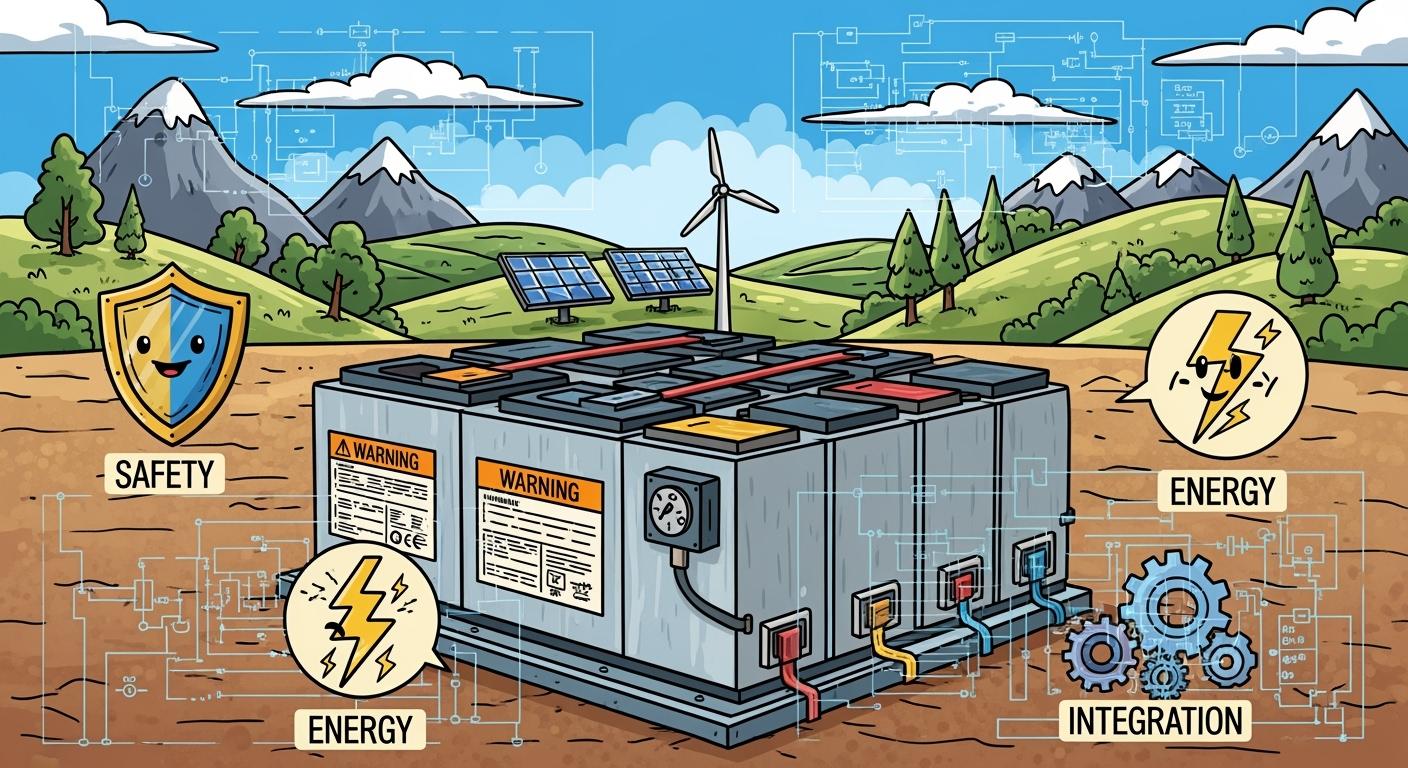
You rely on high-capacity battery packs to power outdoor energy storage across challenging environments. Custom battery solutions meet the unique needs of industries like utility repair, construction, and environmental monitoring. The market for these systems will reach over USD 4 billion by 2026, with a projected annual growth rate of 30.7% through 2035. Applications such as off-grid solar benefit from smart inverters and hybrid lithium chemistries like LiFePO4 delivering reliable power for critical operations. Focus on design, safety, and integration to maximize performance in demanding conditions.
Key Takeaways
Customize battery packs to meet specific outdoor energy needs. Tailored solutions enhance performance in challenging environments.
Select the right lithium chemistry for your application. Options like LiFePO4 offer safety and longevity, while NMC provides balanced performance.
Prioritize safety features in your design. Use robust enclosures and advanced battery management systems to protect against environmental risks.
Collaborate with experienced manufacturers early in the design process. This partnership streamlines production and ensures compliance with safety standards.
Regular maintenance and testing are crucial. These practices help extend battery life and prevent failures in demanding outdoor conditions.
Part 1: Custom High-Capacity Battery Packs Overview
1.1 Customization in Battery Packs
You can tailor high-capacity battery packs to meet the unique demands of outdoor energy storage. Customization options help you address specific technical and environmental challenges. The table below highlights key customization features:
Customization Option | Description |
|---|---|
Electrical Connections | Thick metal busbars and connectors carry high currents with minimal loss and prevent shorts. |
Thermal Management | Cooling systems, such as liquid-cooling plates and built-in heaters, maintain optimal temperatures. |
Battery Management System | The BMS monitors voltage and temperature, balances cells, and protects against over-voltage or heat. |
Safety Features | Multi-layer safety, including interlock loops and mechanical measures, ensures outdoor durability. |
These features allow you to design lithium battery packs that withstand harsh weather and deliver reliable power.
1.2 Outdoor Energy Storage Applications
You will find high-capacity battery packs in many outdoor applications. Industries such as medical, robotics, security systems, infrastructure, and industrial sectors rely on these packs for dependable energy. Off-grid solar installations, for example, benefit from custom lithium battery packs that match specific energy needs. Custom designs use high-endurance cells and advanced BMS to ensure longevity and reduce maintenance. This approach supports consistent operation in remote or rugged environments.
Requirement | Description |
|---|---|
High-capacity storage | Stores significant energy amounts |
Long cycle life | Ensures reliability and longevity |
Scalability | Expands to meet growing energy demands |
Reliable performance outdoors | Operates in various weather conditions |
1.3 Benefits for OEMs
Choosing custom high-capacity battery packs gives you several advantages over standard solutions. You can optimize the form factor, weight, and energy profile for your application. Custom packs integrate advanced BMS and thermal management, improving safety and durability. The table below outlines key benefits:
Benefit | Description |
|---|---|
Tailored Form-Factor & Weight | Optimizes size and weight for better user experience. |
Optimized Energy & Power Profile | Matches capacity and power delivery to your needs. |
Integrated Battery Management | Custom BMS enhances safety and extends battery life. |
Thermal Management | Better heat dissipation for harsh conditions. |
Reduced Time to Market | Faster design cycles and market differentiation. |
Lifecycle Optimization | Higher lifetime value and fewer replacements. |
You also benefit from lower total cost of ownership over five years, especially when you deploy more than 10,000 units per year. Custom packs reduce integration labor and supply chain risks, supporting your long-term business goals.
Part 2: Design Essentials for Outdoor Use

2.1 Capacity and Power Needs
You must start your design process by defining the capacity and power requirements for your outdoor application. High-Capacity Battery Packs must deliver consistent performance in demanding environments, such as off-grid solar, industrial robotics, or infrastructure monitoring. To determine the optimal specifications, ask yourself these questions:
Can your cell provider consistently supply the necessary cells for your production volume?
What technical specifications do you require, such as discharge rate and total capacity?
Does your provider manufacture cells that meet your exact needs?
You should always match the battery pack’s output to your application’s load profile. For example, a security system may need long standby times, while a construction tool may require high peak power. Understanding these factors ensures your battery packs meet the specific demands of outdoor use.
Tip: Collaborate with your cell provider early in the design phase to avoid supply chain disruptions and ensure technical compatibility.
2.2 Lithium Chemistry Selection
Selecting the right lithium chemistry is critical for outdoor High-Capacity Battery Packs. Each chemistry offers unique advantages for different applications, from medical devices to industrial automation. The table below compares the most widely used lithium chemistries:
Chemistry | Advantages |
|---|---|
LCO | High energy density, ideal for portable electronics |
NCA | High energy density, long cycle life, used in electric vehicles |
NCM | Balanced performance, good thermal stability, used in various applications |
LiFePO4 | Excellent safety, long cycle life, stable at high temperatures |
LTO | Fast charging, long cycle life, suitable for high power applications |
You should select a chemistry that aligns with your application’s safety, cycle life, and temperature requirements. For example, LiFePO4 is popular in rugged outdoor battery packs due to its stability and safety, while NCM offers balanced performance for industrial and infrastructure projects.
2.3 Environmental Durability
Outdoor environments expose battery packs to temperature swings, humidity, and severe weather. These factors can shorten lifespan and reduce performance. The table below outlines key environmental factors and their impact:
Environmental Factor | Impact on Battery Performance and Lifespan |
|---|---|
Temperature | Can cause thermal runaway or accelerate degradation |
Humidity | May lead to water ingress and compromise safety |
Severe Weather | Increases risk of failure and speeds up wear |
You should design your battery packs with robust thermal management and moisture barriers. For applications in remote or harsh locations, consider chemistries like LiFePO4 or NCM, which offer better stability.
Note: Battery management systems (BMS) play a vital role in monitoring cell balance and preventing failures caused by extreme conditions or overcharging.
2.4 Enclosure and Protection
The enclosure protects your battery pack from dust, water, and physical impacts. You must select materials and construction methods that match your application’s environment. The table below compares common enclosure materials:
Material Type | Advantages | Disadvantages |
|---|---|---|
PVC | Lightweight, affordable, portable | Limited heat resistance, brittle in cold |
Aluminum Alloy | Lightweight, strong, excellent thermal properties | Needs anodizing for extra durability |
Steel | High strength, cost-effective, good safety | Requires anti-corrosion treatment |
You should also pay attention to Ingress Protection (IP) ratings, which define the enclosure’s ability to block dust and water. The table below summarizes key IP ratings:
IP Rating | Description | Implications |
|---|---|---|
IP6X | Fully dust-proof protection | No dust ingress, reliable in dusty environments |
IP67 | Immersion up to 1 meter for 30 minutes | Suitable for temporary water exposure |
IP68 | Continuous submersion up to 5 hours | Ideal for prolonged water exposure |
IP69 | High pressure water jet resistance | Essential for outdoor maintenance and cleaning |
Ingress Protection ratings, defined by IEC 60529, directly influence your design choices, such as gasket selection and fastener spacing. Higher IP ratings increase the safety and reliability of your battery packs in outdoor conditions.
2.5 Application-Specific Features
You can further enhance your High-Capacity Battery Packs by integrating features tailored to your application. OEMs in sectors like medical, robotics, security, and industrial automation often request the following:
Feature | Description |
|---|---|
High Energy Density | Compact size delivers large energy, reducing cell count |
Long Cycle Life | Cells last 500–1000 cycles, ensuring predictable ROI |
Wide Operating Range | Reliable operation from –20°C to +60°C, ideal for outdoor use |
Cost Efficiency | Competitive costs through mass production and global sourcing |
High-capacity energy storage enables customizable voltage and capacity for energy-intensive applications.
OEM/ODM customization allows seamless integration into your systems.
Enhanced safety features, such as LiFePO4 chemistry, minimize operational risks.
Real-time monitoring with built-in displays helps you track state of charge and battery health.
You should always address common failure modes in your design. These include wear from frequent cycling, risks from extreme temperatures, and hazards from overcharging. A robust BMS will help you monitor cell health and prevent conditions that could lead to short circuits or other failures.
Tip: Prioritize features that align with your application’s mission-critical needs, such as long cycle life for infrastructure or wide temperature range for outdoor robotics.
Part 3: Safety and Certification
3.1 Safety Features for High-Capacity Battery Packs
You need to prioritize safety when designing High-Capacity Battery Packs for outdoor use. Outdoor environments expose lithium battery packs to harsh weather, temperature swings, and humidity. The table below highlights essential safety features you should consider:
Safety Feature | Description |
|---|---|
Battery Pack Assembly and Enclosure | Protects cells from severe weather and reduces thermal runaway risks. |
Ingress Protection Ratings | Shields against water intrusion, especially in humid conditions. |
Routine Maintenance and Testing | Regular checks prevent water ingress and ensure long-term safety. |
Location Considerations | Outdoor sites require designs that handle environmental elements. |
Operating Specifications | Evaluates safe temperature and humidity ranges for real-world use. |
Understanding Failure Mechanisms | Helps you design safer systems for extreme weather. |
Aging Considerations | Recognizes battery aging from heat and humidity exposure. |
Tip: Regular maintenance and testing help you catch issues early and extend battery life.
3.2 Protection Systems
You should integrate advanced protection systems into your lithium battery packs. Battery management systems (BMS) learn more monitor voltage, temperature, and current. These systems balance cells, prevent overcharging, and protect against short circuits. For outdoor applications in sectors like security, robotics, and infrastructure, you must also consider thermal fuses, pressure relief valves, and redundant safety circuits. These features help prevent failures and ensure safe operation in demanding environments.
3.3 Compliance Standards
You must comply with international standards to ensure your battery packs are safe and legal for transport and use. The table below summarizes key standards for outdoor lithium battery packs:
Standard | Description |
|---|---|
UN38.3 | Required for transport compliance of lithium batteries, essential for shipping. |
IEC 62133-2 | Applies to portable products, ensuring safety and performance in consumer devices. |
IEC 62619 | Required for industrial systems, focusing on safety and performance in larger applications. |
UL | Applies based on regional regulations and customer requirements for end products. |
You should also stay updated on regulatory changes. For example, the U.S. EPA is developing a voluntary battery Extended Producer Responsibility (EPR) framework to support battery recycling and management programs. UL 2580 certification ensures lithium battery packs can withstand thermal and mechanical stress. EN 1175 sets electrical safety standards for industrial trucks.
Note: If your application involves conflict minerals, review the conflict minerals statement to ensure compliance.
3.4 Outdoor Safety Challenges
Outdoor environments present unique safety challenges. You must design for wide temperature ranges, high humidity, and exposure to dust or water. Failure to address these factors can lead to reduced performance or safety risks. You should select enclosure materials and IP ratings that match your application. Regularly inspect seals and connectors to prevent water ingress. Understanding lithium-ion failure mechanisms helps you avoid common pitfalls and design safer High-Capacity Battery Packs for medical, industrial, and infrastructure applications.
Remember: Proactive safety design and compliance with standards protect your investment and reputation in the market.
Part 4: OEM Integration Guide
4.1 Customization for OEM Products
You can achieve seamless integration by customizing battery packs to fit your product’s unique requirements. Start by defining the voltage, capacity, and form factor that best suit your application. Customization also includes adding features like smart monitoring, rugged enclosures, or specialized connectors.
4.2 Electrical Interfaces
You must ensure that the electrical interfaces of your High-Capacity Battery Packs match your system’s needs. This involves selecting the right connectors, communication protocols, and voltage ranges. Many OEMs choose CAN bus or SMBus for real-time data exchange between the battery and host device. The table below compares common interface options:
Interface Type | Typical Use Case | Advantages |
|---|---|---|
CAN bus | Industrial, robotics, automotive | Robust, supports diagnostics |
SMBus | Medical, consumer electronics | Simple, widely supported |
UART | Security, infrastructure | Flexible, easy to implement |
Proper interface selection ensures smooth integration and reduces troubleshooting during deployment.
4.3 Manufacturer Collaboration
You gain significant advantages by working closely with experienced battery manufacturers. Early collaboration allows you to optimize design for manufacturability and streamline production.
Collaborative partnerships become invaluable for OEMs as they face challenges in resource allocation and the need for rapid project execution. By engaging with external experts, OEMs can enhance their capabilities in design for manufacturability, materials science, and high-volume production.
Successful projects often involve joint design reviews, shared prototypes, and open communication. For instance, a security system OEM partnered with a battery manufacturer to co-develop a rugged outdoor pack with advanced BMS and IP67-rated enclosures, reducing field failures and warranty claims.
4.4 Testing and Support
You should validate your integrated battery solution through comprehensive testing and ongoing support. Battery manufacturers typically provide:
Advanced battery testing capabilities, including validation of products and lab resources for battery validation testing.
Engineering services to assist in developing custom battery solutions tailored to specific requirements.
Follow a structured validation process to ensure reliability:
Planning and Documentation: Develop a comprehensive safety management plan and detailed test plans tailored for lithium-ion battery safety standards.
Selecting Accredited Labs and Preparing Samples: Choose accredited labs for testing and prepare battery samples according to their specifications.
Timeline and Costs: Understand that certification can take 4 to 12 weeks per standard and budget for potential costs associated with testing and retesting.
Post-Certification: Ensure ongoing compliance through regular audits and updates to meet evolving safety requirements.
You can reduce risk and improve product quality by investing in thorough testing and strong manufacturer support.
You should start by defining your operational goals and energy requirements before selecting a lithium battery pack for outdoor use. Focus on capacity, durability, lifespan, and warranty to ensure reliable performance in sectors like medical, robotics, and infrastructure. Collaborate with experienced manufacturers to optimize safety and compliance. As technology evolves, explore innovations such as LiFePO4 packs with advanced protection and fast charging. Ongoing adaptation and expert consultation will help you meet changing outdoor energy storage needs.
FAQ
What lithium battery chemistry should you choose for outdoor energy storage?
Chemistry | Best For | Key Benefit |
|---|---|---|
LiFePO4 | Infrastructure, robotics | High safety, long life |
NMC | Industrial, security | Balanced performance |
LCO | Consumer electronics | High energy density |
Select chemistry based on your application’s safety, cycle life, and energy needs.
How do you ensure battery pack safety in harsh outdoor environments?
You should use enclosures with high IP ratings, integrate advanced BMS, and schedule regular maintenance. These steps help prevent water ingress, thermal runaway, and electrical faults in sectors like medical, security, and industrial automation.
What certifications do lithium battery packs require for B2B applications?
You need certifications such as UN38.3 for transport, IEC 62619 for industrial use, and UL for regional compliance. These standards ensure your battery packs meet safety and performance requirements in medical, robotics, and infrastructure projects.
How can you customize battery packs for your OEM product?
You can specify voltage, capacity, form factor, and interface type. Manufacturers offer features like rugged enclosures, smart monitoring, and tailored connectors for seamless integration in security systems, robotics, and consumer electronics.
What is the typical lifespan of a custom lithium battery pack?
Most high-quality lithium battery packs, such as those using LiFePO4 or NMC, deliver 2,000–5,000 cycles. Actual lifespan depends on usage, environment, and maintenance. You can expect reliable service in industrial, infrastructure, and medical applications.


