

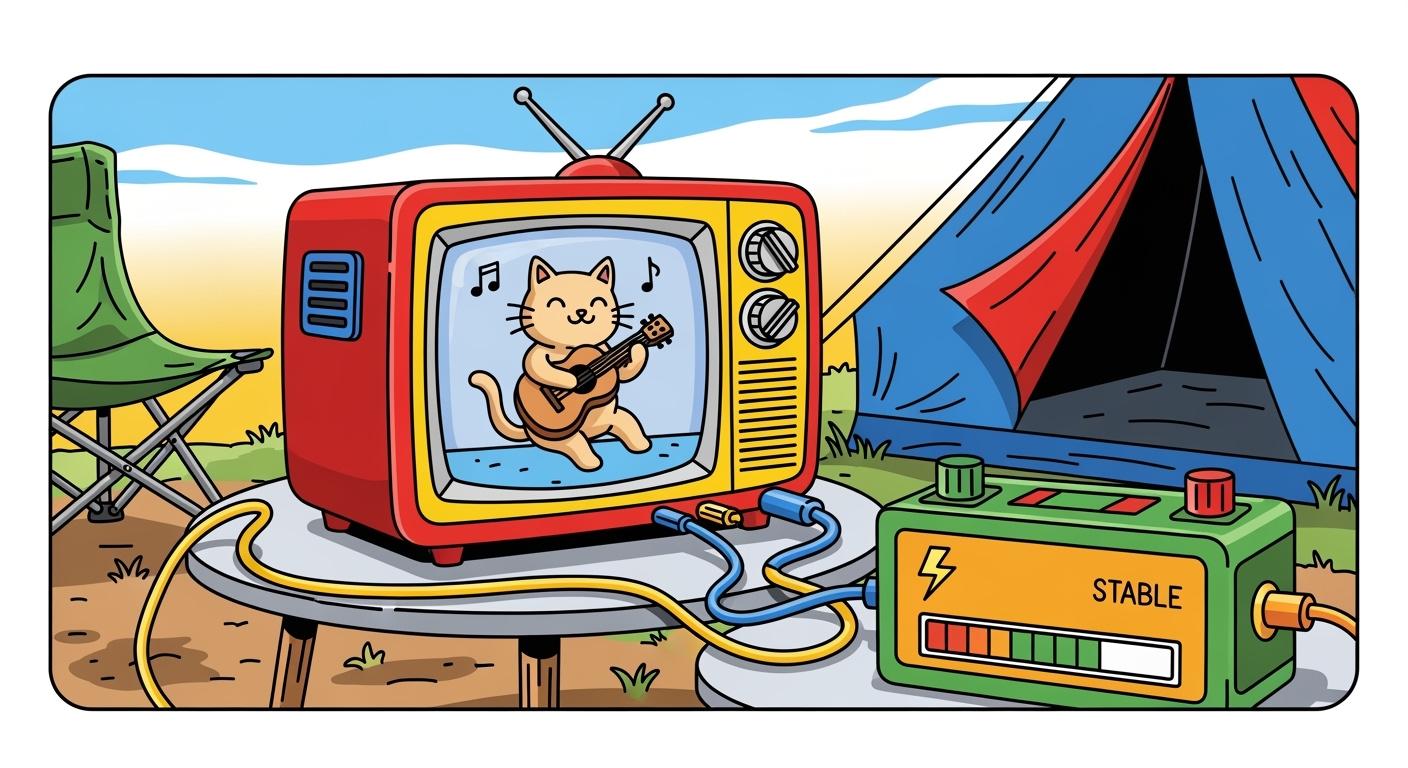
When you design battery packs for mobile TVs, you must analyze voltage, capacity, and discharge needs to ensure a stable power supply. Lithium battery technologies such as LiFePO4, NMC, LCO, and LMO offer strong energy density and long cycle life, making them ideal for portable entertainment, medical carts, robotics, and security systems. Modular design supports quick maintenance and easy upgrades. You also need to focus on safety by using advanced protection circuits and thermal management features that help prevent failures in off-grid and industrial environments.
Key Takeaways
Choose the right lithium battery chemistry, like LiFePO4 or NMC, based on your device’s power needs for optimal performance.
Calculate battery capacity in watt-hours to ensure your mobile TV runs for the desired time without frequent recharging.
Incorporate safety features such as overcharge and thermal protection to enhance reliability and prevent failures.
Design battery packs with modularity in mind to simplify maintenance and allow for easy upgrades or replacements.
Select appropriate charging options, including AC, DC, or solar, to ensure flexibility in off-grid environments.
Part 1: Battery Packs for Mobile TVs

1.1 What Is a Battery Pack?
A battery pack is a group of rechargeable cells combined with electronic circuits to deliver stable power to devices. When you design battery packs for mobile TVs, you must consider more than just the cells. You need to include protection, management, and safety features. These packs use lithium chemistries such as LiFePO4, NMC, LCO, and LMO. Each chemistry offers different energy density, voltage, and cycle life. You see battery packs in medical carts, robotics, security systems, and industrial equipment. They provide reliable energy where AC power is not available.
Component | Function |
|---|---|
Overcharge and Over-discharge | Protects the battery from excessive charging and discharging, ensuring longevity and safety. |
Thermal Monitoring and Management | Monitors temperature to prevent overheating, enhancing safety. |
Input/Output Overvoltage/Overcurrent | Prevents damage from voltage or current spikes, ensuring stable operation. |
Reverse Polarity and Short-Circuit | Protects against incorrect connections and short circuits, preventing potential hazards. |
Transient Voltage and ESD Immunity | Shields the circuit from voltage spikes and electrostatic discharge, ensuring reliability. |
Battery Protection IC | Acts as the control core for voltage detection and current control, essential for safety. |
Charging Management | Implements a three-stage charging profile for efficiency and safety. |
Discharge Management | Regulates output voltage and manages current distribution to prevent overload. |
System Safety | Establishes multi-layered defenses against various hazards, ensuring safe operation. |
1.2 Why Battery Packs Matter for Mobile TVs
You need battery packs to make mobile TVs truly portable. They allow you to use TVs in places where AC power is not available or practical. In B2B settings, this means you can deploy mobile displays in hospitals, factories, or remote security stations. Battery packs also support silent operation, which is important in environments where noise can disrupt work or patient care.
Because it’s battery powered, it charges silently and is perfect for whenever sound is an issue.
When you design battery packs for mobile TVs, you improve flexibility and usability. You can move equipment without worrying about power cords or outlets.
1.3 Power Supply Challenges
You face several challenges when you design battery packs for mobile TVs. You must match the voltage and current needs of the TV. You need to ensure the pack can deliver enough energy for the required runtime. Safety is critical, so you must include protection against overcharge, over-discharge, and overheating. You also need to consider the weight and size of the pack for easy transport. In industrial and off-grid environments, reliability and long cycle life are essential. Lithium battery packs with advanced management systems help you meet these demands.
Part 2: Design Battery Packs: Key Requirements
2.1 Voltage, Capacity, and Discharge Rate
You must analyze the voltage, capacity, and discharge rate before you design battery packs for mobile TVs. Voltage determines compatibility with the TV’s electronics. Capacity affects how long the TV can operate without recharging. Discharge rate shows how quickly the battery can deliver power.
To estimate battery capacity, you need to calculate the total power consumption. For example, if a mobile TV uses 150W and other devices add up to 500W, and you want a runtime of 6 hours, the total energy consumption reaches 3000Wh. Higher capacity means longer runtime. You should match the discharge rate to the TV’s peak power needs to avoid interruptions.
Tip: Always check the TV’s rated voltage and power draw. Oversizing the battery increases weight and cost, while undersizing leads to short runtime and frequent charging.
2.2 Size, Weight, and Portability
Size and weight play a major role in portability. You must balance energy storage with ease of movement. If you design battery packs for mobile TVs, you need to consider how users will transport the system. In B2B applications, such as medical carts or security stations, portability affects deployment speed and flexibility.
Here is a table showing typical size and weight specifications for battery packs in portable TV applications:
Model Size | Battery Capacity | Weight |
|---|---|---|
24″ | 100Wh (≥) | 8–10 kg |
24″ | 216Wh | ~5.2 kg |
32″ | 216Wh | 9+ kg |
Weight impacts portability. The following table shows how different types of portable TVs compare:
Type of Portable TV | Weight Range | Portability Impact |
|---|---|---|
Battery-Powered Compact Units (7–15.6″) | <2.2 lb | Ultra-light, designed for easy transport, ideal for travel and casual use. |
Mid-Size Smart Portables (22–27″) | 12–25 lb | Offers a balance between functionality and weight, but can impact ease of movement due to increased weight. |
Wheeled & Modular Systems (32″) | 33+ lb | Bulkier and less portable, designed for multi-room or outdoor mobility but harder to transport. |
Note: In industrial and medical environments, lighter battery packs improve mobility and reduce strain for staff.
2.3 Lithium Cell Selection
Selecting the right lithium cell chemistry is critical when you design battery packs for mobile TVs. You must consider voltage, energy density, cycle life, and safety. Lithium chemistries such as LiFePO4, NMC, LCO, and LMO offer different advantages. You also see solid-state and lithium metal cells emerging in advanced applications.
Here is a comparison table for lithium battery chemistries used in mobile TV battery packs:
Chemistry | Nominal Voltage | Energy Density (Wh/kg) | Cycle Life (cycles) | Advantages | Disadvantages |
|---|---|---|---|---|---|
LiFePO4 | 3.2V | 90–160 | 3,000–6,000 | Long cycle life, high safety, stable thermal performance | Lower energy density, larger size |
NMC | 3.6–3.7V | 150–220 | 1,000–2,000 | High energy density, balanced performance | Moderate cycle life, requires BMS |
LCO | 3.7V | 150–200 | 500–1,000 | High energy density, common in consumer electronics | Shorter cycle life, less stable at high loads |
LMO | 3.7V | 100–150 | 1,000–2,000 | Good safety, moderate energy density | Lower cycle life, lower capacity |
Solid-State | 3.7V | 250–400 | 2,000–10,000 | High energy density, improved safety, long cycle life | High cost, limited commercial availability |
Lithium Metal | 3.7V | 300–500 | 1,000–2,000 | Very high energy density, lightweight | Safety concerns, expensive, still under development |
You should select the chemistry that matches your application’s needs. For medical, robotics, and security systems, LiFePO4 offers long cycle life and safety. NMC and LCO provide higher energy density for compact designs. Solid-state and lithium metal cells suit advanced industrial and infrastructure projects.
LiFePO4 batteries deliver 3,000 to 6,000 cycles under standard conditions, supporting long-term reliability.
2.4 Modular Design Benefits
Modular battery pack design gives you flexibility and simplifies maintenance. You can replace faulty modules without shutting down the entire system. This approach reduces maintenance costs and downtime. Modular packs also isolate failures, so one module does not affect the whole system’s performance.
Modular battery packs simplify troubleshooting and maintenance, making it easier to identify faulty modules and reduce maintenance costs.
The modular design increases reliability by isolating failures to individual modules, preventing impact on the entire system’s performance.
Modular battery packs enable easy expansion or reduction, allowing systems to adapt to changing energy storage needs without replacing the entire pack.
Callout: Modular design supports quick upgrades and scaling for B2B clients in medical, robotics, security, and industrial sectors.
If you design battery packs with modularity, you can adapt to changing requirements and extend the system’s lifecycle. This approach is ideal for B2B clients who need scalable and reliable power solutions.
Part 3: Design Battery Packs: Process
3.1 Battery Configuration & Sizing
You must start with accurate sizing when you design battery packs for mobile TVs. Begin by identifying the power requirements of the TV. Check the rear energy label for wattage. If only voltage and amperage are listed, multiply them to find the wattage. You can also use a watt meter for real-time measurement.
TV Size (Diagonal) | LED / LCD Wattage | OLED / QLED Wattage |
|---|---|---|
32-inch | 30W – 50W | N/A |
43-inch | 50W – 80W | 60W – 90W |
55-inch | 60W – 100W | |
65-inch | 80W – 120W | 110W – 160W |
75-inch+ | 150W – 250W |
You must understand the difference between battery capacity (Watt-hours, Wh) and output power (Watts, W). Capacity determines runtime. Output power shows if the battery pack can handle startup and operational needs. For example, a 12V, 100Ah lithium battery paired with a 90-watt TV can provide nearly 12 hours of viewing. Lithium chemistries such as LiFePO4, NMC, LCO, and LMO offer higher efficiency and longer lifespan compared to lead-acid batteries.
Tip: Always match the battery configuration to the TV’s peak power and runtime requirements. Oversizing increases weight and cost. Undersizing leads to frequent charging and short runtime.
3.2 Protection Circuits & Thermal Management
You must include robust protection circuits to ensure safety and reliability. Protection circuits prevent overcharge, overdischarge, overcurrent, and overheating. These features protect the battery pack and the connected equipment.
Protection Type | Functionality |
|---|---|
Overcharge protection | Prevents battery from charging beyond safe limits |
Overdischarge protection | Stops discharging below safe voltage levels |
Overcurrent protection | Cuts off current during excessive load or short |
High-temperature protection | Shuts down operation at elevated temperatures |
You must use a Battery Management System (BMS) or Protection Circuit Module (PCM) for advanced monitoring and control.
Thermal management is essential for lithium battery packs in mobile TVs. Passive techniques include heat sinks, phase change materials, heat spreaders, and encapsulation. These methods help dissipate heat and maintain safe operating temperatures.
Heat sinks transfer heat from cells to the environment.
Phase change materials absorb heat during phase transitions.
Heat spreaders balance thermal profiles.
Encapsulation uses thermally conductive compounds for insulation and heat dissipation.
Note: High temperature protection engages shutdown at 60°C during charging and 70°C during discharging.
3.3 Connectors & Wire Harnesses
You must select connectors and wire harnesses that match the power requirements and environmental conditions. Choose wire size and materials for optimal conductivity and durability. Applications exposed to moisture or vibration require specialized connectors.
Polycarbonate (PC) is ideal for connector housing due to strength and heat resistance.
Silver-plated connectors provide high conductivity and low contact resistance.
Current capability must match the connector design and materials.
Assemble connectors according to manufacturer instructions and comply with electrical codes.
You must test connectors and harnesses to prevent failures such as corrosion and loose connections. Consider electrical, mechanical, and environmental performance. Ensure connectors meet power and signal transmission requirements.
Callout: Proper connector selection improves reliability in medical, robotics, security, and industrial applications.
3.4 Safety, Compliance, and Cost
You must meet strict safety and compliance standards when you design battery packs for mobile TVs. Compliance includes ATEX and Intrinsic Safety for hazardous environments. Certification testing covers vibration, shock, humidity, and temperature, following standards like MIL-STD-810. CE marking ensures safety and environmental protection in the European Economic Area. RoHS restricts hazardous substances. ISO standards such as ISO 9001 and ISO 14001 support quality and environmental management.
Integrate quality assurance from the initial design phase.
Qualify suppliers according to ISO 9001 and ISO 13485.
Comply with environmental regulations like RoHS and REACH.
You must consider cost factors such as battery chemistry, protection circuits, modularity, and compliance testing. Lithium battery packs with LiFePO4, NMC, LCO, and LMO chemistries offer long cycle life and stable performance. Apply the 40-80 rule for lithium-ion batteries: keep charge levels between 40% and 80% to maximize lifespan and reduce replacement costs.
Learn more about responsible sourcing and compliance in the Conflict Minerals Statement.
Tip: Investing in quality components and compliance reduces long-term costs and improves reliability for B2B clients in medical, robotics, security, infrastructure, and industrial sectors.
Part 4: Off-Grid & Portability Optimization
4.1 Charging Options: AC, DC, Solar
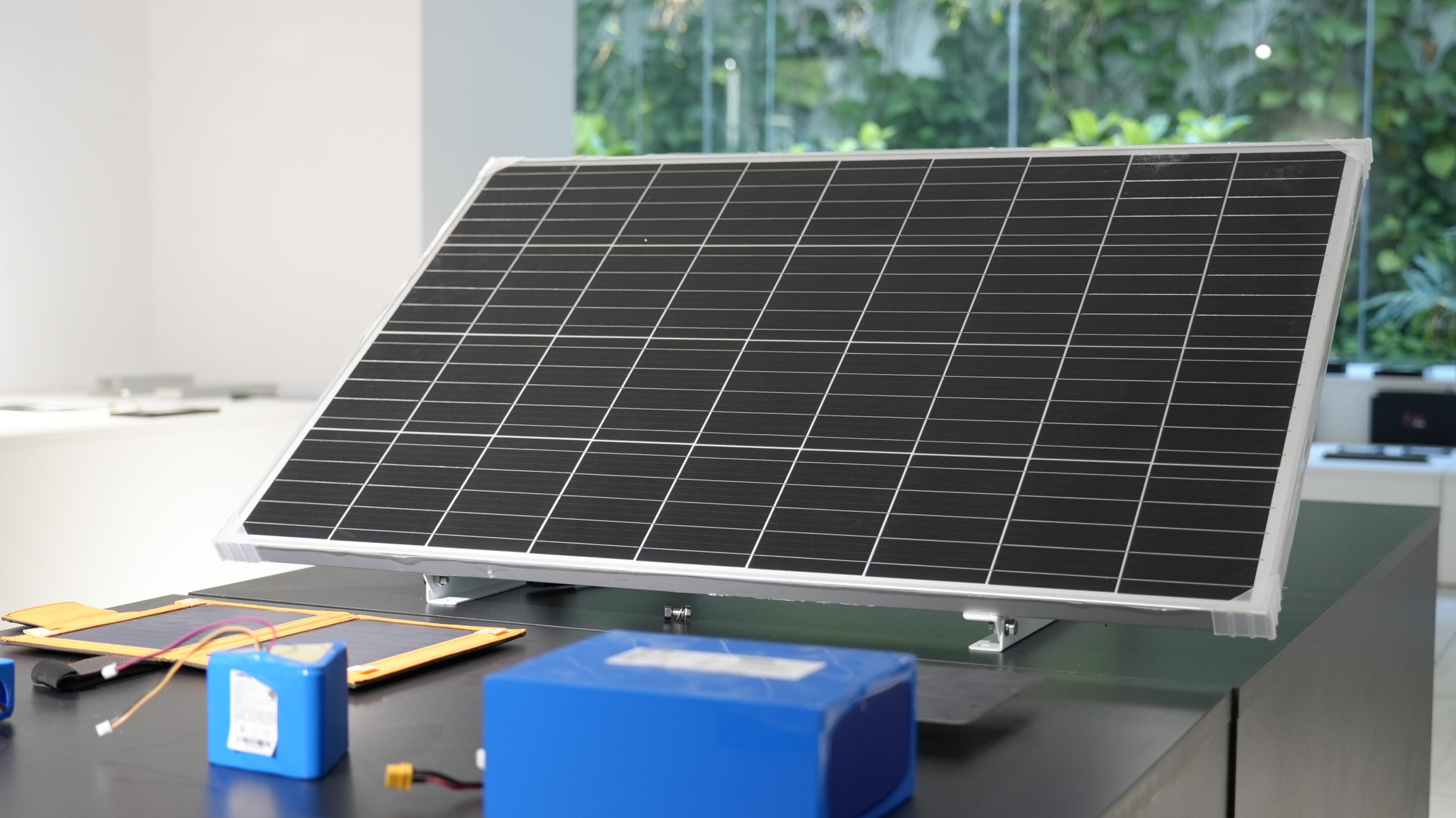
You need flexible charging options for mobile TV battery packs in off-grid environments. Lithium battery packs support AC, DC, and solar charging. AC charging uses standard wall outlets and provides fast, reliable power. DC charging connects to vehicle systems or industrial power sources. Solar charging uses photovoltaic panels, which help you operate in remote locations without grid access.
AC charging suits medical carts and security stations in buildings.
DC charging works well for robotics and infrastructure projects in vehicles or field sites.
Solar charging enables outdoor entertainment and industrial monitoring in remote areas.
Tip: Choose a charging method based on your deployment environment and runtime needs. Solar charging reduces reliance on grid power and supports sustainability goals.
4.2 Durability & Environmental Protection
You must protect lithium battery packs from moisture, dust, and temperature extremes. Robust protection ensures reliable operation in medical, robotics, security, and industrial applications. You can use outdoor IP55 cabinets, gaskets, and thermal management solutions.
Method | Description |
|---|---|
Outdoor IP55 cabinets | Provide strong protection against harsh weather, moisture, and dust. |
Gaskets and sealing | Prevent gas and liquid electrolyte escape. Block external contaminants in harsh environments. |
Thermal management | Maintain battery performance and safety by controlling heat during operation. |
You should select protection methods based on your application and environment. Thermal management prevents overheating and extends battery life. Gaskets and sealing keep contaminants out. IP55 cabinets shield battery packs from weather and dust.
Note: For more information on sustainable battery design, visit Our Approach to Sustainability.
4.3 Maintenance & Lifecycle
You must follow best practices to maximize the lifecycle of lithium battery packs. Maintenance improves reliability and reduces downtime in B2B deployments.
Maintain optimal usage temperature between 32°–95°F (0°–35°C).
Avoid extended exposure to extreme temperatures.
Store devices with a charge around 50% if not in use for an extended period.
Modular battery packs simplify maintenance. You can replace faulty modules without shutting down the system. This approach reduces maintenance costs and supports long-term reliability. You extend the lifecycle by following temperature guidelines and proper storage.
Callout: Regular maintenance and modular design help you achieve stable power supply and long-term performance in medical, robotics, security, and industrial sectors.
When you design battery packs for mobile TVs, you must focus on stable power, modularity, and safety. Follow these best practices:
Choose the right lithium cell type (LiFePO4, NMC, LCO, LMO) for your device’s power needs.
Calculate capacity in watt-hours to match required runtime.
Select voltage that fits your equipment.
Address space and housing for safety and efficiency.
For long-term reliability, use this checklist:
Evaluate supplier reliability and support.
Ensure compliance with safety standards.
Consider sustainability and recycling programs.
Monitor new battery technologies for future compatibility.
Reliable battery design supports medical, robotics, security, and industrial applications.
FAQ
What lithium battery chemistry should you choose for mobile TV packs?
Chemistry | Best For | Key Benefit |
|---|---|---|
LiFePO4 | Medical, Industrial | Long cycle life |
NMC | Robotics, Security | High energy density |
LCO | Consumer Electronics | Compact size |
LMO | Infrastructure | Good safety |
Select chemistry based on your sector’s needs.
How do you calculate the required battery capacity for a mobile TV?
You multiply the TV’s wattage by the desired runtime (in hours) to get watt-hours (Wh). For example, a 50W TV running for 6 hours needs a 300Wh battery pack.
Why is modular design important for B2B battery packs?
Modular design lets you replace faulty modules quickly. You reduce downtime and maintenance costs. You can also scale the system up or down as your energy needs change.
What safety features must you include in lithium battery packs?
You must use overcharge, overdischarge, overcurrent, and high-temperature protection. A Battery Management System (BMS) monitors and controls these features to prevent failures and ensure safe operation.
Can you use solar charging for off-grid mobile TV battery packs?
Yes, you can use solar panels to charge lithium battery packs. Solar charging supports off-grid deployments in security, infrastructure, and industrial sectors. You improve sustainability and reduce reliance on grid power.


