

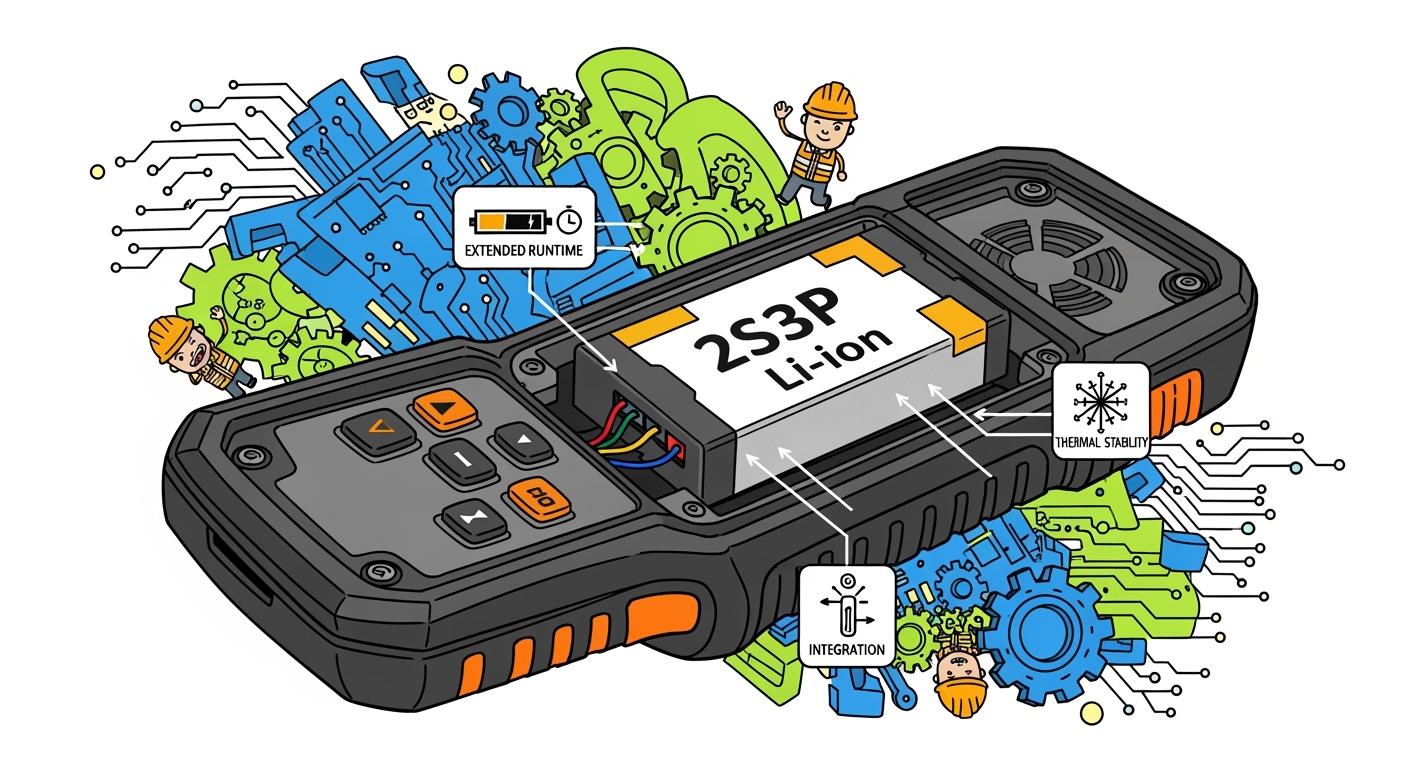
You face constant challenges with handheld industrial gear: limited runtime, overheating, and difficult battery integration. A 2S3P Li-ion battery pack helps solve these problems by improving runtime, voltage stability, and reliability in demanding industrial systems. With the right BMS and cell configuration, these packs support stable voltage, high cycle durability, and stronger resistance to deep-discharge degradation. This helps reduce waste, lower maintenance costs, and improve field efficiency.
Benefit | Description |
|---|---|
Consistent Voltage Delivery | Ensures stable energy supply, minimizing downtime in industrial equipment. |
Enhanced Operational Efficiency | Reduces charge cycles and extends service life, supporting continuous production. |
High Cycle Durability | Supports 24/7 operations with minimal maintenance, contributing to sustainability in manufacturing. |
Resistance to Deep-Discharge Degradation | Increases longevity of battery packs, reducing waste and resource consumption. |
With a properly designed 2S3P configuration, you can achieve longer battery life, lower operating costs, and safer performance for handheld industrial devices.
Key Takeaways
2S3P Li-ion batteries provide longer runtime and stable voltage, reducing downtime in industrial applications.
Following the 40-80 state of charge rule can extend battery lifespan and improve efficiency, allowing for over 800 charge cycles.
Built-in protection circuits in 2S3P packs enhance safety by preventing overcharging and short circuits, crucial for harsh environments.
Regular maintenance and inspections of battery packs ensure optimal performance and safety, reducing risks of failure.
Switching to 2S3P Li-ion batteries can lead to significant cost savings over time due to their long lifespan and low maintenance needs.
Part 1: 2S3P Li-ion Basics
1.1 Series-Parallel Structure
You often need reliable power for handheld devices in demanding fields like medical, robotics, and security. The 2S3P Li-ion battery pack uses two cells in series and three in parallel. This structure gives you a balanced combination of voltage and capacity, which is essential for industrial applications.
Here is a quick look at the typical output you get from a 2S3P pack:
Voltage | Capacity |
|---|---|
7.4V | 9000mAh |
The series connection doubles the voltage, while the parallel connection triples the capacity. This setup supports extended runtime, so your equipment can operate longer between charges. You also get stable discharge rates, which help maintain device accuracy during long inspection sessions.
If you compare different Li-ion chemistries, you see clear differences in platform voltage, energy density, and cycle life:
Chemistry | Platform Voltage | Energy Density (Wh/kg) | Cycle Life (cycles) |
|---|---|---|---|
NMC | 3.6–3.7V | 150–220 | 1000–2000 |
LCO | 3.6–3.7V | 150–200 | 500–1000 |
LiFePO4 | 3.2–3.3V | 90–120 | 2000–4000 |
LMO | 3.7V | 100–150 | 300–700 |
You can select the chemistry that matches your device’s needs for extended runtime and durability.
1.2 Key Technical Advantages
The 2S3P configuration offers several technical advantages over single-cell or other multi-cell setups:
Advantage | Description |
|---|---|
Extremely fast charging | Charges in minutes instead of hours |
Superior thermal conductivity and heat dissipation | Enhances safety and performance under load |
Potential for 2x–5x longer cycle life | Increases longevity of the battery pack |
Higher power density for burst performance | Provides better performance for high-demand applications |
Optimized voltage and capacity | Combines two cells in series for voltage and three in parallel for capacity |
You benefit from built-in protection circuits that prevent overcharging, short circuits, and overheating. These features reduce equipment failure risks and support extended runtime in harsh environments. Regular monitoring enables you to detect issues early, which improves reliability and safety.
The 2S3P structure provides balanced voltage and capacity, extending the usable life of lithium battery packs.
It ensures stable discharge rates, maintaining device accuracy during long inspection sessions.
Built-in protection circuits prevent overcharging, short circuits, and overheating, reducing equipment failure risks.
Regular monitoring enables early detection of issues, enhancing reliability.
Tip: For best results, pair your 2S3P pack with a quality Battery Management System (BMS) to maximize safety and performance.
You can count on the 2S3P structure to deliver the endurance, reliability, and operational efficiency your industrial handheld gear demands.
Part 2: Extended Runtime & Efficiency
2.1 Capacity and Runtime Gains
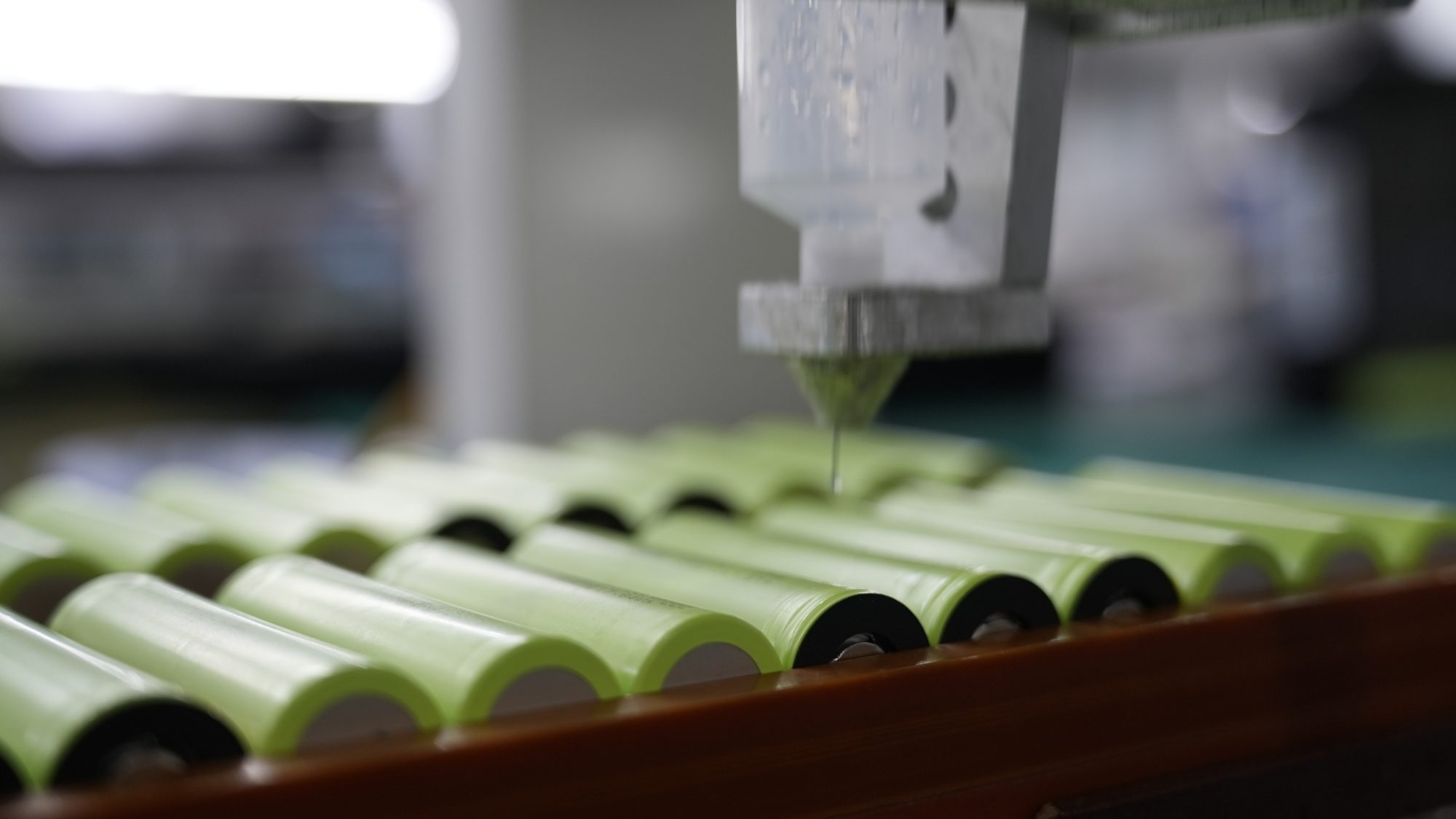
You need your handheld industrial equipment to last through long shifts and demanding tasks. The 2S3P Li-ion battery pack delivers extended runtime by combining two cells in series and three in parallel. This structure increases both voltage and capacity, which means your devices can operate longer between charges. In fields like medical diagnostics, robotics, and security, this extra runtime reduces downtime and boosts productivity.
When you use a 2S3P pack, you get a typical output of 7.4V and 9000mAh. This high capacity supports non-destructive testing (NDT) tools, portable medical scanners, and security devices that require reliable power for hours. You avoid frequent battery swaps, which keeps your workflow smooth and efficient.
To maximize battery lifespan and efficiency, you should follow the 40-80 state of charge (SoC) rule. This practice helps you get the most out of your Li-ion packs:
The 40-80 rule helps maximize the lifespan of lithium-ion batteries by keeping the state of charge between 40% and 80%.
This practice minimizes chemical stress on the cells by avoiding full charges and deep discharges.
Following this guideline can lead to an extension of the battery lifespan, potentially allowing for over 800 charge cycles.
By applying this rule, you extend the operational life of your battery packs and maintain high efficiency. This approach is especially valuable in industrial and infrastructure applications, where equipment reliability is critical.
2.2 Cell Balancing for Longevity
Cell balancing technology plays a key role in maximizing runtime and safety for your 2S3P Li-ion packs. Each cell in the pack must maintain a similar voltage to prevent overcharging or deep discharging, which can shorten battery life or cause failures. Precision cell balancing ensures that every cell works together, delivering consistent performance even under heavy loads.
Here is how cell balancing benefits your operations:
Feature | Description |
|---|---|
Stable Voltage Performance | Precision cell balancing ensures consistent 7.4V output and low internal resistance, minimizing voltage drops during peak loads to sustain performance in critical equipment. |
Comprehensive Safety Certification | Equipped with multi-protection BMS against overcharge, over-discharge, and short circuits, meeting UN38.3, IEC62133, and CE standards for global safety compliance. |
You can trust that your battery packs will meet strict safety standards and deliver reliable power in harsh environments. A quality Battery Management System (BMS) monitors each cell, balances the charge, and protects against electrical faults. This system is essential for applications in medical, robotics, and security sectors, where safety and uptime are non-negotiable.
Tip: Always pair your 2S3P Li-ion packs with a certified BMS to ensure optimal cell balancing and protection. This step helps you achieve extended runtime and long-term reliability.
By focusing on capacity, runtime, and advanced cell balancing, you future-proof your handheld industrial gear. You gain longer operational periods, fewer interruptions, and safer performance across all your critical applications.
Part 3: Thermal Stability & Safety
3.1 Heat Management in Harsh Environments
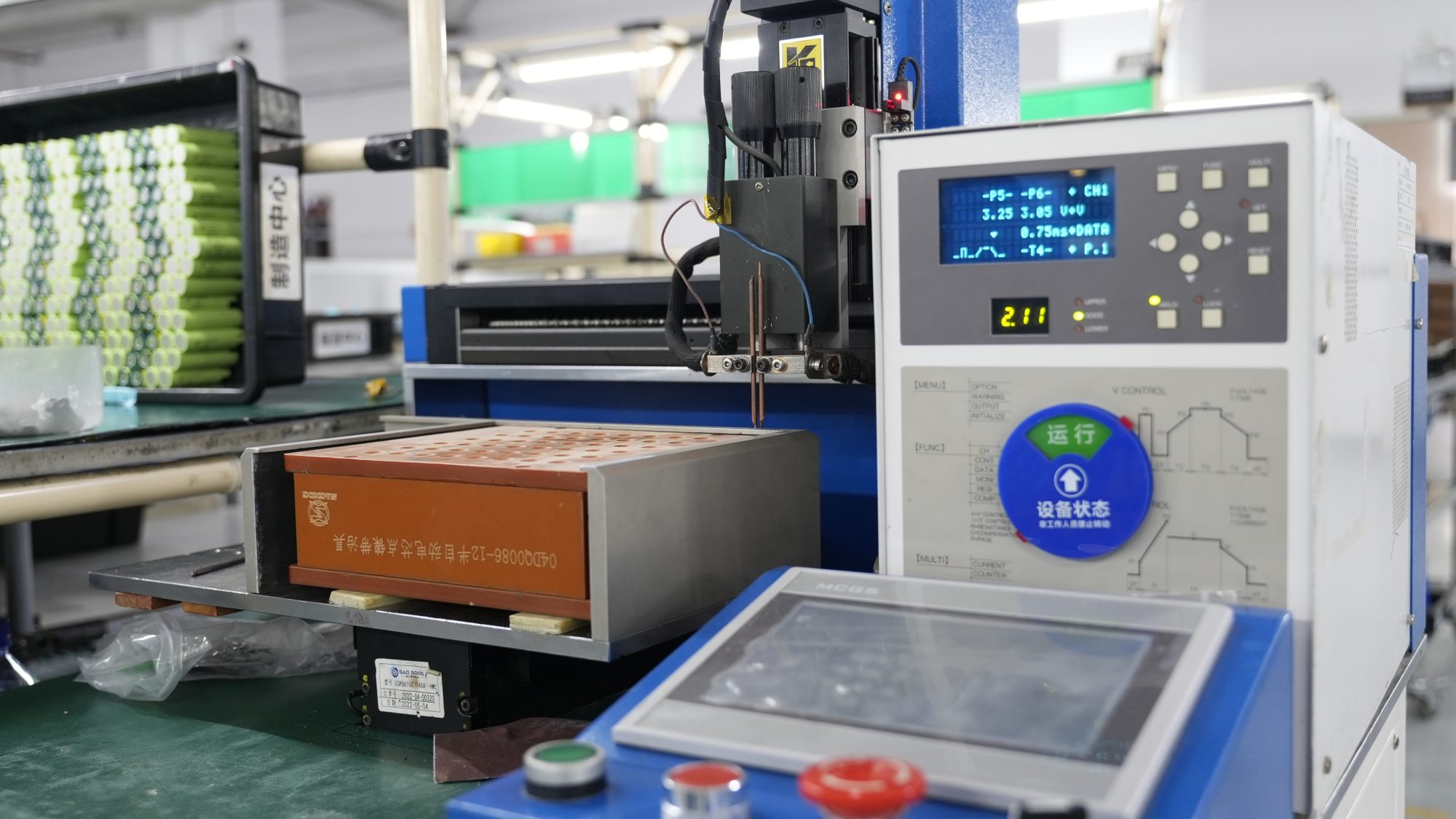
You rely on your handheld gear to perform in remote and extreme conditions. Thermal stability becomes essential for operational reliability and device protection. The 2S3P Li-ion battery pack uses advanced heat management strategies to keep your equipment safe and efficient.
Industrial environments often expose batteries to high temperatures, rapid discharge cycles, and uneven cooling. You face several thermal management challenges:
Challenge | Description |
|---|---|
Heat Dissipation | The cooling system dissipates 33.1% of internal heat through the tabs. |
Temperature Management | Under 2C discharge, the maximum temperature decreases from 40.4 °C to 30.2 °C. |
Cooling Dead Zones | Cooling dead zones can emerge between the positive and negative electrodes. |
Heat Flow Channels | The front and rear surfaces contribute 61% of the total heat flow. |
Thermal Runaway Propagation | TR can propagate along the tabs despite insulation, leading to potential chain reactions. |
Tab Cooling Efficiency | Tab cooling removes 26% of internal heat, keeping tab temperature below TR threshold. |
You see these challenges in medical diagnostic devices, robotics controllers, and security scanners. Efficient heat dissipation through the tabs and surfaces prevents overheating and protects sensitive electronics. You avoid thermal runaway, which can cause chain reactions and damage your equipment.
You also encounter extreme cold in infrastructure and outdoor applications. Lithium-ion batteries operate down to -20 °C (-4 °F), but performance drops at low temperatures. Chemical reactions slow down, reducing voltage and capacity. You can improve efficiency by keeping the battery warm, such as using a heated case or storing it close to the body. Always follow manufacturer guidelines for optimal performance and safety in these conditions.
Tip: Use a quality Battery Management System (BMS) to monitor temperature and prevent overheating. This step helps you maintain stable operation in harsh environments.
3.2 Meeting Industrial Safety Standards
You must meet strict safety standards in industrial applications. The 2S3P Li-ion battery pack integrates multiple safety features to protect your devices and operators.
Safety Feature | Description |
|---|---|
Over-discharge | Prevents the battery from discharging below a safe level. |
Overcharge | Stops charging when the battery reaches full capacity. |
Short circuit | Protects against excessive current flow that could cause damage. |
You find these features in medical equipment, robotics platforms, security devices, and infrastructure tools. The internal BMS (BMS) monitors each cell and activates protection circuits when needed. You reduce the risk of electrical faults, overheating, and device failure.
Thermal stability and safety features ensure your gear operates reliably in demanding environments. You protect your investment and maintain compliance with global standards like UN38.3, IEC62133, and CE. You also support long-term device protection and operational uptime.
Note: Always select battery packs with certified safety features and robust BMS integration. This practice helps you future-proof your handheld gear across all industrial sectors.
Part 4: Seamless Integration & Maintenance
4.1 Integration Steps for Handheld Gear
You want to integrate 2S3P Li-ion battery packs into your handheld devices for medical, robotics, security, or infrastructure applications. Follow these steps to ensure a seamless process:
Define voltage and current requirements for your device. Most packs deliver 7.4V nominal, so check your peak load needs.
Confirm if you need custom connectors, wiring, or size adjustments.
Select suppliers with documented cell sources, such as Samsung, LG, or Molicel.
Verify the inclusion of a Battery Management System (BMS) and protection features like over-voltage and short-circuit prevention.
Request a product specification sheet and compare it to advertised specs.
Order samples and conduct cycle testing to check real-world capacity.
Review contract terms, including minimum order quantity, lead time, warranty, and return policy.
Conduct a factory audit or third-party inspection for orders over 1,000 units.
Tip: Always authenticate battery packs to prevent mismatched or counterfeit cells, which can cause hazardous situations.
4.2 Maintenance Best Practices
You need to maintain your battery packs for optimal performance and safety. Use these best practices:
Inspect the battery pack monthly for physical damage, swelling, cracks, corrosion, or leakage.
Perform visual checks for discoloration or damaged wiring.
Test voltage balance between series cells monthly with a multimeter or battery analyzer.
Avoid overvoltage and undervoltage conditions to prevent internal short circuits and degradation.
Prevent overcurrent and temperature extremes to reduce overheating and degradation reactions.
Allow clearance for battery swelling and use proper enclosures.
For more on sustainability and maintenance, see [internal sustainability link].
4.3 Cost Savings Over Time
You gain significant cost advantages by switching from lead acid to 2S3P Li-ion packs. Li-ion batteries offer a lifespan of 10+ years, reducing replacement frequency and maintenance costs. See the comparison below:
Battery Type | Typical Lifespan | Maintenance Frequency | Replacement Cost (10 Years) |
|---|---|---|---|
Lead Acid | 2–3 years | Quarterly | High |
2S3P Li-ion | 10+ years | Monthly | Low |
You save on labor, downtime, and disposal costs. Li-ion packs also support sustainability goals by reducing waste and resource consumption. This advantage benefits your operations in medical, robotics, security, and industrial sectors.
Note: Implement battery control algorithms to avoid full charging and fast charging. This strategy extends battery longevity and enhances safety.
You see how 2S3P Li-ion batteries address the main challenges in handheld industrial gear. These packs deliver longer runtime, stable thermal performance, and easy integration. You benefit from:
Sufficient voltage (7.4V) and increased capacity for longer operation between charges.
Reliable power for NDT equipment, robotics, and medical devices, reducing downtime.
Built-in protection circuits that prevent overcharge and support safe use in tough environments.
Strong resistance to high discharge currents and mechanical stress in field maintenance.
You can future-proof your equipment by evaluating your current battery systems and following best practices. Choose lithium-ion packs for their durability, fast charging, and temperature resilience. Regular inspections, proper installation, and routine maintenance help you maximize safety and operational life.
FAQ
What does 2S3P mean in Li-ion battery packs?
A 2S3P Li-ion battery pack uses two cells in series and three cells in parallel. This configuration can deliver higher voltage and longer runtime for handheld industrial devices, depending on the selected cell capacity and chemistry.
How do 2S3P Li-ion packs improve safety in harsh environments?
You benefit from protection circuits and a Battery Management System (BMS) that helps prevent overcharge, over-discharge, short circuits, and temperature risks. These features improve reliability in industrial systems and field inspection equipment.
Which Li-ion chemistries work best for 2S3P packs?
You can choose NMC, LCO, LiFePO4, or LMO. NMC offers 3.6–3.7V, 150–220 Wh/kg, and 1000–2000 cycles. LiFePO4 gives you 3.2–3.3V, 90–120 Wh/kg, and 2000–4000 cycles. Select based on your device’s needs.
How do you extend the lifespan of your 2S3P Li-ion battery pack?
You can extend lifespan by avoiding deep discharge, using approved chargers, storing packs at moderate temperatures, and keeping charge levels within the recommended range. A well-designed BMS also helps protect cells and improve long-term battery reliability.
Can you use 2S3P Li-ion packs in cold or hot conditions?
Yes, but performance depends on cell chemistry, enclosure design, and temperature control. For extreme environments, consider low temperature battery options and BMS temperature monitoring to maintain safer operation. Need a 2S3P pack for industrial inspection equipment? Contact Large Power to discuss voltage, capacity, runtime, and safety requirements.


