

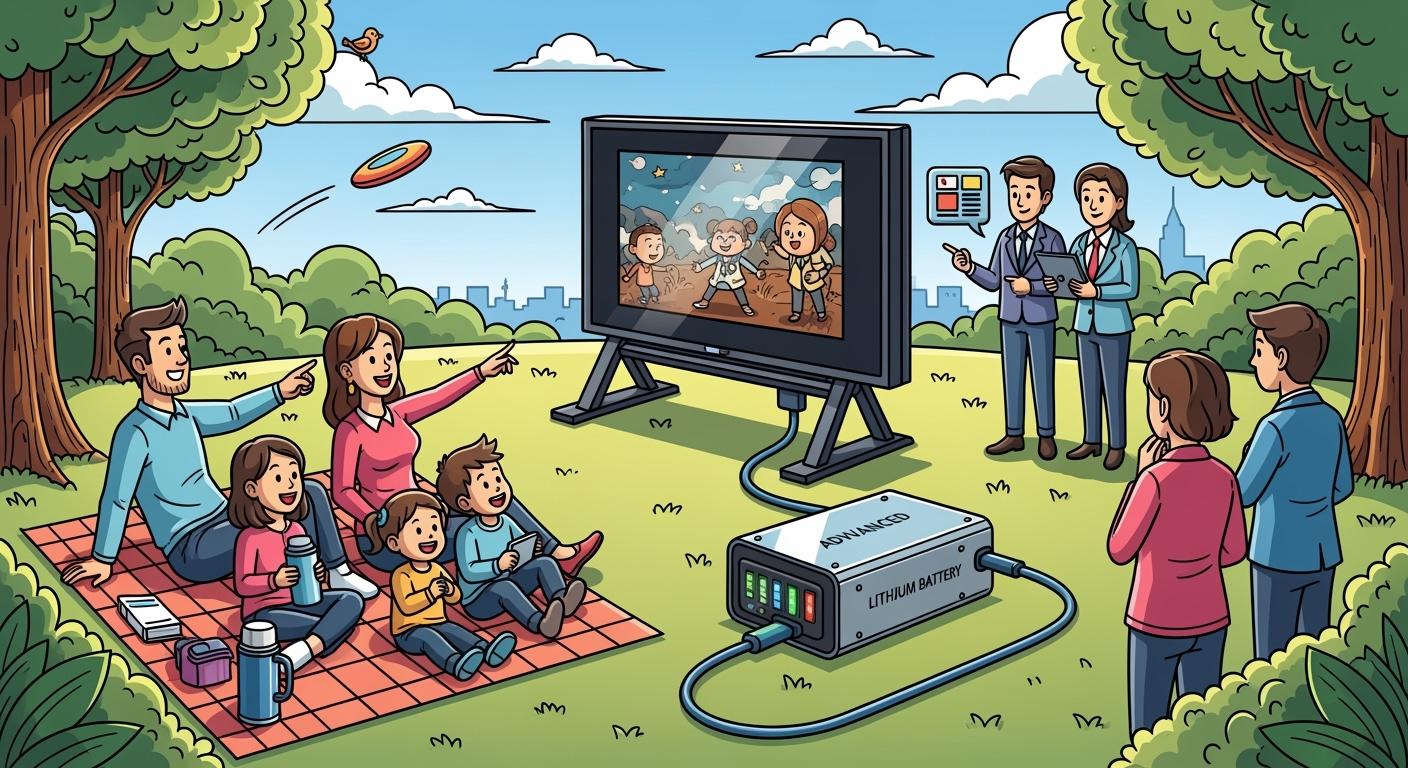
You need a power solution that delivers reliability, safety, and long runtime for outdoor mobile TV systems. High-Efficiency Lithium Battery Packs offer portability and performance. LiFePO4 lithium batteries excel in safety and longevity, with cycle life exceeding 5000 cycles and minimal risk of overheating. Traditional NMC lithium batteries provide higher energy density but face faster capacity loss and greater fire risk. Use the 80/20 rule—avoid full discharges—to extend battery life. Temperature sensitivity affects performance, so store batteries properly for optimal results.
Key Takeaways
High-Efficiency Lithium Battery Packs offer portability and high energy density, making them ideal for outdoor mobile TV systems.
Follow the 80/20 rule to extend battery life by keeping charge levels between 20% and 80%.
Choose a battery pack that matches your power needs, ensuring it has a continuous output rating above your TV’s wattage.
LiFePO4 Lithium batteries provide superior safety and longevity, with cycle life exceeding 3,000 cycles.
Store batteries in a cool, dry place to maintain performance and reliability during outdoor events.
Part1: Benefits of High-Efficiency Lithium Battery Packs
1.1 Portability
You need portable power for outdoor mobile TV systems. High-Efficiency Lithium Battery Packs offer a clear advantage because they store more energy in a lighter package. For example, lithium-ion batteries can reach up to 250 Wh/kg, while alkaline batteries provide only about 100 Wh/kg. This means you can carry less weight and still power your equipment for longer periods.
Battery Type | Energy Density (Wh/kg) |
|---|---|
Lithium-ion | Up to 250 |
Alkaline | Around 100 |
You will also notice that lithium battery packs are more compact than other types. Lead-acid batteries often weigh twice as much for the same capacity, making them less practical for mobile use.
1.2 Long Runtime
You want your outdoor TV system to run through an entire event without interruption. High-Efficiency Lithium Battery Packs deliver extended runtime because of their high energy density and efficient discharge rates. LiFePO4 Lithium batteries, for example, maintain stable voltage and provide consistent power output, which helps you avoid sudden shutdowns. You can maximize runtime by following the 80/20 rule—avoid fully discharging the battery to extend its lifespan.
1.3 Reliability
You depend on reliable power, especially in outdoor environments where weather can change quickly.
Tip: Store your battery packs in a cool, dry place to maintain performance and reliability.
1.4 Safety Features
You must consider safety when using batteries outdoors. Common incidents include thermal runaway, improper charging, and physical damage. Manufacturers have improved safety by using certified batteries, strict quality control, and advanced Battery Management Systems (BMS). These systems monitor temperature and prevent charging below 0°C (32°F), reducing risks.
High-Efficiency Lithium Battery Packs combine portability, long runtime, reliability, and advanced safety features, making them the best choice for outdoor mobile TV systems.
Part2: Comparing Lithium Battery Packs for Outdoor TV
2.1 Top Brands Overview
You have many choices when selecting a battery pack for outdoor mobile TV systems. Each brand offers unique features that suit different business needs.
Tip: Choose a brand that matches your event size and runtime requirements.
2.2 Key Specifications
You need to understand the technical details before making a decision. Battery capacity, output power, battery chemistry, cycle life, and weight are critical factors. LiFePO4 Lithium battery packs offer 3,000 to 8,000 charge cycles. NMC Lithium batteries provide higher energy density but shorter cycle life. The table below shows the main specifications for top models:
Capacity (Wh) | AC Continuous Output (W) | AC Surge Output (W) | Battery Type | Life Cycles (to 80%+) | Weight (kg) | Dimensions (L x W x H) (cm) | Max AC Input (Recharge) (W) | Max Solar Input (W) | Expandable |
|---|---|---|---|---|---|---|---|---|---|
2,016 | 2,400 | 4,600 | NMC Lithium battery | 800 | 22 | 49.7 x 24.2 x 30.5 | 2,000 | 800 | Yes |
512 | 500 | 1,000 | LiFePO4 Lithium battery | 3,000+ | 6.1 | 27 x 26 x 19.6 | 660 | 220 | No |
1,002 | 1,000 | 2,000 | NMC Lithium battery | 500+ | 10 | 33.3 x 23.3 x 28.3 | N/A | 163 | No |
500 | 300 | 450 | N/A | N/A | 6.21 | 29.5 x 19.1 x 19.6 | N/A | 120 | No |
2,048 | 2,400 | N/A | LiFePO4 Lithium battery | 3,000+ | 28.3 | 42 x 28 x 36.65 | 2,400 | 1,200 | Yes |
720 | 600 | 1,200 | Lithium-ion battery | 500+ | 7.6 | 28.9 x 23.5 x 18.0 | 660 | 200 | Yes |
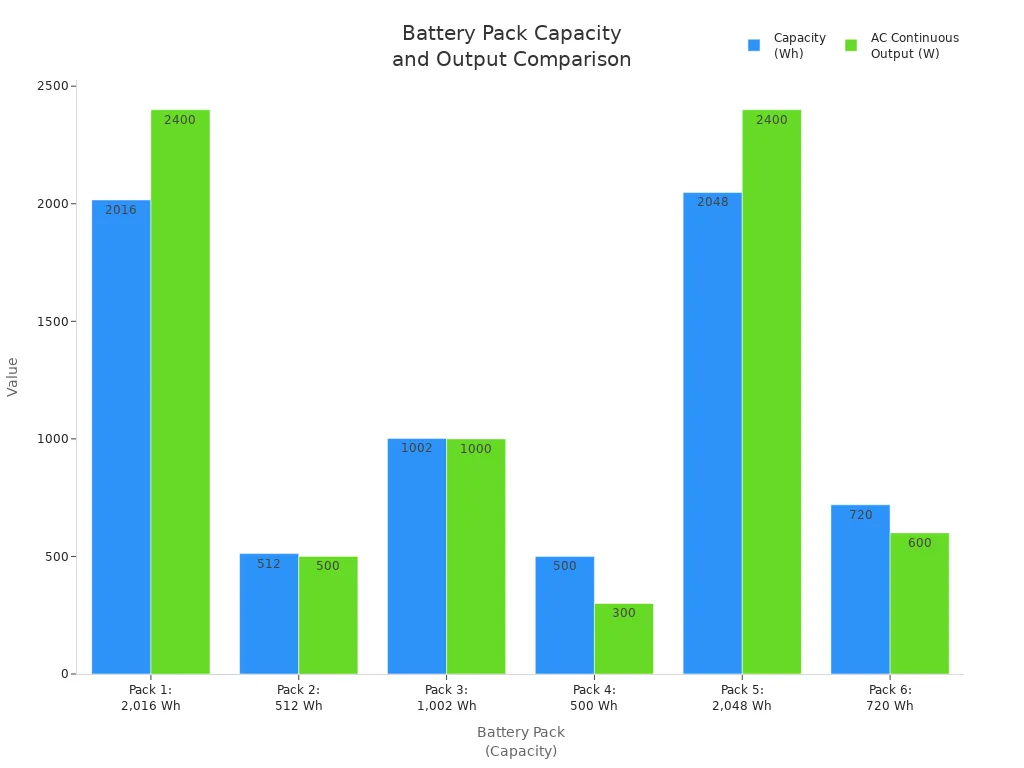
Note: LiFePO4 Lithium battery packs deliver longer cycle life and greater safety. NMC Lithium batteries offer higher energy density but shorter lifespan.
2.3 Pros and Cons
You must weigh the advantages and disadvantages of each battery chemistry and model. LiFePO4 Lithium battery packs provide excellent longevity and safety. NMC Lithium batteries deliver more energy in a smaller package but degrade faster. Consider the following points:
Pros:
LiFePO4 Lithium battery packs last 3,000 to 8,000 cycles.
NMC Lithium batteries offer high energy density for lighter weight.
Most models include multiple output options for flexibility.
Expandable systems support larger events.
Cons:
Lithium-ion batteries are sensitive to extreme temperatures.
Excessive heat above 113°F causes faster degradation.
Cold temperatures below 32°F reduce charge capacity.
NMC Lithium batteries have shorter cycle life (500–800 cycles).
Temperature Condition | Effect on Lifespan |
|---|---|
Above 130°F | Increases voltage temporarily but causes long-term damage, reducing lifespan significantly |
Consistently at 100°F | Can lead to a loss of up to 30% of lifespan |
Above 113°F | Causes faster degradation of battery performance |
Alert: Always store battery packs in moderate temperatures to maximize lifespan.
Part3: Choosing the Right Battery Pack
3.1 Power Needs
You must calculate your power requirements before selecting a battery pack for your outdoor mobile TV system. Start by checking the label on your TV for voltage and amperage. Multiply these values to find the wattage. Next, estimate the total watt-hours needed by multiplying the wattage by the number of hours you plan to run the TV. Add a 20% buffer to ensure you have enough power for unexpected demands.
Identify your TV’s power consumption using the label.
Calculate watt-hours: TV wattage × hours of use.
Add a 20% buffer for safety and reliability.
Choose a battery pack with a continuous output rating above your TV’s wattage.
Confirm the battery pack provides pure sine wave output for optimal TV performance.
Tip: Avoid confusing peak output ratings with continuous output. Continuous output ensures stable operation for the duration of your event.
3.2 Mobility
You need a battery pack that balances portability and power. If you plan to move your setup frequently or cover large outdoor areas, select a lightweight model with a compact design. LiFePO4 Lithium battery packs offer high energy density and extended cycle life, making them ideal for mobile applications. NMC Lithium batteries provide lighter weight but shorter lifespan. Consider the distance you will transport your equipment and the frequency of movement.
Battery Chemistry | Energy Density (Wh/kg) | Typical Weight (kg) | Cycle Life (to 80%+) |
|---|---|---|---|
LiFePO4 Lithium battery | 120-160 | 6-28 | 3,000+ |
NMC Lithium battery | 200-250 | 10-22 | 500-800 |
Note: LiFePO4 Lithium battery packs deliver greater longevity and safety for frequent outdoor use.
3.3 Compatibility
You must ensure your battery pack matches your TV and other devices. Check the voltage and connector types. Confirm that the battery pack supports pure sine wave AC output, which prevents interference and protects sensitive electronics. Review the output ports and verify compatibility with your TV’s power requirements. Battery Management Systems (BMS) play a crucial role in safety and performance. BMS monitors temperature, voltage, and charging cycles, reducing risks and extending battery life.
Alert: Always use compatible chargers and cables to prevent damage and ensure efficient charging.
3.4 Cost and ROI
You must evaluate the cost and return on investment when choosing High-Efficiency Lithium Battery Packs. The average price is about $108 per kilowatt-hour, reflecting an 8% decrease since 2024. For commercial users, investing in a reliable battery pack reduces downtime and maintenance costs. You gain longer cycle life and safer operation, especially with LiFePO4 Lithium battery packs.
Lower upfront costs due to recent price reductions.
Extended cycle life means fewer replacements and lower long-term expenses.
Enhanced safety features protect your equipment and staff.
Tip: Calculate your ROI by comparing the initial cost with the expected lifespan and maintenance savings.
Practical Maintenance Tips
You can optimize battery life and performance by following proven strategies:
Strategy | Description |
|---|---|
Load Management | Charge essential devices first and stagger high-wattage use to extend runtime. |
Avoid Over-Discharging | Recharge batteries before they reach 0% to preserve chemistry and longevity. |
Store at Mid-Level | Keep batteries at mid-level charge when not in use to prevent cell stress. |
Allow Cool-Down Before Charging | Let batteries cool for 20-30 minutes after heavy use before recharging. |
Use Compatible Chargers | Utilize official chargers for safe and efficient charging. |
Perform Occasional Full Cycles | Run full discharge/recharge cycles periodically for accurate battery level reporting. |
Optimal Panel Placement | Position solar panels for maximum sunlight and keep them clean. |
Charge During the Right Hours | Charge during cooler hours to enhance efficiency and safety. |
Avoid Simultaneous Heavy Loads | Minimize heavy loads while charging to maximize energy storage efficiency. |
The 80/20 Rule for Battery Longevity
You can extend battery life by operating within the 20-80% charge range. This practice reduces voltage stress and heat generation, preserving internal components and maximizing cycle life.
Aspect | Explanation |
|---|---|
Voltage Stress | High voltage at 100% accelerates chemical reactions that degrade capacity. |
Deep Discharge | Draining to 0% risks permanent damage and reduces lifespan. |
Sweet Spot | Operating between 20-80% uses shallow discharge cycles, minimizing wear. |
Heat Generation | Charging near full capacity increases heat; stopping at 80% minimizes thermal stress. |
Cycle Life | Staying within 20-80% drastically reduces chemical stress on cells. |
Efficiency | Fast charging to 80% improves time management and reduces heat generation. |
Tip: Use the 80/20 rule to maximize battery longevity and maintain consistent performance for your outdoor mobile TV system.
You can select the right battery pack by assessing your power needs, mobility requirements, compatibility, and cost. High-Efficiency Lithium Battery Packs deliver reliable performance, safety, and long-term value for entertainment and commercial applications.
Part4: Application Scenarios

4.1 Entertainment Events
You can transform any outdoor space into a vibrant entertainment zone with portable TV systems powered by lithium battery packs. Families and outdoor enthusiasts often set up open-air movie nights at parks, beaches, or campgrounds. You can stream live sports events during tailgates or community gatherings. Antenna-enabled portable TVs let you access free-to-air channels, which is ideal for travelers and digital nomads who want to stay connected in remote locations. These battery packs deliver silent operation, so you avoid noise pollution and maintain a pleasant atmosphere. You also benefit from long runtimes, which means your event can last through the evening without interruption.
Tip: Use LiFePO4 Lithium battery packs for stable voltage and consistent performance during long movie marathons or sports viewings.
4.2 Commercial Use
You can rely on lithium battery packs for a wide range of commercial applications. Trade shows and outdoor advertising events often require mobile displays that run for hours without access to grid power. Hospitality businesses use portable TVs to enhance guest experiences at outdoor lounges or poolside areas. In the medical sector, you may need to power mobile diagnostic equipment or patient monitoring systems during field operations. Robotics and security companies use battery-powered systems for surveillance and remote monitoring in infrastructure projects, such as transportation hubs or construction sites. These battery packs offer high energy density and long cycle life, which reduces downtime and maintenance costs.
Sector | Application Example |
|---|---|
Trade Shows | Mobile digital signage |
Hospitality | Outdoor guest entertainment |
Medical | Portable diagnostic equipment |
Security | Surveillance and monitoring |
Infrastructure | Transportation display systems |
Robotics | Autonomous service robots |
4.3 Emergency Setups
You can depend on lithium battery packs during emergencies when grid power is unavailable. During power outages or natural disasters, portable TVs provide real-time updates and emergency broadcasts, which are essential for safety. Emergency response teams use these battery packs to power communication devices and lighting at temporary shelters. Industrial sites may require backup power for critical monitoring systems. You can also use these packs to support consumer electronics, such as radios and charging stations, ensuring that essential information and connectivity remain available.
You should select High-Efficiency Lithium Battery Packs for outdoor mobile TV systems based on weight, charging speed, cycle life, and safety certifications. LiFePO4 Lithium batteries offer superior safety and longevity, with cycle life up to 3,000 cycles and low risk of thermal runaway. You can extend battery lifespan by charging between 20% and 80%, avoiding deep discharges, and keeping batteries clean and dry. Evaluate your operational needs and choose reputable brands for reliable performance.
Tip: Maintain moderate temperatures and respect the Battery Management System to maximize battery efficiency.
Battery Chemistry | Cycle Life | Safety Threshold |
|---|---|---|
LiFePO4 | 2,000-3,000 | Up to 350°C |
NMC | 500-800 | ~200°C |
FAQ
What is the difference between LiFePO4 Lithium batteries and NMC Lithium batteries?
You get longer cycle life and higher safety with LiFePO4 Lithium batteries (2,000–3,000 cycles, up to 350°C). NMC Lithium batteries offer higher energy density (200–250 Wh/kg) but shorter cycle life (500–800 cycles). Choose based on your runtime and safety needs.
How do you calculate the right battery capacity for outdoor TV use?
You multiply your TV’s wattage by the number of hours needed. Add a 20% buffer for reliability. For example, a 100W TV for 5 hours needs at least 600Wh. Always check the continuous output rating.
Can you use lithium battery packs in cold or hot weather?
You can use lithium battery packs outdoors, but extreme temperatures affect performance. Charging below 32°F (0°C) or above 113°F (45°C) reduces lifespan. Store and operate batteries in moderate conditions for best results.
How do you maximize lithium battery pack lifespan?
You follow the 80/20 rule. Keep charge levels between 20% and 80%. Avoid deep discharges and overheating. Store batteries in a cool, dry place. Use official chargers for safe operation.
Are lithium battery packs safe for commercial outdoor events?
You benefit from advanced Battery Management Systems (BMS) that monitor temperature and voltage. LiFePO4 Lithium batteries offer the highest safety threshold. Always select certified packs with proper safety features for commercial use.


