

Can outdoor solar lighting really deliver reliable results in winter? If you manage commercial properties or public spaces, you know the stakes are high. Winter brings some tough obstacles:
Reduced sunlight and daylight hours
Snow buildup on panels
Freezing temperatures that drain batteries
Lower sun angles and more clouds
You might see energy production drop to just 30-50% of summer levels. Lithium battery packs play a key role in keeping your systems running. If you want strong Winter Performance, you need smart strategies and the right equipment.
Key Takeaways
Choose high-quality lithium batteries designed for cold climates. Lithium Titanate batteries perform well down to -40°C, ensuring reliable energy storage.
Select winter-ready fixtures with weatherproof construction and snow-shedding designs. This helps maintain performance during harsh winter conditions.
Adjust solar panel tilt to maximize sunlight capture. A steeper angle allows panels to collect more energy during shorter winter days.
Implement a regular maintenance routine. Check battery health monthly, clean panels, and remove snow to keep your system running efficiently.
Consider supplemental charging options for critical applications. Hybrid systems with grid power or wind turbines can ensure consistent lighting when sunlight is limited.
Part1: Winter Performance Overview
1.1 Key Winter Challenges
You face a unique set of challenges when you try to keep outdoor solar lighting systems running through winter. Shorter days mean your panels get less sunlight, and the sun sits lower in the sky. This reduces the amount of energy your system can capture. Snow and ice can pile up on panels, blocking light and cutting power generation even further. Cold temperatures don’t just make things uncomfortable—they actually slow down the chemical reactions inside your batteries, which means less energy storage and shorter run times.
Note: Research shows that cold climate losses can total millions of kilowatt-hours each year. In fact, the average loss factor for solar lights jumps from 5% in summer to 25% in winter, and in heavy snow regions, it can exceed 50%.
Here’s a quick look at the main obstacles:
Reduced sunlight hours and lower light intensity
Snow and ice accumulation on panels
Freezing temperatures affecting battery and electronics
Increased risk of moisture and condensation inside enclosures
Season | Average Loss Factor (%) |
|---|---|
Summer (May – October) | 5 |
Winter (Nov – April) | 25 |
Cold Climate Average | 20 |
Heavy Snow Regions | >50 |
1.2 Lithium Battery Impact
Lithium battery packs sit at the heart of Winter Performance for outdoor solar lighting. When temperatures drop below freezing, you’ll notice a significant reduction in battery capacity. At -20°C (-4°F), most lithium batteries retain only 70-80% of their rated capacity. Lower-grade lithium-ion batteries may even fail completely, while high-quality variants can still function, though with reduced efficiency.
Let’s compare common lithium chemistries for cold-weather use:
Battery Chemistry | Min. Operating Temp | Capacity at -20°C | Application Scenarios |
|---|---|---|---|
Lithium Iron Phosphate | -10°C | 70-80% | Infrastructure, Security, Industrial |
Lithium Titanate | -40°C | 80-90% | Medical, Robotics, Security |
You should choose battery packs designed for cold climates. For example, Lithium Titanate batteries work reliably down to -40°C, making them ideal for critical infrastructure or security lighting in extreme environments. Advanced solar lighting systems also use sealed enclosures to protect electronics from moisture and freezing, which helps maintain Winter Performance.
Part2: Equipment Selection for Winter
2.1 Winter-Ready Fixtures
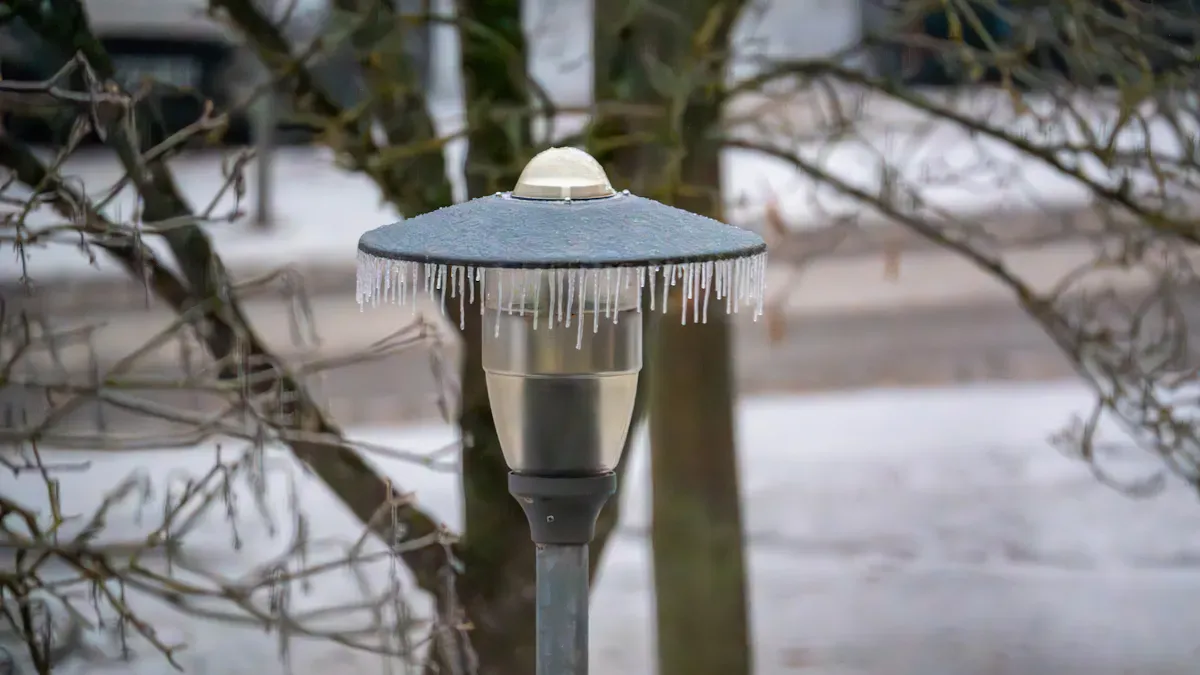
You want your outdoor solar lighting systems to stand up to harsh winter conditions. Start with fixtures that are built for the cold. Look for weatherproof housings with an IP65 rating or higher. This rating means your lights can handle snow, rain, and freezing temperatures without letting moisture inside.
Choose fixtures with snow-shedding designs. Panels that tilt or have smooth surfaces help snow slide off faster. Anti-reflective coatings also speed up melting, so your panels can keep generating power even after a storm. Efficient LED bulbs use less energy and stay bright, which is key when sunlight is limited.
Tip: High-capacity batteries and efficient LEDs work together to maximize runtime and brightness during winter months.
Here’s what you should look for in winter-ready fixtures:
Weatherproof construction (IP65 or higher)
Snow-shedding panel designs
Anti-reflective coatings for faster snow melt
Efficient LED bulbs for maximum brightness with minimal power
2.2 Cold-Proof Lithium Batteries
Lithium battery packs drive Winter Performance. Not all lithium batteries perform the same in cold weather. You need cold-proof batteries with advanced Battery Management Systems (BMS) that protect them from charging damage at low temperatures.
Let’s compare the main lithium battery types for winter use:
Battery Type | Min. Operating Temp | Capacity at -20°C | Application Scenarios | BMS Features |
|---|---|---|---|---|
LiFePO4 (Lithium Iron Phosphate) | -10°C | 70-80% | Infrastructure, Security, Industrial | Low-temp charging protection |
NMC (Nickel Manganese Cobalt) | -20°C | 60-70% | Medical, Robotics, Security | Advanced BMS |
LCO (Lithium Cobalt Oxide) | 0°C | 50-60% | Consumer Electronics | Standard BMS |
LMO (Lithium Manganese Oxide) | -10°C | 60-70% | Industrial, Security | Enhanced BMS |
You see that LiFePO4 batteries retain 70-80% of their rated capacity at -20°C (4°F), while standard lithium batteries may drop to 50% or lower. Cold-proof batteries often include advanced BMS features that prevent charging at low temperatures, which protects them from damage and extends their lifespan. LiFePO4 batteries are recommended as the best choice for cold climates due to their superior performance.
If you operate in winter temperatures between -10°C and 0°C, consider using 18650 ternary lithium batteries. These batteries can boost runtime by 30%–50% and improve capacity retention by 15%–25%. High-capacity batteries also help store more energy for longer nights.
2.3 High-Efficiency Solar Panels
Solar panels need to work harder in winter. You should select panels with high efficiency ratings and snow-shedding features. Snow accumulation blocks sunlight and cuts power generation. Panels with anti-reflective coatings melt snow faster, so your system can keep producing energy.
Look for panels with:
Efficiency ratings above 20%
Anti-reflective coatings for improved snow melt
Snow-shedding designs to reduce buildup
Durable construction for cold climates
High-efficiency panels paired with cold-proof lithium batteries deliver reliable Winter Performance. Weatherproof fixtures and efficient LEDs complete the package. You get a system that stays bright, even when sunlight is scarce.
Note: Efficient panels and batteries are the backbone of winter-ready solar lighting. They help you maintain strong Winter Performance and reduce downtime.
Part3: Installation and Positioning
3.1 Optimal Panel Tilt
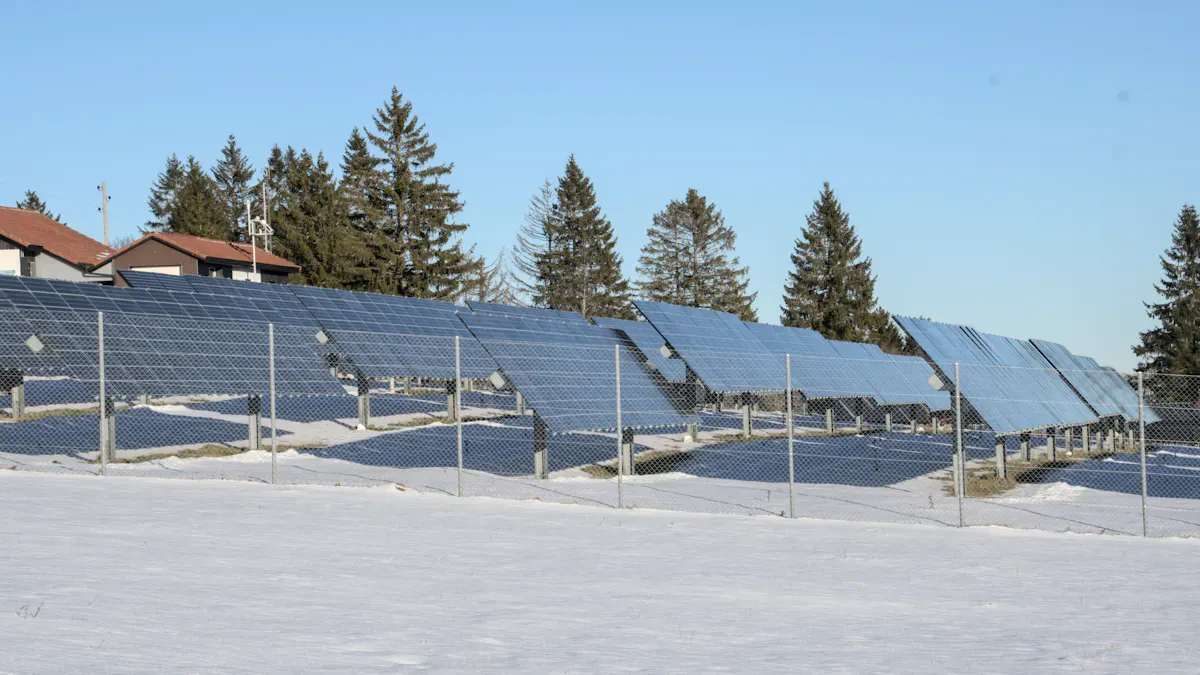
You can boost energy capture in winter by adjusting your solar panel tilt. In northern climates, the sun sits much lower in the sky during winter. A steeper tilt angle helps your panels face the sun directly, which means more sunlight hits the surface. When you set your panels at the optimal winter angle, you can capture 81 to 88 percent of the energy compared to systems with sun-tracking technology. This adjustment makes a big difference for Winter Performance, especially when daylight hours are short.
Tip: Review your installation each fall and adjust the tilt to match the lower sun angle. This simple step can help you get the most out of your solar lighting system.
3.2 Sunlight Maximization
You want every ray of sunlight to count. Start by positioning your panels to face south. This direction gives you the best exposure throughout the day. Adjusting the tilt angle during winter increases your daily energy yield. Fixed panels at the right angle can outperform those left at a summer setting. Here’s what you gain:
Increased energy yield with proper tilt adjustment
Up to 88% of maximum possible energy, even without tracking systems
Better performance than spring, summer, or autumn settings
Keep your panels clean. Snow, frost, or even a thin layer of dust can block sunlight and reduce output. Make it a habit to check and clear your panels after storms or heavy snowfall.
3.3 Secure Mounting
Winter storms can test your installation. You need strong, secure mounting to keep your system running. Use heavy-duty brackets and hardware rated for outdoor use. Make sure all fixtures are tightly fastened to withstand wind and snow loads. Install your lights in a south-facing direction for maximum sunlight. Choose lithium battery packs designed for cold climates, as they hold more charge and last longer than lead-acid options.
Here’s a quick checklist for secure mounting:
Use weather-resistant brackets and hardware
Tighten all connections before winter starts
Inspect mounts after major storms
Avoid low-quality batteries that lose capacity in cold weather
A solid installation helps your solar lighting system deliver reliable results all winter long.
Part4: Maintenance for Winter Performance
Keeping your outdoor solar lighting systems in top shape during winter takes a proactive approach. You want to make sure snow, ice, and dirt do not block your panels or drain your lithium battery packs. Here’s how you can keep your system running strong all season.
4.1 Snow and Ice Removal
Snow and ice can pile up quickly, especially in heavy snowfall regions. You should check your panels after every storm. If snow is light, let it melt or slide off naturally. For heavier buildup, try these safe removal methods:
Use a roof rake with a soft rubber head to gently clear snow.
Blow warm air at your solar panels to speed up melting, but set up carefully.
Spray panels with a hose only if temperatures stay above freezing.
For small amounts, toss a Nerf ball to dislodge snow (works for light snow, not professionally tested).
If your panels sit at a shallow angle, snow may not slide off easily. Regular checks help you spot problems early and keep your system efficient.
Tip: In critical applications like security or infrastructure, remove snow if it stays for several days.
4.2 Panel Cleaning
Dirt and grime can cut your energy output by up to 25%. Regular cleaning restores efficiency and keeps your lights bright. Use soft tools like a snow rake with a non-abrasive head. Avoid brooms or shovels, which can scratch the glass. Wait for natural melting if snowfall is light. Always put safety first when working on or near panels.
Impact of Cleaning on Solar Panel Efficiency | Percentage Change |
|---|---|
Energy absorption reduction due to dirt | 10-25% |
Efficiency restoration after cleaning | Up to 50% |
4.3 Battery Health Checks
Lithium battery packs need special attention in winter. Here’s a simple checklist:
Before winter, charge batteries to 60-70% capacity.
Clean all terminals and remove corrosion.
Tighten connections and check for leaks.
Test voltage and actual capacity.
Each month, check voltage and recharge if it drops below 50%.
Inspect for corrosion, leaks, or swelling.
Monitor storage room temperature.
Watch for warning signs like reduced brightness, shorter runtime, or failure to turn on in extreme cold. These issues often signal battery degradation. In medical, robotics, security, or industrial applications, regular checks ensure reliable Winter Performance.
Stay ahead of problems with a monthly maintenance routine. Your system will thank you with brighter, longer-lasting light.
Part5: Maximizing Battery Efficiency
5.1 Insulation Solutions
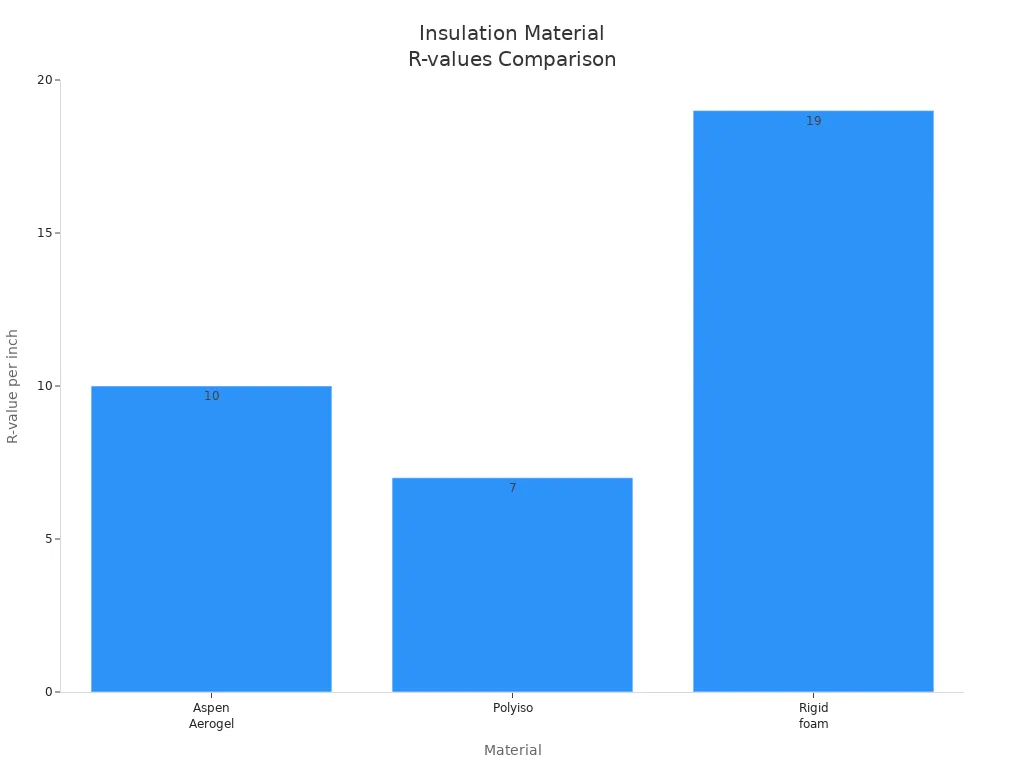
You want your lithium battery packs to stay warm and efficient during winter. Insulation makes a big difference. Rigid foam insulation stands out with an R-value of 19 per inch, making it a top choice for battery encasement in infrastructure and industrial applications. Aspen Aerogel offers high performance but costs more and needs multiple layers. Polyiso is common and works well for security and robotics installations. Rock wool and mineral wool provide fire resistance, which is important for medical and industrial setups.
Material | R-value per inch | Characteristics | Application Scenarios |
|---|---|---|---|
Aspen Aerogel | R-10 | Expensive, requires multiple layers for effective insulation. | Medical, Robotics |
Polyiso | R-7 | Commonly available, used in various applications. | Security, Infrastructure |
Rigid foam | R-19 | Standard insulation material, effective for battery encasement. | Industrial, Infrastructure |
Rock wool | N/A | Fire-resistant, made from steel production slag, safe for high temperatures. | Industrial, Medical |
Mineral wool | N/A | Similar to rock wool, also fire-resistant and made from various minerals. | Industrial, Medical |
Tip: Insulated battery enclosures help maintain optimal temperature and protect against sudden cold snaps.
5.2 Smart Battery Management
Smart battery management systems (BMS) keep your lithium battery packs running smoothly in cold weather. You get advanced monitoring, self-heating functions, and active cell balancing. These features improve efficiency and extend battery life in security, robotics, and infrastructure projects. Dual thermal suppression units add extra protection. Intelligent controls in Fonroche systems monitor energy and adjust usage based on winter conditions, so your lights stay on during long nights. Advanced BMS also safeguards against voltage and thermal issues. For more details, check out our BMS technology overview.
Feature | Description | Application Scenarios |
|---|---|---|
Intelligent BMS | Advanced monitoring with LCD display | Security, Infrastructure |
Self-Heating Function | Ensures optimal performance in cold weather | Robotics, Medical |
Active Cell Balancing | Improves efficiency and longevity of the battery | Industrial, Security |
Advanced BMS Protection | Safeguards against over/under voltage and thermal issues | Infrastructure, Medical |
Dual Thermal Suppression | Two independent units in every battery for better management | Security, Industrial |
Intelligent controls monitor energy and adjust usage for Winter Performance.
Advanced battery management systems enhance efficiency and lifespan in cold climates.
Smart BMS optimizes battery performance for consistent operation in tough environments.
5.3 Charging Best Practices
Charging lithium batteries in cold weather requires careful planning. Charging slows or stops below 0°C, and battery functionality drops. You should use batteries with a low-temperature charging cut-off and consider extra capacity for cold climates. Heating elements or insulated enclosures help maintain safe temperatures. The table below shows how temperature affects charging efficiency and safety:
Temperature (°C) | Charging Efficiency | Safety Implications |
|---|---|---|
Below 0 | Dangerous due to lithium plating | Risk of short-circuiting or cell rupture |
0 to 10 | Moderate | Potential for reduced capacity |
10 to 25 | High | Optimal for battery health |
Note: Always warn clients about charging limits in winter projects. Select batteries that match your local climate for reliable operation.
Temperature impacts battery performance. Extreme cold reduces efficiency, while extreme heat speeds up degradation. You get the best results by choosing lithium battery packs designed for your environment and following best practices for charging.
Part6: Advanced Tips for Winter Reliability
6.1 Waterproofing Components
You want your outdoor solar lighting systems to survive harsh winter weather. Waterproofing is essential. Start by choosing enclosures with at least an IP65 rating. This rating keeps out snow, rain, and ice. Seal all cable entry points with weatherproof grommets. Use silicone sealant around joints and seams. For lithium battery packs, select models with sealed casings. This protects sensitive electronics from moisture and condensation. In industrial or infrastructure projects, you might add desiccant packs inside enclosures to absorb any stray moisture.
Tip: Regularly inspect seals and gaskets before winter. Replace any worn parts to prevent leaks.
6.2 Supplemental Charging Options
Sometimes, sunlight just isn’t enough. You can add supplemental charging options to keep your systems running. For critical applications like security or medical lighting, consider hybrid systems. These combine solar panels with grid power or small wind turbines. Portable battery packs offer a backup for robotics or industrial sites. Here’s a quick comparison:
Charging Option | Application Scenarios | Pros | Cons |
|---|---|---|---|
Grid-tied backup | Security, Medical, Infrastructure | Reliable, always available | Higher installation cost |
Wind turbine hybrid | Industrial, Infrastructure | Works in cloudy/snowy weather | Needs steady wind |
Portable battery packs | Robotics, Security, Industrial | Flexible, easy to deploy | Limited capacity |
You can schedule supplemental charging during low-sun periods. This helps maintain battery health and ensures consistent lighting.
6.3 Seasonal Storage Strategies
If you need to store your solar lighting systems during the off-season, proper storage protects your investment. Always charge lithium battery packs to about 60-70% before storage. Store them in a dry, temperature-controlled room. Avoid freezing temperatures. For medical or robotics applications, use battery management systems that monitor voltage during storage. Check battery voltage monthly and recharge if it drops below 50%. Label all stored units with the last charge date.
Note: Good storage practices extend battery life and support strong Winter Performance when you redeploy your systems.
You can keep your outdoor solar lighting systems reliable all winter by waterproofing components, adding backup charging, and following smart storage strategies.
You can boost Winter Performance by focusing on three key areas. First, choose high-quality lithium battery packs built for cold climates. Next, select winter-ready fixtures and efficient solar panels. Finally, set up a regular maintenance routine. Check your batteries, clean your panels, and remove snow after storms. When you follow these steps, your outdoor solar lighting systems stay reliable and cost-effective. Keep evaluating your setup as winter conditions change.
FAQ
Can lithium battery packs operate reliably in freezing temperatures?
You can use low-temperature lithium battery packs designed for cold climates. Low-temperature LiFePO4 batteries perform well at -40°C.
How often should you check battery health during winter?
You should check battery health monthly. Look for voltage drops, corrosion, or swelling. Regular checks help you avoid downtime in security, industrial, or infrastructure projects.
What is the best way to insulate lithium battery packs?
You can use rigid foam insulation for battery enclosures. It offers high R-value and protects against sudden cold snaps. Polyiso works well for security and robotics. See the table below.
Material | R-value per inch | Application Scenarios |
|---|---|---|
Rigid foam | 19 | Industrial, Infrastructure |
Polyiso | 7 | Security, Robotics |
Do you need supplemental charging for solar lighting in winter?
You might need supplemental charging in regions with low sunlight. Hybrid systems with grid backup or wind turbines keep your lights running for medical, security, or industrial applications.
How can you maximize lithium battery efficiency in winter?
You can use smart battery management systems. Features like self-heating and active cell balancing improve efficiency.


