

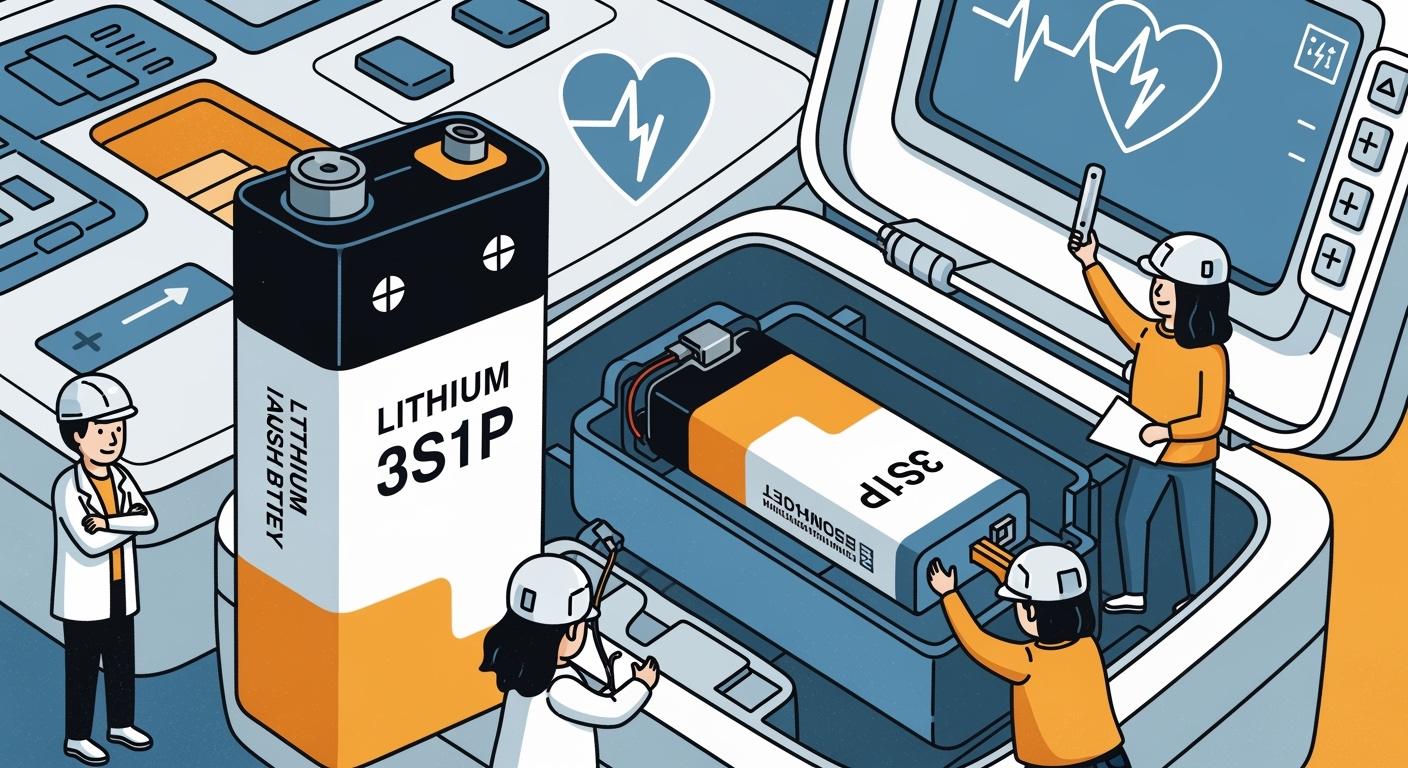
You rely on 3S1P lithium battery solutions to power automated external defibrillators in critical moments. This configuration connects three cells in series and one in parallel, delivering stable voltage and high energy output. You benefit from rapid response, long service life, and advanced safety features that help ensure emergency readiness.
Key Takeaways
3S1P lithium battery packs provide stable voltage and high energy output, ensuring AEDs are ready for emergencies.
Regularly check battery status indicators and expiration dates to maintain optimal performance of your AEDs.
Choose the right lithium chemistry for your AEDs to enhance reliability, safety, and efficiency in critical situations.
Part1: 3S1P Lithium Battery Solutions Overview
1.1 Configuration and Voltage Output
You need a battery pack that delivers both reliability and performance for automated external defibrillators. The 3S1P configuration connects three lithium cells in series and one in parallel. This structure increases the total voltage output while maintaining a compact form factor. In a 3S1P pack, each cell typically provides a nominal voltage of 3.7V. By connecting three cells in series, you achieve a combined output of 11.1V, which matches the standard requirement for most AEDs.
The 3S1P configuration ensures that your AED receives a stable and sufficient voltage, even during high-drain scenarios.
Here is a quick reference for the voltage output:
You can select from various lithium battery chemistries for your 3S1P packs. The most common options include NMC (Nickel Manganese Cobalt Oxide), LCO (Lithium Cobalt Oxide), LiFePO4 (Lithium Iron Phosphate), LMO (Lithium Manganese Oxide), and LTO (Lithium Titanate Oxide). Each chemistry offers unique advantages in terms of platform voltage, energy density, and cycle life. The table below summarizes these characteristics:
Chemistry | Platform Voltage | Energy Density (Wh/kg) | Cycle Life (cycles) |
|---|---|---|---|
NMC | 3.7V | 160-270 | 1000-2000 |
LCO | 3.7V | 180-230 | 500-1000 |
LiFePO4 | 3.2V | 100-180 | 2000-5000 |
LMO | 3.7V | 120-170 | 300-700 |
LTO | 2.4V | 60-90 | 10000-20000 |
When you choose Lithium Battery Solutions with the right chemistry, you ensure your AEDs operate efficiently and reliably.
1.2 Performance and Safety Features
You expect your AEDs to perform flawlessly in emergencies. Lithium Battery Solutions in a 3S1P configuration deliver high energy output and rapid discharge capability, which are critical for life-saving interventions. These packs maintain consistent power delivery, even after long periods of storage.
Safety remains a top priority. Modern 3S1P lithium battery packs integrate advanced protection mechanisms, including:
Overcharge and over-discharge protection
Short-circuit prevention
Temperature monitoring
Cell balancing
Most packs include a Battery Management System (BMS) to monitor and control these safety features.
You benefit from a typical lifespan of 3 to 5 years for these battery packs, depending on usage patterns and storage conditions. This extended service life reduces maintenance frequency and lowers total cost of ownership for your medical devices.
Tip: Regularly check the battery status indicators on your AEDs to ensure optimal emergency readiness.
By selecting Lithium Battery Solutions with robust safety features and proven performance, you provide reliable power for critical medical applications.
Part2: Benefits and Selection for AEDs
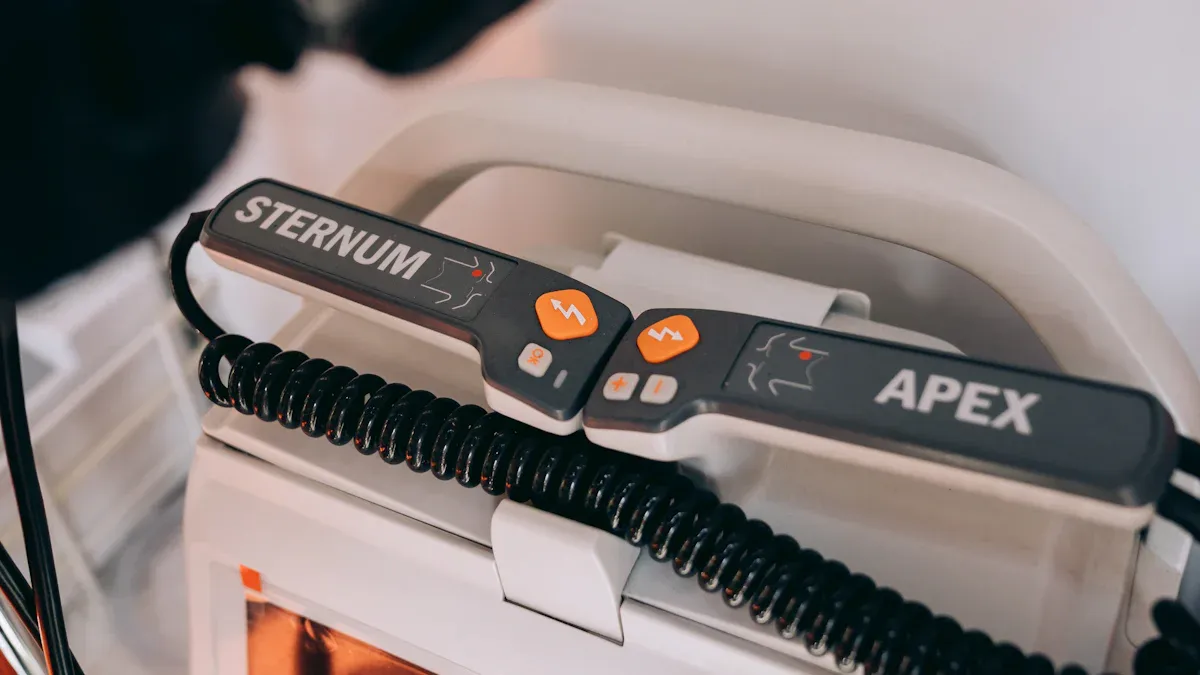
2.1 Advantages of Lithium Battery Solutions in AEDs
You need AEDs that deliver reliable performance in every emergency. Lithium Battery Solutions provide several core benefits that make them the preferred choice for medical professionals and device manufacturers.
Reliability: You can trust lithium battery packs to maintain consistent voltage and power output, even after long periods of storage. Their high energy density allows AEDs to remain ready for use without frequent battery changes.
Rapid Discharge: AEDs require immediate, high-current energy delivery. Lithium Battery Solutions support rapid discharge, ensuring the device can deliver life-saving shocks without delay.
Emergency Readiness: You benefit from a long shelf life and minimal self-discharge. This means your AEDs stay operational and ready for deployment at any time.
Lithium batteries are lightweight, which enhances the portability of AED units. You can easily transport and deploy these devices in various environments, from hospitals to public spaces.
Note: Lithium batteries have a long shelf life, so you do not need to perform regular maintenance as often as with other battery types.
Performance Comparison: Lithium vs. Alkaline Batteries
You should understand how lithium battery solutions outperform traditional alkaline batteries in AED applications. The table below highlights key differences:
Metric | Lithium Batteries | Alkaline Batteries |
|---|---|---|
Voltage Stability | Higher and more stable under load | Lower and less stable |
Performance in Cold | Maintains performance down to -40°C | Loses significant power in cold |
Weight | Generally lighter | Heavier |
You gain a clear advantage with lithium batteries in terms of stability, cold-weather performance, and reduced device weight. These features are essential for medical, robotics, security, infrastructure, consumer electronics, and industrial applications. Each sector relies on dependable power sources to ensure safety and operational continuity.
Environmental and Sustainability Considerations
You also need to consider the environmental impact of your battery choices. Lithium Battery Solutions offer a longer cycle life and are less likely to leak, reducing the risk of soil and water pollution. The table below summarizes the environmental benefits:
Aspect | Lithium Batteries | Alkaline Batteries |
|---|---|---|
Cycle Life | Over 500 times longer than alkaline | Shorter lifespan, leading to more waste |
Leakage | Less likely to leak due to BMS safety | Prone to leakage, causing soil and water pollution |
Recycling Value | High, with 90% recyclable metals | Low value, often discarded improperly |
You can learn more about sustainability and conflict minerals in lithium battery manufacturing to support responsible sourcing and environmental stewardship.
2.2 Customization and Compatibility Factors
Selecting the right Lithium Battery Solutions for your AEDs requires careful consideration of customization and compatibility. Each AED model has unique power requirements, so you must ensure the battery pack matches these specifications.
Compatibility with specific AED models is essential.
Each AED model has unique power requirements.
Using an incompatible battery can lead to poor performance or damage.
You can choose from a range of customization options to optimize performance for your application. The table below outlines common customization features:
Customization Option | Description |
|---|---|
High-rate discharge | Tailored to meet the power demands of AEDs. |
Extreme temperature performance | Designed to function effectively in a wide range of temperatures. |
Size and dimensions | Custom sizes ensure a perfect fit for AED devices. |
Discharge current requirements | Batteries can be customized to match the exact power needs of the device. |
Custom connectors and cables | Options for specific connector types and cable lengths for compatibility. |
You can click for custom battery consultation to discuss your specific requirements and receive expert guidance.
The FAA Technical Standard Order (TSO) sets the minimum safety and performance standards for equipment used in aviation. Lithium batteries in AEDs must comply with TSO C97 or C142 to ensure reliability and effectiveness in emergency situations.
Maintenance and Storage Best Practices
You must follow proper maintenance protocols to ensure your AEDs remain ready for emergencies. Use the following checklist to maintain your lithium battery packs:
Visually inspect the general condition of the AED. Check for cleanliness, intact case, and any signs of damage.
Confirm activation. Push the start button or open the cover to ensure the AED activates and the status indicator shows readiness.
Check for alarms or service notices. Look for any visual or audio alerts indicating maintenance is needed.
Check and replace batteries. Ensure batteries are not past their expiration date and replace them as necessary.
Inspect AED pads. Check for expiration, usage, or damage and replace as needed.
You should also monitor environmental conditions to maximize battery longevity. Store batteries between 15°C–25°C (59°F–77°F) with humidity below 65%. Avoid exposing batteries to excessive heat, as this accelerates degradation. Cold temperatures may temporarily reduce power output, but will not cause permanent damage.
Environmental Factor | Effect on Battery Performance | Recommendations |
|---|---|---|
Heat | Accelerates degradation | Charge in controlled environments, avoid hot vehicles |
Cold | Reduces power output | Allow batteries to warm before use |
Humidity | Risk of condensation | Store in dry, shaded conditions |
By selecting the right Lithium Battery Solutions and following best practices for maintenance and storage, you ensure your AEDs deliver reliable performance when it matters most.
You gain unmatched reliability, safety, and performance with 3S1P lithium battery solutions for AEDs. Regularly inspect status indicators, monitor expiration dates, and store batteries properly. For tailored solutions, consult experts at Large Battery Custom Solutions. This approach ensures your AEDs remain ready for every emergency.
FAQ
What makes 3S1P lithium battery packs ideal for AEDs?
You gain stable voltage, high energy density, and rapid discharge. These features ensure AEDs deliver reliable performance during emergencies.
How do lithium chemistries compare for AED applications?
Chemistry | Platform Voltage | Energy Density (Wh/kg) | Cycle Life (cycles) |
|---|---|---|---|
NMC | 3.7V | 160-270 | 1000-2000 |
LCO | 3.7V | 180-230 | 500-1000 |
LiFePO4 | 3.2V | 100-180 | 2000-5000 |
LMO | 3.7V | 120-170 | 300-700 |
LTO | 2.4V | 60-90 | 10000-20000 |
How can you customize lithium battery packs for AEDs with Large Power?
You can request tailored discharge rates, temperature performance, and connector types. Contact Large Power for custom battery consultation.


