

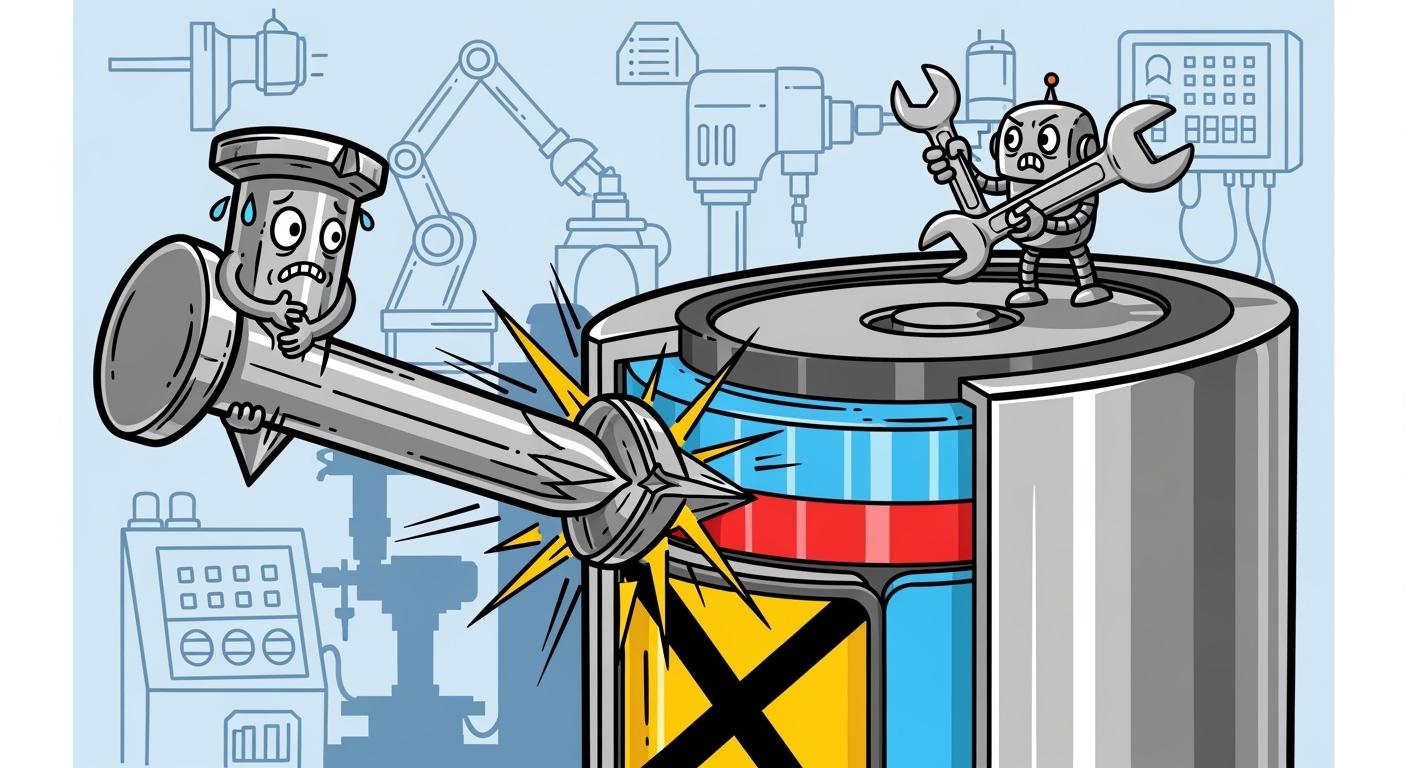
Industrial sectors face significant safety challenges when deploying lithium battery packs in demanding environments. Nail penetration resistant lithium batteries play a critical role in reducing fire hazards, as nail penetration tests simulate internal short circuits that can cause dangerous temperature spikes above 550°C in less safe chemistries. Advanced Lithium Battery technology addresses these risks by offering exceptional thermal stability and reliability. Rigorous safety testing, including quality, certification, and abuse tests, aligns with evolving industry standards and ensures batteries meet the highest expectations for operational performance.
Safety Testing Type | Purpose | Importance in Industry Standards |
|---|---|---|
Quality Tests | Detect faulty cells during production | Ensures only high-quality cells are used |
Certification Tests | Validate safety-relevant battery behavior | Confirms compliance with safety standards |
Abuse Tests | Simulate extreme conditions | Provides insights into potential failures |
Standards (e.g., UL 1973) | Focus on thermal runaway and fire safety | Establishes safety performance framework |
Key operational demands for these batteries include:
Safety, reliability, and performance in critical environments
Long cycle life and thermal stability
Withstanding extreme conditions such as nail penetration
Key Takeaways
Nail penetration resistant lithium batteries enhance safety by preventing thermal runaway and fire during mechanical abuse.
Advanced designs, like solid-state batteries, show superior stability and do not catch fire when punctured, unlike traditional batteries.
Rigorous safety testing, including nail penetration tests, ensures these batteries meet high industry standards for performance and reliability.
Key features such as real-time monitoring and layered redundancy help detect and contain potential failures before they escalate.
Industries like energy storage, automation, and emergency power rely on these batteries for safe and uninterrupted operations.
Part1: Advanced Lithium Battery Safety in Industrial Applications
1.1 Nail Penetration Resistance Overview
Nail penetration resistance stands as a critical safety feature for lithium battery packs used in industrial environments. Industrial operators demand batteries that can withstand severe mechanical abuse without catastrophic failure. Nail penetration tests simulate internal short circuits, which often lead to thermal runaway and fire in less advanced designs. Manufacturers have responded by integrating multiple safety innovations into lithium battery packs. These include advanced cathode and anode materials, solid-state electrolytes, innovative cell designs, enhanced thermal management systems, and improved pressure relief systems. Each of these elements works together to prevent internal short circuits from escalating into dangerous events.
Nail penetration resistant lithium battery packs, such as those using solid-state electrolytes, have demonstrated superior safety. During testing, solid-state batteries showed no serious reactions when punctured, while traditional lithium-ion batteries often produced smoke or fire. This difference highlights the importance of material and design innovation in achieving true nail penetration resistance.
Safety Feature | Description |
|---|---|
Layered Redundancy | Multiple independent safety mechanisms to avoid single points of failure. |
Proactive Risk Mitigation | Predictive analytics to identify and address risks before failures occur. |
Real-Time Monitoring | Continuous tracking of battery parameters to detect anomalies early. |
Fault Isolation | Mechanisms to contain failures and prevent cascading damage. |
Advanced Battery Management Systems | Systems that enforce safety protocols and manage battery performance effectively. |
1.2 Preventing Thermal Runaway & Fire Risk
Thermal runaway remains one of the most severe risks in lithium battery packs. The process begins with an initial trigger, such as nail penetration, which causes an internal short circuit and localized heating. As the temperature rises, the solid electrolyte interface on the anode decomposes, releasing more heat. The polymer separator may melt, allowing direct contact between the anode and cathode. This leads to electrolyte decomposition and the release of flammable gases. At higher temperatures, metal oxide cathodes decompose, releasing oxygen that can feed fires. If unchecked, these reactions escalate into full thermal runaway, resulting in fire, explosion, or violent venting.
Initial Trigger (80-100°C): Internal short circuit and localized heating.
SEI Layer Breakdown (90-120°C): Heat release from interface decomposition.
Separator Melting (130-160°C): Direct anode-cathode contact.
Electrolyte Decomposition (150-200°C): Flammable gas release.
Cathode Oxygen Release (200-300°C): Oxygen feeds combustion.
Full Thermal Runaway (300-500°C+): Fire, explosion, or venting.
Advanced Lithium Battery designs address each stage of this process. Solid-state batteries, for example, use non-flammable electrolytes that do not release gases under stress. SAFD 18650 cells and other reinforced cylindrical formats provide strong mechanical stability, reducing the risk of separator failure. Enhanced thermal management systems and pressure relief mechanisms further contain any abnormal reactions, preventing escalation. These features ensure that lithium battery packs remain safe, even under severe abuse conditions.
1.3 Operational Stability in Critical Environments
Industrial environments often expose lithium battery packs to high temperatures, vibration, and mechanical shock. Advanced Lithium Battery technology maintains operational stability through several key innovations:
Heat-resistant electrolytes with high thermal stability and gas suppression additives.
Advanced cathode materials, such as LiFePO4 Lithium battery and modified NMC Lithium battery, which offer superior thermal stability and reduced side reactions.
Ceramic-coated separators that improve mechanical strength and short circuit resistance.
Structural reinforcement, especially in cylindrical cells like 18650 formats, which enhances durability.
Modern battery management systems (BMS) that monitor temperature, regulate charging, prevent overheating, and balance cell voltages.
These features allow lithium battery packs to deliver reliable performance in energy storage systems, automation, robotics, and emergency power solutions. Real-time monitoring and fault isolation mechanisms ensure that any anomaly is detected and contained before it can impact operations. As a result, Advanced Lithium Battery packs provide the safety, reliability, and long service life required for critical industrial applications.
Part2: Nail Penetration Testing & Standards

2.1 Nail Penetration Test Procedures
Nail penetration testing serves as a critical safety validation for lithium battery packs in industrial environments. This test simulates an internal short circuit, assessing the battery’s response to severe mechanical abuse. Engineers follow strict procedures to ensure consistent and reliable results:
Allow the battery to return to room temperature before testing.
Control all variables, such as nail diameter, insertion speed, and ambient conditions.
Repeat each test at least three times to eliminate randomness.
Select five different states of charge (SOC): 20%, 40%, 60%, 80%, and 100%.
Record ultimate load and terminal voltage drop time for each SOC.
Analyze voltage-time curves and temperature changes throughout the test.
The nail penetration test evaluates whether the battery emits smoke, catches fire, or ruptures. Adjustments in nail diameter, material, and speed help simulate a range of abuse scenarios.
Controlled Variable | Description |
|---|---|
Test Speed | Set at 30 mm/min |
Ambient Temperature | Maintained at 25 ± 2 °C |
Battery State of Charge (SOC) | Random assignment to groups |
Instrument Calibration | Calibrated before experiments |
Data Recording | Real-time voltage, temperature, force, displacement |
Environmental Conditions | Constantly maintained |
2.2 Evolution of Testing Methods
Testing methods have evolved to match advances in battery technology. Early tests used 3mm nails, which identified weak points in battery designs. Modern standards now require 8mm nails, providing a rigorous benchmark for next-generation batteries. Semi-insulated nails allow precise control over the location of internal short circuits, improving simulation fidelity. Laboratories such as SwRI Energy Storage Technology Center® conduct comprehensive tests, including nail penetration in immersion chambers, to monitor temperatures and detect thermal runaway propagation. Immersion cooling often improves outcomes, but secondary reactions from vaporized fluids require careful monitoring.
Cathode metallized polyester current collectors in 18650 and 21700 cell designs demonstrate consistent tolerance to nail penetration. Batteries with higher energy density sometimes show increased risk of thermal runaway under these tests, highlighting the importance of robust safety engineering.
2.3 Compliance with Industrial Safety Standards
International safety standards govern nail penetration testing for lithium batteries. The test verifies that batteries do not catch fire or explode under worst-case scenarios. Certification tests validate safety-relevant behavior, including thermal stability, electrical performance, and mechanical resilience. Abuse tests, such as nail penetration, crush, and thermal tests, simulate extreme conditions to evaluate internal short circuit risks and structural integrity.
Manufacturers like LG Energy Solution implement multi-layer safety mechanisms and advanced Battery Management Systems (BMS) with predictive algorithms. Their protocols include nail penetration, crush, and extreme temperature exposure to ensure batteries meet stringent industrial requirements. Advanced Lithium Battery packs consistently comply with these standards, providing reliable performance and safety in critical applications.
Part3: Industrial Applications & Case Studies

3.1 Energy Storage Systems
Industrial sectors rely on energy storage systems to maintain stable operations and manage peak demand. Nail penetration resistant lithium batteries have become essential in these applications due to their ability to prevent fire and explosion during mechanical abuse. Operators in data centers, UPS rooms, and electric vehicle infrastructure choose these batteries for their proven safety and reliability. The following table highlights common sectors utilizing these solutions:
Industrial Sector | Description |
|---|---|
Energy Storage Systems | Utilizes lithium-ion batteries for energy storage |
UPS Rooms | Provides backup power using lithium batteries |
Data Centers | Employs batteries for reliable power supply |
Electric Vehicle (EV) Infrastructure | Supports charging and energy needs for EVs |
These sectors demand batteries that deliver long cycle life, high thermal stability, and consistent performance under stress. Advanced Lithium Battery packs meet these requirements, ensuring uninterrupted power and operational safety.
3.2 Automation & Robotics
Automation and robotics require battery solutions that balance safety and performance. Manufacturers integrate safety reinforced layers (SRLs) into lithium battery packs to enhance protection against thermal runaway. SRL-equipped batteries demonstrate improved outcomes during nail penetration tests. They recover voltage after a temporary drop, unlike standard batteries. This feature proves critical in robotics, medical devices, and security systems, where any failure can disrupt essential operations.
Safety reinforced layers mitigate thermal runaway risks.
SRL-equipped batteries maintain voltage stability after mechanical abuse.
These batteries support safe, reliable operation in automation, medical, and security applications.
3.3 Emergency Power Solutions
Critical infrastructure depends on emergency power solutions that function reliably during crises. Solid-state lithium batteries provide a high level of safety in these scenarios. During nail penetration tests, these batteries remain stable and do not catch fire or explode. The short circuit and heat generation stay localized, preventing chain reactions and widespread damage. Solid electrolytes offer thermal stability and eliminate the risk of fire or thermal runaway.
Evidence Description | Key Point |
|---|---|
Solid-state batteries remain stable and safe during nail penetration tests. | They do not catch fire or explode, unlike traditional batteries. |
The short circuit and heat generation in solid-state batteries are localized. | This prevents widespread damage and chain reactions. |
Solid electrolytes are thermally stable and non-flammable. | They eliminate the risk of fire or thermal runaway. |
Emergency power systems in hospitals, industrial facilities, and security infrastructure benefit from these advanced safety features. Advanced Lithium Battery technology ensures that backup power remains available and safe, even under extreme conditions.
Advanced lithium battery packs with nail penetration resistance deliver unmatched safety, reliability, and compliance for critical industrial applications. These batteries prevent fire and explosion, even under severe abuse, as shown by the zero ignition rate and immediate voltage recovery in SRL-applied cells:
Cell Type | Ignition Rate | Voltage Recovery Time | Short Circuit Suppression |
|---|---|---|---|
Bare Cells | 5 out of 6 | Rapid drop to 0 V | No |
SRL-Applied Cells | 0 out of 6 | Immediate recovery | Yes |
B2B clients should prioritize these solutions to ensure operational stability, regulatory compliance, and long-term safety in demanding environments.
FAQ
What makes nail penetration resistant lithium batteries essential for industrial safety?
Nail penetration resistant lithium batteries prevent thermal runaway and fire during mechanical abuse. Industrial operators rely on these batteries to ensure safe, stable operations in critical environments such as energy storage, automation, and emergency power systems. For applications exposed to impact, vibration, or mechanical abuse, contact Large Power to design a nail penetration resistant lithium battery pack matched to your voltage, capacity, enclosure, and safety requirements.
How do LiFePO4 Lithium battery and NMC Lithium battery chemistries compare for industrial use?
Chemistry | Platform Voltage | Energy Density | Cycle Life |
|---|---|---|---|
LiFePO4 Lithium battery | 3.2V | 120 Wh/kg | 2,000+ cycles |
NMC Lithium battery | 3.7V | 180 Wh/kg | 1,000+ cycles |
LiFePO4 Lithium battery offers longer cycle life. NMC Lithium battery provides higher energy density.
Which industrial standards cover nail penetration testing?
UL 1973, IEC 62619, and UN 38.3 set requirements for nail penetration and abuse testing. These standards ensure lithium battery packs meet strict safety and performance benchmarks for industrial applications.
Can nail penetration resistant batteries operate in extreme environments?
Yes. These batteries use advanced materials, reinforced separators, and robust battery management systems. They maintain performance and safety in high temperatures, vibration, and shock, making them ideal for automation, robotics, and backup power.
Why should B2B clients prioritize nail penetration resistant lithium battery packs?
B2B clients gain enhanced safety, regulatory compliance, and operational reliability. These batteries reduce fire risk, support long-term performance, and protect critical infrastructure investments.


