

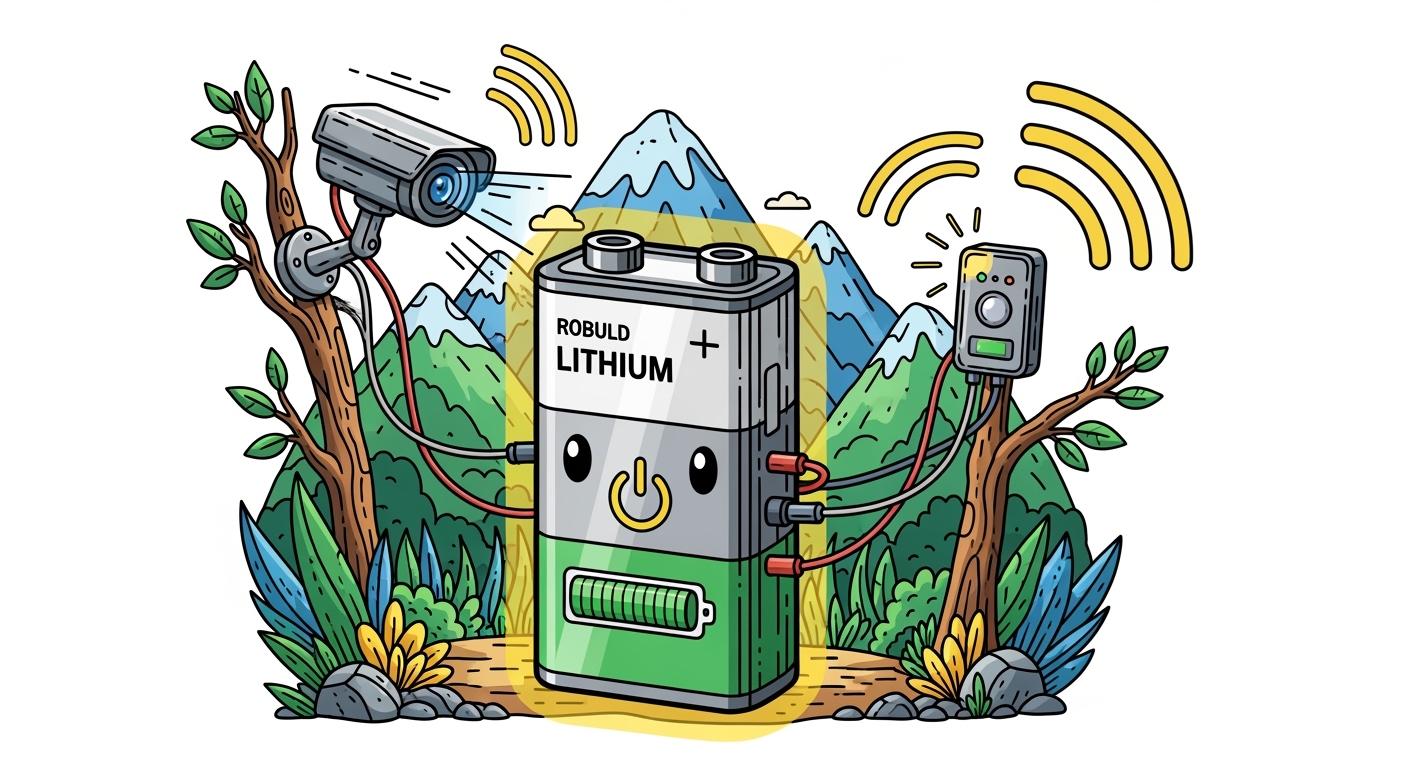
You depend on lithium battery solutions to deliver reliable power for security systems in remote locations. Security camera power supply needs consistent battery performance to maintain surveillance. Reliable battery packs support security alarms, sensors, and monitoring devices in harsh environments. Security teams require reliable power to protect assets and infrastructure. Advanced battery management and IoT integration make security operations efficient and reliable. Battery solutions ensure reliable power for critical security systems.
Key Takeaways
Lithium battery solutions provide energy independence for security cameras, ensuring they operate without grid reliance.
These batteries require less maintenance and offer longer lifespans compared to traditional options, reducing overall costs.
Advanced battery management systems enable remote monitoring, helping you track battery health and prevent unexpected failures.
Lithium batteries perform reliably in extreme temperatures, making them ideal for outdoor security applications.
Integrating lithium batteries with IoT platforms enhances monitoring capabilities, allowing for real-time alerts and predictive maintenance.
Part1: Reliable Power for Remote Security Systems

1.1 Lithium Battery Solutions for Security Camera Power Supply
You need a security camera power supply that works without interruption, especially in remote or off-grid locations. Lithium battery solutions give you the energy independence to keep your security camera running even when the grid is unavailable. Many industries, including security systems, medical, robotics, infrastructure, and industrial sectors, rely on these solutions for reliable camera operation.
Here is a comparison of the main advantages you gain when you choose lithium battery solutions for your security camera power supply:
Advantage | Description |
|---|---|
Energy Independence | Lithium batteries enable your camera to operate without reliance on the grid. |
Reduced Maintenance | These systems require less frequent maintenance compared to traditional power sources. |
Cost-Effectiveness | Utilizing solar and lithium batteries can lower overall energy costs in remote locations. |
You can use a wireless security camera power supply to monitor assets in areas where running cables is not practical. Lithium battery solutions provide a stable power source for your camera, so you do not have to worry about outages or interruptions. You can also combine solar panels with lithium battery backup solutions to extend the runtime of your security camera power supply. This approach reduces your maintenance visits and lowers your total cost of ownership.
Security camera power supply systems in remote areas often face challenges such as harsh weather, limited access, and the need for continuous monitoring. Lithium battery solutions address these challenges by providing a reliable power source that keeps your camera and security system online. You can trust these solutions to deliver consistent performance, even when traditional power sources fail.
Tip: When you deploy a wireless security camera power supply with lithium battery backup solutions, you increase the reliability of your security system and reduce the risk of downtime.
You can also benefit from advanced battery management systems that allow you to monitor the status of your security camera power supply remotely. This feature helps you plan maintenance and avoid unexpected failures. Many security professionals in the infrastructure and industrial sectors use these solutions to protect critical sites and assets.
1.2 Wide Temperature and Outdoor Performance
Outdoor security camera power supply systems must perform in extreme temperatures and harsh environments. Lithium battery solutions are designed to function effectively in conditions below -20°C and above 60°C. This wide operational range ensures your security camera continues to work during critical moments, no matter the weather.
Let’s compare how lithium battery backup solutions perform against traditional battery technologies in outdoor security camera power supply applications:
Feature | Lithium Batteries (LiFePO4) | Traditional Batteries (Lead-Acid/AGM) |
|---|---|---|
Temperature Range | Wide | Limited |
Performance in Heat | Maintains capacity | Loses up to 50% capacity |
Performance in Cold | Consistent performance | Degrades quickly |
Safety Features | High (temperature protection) | Lower (risk of spillage and gas) |
Cycle Life | Thousands of cycles | Shorter cycle life |
Durability | Superior | Inferior |
You can see that lithium battery backup solutions offer superior durability and safety for your security camera power supply. These batteries maintain stable voltage and capacity, so your security system stays operational even in extreme heat or cold. Traditional batteries often lose capacity or fail in these conditions, putting your security at risk.
You face several challenges when you operate a remote security system. Lithium battery solutions help you overcome these obstacles by providing:
Reliable power supply in off-grid environments, which is crucial for continuous operation of your security camera.
Enhanced system performance, ensuring stable operation under harsh environmental conditions.
Integration with advanced battery management systems, allowing for remote monitoring and data tracking. This simplifies maintenance and improves reliability.
You can rely on lithium battery backup solutions to keep your security camera power supply running in any environment. These solutions support your security system by delivering consistent power, reducing maintenance needs, and increasing the lifespan of your equipment. Many professionals in the security, medical, and industrial sectors choose lithium battery solutions for their proven performance and reliability.
Part2: Comparing Battery Backup Solutions
2.1 LFP vs. Traditional Batteries
You need to compare battery options when you select backup power for your security system. Lithium iron phosphate (LiFePO4 or LFP) batteries stand out against traditional sealed lead-acid (SLA) batteries. You can see the differences in cycle life, energy density, and specific energy in the table below:
Battery Type | Cycle Life (80% DoD) | Energy Density (Wh/L) | Specific Energy (Wh/kg) |
|---|---|---|---|
SLA | < 300 cycles | 80 | 45 |
LFP | > 2000 cycles | 250 | 140 |
LFP batteries deliver much higher cycle life and capacity than SLA batteries. You get more energy storage in a smaller space, which is important for security system installations in tight locations. LFP batteries also offer excellent thermal stability. You can trust these solutions in safety-critical environments, such as mining or explosive atmospheres, because they resist thermal runaway. This makes LFP the preferred choice for dedicated security system batteries where safety and capacity matter most.
2.2 Cost, Maintenance, and Runtime
You must consider cost, maintenance, and runtime when choosing a battery for your security system. The table below shows how lithium battery solutions compare to regular batteries:
Factor | Regular Batteries | Lithium Batteries |
|---|---|---|
Initial Cost | Lower upfront cost | Higher upfront cost |
Lifetime Use Cost | Higher (frequent replacements) | Lower (long lifespan) |
Performance Consistency | Declines quickly | Stable until depleted |
Environmental Impact | More waste generated | Less waste, more cycles |
Lithium battery solutions require less maintenance and provide longer runtime. You can see this in the next table:
Feature | Lithium Ferro Phosphate (LiFePO4) | Traditional VRLA Batteries |
|---|---|---|
Maintenance Requirements | Maintenance-free | Regular maintenance |
Expected Runtime | 2000-3000 charge cycles | 3-8 hours reserve time |
Safety | Low thermal runaway risk | Higher risk |
Monitoring | Embedded BMS, real-time data | Limited monitoring |
You reduce your total cost of ownership and improve reliability for your security system by choosing custom lithium battery solutions.
2.3 Size and System-Level Options
You benefit from the compact size and flexible integration of lithium battery solutions. These batteries weigh less and take up less space than traditional options. You can install them in security system cabinets, medical devices, or industrial robots with ease. Here are the main advantages:
Lithium-ion batteries are much lighter than lead-acid batteries.
They use 40-60% less space than VRLA batteries.
Lower weight means easier shipment and service.
You also gain advanced system-level integration with lithium battery solutions. The table below shows how these solutions compare:
Feature/Advantage | Lithium Battery Solutions | Traditional Battery Technologies |
|---|---|---|
System-Level Integration | Deep integration with energy management systems | Standalone, less integration |
Communication Capabilities | Real-time monitoring and alerts | Limited communication |
Adaptability to Harsh Environments | Stable in challenging conditions | Less stable |
Scalability and Management Ease | Expandable, easy to manage | Complex deployment |
You can scale your security system and manage power more efficiently with lithium battery solutions. These solutions help you maintain capacity, reduce downtime, and ensure reliable monitoring for all your security needs.
Part3: Battery Management and IoT Integration
3.1 Intelligent BMS for Dedicated Security System Batteries
You need reliable power for your security system, especially in remote or mission-critical environments. An intelligent Battery Management System (BMS) plays a key role in keeping your lithium battery solutions safe and long-lasting. The BMS monitors and manages each rechargeable battery cell, preventing issues that can lead to power interruptions or failures. This technology is essential for uninterruptible power supplies in security, medical, and industrial applications.
Here is how an intelligent BMS improves safety and extends battery life:
Feature | Contribution to Safety and Longevity |
|---|---|
Monitoring SOC and SOH | Prevents overcharging and over-discharging, reducing thermal runaway. |
Cell Balancing | Ensures uniform charge levels, enhancing efficiency and lifespan. |
Communication Capabilities | Enables real-time performance tracking for informed maintenance. |
You benefit from high-resolution data acquisition, which helps you detect defects early. Sophisticated algorithms estimate the state of charge (SOC) and state of health (SOH) with accuracy. Built-in safety protections guard against overvoltage and short circuits. These features keep your security system running and reduce the risk of downtime.
Note: Learn more about how BMS works in lithium battery packs and its importance for security and surveillance by visiting our Battery Management System (BMS) resource page.
3.2 Remote Monitoring and Data Insights
You can improve your security system’s reliability by integrating lithium battery solutions with IoT platforms. This integration gives you real-time monitoring of key metrics like SOC, SOH, voltage, temperature, and charge cycles. You receive instant alerts for critical events, such as overheating or deep discharge, which helps you act before problems affect your power supply.
Here are the main remote monitoring capabilities you gain:
Real-time tracking of battery status and performance.
Automated notifications for abnormal conditions.
AI-powered predictive maintenance for early fault detection.
Centralized cloud-based dashboards for analytics and reporting.
Seamless integration with fleet management and IoT platforms.
Security features like GPS alerts and QR-code authentication.
You can report real-time SOC, SOH, cell voltages, and temperature to a central monitoring system. You can also send remote commands, such as enabling charging or putting the battery into sleep mode. Historical data logging supports preventive maintenance and warranty management.
Modern battery systems communicate with inverters and monitoring platforms. When you integrate BMS data into SCADA or energy management systems, you gain better control and visibility over your security system’s power supply. This approach works well in infrastructure, robotics, and industrial sectors, where remote monitoring is critical.
The table below shows how IoT-enabled data insights improve maintenance and operational efficiency:
Evidence Type | Description |
|---|---|
Continuous Monitoring | IoT enables ongoing observation of battery health metrics like SOH and RUL. |
Predictive Analytics | Data-driven models allow for predictive maintenance and higher efficiency. |
Resource Optimization | Real-time insights lead to better resource allocation and reliability. |
You can optimize resources and reduce operational variability. This means your security system stays online, and you avoid costly emergency repairs.
3.3 IoT-Enabled Visualization and Alerts
You need clear visibility into your security system’s power status. IoT integration with lithium battery solutions provides advanced visualization and alert features. You can view real-time battery performance, receive alerts for abnormal voltage or temperature, and track predictive maintenance indicators.
The following table highlights key features available through IoT integration:
Feature | Description |
|---|---|
Real-time battery performance | Visualization of battery metrics as they occur. |
Alerts for abnormal voltage/temperature | Notifications triggered by deviations from normal levels. |
Predictive maintenance indicators | Alerts based on data trends indicating potential failures. |
Historical performance analysis | Review of past performance data for informed decision-making. |
Fleet-level battery monitoring | Centralized monitoring of multiple battery systems. |
You can monitor all your battery systems from one dashboard. This is important for large-scale security system deployments in infrastructure, medical, and industrial settings. You can review historical data to make better decisions and plan maintenance before failures occur.
Tip: Use IoT-enabled alerts to respond quickly to power interruptions and keep your home security system and business assets protected.
You can install security cameras in remote or harsh environments with confidence. IoT-enabled lithium battery solutions give you the tools to manage your power supply, reduce downtime, and extend the life of every rechargeable battery in your security system.
Part4: Deployment Guide for Lithium Battery Solutions
4.1 Secure Connectivity and Compatibility
You must ensure secure connectivity and compatibility when deploying lithium battery solutions for remote monitoring. Start by selecting an advanced multi-protocol conversion gateway. This gateway supports different communication protocols, which helps you scale your system as your needs grow. Choose gateways that comply with IT network security standards. Look for support for secure protocols such as HTTPS and SNMPv3. These features protect your data and prevent unauthorized access. For critical applications in security, medical, or industrial sectors, select telecom industrial-grade gateways. These devices offer high reliability and performance, even in harsh environments.
Tip: Always verify that your lithium battery packs and gateways are compatible with your existing monitoring platforms and energy management systems.
4.2 Installation and Maintenance Checklist
You can maximize the lifespan and reliability of your lithium battery solutions by following best practices during installation and maintenance.
Installation Steps:
Choose an indoor, dry, clean, and well-ventilated area.
Maintain at least 30 cm clearance on all sides for airflow.
Wear insulated gloves, safety shoes, and goggles.
Secure the mounting bracket to a load-bearing wall.
Connect protective grounding and check DC polarity.
Follow the correct power-on sequence.
Maintenance Practices:
Practice | Description | Benefit |
|---|---|---|
Proper Storage | Store at 50-60% charge in a cool, dry place. | Extends battery life. |
Temperature Management | Charge at 0°C–45°C, discharge at -20°C–60°C. | Prevents overheating, ensures safety. |
Regular Monitoring | Use IoT for real-time health data. | Enables proactive maintenance. |
4.3 Compliance and Safety
You must follow strict compliance and safety standards when deploying lithium battery packs in security and surveillance systems. The table below lists key standards:
Compliance Standard | Description |
|---|---|
FCC | Certification for electronic devices in the U.S. |
CE | Indicates compliance with EU safety standards. |
RoHS | Limits hazardous substances in electronics. |
UN38.3 | Ensures safe transport of lithium batteries. |
UL 1973: Applies to stationary energy storage systems.
UL 9540: Applies to systems used with renewable energy.
You may also need to meet aviation-grade or high-altitude standards for specialized deployments. These regulations require rigorous testing and multi-layered protection systems, especially in medical, robotics, and industrial applications.
Note: Always confirm that your lithium battery solutions meet all required certifications before deployment.
You gain many advantages when you choose lithium battery solutions for security and surveillance. These batteries last 8-10 years, need less maintenance, and weigh less than lead-acid options. You also benefit from compact size and fast recharging. With intelligent BMS and IoT integration, you improve energy management and system reliability. When you evaluate your current power setup, consider these factors:
Factor | Description |
|---|---|
Usable Capacity | How long the battery can power your devices |
Power Rating | How many devices you can run at once |
Depth of Discharge (DoD) | How much battery capacity you can safely use |
Warranty and Cycle Life | How long and how reliably the battery will last |
Installation Complexity | How easy it is to add or upgrade the system |
You can consult a battery solutions provider or request a system evaluation to upgrade your security system with advanced lithium battery packs.
FAQ
What makes lithium battery packs ideal for remote security and surveillance systems?
You gain long runtime, high reliability, and low maintenance with lithium battery packs. These features help you keep security cameras and sensors online in remote or harsh environments. You can trust these batteries for critical infrastructure and industrial monitoring.
How do lithium battery packs improve maintenance for B2B applications?
You use lithium battery packs with advanced battery management systems (BMS). These systems provide real-time data and predictive maintenance alerts. You reduce downtime and avoid unexpected failures in security, medical, and robotics sectors.
Can you integrate lithium battery packs with IoT platforms?
Yes, you can connect lithium battery packs to IoT platforms. This integration gives you remote monitoring, instant alerts, and performance analytics. You manage large fleets of batteries in industrial, infrastructure, and security applications more efficiently.
What safety standards should you check before deploying lithium battery packs?
You should verify compliance with standards like UL 1973, UL 9540, FCC, CE, RoHS, and UN38.3. These certifications ensure safe operation and transport for lithium battery packs in medical, industrial, and security systems.
How do lithium battery packs perform in extreme temperatures?
You benefit from lithium battery packs that operate reliably from -20°C to 60°C. This wide range supports outdoor security, infrastructure, and robotics applications. You maintain system uptime even in harsh weather conditions.


