

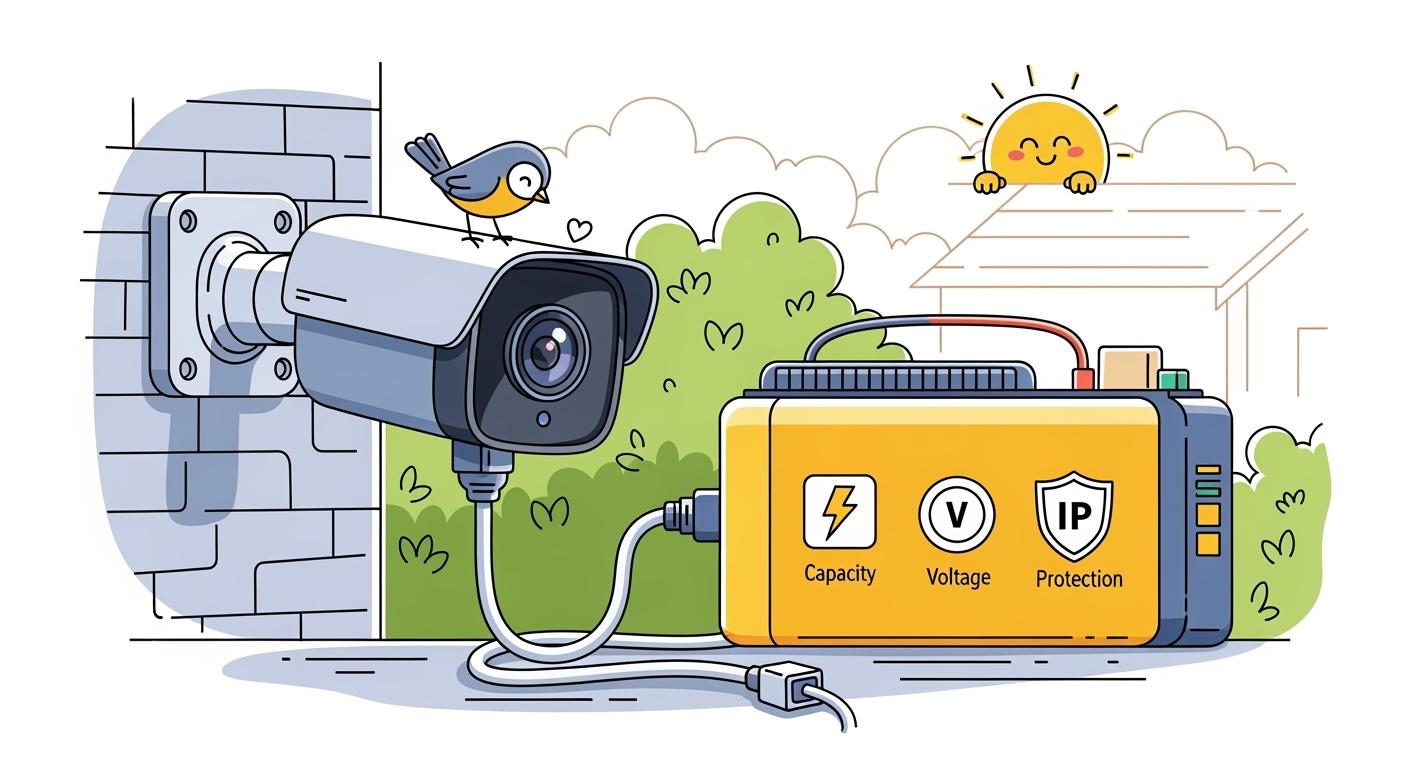
Choosing the right battery for your battery-powered security cameras matters more than you might think. If you pick a battery with the wrong capacity or voltage, your cameras could miss important moments or shut down in bad weather. Lithium batteries lead the way because they last longer and work better outdoors. Off-brand alkaline batteries can let you down, especially when you need steady protection.
A good battery keeps your cameras running longer, makes swapping easier, and helps you avoid downtime—even in tough rural or industrial locations.
Long battery life cuts down on replacements.
Smart power-saving features stretch battery use.
Quick-release designs mean less time offline.
Key Takeaways
Choose lithium batteries for outdoor security cameras. They last longer and perform better in extreme temperatures.
Match battery capacity to your camera’s power needs. A minimum of 2000mAh is essential for reliable operation.
Check voltage requirements carefully. Using the wrong voltage can damage your camera and lead to security risks.
Look for high IP ratings (like IP67) for outdoor batteries. This ensures protection against dust and water.
Regular maintenance and proper settings can extend battery life and reduce replacements.
Part1: Battery Capacity for Battery-Powered Security Cameras
1.1 Assessing Camera Power Needs
When you select batteries for battery-powered security cameras, you need to start with a clear understanding of your camera’s power requirements. Every camera model draws a different amount of current, especially when it switches between standby and active modes. If your cameras operate in high-traffic zones, like industrial sites or transportation hubs, they will trigger more frequently and consume more energy. In sectors such as Security Systems, Infrastructure, and Industrial automation, you often see cameras running 24/7, which puts extra demand on battery packs.
Here’s what you should consider:
A minimum of 3000mAh battery capacity is necessary for consistent operation in most outdoor environments.
Cameras with 4000mAh batteries can last 2-4 weeks between charges under normal conditions.
Power-hungry features—like night vision, continuous recording, or high-resolution streaming—can reduce battery life by 40-60%.
Extreme temperatures, common in outdoor and industrial settings, can cut battery efficiency by 20-30%.
Real-world performance often reaches only 30-50% of the advertised battery life, especially in challenging environments.
For high-activity areas or remote infrastructure, batteries with 6000-10000mAh capacity are advisable to minimize maintenance.
You should always match the battery pack to the actual usage scenario. For example, in Medical or Robotics applications, where reliability is critical, you may need to oversize your battery to ensure uninterrupted operation.
1.2 Estimating Battery Life of Battery-Operated Security Cameras
You can estimate the battery life of battery-operated security cameras using a simple formula:
Battery life (hours) = Battery capacity (mAh) ÷ Device consumption (mA)
For example, if your camera uses a 5000mAh battery and draws 400mA, you can expect about 12.5 hours of operation. However, most cameras do not run at full power all the time. You should track the power consumed during each operation—such as motion detection, recording, or data transmission—and subtract this from the total battery capacity. Taking voltage measurements when the camera wakes up and after it has been idle also helps you fine-tune your estimates.
Here’s a quick reference table for calculating battery life in different modes:
Calculation Type | Formula |
|---|---|
Active Mode Battery Life | Battery Life (hours) = (Battery Capacity × 90%) ÷ Power Consumption |
Standby Time | Standby Time (hours) = (Battery Capacity × 90%) ÷ Standby Consumption |
Keep in mind that cold weather, weak Wi-Fi signals, and frequent alerts can all reduce the battery life of battery-operated security cameras. In practice, users often achieve only 30-50% of the advertised battery performance, especially in outdoor or industrial environments.
1.3 Choosing the Right Battery Capacity
Selecting the right battery for battery-powered security cameras means balancing capacity, reliability, and maintenance needs. Lithium battery packs—especially those using advanced chemistries like LiFePO4, NMC, LCO, and LMO—offer clear advantages over alkaline options. You see these lithium batteries widely used in Security Systems, Medical devices, Robotics, Infrastructure monitoring, Consumer Electronics, and Industrial automation.
Let’s compare lithium and alkaline batteries for outdoor security camera applications:
Advantage | Lithium Batteries (LiFePO4, NMC, LCO, LMO) | Alkaline Batteries |
|---|---|---|
Lifespan | Lasts months to years, holds charge well | Shorter lifespan, frequent replacements |
Temperature Performance | Reliable from -40°C to +85°C | Loses capacity in cold, unreliable in heat |
Voltage Stability | Maintains stable output throughout cycle | Gradual voltage drop, inconsistent power |
Energy Density | High, supports compact designs | Lower, bulkier for same capacity |
Cycle Life | Hundreds to thousands of cycles | Limited, not suitable for frequent use |
You should always choose lithium batteries for wireless battery-operated security cameras in harsh or mission-critical environments. These batteries deliver consistent power, even in extreme temperatures, and require less frequent replacement. For sustainability considerations, lithium battery packs also offer better recyclability and lower long-term environmental impact.
The HL18650V lithium battery, for example, uses advanced lithium-ion chemistry and construction for a wide operational temperature range. Special electrolytes and separators maintain ionic conductivity in deep cold, while heat-resistant materials prevent thermal runaway and capacity loss in high heat.
Part2: Voltage Compatibility for Battery-Operated Security Cameras
2.1 Identifying Voltage Requirements
You need to match the voltage of your battery to the exact requirements of your security camera. This step is not optional. If you skip it, you risk damaging your equipment and losing critical footage. Every camera model has its own voltage and current needs. You can find these details in the datasheet that comes with your device.
Here’s how you can accurately identify the voltage requirements for your battery-operated security cameras:
Check the specification sheet for the exact voltage and current needs.
Watch for power spikes when infrared (IR) LEDs turn on. These can double the electricity usage.
Consider extra power for moving parts like PTZ motors. These features often need higher voltage and current.
If you work with Medical, Robotics, or Infrastructure monitoring, you know that voltage stability is non-negotiable. A mismatch can lead to downtime or even equipment failure. Lithium battery packs—especially LiFePO4, NMC, LCO, and LMO chemistries—offer stable voltage output, which is essential for reliable operation in demanding environments.
Tip: Always document the voltage and current requirements for each camera model in your system. This practice helps you standardize battery selection and avoid costly mistakes.
2.2 Risks of Voltage Mismatch
Using the wrong voltage battery in battery-operated security cameras can cause serious problems. You might think a little extra voltage gives you more power, but it actually puts your equipment at risk. Here are the main dangers:
Higher voltage than rated can cause irreversible damage to your camera.
Excess voltage may overload and burn out the internal circuit board.
Incorrect voltage can lead to malfunction and security risks.
Unstable power supply can cause weak movement in PTZ cameras, which means you lose coverage when you need it most.
If you manage Security Systems or Industrial automation, you know that a single voltage mismatch can disrupt your entire operation. You cannot afford to take chances with off-brand or unverified batteries. Always choose batteries with proven voltage stability, like lithium battery packs designed for professional use.
Note: Voltage mismatches are a leading cause of malfunctions in battery-operated security cameras. You can prevent these issues by sticking to the manufacturer’s recommendations and using trusted battery suppliers.
2.3 Selecting the Right Battery Type
Not all batteries are created equal. You need to select a battery type that matches your camera’s voltage requirements and delivers consistent performance in outdoor conditions. The table below compares the most common battery types for battery-operated security cameras:
Battery Type | Characteristics |
|---|---|
Alkaline (AA or AAA) | Common in budget cameras, not rechargeable, requires frequent replacements. |
NiMH Rechargeable | Eco-friendly, reusable, but has lower energy density. |
Lithium-Ion (Li-ion) | Most widely used, high capacity, lightweight, long-lasting. |
Lithium-Polymer (Li-Po) | Slimmer and more flexible, excellent for compact designs. |
For B2B applications in Security Systems, Medical devices, Robotics, and Infrastructure, lithium battery packs (LiFePO4, NMC, LCO, LMO) stand out. They offer high energy density, stable voltage, and long cycle life. These features make them ideal for outdoor and mission-critical environments.
You should also consider the reputation of the battery brand. The table below lists some of the most trusted lithium battery brands for outdoor security cameras, based on security score and features:
Brand | Security Score | Top Features |
|---|---|---|
ADT | 9.8/10 | Most reliable professional monitoring, home automation with facial recognition, encrypted video |
Ring | 9.5/10 | Place cameras anywhere, wireless models under $100, up to 12 months battery life |
Nest | 9.2/10 | Easy DIY installation, guaranteed security during power outages, rated for indoor and outdoor use |
You should avoid off-brand alkaline batteries. These often fail to deliver the voltage stability and reliability needed for professional security applications. Trusted lithium battery packs ensure your battery-operated security cameras stay online, even in harsh weather or remote locations.
If your organization values responsible sourcing, look for suppliers who provide transparency about their lithium supply chain. For more on responsible sourcing, see our conflict minerals statement.
Part3: IP Protection and Outdoor Reliability
3.1 Understanding IP Ratings
You need to know what IP ratings mean when you choose batteries for battery-operated security cameras. IP stands for “Ingress Protection.” This rating tells you how well a battery can resist dust and water. The first digit shows the level of protection against solid particles like dust. The second digit shows how well the battery resists water. For example, an IP67 rating means the battery is completely dust-tight and can handle being under water up to 1 meter. This is important for outdoor use, where dust storms or heavy rain can happen at any time.
If you want your battery powered cameras to last in tough environments, always check the IP rating before you buy.
3.2 Water and Dust Resistance for Battery-Powered Security Cameras
Outdoor environments can be harsh. Dust, rain, and even mud can damage batteries if they are not protected. High IP ratings, like IP65 or IP67, give you strong seals against both dust and water. Dust can cause rust inside the battery, while water can lead to short circuits. These problems will shorten the life of your battery and may cause your battery-operated security cameras to fail.
Manufacturers test batteries using strict methods. They expose batteries to dust for eight hours, spray them with water jets, and even submerge them in water. After these tests, the battery must still work perfectly. This ensures that your battery powered cameras stay reliable, even in extreme weather.
Here’s a quick look at what different IP ratings mean for battery safety and reliability:
IP Rating | Protection Level | Impact on Battery Performance |
|---|---|---|
IP5X | Dust-tight | Prevents performance loss in dusty areas |
IP6X | Total dust protection | Ensures long life in high dust zones |
IP65 | Dust-tight and water jet resistant | Great for outdoor lighting and security systems |
IP67 | Dust-tight and water immersion (up to 1m) | Stops rust and short circuits in wet places |
IP68 | Full water protection | Works in muddy fields or underwater setups |
3.3 Choosing Batteries with Adequate IP Protection
You should always pick batteries with high IP ratings for outdoor security cameras. For most outdoor and industrial sites, an ip65 weatherproof rating is the minimum you need. If your cameras are in places with heavy rain, dust, or even flooding, go for IP67 or higher. These batteries are perfect for Security Systems, Medical devices, Robotics, Infrastructure, and Industrial automation.
Look for lithium battery packs (LiFePO4, NMC, LCO, LMO) with robust, sealed enclosures.
Make sure the battery is tested for both dust and water resistance.
Choose trusted suppliers who provide clear IP ratings and test results.
A weatherproof battery keeps your battery-operated security cameras running, no matter what the environment throws at them.
If you want your outdoor cameras to stay online and maintenance-free, invest in batteries with the right IP protection. This simple step will save you time, money, and headaches in the long run.
Part4: Additional Factors for the Right Battery Choice
4.1 Lithium vs. Alkaline and Lead-Acid Batteries
When you compare battery types for outdoor security cameras, you see big differences in performance, battery life, and cost-effectiveness. Lithium battery packs—especially LiFePO4, NMC, LCO, and LMO chemistries—stand out in Security Systems, Medical, Robotics, and Industrial applications. They deliver long-lasting charging power, stable voltage, and high energy density. Alkaline batteries may seem affordable, but they struggle in high-drain environments and need frequent battery replacement. Lead-acid batteries are heavy and not ideal for compact or remote setups.
Here’s a quick comparison:
Battery Type | Performance | Lifespan | Temperature Resilience |
|---|---|---|---|
Lithium (LiFePO4, NMC, LCO, LMO) | High energy density, stable voltage, ideal for high-drain use | Longer battery life, retains charge | Effective across wide temperature range |
Alkaline | Affordable, works for low/moderate energy needs | Shorter battery life in high-drain use | Limited in extreme temperatures |
Lead-Acid | Reliable for backup, bulky, less energy dense | Moderate, needs maintenance | Sensitive to cold, heavy |
Lithium-ion batteries cost more at first, but you save money over time. You would need hundreds of alkaline batteries to match the battery life of one lithium-ion pack. This makes lithium battery packs the smart choice for B2B projects that demand reliability and long-lasting charging power. If you care about sustainability, lithium battery packs also offer better recyclability.
4.2 Temperature Tolerance for Battery-Operated Security Cameras
Outdoor cameras face extreme temperatures. You need batteries that work in both freezing cold and high heat. Large Power’s low-temperature lithium battery cells, operate from -40°C to +60°C. This wide range keeps your security system running, even in harsh weather. At 0°C, battery capacity can drop by 30%, and high heat can shorten battery life, but lithium chemistries still outperform other types.
Category | Temperature Range |
|---|---|
Optimal Operating Temp | 15°C–35°C (59°F–95°F) |
Safe Charging Temp | 0°C–45°C (32°F–113°F) |
Recommended Storage Temp | -20°C–25°C (-4°F–77°F) |
Maximum Temp Limit | 60°C (140°F) |
You should always check the battery’s temperature specs before deployment. Battery capacity links directly to operational reliability. Temperature swings can reduce battery efficiency by up to 30%. For critical infrastructure, Medical, or Robotics, lithium battery packs ensure your cameras stay online.
4.3 Maintenance and Replacement Tips
You can extend battery life and reduce battery replacement with a few smart practices:
Adjust camera location to avoid high-traffic zones and cut down on unnecessary motion triggers.
Change camera settings—lower motion sensitivity, enable People-Only Detection, and set Activity Zones to focus only on what matters.
Use proper charging methods. Always charge with the correct adapter to keep battery health strong and maintain long-lasting charging power.
Factors like video quality, night vision, and Wi-Fi strength also affect battery life. If you use rechargeable batteries, you get easier maintenance and less downtime. Choose a removable battery design for quick swaps in the field. For B2B operations, regular checks and scheduled battery replacement keep your security cameras reliable year-round.
Choosing the right battery for your outdoor security camera keeps your cameras running when you need them most. You should focus on three things: battery capacity, voltage compatibility, and IP protection. High-quality lithium battery packs (LiFePO4, NMC, LCO, LMO) give you steady power, long life, and top performance in tough conditions. If you want the right battery for your security cameras, talk with industry experts or trusted suppliers. They can help you find a battery that fits your unique needs and keeps your security strong.
Tip: Custom lithium battery packs boost efficiency and safety for Medical, Robotics, Security System, Infrastructure, and Industrial projects.
Benefit | Description |
|---|---|
Customization | Get batteries tailored to your voltage and capacity needs |
Efficiency | Maximize camera uptime and reduce maintenance |
Integration | Ensure reliable operation with advanced lithium battery technology |
FAQ
What makes lithium battery packs better for outdoor security cameras?
You get longer life, stable voltage, and reliable performance in harsh weather. Lithium chemistries like LiFePO4, NMC or LCO work well in Security Systems, Infrastructure, and Industrial automation. They also need less maintenance than alkaline or lead-acid batteries.
How do I know if a battery pack meets my camera’s voltage needs?
Check your camera’s spec sheet for voltage requirements. Match the battery pack’s output exactly. Lithium battery packs offer stable voltage, which helps prevent downtime in Medical, Robotics, and Security System applications.
Why is IP protection important for battery packs outdoors?
IP ratings show how well a battery resists dust and water. High IP ratings, like IP65 or IP67, keep your cameras running in rain, dust, or mud. This matters for Infrastructure, Industrial, and Security System deployments.
Can extreme temperatures affect lithium battery packs?
Yes, but lithium chemistries handle temperature swings better than others. For example, LiFePO4 and NMC packs work from -40°C to +85°C. You get reliable power for Robotics, Medical, and outdoor Security Systems.
How often should I replace lithium battery packs in outdoor cameras?
Most lithium battery packs last hundreds to thousands of cycles. You may only need to replace them every few years, depending on usage. Regular checks help you spot issues early and keep your Security System or Industrial site running smoothly.


