

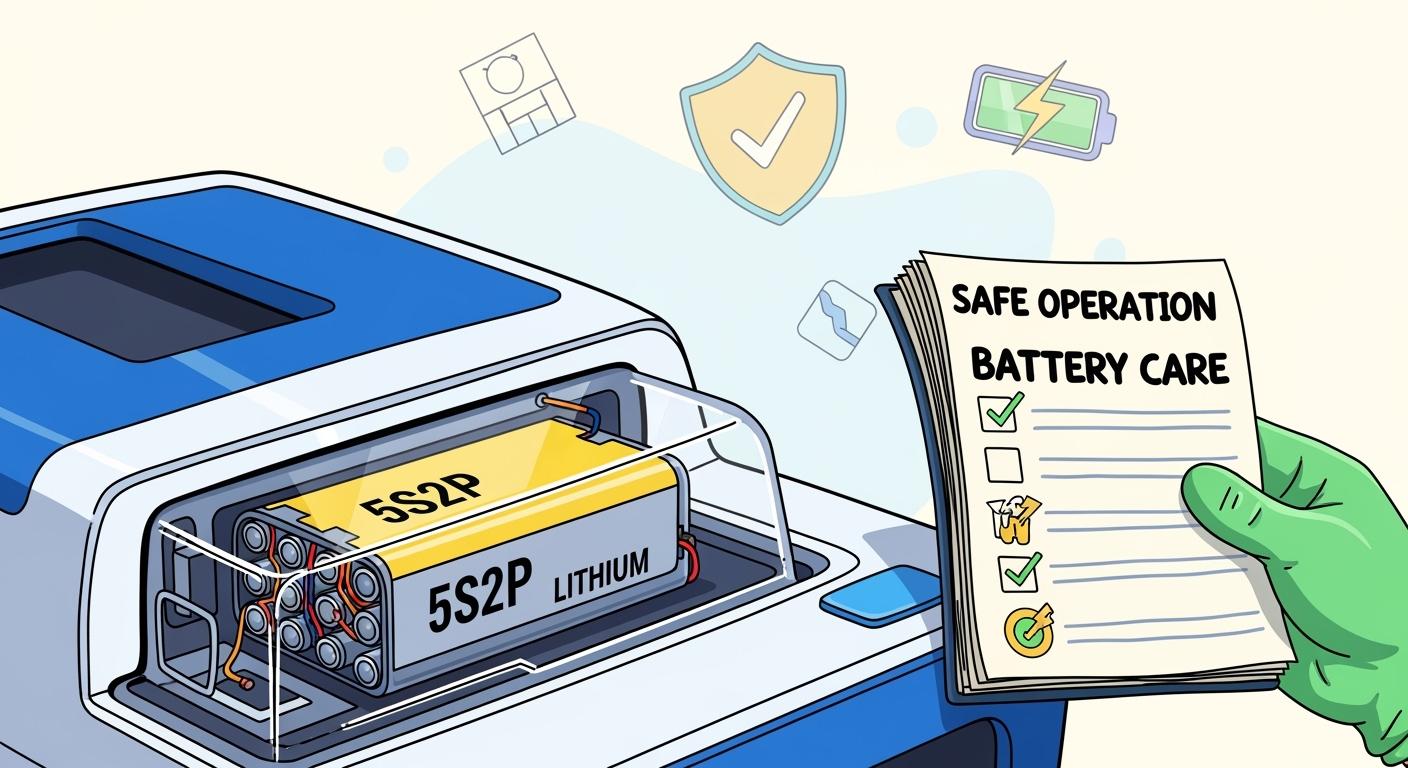
IVD analyzers require stable power to protect test accuracy, sample integrity, and operational continuity. A properly engineered 5S2P lithium battery pack can provide the voltage, capacity, and redundancy required by portable and benchtop diagnostic equipment. Safe integration, however, depends on more than cell configuration. Cell quality, Battery Management System (BMS) protection, thermal design, traceability, and device-level compliance must work together.
Quick Answer: A 5S2P battery pack can support IVD analyzers safely when its voltage and capacity match the device load, its BMS protects every series group, and the completed power system is validated under normal use and single-fault conditions. For a typical NMC design using 3.7V, 2700mAh cells, the pack provides approximately 18.5V nominal voltage, 21.0V maximum charge voltage, and 5400mAh capacity.
Key Takeaways
Treat voltage, capacity, and temperature values as design-specific rather than universal 5S2P specifications.
Use a BMS with overcharge, overdischarge, overcurrent, short-circuit, temperature, and cell-balancing functions.
Validate the complete medical device power system against applicable standards; do not describe IEC 60601 or ISO 13485 as battery certifications.
Maintain cell-batch traceability, calibrated test equipment, documented quality controls, and defined replacement criteria.
Verify runtime, peak current, charging behavior, and thermal performance under the analyzer’s actual operating profile.
Part 1: Safety Requirements for 5S2P Lithium Battery Packs
1.1 Electrical Performance and Stability
A 5S2P configuration connects five cell groups in series and two cells in parallel within each group. The series connection determines pack voltage, while the parallel connection increases capacity and current capability.
Example specification | Typical value |
|---|---|
Cell chemistry | NMC lithium-ion |
Nominal cell voltage | 3.7V |
Nominal pack voltage | 18.5V |
Maximum charge voltage | 21.0V |
Example cell capacity | 2700mAh |
Example pack capacity | 5400mAh |
Configuration | 5S2P |
These values describe one example design, not every 5S2P pack. Cell capacity, discharge capability, cycle life, temperature limits, and cutoff voltages must be confirmed from the selected cell specification and validated at pack level.
For IVD analyzers, testing should include startup current, continuous load, transient demand, low-state-of-charge behavior, charger transitions, and backup-power switchover. A pack that meets nominal voltage requirements may still cause analyzer resets if voltage drops excessively during a peak load.
1.2 Battery Management System Protection
The BMS is the principal electronic protection layer between the cells, charger, and analyzer. It should monitor each series group rather than relying only on total pack voltage.
BMS function | Purpose |
Overcharge protection | Stops charging when a cell group exceeds its validated upper limit |
Overdischarge protection | Prevents damaging cell depletion |
Overcurrent protection | Interrupts abnormal charging or discharging current |
Short-circuit protection | Responds rapidly to severe electrical faults |
Temperature monitoring | Restricts operation outside validated temperature limits |
Cell balancing | Reduces voltage divergence between series groups |
State monitoring | Supports SOC, SOH, fault logging, and maintenance decisions |
Protection thresholds should be based on the cell manufacturer’s limits and the medical device risk analysis. Values such as 4.25V or 2.8V per cell should not be presented as universal settings.
For critical analyzers, the BMS may also communicate with the host device through SMBus, I²C, CAN, UART, or another validated interface. The analyzer should respond predictably to low-capacity warnings, temperature faults, communication loss, and end-of-life conditions.
1.3 Thermal and Environmental Safety
Thermal performance must be validated inside the final analyzer enclosure. Cell temperature can differ significantly from ambient temperature because of charging current, processor heat, restricted airflow, and nearby power electronics.
Design verification should cover:
Maximum continuous and peak loads
Charging during analyzer operation
Blocked or reduced ventilation
High and low ambient temperatures
Repeated cleaning and disinfection
Storage and transportation conditions
Single-fault scenarios where required
Charging and discharging temperature ranges must follow the selected cell specification. Charging is usually more temperature-sensitive than discharging, especially below 0°C. The BMS should prevent charging outside the validated range rather than relying only on written operating instructions.
Part 2: Integration and Quality Management
2.1 Assembly and Traceability
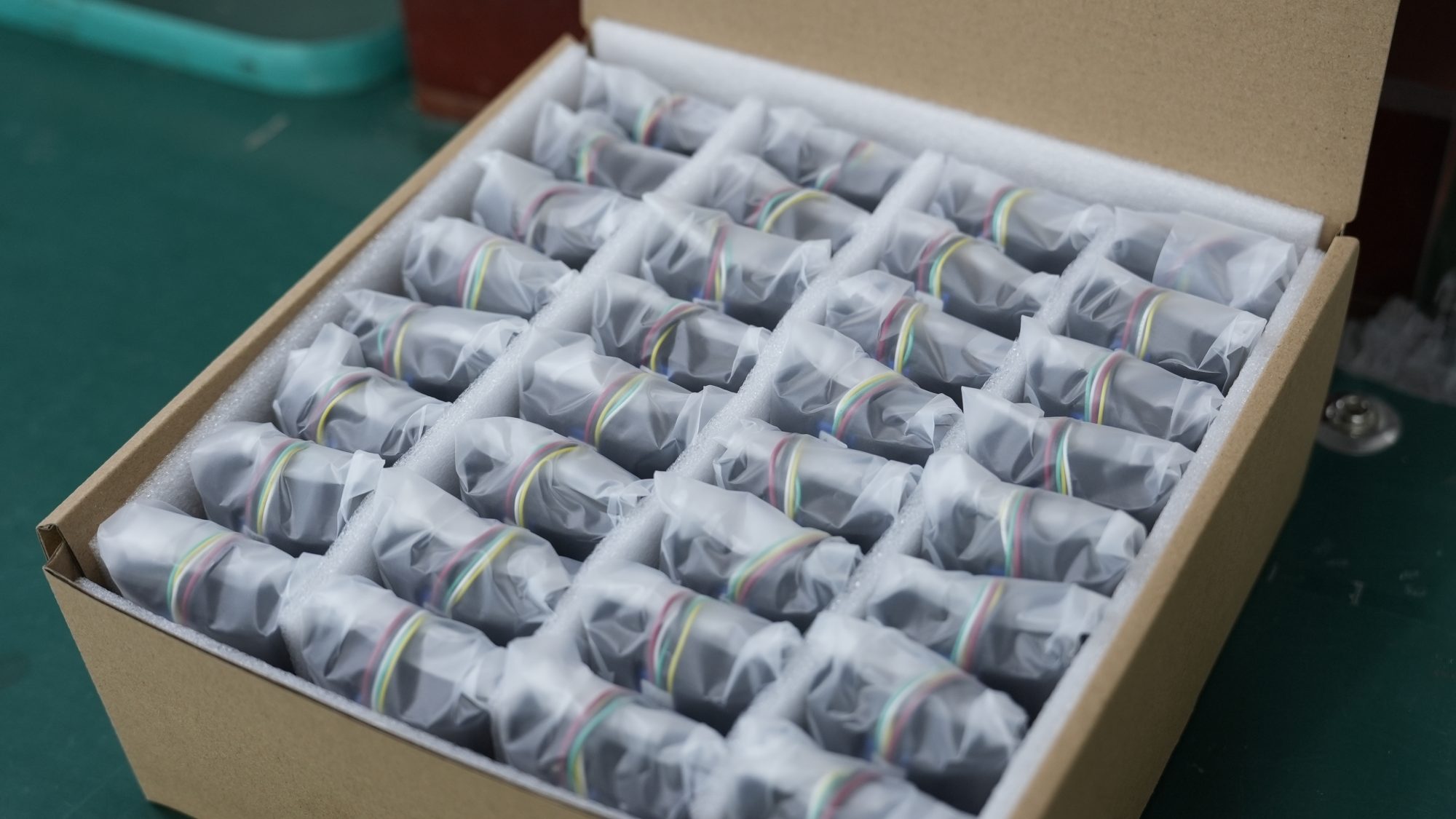
Reliable integration requires controlled cell matching, welding, insulation, connector assembly, and enclosure design. Every pack should be traceable to its cell batch, BMS version, production date, test record, and key materials.
Quality controls should include:
Incoming cell capacity and internal-resistance inspection
Cell matching before assembly
Weld-strength and connection-resistance verification
Insulation and polarity checks
BMS functional testing
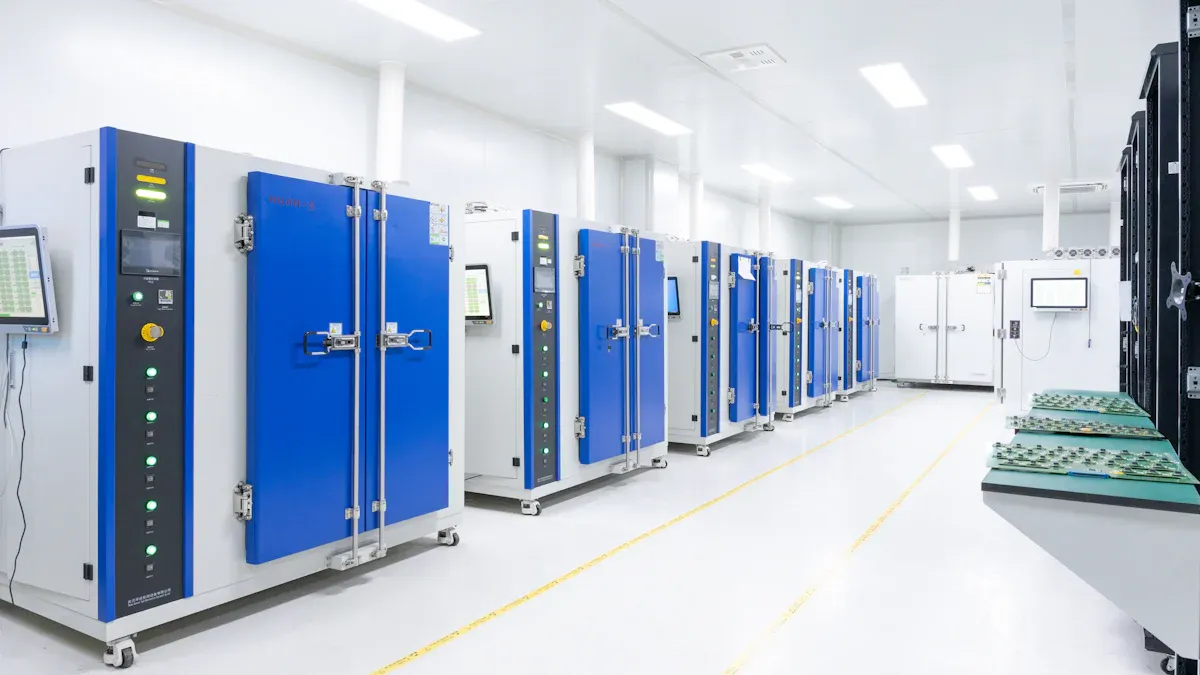
Charge-discharge and capacity testing
Final visual and dimensional inspection
Serialization and production-record retention
Pack design should also prevent incorrect installation, connector reversal, cable abrasion, liquid ingress, and mechanical stress during servicing.
2.2 Monitoring, Calibration, and Maintenance
Battery testers, temperature sensors, data loggers, and electrical measurement equipment must be calibrated according to documented schedules. Unreliable measurement data can conceal cell imbalance, capacity loss, or abnormal heat generation.
The analyzer should monitor relevant parameters and provide actionable warnings. Maintenance criteria can include reduced runtime, abnormal charging time, excessive voltage imbalance, rising internal resistance, swelling, damage, repeated BMS faults, or unexpected shutdowns.
Battery replacement should follow validated service criteria rather than a universal cycle number. Actual life depends on chemistry, depth of discharge, charging voltage, temperature exposure, current demand, storage conditions, and calendar aging.
2.3 Standards and Regulatory Considerations
Applicable requirements depend on the product, market, battery design, and transportation method. Common references may include:
IEC 62133-2 for rechargeable portable sealed cells and batteries
UN 38.3 for lithium battery transportation testing
UL 2054 where applicable to household and commercial battery packs
IEC 60601-1 for the completed medical electrical equipment
ISO 13485 for the manufacturer’s medical-device quality management system
FDA quality-system requirements for devices marketed in the United States
These requirements should be assigned correctly. IEC 60601-1 applies to the medical equipment and its power system, while ISO 13485 addresses the organization’s quality management system. Neither should be presented simply as a battery-pack certification.
FAQ
What voltage does a 5S2P lithium battery pack provide?
A 5S2P NMC pack typically provides about 18.5V nominal voltage and reaches 21.0V when fully charged. The exact operating range depends on the selected cells and BMS cutoff settings.
Does 5S2P always provide 5400mAh?
No. Pack capacity equals twice the capacity of one cell in a 5S2P configuration. Two 2700mAh cells in parallel provide 5400mAh, while two 3500mAh cells would provide approximately 7000mAh.
How does a BMS improve IVD analyzer safety?
A BMS monitors cell-group voltage, pack current, and temperature. It can stop charging or discharging when unsafe conditions occur and can provide diagnostic information to the analyzer.
Which standards should be considered?
IEC 62133-2 and UN 38.3 commonly apply to battery safety and transportation. IEC 60601-1 applies to the completed medical electrical equipment, while ISO 13485 applies to the manufacturer’s quality management system.
Where can manufacturers obtain a customized battery solution?
Large Power provides medical battery solutions and application-specific custom battery design covering cell selection, BMS development, mechanical integration, testing, and production traceability.


