

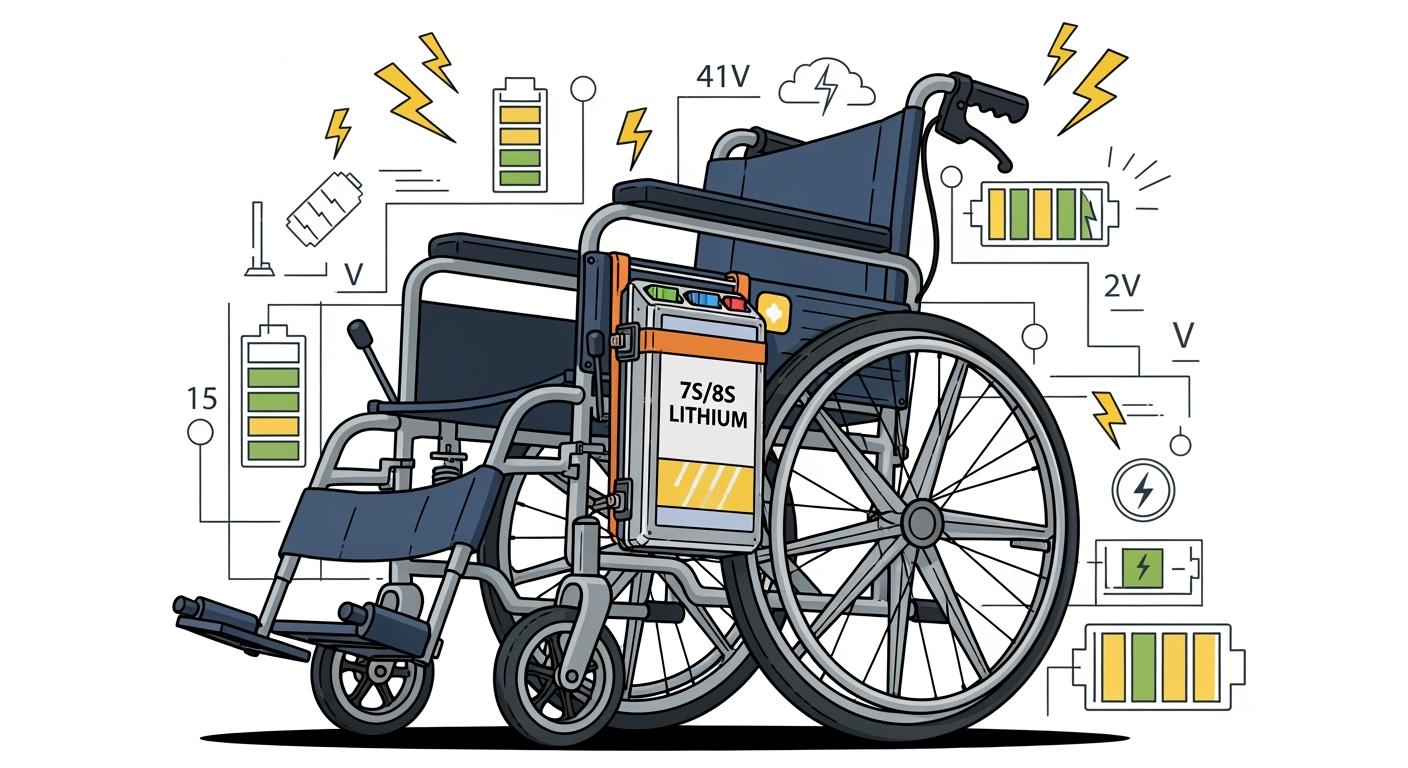
You depend on 24v medical power wheelchairs for consistent performance, and lithium-ion batteries deliver the ideal solution. These batteries offer lightweight construction, rapid charging, and stable output. With lithium technology, your wheelchair gains reliable power, extended runtime, and easier portability, enhancing both mobility and independence.
Key Takeaways
Choose 7S or 8S lithium batteries for 24V medical wheelchairs to ensure proper voltage and reliable power delivery.
Lightweight lithium batteries enhance mobility and reduce strain on the wheelchair, making them ideal for users who travel frequently.
Follow essential maintenance steps, like nightly recharging and regular inspections, to extend battery life and ensure optimal performance.
Part1: Voltage and Battery Compatibility in 24V Medical Wheelchairs
1.1 7S/8S Batteries and Voltage Requirements
You need a battery system that matches the power requirements of 24v medical power wheelchairs. The 7S (seven cells in series) and 8S (eight cells in series) battery configurations deliver the precise voltage needed for these devices. Each lithium-ion cell provides a nominal voltage of 3.6V to 3.7V. When you connect seven cells in series, you achieve a nominal battery voltage and configuration of 25.2V to 25.9V. An 8S configuration increases this to 28.8V to 29.6V. This voltage range aligns perfectly with the 24V system, ensuring your wheelchair receives stable power throughout the discharge cycle.
Tip: Choosing the right battery voltage and configuration prevents under-voltage or over-voltage issues, which can damage sensitive electronics in your electric wheelchair.
You benefit from this compatibility because it allows the battery to deliver consistent power output, supporting the performance and range you expect from your wheelchair. The 7S/8S setup also simplifies integration with standard 24V controllers and motors, reducing the risk of system errors and improving overall reliability.
1.2 Impact on Electric Wheelchair Systems
When you select a 7S or 8S battery pack, you ensure that your electric wheelchair operates efficiently and safely. The battery voltage and configuration directly affect the performance, charging, and power delivery of the entire system. You avoid voltage drops that can limit range or cause sudden power loss. Instead, you experience smooth acceleration, reliable power, and optimal performance.
The table below compares common lithium battery chemistries used in 24v medical wheelchairs and other sectors such as robotics, security systems, infrastructure, consumer electronics, and industrial applications:
Chemistry | Nominal Cell Voltage (V) | 7S Pack Voltage (V) | 8S Pack Voltage (V) | Energy Density (Wh/kg) | Cycle Life (cycles) |
|---|---|---|---|---|---|
LiFePO4 | 3.2 | 22.4 | 25.6 | 90-120 | 2000-4000 |
NMC (LiNiMnCoO2) | 3.6 | 25.2 | 28.8 | 150-220 | 1000-2000 |
LCO (LiCoO2) | 3.7 | 25.9 | 29.6 | 150-200 | 500-1000 |
LMO (LiMn2O4) | 3.7 | 25.9 | 29.6 | 100-150 | 500-1000 |
LTO (Li4Ti5O12) | 2.3 | 16.1 | 18.4 | 60-110 | 5000-10000 |
Solid-State | 3.7 | 25.9 | 29.6 | 250+ | 2000+ |
You see that NMC and LCO chemistries, both types of lithium-ion batteries, offer the ideal voltage for 24v medical wheelchairs. LiFePO4 batteries, while safer and longer-lasting, require an 8S configuration to meet the minimum voltage threshold. LTO batteries do not reach the required voltage even in an 8S setup, making them less suitable for this application.
When you choose the right battery, you also streamline charging and maintenance. The battery integrates seamlessly with the wheelchair’s electronics, supporting efficient charging cycles and protecting against overcharge or deep discharge. This compatibility extends the battery’s lifespan and ensures you get the most out of every charge.
Note: For more details on medical battery solutions, visit our medical battery solution page.
For a deeper dive into lithium-ion battery solutions, see our lithium-ion battery solution page.
You gain peace of mind knowing your battery system meets strict industry standards for safety, performance, and reliability. This approach supports not only medical applications but also robotics, security, infrastructure, and industrial sectors where dependable power is critical.
Part2: Safety, Performance, and Efficiency of Lithium Batteries
2.1 Lightweight and High Energy Density
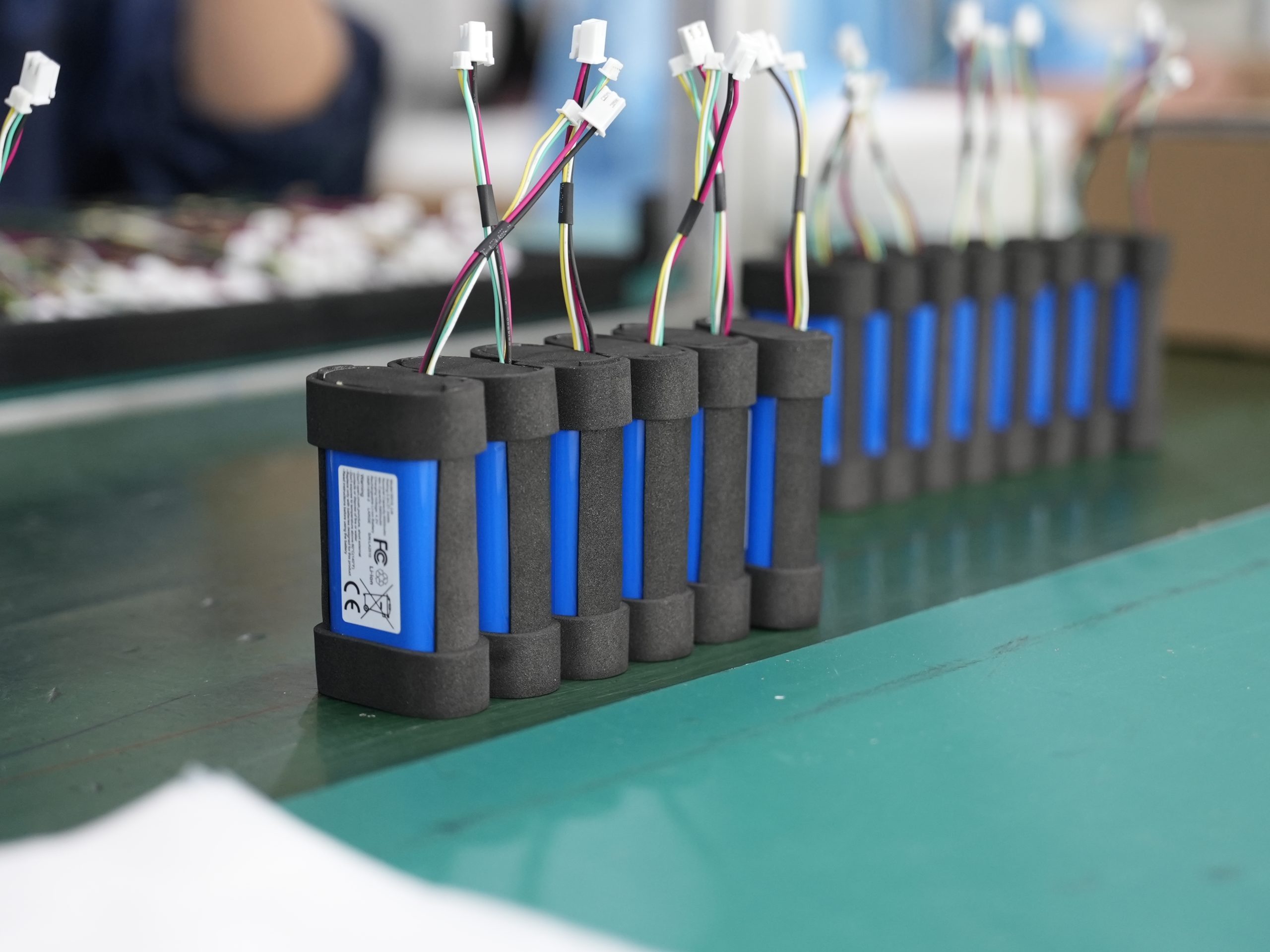
You expect your 24v medical wheelchairs to deliver optimal mobility and extended range. Lithium batteries provide a significant advantage due to their lightweight design and high energy density. When you select lithium-ion batteries, you reduce the overall weight of your wheelchair, making it easier to transport and maneuver. This feature is essential for users who require frequent travel or need to navigate tight spaces in medical, robotics, or industrial environments.
You benefit from batteries that offer up to 1,000 charge cycles, which translates to a longer lifespan and fewer replacements. The high energy density ensures that your wheelchair can cover greater distances on a single charge, supporting your daily activities without frequent interruptions. Compared to traditional lead-acid batteries, lithium-ion batteries deliver superior range and performance, making them the preferred choice for electric mobility solutions.
Tip: Lightweight batteries not only improve portability but also reduce strain on the wheelchair’s frame and drive system, enhancing overall durability.
The table below compares the most common battery chemistries used in medical wheelchairs. For more details on LiFePO4, NMC, LCO, LMO, LTO, and solid-state battery chemistries, visit our battery chemistry solution page.
Chemistry | Platform Voltage (V) | Energy Density (Wh/kg) | Cycle Life (cycles) |
|---|---|---|---|
LiFePO4 | 3.2 | 90-120 | 2000-4000 |
NMC | 3.6 | 150-220 | 1000-2000 |
LCO | 3.7 | 150-200 | 500-1000 |
LMO | 3.7 | 100-150 | 500-1000 |
LTO | 2.3 | 60-110 | 5000-10000 |
Solid-State Battery | 3.7 | 250+ | 2000+ |
2.2 Reliable Power and Low Discharge Rate
You rely on consistent power delivery to maintain the performance of your electric wheelchair. Lithium batteries excel in providing reliable power output and maintaining a low discharge rate. This stability ensures that your wheelchair operates smoothly, with minimal risk of sudden power loss or voltage drops. You experience dependable acceleration and sustained range, which are critical for medical and industrial applications.
Lithium-ion batteries are preferred in 24v medical wheelchairs due to their high energy density.
These batteries are lightweight, which enhances the mobility of the wheelchair.
You benefit from a long lifespan, with up to 4,000 charge cycles.
Fast charging capabilities allow you to recharge batteries within 1–2 hours.
Virtually no maintenance is required, improving reliability and reducing downtime.
Safety remains a top priority when you choose lithium batteries. The most frequently reported safety incidents involve overheating, off-gassing, and fire risks. Manufacturers address these concerns by implementing advanced battery management systems (BMS) and strict safety protocols. The table below summarizes recent safety incidents and mitigation strategies in healthcare and industrial settings:
Incident Description | Location | Year | Outcome |
|---|---|---|---|
Fire due to lithium-ion battery in healthcare workstation | Hospital | N/A | Evacuation of part of the building |
Fire triggered by off-gassing from a commercial power bank | Children’s Hospital, Tampa, Florida | 2023 | Evacuation of approximately 80 people |
Average of lithium-ion battery fires recorded | Massachusetts | 2019-2023 | 19.4 fires per year |
Fires attributed to lithium-ion batteries | New York City | 2023 | 268 fires, 18 deaths |
Lithium battery involvement in fires | New South Wales, Australia | N/A | 1 in every 40 fires attended |
Lithium Battery Management Plan (LBMP) | N/A | N/A | Systematic approach to prevent incidents |
You minimize risk by choosing batteries with integrated BMS, which monitor temperature, voltage, and current. These systems prevent overcharging, deep discharge, and thermal runaway, ensuring safe operation in all environments.
2.3 Fast Charging and Enhanced User Mobility
You value efficiency and independence in your daily routine. Lithium batteries support fast charging, allowing you to recharge your wheelchair in just 1–2 hours. This rapid turnaround means you spend less time waiting and more time moving. You maintain a high level of mobility, whether you operate in a medical facility, robotics lab, or industrial site.
Efficient charging cycles and maintenance-free operation set lithium-ion batteries apart from other technologies. You avoid the frequent service requirements associated with lead-acid batteries, which often need regular water top-ups and periodic checks. Lithium batteries deliver consistent performance and power, supporting your need for reliability and extended range.
Lithium-ion batteries offer lightweight design, longer range, and maintenance-free operation.
Lead-acid batteries provide cost-effective solutions and reliability for indoor use, but lack portability and fast charging.
You achieve greater independence with lithium batteries, as you can quickly recharge and resume activities without delay.
Note: Fast charging not only improves user mobility but also reduces downtime for medical staff and facility operators, increasing overall productivity.
You gain confidence knowing your battery system meets industry standards for safety, performance, and efficiency. The combination of lightweight construction, reliable power delivery, and rapid charging makes lithium batteries the optimal choice for 24v medical wheelchairs and other electric mobility platforms.
Part3: Practical Benefits for Electric Wheelchair Users
3.1 Maintenance and Serviceability of Battery Systems
You need reliable batteries in 24v medical wheelchairs to ensure consistent power and minimal downtime. Proper battery maintenance helps you maximize performance and extend the lifespan of your battery systems. Follow these essential steps for effective maintenance:
Recharge the batteries of your electric wheelchair every night, regardless of usage.
Allow each charging cycle to complete fully overnight.
Keep the batteries charging if you do not use the chair for several days.
Disconnect the batteries if you will not use the wheelchair for more than 15 days, but ensure weekly charging.
Inspect battery terminals regularly for corrosion and clean them as needed.
Disconnect the charger by pulling the connector, not the cable.
Avoid extension cables to reduce fire or electric shock risk.
These procedures help you maintain optimal power delivery and range. Modular battery designs in dual battery systems allow for quick swaps, reducing downtime and supporting efficient service. You benefit from batteries that integrate seamlessly with electronics in medical, robotics, security system, infrastructure, consumer electronics, and industrial applications. Learn more about custom battery solutions.
3.2 Cost-effectiveness and Industry Adoption
You want batteries that deliver value and meet industry standards. The table below highlights how 7S/8S lithium battery systems align with B2B needs:
Benefit | Description |
|---|---|
Longer service life | Custom battery systems increase cycle life, reducing frequent replacements. |
Predictable performance | Tested under real conditions for reliable power in medical settings. |
Easier service and maintenance | Modular batteries enable quick changes, minimizing downtime and improving safety. |
Sustainability | Longer life and stability reduce waste, supporting greener operations. Learn more about sustainability. |
Material sourcing and recyclability | Custom packs support easier recycling and compliance with regulations. See conflict minerals policy. |
You gain cost savings from fewer replacements and efficient maintenance. Industry adoption of these batteries continues to grow due to their proven performance, safety, and compatibility with advanced power systems.
You choose 7S/8S lithium battery systems for 24V medical wheelchairs because they deliver the right voltage, strong battery performance and range, and reliable charging. These battery solutions answer questions like how long does an electric wheelchair battery last and how far can an electric wheelchair go. You benefit from safe, efficient charging and robust battery technology. Ongoing innovation will keep improving battery performance and charging for your industry.
FAQ
What makes 7S/8S lithium battery systems ideal for medical wheelchairs?
You achieve precise voltage compatibility, reliable power delivery, and efficient integration with controllers. Large Power offers a custom battery solution for your range needs.
How do lithium batteries improve serviceability in industrial and medical sectors?
You benefit from modular designs, quick swaps, and minimal maintenance. These features support robotics, security system, and infrastructure applications with consistent uptime.
Can you compare battery chemistries for cycle life and energy density?
Chemistry | Platform Voltage (V) | Energy Density (Wh/kg) | Cycle Life (cycles) |
|---|---|---|---|
LiFePO4 | 3.2 | 90-120 | 2000-4000 |
NMC | 3.6 | 150-220 | 1000-2000 |
LCO | 3.7 | 150-200 | 500-1000 |
Solid-State | 3.7 | 250+ | 2000+ |


