

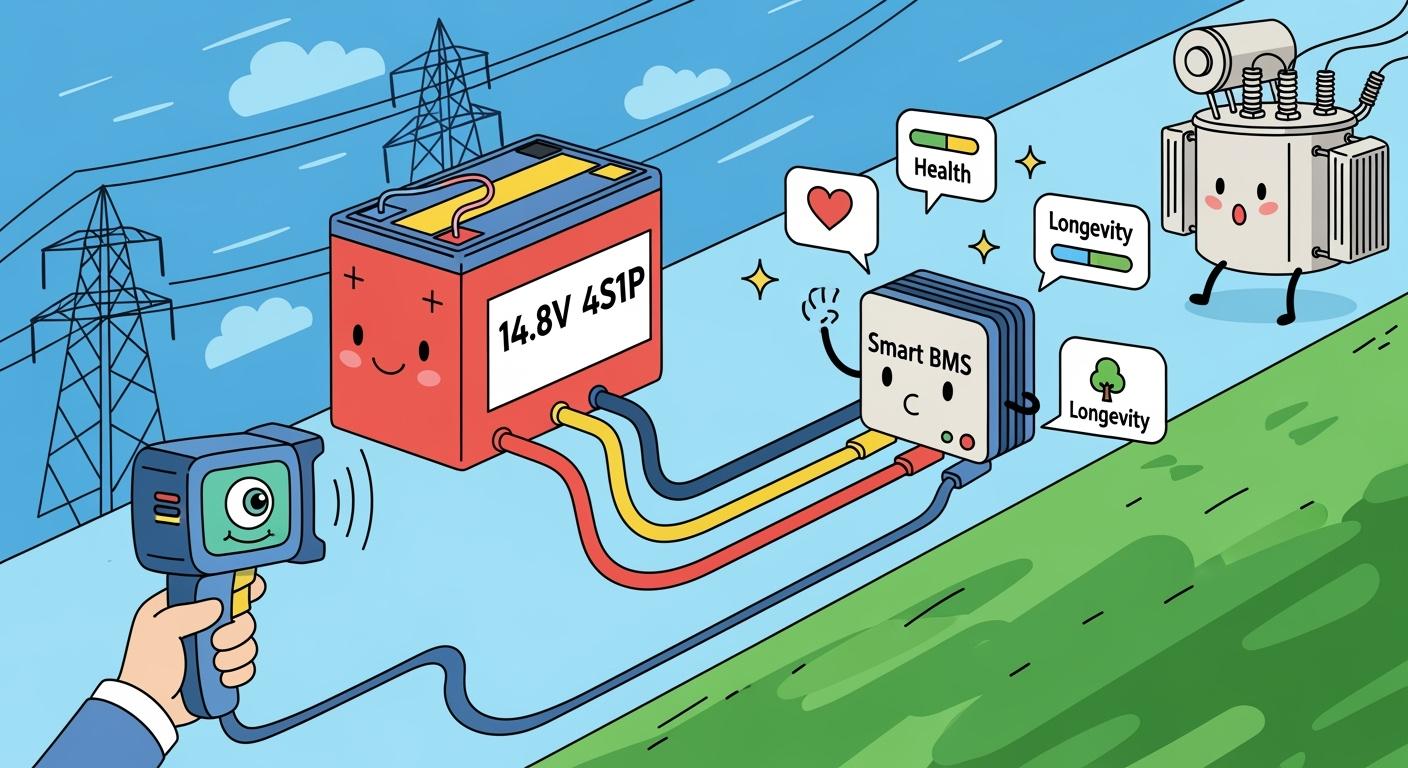
You rely on your 14.8V 4S1P lithium battery packs to power substation inspection devices in demanding environments. Smart BMS gives you precise control over cell balancing and safeguards against overcharge and over-discharge. This technology helps you maintain a stable power supply, which supports consistent device performance. You reduce the risk of battery failure and extend operational life. Technical professionals and decision-makers see real benefits in reduced downtime and safer, more reliable inspections.
Key Takeaways
Smart BMS actively balances battery cells, preventing overcharging and extending battery life from 3-5 years to 10-15 years.
Real-time monitoring of voltage, current, and temperature enhances safety, reducing risks of thermal runaway and equipment failure.
Stable power supply from Smart BMS ensures uninterrupted operation of substation inspection devices, minimizing downtime.
Lower maintenance costs result from fewer battery replacements, allowing for better resource allocation and supporting sustainability goals.
Choosing a Smart BMS that fits your application needs ensures optimal performance and safety in demanding environments.
Part1: Smart BMS Overview for 14.8V 4S1P Batteries
1.1 Core Functions of Smart BMS
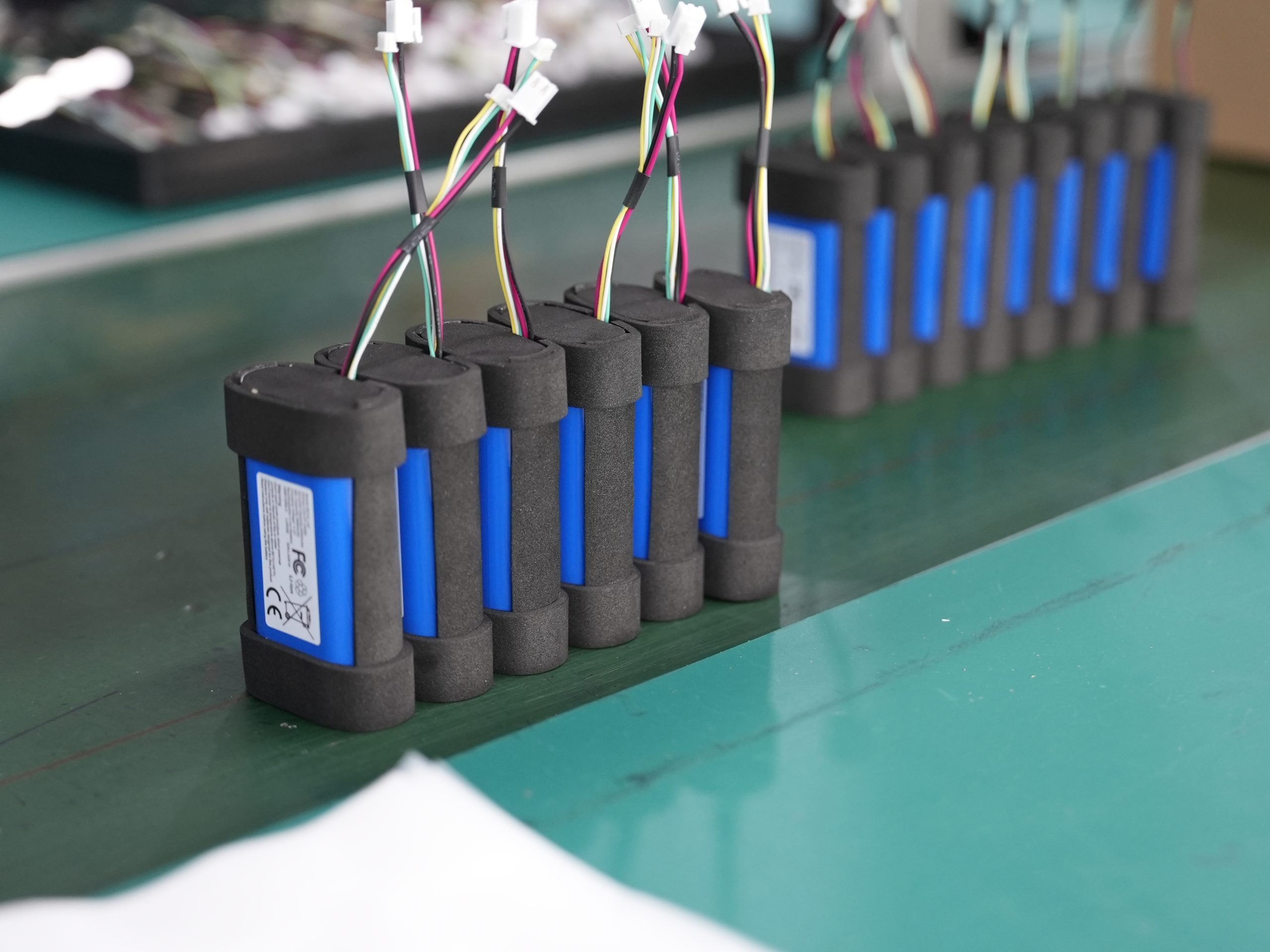
You need a battery management solution that goes beyond basic protection. Smart BMS stands out as an advanced system designed for lithium battery packs, including the 14.8V 4S1P configuration used in substation inspection devices. If you want to learn more about battery management systems, you can visit the BMS and PCM page.
Smart BMS brings several core functions that support your operations:
It monitors battery voltage to prevent overcharging and undercharging.
It protects your battery pack from current spikes and short circuits.
It ensures proper charging and discharging of lithium-ion or polymer cells.
It balances the cells within the pack, which helps maintain consistent performance and extends battery life.
These features help you maintain safe and reliable power for critical infrastructure and industrial applications.
1.2 Differences from Conventional BMS
You may wonder how Smart BMS differs from a conventional BMS. Traditional BMS units provide basic protection, such as disconnecting the battery during unsafe conditions. However, Smart BMS offers advanced monitoring and control. You gain access to real-time data on voltage, current, and temperature for each cell. This level of detail allows you to detect issues early and take action before failures occur.
Smart BMS also supports active cell balancing. This function keeps all cells at similar voltage levels, which prevents capacity loss and improves cycle life. In contrast, conventional BMS often relies on passive balancing or may not balance cells at all. With Smart BMS, you can optimize the performance of your 14.8V 4S1P lithium battery packs, reduce maintenance needs, and ensure stable operation for substation inspection devices and other industrial systems.
Part2: Smart BMS Impact on Battery Life and Safety
2.1 Cell Balancing and Overcharge Protection
You need your lithium battery packs to deliver consistent performance in every inspection cycle. Smart BMS actively manages cell balancing by ensuring that each cell in your 14.8V 4S1P pack maintains the same state of charge. This process prevents weaker cells from being overcharged or over-discharged, which can shorten their lifespan and reduce overall capacity. You benefit from a battery system that enforces strict limits on charge levels, extending operational life from a typical 3-5 years to as much as 10-15 years.
Smart BMS balances cells to ensure uniform charge distribution.
It prevents voltage imbalances that can lead to premature cell degradation.
You avoid overcharging and over-discharging, which protects both strong and weak cells.
Tip: In industrial, medical, and robotics applications, cell balancing is critical. You reduce the risk of unexpected shutdowns and extend the service life of your devices.
You can see how Smart BMS protects your battery pack in the following table:
Mechanism | Description |
|---|---|
Overcharge Protection | Disconnects the battery pack from the charger when the voltage exceeds the overcharge protection voltage (VOCP). |
Over-discharge Protection | Disconnects the battery pack when the voltage drops below the over-discharge protection voltage (VODP). |
2.2 Stable Power Supply and Runtime
You rely on a stable power supply to keep your substation inspection devices running without interruption. Smart BMS ensures that your battery pack delivers consistent voltage and capacity, such as 6Ah, throughout each cycle. This stability is essential for applications in infrastructure, security systems, and industrial automation, where device reliability cannot be compromised.
Aspect | Description |
|---|---|
Enhanced Power Efficiency | Stable, consistent energy output for uninterrupted inspections |
Increased Durability and Longevity | Longer lifespan, fewer replacements, withstands deep discharge cycles |
Resistance to Harsh Conditions | Reliable performance in extreme temperatures and heavy usage |
You experience fewer unexpected shutdowns and less downtime. Your devices operate efficiently, even in challenging environments. This reliability supports continuous monitoring and data collection, which is vital for infrastructure and security systems.
2.3 Optimized Charging and Discharging
You need your lithium battery packs to charge quickly and discharge safely. Smart BMS optimizes these processes by accurately managing the flow of energy into and out of each cell. This control reduces the risk of overheating and extends the usable life of your battery pack. In sectors like medical devices, robotics, and consumer electronics, fast charging and safe discharging are essential for operational efficiency.
Smart BMS enables quick recharge cycles, minimizing delays.
It reduces downtime by preventing deep discharge damage.
You maintain high operational efficiency, even during heavy usage.
Note: Effective BMS control enhances battery lifespan and performance by managing charging and discharging with precision. This is especially important in large-scale energy storage and critical infrastructure.
You can trust Smart BMS to deliver the safety, reliability, and longevity your applications demand, whether you work in industrial automation, medical technology, or advanced robotics.
Part3: Benefits for Substation Inspection Devices
3.1 Increased Uptime and Reliability
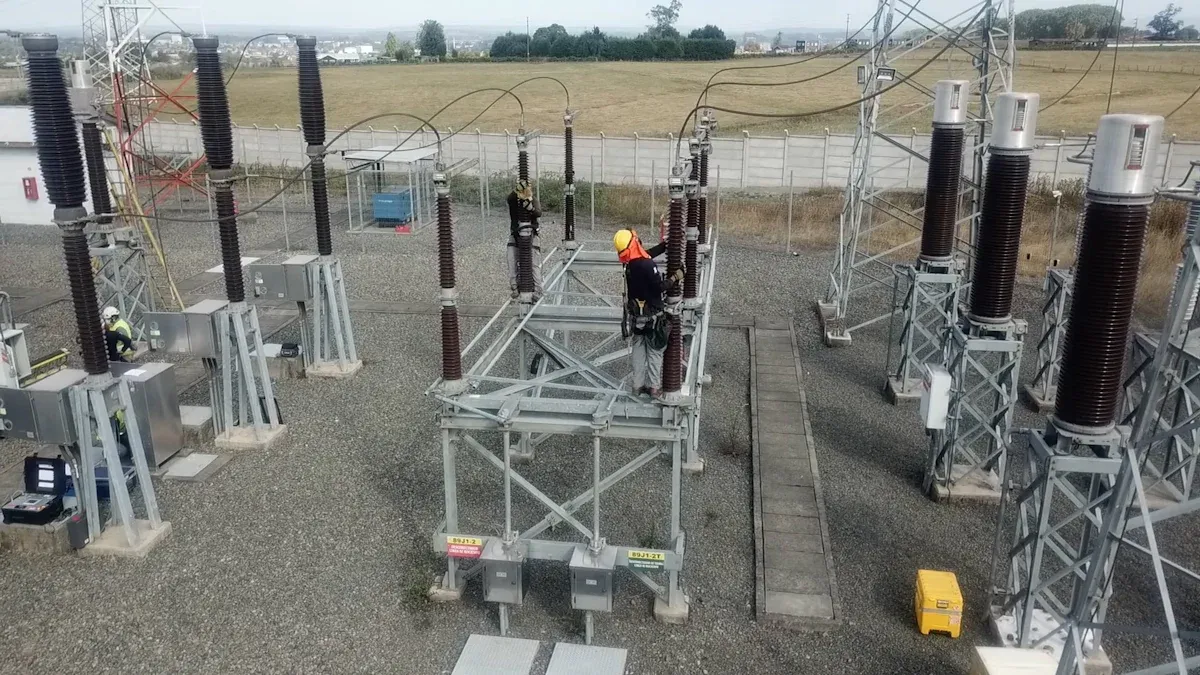
You depend on uninterrupted operation for substation inspection devices. Smart BMS helps you achieve this by maintaining balanced cells and stable voltage in your 14.8V 4S1P lithium battery packs. This technology reduces the risk of sudden shutdowns during critical inspections. You see consistent performance in industrial automation, security systems, and infrastructure monitoring. Devices equipped with Smart BMS deliver reliable power, even in harsh environments or during extended field operations. This reliability supports continuous data collection and minimizes the risk of missed events.
3.2 Lower Maintenance and Replacement Costs
You want to reduce operational expenses and avoid frequent battery replacements. Smart BMS extends the service life of lithium battery packs by preventing overcharge, over-discharge, and cell imbalance. You spend less time on manual checks and fewer resources on emergency repairs. Lower failure rates mean you can allocate your maintenance budget more efficiently. When you use battery packs with Smart BMS, you also support sustainability goals by reducing electronic waste and extending product lifecycles.
Tip: Longer battery life and fewer replacements help you meet both cost and environmental targets.
3.3 Enhanced Safety Features
You need to protect your personnel and equipment from battery hazards. Smart BMS provides advanced safety features that actively monitor thermal conditions and current flow. If temperatures rise above safe limits, the system triggers alarms or initiates a controlled shutdown. This proactive approach prevents thermal runaway and system failures, which is critical for regulatory compliance in industrial and medical applications.
Safety Feature | How It Works |
|---|---|
Thermal Monitoring | Continuously checks cell temperature to prevent overheating |
Current Management | Actively controls current to keep temperatures below critical thresholds |
Automated Alarms and Shutdowns | Triggers alerts or system shutdown if unsafe conditions are detected |
You gain peace of mind knowing your lithium battery packs operate within safe parameters. These features reduce incident rates and help you maintain a safe working environment across robotics, medical, and infrastructure sectors.
Part4: Comparing Smart BMS and Conventional BMS
4.1 Battery Life Extension
You want your lithium battery packs to last as long as possible in demanding environments. Smart BMS gives you advanced cell balancing and precise control over charging and discharging. This technology helps you extend battery life well beyond what conventional BMS can achieve. For example, in LiFePO4, NMC, LCO, and LMO chemistries, you see longer cycle life and more stable platform voltage when you use Smart BMS. You reduce the risk of early capacity loss, which is critical for industrial, medical, and robotics applications.
Feature | Smart BMS | Conventional BMS |
|---|---|---|
Cell Balancing | Active (precise, real-time) | Passive or none |
Data Monitoring | Real-time, per-cell | Basic, pack-level |
Cycle Life Extension | Significant | Limited |
Overcharge Protection | Advanced, adaptive | Basic, fixed thresholds |
Application Fit | Industrial, medical, robotics | General, less specialized |
Tip: You can maximize battery pack longevity by pairing Smart BMS with regular maintenance and monitoring.
4.2 Performance and Safety Metrics
You need reliable performance and safety for your substation inspection devices. Smart BMS provides real-time monitoring of voltage, current, and temperature for each cell. This level of detail helps you prevent failures and maintain consistent energy output. In contrast, conventional BMS offers only basic protection and limited data. You see the difference in critical sectors like security systems and infrastructure, where downtime is not acceptable.
Smart BMS supports higher energy density and stable platform voltage for LiFePO4 (3.2V), NMC (3.7V), LCO (3.7V), and LMO (3.7V) cells.
You benefit from longer cycle life, often exceeding 2000 cycles for LiFePO4 and 1000 cycles for NMC, LCO, and LMO.
You reduce safety risks through advanced thermal and current management.
4.3 Selection Considerations
You must consider several factors when selecting a Smart BMS for 14.8V 4S1P battery packs in industrial settings:
Regular battery maintenance and monitoring help you maximize lifespan and reliability.
Proper usage within manufacturer-specified operating range prevents damage from voltage, current, or temperature extremes.
Quality of materials and strict manufacturing standards ensure performance and safety.
Brand reputation and supplier reliability reduce risks from substandard products.
Incorporation of a battery management system is critical for monitoring and protecting each cell.
You should also evaluate compatibility and scalability. A well-designed BMS adapts to different voltage, current, and capacity needs. This flexibility ensures optimal performance in diverse environments, from medical devices to industrial automation and security systems.
⚡ Tip: Choose a Smart BMS that matches your application’s requirements and supports future expansion.
You improve the operational life, safety, and reliability of your 14.8V 4S1P lithium battery packs with Smart BMS. This technology supports your substation inspection devices by providing advanced monitoring and protection. You should consider key safety standards and certifications when choosing a solution:
Safety Standard | Key Features |
|---|---|
ISO 26262 | Risk assessment, hazard analysis, safety integrity levels, design and testing requirements |
IEC 61508 | Safety lifecycle management, risk reduction, certification for industrial BMS |
UL 1973 | Thermal runaway and fire hazard testing, system design guidelines |
SAE J2464 | Abuse condition testing, pack design, safety measures for EV batteries |
UN 38.3 | Vibration, shock, thermal testing, packaging, and shipping safety |
Certification / Test | Purpose |
|---|---|
UN38.3 | Air transport and shipping safety |
IEC62133-2 | Cell and pack safety for portable batteries |
UL1642 / UL2054 | Safety and flammability tests for US market |
You ensure compliance and performance by selecting a Smart BMS that meets these standards.
FAQ
What advantages does Smart BMS offer for 14.8V 4S1P lithium battery packs?
You gain real-time monitoring, active cell balancing, and advanced protection. These features extend battery life, improve safety, and reduce downtime for substation inspection devices and other industrial applications.
How does Smart BMS improve safety in industrial environments?
Smart BMS detects abnormal voltage, current, or temperature. It triggers alarms or controlled shutdowns to prevent hazards. You protect your equipment and personnel from risks like thermal runaway or electrical faults.
Can Smart BMS support different lithium chemistries like LiFePO4, NMC, LCO, and LMO?
Yes. You can use Smart BMS with LiFePO4, NMC, LCO, and LMO cells. It adapts to each chemistry’s platform voltage, energy density, and cycle life requirements.
Why is cell balancing important for substation inspection devices?
Cell balancing keeps all cells at similar voltage levels. You avoid early capacity loss and extend battery pack life. This ensures reliable power for continuous monitoring in critical infrastructure and security systems.
What certifications should you check when selecting a Smart BMS?
You should look for compliance with standards like ISO 26262, IEC 61508, UL 1973, and UN 38.3. These certifications ensure safety, reliability, and suitability for industrial and medical applications.
Need a smart BMS for substation inspection batteries or other field devices? Request a custom lithium battery solution from Large Power to match your voltage, communication, safety, and runtime requirements.


