

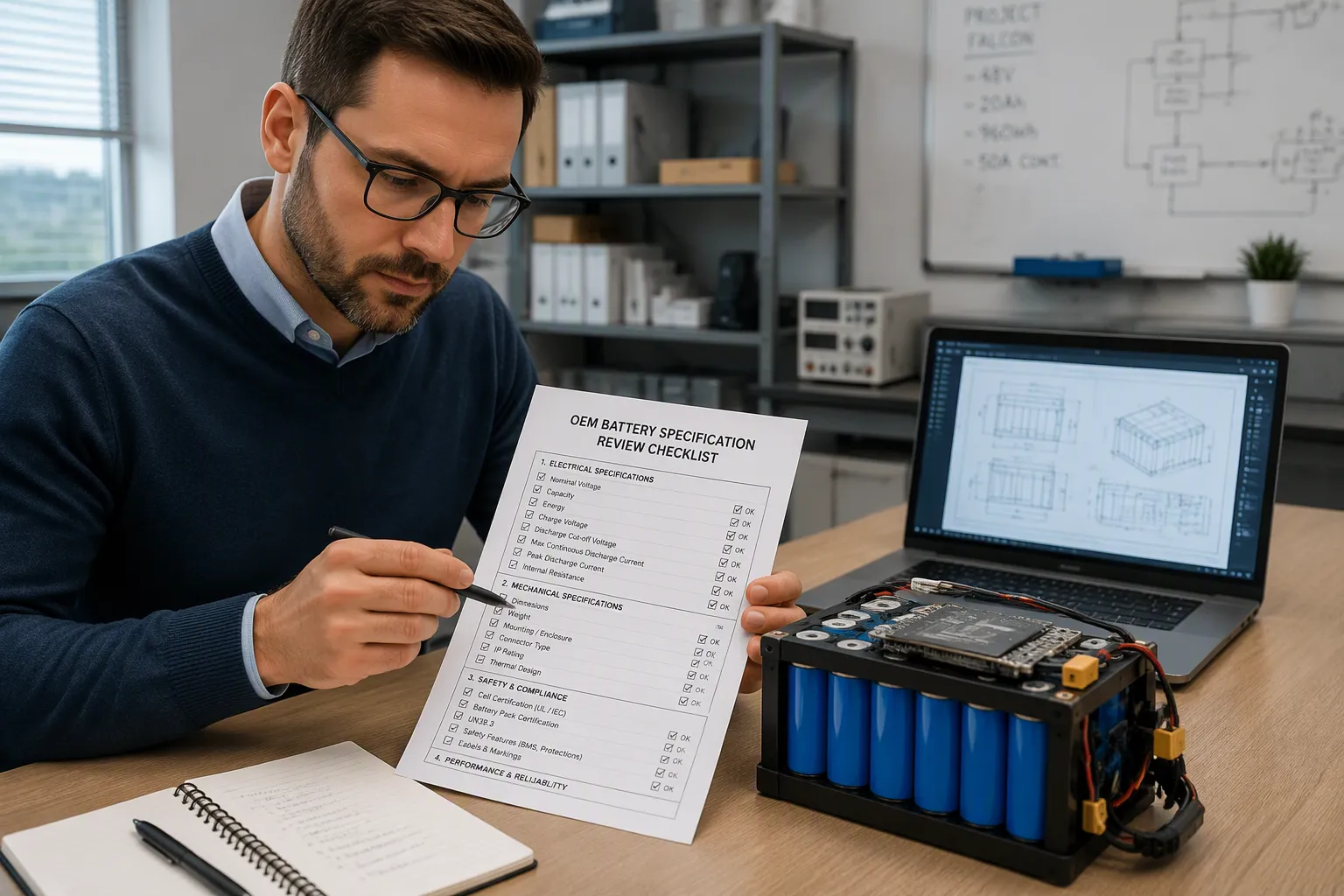
A useful battery RFQ describes what the equipment needs and how the finished pack will be accepted. It allows suppliers to identify gaps, propose alternatives and quote a defined scope. A capacity, nominal voltage and connector photograph are rarely enough for a reliable engineering quotation.
Quick Answer
Send the supplier a revision-controlled requirements package covering the complete voltage window, measured load profile, runtime at the required temperature and service age, finished dimensions, charger and communication interfaces, target markets, validation scope and project quantities. Mark unknowns explicitly. Request a quotation with assumptions, exceptions, one-time costs and acceptance deliverables so proposals can be compared on the same basis.
Part 1: Describe the Application and Project Stage
1.1 Identify the operating task
Explain whether the pack powers a medical instrument, robot, security device, infrastructure controller or other industrial equipment. Describe normal use, storage, transport and charging conditions without disclosing confidential customer information unnecessarily.
State whether the project is an early concept, retrofit, engineering prototype or production transfer. Identify who can approve requirements and when technical decisions are needed.
1.2 Separate requirements from preferences
Mark each field as mandatory, preferred or open for supplier recommendation. When a value is unknown, assign an owner and decision date. A blank field must not be interpreted as supplier approval.
Part 2: Specify Electrical and Mechanical Inputs
2.1 Provide a measured load profile
List continuous current, startup current, pulse duration, repetition rate and simultaneous loads. Provide acceptable voltage drop and the host input range. For motor systems, include relevant stall and regenerative conditions.
State target runtime and the actual operating cycle. Capacity in Ah is incomplete without voltage; Wh helps compare energy targets. Include temperature, aging and reserve assumptions instead of specifying an unsupported capacity margin.
2.2 Define the finished envelope
Supply the available battery-space drawing and finished-pack limits, including PCM, wiring, insulation, connector and expansion allowance where relevant. Identify mounting points, cable exit, pinout, polarity, keying and mating connector.
Specify handling, insertion, vibration, contamination and ingress requirements from the device environment. Do not select an IP rating merely because the product is described as industrial; ingress, shock and vibration need separate evaluation.
2.3 Use a shared requirements worksheet
RFQ field | Evidence or input | Acceptance basis |
|---|---|---|
Voltage and load | Host input range; current waveform and pulse timing | No reset or prohibited protection trip under the qualified duty |
Runtime | Duty cycle, temperature, initial SOC and service-age requirement | Agreed complete-device runtime test |
Mechanical interface | Revision-controlled drawing, tolerances, connector and pinout | Finished-pack dimensional and integration checks |
Smart interface | Registers, units, timing and invalid-data behavior | Host interoperability and fault-response tests |
Documentation | Target markets, exact model and proposed test scope | Reviewed document list linked to the released design |
For example, a medical instrument RFQ may prioritize backup runtime after storage, whereas a mobile robot RFQ may require regenerative-current and dock-communication data. Do not copy requirements between applications without reviewing their operating conditions.
Part 3: Define Charging and Communication
3.1 Include the existing power system
Provide charger and adapter details, charge voltage and current, temperature restrictions, restart behavior and whether the host operates while charging. Identify which controller performs charge regulation and termination. A BMS protection cutoff is not a substitute for normal charger control.
3.2 Specify the interface contract
If communication is required, give the physical interface, voltage levels, connector pins, protocol, register definitions, update rate and timeout behavior. CAN, RS-485, SMBus and I2C are not interchangeable interfaces.
Describe required SOC reporting, alarms and host actions. Discuss the actual functions through the BMS and PCM specification, rather than asking only for a smart battery.
Part 4: Scope Documentation and Commercial Deliverables
4.1 Map evidence to target markets
List intended countries, device category and applicable safety and transport requirements for assessment. Ask the supplier to identify which cell and pack documents already exist, what configuration they cover and what new work is proposed.
Request document identifiers and a compliance plan where needed. Do not assume that one cell certificate covers every custom pack, or that every project requires the same UL or IEC standard. Requirements depend on the equipment and market.
4.2 Keep quantities and costs distinct
List engineering samples, pilot quantity, first production order and annual forecast separately. Distinguish forecasts from committed orders. Ask for unit price, tooling, firmware, engineering, testing and logistics scope as separate quotation lines.
Request supplier-specific MOQ, lead time, assumptions, exclusions and quotation validity. Do not treat another supplier’s published turnaround as a Large Power commitment.
Part 5: Compare Quotes on a Common Basis
5.1 Require a compliance matrix
For each requirement, ask whether the proposal complies, needs validation, has an exception or requires clarification. Record the proposed cell model, configuration, drawing revision and deliverable list.
5.2 Define acceptance and change control
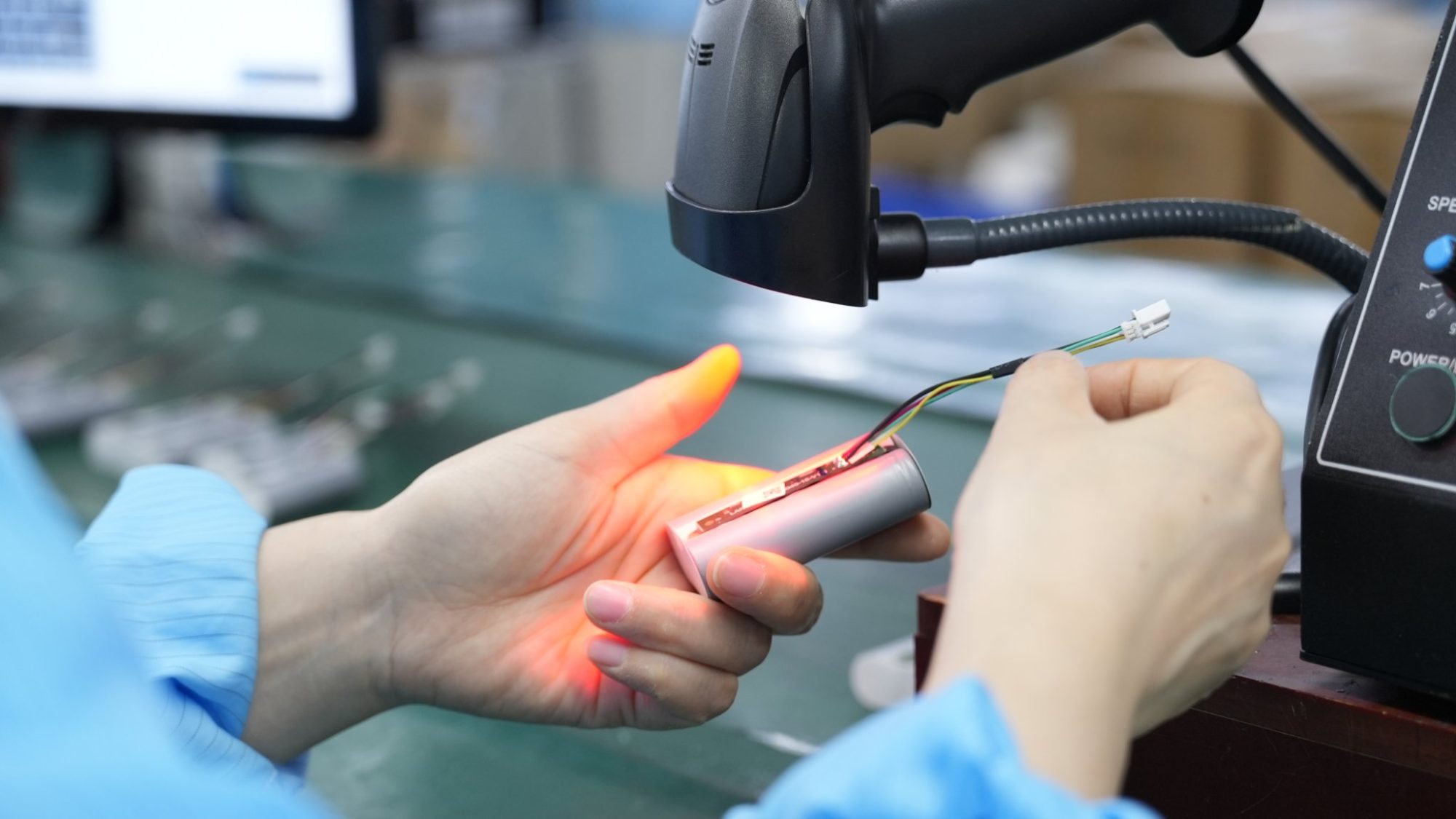
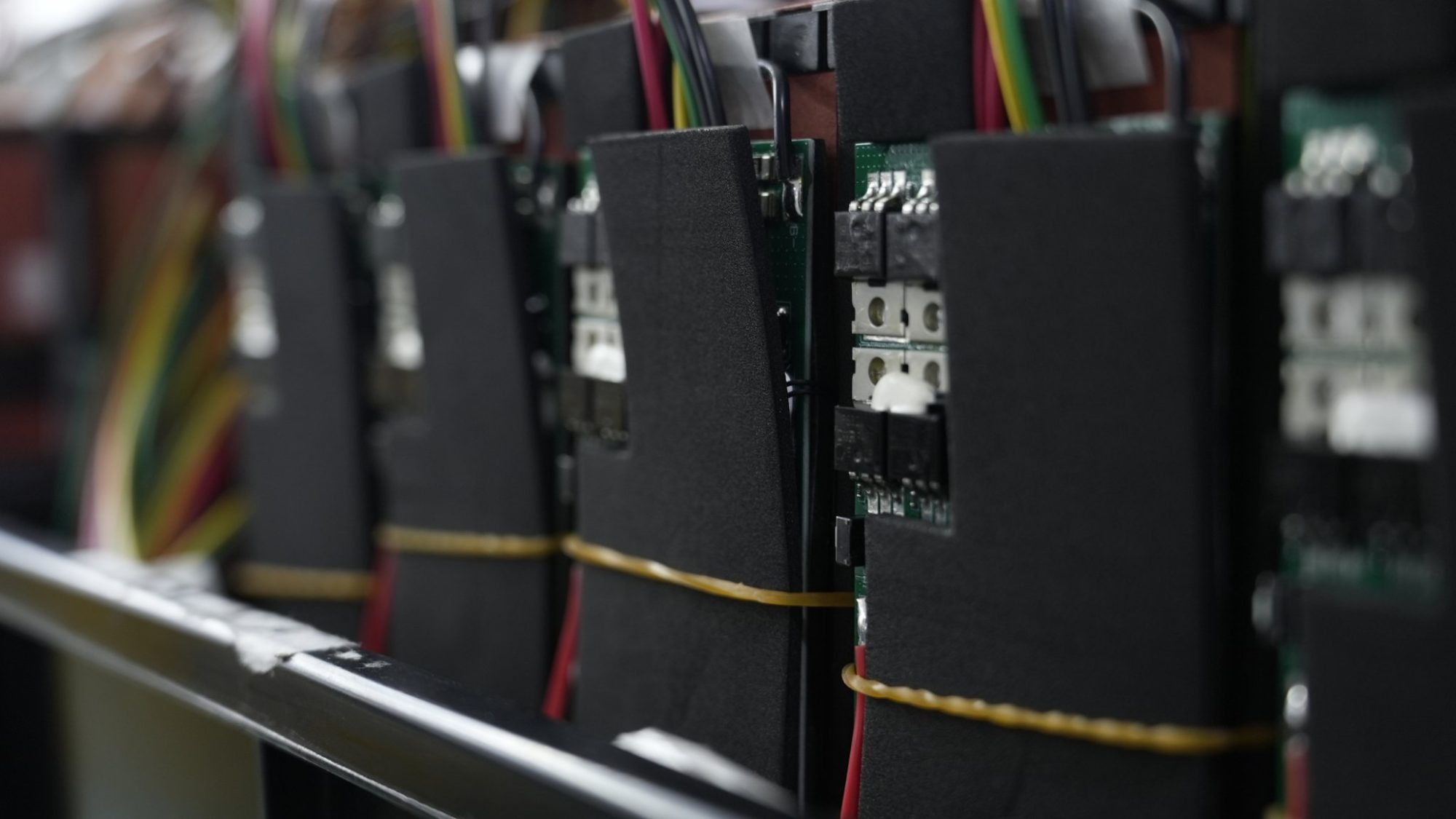
Agree on sample acceptance before development starts. Define the test configuration, host and firmware revisions, measurement conditions, sample plan, pass/fail criteria and handling of failures. Separate design-validation evidence from routine production checks and shipment documentation. A production aging photograph illustrates a process, not proof that the proposed model has passed qualification.
Require traceability to the released cell, BMS hardware and firmware, drawings and test records. Specify change notification and approval before cell substitution, connector changes or parameter updates. Evaluate proposals against the same deliverables and exclusions rather than headline unit price alone.
FAQ
Must the chemistry be fixed before requesting a quote?
No. Describe the operating constraints and priorities if cell selection remains open.
What if the load has not been measured?
Mark the uncertainty and agree on a measurement plan. Do not silently treat estimates as approved requirements.
Where can I submit the RFQ?
Use the custom battery solution inquiry with your drawings, load profile, documentation needs and project quantities.


