

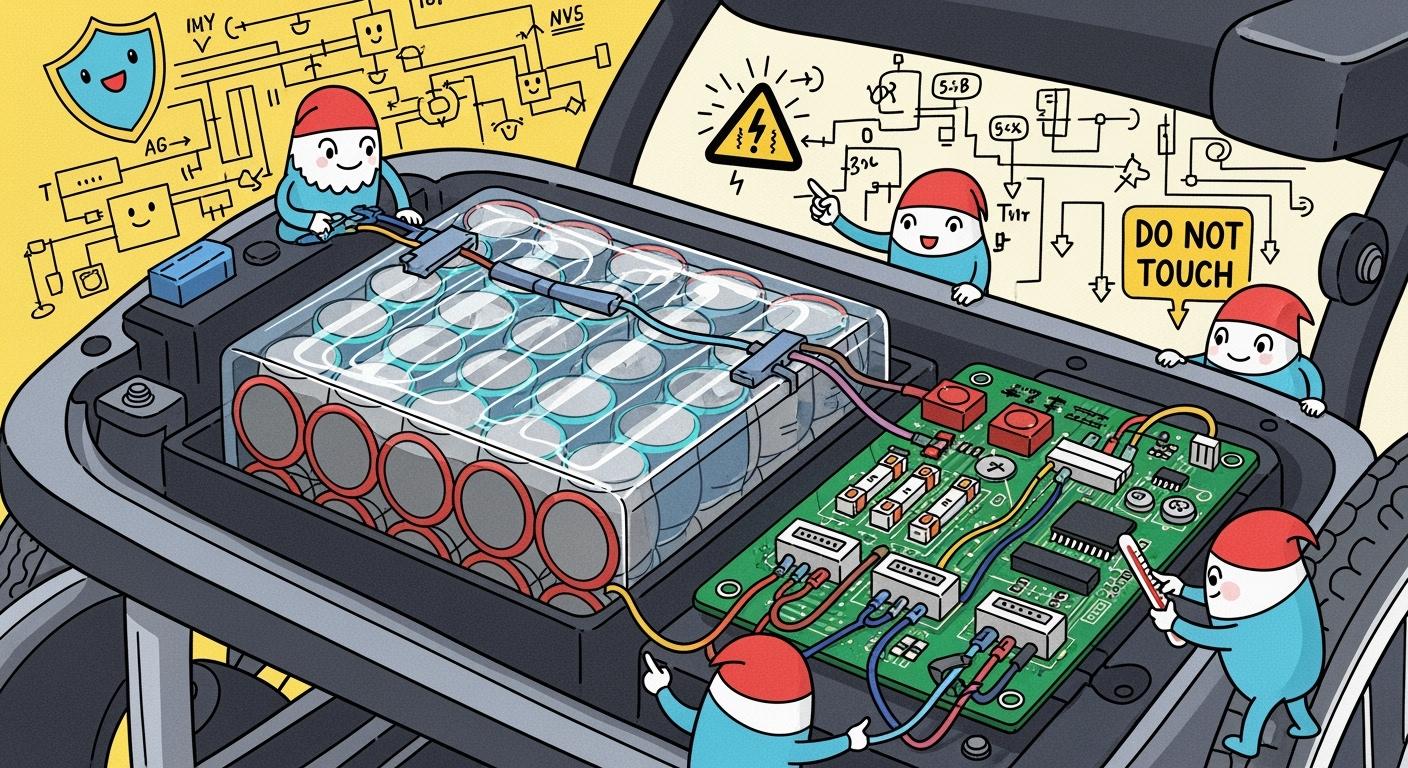
You face critical hazards when designing batteries for wheelchairs. Bms safety design demands insulation, robust encapsulation, and fire risk mitigation to protect against failure. Accurate monitoring and balancing maintain battery performance within the safe operating area. This practical guide delivers safety assurance and helps you avoid critical hazards in every battery application.
Key Takeaways
Prioritize insulation and fire risk mitigation to prevent electrical shorts and thermal runaway. Use high-quality materials and inspect insulation regularly to ensure safety.
Implement accurate voltage and temperature sensing to maintain safe operating conditions. This helps detect anomalies early and prevents overcharging or overheating.
Choose the right cell balancing method for your application. Active balancing offers better reliability for medical mobility, while passive balancing is simpler and cost-effective.
Part1: BMS Safety Design Fundamentals
1.1 Insulation and Fire Risk Mitigation
You must prioritize insulation and fire risk mitigation in every bms safety design for wheelchair battery packs. Insulation prevents electrical shorts and reduces the chance of thermal runaway. You should select high-quality insulating materials that withstand voltage spikes and mechanical stress. Fire risk mitigation starts with proper separation of cells and the use of flame-retardant barriers. You can add thermal fuses and current interrupters to stop abnormal heat buildup.
Tip: Always inspect insulation integrity during routine maintenance. Early detection of wear or damage helps you avoid catastrophic failures.
You need to follow bms design guidelines that recommend redundant safety layers. These layers include physical barriers, temperature sensors, and software-based cutoffs. You can use modular soa design to separate high-voltage sections and limit the spread of heat or fire. This approach keeps batteries safe and reliable for medical mobility applications.
1.2 Encapsulation and Robust Construction
Encapsulation protects battery cells from moisture, dust, and mechanical impact. You should choose techniques that offer strong seals and electrical insulation. Potting and encapsulation stand out as effective methods for wheelchair battery packs. The table below compares their benefits:
Technique | Benefits |
|---|---|
Potting | – Low cost shells |
Encapsulation | – Low cost of reusable molds |
You can select potting for simple designs or encapsulation for modular packs that require frequent servicing. Both methods help you prevent moisture ingress and mechanical damage. You should reinforce the battery enclosure with impact-resistant materials and secure all connectors. This step ensures robust construction and long-term reliability.
Parallel module integration supports safe expansion and current management. You can add modules to increase capacity without overloading individual cells. This design allows you to balance current flow and maintain stable operation. You should monitor each module with dedicated bms circuits (BMS) to detect faults early and isolate affected sections.
Your guide to bms safety design must include regular testing and validation. You need to verify insulation, encapsulation, and module integration before deployment. These steps protect users and meet industry standards for wheelchair battery packs.
Part2: Cell Monitoring and Balancing in BMS
2.1 Accurate Voltage and Temperature Sensing
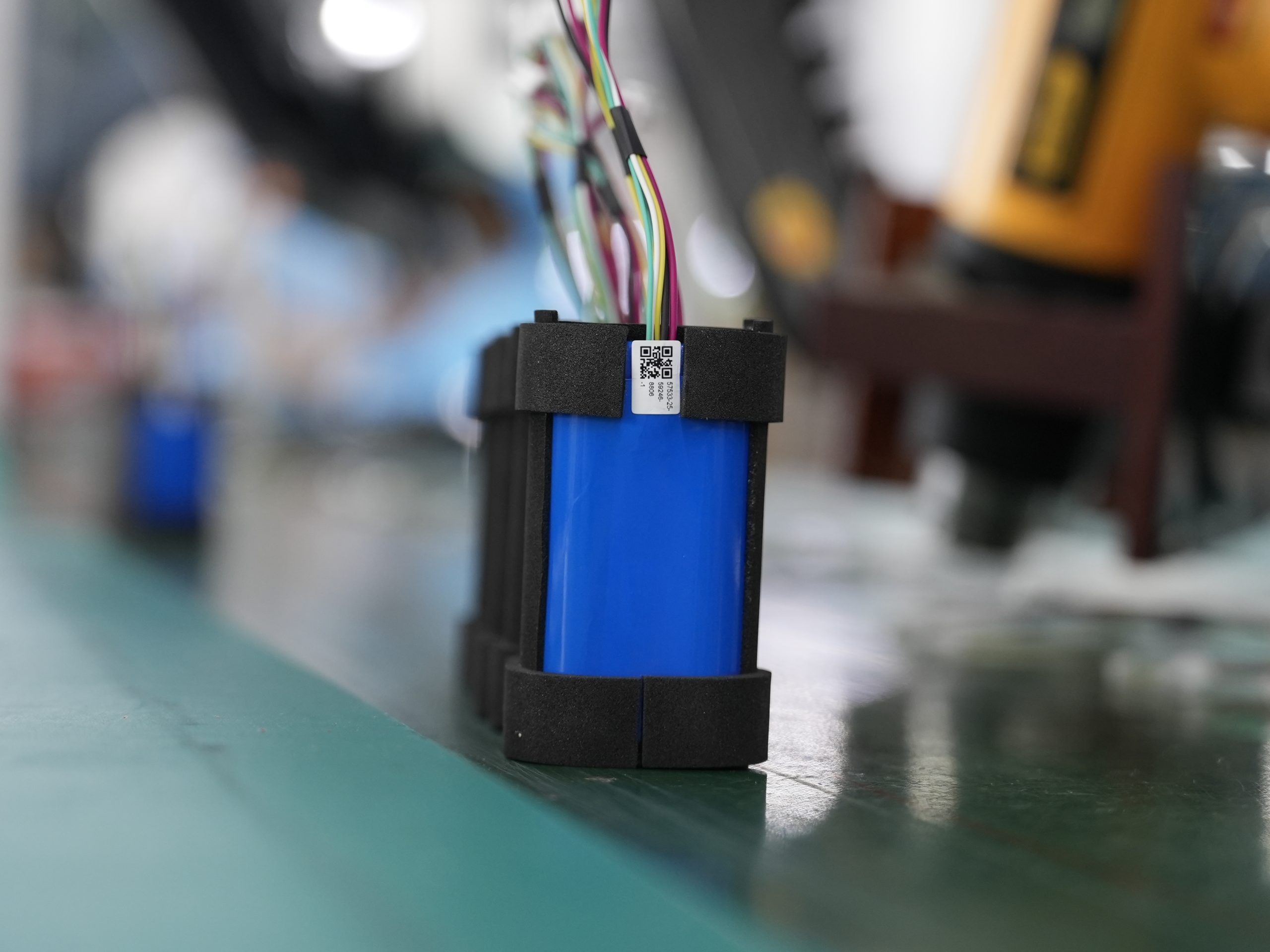
You need precise voltage and temperature sensing to maintain the safe operating area for each cell in your wheelchair battery pack. High-series lithium battery packs require advanced monitoring circuits that track individual cell voltages and temperatures. You can integrate sensors directly onto cell terminals for real-time data. This approach helps you detect anomalies early and prevent overcharging or overheating. You should select sensors with high accuracy and fast response times. When you use a BMS with robust sensing capabilities, you reduce the risk of cell imbalance and thermal events.
2.2 SOC and SOH Monitoring
You must monitor State of Charge (SOC) and State of Health (SOH) to optimize battery performance and safety. Inaccurate SOC and SOH readings can compromise your battery pack’s reliability. Consider the following risks:
Inaccurate SOH measurements increase safety risks, especially thermal runaway as cells reach end of life.
SOC calculations lose reliability without accurate SOH data, leading to financial losses.
A report shows that an 8% error in SOH estimation caused significant revenue loss.
You should implement algorithms that continuously update SOC and SOH values based on real-time sensor data. This strategy ensures you operate within the safe operating area and extend battery lifespan.
2.3 Cell Balancing Methods
You can choose from several cell balancing methods to maintain uniform cell voltages. The table below compares passive and active balancing techniques:
Method | Description | Pros | Cons |
|---|---|---|---|
Passive Balancing | Uses resistors to dissipate excess charge | Simple, low cost | Energy loss, slower |
Active Balancing | Transfers charge between cells | Efficient, less energy loss | Higher complexity, cost |
You should select the method that matches your application’s requirements. For medical mobility, active balancing offers better long-term reliability. You can integrate balancing circuits into your BMS to automate the process and ensure consistent performance.
Part3: Short Circuit and Overcurrent Protection
3.1 Short Circuit Detection
You must implement reliable short circuit detection in every lithium battery pack. Short circuits can cause rapid temperature rise and catastrophic failure, especially in medical mobility devices. The bms monitors current flow and voltage drops across each cell. You should use fast-acting sensors that trigger immediate shutdown when abnormal currents appear. For lithium iron phosphate and nickel manganese cobalt oxide chemistries, detection thresholds differ due to their unique electrical properties.
Note: Early detection prevents damage and ensures user safety in medical and industrial applications.
3.2 Overcurrent Response
You need a robust overcurrent response strategy. The bms analyzes current spikes and activates protective measures. You can use solid-state relays or MOSFETs to disconnect the battery pack instantly. In robotics and security systems, rapid isolation prevents equipment damage. The bms logs each event for diagnostics and compliance reporting.
Protection Method | Response Time | Application Suitability |
|---|---|---|
Fuse | Moderate | Consumer electronics |
MOSFET | Fast | Medical, industrial, robotics |
Solid-State Relay | Fast | Infrastructure, security |
3.3 Protection Circuit Design
You should design protection circuits with redundancy. The bms integrates multiple layers, including hardware cutoffs and firmware logic. You can add thermal sensors and current shunts for precise monitoring. In industrial lithium battery packs, modular protection allows you to isolate faulty sections without shutting down the entire system. You must validate each circuit under real-world conditions to ensure reliability.
Tip: Regularly test protection features during scheduled maintenance to maintain compliance and operational safety.
Part4: Thermal Management in BMS
4.1 Temperature Sensor Placement
You need to place temperature sensors strategically throughout your battery pack. Position sensors on cell terminals, near high-current pathways, and at the pack’s thermal hotspots. This approach allows your bms to detect abnormal temperature rises quickly. In high-series lithium battery chemistries, precise sensor placement helps you prevent localized overheating and ensures accurate monitoring. You should calibrate each sensor to maintain reliable data for your bms.
4.2 Thermal Cutoff Features
You must integrate advanced thermal cutoff features to prevent thermal runaway in wheelchair battery packs. The table below compares leading products for thermal protection:
Product Name | Description | Key Features |
|---|---|---|
Go-Therm 150 | Glass-on-one-side silicone laminate thermal runaway barrier. | Designed for interior lining of battery case. |
Go-Therm 315 | Dual-sided fiberglass-backed laminate for barrier protection. | Suitable for interior lining or module-to-module barrier. |
Pyrel-Therm EIG 1000 | Thin, high-temperature insulation for extreme heat environments. | Excellent compression resistance, available in widths up to 1016mm. |
Pyrel-Therm ES 1100 | High-temperature insulation with excellent mechanical properties. | Available in widths up to 1220mm. |
Pyrel-Therm RMC Mica Heat Shield | Effective dielectric and gas barrier for extreme heat environments. | Low heat transfer abilities, customizable with slits or punched parts. |
Pyrel-Therm TS 800C | Thin, semi-flexible sheet for high temperatures. | Superior resistance to high heat and flames, excellent heat shield. |
You should select materials that match your application’s requirements. These barriers help your bms isolate heat and stop the spread of fire within the pack.
4.3 Heat Dissipation Design
You must design your battery pack for efficient heat dissipation. Effective thermal management systems regulate battery temperature and prevent overheating. This approach reduces risks such as thermal runaway, which can compromise battery integrity and safety. Consider these benefits:
You extend battery efficiency and lifespan by keeping temperatures within recommended ranges.
You slow chemical reactions that cause lithium-ion batteries to age quickly.
You maintain safety and reliability for medical and industrial applications.
Tip: Use heat sinks, ventilation channels, and thermally conductive materials to improve heat dissipation in your bms design.
Part5: Fault Detection, Diagnostics, and Communication
5.1 Real-Time Fault Monitoring
You need real-time fault monitoring to ensure safe operation of your wheelchair battery packs. The bms continuously checks for abnormal voltage, temperature, and current readings. You can detect faults early and prevent damage by using advanced algorithms. In medical and robotics applications, rapid fault detection helps you avoid downtime and maintain safety. If you use lithium battery chemistries, you must tailor your monitoring thresholds to match each chemistry’s characteristics.
Tip: Set up alerts for critical faults so your maintenance team can respond quickly.
5.2 Error Logging
You should implement robust error logging in your bms. The system records every fault event, including time, location, and type. This data helps you analyze trends and improve reliability. In industrial and security sectors, error logs support compliance and diagnostics. You can use error logs to identify recurring issues and optimize your battery management strategy.
Logging Feature | Benefit |
|---|---|
Timestamped Events | Accurate fault tracking |
Location Data | Pinpoint problem areas |
Fault Type | Targeted troubleshooting |
5.3 Communication Protocols
You must select reliable communication protocols for your bms. These protocols allow your system to share fault data with external controllers and monitoring platforms. You can choose CAN, RS485, or Modbus for industrial and infrastructure applications. Each protocol offers unique advantages:
Protocol | Speed | Reliability | Application Scenario |
|---|---|---|---|
CAN | High | Excellent | |
RS485 | Medium | Good | |
Modbus | Medium | Good |
You should match the protocol to your application’s needs. Reliable communication ensures your bms responds quickly to faults and maintains system integrity.
You strengthen user safety and reliability when you focus on bms safety design. Insulation, fire risk mitigation, and robust monitoring form the foundation of every high-series wheelchair battery pack. You should prioritize bms safety design and compliance to meet industry standards and support long-term performance.
FAQ
What makes Large Power BMS solutions suitable for medical and industrial wheelchair battery packs?
Large Power BMS offers advanced cell monitoring, robust protection, and compliance with medical safety standards. You can request a custom battery consultation.
How do lithium battery chemistries impact safety design in high-series packs?
Lithium battery chemistries determine voltage, thermal stability, and protection needs. You must select chemistries that match your application’s safety and performance requirements.
Can you compare passive and active cell balancing for B2B wheelchair battery packs?
Method | Efficiency | Maintenance | Application Suitability |
|---|---|---|---|
Passive Balancing | Low | Minimal | Consumer electronics |
Active Balancing | High | Moderate | Medical, robotics, industrial |


