

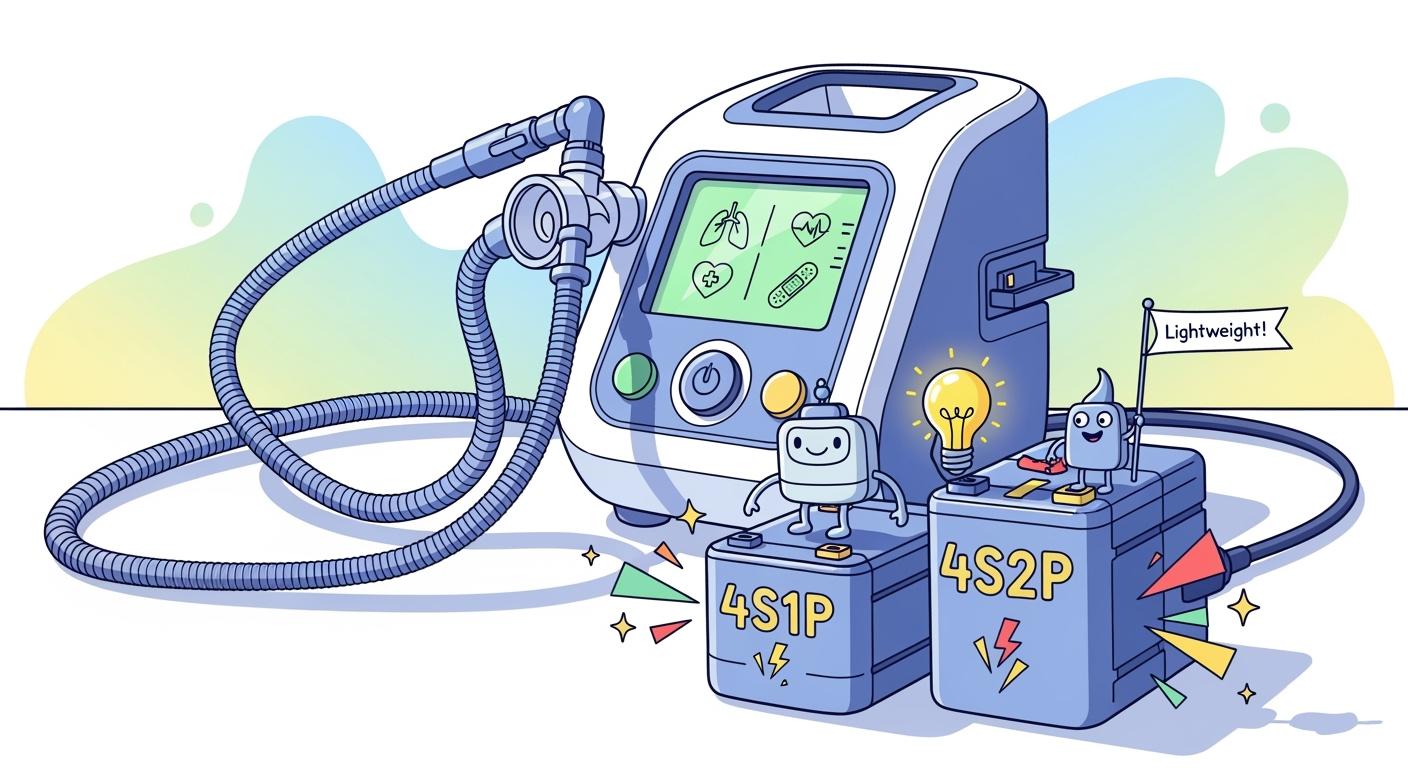
You need Lightweight Battery Solutions that minimize weight and maximize runtime for portable ventilators. The 4S1P configuration delivers lower weight and shorter runtime. The 4S2P configuration offers higher capacity and extended runtime but adds mass. Weight impacts patient mobility and device integration in medical environments.
Key Takeaways
Choose the 4S1P configuration for maximum portability. It offers a lightweight solution ideal for quick transport in medical settings.
Opt for the 4S2P configuration when extended runtime and reliability are crucial. This setup provides doubled capacity and redundancy for critical applications.
Evaluate your device’s needs carefully. Consider the trade-off between weight and runtime to select the best battery solution for your portable ventilator.
Part1: Lightweight Battery Solutions Overview
1.1 Why Weight Matters for Portable Ventilators
You need Lightweight Battery Solutions that deliver reliable power without adding unnecessary mass. In portable ventilators, every gram counts. Weight affects how easily you can transport devices between patient rooms, ambulances, or remote care sites. Lighter battery packs reduce fatigue for healthcare professionals and improve patient comfort. You also gain flexibility in device placement and integration, which is critical in fast-paced medical environments.
Tip: Choosing the right battery chemistry and configuration helps you optimize both weight and performance. Lithium-ion batteries offer high energy density and long cycle life, making them ideal for portable medical devices.
Here is a comparison of common battery types used in portable medical devices:
Chemistry | Platform Voltage | Energy Density (Wh/kg) | Cycle Life (cycles) |
|---|---|---|---|
NMC | 3.7V | 160-270 | 1000-2000 |
LCO | 3.7V | 180-230 | 500-1000 |
LiFePO4 | 3.2V | 100-180 | 2000-5000 |
LMO | 3.7V | 120-170 | 300-700 |
LTO | 2.4V | 60-90 | 10000-20000 |
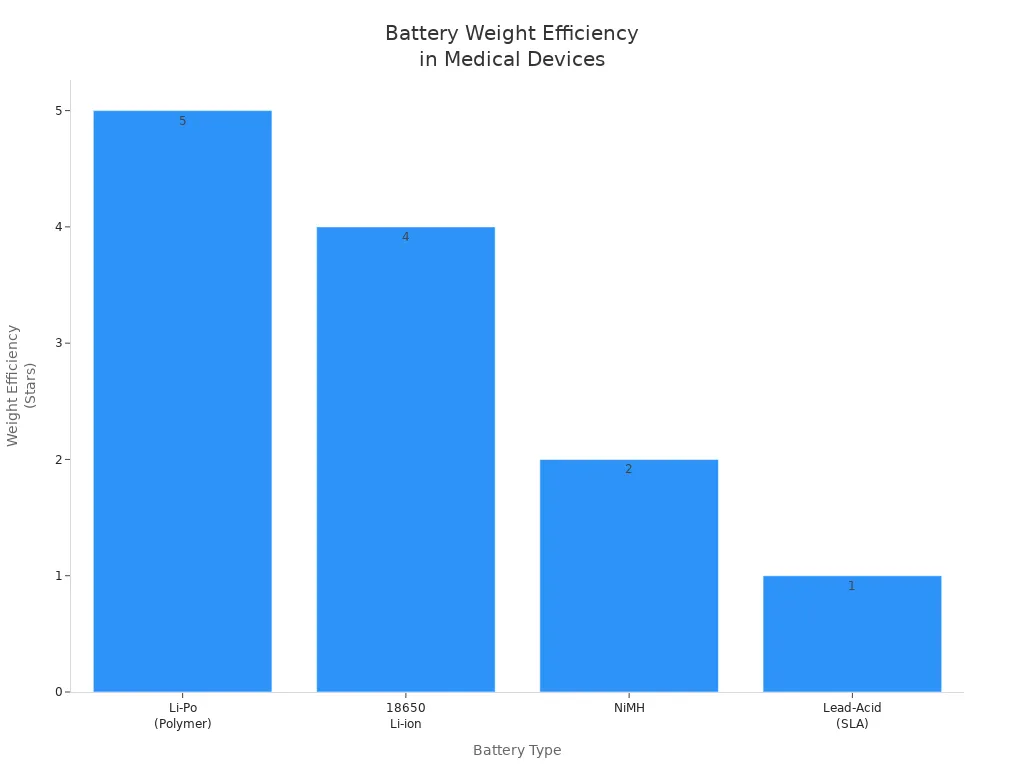
You see that Li-Po and 18650 lithium-ion cells provide the best weight efficiency for Lightweight Battery Solutions. These chemistries dominate the medical, robotics, and industrial sectors due to their slim profiles and high performance.
1.2 4S1P vs. 4S2P: Quick Comparison
You must select the right battery configuration to balance weight, capacity, and runtime. The 4S1P and 4S2P arrangements both use four cells in series for a nominal voltage of 14.4V, but differ in parallel cell count and overall capacity.
Here is a technical comparison:
Feature | ||
|---|---|---|
Voltage | 14.4v | 14.4v |
Capacity | Standard (1x cell) | Double (2x cell) |
Runtime | Moderate | Extended |
Size/Weight | Compact, lighter | Larger, heavier |
Redundancy | None | High (parallel cells) |
Long Cycle Life | Good | Excellent |
Reliability | Standard | Superior |
Application | Short-term, portable | Long-term, critical care |
4S1P: You get a compact, lightweight battery pack. This configuration suits applications where portability and minimal weight are essential. You sacrifice runtime for mobility.
4S2P: You gain extended runtime and higher reliability. The parallel cell arrangement provides redundancy, which is valuable in critical care and industrial settings. You accept increased weight and size.
Note: You should always consider the trade-off between weight and runtime. Lightweight Battery Solutions often prioritize 4S1P for ultra-portable devices, while 4S2P fits scenarios demanding longer operation and higher reliability.
If you require sustainable battery solutions, you can explore our approach to sustainability. For compliance and sourcing, review the conflict minerals statement.
Part2: Configuration Details and Key Differences
2.1 4S1P Structure and Features
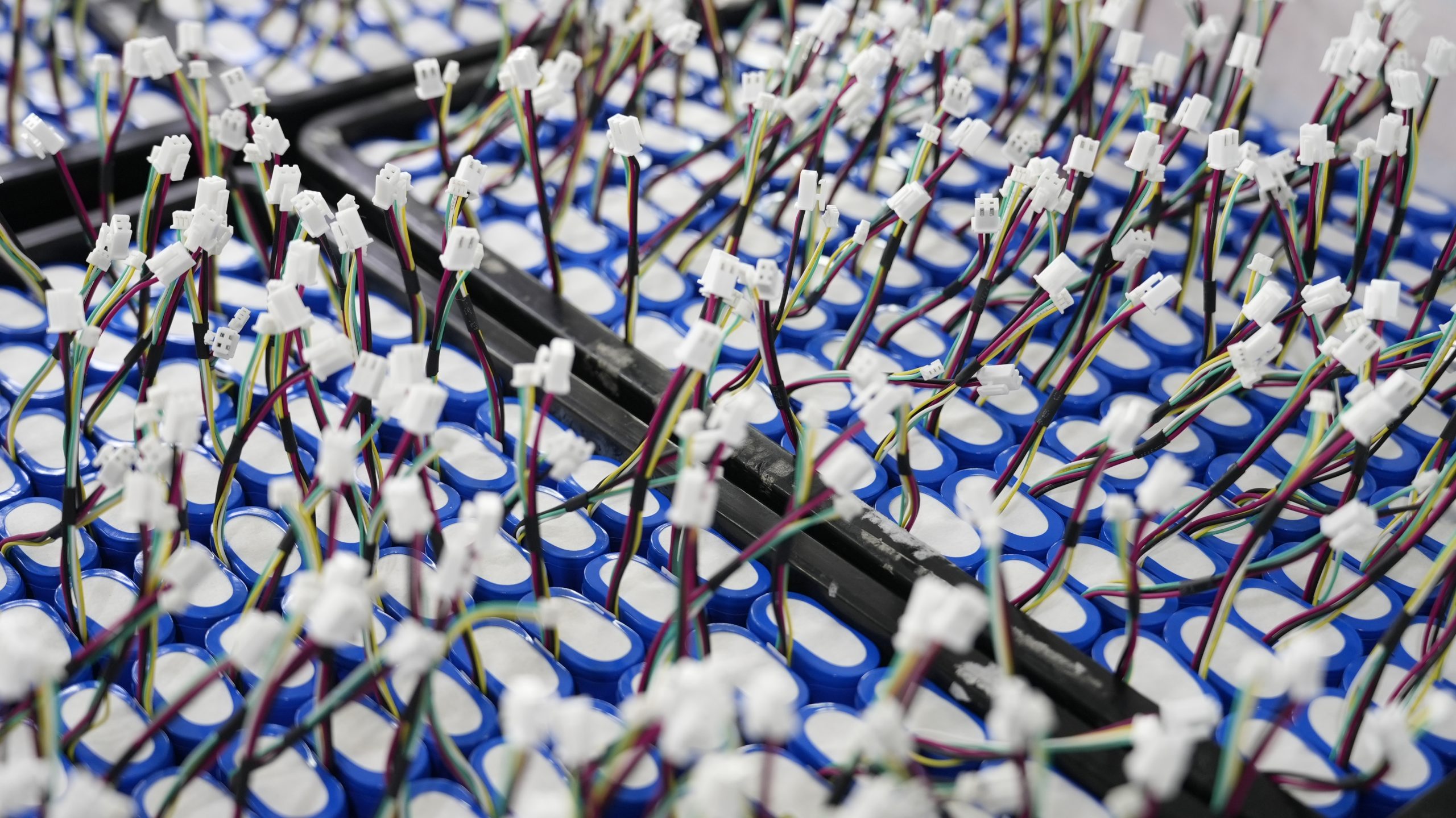
You select the 4S1P configuration when you need a compact battery pack. This structure uses four cells in series and one cell in parallel. You achieve a voltage output of approximately 14.8V. The capacity remains limited because only one cell operates in parallel. You often find 4S1P packs built with lithium-ion chemistries such as NMC, LiFePO4, LCO, LMO, LTO, or solid-state. You benefit from reduced weight and size, which supports Lightweight Battery Solutions in portable medical and robotics devices.
2.2 4S2P Structure and Features
You choose the 4S2P configuration for higher capacity and longer runtime. This structure uses four cells in series and two cells in parallel. You maintain the same voltage output, around 14.8V, but double the capacity compared to 4S1P. You gain improved reliability and redundancy, which is critical in medical, security, and industrial applications. You often see 4S2P packs with advanced battery management systems (BMS) to ensure safety and performance.
Note: You must consider the increased weight and size when integrating 4S2P packs into portable devices.
Configuration | Series Cells | Parallel Cells | Voltage Output | Capacity Characteristics |
|---|---|---|---|---|
4S1P | 4 | 1 | ~14.8V | Limited capacity due to single parallel structure |
4S2P | 4 | 2 | ~14.8V | Doubled capacity, better for high-demand applications |
2.3 Weight vs. Capacity Trade-Off
You face a clear trade-off between weight and capacity. The 4S1P configuration delivers Lightweight Battery Solutions for applications where portability matters most. You sacrifice runtime for mobility. The 4S2P configuration offers extended operation and greater reliability, but you must accept increased mass. You need to evaluate your device requirements and operational environment before making a selection. Medical and industrial sectors often prioritize runtime and redundancy, while robotics and consumer electronics value compactness.
Part3: Runtime and Performance
3.1 Runtime Impact for Portable Ventilators
You depend on consistent runtime to ensure patient safety and device reliability in portable ventilators. A stable power source keeps the ventilator running without interruption, which is critical in medical settings. If you select batteries with high internal resistance, you risk voltage drops that can cause device malfunction. This can lead to overheating or premature voltage cut-off, reducing the effective runtime of your ventilator.
Reliable power supports uninterrupted ventilator operation, protecting patient safety.
Proper battery chemistry and low internal resistance prevent voltage drops and device failures.
High internal resistance increases the risk of overheating and shortens runtime.
You must evaluate runtime needs based on your application. In critical care, longer runtime reduces the need for frequent battery changes and minimizes patient risk. Lightweight Battery Solutions help you balance portability with the operational time required for safe patient care.
3.2 Discharge Rate and Power Output
You need to match the battery’s discharge rate and power output to the ventilator’s demands. Both 4S1P and 4S2P lithium battery packs deliver a nominal voltage of 14.8V and a capacity of at least 5,000mAh. These packs support a continuous discharge rate of 2C or higher, which ensures stable power delivery during peak loads.
Voltage: 14.8V nominal
Capacity: ≥5,000mAh
Discharge Rate: ≥2C continuous
If your ventilator requires higher power output for advanced features or longer operation, the 4S2P configuration provides greater capacity and improved thermal management. You gain confidence in device performance, even during demanding use cases.
Part4: Size, Portability, and Integration
4.1 Size Comparison
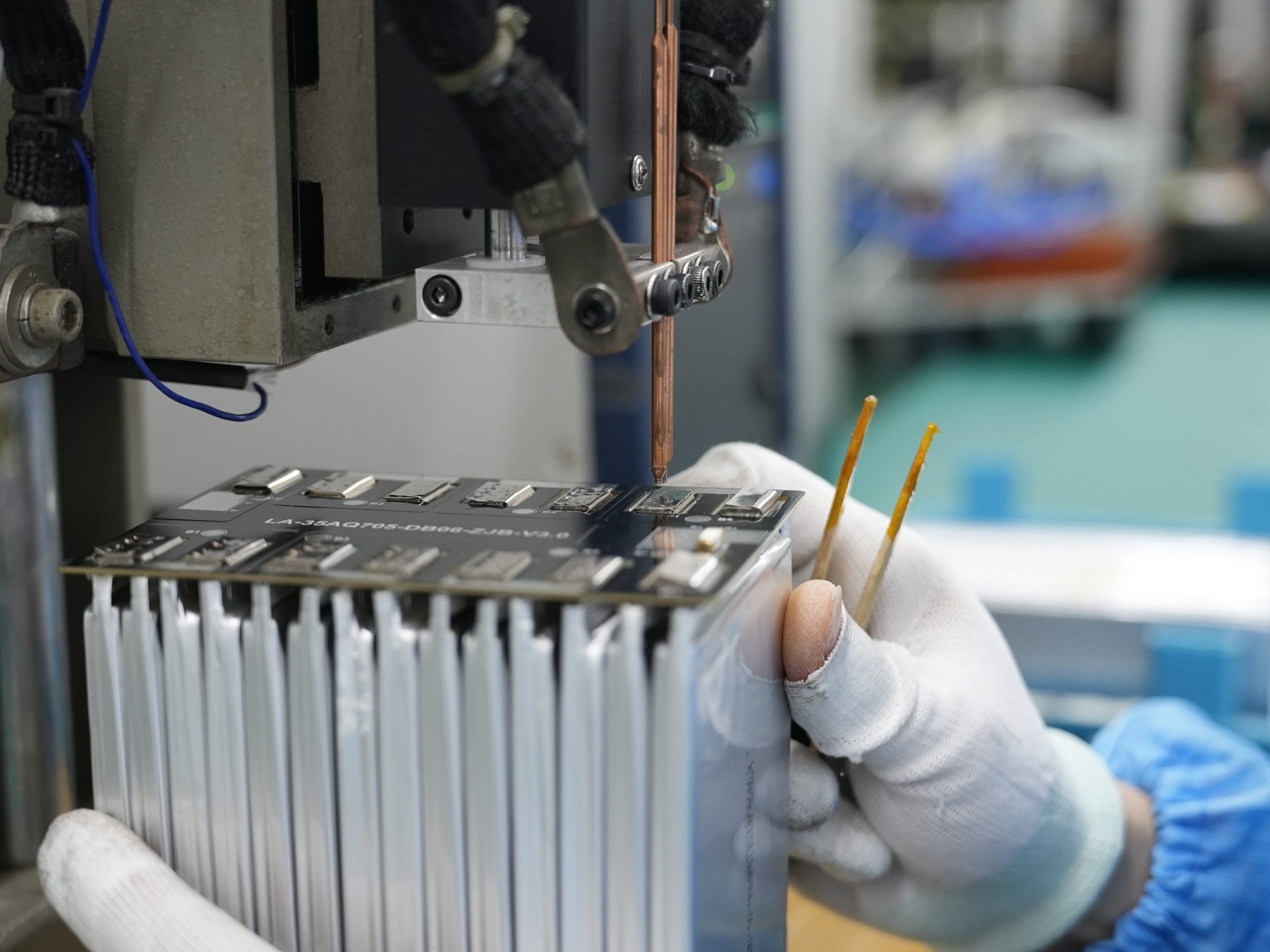
You need to evaluate battery pack size when selecting power solutions for portable ventilators. The 4S1P configuration uses four lithium-ion cells in series, resulting in a compact and slim profile. You can easily integrate this pack into devices where space is limited. The 4S2P configuration doubles the parallel cells, increasing both thickness and overall footprint. You gain higher capacity, but you must accommodate a larger enclosure.
Configuration | Cell Count | Typical Dimensions (mm) | Weight (g) | Capacity (mAh) |
|---|---|---|---|---|
4S1P | 4 | 70 × 40 × 20 | 200–250 | 2,500–3,000 |
4S2P | 8 | 70 × 40 × 40 | 400–500 | 5,000–6,000 |
You see that 4S1P packs fit best in ultra-portable medical devices. 4S2P packs suit applications where extended runtime outweighs compactness.
Tip: You should always check device enclosure specifications before finalizing your battery pack selection.
4.2 Portability in Healthcare Settings
You must prioritize portability when deploying ventilators in healthcare environments. Lightweight Battery Solutions improve mobility for staff and patients. You reduce fatigue and streamline workflows by choosing battery packs that minimize mass and maximize operational readiness. In hospitals, clinics, and ambulances, you need batteries that support frequent movement and rapid deployment.
Healthcare professionals use several metrics to evaluate battery portability:
Metric | Description |
|---|---|
Device Lifespan | Duration a battery powers a device before replacement. |
User Compliance | Adherence to recommended usage and charging practices. |
Data Accuracy | Precision of data collected by devices powered by the battery. |
Charge Retention | Ability to hold a charge over time without significant loss. |
Recharge Cycles | Number of times a battery can be charged and discharged before capacity diminishes. |
Operational Readiness | State of being ready for immediate use, especially in emergencies. |
Safety | Measures to prevent hazards associated with battery use in medical devices. |
You enhance device integration by selecting lithium battery packs with high energy density and reliable charge retention. You ensure operational readiness and safety for critical care scenarios. You also improve user compliance and device lifespan by choosing batteries with robust recharge cycles.
Part5: Safety and Reliability
5.1 Safety Features of 4S1P and 4S2P
You must prioritize safety when selecting lithium battery packs for portable ventilators. Both 4S1P and 4S2P configurations integrate advanced protection systems to safeguard patients and equipment. Battery management systems (BMS) monitor and control each cell, reducing risks in demanding medical environments. Here is a summary of key safety features:
Safety Feature | Description |
|---|---|
Overcharge Protection | Prevents the battery from charging beyond its maximum voltage. |
Over-discharge Protection | Stops the battery from discharging below a safe voltage level. |
Overtemperature Protection | Monitors and controls the temperature to prevent overheating. |
Short Circuit Protection | Detects and prevents short circuits to protect the battery and device. |
Tip: You should always verify compliance with medical safety standards and sustainability practices. Review our approach to sustainability and conflict minerals statement for responsible sourcing.
5.2 Reliability for Medical Use
You rely on battery packs that deliver consistent performance in critical care. Lithium-ion and solid-state batteries offer high energy density, long lifespan, and rapid recharge capabilities. These metrics ensure your devices operate reliably during emergencies and frequent use.
Requirement | Description |
|---|---|
High energy density | Essential for prolonged use in portable devices. |
Long lifespan | Ensures reliability over time for medical use. |
Rapid recharge capabilities | Important for quick turnaround in emergencies. |
You need batteries that withstand high humidity and temperature variations. You depend on packs designed for frequent usage in critical situations. Emergency backup during power failures is vital for patient safety.
Operate under high humidity and temperature variations
Designed for frequent usage in critical situations
Provide emergency backup during power failures
As technology advances, lithium-ion and solid-state batteries continue to improve capacity, weight, and longevity. You gain confidence in device reliability and patient care with these innovations.
You gain the most value from Lightweight Battery Solutions by focusing on battery life, portability, and versatility.
Battery life supports uninterrupted operation.
Portability ensures easy transport.
Versatility adapts to diverse patient needs.
Compliance Requirement | Description |
|---|---|
IEC 60601 | Safety and performance |
ISO 13485 | Quality management |
GB 9706.1-2020 | Risk-based design |
You should assess your device requirements and verify certifications. Procurement teams can collaborate with engineering to select lithium battery packs that meet medical standards.
FAQ
What is the main advantage of 4S1P for portable ventilators?
You gain maximum portability with 4S1P. This configuration minimizes weight, making it ideal for medical, robotics, and industrial devices requiring frequent movement.
How does 4S2P improve reliability in critical applications?
You benefit from doubled capacity and redundancy with 4S2P. Parallel cells enhance reliability for security, infrastructure, and medical sectors needing extended runtime.
Configuration | Weight (g) | Capacity (mAh) | Runtime | Reliability |
|---|---|---|---|---|
4S1P | 200–250 | 2,500–3,000 | Moderate | Standard |
4S2P | 400–500 | 5,000–6,000 | Extended | Superior |
How can you customize lithium battery packs for your device?
You can request tailored solutions from Large Power. Visit custom battery consultation for expert guidance on lithium battery packs for medical and industrial applications.


