

You need high-reliability lithium battery packs and proven operational practices to extend the field operation time of your 3D scanners. Technical factors like battery chemistry and capacity play a critical role. Operational choices such as scanning technique also impact performance and safety. You improve efficiency and safety by analyzing power needs, selecting the right batteries, engineering for reliability, optimizing pack design, deploying effectively, and applying smart field practices.
Key Takeaways
Analyze your 3D scanner’s energy consumption to select the right lithium battery pack. Accurate calculations prevent unexpected downtime.
Choose the appropriate battery chemistry based on your application. LiFePO₄ is ideal for medical use, while NMC suits robotics and industrial needs.
Implement a robust Battery Management System (BMS) to enhance safety and reliability. A good BMS monitors battery health and prevents failures.
Opt for modular battery pack designs to improve serviceability. This allows for quick repairs and reduces downtime in critical applications.
Adopt best practices for charging and maintenance. Regular care extends battery lifespan and ensures consistent performance in the field.
Part1: Field Operation Time and Power Needs
Understanding how much energy your 3D scanner uses and matching it with the right lithium battery pack is the foundation for extending field operation time. You need to analyze both the technical requirements of your device and the real-world conditions you face in the field. This approach applies across industries, including medical imaging, robotics, security systems, infrastructure inspection, and industrial automation.
1.1 Energy Consumption Calculation
You should start by measuring the average power draw of your 3D scanner during typical operation. Use a reliable power meter to record the current (in amperes) and voltage (in volts) while the scanner runs under normal field conditions. Multiply these values to get the power in watts (W). For example, if your scanner draws 2.5A at 14.8V, the power consumption is 37W.
Tip: Always measure power draw during actual scanning tasks, not just idle or standby modes. This gives you a realistic baseline for energy needs.
You must also consider common errors that can affect your calculations and battery selection:
Battery age and condition can cause large differences in runtime.
Cold temperatures can reduce runtime by 20-30%.
Actual battery capacity may be lower than the rated value due to variable loads and the overhead of protection circuits.
High discharge rates can decrease usable capacity by 10-20%.
Protection circuits often cut off power around 3.0V per cell, which reduces usable capacity.
Over time and with repeated charging, battery capacity will degrade.
If you ignore these factors, you may overestimate how long your scanner will run in the field. This can lead to unexpected downtime and lost productivity, especially in critical applications like medical or security deployments.
1.2 Battery Capacity Estimation
Once you know your scanner’s energy consumption, you can estimate the battery capacity you need. Use this formula:
Required Capacity (Wh) = Power Consumption (W) × Desired Operation Time (h)
For example, if your scanner uses 37W and you want 6 hours of field operation time:
Required Capacity = 37W × 6h = 222Wh
You must then select a lithium battery pack with at least this capacity, but you should add a safety margin to account for real-world losses and aging. A 20-30% margin is common in industrial and infrastructure projects.
Scenario | Power (W) | Desired Time (h) | Base Capacity (Wh) | Recommended Pack (Wh) |
|---|---|---|---|---|
Medical Cart Scanner | 30 | 8 | 240 | 300 |
Security Robot | 45 | 5 | 225 | 270 |
Industrial Survey Unit | 50 | 4 | 200 | 250 |
You should also consider the impact of high discharge rates and low temperatures. If you expect heavy loads or cold weather, increase your battery size further to maintain reliable field operation time.
Note: Always check the manufacturer’s datasheet for the actual usable capacity of the lithium battery pack, not just the rated value.
By following these steps, you can match your battery pack to your scanner’s needs and maximize field operation time. This process helps you avoid costly interruptions and ensures your 3D scanning projects run smoothly, whether you work in robotics, infrastructure, or industrial environments.
Part2: Battery Chemistry Selection

2.1 Lithium-Ion vs. Lithium-Polymer
You need to choose the right battery chemistry for your 3D scanner to maximize field operation time and reliability. Lithium-ion (Li-ion) and lithium-polymer (LiPo) batteries are the most common choices for professional applications. Both offer high energy density and long cycle life, but they differ in construction and performance.
Chemistry | Energy Density (Wh/kg) | Cycle Life | Safety Profile | Typical Applications |
|---|---|---|---|---|
LiFePO4 | 90-120 | 2000+ | Excellent | Medical, Infrastructure, Industrial |
NMC | 150-220 | 1000-2000 | Good | Robotics, Security, Consumer |
LCO | 150-200 | 500-1000 | Moderate | Consumer Electronics |
LMO | 100-150 | 1000+ | Good | Industrial, Security Systems |
Solid-State | 250+ | 2000+ | Excellent | Medical, Robotics, Infrastructure |
Lithium Metal | 300+ | 500-1000 | Moderate | Advanced Industrial, Security |
Li-ion batteries use a liquid electrolyte and rigid casing. You get consistent performance and robust safety features. LiPo batteries use a gel-like electrolyte and flexible pouch. You gain lighter weight and more compact designs, which help in portable scanners. LiFePO4 and solid-state chemistries offer superior safety and longer lifespan, making them ideal for medical and infrastructure projects. NMC and LCO chemistries deliver higher energy density, which suits robotics and security systems.
2.2 Energy Density and Safety Trade-Offs
You must balance energy density and safety when selecting batteries for field use. High-energy-density batteries extend operation time, but they introduce risks that you cannot ignore.
Dendrite formation can cause short circuits and fires.
Thermal stability becomes a concern. High energy density generates more heat, which increases the risk of thermal runaway.
Improvements in energy density may compromise safety performance.
You should select battery packs with advanced battery management systems (BMS) and robust thermal protection. These features help prevent overheating and short circuits. In medical and industrial sectors, you need chemistries like LiFePO4 or solid-state for safer operation. Robotics and security systems often require NMC or lithium metal for longer runtime, but you must monitor temperature and charging closely.
Tip: Always check the battery pack’s certifications and safety ratings before deployment. This step protects your equipment and ensures compliance with industry standards.
Part3: Reliability and Safety Engineering
3.1 Battery Management Systems (BMS)
You need a robust Battery Management System (BMS) to ensure the reliability and safety of lithium battery packs in demanding field applications. A BMS acts as the control center for your battery pack. It monitors and manages every cell to prevent failures that could disrupt your 3D scanning operations. This is especially important in sectors like medical imaging, robotics, security systems, and industrial automation, where downtime can lead to costly delays or safety risks.
A high-quality BMS provides several critical functions:
Function | Description |
|---|---|
Cell Monitoring | Continuously checks the voltage, current, and temperature of each cell to ensure safe operation. |
State of Charge Estimation | Calculates the remaining charge in the battery to optimize usage and prevent over-discharge. |
Cell Balancing | Ensures all cells are charged equally to prolong battery life and maintain performance. |
Functional Safety | Monitors operational parameters to prevent conditions that could lead to thermal runaway. |
Lifespan and Reliability | Manages the overall health of the battery to extend its usable life. |
Performance Optimization | Adjusts charging and discharging processes for maximum efficiency. |
Diagnostics | Provides real-time data for troubleshooting and maintenance. |
External Communication | Interfaces with other devices to relay battery status and receive commands. |
A BMS prevents voltage, current, and temperature from exceeding safe limits. It protects your equipment from dangerous conditions like thermal runaway and monitors low voltage to avoid issues such as copper dendrite growth. You can learn more about advanced BMS features in our Battery Management System Engineering Guide.
Tip: Always select battery packs with integrated BMS for field deployments. This step increases reliability and reduces maintenance costs.
3.2 Thermal and Environmental Protection
You must protect lithium battery packs from extreme temperatures and harsh environments to maintain safe and reliable operation. Overheating can cause thermal runaway, which may lead to fires or permanent battery damage. In field applications, such as infrastructure inspection or outdoor robotics, you face risks from both high and low temperatures.
Manufacturers use advanced materials and design strategies to address these risks. Thermo-responsive polymers in electrolytes or separators can suppress ionic conduction when temperatures rise, reducing the chance of overheating. Positive thermal coefficient (PTC) materials interrupt electronic conduction if the battery gets too hot. These features provide rapid responses to temperature spikes, improving safety in critical sectors like medical and industrial automation.
Note: Always check for battery packs with built-in thermal protection and environmental sealing. This ensures your 3D scanners perform reliably, even in challenging field conditions.
Part4: Battery Pack Design Optimization
4.1 Modular vs. Integrated Packs
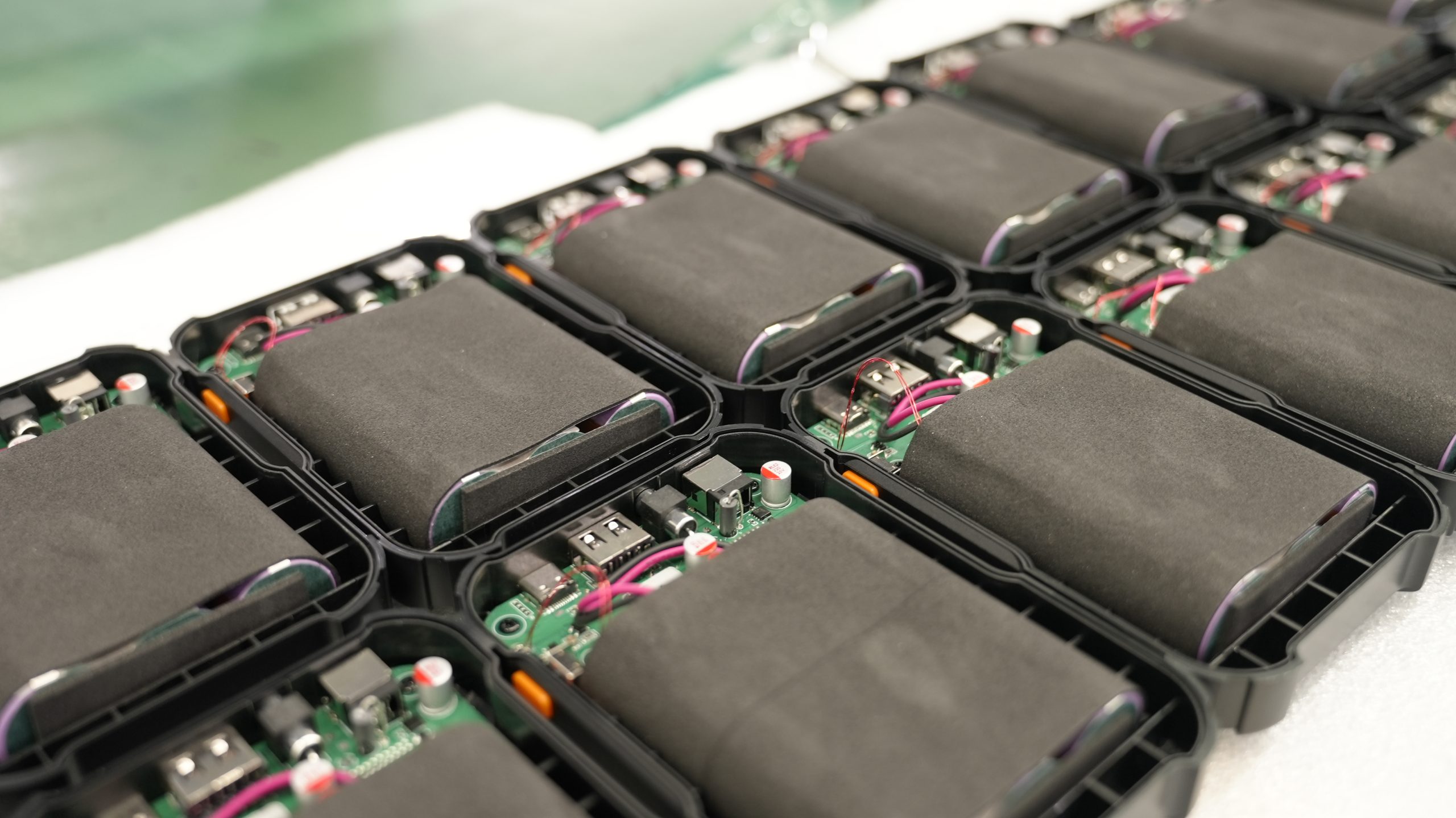
You need to choose between modular and integrated battery pack designs for your 3D scanner projects. Modular packs offer clear advantages in field serviceability and reliability. You can replace or repair individual modules, which extends the lifespan of your equipment. This feature is especially valuable in medical, robotics, and industrial applications where downtime impacts productivity. Modular designs also provide better containment for thermal runaway. Each module stays electrically and physically isolated, reducing the risk of short circuits. You gain improved mechanical integrity, which helps protect against environmental stresses in infrastructure and security systems.
Design Type | Serviceability | Thermal Safety | Mechanical Reliability | Application Scenarios |
|---|---|---|---|---|
Modular | High | Excellent | Robust | Medical, Robotics, Industrial |
Integrated | Low | Moderate | Standard | Consumer Electronics, Security |
Tip: Modular battery packs help you maintain longer Field Operation Time by allowing quick repairs and replacements in demanding environments.
4.2 Portability and Replacement
You improve operational efficiency by optimizing battery pack portability and replacement strategies. High-capacity batteries support several hours of continuous scanning, which is critical for remote field locations in infrastructure and industrial projects. Swappable batteries and fast-charging options let you deploy scanners rapidly, reducing downtime and boosting productivity. You can carry extra packs for medical and security systems, ensuring uninterrupted Field Operation Time during extended shifts.
Swappable packs allow you to replace batteries without shutting down your scanner.
Fast-charging solutions minimize waiting periods between scanning sessions.
Portable designs make it easier to transport equipment across large sites.
You achieve reliable performance by combining modular design with portable, replaceable battery packs. This approach supports diverse application scenarios, from medical imaging to industrial automation, and helps you maximize Field Operation Time in every deployment.
Part5: Field Deployment and Operation Best Practices
5.1 Charging and Backup Planning
You maximize 3D scanner uptime in the field by adopting effective charging strategies and robust backup planning. Lithium battery packs require careful management to deliver reliable performance in demanding environments such as medical imaging, robotics, security systems, infrastructure inspection, and industrial automation.
Charging Strategy | Description |
|---|---|
Avoid Deep Discharges | Recharge before dropping below 20–30% state of charge to extend battery life. |
Use Compatible Chargers | Select chargers designed for lithium-ion batteries to maintain performance and safety. |
Optimize Charging with SkyEMS® | Use real-time monitoring to improve charging habits and battery health. |
Maintain Proper Charging Environments | Charge in moderate temperatures and ensure proper airflow to maximize efficiency. |
Prevent Overcharging | Rely on smart battery management systems to avoid overcharging and ensure safe charging. |
Train Operators | Educate staff on best charging practices to reduce downtime and improve equipment effectiveness. |
Leverage Data for Continuous Improvement | Use data insights to optimize charging schedules and improve ROI on battery investments. |
You should avoid deep discharges. Recharge your battery packs before they drop below 20–30% state of charge. This practice extends battery lifespan and reduces the risk of unexpected shutdowns during critical field operations. Always use chargers that match your lithium battery chemistry and pack design. Inconsistent charging can lead to reduced performance or even safety hazards.
You improve reliability by charging in moderate temperatures and ensuring proper airflow. Overheating during charging can damage cells and shorten battery life. Smart battery management systems help prevent overcharging and monitor battery health in real time. You can further optimize your charging strategy by training operators and using data analytics to refine charging schedules. These steps help you maintain high availability for your 3D scanners, even during extended deployments.
Tip: Carry backup battery packs and plan charging rotations for long field shifts. This approach ensures uninterrupted operation in sectors like security, medical, and industrial automation.
5.2 Maintenance and Lifespan
You extend the lifespan of lithium battery packs by following regular maintenance routines. Consistent care prevents premature failures and maintains capacity, which is essential for reliable field operation.
Charge and discharge batteries at recommended intervals. This practice keeps cells active and prevents capacity loss.
Follow manufacturer specifications for ideal state of charge, storage temperature, and maintenance frequency. Adhering to these guidelines ensures optimal performance.
Store battery packs in cool, dry environments when not in use. Extreme temperatures or humidity can degrade battery chemistry and reduce lifespan.
Inspect battery packs regularly for signs of swelling, leakage, or physical damage. Replace any compromised packs immediately to avoid safety risks.
Avoid neglecting maintenance. Skipping routine checks can lead to reduced performance or irreversible cell failure.
You should document maintenance activities and train your team on proper handling procedures. This approach reduces downtime and supports compliance with safety standards in regulated sectors such as medical and infrastructure.
Note: Well-maintained battery packs deliver consistent power for 3D scanners, supporting long-term projects in robotics, security, and industrial environments.
5.3 Scanning Techniques for Efficiency
You can further extend field operation time by applying efficient scanning techniques. While the type of 3D scanner often determines overall efficiency, you still benefit from adopting best practices during operation.
Maintain a steady scanning distance. This habit ensures consistent data capture and reduces the need for repeat scans.
Move the scanner smoothly and avoid abrupt motions. Smooth movement minimizes power spikes and helps the battery pack deliver stable output.
Avoid over-scanning areas. Excessive scanning wastes both battery energy and operator time.
Recalibrate the scanner as needed, especially after moving between environments or handling bright surfaces. Proper calibration improves accuracy and reduces the need for rescans.
Adjust settings for challenging surfaces, such as highly reflective or bright materials. This adjustment prevents unnecessary battery drain and improves data quality.
Operator training in these techniques supports efficient workflows, but the scanner’s technology plays the most critical role in determining accuracy and speed. You should select advanced 3D scanners with optimized battery management and energy-efficient hardware for the best results.
Tip: Combine smart scanning techniques with high-reliability battery engineering. This synergy maximizes field operation time and ensures successful project outcomes in every application scenario.
Part6: Case Studies and Lessons
6.1 Real-World Implementations
You can see the impact of high-reliability lithium battery pack engineering in many industries. For example, a medical imaging company upgraded its mobile CT scanners with modular LiFePO₄ battery packs. This change increased field operation time by 30% and reduced downtime for battery maintenance. In robotics, a security firm deployed NMC-based battery packs with advanced BMS in autonomous patrol robots. These robots now operate for longer shifts and report fewer battery-related failures.
A recent infrastructure inspection project used solid-state lithium battery packs in drones. The team achieved longer flight times and improved safety in harsh environments.
You can compare these real-world results in the table below:
Sector | Battery Chemistry | Key Benefit | Application Example |
|---|---|---|---|
Medical | LiFePO₄ | Longer runtime | Mobile CT scanners |
Robotics/Security | NMC | Fewer failures | Autonomous patrol robots |
Infrastructure | Solid-State | Improved safety | Inspection drones |
Industrial | NMC | High energy density | Survey units |
6.2 Key Takeaways
You gain several lessons from these case studies:
Select the right lithium battery chemistry for your sector. LiFePO₄ works well for medical and infrastructure. NMC suits robotics and industrial needs. Solid-state batteries offer the best safety for harsh environments.
Use modular battery packs to reduce downtime and improve serviceability.
Always integrate advanced BMS for safety and reliability.
Train your team on best practices for charging, maintenance, and scanning techniques.
By combining smart engineering with operational discipline, you maximize field operation time and ensure safe, efficient 3D scanning in every deployment.
You can extend your 3D scanner’s performance by following proven battery engineering steps and applying smart operational practices. Choose the right lithium battery chemistry, use modular pack designs, and maintain your equipment regularly. Train your team on efficient scanning and charging routines. When you combine technical reliability with effective field habits, you achieve safer, longer, and more productive deployments across medical, robotics, security, and industrial sectors.
FAQ
What is the best lithium battery chemistry for field 3D scanners?
You should select the chemistry based on your sector. For medical and infrastructure, LiFePO₄ offers safety and long life. Robotics and industrial projects benefit from NMC for higher energy density. Solid-state batteries provide top safety for harsh environments.
How do modular battery packs improve reliability?
Modular packs let you replace faulty modules quickly. This reduces downtime and extends equipment life. You gain better thermal safety and easier maintenance, which is critical for medical, robotics, and industrial field operations.
How can I maximize battery lifespan in demanding environments?
You should avoid deep discharges and charge batteries before they drop below 20–30%. Store packs in cool, dry places. Inspect regularly for damage. Follow manufacturer guidelines for charging and storage to ensure long-term reliability.
What are the main safety features to look for in lithium battery packs?
Look for advanced Battery Management Systems (BMS), thermal protection, and environmental sealing. These features prevent overheating, overcharging, and short circuits. They help you maintain safe operation in sectors like security, medical, and industrial automation.
How do different battery chemistries compare for B2B applications?
Chemistry | Energy Density (Wh/kg) | Cycle Life | Safety | Best Use Case |
|---|---|---|---|---|
LiFePO₄ | 90–120 | 2000+ | Excellent | Medical, Infrastructure |
NMC | 150–220 | 1000–2000 | Good | Robotics, Industrial |
Solid-State | 250+ | 2000+ | Excellent | Harsh Environments |
Note: Choose chemistry based on your application’s safety, runtime, and reliability needs.


