

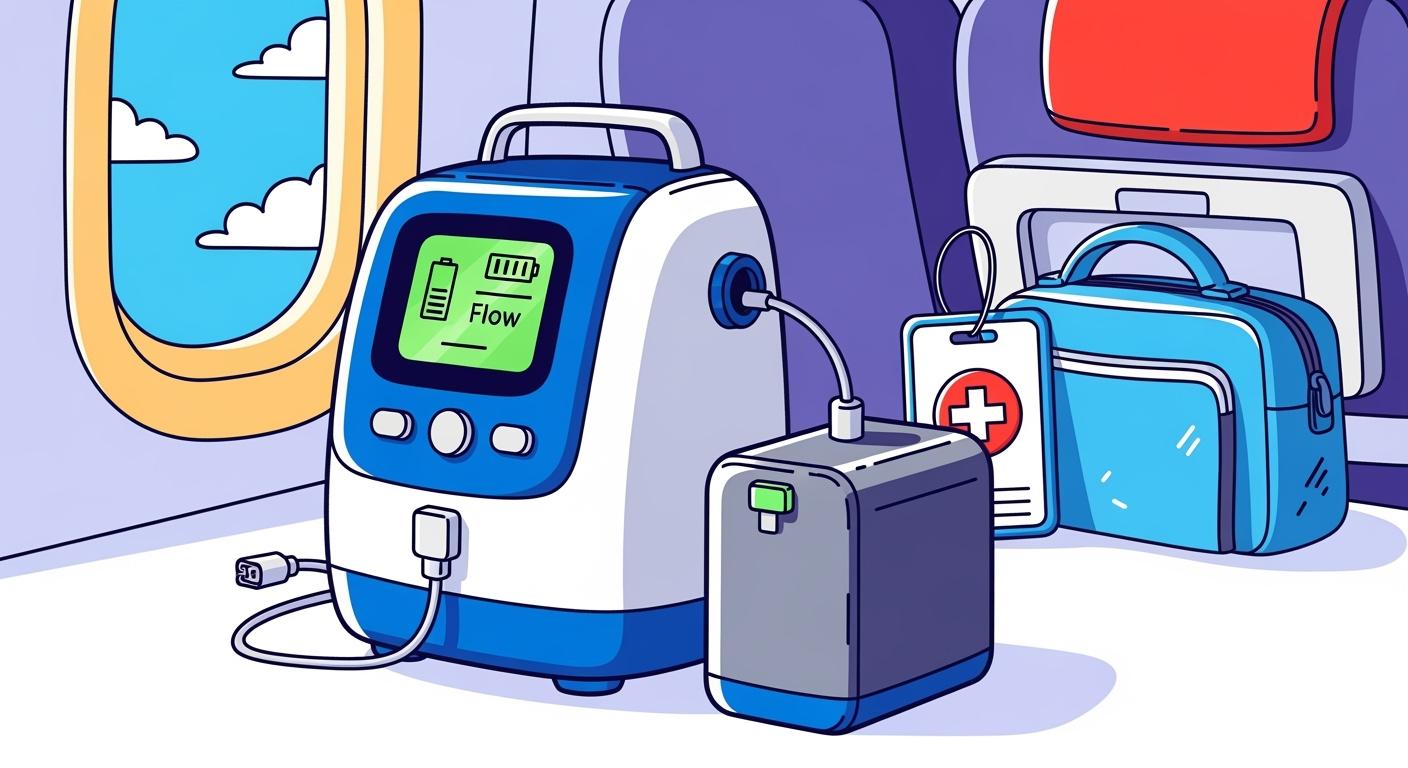
Designing an oxygen concentrator battery pack for air travel requires careful planning. You must understand the FAA’s 160 Wh limit and prioritize safety features. Start with a checklist:
Review FAA rules for lithium battery packs.
Select the best battery chemistry for medical reliability.
Identify user safety needs, including overcharge and thermal protections.
You ensure compliance and support critical medical performance with this approach.
Key Takeaways
Understand FAA regulations for lithium batteries. Follow the 160 Wh limit for portable oxygen concentrators to ensure compliance.
Choose the right battery chemistry. Lithium-ion (NMC) batteries offer a balance of energy density and safety, making them ideal for medical devices.
Incorporate essential safety features. Use overcharge, short-circuit, and thermal protections to safeguard users and devices.
Design for portability and usability. Optimize battery size and weight to enhance the user experience during travel.
Conduct thorough testing and documentation. Ensure your battery packs meet safety standards and maintain proper records for FAA approval.
Part1: FAA Rules for Oxygen Concentrator Battery Pack

1.1 FAA Lithium Battery Limits
You must understand the FAA approved limits for lithium batteries when designing an oxygen concentrator battery pack. The FAA oxygen concentrator guidelines set clear watt-hour (Wh) restrictions for portable oxygen concentrators. The table below summarizes these limits:
Battery Type | Maximum Wh Rating | Airline Approval Required |
|---|---|---|
Lithium ion (rechargeable) | 100 Wh | No |
Lithium ion (rechargeable) | 101-160 Wh | Yes |
Lithium metal (non-rechargeable) | 2 grams of lithium | No |
If your battery power exceeds 100 Wh but stays below 160 Wh, you need airline approval. You can carry up to two larger batteries in your carry-on baggage with approval. Medical devices sometimes receive more lenient rules compared to consumer electronics, but you must always check with the airline. Southwest Airlines, for example, requires lithium batteries from mobility devices to be carried into the cabin. New limits on lithium-powered batteries have been enforced across many carriers.
1.2 Battery Pack Labeling and Packaging
You must label your portable oxygen concentrators clearly to meet FAA approved standards.
The FAA mandates that manufacturers must place a label on portable oxygen concentrators that utilize lithium ion batteries with a capacity not exceeding 100 Wh. This label is crucial for ensuring that these devices meet the necessary regulations for use on aircraft.
The proposed label must include a statement confirming that the device complies with all relevant FAA regulations for portable oxygen concentrators used on aircraft, and it should be printed in red to enhance visibility.
Proper packaging prevents short circuits and damage during transport. You should protect battery terminals from contact with metal. Recommended methods include keeping batteries in retail packaging, covering terminals with non-metallic tape, using a battery case or sleeve, or storing batteries snugly in a plastic bag or protective pouch. Spare batteries must be stored in protective cases or have terminals covered. These steps ensure your oxygen concentrator battery pack remains safe and FAA approved for air travel.
Part2: Designing Portable Oxygen Concentrators for Compliance
2.1 Battery Chemistry Selection
You must select the right battery chemistry for your oxygen concentrator battery pack to ensure compliance and reliability. Most faa-approved oxygen concentrators use lithium-ion batteries because they offer high energy density, long cycle life, and low self-discharge rates. These features make them ideal for medical, robotics, security system, infrastructure, consumer electronics, and industrial applications.
The table below compares common lithium battery chemistries used in portable devices, including LiFePO4, NMC, LCO, LMO, solid-state, and lithium metal batteries:
Chemistry | Energy Density (Wh/kg) | Cycle Life (cycles) | Safety Profile | Application Scenarios |
|---|---|---|---|---|
LiFePO4 | 90–120 | 2000+ | Very stable, low risk | Medical, industrial, infrastructure |
NMC | 150–220 | 1000–2000 | Stable, moderate risk | Medical, robotics, security system, consumer electronics |
LCO | 150–200 | 500–1000 | Moderate risk | Consumer electronics |
LMO | 100–130 | 300–700 | Moderate risk | Power tools, industrial |
Solid-State | 250+ | 1000+ | High stability | Emerging medical, robotics |
Lithium Metal | 300+ | 500–1000 | High risk | Research, specialty industrial |
You can see that lithium-ion (NMC) batteries balance energy density, safety, and cost, making them the preferred choice for faa-approved oxygen concentrators. LiFePO4 offers excellent safety and long life, which is valuable in medical and infrastructure settings. Solid-state and lithium metal batteries promise higher energy but remain less common due to cost and safety concerns.
A comparison between lithium-ion and lithium-polymer batteries highlights further differences:
Feature | Lithium-Ion Batteries | Lithium-Polymer Batteries |
|---|---|---|
High Energy Density | Stores significantly more energy per volume. | Lower energy density (10%-15% less). |
Cost-Effectiveness | Lower cost per unit of energy due to mass production. | Higher manufacturing cost due to complexity. |
Longer Cycle Life | Can endure 500 to 1,000 cycles with slow degradation. | Shorter cycle life and more prone to degradation. |
Low Self-Discharge Rate | Retains over 95% charge after a month. | N/A |
Low Maintenance | No memory effect; can recharge at any time. | N/A |
Fixed Shape & Weight | Rigid metal casing limits design flexibility. | Extreme design flexibility; can be molded into any shape. |
Safety Risk: Thermal Runaway | Risk of explosion if short-circuited or overheated. | Less violent failure mode; swells and vents instead. |
Temperature Sensitivity | Sensitive to high and low temperatures. | N/A |
Requires Complex Protection | Needs a Battery Management System for safety. | N/A |
You should always consider the specific requirements of your application. For medical devices, safety, reliability, and regulatory compliance are critical.
2.2 Capacity and Runtime Calculations
You need to calculate the battery capacity to guarantee safe oxygen delivery during flights. Start by identifying the power draw of your oxygen concentrator battery pack in watts. Next, determine the required runtime in hours. Use the following formula to estimate the amp-hour (Ah) capacity:
Required Capacity (Ah) = (Device Wattage × Hours of Use) ÷ Battery Voltage
For example, if your device uses 60 watts and you need 6 hours of operation at 14.8 volts:
(60 × 6) ÷ 14.8 ≈ 24.3 Ah
Always add a safety buffer of 20–30% to account for variations in battery power and device performance. This ensures your faa-approved oxygen concentrators will not run out of power during long-haul flights.
Consider these factors:
Device wattage (W)
Required runtime (hours)
Battery voltage (V)
Safety buffer (20–30%)
You must also plan for worst-case scenarios, such as delays or increased oxygen demand. This approach supports uninterrupted medical care and meets FAA requirements.
2.3 Safety Features and Protections
You must integrate advanced safety features into your oxygen concentrator battery pack. These features protect both the user and the device. The most important mechanisms include overcharge, short-circuit, and thermal protection. Each mechanism serves a specific function:
Mechanism | Function |
|---|---|
Overcharge | Prevents voltage from exceeding 4.2V to avoid electrolyte breakdown and thermal runaway. |
Short-circuit | Protects against excessive current flow that can cause rapid heating and potential battery damage. |
Thermal protection | Monitors temperature to prevent overheating, reducing the risk of fire or explosion. |
You should always use a robust Battery Management System (BMS) to monitor and control these safety features. A BMS ensures safe charging, discharging, and temperature regulation. For more details, see Battery Management System (BMS) Design for Medical Devices.
These protections are essential for faa-approved oxygen concentrators. They also apply to battery packs in robotics, security systems, and industrial equipment, where safety and reliability are critical.
2.4 Size and Weight Constraints
You must balance battery size and weight to optimize portability and usability. FAA rules allow you to carry an unlimited number of lithium-ion batteries up to 100 Wh each for portable oxygen concentrators. You may also bring up to two spare batteries between 101 Wh and 160 Wh under certain conditions.
The size of the battery pack directly affects the usability of faa-approved oxygen concentrators. Larger batteries provide longer operation but increase the device’s weight, making it less portable. Smaller batteries reduce weight and improve handling but may require more frequent recharging. Most portable oxygen concentrators weigh between 5 and 10 pounds and offer 4 to 8 hours of battery life.
You should design your oxygen concentrator battery pack to meet both FAA requirements and user expectations for portability. Consider ergonomic handles, compact shapes, and easy battery access. These features improve the experience for medical professionals and patients, as well as users in robotics, security, and industrial sectors.
Tip: Always test your design with real users to ensure the device remains comfortable and practical for travel.
Part3: Testing FAA-Approved Oxygen Concentrators
3.1 Safety and Performance Testing
You must verify that your lithium battery packs meet strict safety and performance standards before deploying them in FAA-approved oxygen concentrators. The UN38.3 and IEC standards set the benchmark for global air transport safety. These tests simulate real-world conditions that battery packs may encounter during shipping and use in medical, robotics, security system, infrastructure, consumer electronics, and industrial applications.
Here is a summary of the required tests:
Test | Description |
|---|---|
T1 | Altitude Simulation – Simulates low pressure |
T2 | Thermal Test – Integrity check during temperature changes |
T3 | Vibration – Simulates transportation vibration |
T4 | Shock – Simulates transportation shock |
T5 | Short Circuit – Simulates external short circuit |
T6 | Impact – Simulates impact and crush |
T7 | Overcharge – Simulates overcharge on a rechargeable battery |
T8 | Forced Discharge – Simulates forced discharge of cells |
You should conduct these tests in certified laboratories and document all results. This process ensures your battery packs can withstand the rigors of air travel and daily use. For more details on these standards, you can consult resources from the International Electrotechnical Commission (IEC) and the United Nations (UN38.3).
3.2 Documentation and FAA Approval
You need to prepare comprehensive documentation to achieve FAA approval for your oxygen concentrator battery packs. The FAA requires proof that your device meets all regulatory and safety criteria. The table below outlines the main documentation requirements:
Requirement | Description |
|---|---|
FDA Compliance | Legally marketed in the U.S. per FDA regulations. |
Radio Frequency | Must not interfere with aircraft systems. |
Oxygen Pressure | Generates less than 200 kPa gauge at 20 °C. |
Hazardous Materials | Must not contain hazardous materials, except certain battery types. |
Manufacturer Label | Must have a label certifying FAA acceptance criteria in red lettering. |
You must also ensure:
Passengers can use your device on board if it meets acceptance criteria.
Each device displays a label indicating compliance with FAA standards.
The label remains affixed for the life of the device to prevent misuse.
The agency also proposes to require POC manufacturers to use a labeling method that would ensure that the label remains affixed for the life of the device. This requirement is crucial to prevent the label from being transferred to devices that may pose a higher safety risk.
You support oxygen access advocacy by following these documentation and labeling practices. This approach not only meets regulatory demands but also promotes safe and reliable oxygen delivery for users worldwide. By prioritizing compliance, you contribute to oxygen access advocacy and help set industry standards for lithium battery safety.
Part4: Best Practices for Oxygen Concentrator Battery Pack Design
4.1 Modular and Swappable Designs
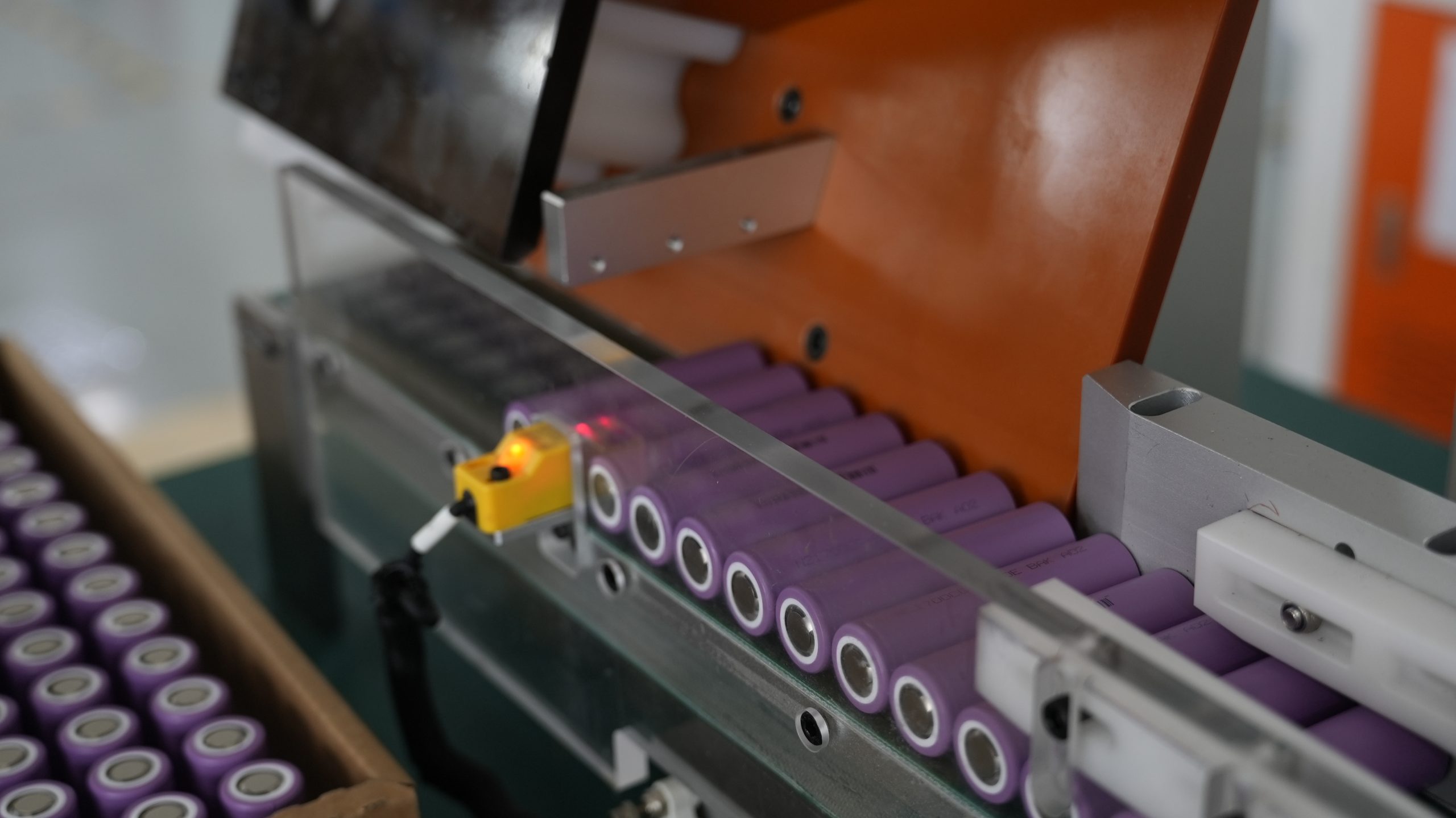
You should consider modular and swappable battery designs when developing lithium battery packs for portable oxygen concentrators. These designs offer several advantages for B2B customers in medical, robotics, security system, infrastructure, consumer electronics, and industrial sectors:
Users can easily replace or add batteries, which increases convenience and reduces downtime.
Modular systems extend device usability, supporting longer operation without frequent recharging.
Swappable batteries lower long-term ownership costs by reducing the need for new device purchases.
The table below shows how modular battery systems extend operational time, especially when traveling with an oxygen concentrator:
Feature | Description |
|---|---|
Battery Type | Robust lithium-ion battery supports extended operational cycles. |
Recharge Capabilities | Rapid recharge ensures continuous oxygen delivery during charging cycles. |
Expandable Configurations | Modular systems can be expanded for longer service life and various therapeutic requirements. |
Built-in Battery Duration | Lasts up to 4 hours on a full charge. |
External Battery Connection | Adds 5 more hours, providing up to 9 hours of reliable support. |
Travel Suitability | Ideal for extended travel or field operations without concern for sufficient battery power. |
4.2 User-Friendly Features
You should prioritize user-friendly features in lithium battery pack design. These features improve the experience for both patients and healthcare providers:
Feature | Description |
|---|---|
Portability | Devices weigh 3–10 pounds, making them compact and easy to transport. |
Ease of Use | Simple controls, LCD screens, and clear buttons allow for quick oxygen adjustment. |
Independence | Continuous oxygen supply gives users more freedom and flexibility in their daily routines. |
Removable batteries enable quick replacement, ensuring uninterrupted operation.
Easy battery replacement lets users manage battery life independently, reducing reliance on technical support.
Charge indicators provide immediate feedback on battery status, enhancing usability and planning.
4.3 Maintenance and Lifecycle Management
You must implement best practices for maintenance and lifecycle management to maximize reliability and safety:
Store spare batteries at 50% charge if unused for 2–3 months.
Recharge batteries according to manufacturer cycles and monitor performance after two years.
Recalibrate batteries monthly by fully depleting and recharging to maintain accurate power readings.
Always travel with fully charged extra batteries for trips longer than three hours.
Use only manufacturer-approved chargers and inspect charging equipment regularly.
Dispose of depleted or damaged batteries at certified electronic waste facilities.
Regular maintenance extends the lifespan of lithium battery packs and ensures consistent runtimes. Keep devices in dust-free environments and clean filters often. For more information, see Sustainability Statement and Conflict Minerals Statement. These practices support sustainability and regulatory compliance, which are essential for B2B customers and industry partners.
Tip: Following international standards such as FDA, ISO, and IEC helps protect users from electrical hazards and supports regulatory approval.
You must follow clear steps to design FAA-compliant lithium battery packs for oxygen concentrators. Start with the 160 Wh limit and label each pack for air travel. Add safety features like overcharge and thermal protection. Keep user needs and regulatory rules in mind at every stage.
Aspect | Importance |
|---|---|
Regulatory Compliance | Meets safety standards and avoids legal issues. |
User Needs | Supports healthcare providers and patient expectations. |
Early Integration | Prevents unexpected compliance burdens. |
Cross-Disciplinary Approach | Improves risk management and design quality. |
You ensure reliable performance in medical, robotics, security system, and industrial sectors by focusing on both compliance and user experience.
FAQ
What is the FAA watt-hour limit for lithium battery packs in portable oxygen concentrators?
You must follow the FAA limit of 160 Wh for lithium battery packs. You can carry up to two spare batteries between 101 Wh and 160 Wh with airline approval. Devices under 100 Wh require no approval.
How do you ensure lithium battery pack safety during air travel?
You protect battery terminals with non-metallic tape or cases. You label each pack clearly. You use a Battery Management System to prevent overcharge, short-circuit, and overheating.
Which lithium battery chemistry suits medical and industrial devices best?
You select lithium-ion (NMC) for high energy density and reliability. LiFePO4 offers excellent safety and long cycle life. Both chemistries support medical, robotics, security system, and industrial applications.
What documentation does the FAA require for lithium battery packs?
You provide proof of FDA compliance, radio frequency safety, and hazardous material status. You affix a permanent red label stating FAA acceptance. You keep all records for regulatory review.
Can you use modular lithium battery packs for extended device runtime?
You use modular and swappable lithium battery packs to extend runtime. This approach supports uninterrupted operation in medical, robotics, security system, infrastructure, and industrial sectors.


