

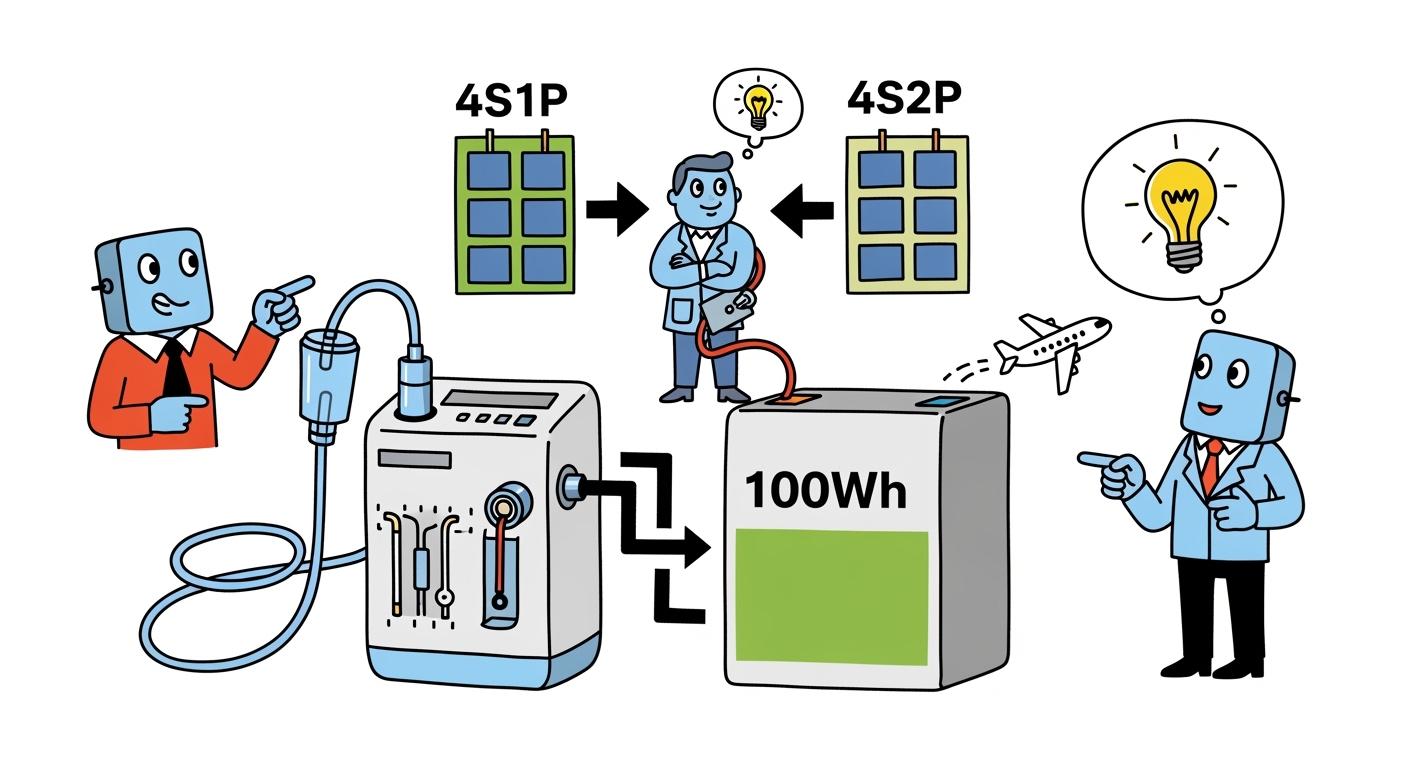
You face complex challenges when sourcing batteries for a Portable Oxygen Concentrator used in air travel. Understanding battery pack configurations like 4S1P and 4S2P helps you ensure safety and compliance. You must follow FDA consensus standards and ANSI/AAMI ES 60601-1 for medical devices. Many shipments get mishandled or mislabeled, increasing risk. Approved batteries and chargers, along with clear instructions, support safe practices. A defective battery can trigger thermal runaway, so you must address hazards during distribution and transportation.
Key Takeaways
Choose a lithium battery pack that meets the 100Wh airline limit for safe air travel with Portable Oxygen Concentrators.
Select between 4S1P and 4S2P configurations based on your needs: 4S1P for lightweight portability and 4S2P for longer runtime.
Always verify that your battery pack includes a certified Battery Management System (BMS) to ensure safety and reliability.
Prepare for travel by carrying spare batteries and keeping compliance documents accessible to avoid delays at the airport.
Consult with battery suppliers for customized solutions that meet both technical and regulatory requirements.
Part1: Best Battery Choice for Portable Oxygen Concentrator
1.1 Summary Recommendation
Selecting the right battery for a Portable Oxygen Concentrator requires you to balance airline compliance, device performance, and patient safety. You should choose a lithium battery pack that meets the 100Wh airline limit, offers sufficient runtime, and uses a robust cell configuration. For most air travel scenarios, a 4S1P or 4S2P lithium-ion pack with a 14.8V nominal voltage provides the best combination of portability and reliability. You must ensure the battery chemistry matches your application. For example, NMC (Nickel Manganese Cobalt Oxide) offers high energy density and moderate cycle life, while LiFePO4 (Lithium Iron Phosphate) provides longer cycle life and improved safety, though with lower energy density.
You should always verify that the battery pack includes a certified Battery Management System (BMS) to prevent overcharge, over-discharge, and short circuits. This is especially important for medical devices, where reliability is critical. In the medical sector, you need to consider not only runtime but also the ability to swap batteries quickly and safely during long flights.
Tip: Airlines require you to carry enough battery capacity for at least 150% of your expected flight time. For a 2-hour flight, you must have at least 3 hours of battery life.
1.2 Key Selection Factors
You must evaluate several criteria when choosing a lithium battery pack for a Portable Oxygen Concentrator. The following table summarizes the most important factors:
Criteria | Details |
|---|---|
Battery Life Requirements | Airlines require 150% of battery life compared to flight time (e.g., 3 hours for 2-hour flight). |
Watt-Hour Limits | Batteries must not exceed 160 Watt Hours; double batteries (over 160 Wh) are not allowed. |
Battery Packaging Regulations | Spare batteries must be protected from short circuits and physical damage as per PHMSA regulations. |
You should also consider these points:
Double batteries that exceed the watt-hour limit are not allowed on flights.
Each battery must remain under 160Wh, but most airlines recommend staying below 100Wh for medical devices.
Spare batteries must be packed to prevent short circuits and physical damage.
Always check the airline’s specific policy for the maximum number of spare batteries allowed.
When you select a battery, you must also match the chemistry to your operational needs. For example, NMC batteries offer a platform voltage of 3.7V per cell, energy density of 150-220 Wh/kg, and a cycle life of 1000-2000 cycles. LiFePO4 batteries provide a platform voltage of 3.2V per cell, energy density of 90-140 Wh/kg, and a cycle life of 2000-4000 cycles. LCO (Lithium Cobalt Oxide) and LMO (Lithium Manganese Oxide) are less common in medical applications due to lower cycle life or safety concerns.
You may also encounter similar battery requirements in robotics, security systems, and industrial backup systems, where reliability and compliance are equally important. Always work with suppliers who understand both regulatory and technical requirements for medical-grade lithium battery packs.
Part2: 100Wh Airline Limit Explained

2.1 Airline Rules for Lithium Batteries
You must understand airline rules before sourcing lithium battery packs for medical devices. Airlines set strict limits for battery capacity to ensure passenger safety. Most carriers allow lithium batteries up to 100Wh for carry-on use without extra requirements. If you need batteries between 101Wh and 160Wh, you can carry up to two, but you must get airline approval first. Batteries over 160Wh are not allowed on passenger aircraft.
Here is a summary of airline battery limits:
Battery Capacity | Carry-on Limit | Additional Requirements |
|---|---|---|
Up to 100 Wh | Allowed | None |
101 Wh – 160 Wh | 2 batteries | Airline approval needed |
International airlines and US-based airlines have similar rules, but you must check for differences. For example, international carriers require batteries to be at 30% charge for transport, while US airlines do not specify charge levels. Both require you to carry batteries on board, not in checked luggage. You must also ensure you have enough battery life for 150% of your flight time. This rule applies to Portable Oxygen Concentrator batteries and other medical devices.
International airlines may offer exemptions for medical devices.
TSA agents know CPAP equipment, but international security may vary.
Batteries over 160Wh are prohibited worldwide.
2.2 Compliance and Documentation
You must provide proper documentation to prove compliance when traveling with lithium batteries. Airlines require that each battery used in a Portable Oxygen Concentrator be labeled or accompanied by paperwork showing conformity with UN safety standards. The FAA mandates that medical device batteries display a label indicating they meet FAA acceptance criteria for use on aircraft.
You must protect all batteries from short circuits and physical damage. Pack spare batteries in individual cases or sleeves. Always check the airline’s website for updated requirements and keep documentation ready for inspection. These steps help you avoid delays and ensure safe transport of lithium battery packs for medical, robotics, security, and industrial applications.
Tip: Keep compliance documents and battery labels accessible during check-in and security screening. This practice speeds up the approval process and reduces risk.
Part3: 4S1P vs 4S2P Battery Design
3.1 4S1P Structure and Features
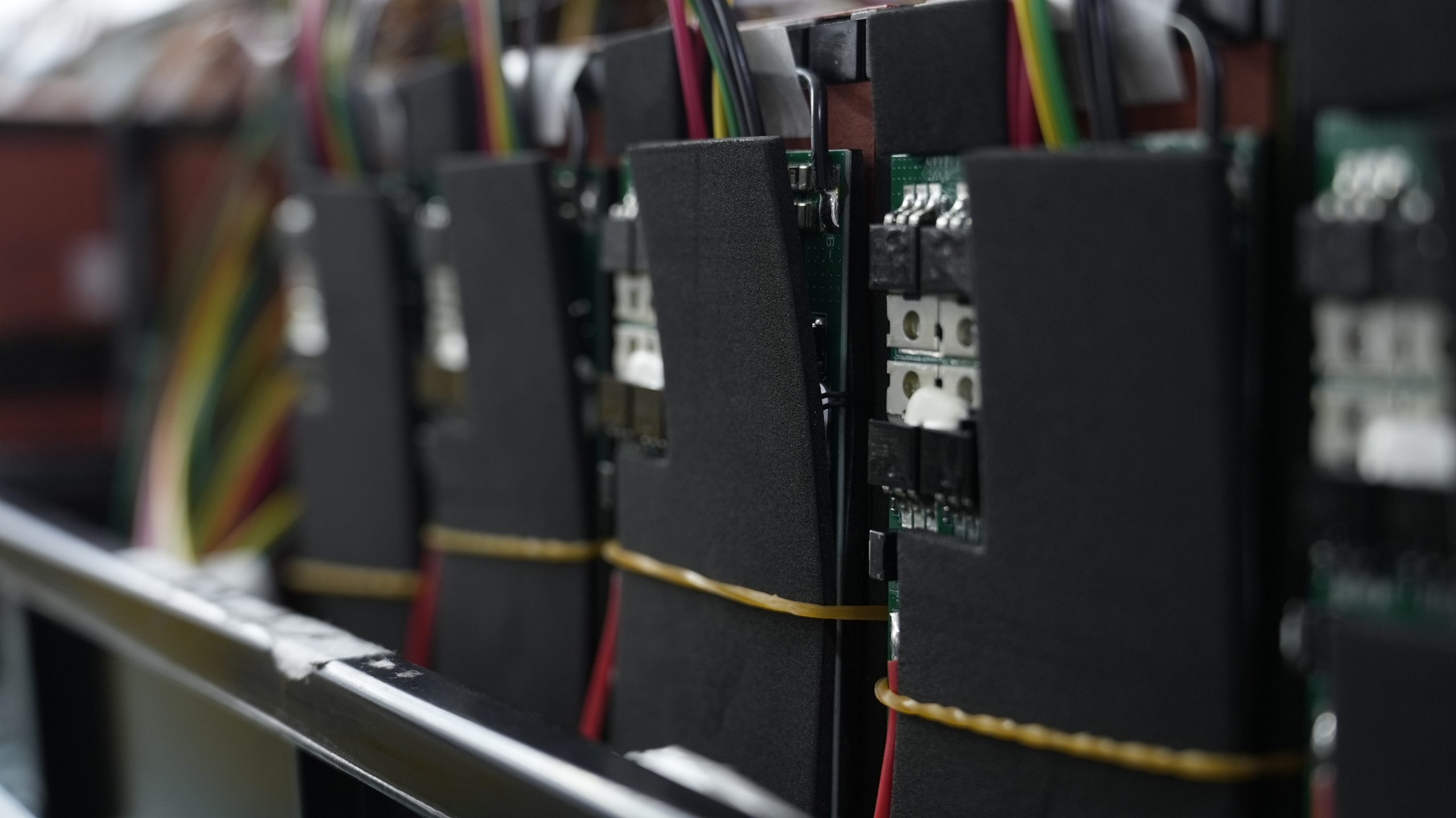
You encounter the 4S1P configuration often when sourcing batteries for medical devices. This design uses four cells in series and one in parallel. The series connection increases voltage, while the single parallel cell keeps the pack lightweight. You see this structure in applications where portability matters, such as robotics and security systems.
Here is a summary of the technical specifications for a typical 4S1P lithium battery pack:
Specification | Details |
|---|---|
Configuration | 4S1P (four cells in series, one parallel) |
Rated Capacity | 3350mAh |
Nominal Voltage | 14.6V |
Continuous Discharge Current | 1C (2.6A) |
Operating Temperature Range | Charging: 0°C to 45°C, Discharging: -20°C to 45°C |
Dimensions | 2.64” x 2.99” x 1.06” (67.0 x 76.0 x 27mm) |
Compliance | IEC 62133-2:2017, UN38.3 |
Features | Built-in BMS, SMBus-compatible fuel gauge, built-in charger requiring 18V–27V for recharging |
You benefit from the built-in Battery Management System (BMS), which protects against overcharge, over-discharge, and short circuits. The 4S1P pack offers a compact size and meets international safety standards. You can use this configuration in Portable Oxygen Concentrator devices, where weight and compliance are critical.
3.2 4S2P Structure and Features
You choose the 4S2P configuration when you need longer runtime and higher capacity. This design connects four cells in series and two in parallel. The parallel connection doubles the capacity, which extends the operating time for medical devices and industrial backup systems.
The 4S2P pack maintains the same nominal voltage of 14.8V, but increases the amp-hour rating. You see this structure in applications that require extended use, such as infrastructure monitoring and consumer electronics.
Key features of the 4S2P configuration include:
Higher capacity for longer device operation
Increased weight compared to 4S1P
Built-in BMS for safety and reliability
Compliance with IEC and UN standards
You must consider the trade-off between capacity and portability. The 4S2P pack suits Portable Oxygen Concentrator users who need extended runtime during long flights or remote operations.
3.3 Capacity and Runtime Comparison
You compare 4S1P and 4S2P battery designs to match your device requirements. The following table shows the differences in capacity, runtime, and weight:
Configuration | Capacity | Runtime | Weight |
|---|---|---|---|
4S1P | Limited | Shorter | Lightweight |
4S2P | Doubled | Extended | Heavier |
You see that the 4S2P pack provides twice the capacity and runtime of the 4S1P, but adds extra weight. You must balance these factors when selecting a battery for Portable Oxygen Concentrator devices. Airlines set a 100Wh limit, so you need to check if the 4S2P pack stays within this threshold.
Note: You must verify the watt-hour rating before travel. Packs above 100Wh may require airline approval and documentation.
3.4 Suitability for Portable Oxygen Concentrator
You select the battery configuration based on your operational needs. The 4S1P pack fits users who prioritize lightweight design and easy transport. You use this option for short flights or situations where frequent battery swaps are possible. The 4S2P pack suits users who need longer runtime, such as patients on extended flights or in remote areas.
You must ensure the battery chemistry matches your application. For example:
LiFePO4: Platform voltage 3.2V/cell, energy density 90-140 Wh/kg, cycle life 2000-4000 cycles
NMC: Platform voltage 3.7V/cell, energy density 150-220 Wh/kg, cycle life 1000-2000 cycles
LCO: Platform voltage 3.7V/cell, energy density 100-150 Wh/kg, cycle life 500-1000 cycles
LMO: Platform voltage 3.7V/cell, energy density 100-150 Wh/kg, cycle life 1000-2000 cycles
You see these chemistries in medical, robotics, security, and industrial sectors. You must select a chemistry that offers the best balance of energy density, cycle life, and safety for Portable Oxygen Concentrator devices.
Tip: Always check the battery’s compliance with IEC 62133 and UN38.3 standards. You reduce risk and ensure safe operation in medical environments.
You improve device performance and patient safety by choosing the right battery configuration. You also meet airline regulations and avoid delays during travel. You can consult with battery suppliers to customize packs for your specific needs.
Part4: Safety, Size, and Weight
4.1 Safety Features
You must prioritize safety when selecting lithium battery packs for portable oxygen concentrators. Medical devices require batteries that meet strict certification standards. The following table summarizes key certifications:
Certification Standard | Description |
|---|---|
ISO13485 | Medical device quality management system standard |
IEC60601-1 | General requirements for basic safety and essential performance of medical electrical equipment |
All KRL medical battery packs comply with ISO13485 and IEC60601-1. You benefit from an intelligent Smart BMS, which prevents overcharging, short circuits, and thermal runaway. This system ensures zero electromagnetic interference with hospital monitors. You can learn more about sustainable battery materials and responsible sourcing by visiting our approach to sustainability and conflict minerals statement.
Tip: Always verify that your battery supplier provides documentation for these certifications. This step protects your organization from compliance risks.
4.2 Size and Weight Comparison
You must consider size and weight when choosing between 4S1P and 4S2P battery configurations. The table below shows typical values:
Configuration | Cell Count | Typical Dimensions (mm) | Weight (g) | Capacity (mAh) |
|---|---|---|---|---|
4S1P | 4 | 70 × 40 × 20 | 200–250 | 2,500–3,000 |
4S2P | 8 | 70 × 40 × 40 | 400–500 | 5,000–6,000 |
You see that 4S1P packs offer lightweight portability, which suits short-duration medical, robotics, and security applications. 4S2P packs provide higher capacity and longer runtime, but add extra weight. You must balance these factors based on patient needs and device requirements.
4.3 Durability for Medical Use
You need batteries that withstand demanding environments. Medical devices require lithium battery packs to meet several durability standards:
ISO13485: Ensures quality management systems for medical devices.
IEC60601-1: Specifies safety and performance requirements for battery-powered medical equipment.
ANSI/AAMI ES 60601-1: Focuses on safety and performance in medical applications.
IEC 62133: Covers safety requirements for portable sealed secondary cells and batteries.
IEC 60086 Part 4: Addresses primary battery safety.
UL 1642: Sets safety standards for lithium batteries.
You must select batteries that pass rigorous testing for vibration, shock, and temperature extremes. These standards guarantee reliable performance in medical, industrial, and infrastructure scenarios. You protect patients and equipment by choosing certified, durable lithium battery packs.
Part5: Air Travel and Battery Management
5.1 Airline Approval Process
You must follow a clear process to gain airline approval for lithium battery packs used in a Portable Oxygen Concentrator. Start by contacting your airline at least 48 hours before your flight. Confirm the requirements for carrying your device and check if your model is FAA-approved. Some airlines may ask for extra documents, such as a doctor’s letter or prescription. You should also verify if recent updates to airline rules affect lithium-ion batteries for medical devices. Most airlines require you to have battery life equal to at least 150% of your total flight time. This ensures uninterrupted operation during delays or layovers.
Contact your airline at least 48 hours in advance.
Confirm requirements for your Portable Oxygen Concentrator.
Ensure your device is FAA-approved.
Check if you need a doctor’s letter or prescription.
Verify battery life meets 150% of flight time.
Tip: Keep all documents and battery labels accessible for inspection at the airport.
5.2 Carrying Spares and Backups
You should prepare for travel by carrying spare lithium battery packs. Most airlines allow you to bring up to two spare batteries for your Portable Oxygen Concentrator, each under 100 watt hours. Some airlines may have different policies, so always check before your trip. Carrying spares ensures you meet the 150% battery life rule and provides backup in case of unexpected delays. This practice applies to medical, robotics, and security system applications where continuous device operation is critical.
Carry up to two spare batteries, each under 100Wh.
Check airline policies for the maximum number of spares.
Store spares in your carry-on, not checked baggage.
5.3 Handling and Storage
You must handle and store lithium battery packs with care during air travel. Follow these best practices to reduce risks and ensure compliance:
Tape over the on/off switch or remove batteries to prevent accidental activation.
Avoid placing heavy items on top of devices with lithium batteries.
Keep batteries inserted in devices when possible.
Do not pack devices with batteries in checked baggage if spares are attached.
Store batteries in a cool, dry, and well-ventilated area.
Keep batteries away from direct sunlight and heat sources.
Maintain batteries at about 50% charge for long-term storage.
If a device is damaged or overheating, inform airline staff immediately.
Store spare batteries in an accessible part of your carry-on for inspection.
Ensure larger batteries have clear watt-hour labels and carry documentation.
Note: Never travel with faulty batteries. Always check for updates to airline battery regulations before each flight.
These steps help you protect lithium battery packs used in medical, industrial, and consumer electronics sectors. Proper handling and storage support safety and compliance throughout your journey.
Part6: Matching Battery to User Needs
6.1 Assessing Device and Patient Requirements
You need to match the right battery type to your device and user scenario. Start by considering how the Portable Oxygen Concentrator will be used. For short errands, internal batteries offer convenience but limit runtime. Daily activities benefit from external or removable batteries, which allow you to swap and charge packs separately. Full-day outings require modular multi-cell packs, even though they add weight. Emergency backup batteries support critical needs in medical, security, and industrial settings.
Battery Type | Description | Best For |
|---|---|---|
Internal (built-in) | Compact and convenient, limits battery life, requires full-device replacement. | Short errands |
External/removable batteries | Allows separate charging, reduces downtime, ideal for daily use. | Daily activities |
Modular multi-cell packs | Offers options for extended runtime, heavier weight. | Full-day outings |
Emergency backup batteries | Stand-alone units for AC/DC or solar inputs. | Emergency situations |
You should also evaluate key features:
Key Features | Description | Importance |
|---|---|---|
Runtime | Single batteries deliver 3–7 hours; extended packs double that capacity. | Essential for user needs |
Rechargeability | Lithium-ion and lithium-polymer are lightweight and reliable. | Long-lasting performance |
Weight vs. power | Extended batteries add weight but provide more power. | Balance between portability and use |
Safety certifications | Look for UN38.3, IEC 62133, and FAA/TSA approval. | Important for travel safety |
Built-in protection | Prevents hazards like thermal issues and overcharging. | Safety assurance |
User-friendly design | Features like easy swaps and clear indicators enhance usability. | Convenience for users |
You must always check for certifications and built-in safety features, especially for medical and security system applications.
6.2 Procurement Tips for B2B
When sourcing lithium battery packs for your organization, you should work closely with manufacturers who understand both airline and medical device regulations. Manufacturers provide guidance on proper classification, packaging, labeling, and documentation. They also offer training for your logistics teams and ensure all packaging meets regulatory standards. This support helps you avoid compliance issues and ensures safe shipping for medical, robotics, infrastructure, and industrial applications.
Request detailed regulatory information and best practices for shipping.
Confirm that packaging and labeling meet airline and medical device requirements.
Ask about training for your staff on safe battery handling.
Ensure all documentation is ready for customs and airline inspections.
Tip: Choose suppliers with a proven track record in your sector. This reduces risk and streamlines procurement.
6.3 Customization Options
You can request custom battery solutions to fit your device and operational needs. Manufacturers offer a range of options:
Custom form factors, including thin, tall, round, or flexible designs
Voltage and capacity tuning for specific device requirements
Built-in safety circuits for thermal and electrical protection
Smart features such as Bluetooth or app integration for monitoring
Compliance with UL, IEC, UN38.3, and FAA standards
These options help you optimize performance for Portable Oxygen Concentrator devices and other equipment in medical, consumer electronics, and industrial sectors. Customization ensures your battery packs meet both technical and regulatory demands.
You must weigh several factors when choosing between 4S1P and 4S2P lithium battery packs for portable oxygen concentrators under the 100Wh airline limit.
Select 4S2P packs to maximize uptime in medical, robotics, and industrial devices.
Prioritize reliability, energy density, and strict certification for safe operation.
Understand travel battery guidelines and pack batteries properly to ensure compliance and safety.
You should consult battery manufacturers for tailored solutions. Consider next steps like reviewing procurement options or researching custom battery designs for your sector.
FAQ
What is the main difference between 4S1P and 4S2P lithium battery packs?
You get higher capacity and longer runtime with 4S2P packs. 4S1P packs stay lighter and more compact. Both use four cells in series, but 4S2P doubles the parallel cells. Choose based on your device’s runtime and portability needs.
How do I ensure my lithium battery pack meets airline regulations?
You must check the watt-hour rating. Keep each pack under 100Wh for easy approval. Always carry compliance documents and labels. Airlines require batteries to meet UN38.3 and IEC 62133 standards. Contact your airline before travel for the latest rules.
Which lithium battery chemistry is best for medical devices?
You should consider NMC (3.7V/cell, 150–220 Wh/kg, 1000–2000 cycles) for high energy density. LiFePO4 (3.2V/cell, 90–140 Wh/kg, 2000–4000 cycles) offers longer cycle life and better safety. Match chemistry to your device’s needs and safety requirements.
Can I use the same battery packs in robotics or security systems?
Yes, you can use similar lithium battery packs in robotics, security, infrastructure, and industrial devices. Always check voltage, capacity, and certification. Application requirements may differ, so consult your supplier for the best fit.
What safety features should I look for in lithium battery packs?
You need a certified Battery Management System (BMS). Look for packs with overcharge, over-discharge, and short-circuit protection. Certifications like ISO13485, IEC60601-1, and UL 1642 ensure safety for medical, industrial, and consumer electronics applications.


