


You want reliable power for camping, field work, or emergency situations. A portable energy storage battery or portable power station gives you emergency power wherever you need it. These portable solutions use lithium battery packs for strong performance and easy transport. You get safer operation and less noise compared to traditional generators. When you choose a portable power station, focus on capacity, output power, portability, charging options, battery life, safety features, environmental impact, and brand reputation. Match the right battery to your business needs for dependable energy.
Key Takeaways
Portable energy storage batteries provide reliable power for camping, field work, and emergencies, ensuring you stay connected and operational.
Lithium-ion batteries offer high energy density and long cycle life, making them a superior choice over traditional lead-acid batteries.
Portable power stations are safer and quieter than traditional generators, allowing for indoor use without harmful emissions.
Understanding your power needs is crucial; calculate watt-hours for devices to choose the right battery capacity for your operations.
Look for features like multiple charging options, durability, and brand reputation to ensure your portable power solution meets your business needs.
Part1: Energy Storage Battery Basics
1.1 What Is an Energy Storage Battery
You rely on an energy storage battery to deliver portable power wherever your business needs it. This system stores energy in lithium-ion cells, which you can use later for equipment, devices, or backup. A portable power station combines several key components to ensure safe and efficient operation. Here’s a quick look at what’s inside:
Component | Description |
|---|---|
Battery | Stores energy, using lithium-ion cells (LiFePO4, NMC, LCO, LMO) arranged in modules. |
Battery Management System (BMS) | Monitors state of charge, health, voltage, temperature, and current for safety and long life. |
Power Conversion System (PCS) | Converts DC to AC for your devices and AC to DC for charging. |
Controller | Manages system operation and communication with external devices. |
HVAC System | Keeps the battery at the right temperature to prevent overheating. |
Fire Suppression System | Adds safety by cooling and suppressing fires if needed. |
SCADA | Lets you monitor and control the system remotely. |
Energy Management System (EMS) | Schedules and optimizes battery use for your business. |
Tip: If you want to learn more about BMS, check out our Battery Management System resource.
1.2 Lithium Technology Advantages
Lithium-ion batteries stand out for their high energy density and long cycle life. You get more power in a smaller, lighter package compared to older chemistries like lead-acid. Here’s how lithium-ion compares:
Battery Type | Energy Density (Wh/kg) | Cycle Life (Approx.) |
|---|---|---|
Lithium-ion | Up to 330 | 500-2000 |
Lead-acid | 75 | 200-300 |
You can choose from several lithium chemistries. LiFePO4 offers excellent safety and long cycle life (up to 3500 cycles, 3.2V platform voltage). NMC provides high energy density (up to 250 Wh/kg, 3.7V). LCO and LMO are common in consumer electronics and industrial tools. Lithium-ion batteries also need less maintenance and don’t suffer from memory effect.
Part2: Portable Power Station vs. Traditional Generators
2.1 Reliability and Safety
You want dependable power for your business operations in the field. When you compare a portable power station to a traditional generator, you notice some clear differences:
Portable power stations rely on stored battery energy, often using lithium chemistries like LiFePO4 or NMC. You get instant power, but you need to monitor battery levels to avoid depletion.
Traditional generators use fuel, such as gas or propane. They deliver higher watt hours and longer runtime, but you must manage fuel and ventilation.
Portable power stations offer safer operation. You can use them indoors because they produce zero emissions. Generators release carbon monoxide, which poses risks in enclosed spaces.
Note: If your team works with medical equipment, robotics, or security systems, a portable power station gives you safer, emission-free power for sensitive environments.
2.2 Environmental and Noise Benefits
You care about the impact your equipment has on the environment and your team. Portable power stations operate quietly and cleanly. Generators create noise and exhaust. Here’s a quick comparison:
Generator Type | Noise Level | Notes |
|---|---|---|
Standard open-frame generator | 70–90 dB | Loud, like a lawnmower |
Inverter generator | 55–65 dB | More suitable for campsites |
Portable power station | Silent | No engine, ideal for indoor use |
Solar power station | Silent | No noise or exhaust emissions |
You can use the best portable power stations in noise-sensitive areas, such as hospitals or infrastructure sites. You avoid disturbing your staff or nearby residents.
2.3 Maintenance and Usability
You want equipment that’s easy to use and maintain. Portable power stations require minimal upkeep. You just recharge the battery and check the system. Generators demand regular maintenance, fuel management, and safety checks.
Portable power stations are simple to operate. You plug in your devices and get power instantly.
Generators need oil changes, fuel refills, and filter replacements.
If you need the best portable power station for industrial field work, you save time and reduce hassle. The best portable power stations let you focus on your business, not on equipment maintenance.
Part3: Sizing and Capacity for Camping and Field Work
3.1 Assessing Power Needs
Choosing the right portable power solution starts with understanding what you need to run in the field. You want to avoid running out of battery during critical operations. Here’s a simple way to figure out your requirements:
Make a list of every device and appliance you plan to use during camping or field work. This could include medical equipment, robotics controllers, security cameras, laptops, or small tools.
Check the power rating (in watts) for each item. You can usually find this on the device label or in the manual.
Estimate how many hours you will use each device per day.
Look for ways to reduce energy use. For example, switch to LED lighting or use energy-efficient equipment.
Tip: A detailed inventory helps you avoid surprises and ensures your portable battery capacity matches your real-world needs.
3.2 Understanding Watt-Hours and Output
You need to know how long your portable power station can keep your devices running. The key number here is capacity, measured in watt-hours (Wh). To calculate the required battery capacity, multiply the wattage of each device by the number of hours you plan to use it. For example, if you have a 60-watt device and you use it for 8 hours, you need 480Wh.
Watt-hour capacity tells you how much energy your battery can store and deliver.
Higher capacity means you can run more devices or operate them longer.
Output power (measured in watts) shows the maximum load your portable station can handle at one time.
A good match between your battery capacity and your actual needs keeps your operations smooth, whether you’re supporting infrastructure sensors, running field medical equipment, or powering industrial tools.
3.3 Matching Devices and Appliances
You want to make sure your portable power station can handle all your essential devices. A 1000W portable unit is a popular choice for many B2B outdoor scenarios. Here are some examples of what you can power with a 1000W station:
Device/Appliance | Typical Power Draw (W) | Hours Supported (with 1000Wh) |
|---|---|---|
Smartphones/Tablets | 5 – 20 | 50+ |
40 – 60 | 16 – 25 | |
Laptop | 60 – 100 | 10 – 16 |
Mini Fridge | 60 – 100 | 10 – 16 |
Electric Grill/Microwave | 1000 – 1500 | 0.6 – 1 |
You can see that a 1000W portable power station offers enough capacity for most field work, medical support, or security operations. It also gives you flexibility for charging options, such as AC, DC, or solar. Portability matters, too. You want a battery that’s easy to move between sites, fits in your vehicle, and stands up to tough outdoor conditions.
Note: Always check the combined wattage of all devices you plan to run at the same time. Make sure it does not exceed the output rating of your portable power station.
When you select a portable battery, consider the chemistry as well. LiFePO4 batteries offer long cycle life and high safety, while NMC batteries provide higher energy density. Both types give you reliable performance for demanding B2B applications.
By taking the time to assess your needs, understand capacity, and match your devices, you set your team up for success in any outdoor or emergency scenario.
Part4: Key Features for Portability and Outdoor Use
4.1 Output Ports and Compatibility
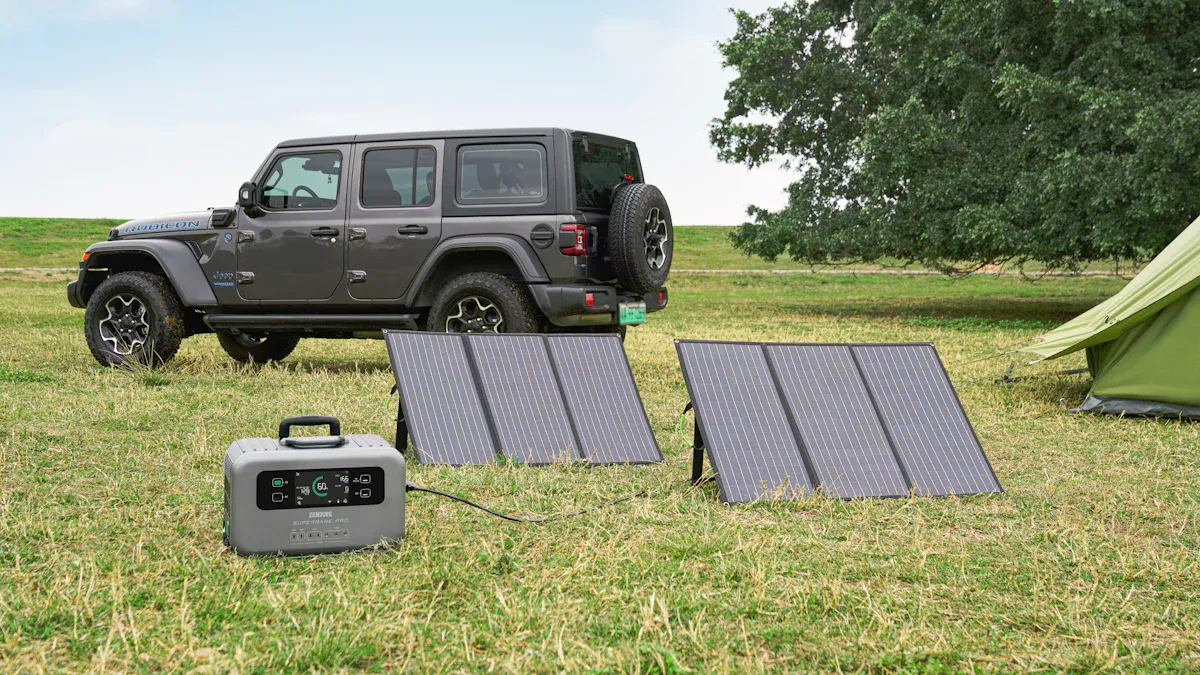
You need a portable power solution that connects with a wide range of devices in the field. The right output ports make your energy storage battery versatile for medical equipment, robotics, security systems, and industrial tools. You want to plug in laptops, CPAP machines, drills, and even car fridges without worrying about compatibility.
Here’s a quick table showing the most essential ports for outdoor use:
Port Type | Best Used For | Lipower Standard |
|---|---|---|
AC (Pure Sine Wave) | Laptops, CPAP, Drills, Blenders | 110V US Standard |
12V DC Car Port | Car Fridges, Air Pumps, Fans | Regulated 12V |
DC5521 Barrel | LED Lights, Routers, Modems | Standard DC Output |
You get safe operation for sensitive electronics with pure sine wave inverters. USB-C Power Delivery (PD) lets you charge modern devices quickly. If you work in infrastructure or industrial field work, you rely on regulated 12V car ports for appliances and tools. You want to avoid downtime, so compatibility matters.
Tip: Always check that your portable power station supports the devices you use most. If you need more information about battery management systems (BMS), visit our Battery Management System resource.
4.2 Charging Options: AC, Car, Solar
You want flexible charging options for your portable energy storage battery. You might work in remote areas, travel between sites, or face unpredictable weather. Multiple charging methods keep your operations running.
AC charging gives you fast, reliable power from standard outlets.
Car charging lets you recharge on the go, using your vehicle’s 12V port.
Solar charging is essential for off-grid work, field deployments, and emergency backup.
Many portable power stations deliver 1,000–3,000W of continuous 120V AC output. That’s enough for charging electric vehicles or running high-demand equipment. Pure sine wave AC outlets protect sensitive devices and reduce noise. You get flexibility with multiple input options—AC, solar, car, or even EV stations. This means you can recharge your energy storage battery wherever you are.
Note: Solar compatibility is a game-changer for B2B users. You can deploy solar panels at infrastructure sites, medical camps, or industrial locations. You reduce reliance on fuel and support sustainability goals.
4.3 Durability and Weather Resistance
You need a portable power station that stands up to tough outdoor conditions. Durability and weather resistance keep your energy storage battery safe and reliable. You want to avoid failures during critical operations.
Check for certifications that guarantee performance:
Certification | Description |
|---|---|
UL Certification | Confirms reliability and safety throughout the battery’s life cycle |
CE Certification | Ensures compliance with safety, health, and environmental standards |
You get peace of mind when your portable power station meets UL and CE standards. Rugged design protects against drops, dust, and moisture. If you work in medical, robotics, or security sectors, you need equipment that operates in all weather. Look for lithium battery packs with LiFePO4 or NMC chemistry—they offer high cycle life and stable performance.
Tip: If your business cares about sustainability or conflict minerals, check our internal resources for guidance on responsible sourcing.
4.4 Portability and Ease of Use
You want to move your portable energy storage battery easily between sites. Weight and form factor matter for field professionals. Lighter units are easier to carry and deploy in challenging environments. Compact design enhances portability and efficiency.
Here’s a quick look at what makes a portable power station easy to use:
Feature | Description |
|---|---|
Weight | Lighter units are easier to carry and reposition |
Capacity | Higher energy density means more power without extra weight |
Design | Compact form factor fits in vehicles and tight spaces |
Efficiency | Modern lithium-ion stations charge faster and last longer |
Performance-to-weight ratio | More energy at lower weight improves transportability |
You save time and reduce labor when you use high-capacity lithium battery banks. You need fewer units because each one delivers more power. If you work in industrial or infrastructure sectors, you appreciate the efficiency and reliability of modern lithium battery packs.
Note: Portability is key for B2B outdoor applications. You want a solution that adapts to your workflow and keeps your team productive.
You get the best results when you choose a portable power station with the right ports, flexible charging, rugged design, and easy transport. These features help your business stay powered up in any outdoor or emergency scenario.
Part5: Solar Integration and Off-Grid Power
5.1 Solar Charging Benefits
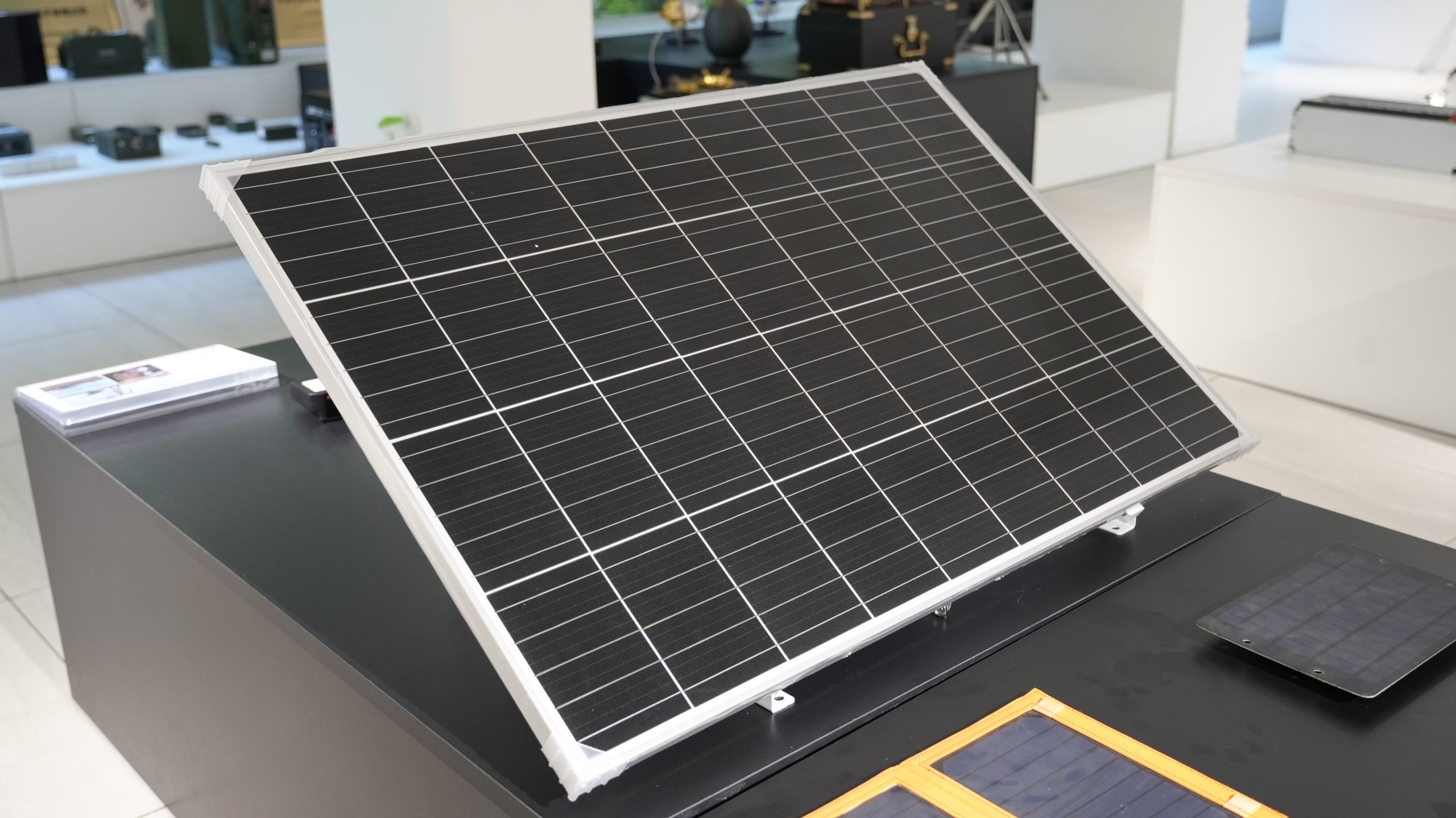
You want your portable lithium battery packs to deliver reliable power in remote locations. Solar charging gives you a big advantage. You tap into renewable energy, which helps your business reduce environmental impact and supports sustainability goals. You also boost energy efficiency. Your portable power station uses every bit of sunlight to minimize waste and maximize output. You cut down on fossil fuel use, so you don’t need to haul gasoline or worry about emissions. Solar integration lets you recharge your LiFePO4 or NMC battery packs anywhere the sun shines.
Tip: Solar charging keeps your operations running even when you’re far from the grid. You stay productive and avoid downtime.
5.2 Off-Grid Use Cases
You rely on portable power solutions for many off-grid scenarios. In medical field deployments, you keep essential devices running during emergencies. Robotics teams use portable stations to operate inspection units in remote areas. Security systems stay active at infrastructure sites without grid access. Industrial crews power tools and equipment at temporary job sites. You also support consumer electronics for staff working outdoors. Military and emergency response teams depend on portable lithium battery packs for medical tents and shelters. Field engineers use them for scientific projects and remote construction.
Emergency preparedness
Outdoor adventures
Worksite flexibility
Eco-conscious operations
Military and defense
Emergency response
Field engineering
Remote construction sites
Temporary construction sites
Emergency backup power
5.3 Practical Considerations
You need to plan for solar integration with your portable power stations. Check the compatibility of your LiFePO4 or NMC battery packs with solar panels. Look for systems that offer fast charging and high efficiency. Make sure your portable units have weather-resistant designs for outdoor use. You want easy setup and clear indicators for battery status. Consider the size and weight of your solar panels. Choose rugged panels that fit your workflow and transport needs. You also want to monitor power output and adjust your operations based on sunlight conditions.
Note: Solar integration gives your business flexibility and independence. You can deploy portable power solutions anywhere, keeping your team ready for any challenge.
Part6: Brand Reputation and Support
6.1 Evaluating Manufacturers
You want to trust your portable power solution, especially when your business depends on reliable energy in the field. Leading brands like Lipower and GSL ENERGY stand out for their innovation and commitment to B2B clients. Lipower offers a 3000 Watt Portable Solar Generator, which suits demanding environments such as medical deployments or industrial field work. GSL ENERGY provides customized energy storage for EPC contractors and solar installers, with a diverse portfolio that covers commercial and industrial needs.
When you evaluate manufacturers, look at several key criteria:
Criteria | Description |
|---|---|
User Reviews | Real-world feedback shows performance and reliability. |
Supplier Expertise | Industry experience means better quality and proven use cases. |
Transparency | Clear specs, certifications, and warranties build trust. |
Customer Support | Responsive support with multiple channels is essential. |
Warranty Considerations | Longer warranties show confidence in product durability. |
Sustainability Practices | Commitment to eco-friendly practices boosts reputation. |
Tip: Always check for documented cases in your sector, like robotics or security systems, to see how the manufacturer supports B2B integration.
6.2 Warranty and After-Sales Service
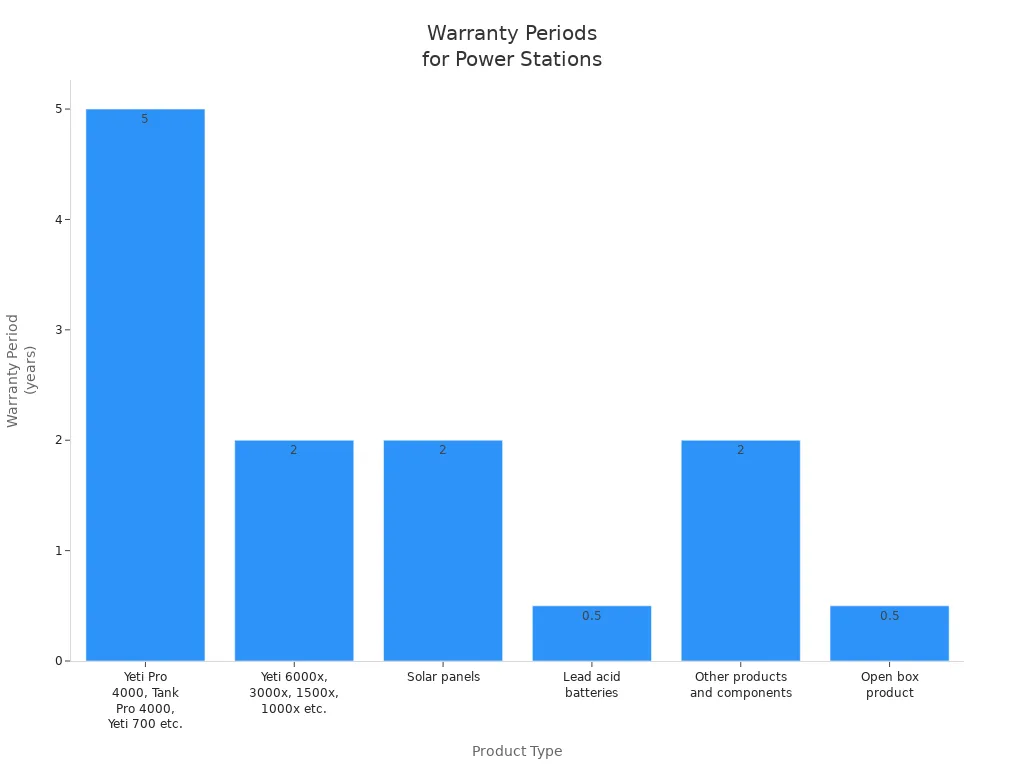
You need strong warranty coverage and after-sales support for your portable power station. Brands like GOAL ZERO offer warranties ranging from 2 to 5 years for their lithium battery packs. Some products, like the Yeti Pro 4000, come with a 5-year warranty. Others, such as solar panels or lead-acid batteries, have shorter coverage. GOAL ZERO will repair or replace products at no charge, using new or refurbished parts. The warranty continues from the original period or extends for 90 days after replacement.
Product Type | Warranty Period |
|---|---|
Yeti Pro 4000, Tank Pro 4000, Yeti 700, Yeti 500, Yeti 300, Haven 10 | 5 years |
Yeti 6000x, Yeti 3000x, Yeti 1500x, Yeti 1000x, Yeti 1000 CORE, Yeti 500x, Yeti 200x | 2 years |
Goal Zero-branded solar panels | 2 years |
Lead acid batteries | 180 days |
Other products/components | 2 years |
Open box product | 6 months |
Note: Comprehensive warranties, like 12-year workmanship and performance coverage, show the manufacturer’s confidence in their lithium battery packs.
6.3 B2B Integration Support
You want your portable power solution to fit your business needs. Manufacturers help you establish your own brand identity and offer BMS customization for local conditions. You can request software localization, so your team uses interfaces in their preferred language. Quality and value are guaranteed, with high-grade lithium chemistries like LiFePO4 and NMC. You get a complete solar ecosystem for seamless integration, plus expert installation support—either on-site or remote.
Full Brand Ownership
BMS Customization for local environments
Software Localization for usability
Quality components at competitive prices
Complete solar integration
Expert installation support
If your business operates in camping, medical, robotics, or industrial sectors, you benefit from tailored portable power solutions and reliable after-sales service.
Part7: Actionable Advice for B2B Buyers
7.1 Matching Solutions to Business Needs
You want your portable power solution to fit your business perfectly. Start by looking at the total cost of ownership. Consider not just the unit price, but also shipping and how many watt-hours you get over the battery’s life. Check if your supplier has strong manufacturing capabilities and financial stability. Think about their long-term business intent and after-sales support. Identify your unique project needs, like load demands, environmental conditions, safety standards, and operational goals. Seek customized portable solutions that match your requirements for optimal performance.
Evaluate total cost of ownership, including unit price, shipping, and lifecycle watt-hours.
Assess supplier manufacturing readiness and financial strength.
Consider supplier after-sales capabilities and long-term business intent.
Identify unique project requirements—load, environment, safety, and operational goals.
Seek customized portable solutions for best performance.
Tip: Customization helps you get the most out of your portable lithium battery packs, especially for medical, robotics, or industrial applications.
7.2 Ensuring Long-Term Value
You want your portable power investment to deliver value year after year. Look for reliability and technical expertise from your supplier. Tailored solutions help you adapt to changing needs. Dynamic technical support keeps your operations running smoothly. Lifecycle services, like maintenance and spare parts, ensure your portable battery stays usable. Compliance with regulations reduces legal risks. Economic value comes from lower total cost of ownership. Future-ready solutions with modern technology boost efficiency. Collaborative relationships build trust and long-term success.
Factor | Description |
|---|---|
Product Reliability | Fewer failures and less downtime through strict standards |
Technical Expertise | Industrial knowledge prevents design errors |
Tailored Solutions | Customization meets changing operational needs |
Dynamic Technical Support | Reliable after-sales services maintain business continuity |
Lifecycle Services | Maintenance and spare parts ensure long-term usability |
Compliance with Regulations | Safety and industry standards minimize legal risks |
Economic Value | Lower total cost of ownership leads to savings |
Future-Ready Solutions | Modern technology improves operational efficiency |
Transactional Relationships | Collaboration enhances trust and long-term success |
7.3 Avoiding Common Pitfalls
You want to avoid mistakes when choosing portable power and backup solutions. Many buyers focus only on initial costs and forget about long-term expenses. Some believe that a famous brand always means high quality, but batch consistency and supplier transparency matter more. Integration challenges can cause operational issues if you don’t check compatibility with your existing systems.
Mistake | Description |
|---|---|
Overlooking lifecycle costs | Focusing only on initial costs, ignoring maintenance and performance expenses |
Assuming brand guarantees quality | Believing a well-known brand ensures quality, ignoring batch consistency |
Failing to check compatibility with existing systems |
Many buyers assume a globally known cell brand guarantees quality.
The best quality comes from batch consistency and supplier transparency.
Note: Always check how your portable lithium battery packs will integrate with your current infrastructure, medical devices, or robotics systems. This step helps you avoid downtime and ensures reliable backup power.
You want reliable power for every off-grid weekends project. Portable energy storage batteries and a portable station give you dependable output and top performance in medical, robotics, security, and industrial use. You should always check sizing, features, durability, and brand reputation before you choose a station. For your next steps, consult manufacturers, compare station options, and look at solar integration for off-grid weekends. Long-term reliability and strong support help you lower costs and keep your station ready for any use.
Key Step | Action Item |
|---|---|
Calculate energy use | Find daily watt-hours for your application |
Match output and size | Ensure station meets your power needs |
Compare manufacturers | Review support, warranty, and performance |
Plan for off-grid weekends | Consider solar for flexible charging |
FAQ
What lithium battery chemistry should you choose for outdoor B2B use?
You should consider LiFePO4 for safety and long cycle life. NMC offers higher energy density if you need lighter weight. LCO and LMO work best for consumer electronics. Match the chemistry to your application’s power and durability needs.
How do you estimate the right battery capacity for field operations?
List all devices you plan to power. Check each device’s wattage. Multiply by hours of use. Add up the total watt-hours. Choose a portable power station with at least 20% more capacity for safety.
Can you use portable lithium battery packs in harsh weather?
Yes, many LiFePO4 and NMC battery packs have rugged, weather-resistant designs. Look for UL or CE certifications. These ensure safe operation in rain, dust, or extreme temperatures.
What are the main charging options for portable power stations?
You can charge with AC outlets, car ports, or solar panels. Solar charging is ideal for remote sites. AC charging works best for quick top-ups at base. Car charging helps during transport.
How do you ensure safe operation with sensitive equipment?
Use a portable power station with a pure sine wave inverter. This protects medical devices, robotics, and security systems from voltage spikes. Always check compatibility with your equipment’s requirements.
Tip: Always review your battery management system (BMS) features. A good BMS extends battery life and keeps your operations safe.


